漢王就國與韓信進言
The King of Han Goes to His Kingdom; Han Xin's Counsel
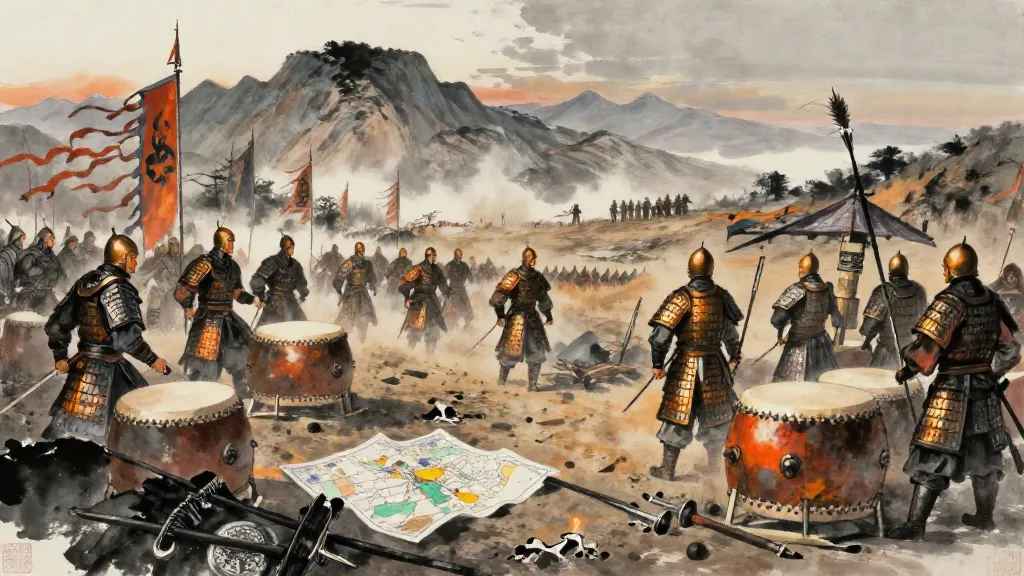
四月,兵罷戲下,諸侯各就國。漢王之國,項王使卒三萬人從,楚與諸侯之慕從者數萬人,從杜南入蝕中。去輒燒絕棧道,以備諸侯盜兵襲之,亦示項羽無東意。至南鄭,諸將及士卒多道亡歸,士卒皆歌思東歸。韓信說漢王曰:「項羽王諸將之有功者,而王獨居南鄭,是遷也。軍吏士卒皆山東之人也,日夜跂而望歸,及其鋒而用之,可以有大功。天下已定,人皆自寧,不可復用。不如決策東鄉,爭權天下。」
In the fourth month, the armies are disbanded at Xihe, and the feudal lords each depart for their kingdoms. As the King of Han proceeds to his domain, the King of Xiang sends thirty thousand soldiers to escort him; several tens of thousands more from Chu and the other lords follow of their own accord. They enter the Bao Valley from south of Du. As they advance, they burn the plank roads behind them — partly to guard against surprise attack by the other lords, and partly to signal to Xiang Yu that they have no intention of returning east. Upon reaching Nanzheng, many generals and soldiers desert along the way and flee home. The troops all sing songs longing to return east. Han Xin addresses the King of Han: "Xiang Yu has made kings of those generals who served him well, yet Your Majesty alone has been banished to Nanzheng — this is exile. Your officers and soldiers are all men from east of the mountains. Day and night they stand on tiptoe looking homeward. Use them now while their ardor is keen, and great deeds can be accomplished. Once All-Under-Heaven is settled and men grow comfortable, they can never be used again. Better to decide at once on an eastern campaign and contend for mastery of All-Under-Heaven."
Notes
Han Xin (?–196 BC), one of the three great heroes of the Han founding. Originally served under Xiang Yu as a junior officer, defected to Liu Bang and was promoted by Xiao He to Supreme Commander (大將軍). His military genius was decisive in the Chu-Han War.
Capital of Hanzhong commandery. Modern Hanzhong (漢中), Shaanxi province, in the upper Han River valley south of the Qinling Mountains.
The plank roads (棧道): wooden galleries built along cliff faces through the Qinling Mountains, the only practical route connecting the Guanzhong plain to Hanzhong. Burning them signaled no intent to return — but also set up the famous stratagem of 'repairing the plank roads openly while advancing secretly through Chencang' (明修棧道,暗度陳倉).