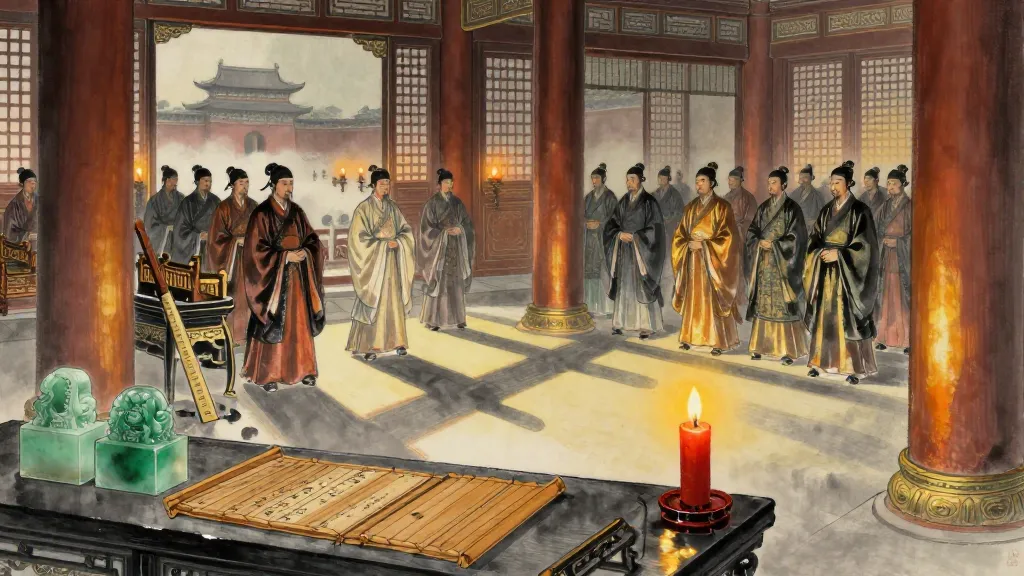
張釋之馮唐列傳 (Biographies of Zhang Shizhi and Feng Tang) — Chinese ink painting

Chapter 102 of 130

張釋之馮唐列傳

Biographies of Zhang Shizhi and Feng Tang

View:

張釋之論法

Zhang Shizhi's Arguments on the Law

張廷尉釋之者,堵陽人也。釋之言秦漢之間事,秦所以失而漢所以興者久之。文帝稱善。

上問上林尉諸禽獸簿,尉盡不能對。虎圈嗇夫從旁代對甚悉。文帝曰:“吏不當若是邪?”乃詔拜嗇夫為上林令。釋之曰:“夫絳侯、東陽侯稱為長者,言事曾不能出口,豈斅此嗇夫諜諜利口捷給哉!且秦以任刀筆之吏,吏爭以亟疾苛察相高,然其敝徒文具耳。臣恐天下隨風靡靡,爭為口辯而無其實。”文帝曰:“善。”乃止。

Zhang Shizhi, the Chief Justice, was a man of Duyang. He discoursed at length on why Qin fell and Han rose. Emperor Wen commended him.

The Emperor once inspected the Imperial Park and asked the superintendent about the animals' registry; the superintendent could not answer a single question. A lower keeper standing nearby answered every query in detail. Emperor Wen said: "Should not all officials be like this?" and ordered the keeper promoted to Superintendent of the Park. Zhang Shizhi objected: "The Marquis of Jiang and the Marquis of Dongyang are esteemed as worthy men, yet they can barely get a word out. Should they emulate this keeper's glib, rapid-fire chatter? Moreover, Qin promoted clerks who competed to be the most swift, harsh, and meticulous, but the result was mere paperwork with no substance. I fear the realm will follow the wind and compete to be eloquent without substance." Emperor Wen said: "You are right." He withdrew the appointment.

Notes

1person張釋之Zhāng Shìzhī

Zhang Shizhi (張釋之, fl. 170s-150s BC), styled Ji, served as Chief Justice (廷尉) under Emperor Wen. He became famous for his insistence that the law must apply equally to all, including the Emperor himself.

2context

Zhang Shizhi's argument — that promoting officials for glib presentation would encourage style over substance — became a foundational critique in Chinese bureaucratic theory.

張釋之廷尉守法

Zhang Shizhi as Chief Justice Upholds the Law

上行出中渭橋,有一人從橋下走出,乘輿馬驚。廷尉秦當,一人犯蹕,當罰金。文帝怒曰:“此人親驚吾馬,而廷尉乃當之罰金!”釋之曰:“法者天子所與天下公共也。今法如此而更重之,是法不信於民也。且方其時,上使立誅之則已。今既下廷尉,廷尉,天下之平也,一傾而天下用法皆為輕重,民安所措其手足?”良久,上曰:“廷尉當是也。”

其後有人盜高廟坐前玉環,上大怒,下廷尉治。釋之案律盜宗廟服御物者奏當棄市。上大怒曰:“吾屬廷尉者,欲致之族。”釋之曰:“法如是足也。今盜宗廟器而族之,有如萬分之一,假令愚民取長陵一抔土,陛下何以加其法乎?”久之,文帝與太后言之,乃許廷尉當。

When the Emperor's procession crossed the central Wei bridge, a man suddenly ran out from underneath, startling the imperial horses. The Chief Justice judged the case: one man had violated the processional route; the penalty was a fine. Emperor Wen was furious: "This man nearly spooked my horses to death, and the Chief Justice imposes a mere fine?" Zhang Shizhi replied: "The law is what the Son of Heaven shares with the entire realm. If the law says this and you make it heavier, the law will lose the people's trust. Had Your Majesty wished, you could have had him killed on the spot. But once the case was sent to the Chief Justice, the Chief Justice is the balance of the realm. If the balance tips, the entire realm's use of law will become arbitrary — where will the people put their hands and feet?" After a long pause, the Emperor said: "The Chief Justice's ruling is correct."

Later, a man stole a jade ring from the seat in Emperor Gao's ancestral temple. The Emperor was enraged and sent the case to the Chief Justice. Zhang Shizhi judged it by statute: theft of imperial temple furnishings merited execution at the market. The Emperor was furious: "I sent this case to you intending the man's entire clan be destroyed!" Zhang Shizhi said: "The law as it stands is sufficient. If you exterminate the clan for stealing a temple vessel, and then, just suppose, some fool scoops up a handful of dirt from the Changling tomb — how will Your Majesty increase the punishment beyond what has already been spent?" After a long time, Emperor Wen discussed it with the Empress Dowager and accepted the Chief Justice's ruling.

Notes

1context

Zhang Shizhi's argument — that the law must leave room for proportional escalation — is one of the most lucid statements of legal principle in Chinese history. His metaphor of the balance (平) became the standard image for judicial impartiality.

2context

The 'handful of dirt from Changling' argument is a masterpiece of reductio ad absurdum. If temple theft merits clan extermination, there is no punishment left for tomb desecration — which was considered far worse.

馮唐論將

Feng Tang's Discourse on Generalship

馮唐者,其大父趙人。文帝曰:“吾獨不得廉頗、李牧時為吾將,吾豈憂匈奴哉!”唐曰:“主臣!陛下雖得廉頗、李牧,弗能用也。”上怒,起入禁中。良久,召唐問。唐對曰:“臣聞李牧為趙將居邊,軍市之租皆自用饗士。委任而責成功,故李牧乃得盡其智慧。今臣竊聞魏尚為雲中守,其軍市租盡以饗士卒。虜曾一入,尚率車騎擊之,所殺其眾。夫士卒盡家人子,安知尺籍伍符。終日力戰,斬首捕虜,上功莫府,一言不相應,文吏以法繩之。其賞不行而吏奉法必用。臣愚,以為陛下法太明,賞太輕,罰太重。”文帝說。是日令馮唐持節赦魏尚。

Feng Tang's grandfather was from Zhao. Emperor Wen once sighed: "If only I had Lian Po and Li Mu as my generals — why would I worry about the Xiongnu?" Feng Tang said: "With respect, Your Majesty! Even if you had Lian Po and Li Mu, you would not be able to use them." The Emperor was furious and withdrew. After a long pause, he summoned Feng Tang to explain. Feng Tang said: "I have heard that Li Mu, as Zhao's frontier general, used all the revenue from the military markets to reward his troops. He was given full authority and held responsible only for results. That is why Li Mu could fully deploy his genius. Now I hear that Wei Shang, Governor of Yunzhong, likewise uses all military market revenue to feed his soldiers. When the barbarians raided, Wei Shang led his cavalry against them and killed many. But the soldiers are all farm boys — what do they know of military paperwork? They fight all day, take heads and capture prisoners, then report their tally to headquarters. One discrepancy in the count, and the clerks punish them by the book. Rewards never come, but penalties are always enforced. I believe Your Majesty's regulations are too strict, rewards too meager, and punishments too severe." Emperor Wen was pleased. That very day he sent Feng Tang with the imperial staff to pardon Wei Shang.

Notes

1person馮唐Féng Táng

Feng Tang (馮唐, fl. 170s BC) was an elderly court official whose blunt advice to Emperor Wen about military leadership became proverbial. The phrase 'Feng Tang is old' (馮唐易老) later became a literary allusion for talent going to waste through lack of opportunity.

2context

Feng Tang's critique cut to the heart of the tension between civilian bureaucratic control and effective frontier defense. His argument that bean-counting clerks undermined fighting morale anticipated debates that would recur throughout Chinese imperial history.

Edition & Source

Text
《史記》 Shiji
Edition
中華古詩文古書籍網 transcription
Commentary
裴駰《史記集解》、司馬貞《史記索隱》、張守節《史記正義》(Three Commentaries)