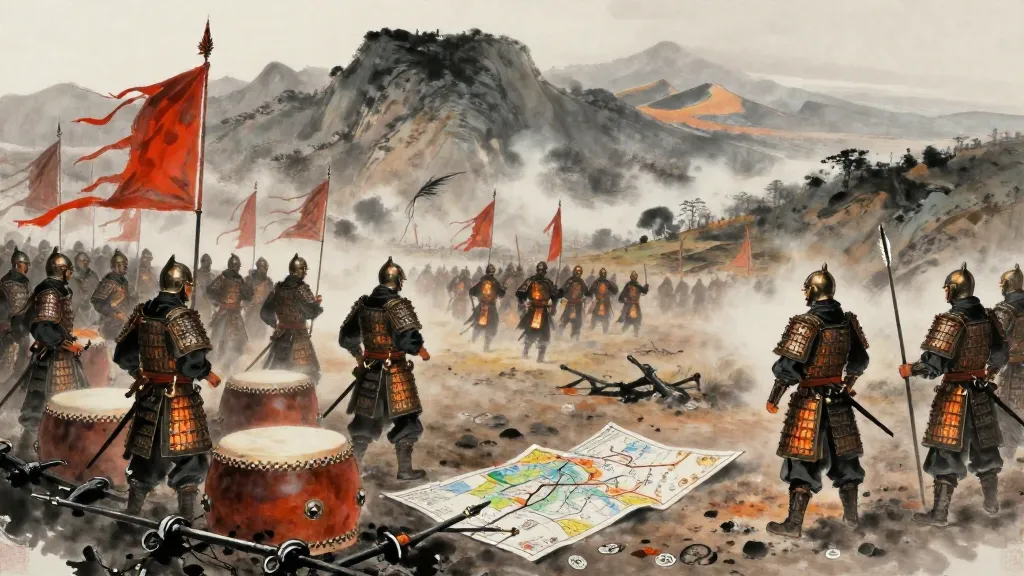
萬石張叔列傳 (Biographies of Wanshi and Zhang Shu) — Chinese ink painting

Chapter 103 of 130

萬石張叔列傳

Biographies of Wanshi and Zhang Shu

View:

萬石君石奮

Lord Wanshi, Shi Fen

萬石君名奮,其父趙人也,姓石氏。趙亡,徙居溫。高祖東擊項籍,過河內,時奮年十五,為小吏,侍高祖。高祖與語,愛其恭敬,問曰:「若何有?」對曰:「奮獨有母,不幸失明。家貧。有姊,能鼓琴。」高祖曰:「若能從我乎?」曰:「原盡力。」於是高祖召其姊為美人,以奮為中涓,受書謁,徙其家長安中戚里,以姊為美人故也。其官至孝文時,積功勞至大中大夫。無文學,恭謹無與比。

文帝時,東陽侯張相如為太子太傅,免。選可為傅者,皆推奮,奮為太子太傅。及孝景即位,以為九卿;迫近,憚之,徙奮為諸侯相。奮長子建,次子甲,次子乙,次子慶,皆以馴行孝謹,官皆至二千石。於是景帝曰:「石君及四子皆二千石,人臣尊寵乃集其門。」號奮為萬石君。

Lord Wanshi's personal name was Fen. His father was a man of Zhao, surnamed Shi. When Zhao fell, the family moved to Wen. When the Grand Progenitor marched east to attack Xiang Ji, he passed through Henei. Fen was then fifteen, serving as a minor clerk. The Grand Progenitor conversed with him and, impressed by his respectfulness, asked: "What family do you have?" Fen replied: "I have only my mother, who has lost her sight. Our family is poor. I have an elder sister who can play the zither." The Grand Progenitor said: "Can you follow me?" He said: "I would serve with all my strength." The Grand Progenitor summoned his sister as a palace lady, appointed Fen as Attendant of the Inner Chamber, and moved the family to the imperial quarter of Chang'an. By Emperor Wen's time, Fen had risen to Grand Palace Grandee through accumulated merit. He had no literary accomplishments, but in respectfulness and caution he was without equal.

During Emperor Wen's reign, all recommended Fen as Tutor to the Heir Apparent. When Emperor Jing ascended, he appointed Fen among the Nine Ministers but, finding his proximity intimidating, transferred him to be Chancellor of a feudal kingdom. Fen's four sons all reached the rank of Two Thousand Bushels through obedient, filial conduct. Emperor Jing remarked: "Shi Fen and his four sons all hold the rank of Two Thousand Bushels — such honor concentrated in one family." He gave Fen the title Lord Wanshi (Lord of Ten Thousand Bushels).

Notes

1person石奮Shí Fèn

Shi Fen (石奮, d. 124 BC) rose from humble origins through sheer conscientiousness. His title Lord Wanshi (萬石君) came from the fact that he and his four sons each held posts ranked at 2,000 bushels, totaling 10,000.

2context

Two Thousand Bushels (二千石) was the salary grade for the highest provincial and central officials in the Han system. The Shi family's five simultaneous holders of this rank was considered extraordinary.

萬石家風

The Family Discipline of Lord Wanshi

孝景帝季年,萬石君以上大夫祿歸老於家,以歲時為朝臣。過宮門闕,萬石君必下車趨,見路馬必式焉。子孫為小吏,來歸謁,萬石君必朝服見之,不名。子孫有過失,不譙讓,為便坐,對案不食。然後諸子相責,因長老肉袒固謝罪,改之,乃許。子孫勝冠者在側,雖燕居必冠,申申如也。僮僕如也,唯謹。上時賜食於家,必稽首俯伏而食之,如在上前。其執喪,哀戚甚悼。子孫遵教,亦如之。萬石君家以孝謹聞乎郡國,雖齊魯諸儒質行,皆自以為不及也。

建元二年,郎中令王臧以文學獲罪。皇太后以為儒者文多質少,今萬石君家不言而躬行,乃以長子建為郎中令,少子慶為內史。

建老白首,萬石君尚無恙。建為郎中令,每五日洗沐歸謁親,入子舍,竊問侍者,取親中稖廁窬,身自浣滌,復與侍者,不敢令萬石君知,以為常。建為郎中令,事有可言,屏人恣言,極切;至廷見,如不能言者。是以上乃親尊禮之。

In Emperor Jing's final years, Lord Wanshi retired. Whenever he passed the palace gates, he would alight and walk briskly. When sons and grandsons came home, he always received them in full court attire, never using their personal names. If any committed a fault, he would sit at the table and refuse to eat until they bared their shoulders and begged forgiveness. Even in private he wore his formal cap. The Shi family became renowned throughout the commanderies for filial piety — even the Confucian scholars of Qi and Lu admitted they could not match them.

In the second year of Jianyuan (139 BC), the Empress Dowager, believing Confucian scholars strong in rhetoric but weak in substance, appointed Jian as Superintendent of Palace Attendants and Qing as Director of the Capital, since the Wanshi family practiced virtue through action rather than words.

Jian grew old and white-haired while Lord Wanshi was still in good health. As Superintendent, Jian secretly washed his father's soiled garments himself. In private counsel he spoke with extreme frankness; at court he appeared incapable of speech. Lord Wanshi rebuked Qing when he failed to dismount his carriage at the neighborhood gate. Lord Wanshi died in 124 BC. Jian wept so bitterly he could only walk with a staff; a year later Jian himself died.

As Superintendent, Jian once submitted a document and then discovered he had written the character for 'horse' with four strokes instead of five. He was terrified the emperor would execute him for the error. Such was his caution. The youngest son Qing, serving as Grand Coachman, counted the carriage horses one by one with his whip before answering the emperor's question. As Chancellor of Qi, the kingdom was governed without commands; the people erected a shrine to him.

Notes

1person石建Shí Jiàn

Shi Jian (石建) epitomized extreme filial conscientiousness. His secret laundering of his father's soiled garments and terror over a minor calligraphic error became famous exemplars of excessive caution.

2person石慶Shí Qìng

Shi Qing (石慶, d. 103 BC) eventually rose to Chancellor under Emperor Wu, though Sima Qian portrays him as competent but uninspired. He was ennobled as Marquis of Muqiu.

石慶為丞相

Shi Qing as Chancellor

萬石君徙居陵里。內史慶醉歸,入外門不下車。萬石君聞之,不食。慶恐,肉袒請罪,不許。舉宗及兄建肉袒,萬石君讓曰:「內史貴人,入閭里,里中長老皆走匿,而內史坐車中自如,固當!」乃謝罷慶。慶及諸子弟入里門,趨至家。

萬石君以元朔五年中卒。長子郎中令建哭泣哀思,扶杖乃能行。歲餘,建亦死。諸子孫鹹孝,然建最甚,甚於萬石君。

建為郎中令,書奏事,事下,建讀之,曰:「誤書!'馬'者與尾當五,今乃四,不足一。上譴死矣!」甚惶恐。其為謹慎,雖他皆如是。

萬石君少子慶為太僕,御出,上問車中幾馬,慶以策數馬畢,舉手曰:「六馬。」慶於諸子中最為簡易矣,然猶如此。為齊相,舉齊國皆慕其家行,不言而齊國大治,為立石相祠。

In the first year of Yuanshou (122 BC), Qing became Tutor to the Heir Apparent, then Censor-in-Chief. In 112 BC, the emperor made him Chancellor and Marquis of Muqiu. But the Han was campaigning on every frontier; Sang Hongyang managed finances, harsh officials enforced law, and new favorites handled policy. Matters were no longer referred to the Chancellor. In nine years, Qing never offered corrective counsel.

When two million refugees were displaced in 107 BC, the emperor considered the Chancellor too old for the debate. Qing tried to resign, but the emperor rebuked him: "The granaries are empty and the people destitute. You propose to relocate them, destabilizing them further, and then resign — are you passing the crisis on?" Qing returned to his duties in shame.

Qing was thorough but had no grand vision. He died in 103 BC as Marquis Tian (the Serene). Thirteen of his descendants had held the Two Thousand Bushel rank while he was Chancellor, but after his death they were gradually dismissed and the tradition of filial conscientiousness declined.

Notes

1person桎弘羊Sāng Hóngyáng

Sang Hongyang (桎弘羊, 152–80 BC) was Emperor Wu's chief fiscal administrator who implemented state monopolies on salt, iron, and liquor.

2context

Sima Qian's portrait of Shi Qing as Chancellor illustrates the hollowing-out of the office under Emperor Wu, who increasingly used inner-court favorites and specialists to run policy, bypassing the traditional ministerial hierarchy.

衛綿、直不疑、周仁

Wei Wan, Zhi Buyi, and Zhou Ren

元狩元年,上立太子,選群臣可為傅者,慶自沛守為太子太傅,七歲遷為御史大夫。

元鼎五年秋,丞相有罪,罷。制詔御史:「萬石君先帝尊之,子孫孝,其以御史大夫慶為丞相,封為牧丘侯。」是時漢方南誅兩越,東擊朝鮮,北逐匈奴,西伐大宛,中國多事。天子巡狩海內,修上古神祠,封禪,興禮樂。公家用少,桑弘羊等致利,王溫舒之屬峻法,兒寬等推文學至九卿,更進用事,事不關決於丞相,丞相醇謹而已。在位九歲,無能有所匡言。嘗欲請治上近臣所忠、九卿鹹宣罪,不能服,反受其過,贖罪。

元封四年中,關東流民二百萬口,無名數者四十萬,公卿議欲請徙流民於邊以適之。上以為丞相老謹,不能與其議,乃賜丞相告歸,而案御史大夫以下議為請者。丞相慚不任職,乃上書曰:「慶幸得待罪丞相,罷駑無以輔治,城郭倉庫空虛,民多流亡,罪當伏斧質,上不忍致法。原歸丞相侯印,乞骸骨歸,避賢者路。」天子曰:「倉廩既空,民貧流亡,而君欲請徙之,搖盪不安,動危之,而辭位,君欲安歸難乎?」以書讓慶,慶甚慚,遂復視事。

慶文深審謹,然無他大略,為百姓言。後三歲餘,太初二年中,丞相慶卒,謚為恬侯。慶中子德,慶愛用之,上以德為嗣,代侯。後為太常,坐法當死,贖免為庶人。慶方為丞相,諸子孫為吏更至二千石者十三人。及慶死後,稍以罪去,孝謹益衰矣。

建陵侯衛綰者,代大陵人也。綰以戲車為郎,事文帝,功次遷為中郎將,醇謹無他。孝景為太子時,召上左右飲,而綰稱病不行。文帝且崩時,屬孝景曰:「綰長者,善遇之。」及文帝崩,景帝立,歲餘不噍呵綰,綰日以謹力。

景帝幸上林,詔中郎將參乘,還而問曰:「君知所以得參乘乎?」綰曰:「臣從車士幸得以功次遷為中郎將,不自知也。」上問曰:「吾為太子時召君,君不肯來,何也?」對曰:「死罪,實病!」上賜之劍。綰曰:「先帝賜臣劍凡六,劍不敢奉詔。」上曰:「劍,人之所施易,獨至今乎?」綰曰:「具在。」上使取六劍,劍尚盛,未嘗服也。郎官有譴,常蒙其罪,不與他將爭;有功,常讓他將。上以為廉,忠實無他腸,乃拜綰為河間王太傅。吳楚反,詔綰為將,將河間兵擊吳楚有功,拜為中尉。三歲,以軍功,孝景前六年中封綰為建陵侯。

Wei Wan, the Marquis of Jianling, was from Dai. He entered service through chariot acrobatics under Emperor Wen. When the future Emperor Jing summoned attendants to drink, Wan pleaded illness and refused. On his deathbed, Emperor Wen told his heir: "Wan is a man of integrity — treat him well." When Emperor Jing asked why Wan had refused the invitation, Wan said: "I was truly ill." The emperor gave him a sword; Wan said he still had the six swords Emperor Wen had given him, all still in their sheaths, never worn. The emperor, seeing his loyalty, eventually made him Chancellor. Yet from his first post to the chancellorship, Wan never had anything significant to say.

Zhi Buyi of Nanyang once took the blame when a colleague's gold went missing, buying gold to repay it. When the real culprit was discovered, Buyi was known as a man of integrity. When slandered for seducing a sister-in-law, he calmly replied: "I have no elder brother," and refused to defend himself further. He studied Laozi's teachings and governed so unobtrusively that no one noticed he was an official.

Zhou Ren served as Superintendent of Palace Attendants through sheer discretion. He was always present for Emperor Jing's private entertainments and never spoke a word of what he saw. The emperor trusted him so completely that he visited Ren's home in person.

Notes

1person衛綿Wèi Wǎn

Wei Wan (衛綿, d. c. 131 BC) served as Chancellor under Emperor Jing. His refusal to attend the then-Heir Apparent's drinking party paradoxically earned him lasting trust.

2person直不疑Zhí Bùyí

Zhi Buyi (直不疑) exemplified dignified forbearance — accepting false blame without protest and ignoring slander without rebuttal.

張歐與太史公論贊

Zhang Ou and the Grand Historian's Appraisal

其明年,上廢太子,誅栗卿之屬。上以為綰長者,不忍,乃賜綰告歸,而使郅都治捕栗氏。既已,上立膠東王為太子,召綰,拜為太子太傅。久之,遷為御史大夫。五歲,代桃侯舍為丞相,朝奏事如職所奏。然自初官以至丞相,終無可言。天子以為敦厚,可相少主,尊寵之,賞賜甚多。

為丞相三歲,景帝崩,武帝立。建元年中,丞相以景帝疾時諸官囚多坐不辜者,而君不任職,免之。其後綰卒,子信代。坐酎金失侯。

塞侯直不疑者,南陽人也。為郎,事文帝。其同舍有告歸,誤持同舍郎金去,已而金主覺,妄意不疑,不疑謝有之,買金償。而告歸者來而歸金,而前郎亡金者大慚,以此稱為長者。文帝稱舉,稍遷至太中大夫。朝廷見,人或毀曰:「不疑狀貌甚美,然獨無柰其善盜嫂何也!」不疑聞,曰:「我乃無兄。」然終不自明也。

吳楚反時,不疑以二千石將兵擊之。景帝後元年,拜為御史大夫。天子修吳楚時功,乃封不疑為塞侯。武帝建元年中,與丞相綰俱以過免。

不疑學老子言。其所臨,為官如故,唯恐人知其為吏跡也。不好立名稱,稱為長者。不疑卒,子相如代。孫望,坐酎金失侯。

郎中令周文者,名仁,其先故任城人也。以醫見。景帝為太子時,拜為舍人,積功稍遷,孝文帝時至太中大夫。景帝初即位,拜仁為郎中令。

仁為人陰重不泄,常衣敝補衣溺袴,期為不絜清,以是得幸。景帝入臥內,於後宮祕戲,仁常在旁。至景帝崩,仁尚為郎中令,終無所言。上時問人,仁曰:「上自察之。」然亦無所毀。以此景帝再自幸其家。家徙陽陵。上所賜甚多,然常讓,不敢受也。諸侯群臣賂遺,終無所受。

武帝立,以為先帝臣,重之。仁乃病免,以二千石祿歸老,子孫鹹至大官矣。

御史大夫張叔者,名歐,安丘侯說之庶子也。孝文時以治刑名言事太子。然歐雖治刑名家,其人長者。景帝時尊重,常為九卿。至武帝元朔四年,韓安國免,詔拜歐為御史大夫。自歐為吏,未嘗言案人,專以誠長者處官。官屬以為長者,亦不敢大欺。上具獄事,有可卻,卻之;不可者,不得已,為涕泣面對而封之。其愛人如此。

老病篤,請免。於是天子亦策罷,以上大夫祿歸老於家。家於陽陵。子孫鹹至大官矣。

太史公曰:仲尼有言曰「君子欲訥於言而敏於行」,其萬石、建陵、張叔之謂邪?是以其教不肅而成,不嚴而治。塞侯微巧,而周文處讇,君子譏之,為其近於佞也。然斯可謂篤行君子矣!

萬石孝謹,自家形國。郎中數馬,內史匍匐。綰無他腸,塞有陰德。刑名張歐,垂涕恤獄。敏行訥言,俱嗣芳躅。

Zhang Ou, the Censor-in-Chief, was trained in the Legalist school of Forms and Names but was personally a man of benevolence. He never once recommended prosecution. When unavoidable cases came before him, he would seal the verdicts with tears streaming down his face.

The Grand Historian remarks: Confucius said, "The gentleman wishes to be slow in speech but prompt in action." Was he not speaking of men like Lord Wanshi and the Marquis of Jianling? Their governance succeeded without being harsh. The Marquis of Sai showed subtle tact, and Zhou Ren occupied a position close to flattery — the gentleman might censure them as bordering on sycophancy. Yet all may be called gentlemen of steadfast practice.

Notes

1person張歐Zhāng Ōu

Zhang Ou (張歐), courtesy name Zhang Shu, was a rare Legalist-trained official who governed with compassion. His tears over unavoidable convictions contrast sharply with the harsh judicial officials who dominated Emperor Wu's administration.

2translation

Sima Qian's appraisal is gently ironic. He groups these men as exemplars of action over words, but his narrative shows their extreme caution also meant failure to speak when speaking was needed — particularly Shi Qing as Chancellor.

Edition & Source

Text
《史記》 Shiji
Edition
中華古詩文古書籍網 transcription
Commentary
裴駰《史記集解》、司馬貞《史記索隱》、張守節《史記正義》(Three Commentaries)