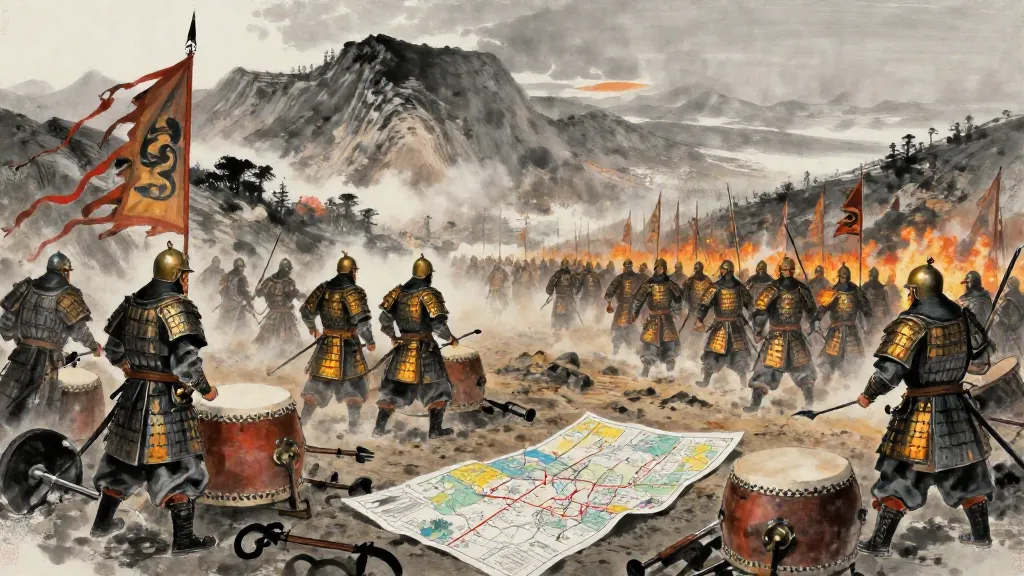
李將軍列傳 (Biography of General Li) — Chinese ink painting

Chapter 109 of 130

李將軍列傳

Biography of General Li

View:

李廣早年

Li Guang's Early Career

李將軍廣者,隴西成紀人也。其先曰李信,秦時為將,逐得燕太子丹者也。故槐里,徙成紀。廣家世世受射。孝文帝十四年,匈奴大入蕭關,而廣以良家子從軍擊胡,用善騎射,殺首虜多,為漢中郎。廣從弟李蔡亦為郎,皆為武騎常侍,秩八百石。嘗從行,有所旻陷折關及格猛獸,而文帝曰:「惜乎,子不遇時!如令子當高帝時,萬戶侯豈足道哉!」

及孝景初立,廣為隴西都尉,徙為騎郎將。吳楚軍時,廣為驍騎都尉,從太尉亞夫擊吳楚軍,取旗,顯功名昌邑下。以梁王授廣將軍印,還,賞不行。徙為上谷太守,匈奴日以合戰。典屬國公孫昆邪為上泣曰:「李廣才氣,天下無雙,自負其能,數與虜敵戰,恐亡之。」於是乃徙為上郡太守。後廣轉為邊郡太守,徙上郡。嘗為隴西、北地、雁門、代郡、雲中太守,皆以力戰為名。

匈奴大入上郡,天子使中貴人從廣勒習兵擊匈奴。中貴人將騎數十縱,見匈奴三人,與戰。三人還射,傷中貴人,殺其騎且盡。中貴人走廣。廣曰:「是必射鵰者也。」廣乃遂從百騎往馳三人。三人亡馬步行,行數十里。廣令其騎張左右翼,而廣身自射彼三人者,殺其二人,生得一人,果匈奴射鵰者也。已縛之上馬,望匈奴有數千騎,見廣,以為誘騎,皆驚,上山陳。廣之百騎皆大恐,欲馳還走。廣曰:「吾去大軍數十里,今如此以百騎走,匈奴追射我立盡。今我留,匈奴必以我為大軍誘,必不敢擊我。」廣令諸騎曰:「前!」前未到匈奴陳二里所,止,令曰:「皆下馬解鞍!」其騎曰:「虜多且近,即有急,柰何?」廣曰:「彼虜以我為走,今皆解鞍以示不走,用堅其意。」於是胡騎遂不敢擊。有白馬將出護其兵,李廣上馬與十餘騎餎射殺胡白馬將,而復還至其騎中,解鞍,令士皆縱馬臥。是時會暮,胡兵終怪之,不敢擊。夜半時,胡兵亦以為漢有伏軍於旁欲夜取之,胡皆引兵而去。平旦,李廣乃歸其大軍。大軍不知廣所之,故弗從。

居久之,孝景崩,武帝立,左右以為廣名將也,於是廣以上郡太守為未央衛尉,而程不識亦為長樂衛尉。程不識故與李廣俱以邊太守將軍屯。及出擊胡,而廣行無部伍行陳,就善水草屯,舍止,人人自便,不擊刀斗以自衛,莫府省約文書籍事,然亦遠斥候,未嘗遇害。程不識正部曲行伍營陳,擊刀斗,士吏治軍簿至明,軍不得休息,然亦未嘗遇害。不識曰:「李廣軍極簡易,然虜卒犯之,無以禁也;而其士卒亦佚樂,鹹樂為之死。我軍雖煩擾,然虜亦不得犯我。」是時漢邊郡李廣、程不識皆為名將,然匈奴畏李廣之略,士卒亦多樂從李廣而苦程不識。程不識孝景時以數直諫為太中大夫。為人廉,謹於文法。

General Li Guang was from Chengji in Longxi. His ancestor Li Xin had been a Qin general who captured the Heir Apparent of Yan. Li Guang's family had practiced archery for generations. In Emperor Wen's fourteenth year, when the Xiongnu broke through Xiao Pass in force, Guang joined the army as the son of a good family and distinguished himself through his riding and archery. Emperor Wen sighed: "What a pity you were not born in the time of the Grand Progenitor — a marquisate of ten thousand households would have been nothing for you!"

Under Emperor Jing, Guang fought at Changyi during the Wu-Chu Rebellion, capturing an enemy standard. But because the King of Liang had given him a general's seal without imperial authorization, he received no reward. He was transferred to frontier command, serving as governor of one border commandery after another, always fighting. When the Xiongnu learned he was stationed at the Right Beiping command, they called him "The Flying General of Han" and avoided his sector for years.

Guang's military style was the opposite of his counterpart Cheng Buzhi's. Where Cheng maintained strict formations and regulations, Guang had no formations, camped near good water and grass, let his soldiers rest freely, and never posted sentries. Both were effective, but the soldiers all preferred serving under Li Guang and found Cheng Buzhi's discipline tiresome.

Notes

1person李廣Lǐ Guǎng

Li Guang (李廣, d. 119 BC) was the most famous tragic hero in Chinese military history. Despite a career spanning over forty years and more than seventy engagements with the Xiongnu, he was never enfeoffed — a fact that became the defining symbol of unrecognized merit.

2context

The epithet 'Flying General' (飛將軍) given by the Xiongnu became one of the most resonant military titles in Chinese culture. The Tang poet Wang Changling wrote: 'But if the Flying General of Dragon City were here, he would not let the Hu horses cross the Yin Mountains.'

李廣之勇與不封

Li Guang's Courage and the Failure to Be Enfeoffed

後漢以馬邑城誘單于,使大軍伏馬邑旁谷,而廣為驍騎將軍,領屬護軍將軍。是時單于覺之,去,漢軍皆無功。其後四歲,廣以衛尉為將軍,出雁門擊匈奴。匈奴兵多,破敗廣軍,生得廣。單于素聞廣賢,令曰:「得李廣必生致之。」胡騎得廣,廣時傷病,置廣兩馬間,絡而盛臥廣。行十餘里,廣詳死,睨其旁有一胡兒騎善馬,廣暫騰而上胡兒馬,因推墮兒,取其弓,鞭馬南馳數十里,復得其餘軍,因引而入塞。匈奴捕者騎數百追之,廣行取胡兒弓,射殺追騎,以故得脫。於是至漢,漢下廣吏。吏當廣所失亡多,為虜所生得,當斬,贖為庶人。

頃之,家居數歲。廣家與故潁陰侯孫屏野居藍田南山中射獵。嘗夜從一騎出,從人田間飲。還至霸陵亭,霸陵尉醉,呵止廣。廣騎曰:「故李將軍。」尉曰:「今將軍尚不得夜行,何乃故也!」止廣宿亭下。居無何,匈奴入殺遼西太守,敗韓將軍,後韓將軍徙右北平。於是天子乃召拜廣為右北平太守。廣即請霸陵尉與俱,至軍而斬之。

廣居右北平,匈奴聞之,號曰「漢之飛將軍」,避之數歲,不敢入右北平。

廣出獵,見草中石,以為虎而射之,中石沒鏃,視之石也。因復更射之,終不能復入石矣。廣所居郡聞有虎,嘗自射之。及居右北平射虎,虎騰傷廣,廣亦竟射殺之。

廣廉,得賞賜輒分其麾下,飲食與士共之。終廣之身,為二千石四十餘年,家無餘財,終不言家產事。廣為人長,猿臂,其善射亦天性也,雖其子孫他人學者,莫能及廣。廣訥口少言,與人居則畫地為軍陳,射闊狹以飲。專以射為戲,竟死。廣之將兵,乏絕之處,見水,士卒不盡飲,廣不近水,士卒不盡食,廣不嘗食。寬緩不苛,士以此愛樂為用。其射,見敵急,非在數十步之內,度不中不發,發即應弦而倒。用此,其將兵數困辱,其射猛獸亦為所傷雲。

居頃之,石建卒,於是上召廣代建為郎中令。元朔六年,廣復為後將軍,從大將軍軍出定襄,擊匈奴。諸將多中首虜率,以功為侯者,而廣軍無功。後二歲,廣以郎中令將四千騎出右北平,博望侯張騫將萬騎與廣俱,異道。行可數百里,匈奴左賢王將四萬騎圍廣,廣軍士皆恐,廣乃使其子敢往馳之。敢獨與數十騎馳,直貫胡騎,出其左右而還,告廣曰:「胡虜易與耳。」軍士乃安。廣為圜陳外鄉,胡急擊之,矢下如雨。漢兵死者過半,漢矢且盡。廣乃令士持滿毋發,而廣身自以大黃射其裨將,殺數人,胡虜益解。會日暮,吏士皆無人色,而廣意氣自如,益治軍。軍中自是服其勇也。明日,復力戰,而博望侯軍亦至,匈奴軍乃解去。漢軍罷,弗能追。是時廣軍幾沒,罷歸。漢法,博望侯留遲後期,當死,贖為庶人。廣軍功自如,無賞。

初,廣之從弟李蔡與廣俱事孝文帝。景帝時,蔡積功勞至二千石。孝武帝時,至代相。以元朔五年為輕車將車,從大將軍擊右賢王,有功中率,封為樂安侯。元狩二年中,代公孫弘為丞相。蔡為人在下中,名聲出廣下甚遠,然廣不得爵邑,官不過九卿,而蔡為列侯,位至三公。諸廣之軍吏及士卒或取封侯。廣嘗與望氣王朔燕語,曰:「自漢擊匈奴而廣未嘗不在其中,而諸部校尉以下,才能不及中人,然以擊胡軍功取侯者數十人,而廣不為後人,然無尺寸之功以得封邑者,何也?豈吾相不當侯邪?且固命也?」朔曰:「將軍自念,豈嘗有所恨乎?」廣曰:「吾嘗為隴西守,羌嘗反,吾誘而降,降者八百餘人,吾詐而同日殺之。至今大恨獨此耳。」朔曰:「禍莫大於殺已降,此乃將軍所以不得侯者也。」

後二歲,大將軍、驃騎將軍大出擊匈奴,廣數自請行。天子以為老,弗許;良久乃許之,以為前將軍。是歲,元狩四年也。

Once, when Guang was leading a hundred riders and encountered several thousand Xiongnu cavalry, his men wanted to flee. Guang said: "We are dozens of li from our main force. If we run, the Xiongnu will chase us down. But if we stay, they will think we are a decoy and not dare attack." He ordered his men to advance toward the enemy, dismount, and unsaddle their horses. The Xiongnu were astonished. A mounted officer rode out to organize their troops; Guang galloped forward with ten riders, shot the officer dead, and returned to his position. He ordered his men to lie down with their horses loose. At nightfall, the Xiongnu, convinced of an ambush, withdrew.

After the Mayi ambush failed, Guang fought as a general in four campaigns. He was captured by the Xiongnu but feigned death, then leaped onto a Xiongnu boy's horse and escaped, shooting pursuers with the boy's bow. He was condemned to death for his losses but redeemed himself to commoner status. Called back to service at Right Beiping, he shot a tiger that mauled him and once shot an arrow completely through a rock he mistook for a tiger in the dark — when he saw it was stone, he could never replicate the shot.

Guang was incorruptible, sharing all rewards with his men. He ate and drank only after every soldier had been served. He never spoke of personal wealth in forty years of service. In battle, he would not shoot until the enemy was within tens of paces — and then every arrow found its mark. This is why, though he sometimes suffered disasters, his soldiers loved him to the death.

His cousin Li Cai, far less talented, became Chancellor and a marquis. Other officers less skilled than Guang won marquisates by the dozen. Guang once asked a fortune-teller why. The fortune-teller asked: "Have you ever done something you deeply regretted?" Guang said: "When I was governor of Longxi, the Qiang people rebelled. I lured 800 to surrender and then massacred them all on the same day. This is my only great regret." The fortune-teller said: "No disaster is greater than killing those who have already surrendered. This is why you were never enfeoffed."

Notes

1context

Li Guang's failure to be enfeoffed despite supreme martial talent became the archetype of unrecognized merit in Chinese culture. The fortune-teller's explanation — that the massacre of surrendered Qiang prisoners created a karmic debt — adds a moral dimension to what might otherwise be mere bad luck.

2translation

The stone-shooting anecdote illustrates the Chinese concept that extraordinary feats occur through spontaneous concentration (yi, 意) rather than deliberate effort. Once Guang knew it was stone, his conscious mind interfered and the feat was impossible.

李廣之死

The Death of Li Guang

廣既從大將軍青擊匈奴,既出塞,青捕虜知單于所居,乃自以精兵走之,而令廣並於右將軍軍,出東道。東道少回遠,而大軍行水草少,其勢不屯行。廣自請曰:「臣部為前將軍,今大將軍乃徙令臣出東道,且臣結髮而與匈奴戰,今乃一得當單于,臣原居前,先死單于。」大將軍青亦陰受上誡,以為李廣老,數奇,毋令當單于,恐不得所欲。而是時公孫敖新失侯,為中將軍從大將軍,大將軍亦欲使敖與俱當單于,故徙前將軍廣。廣時知之,固自辭於大將軍。大將軍不聽,令長史封書與廣之莫府,曰:「急詣部,如書。」廣不謝大將軍而起行,意甚慍怒而就部,引兵與右將軍食其合軍出東道。軍亡導,或失道,後大將軍。大將軍與單于接戰,單于遁走,弗能得而還。南絕幕,遇前將軍、右將軍。廣已見大將軍,還入軍。大將軍使長史持醪遺廣,因問廣、食其失道狀,青欲上書報天子軍曲折。廣未對,大將軍使長史急責廣之幕府對簿。廣曰:「諸校尉無罪,乃我自失道。吾今自上簿。」

至莫府,廣謂其麾下曰:「廣結髮與匈奴大小七十餘戰,今幸從大將軍出接單于兵,而大將軍又徙廣部行回遠,而又迷失道,豈非天哉!且廣年六十餘矣,終不能復對刀筆之吏。」遂引刀自剄。廣軍士大夫一軍皆哭。百姓聞之,知與不知,無老壯皆為垂涕。而右將軍獨下吏,當死,贖為庶人。

廣子三人,曰當戶、椒、敢,為郎。天子與韓嫣戲,嫣少不遜,當戶擊嫣,嫣走。於是天子以為勇。當戶早死,拜椒為代郡太守,皆先廣死。當戶有遺腹子名陵。廣死軍時,敢從驃騎將軍。廣死明年,李蔡以丞相坐侵孝景園壖地,當下吏治,蔡亦自殺,不對獄,國除。李敢以校尉從驃騎將軍擊胡左賢王,力戰,奪左賢王鼓旗,斬首多,賜爵關內侯,食邑二百戶,代廣為郎中令。頃之,怨大將軍青之恨其父,乃擊傷大將軍,大將軍匿諱之。居無何,敢從上雍,至甘泉宮獵。驃騎將軍去病與青有親,射殺敢。去病時方貴幸,上諱雲鹿觸殺之。居歲餘,去病死。而敢有女為太子中人,愛幸,敢男禹有寵於太子,然好利,李氏陵遲衰微矣。

李陵既壯,選為建章監,監諸騎。善射,愛士卒。天子以為李氏世將,而使將八百騎。嘗深入匈奴二千餘里,過居延視地形,無所見虜而還。拜為騎都尉,將丹陽楚人五千人,教射酒泉、張掖以屯衛胡。

數歲,天漢二年秋,貳師將軍李廣利將三萬騎擊匈奴右賢王於祁連天山,而使陵將其射士步兵五千人出居延北可千餘里,欲以分匈奴兵,毋令專走貳師也。陵既至期還,而單于以兵八萬圍擊陵軍。陵軍五千人,兵矢既盡,士死者過半,而所殺傷匈奴亦萬餘人。且引且戰,連斗八日,還未到居延百餘里,匈奴遮狹絕道,陵食乏而救兵不到,虜急擊招降陵。陵曰:「無面目報陛下。」遂降匈奴。其兵盡沒,餘亡散得歸漢者四百餘人。

單于既得陵,素聞其家聲,及戰又壯,乃以其女妻陵而貴之。漢聞,族陵母妻子。自是之後,李氏名敗,而隴西之士居門下者皆用為恥焉。

In the fourth year of Yuanshou (119 BC), the great northern expedition was launched. Guang, now over sixty, repeatedly begged to participate. The emperor thought him too old but finally relented and appointed him Vanguard General. However, the General-in-Chief Wei Qing had secretly received the emperor's instruction not to let Li Guang face the Shanyu directly, fearing his bad luck would ruin the encounter. Wei Qing also wanted to give his friend Gongsun Ao the chance to win merit against the Shanyu. So he reassigned Guang to the eastern route — a longer, waterless detour.

Guang protested: "I have fought the Xiongnu since I was young. Now at last I have the chance to face the Shanyu directly. Let me be in the vanguard and die before the Shanyu's tent." Wei Qing refused. Guang departed in fury without even taking leave. The eastern route had no guides; his army lost its way and arrived late. Wei Qing sent a clerk to interrogate Guang about the delay.

Guang said to his officers: "Since I first took up arms against the Xiongnu, I have fought over seventy engagements. Now I had the fortune to march with the General-in-Chief against the Shanyu himself, but he transferred me to a roundabout route where I lost my way. Is this not Heaven's will? Moreover, I am over sixty. I cannot bear to face the petty clerks and their interrogations." He drew his sword and cut his own throat. Every officer and soldier in his army wept. When the common people heard — those who knew him and those who did not, old and young alike — all shed tears.

Notes

1context

Li Guang's suicide is one of the most emotionally charged passages in the Shiji. Sima Qian's personal sympathy is evident — he had met Li Guang and admired him. The phrase 'those who knew him and those who did not' (知與不知) became a famous expression of universal mourning.

2person衛青Wèi Qīng

Wei Qing (衛青) emerges somewhat negatively here — his decision to reassign Li Guang appears motivated partly by favoritism toward Gongsun Ao. The emperor's secret instruction not to let Li Guang face the Shanyu adds institutional cruelty to personal slight.

李氏後人與太史公論贊

Li Guang's Descendants and the Grand Historian's Appraisal

太史公曰:傳曰「其身正,不令而行;其身不正,雖令不從」。其李將軍之謂也?余睹李將軍悛悛如鄙人,口不能道辭。及死之日,天下知與不知,皆為盡哀。彼其忠實心誠信於士大夫也?諺曰「桃李不言,下自成蹊」。此言雖小,可以諭大也。

猿臂善射,實負其能。解鞍卻敵,圓陣摧鋒。邊郡屢守,大軍再從。失道見斥,數奇不封。惜哉名將,天下無雙!

Li Guang had three sons. His son Li Gan served under Huo Qubing and was enfeoffed as Marquis within the Passes for his bravery against the Xiongnu Left Worthy King. Soon after, Li Gan attacked Wei Qing to avenge his father's humiliation. Wei Qing concealed the matter, but Huo Qubing later shot and killed Li Gan during an imperial hunt. The emperor covered it up, saying a deer had struck him.

Li Guang's grandson Li Ling was selected as a commander and given 5,000 infantry archers. Marching deep into Xiongnu territory, he was surrounded by 80,000 Xiongnu cavalry. After eight days of fighting retreat, with over half his men dead and their arrows exhausted, Li Ling surrendered. The Shanyu, knowing his family reputation, gave him his daughter in marriage. The Han emperor had Li Ling's entire family executed. From that point, the Li family name was ruined, and the men of Longxi who had served under Li Guang considered it a disgrace.

The Grand Historian remarks: The tradition says, "When the man himself is upright, things get done without orders; when he is not upright, orders are given but not followed." Was this not said of General Li? I saw him in person — he was as honest and plain as a farmer, barely able to string words together. Yet on the day of his death, all under Heaven, those who knew him and those who did not, all grieved for him. His loyalty and sincerity truly won the trust of officers and soldiers. The proverb says: "The peach and plum trees do not speak, yet a path forms beneath them." These words may be humble, but they can illustrate something great.

Notes

1person李陵Lǐ Líng

Li Ling (李陵, d. 74 BC) was Li Guang's grandson whose surrender to the Xiongnu in 99 BC led to the extermination of his family. Sima Qian's defense of Li Ling before the emperor resulted in Sima Qian's own castration — one of the most consequential acts of historical advocacy in Chinese history.

2translation

The proverb 'peach and plum trees do not speak, yet a path forms beneath them' (桃李不言,下自成蹊) is Sima Qian's epitaph for Li Guang: a man of deeds, not words, whose character attracted people naturally. It became one of the most quoted lines from the Shiji.

Edition & Source

Text
《史記》 Shiji
Edition
中華古詩文古書籍網 transcription
Commentary
裴駰《史記集解》、司馬貞《史記索隱》、張守節《史記正義》(Three Commentaries)