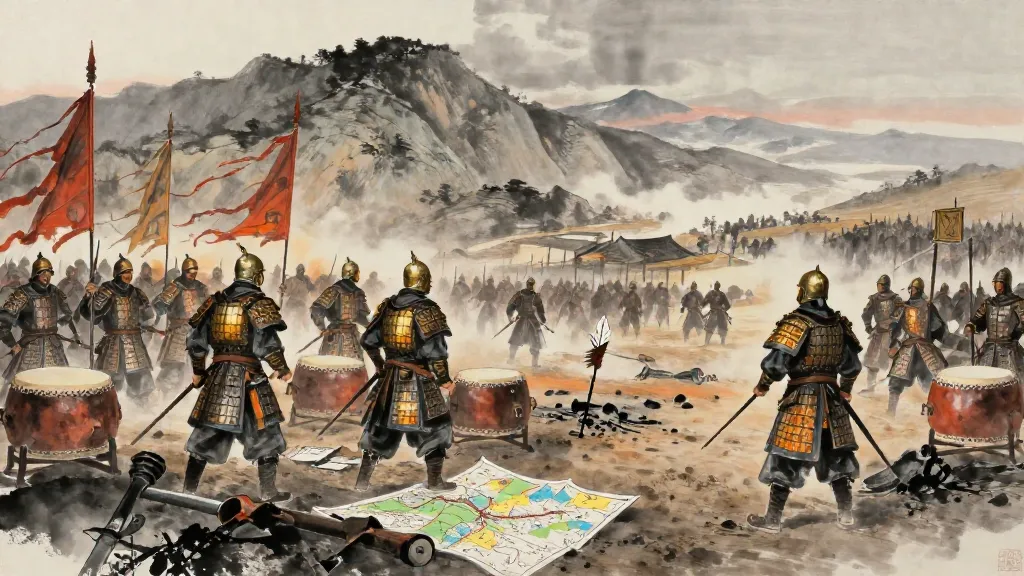
朝鮮列傳 (Account of Joseon) — Chinese ink painting

Chapter 115 of 130

朝鮮列傳

Account of Joseon

View:

衛滿建國與右渠的抵抗

Wiman's Kingdom and Ugeo's Resistance

朝鮮王滿者,故燕人也。自始全燕時嘗略屬真番、朝鮮,為置吏,築鄣塞。秦滅燕,屬遼東外徼。漢興,為其遠難守,復修遼東故塞,至浿水為界,屬燕。燕王盧綰反,入匈奴,滿亡命,聚黨千餘人,魋結蠻夷服而東走出塞,渡浿水,居秦故空地上下鄣,稍役屬真番、朝鮮蠻夷及故燕、齊亡命者王之,都王險。

會孝惠、高后時天下初定,遼東太守即約滿為外臣,保塞外蠻夷,無使盜邊;諸蠻夷君長欲入見天子,勿得禁止。以聞,上許之,以故滿得兵威財物侵降其旁小邑,真番、臨屯皆來服屬,方數千里。

傳子至孫右渠,所誘漢亡人滋多,又未嘗入見;真番旁眾國欲上書見天子,又擁閼不通。元封二年,漢使涉何譙諭右渠,終不肯奉詔。何去至界上,臨浿水,使御刺殺送何者朝鮮裨王長,即渡,馳入塞,遂歸報天子曰「殺朝鮮將」。上為其名美,即不詰,拜何為遼東東部都尉。朝鮮怨何,發兵襲攻殺何。

天子募罪人擊朝鮮。其秋,遣樓船將軍楊僕從齊浮渤海;兵五萬人,左將軍荀彘出遼東:討右渠。右渠發兵距險。左將軍卒正多率遼東兵先縱,敗散,多還走,坐法斬。樓船將軍將齊兵七千人先至王險。右渠城守,窺知樓船軍少,即出城擊樓船,樓船軍敗散走。將軍楊仆失其眾,遁山中十餘日,稍求收散卒,復聚。左將軍擊朝鮮浿水西軍,未能破自前。

天子為兩將未有利,乃使衛山因兵威往諭右渠。右渠見使者頓首謝:「願降,恐兩將詐殺臣;今見信節,請服降。」遣太子入謝,獻馬五千匹,及饋軍糧。人眾萬餘,持兵,方渡浿水,使者及左將軍疑其為變,謂太子已服降,宜命人毋持兵。太子亦疑使者左將軍詐殺之,遂不渡浿水,復引歸。山還報天子,天子誅山。

左將軍破浿水上軍,乃前,至城下,圍其西北。樓船亦往會,居城南。右渠遂堅守城,數月未能下。

King Man of Joseon was originally from Yan. In the time when Yan still controlled the region, it had annexed Zhenfan and Joseon, establishing garrisons. After Qin destroyed Yan, the area fell under the Liaodong outer frontier. When the Han arose, finding it too remote to defend, they restored the old Yan frontier at the Pae River. When the King of Yan, Lu Wan, rebelled and fled to the Xiongnu, Man gathered over a thousand followers, adopted the knotted-hair style and barbarian dress, crossed the Pae River, and settled in the old Qin buffer zone. He gradually subjugated the Zhenfan and Joseon peoples and Chinese refugees, proclaiming himself king at Wangxian (Royal險).

The Han recognized Man as an outer vassal tasked with protecting the frontier and allowing tribal leaders to visit the Han court. Man's grandson Ugeo refused to fulfill these obligations, blocked border peoples from contacting the Han, and attracted growing numbers of Chinese defectors. In 109 BC, a Han envoy named She He was sent to remonstrate with Ugeo but failed. On his return, She He had his driver assassinate the Joseon escort officer at the Pae River crossing, then reported to the emperor that he had killed a Joseon general. The emperor, impressed by the claim, appointed She He as a commandery official. Joseon retaliated by killing She He.

Notes

1person衛滿Wèi Mǎn

Wiman (衛滿, Korean: Wiman) was a Yan exile who founded the Wiman Joseon kingdom (c. 194–108 BC) in the northern Korean peninsula. His dynasty lasted three generations before Han conquest.

2place

Wangxian (王險, Korean: Wanggom) was the capital of Wiman Joseon, generally identified with the area of modern Pyongyang, North Korea.

漢征朝鮮

The Han Conquest of Joseon

左將軍素侍中,幸,將燕代卒,悍,乘勝,軍多驕。樓船將齊卒,入海,固已多敗亡;其先與右渠戰,因辱亡卒,卒皆恐,將心慚,其圍右渠,常持和節。左將軍急擊之,朝鮮大臣乃陰間使人私約降樓船,往來言,尚未肯決。左將軍數與樓船期戰,樓船欲急就其約,不會;左將軍亦使人求間郤降下朝鮮,朝鮮不肯,心附樓船:以故兩將不相能。左將軍心意樓船前有失軍罪,今與朝鮮私善而又不降,疑其有反計,未敢發。天子曰將率不能,前使衛山諭降右渠,右渠遣太子,山使不能剸決,與左將軍計相誤,卒沮約。今兩將圍城,又乖異,以故久不決。使濟南太守公孫遂往之,有便宜得以從事。遂至,左將軍曰:「朝鮮當下久矣,不下者有狀。」言樓船數期不會,具以素所意告遂,曰:「今如此不取,恐為大害,非獨樓船,又且與朝鮮共滅吾軍。」遂亦以為然,而以節召樓船將軍入左將軍營計事,即命左將軍麾下執捕樓船將軍,並其軍,以報天子。天子誅遂。

左將軍已並兩軍,即急擊朝鮮。朝鮮相路人、相韓陰、尼谿相參、將軍王夾相與謀曰:「始欲降樓船,樓船今執,獨左將軍並將,戰益急,恐不能與,王又不肯降。」陰、唊、路人皆亡降漢。路人道死。元封三年夏,尼谿相參乃使人殺朝鮮王右渠來降。王險城未下,故右渠之大臣成巳又反,復攻吏。左將軍使右渠子長降、相路人之子最告諭其民,誅成巳,以故遂定朝鮮,為四郡。封參為澅清侯,陰為荻苴侯,唊為平州侯,長為幾侯。最以父死頗有功,為溫陽侯。

左將軍徵至,坐爭功相嫉,乖計,棄市。樓船將軍亦坐兵至洌口,當待左將軍,擅先縱,失亡多,當誅,贖為庶人。

太史公曰:右渠負固,國以絕祀。涉何誣功,為兵發首。樓船將狹,及難離咎。悔失番禺,乃反見疑。荀彘爭勞,與遂皆誅。兩軍俱辱,將率莫侯矣。

衛滿燕人,朝鮮是王。王險置都,路人作相。右渠首差,涉何上。兆禍自斯,狐疑二將。山、遂伏法,紛紜無狀。

The emperor sent two armies: the Towered Ship General Yang Pu by sea from Qi, and the Left General Xun Zhi overland from Liaodong, each with 50,000 men. The overland forces suffered early defeats. Yang Pu's 7,000 naval troops reached Wangxian first but were routed when Ugeo's forces sortied. Yang Pu fled to the mountains for over ten days before regathering his men.

A negotiator named Wei Shan was sent to parley. Ugeo agreed to surrender and sent his heir with 5,000 horses, but mutual suspicion caused the heir to turn back at the river crossing. The emperor had Wei Shan executed for bungling the negotiation.

The Left General broke through to besiege Wangxian from the northwest while the Towered Ship General invested the south. The two commanders quarreled bitterly — the Left General suspected the Towered Ship General of secretly negotiating a separate peace with the enemy. An imperial commissioner, Gongsun Sui, arrived to sort out the dispute, sided with the Left General, and had the Towered Ship General arrested. Gongsun Sui was later executed for this unauthorized action.

The Left General, now commanding both armies, pressed the siege. Joseon's own ministers assassinated King Ugeo and surrendered. The capital was taken in the summer of 108 BC, and four Han commanderies were established. Most of the surrendering Joseon nobles were enfeoffed as marquises. Both Han generals were punished: the Left General for insubordination and the Towered Ship General for his earlier defeats.

The Grand Historian remarks: Ugeo relied on his fortifications and his kingdom perished. She He fabricated military exploits and ignited the war. The Towered Ship General's narrow perspective brought him grief. The Left General fought for credit, and both generals were punished. Of all the commanders, none received a marquisate.

Notes

1context

The Han conquest of Joseon in 108 BC established four commanderies (Lelang, Zhenfan, Lintun, Xuantu) that extended Chinese administration into the Korean peninsula for over four centuries. Lelang (樂浪) near modern Pyongyang became a major center of Chinese culture in the region.

2translation

Sima Qian's account of the Joseon campaign emphasizes the incompetence and rivalry of the Han commanders rather than celebrating conquest. The chapter serves as a study in how inter-commander rivalry can undermine even successful military operations.

Edition & Source

Text
《史記》 Shiji
Edition
中華古詩文古書籍網 transcription
Commentary
裴駰《史記集解》、司馬貞《史記索隱》、張守節《史記正義》(Three Commentaries)