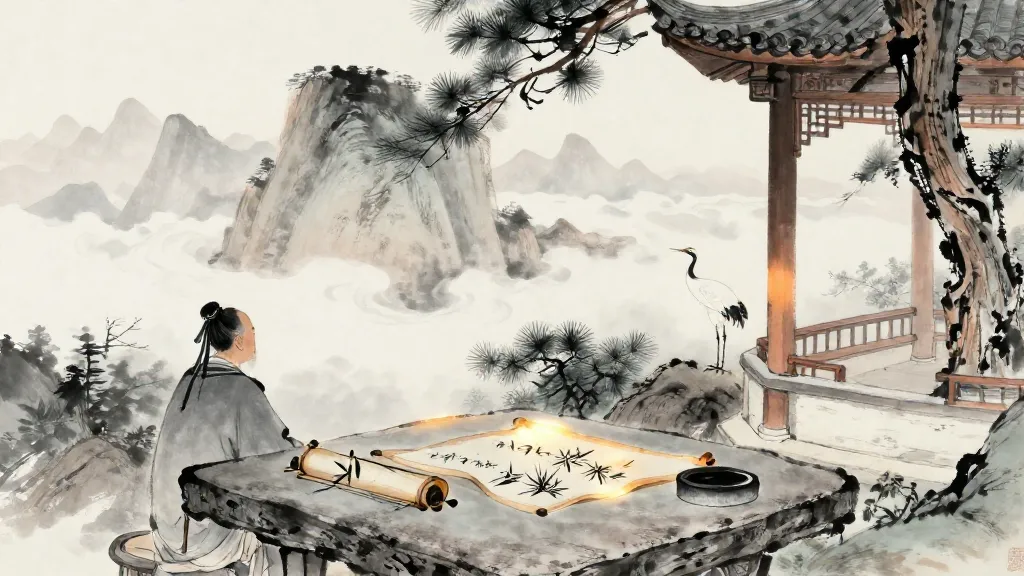
司馬相如列傳(下) (Biography of Sima Xiangru (Part 2)) — Chinese ink painting

Chapter 117 of 130

司馬相如列傳(下)

Biography of Sima Xiangru (Part 2)

View:

大人賦

The Rhapsody of the Great Man

相如拜為孝文園令。天子既美子虛之事,相如見上好仙道,因曰:“上林之事未足美也,尚有靡者。臣嘗為大人賦,未就,請具而奏之。”相如以為列仙之傳居山澤間,形容甚癸,此非帝王之仙意也,乃遂就大人賦。其辭曰:

世有大人全,在於中州。宅彌萬里兆,曾不足以少留。…必長生若此而不死兆,雖濟萬世不足以喜。

相如既奏大人之頡,天子大説,飄飄有凌雲之氣,似游天地之間意。

Xiangru was appointed Superintendent of the Park of Emperor Wen. The Emperor had already admired the Zixu rhapsody. Xiangru, seeing that the Emperor was interested in the way of immortals, said: “The Shanglin composition does not quite reach the mark — there is something even more splendid. I once began a Rhapsody of the Great Man but did not finish it. Allow me to complete and present it.” Xiangru reflected that the traditions of the immortals placed them in mountains and marshes, gaunt and wasted in appearance — this was not the kind of immortality befitting an emperor. He therefore composed the Rhapsody of the Great Man. Its text read:

“In the world there is a Great Man, dwelling in the Central Land. His dwelling spans ten thousand li, yet this is not enough for the briefest sojourn. ... Even if one were to live forever like this without dying, though ten thousand generations passed, it would not be cause for joy.”

When Xiangru presented the Rhapsody of the Great Man, the Emperor was greatly pleased and felt as though he were borne aloft on clouds, as though wandering between Heaven and Earth.

Notes

1context

The Daren fu (大人賦, Rhapsody of the Great Man) describes an imperial journey through the cosmos, visiting celestial realms. It deliberately redefines ‘immortality’ away from the hermit tradition toward an imperial, cosmic vision. The Emperor’s ecstatic response suggests that Xiangru had found the perfect vehicle for flattery disguised as philosophy.

2context

Emperor Wu’s well-documented interest in immortality and Daoist magic (方士) was a defining obsession of his reign. Xiangru’s fu simultaneously indulged and subtly critiqued this interest.

相如之死與封禪書

Xiangru's Death and the Essay on the Feng and Shan Sacrifices

相如既病免,家居茂陵。天子曰:“司馬相如病甚,可往從悉取其書;若不然,後失之矣。”使所忠往,而相如已死,家無書。問其妻,對曰:“長卿固未嘗有書也。時時著書,人又取去,即空居。長卿未死時,為一卷書,曰有使者來求書,奏之。無他書。”其遺札書言封禪事,奏所忠。忠奏其書,天子異之。

Xiangru retired from office due to illness and lived at home in Maoling. The Emperor said: “Sima Xiangru is gravely ill. Send someone to collect all his writings, lest they be lost after his death.” He dispatched the official Suo Zhong to go. But Xiangru had already died, and there were no writings in his home. His wife was asked, and she replied: “Changqing never actually kept a library. He would write from time to time, but people would take the manuscripts away, and the shelves would be empty. Before he died, he wrote one scroll and said that if a messenger came asking for his writings, this should be presented. There are no other manuscripts.” The scroll contained an essay on the Feng and Shan sacrifices. It was presented to Suo Zhong, who submitted it to the Emperor. The Emperor was greatly struck by it.

Notes

1context

The Feng and Shan (封禪) sacrifices were the most solemn imperial rituals, performed atop Mount Tai to announce a dynasty’s legitimacy to Heaven. Xiangru’s deathbed essay urging the Emperor to perform them was his final literary act. Emperor Wu would indeed carry out the Feng and Shan in 110 BC.

2place

Maoling (茂陵) was a settlement near Emperor Wu’s future tomb, northwest of modern Xingping, Shaanxi. Many officials were relocated there.

太史公曰

The Grand Historian's Judgment

太史公曰:春秋推見至隱,易本隱之以顯,大雅言王公大人而德逮黎庶,小雅譏小己之得失,其流及上。所以言雖外殊,其合德一也。相如雖多虛辭濫說,然其要歸引之節儉,此與詩之風諊何異。楊雄以為靡麗之賦,勸百風一,猶馳騁鄭衛之聲,曲終而奏雅,不已虧乎?余采其語可論者著於篇。

The Grand Historian remarks: The Spring and Autumn Annals proceeds from the visible to the hidden; the Changes begins from the hidden and makes it manifest. The Greater Odes address kings and great men while their virtue reaches down to the common people; the Lesser Odes criticize the small self’s gains and losses, and their influence extends upward. Though the forms of expression are outwardly different, their moral convergence is one. Xiangru may be full of empty rhetoric and extravagant language, but in essence his works lead back to frugality — how does this differ from the remonstrance tradition of the Odes? Yang Xiong thought that ornate rhapsodies ‘encourage a hundred and warn against one’ — like letting the licentious music of Zheng and Wei play on until the piece finally turns to the classical airs at the very end. Is this not a flaw? I have selected from his writings those passages that merit discussion and recorded them here.

Notes

1person楊雄Yáng Xióng

Yang Xiong (楊雄, 53 BC–AD 18) was a later Han literary critic and philosopher who famously criticized the fu genre for being too seductive in its extravagance, undermining its own moral purpose.

2context

Sima Qian’s defense of Xiangru’s literary method — that extravagant description serves moral remonstrance — is a cornerstone of Chinese literary theory. The tension between aesthetic pleasure and moral purpose runs through all subsequent Chinese criticism of the fu genre.

Edition & Source

Text
《史記》 Shiji
Edition
中華古詩文古書籍網 transcription
Commentary
裴駰《史記集解》、司馬貞《史記索隱》、張守節《史記正義》(Three Commentaries)