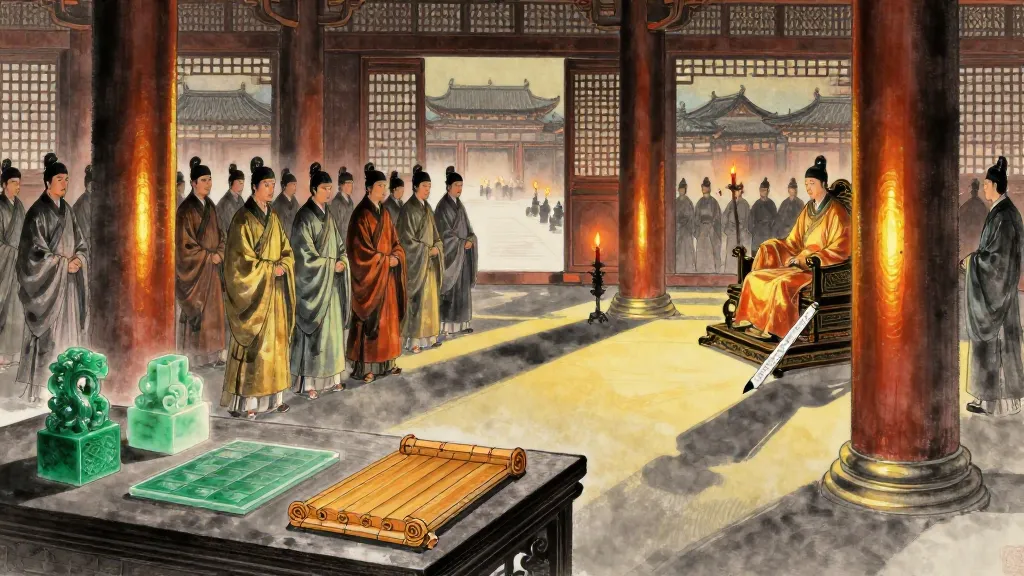
遊俠列傳 (Biographies of Knight-Errants) — Chinese ink painting

Chapter 124 of 130

遊俠列傳

Biographies of Knight-Errants

View:

遊俠總論

On Knight-Errants

韓子曰:「儒以文亂法,而俠以武犯禁。」二者皆譏,而學士多稱於世雲。至如以術取宰相卿大夫,輔翼其世主,功名俱著於春秋,固無可言者。及若季次、原憲,閭巷人也,讀書懷獨行君子之德,義不苟合當世,當世亦笑之。故季次、原憲終身空室蓬戶,褐衣疏食不厭。死而已四百餘年,而弟子志之不倦。今遊俠,其行雖不軌於正義,然其言必信,其行必果,已諾必誠,不愛其軀,赴士之戹困,既已存亡死生矣,而不矜其能,羞伐其德,蓋亦有足多者焉。

Han Feizi said: 'Scholars use their writings to undermine the law; knight-errants use force to transgress prohibitions.' Both are censured, yet scholars have praised them throughout the ages. As for those who rose to chancellor or minister through political skill, supporting their sovereign with lasting fame and achievement recorded in the annals — there is nothing to add. Then there are men like Ji Ci and Yuan Xian, commoners of the back alleys, who studied books and cherished the independent virtue of the solitary gentleman, disdaining to compromise with their times — and their times laughed at them. Thus Ji Ci and Yuan Xian lived their whole lives in empty rooms with thatched doors, clad in rough cloth, eating coarse food without complaint. They have been dead for over four hundred years, yet their disciples commemorate them tirelessly. Now the knight-errants: though their conduct does not conform to orthodox righteousness, their word is always kept, their actions are always decisive, their promises are always fulfilled. They do not spare their own lives, rushing to the aid of those in distress. Having already decided matters of life and death, they do not boast of their abilities or take pride in their virtue. There is indeed much to admire in them.

Notes

1context

Sima Qian's defense of the knight-errants (遊俠) was both personal and philosophical. Having himself been abandoned by his peers after his judicial ordeal, he deeply valued the knight-errant code of keeping promises and standing by those in trouble regardless of personal cost. The term 俠 here denotes vigilante justice operators who maintained personal networks of loyalty outside official channels.

朱家與劇孟

Zhu Jia and Ju Meng

魯朱家者,與高祖同時。魯人皆以儒教,而朱家用俠聞。所藏活豪士以百數,其餘庸人不可勝言。然終不伐其能,歆其德,諸所嘗施,唯恐見之。振人不贍,先從貧賤始。家無餘財,衣不完采,食不重味,乘不過軥牛。專趨人之急,甚己之私。既陰脫季布將軍之戹,及布尊貴,終身不見也。自關以東,莫不延頸原交焉。

楚田仲以俠聞,喜劍,父事朱家,自以為行弗及。田仲已死,而雒陽有劇孟。周人以商賈為資,而劇孟以任俠顯諸侯。吳楚反時,條侯為太尉,乘傳車將至河南,得劇孟,喜曰:「吳楚舉大事而不求孟,吾知其無能為已矣。」天下騷動,宰相得之若得一敵國雲。

Zhu Jia of Lu was a contemporary of Emperor Gaozu. The people of Lu were all devoted to Confucian teaching, yet Zhu Jia was famous as a knight-errant. The number of powerful men he sheltered and saved reached into the hundreds; the ordinary people he helped were beyond counting. Yet he never boasted of his abilities or took pride in his virtue; among all those he had helped, he dreaded being recognized. When he aided the destitute, he began with the poorest and lowest. His household had no surplus wealth; his clothes were not properly dyed; his food was plain; he rode nothing better than a yoked ox-cart. He devoted himself wholly to others' emergencies, prioritizing them over his own needs. After he secretly rescued General Ji Bu from danger, and Ji Bu later rose to high rank, Zhu Jia never saw him again for the rest of his life. East of the passes, everyone craned their necks in hope of forming a connection with him.

Tian Zhong of Chu was known as a knight-errant and loved swordsmanship. He served Zhu Jia as a disciple would a father, considering his own conduct inferior. After Tian Zhong died, Luoyang had Ju Meng. The people of Zhou normally relied on trade and commerce, but Ju Meng made his name among the feudal lords through personal loyalty. When Wu and Chu rebelled, the Marquis of Tiao, serving as Grand Commandant, was traveling by relay carriage toward Henan when he encountered Ju Meng. He exclaimed with delight: 'Wu and Chu have raised their great enterprise without recruiting Meng — I know they cannot succeed!' The realm was in turmoil, yet the chancellor considered gaining Ju Meng as valuable as gaining an enemy state.

Notes

1person朱家Zhū Jiā

Zhu Jia (朱家) is presented as the ideal knight-errant: selfless, self-effacing, and principled. His most famous deed was secretly rescuing Ji Bu (季布), a former Chu general with a price on his head, by smuggling him to safety. His refusal to accept gratitude or maintain contact afterward embodies the knight-errant code of disinterested service.

2person劇孟Jù Mèng

Ju Meng (劇孟) of Luoyang was the most politically significant knight-errant of the early Han. That the Grand Commandant Zhou Yafu valued his allegiance during the Rebellion of the Seven Kingdoms (154 BC) illustrates how these unofficial power brokers wielded influence rivaling feudal lords.

郭解

Guo Jie

郭解,軹人也,字翁伯,善相人者許負外孫也。解父以任俠,孝文時誅死。解為人短小精悍,不飲酒。少時陰賊,慨不快意,身所殺甚眾。以軀借交報仇,藏命作奸剽攻,休鑄錢掘冢,固不可勝數。適有天幸,窘急常得脫,若遇赦。及解年長,更折節為儉,以德報怨,厚施而薄望。然其自喜為俠益甚。既已振人之命,不矜其功,其陰賊著於心,卒發於睚眥如故云。

Guo Jie was a man of Zhi, styled Wengbo. He was the maternal grandson of the famous physiognomist Xu Fu. Guo Jie's father had been a knight-errant and was executed under Emperor Wen. Guo Jie was short, lean, and fierce, and did not drink wine. In his youth he was a covert killer: whenever his feelings were crossed, he personally slew many men. He lent his body to avenge his associates' grudges, harbored fugitives, committed robbery and assault, and in his spare time counterfeited coins and robbed graves — the offenses were beyond counting. By sheer good fortune, he always escaped when cornered, as if meeting with amnesties. As Guo Jie grew older, he changed his ways and became frugal, repaying hostility with kindness, giving generously while expecting nothing in return. Yet his delight in playing the knight-errant only intensified. Though he had saved many lives and never boasted of it, the violent streak rooted in his heart would still erupt over the slightest provocation, as before.

Notes

1person郭解Guō Jiě

Guo Jie (郭解, d. c. 124 BC) is the central figure of this chapter and one of the most complex characters in the Shiji. A former killer who reformed into a magnanimous local power broker, he was ultimately destroyed by the state: when his followers killed a Confucian scholar who criticized him, the Imperial Secretary Gongsun Hong argued that Guo Jie's influence over common people constituted treason, and his entire clan was exterminated.

太史公贊

The Grand Historian's Assessment

太史公曰:吾視郭解,狀貌不及中人,言語不足采者。然天下無賢與不肖,知與不知,皆慕其聲,言俠者皆引以為名。諺曰:「人貌榮名,豈有既乎!」於戲,惜哉!

The Grand Historian says: I observed Guo Jie — his appearance was below average, and his speech was unremarkable. Yet throughout the realm, whether worthy or unworthy, whether they knew him or not, all admired his reputation. Whenever people spoke of knight-errants, they cited him by name. A proverb says: 'Can a man's reputation ever match his appearance? Is there any end to it!' Alas, what a pity!

Notes

1context

Sima Qian's personal observation of Guo Jie is one of the rare instances in the Shiji where the historian describes meeting a subject. His lament is directed at the state's destruction of a man whose only real crime was commanding more loyalty from the common people than the government itself could.

Edition & Source

Text
《史記》 Shiji
Edition
中華古詩文古書籍網 transcription
Commentary
裴駰《史記集解》、司馬貞《史記索隱》、張守節《史記正義》(Three Commentaries)