律與兵之本源
The Pitch-pipes and the Origins of Warfare
王者制事立法,物度軌則,壹稟於六律,六律為萬事根本焉。
其於兵械尤所重,故云「望敵知吉凶,聞聲效勝負」,百王不易之道也。
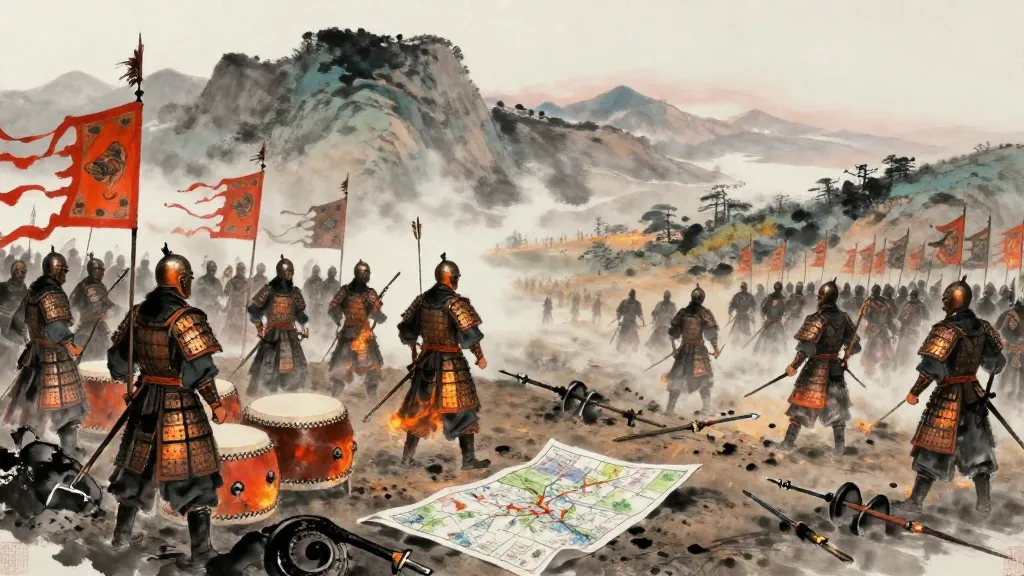
武王伐紂,吹律聽聲,推孟春以至於季冬,殺氣相併,而音尚宮。同聲相從,物之自然,何足怪哉?
兵者,聖人所以討彊暴,平亂世,夷險阻,救危殆。自含戴角之獸見犯則校,而況於人懷好惡喜怒之氣?喜則愛心生,怒則毒螫加,情性之理也。
When a king creates institutions, establishes laws, and sets the measures and standards for all things, everything derives from the six pitch-pipes. The six pitch-pipes are the root of the myriad affairs.
This is especially true for military equipment and operations. The saying goes: 'Observe the enemy and know fortune or misfortune; listen to the sounds and judge victory or defeat.' This is the Way that a hundred kings have never altered.
When King Wu attacked King Zhou of Shang, he blew the pitch-pipes and listened to their sound, tracing the cycle from the first month of spring through the last month of winter. The killing energies converged, and the dominant tone was gong. Like sounds follow like — this is simply the nature of things. What is there to wonder at?
Warfare is what the sage uses to punish the violent, pacify a disordered age, level the steep and dangerous, and rescue the imperiled. Even animals with teeth and horns will fight back when attacked — how much more so human beings, who carry within them the energies of like and dislike, joy and anger? Joy gives birth to love; anger brings the sting of venom. This is the principle of human feeling and nature.
Notes
The six pitch-pipes (六律) are the six yang pitches of the twelve-pitch chromatic system: Huangzhong, Taicu, Guxian, Ruibin, Yize, and Wuyi. Together with the six yin pitches (六呂), they formed the foundation of Chinese musical theory, calendrical calculation, and cosmological measurement.
The connection between pitch-pipes and warfare reflects the ancient Chinese belief that cosmic forces (qi/energy) manifest in both sound and military affairs. Commanders were said to blow pitch-pipes before battle to assess the prevailing energetic conditions.