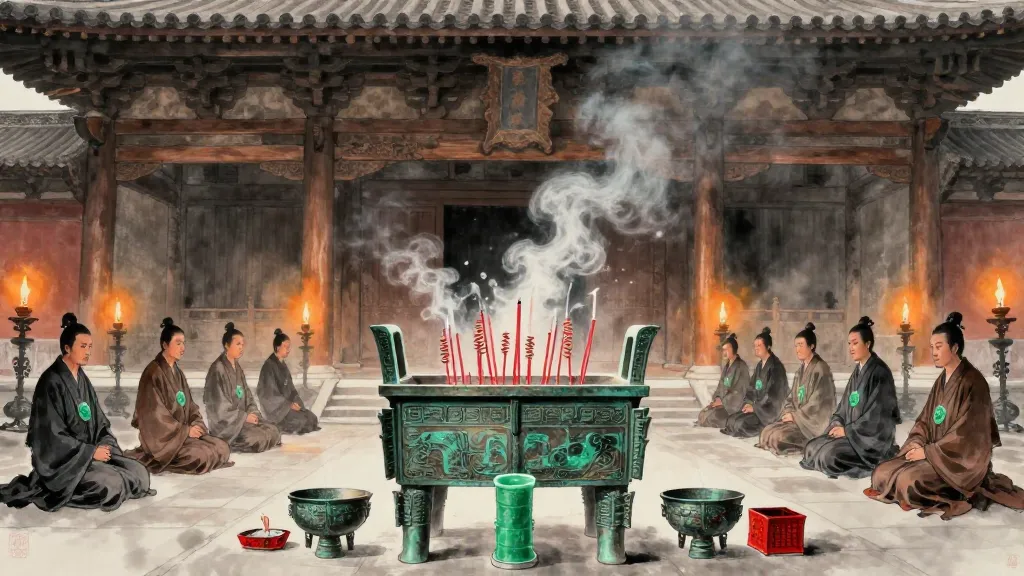
衛康叔世家 (Hereditary House of Wei — Kang Shu) — Chinese ink painting

Chapter 37 of 130

衛康叔世家

Hereditary House of Wei — Kang Shu

View:

康叔封衛與周公之誡

Kang Shu Is Enfeoffed at Wei and the Duke of Zhou's Admonitions

衛康叔名封,周武王同母少弟也。其次尚有厓季,厓季最少。

武王已克殷紂,復以殷餘民封紂子武庚祿父,比諸侯,以奉其先祀勿絕。為武庚未集,恐其有賊心,武王乃令其弟管叔、蔡叔傅相武庚祿父,以和其民。武王既崩,成王少。周公旦代成王治,當國。管叔、蔡叔疑周公,乃與武庚祿父作亂,欲攻成周。周公旦以成王命興師伐殷,殺武庚祿父、管叔,放蔡叔,以武庚殷餘民封康叔為衛君,居河、淇間故商墟。

周公旦懼康叔齒少,乃申告康叔曰:"必求殷之賢人君子長者,問其先殷所以興,所以亡,而務愛民。"告以紂所以亡者以淫於酒,酒之失,婦人是用,故紂之亂自此始。為梓材,示君子可法則。故謂之康誥、酒誥、梓材以命之。康叔之國,既以此命,能和集其民,民大說。

成王長,用事,舉康叔為周司寇,賜衛寶祭器,以章有德。

Kang Shu, personal name Feng, was a younger full brother of King Wu of Zhou. After him there was still Yan Ji, the youngest of all.

When King Wu had conquered Yin Zhou, he further enfeoffed Wu Geng Lufu, the son of King Zhou of Shang, among the remnant Yin population, ranking him among the lords to maintain his ancestors' sacrifices without interruption. But since Wu Geng had not yet been fully pacified and might harbor treasonous intentions, King Wu ordered his brothers Guan Shu and Cai Shu to serve as overseers and counselors to Wu Geng, to maintain harmony among the people. When King Wu died, King Cheng was young. The Duke of Zhou governed on King Cheng's behalf, directing the state. Guan Shu and Cai Shu suspected the Duke of Zhou and, together with Wu Geng, raised a rebellion intending to attack Chengzhou. The Duke of Zhou, bearing King Cheng's mandate, raised an army and attacked Yin. He killed Wu Geng and Guan Shu, banished Cai Shu, and enfeoffed Kang Shu as Lord of Wei with the Yin remnant population, settled between the Yellow River and the Qi River on the old Shang ruins.

The Duke of Zhou, fearing that Kang Shu was too young, solemnly admonished him: "You must seek out the worthy men, noble gentlemen, and elders of Yin, and ask them why the former Yin rose and why it fell, and devote yourself to loving the people." He warned that the reason King Zhou fell was his addiction to wine — the ruin of wine lay in the employment of women, and so the disorder of Zhou began. He composed the "Catalpa Materials" as a model for the noble man to follow. These were called the Announcement to Kang, the Announcement on Wine, and the Catalpa Materials — these three mandates. Kang Shu governed his state according to these commands and was able to unite and settle his people. The people were greatly pleased.

When King Cheng grew up and assumed governance, he elevated Kang Shu to serve as the Zhou Minister of Justice and bestowed treasured sacrificial vessels upon Wei, to honor its virtue.

Notes

1person康叔Kāng Shū

Kang Shu (康叔封, Ji Feng 姬封) was the ninth son of King Wen and the founder of the state of Wei. The Duke of Zhou's three admonitions to him — the Announcement to Kang (康誥), Announcement on Wine (酒誥), and Catalpa Materials (梓材) — are preserved in the Book of Documents and became foundational texts on governance.

2place

The old Shang ruins (故商墟) where Wei was established lay between the Yellow River and the Qi River, in modern Qi County (淇縣) and Hebi, Henan province. This was the heartland of the former Shang dynasty.

3context

The Announcement on Wine (酒誥) is one of the earliest temperance texts in world literature. It specifically links the Shang dynasty's fall to excessive drinking and argues that alcohol should be used only in sacrificial contexts.

康叔至武公

From Kang Shu to Duke Wu

康叔卒,子康伯代立。康伯卒,子考伯立。考伯卒,子嗣伯立。嗣伯卒,子榲伯立。榲伯卒,子靖伯立。靖伯卒,子貞伯立。貞伯卒,子頃侯立。

頃侯厚賂周夷王,夷王命衛為侯。頃侯立十二年卒,子釐侯立。

釐侯十三年,周厲王出餎於彘,共和行政焉。二十八年,周宣王立。

四十二年,釐侯卒,太子共伯餘立為君。共伯弟和有寵於釐侯,多予之賂;和以其賂賂士,以襲攻共伯於墓上,共伯入釐侯羨自殺。衛人因葬之釐侯旁,謚曰共伯,而立和為衛侯,是為武公。

武公即位,修康叔之政,百姓和集。四十二年,犬戎殺周幽王,武公將兵往佐周平戎,甚有功,周平王命武公為公。五十五年,卒,子莊公揚立。

When Kang Shu died, his son Kang Bo succeeded. Kang Bo was followed by Kao Bo, Si Bo, Wen Bo, Jing Bo, and Zhen Bo in succession. Then Duke Qing succeeded.

Duke Qing offered rich bribes to King Yi of Zhou, and King Yi commanded that Wei be elevated to the rank of marquis. Duke Qing died after twelve years. His son Duke Xi succeeded.

In the thirteenth year of Duke Xi, King Li of Zhou fled to Zhi, and the Gonghe Regency administered the government. In the twenty-eighth year, King Xuan of Zhou took the throne.

In Duke Xi's forty-second year he died. His crown prince Gong Bo Yu was established. But Gong Bo's younger brother He had been favored by Duke Xi and given great wealth. He used his wealth to bribe men, and attacked Gong Bo at the tomb site. Gong Bo fled into Duke Xi's tomb tunnel and killed himself. The people of Wei buried him beside Duke Xi, gave him the posthumous name Gong Bo, and established He as Lord of Wei — this was Duke Wu.

Duke Wu took the throne and restored the governance of Kang Shu. The people were at peace. In his forty-second year, the Quanrong killed King You of Zhou. Duke Wu led troops to assist Zhou in repelling the Rong and performed great service. King Ping of Zhou elevated Duke Wu to the rank of duke. He died in his fifty-fifth year. His son Duke Zhuang Yang succeeded.

Notes

1person衛武公Wèi Wǔ Gōng

Duke Wu of Wei (衛武公, r. c. 812–758 BC) was one of the most celebrated rulers of the Western-Eastern Zhou transition. His long and successful reign restored Wei to prominence. The Book of Odes includes a poem attributed to him in his old age, expressing the virtues of self-cultivation.

2context

Duke Qing's purchase of his elevated title through bribes to King Yi illustrates the early erosion of the Zhou feudal hierarchy. Titles were meant to reflect virtue and service, but by this period they could be bought.

宣公殺太子伋

Duke Xuan Kills Crown Prince Ji

莊公五年,取齊女為夫人,好而無子。又取陳女為夫人,生子,蚤死。陳女女弟亦幸於莊公,而生子完。完母死,莊公令夫人齊女子之,立為太子。莊公有寵妾,生子州吁。十八年,州吁長,好兵,莊公使將。石碏諫莊公曰:"庶子好兵,使將,亂自此起。"不聽。二十三年,莊公卒,太子完立,是為桓公。

桓公二年,弟州吁驕奢,桓公絀之,州吁出餎。十三年,鄭伯弟段攻其兄,不勝,亡,而州籲求與之友。十六年,州吁收聚衛亡人以襲殺桓公,州吁自立為衛君。為鄭伯弟段欲伐鄭,請宋、陳、蔡與俱,三國皆許州吁。州吁新立,好兵,弒桓公,衛人皆不愛。石碏乃因桓公母家於陳,詳為善州吁。至鄭郊,石碏與陳侯共謀,使右宰醜進食,因殺州吁於濮,而迎桓公弟晉於邢而立之,是為宣公。

宣公七年,魯弒其君隱公。九年,宋督弒其君殤公,及孔父。十年,晉曲沃莊伯弒其君哀侯。

十八年,初,宣公愛夫人夷姜,夷姜生子伋,以為太子,而令右公子傅之。右公子為太子取齊女,未入室,而宣公見所欲為太子婦者好,說而自取之,更為太子取他女。宣公得齊女,生子壽、子朔,令左公子傅之。太子伋母死,宣公正夫人與朔共讒惡太子伋。宣公自以其奪太子妻也,心惡太子,欲廢之。及聞其惡,大怒,乃使太子伋於齊而令盜遮界上殺之,與太子白旄,而告界盜見持白旄者殺之。且行,子朔之兄壽,太子異母弟也,知朔之惡太子而君欲殺之,乃謂太子曰:"界盜見太子白旄,即殺太子,太子可毋行。"太子曰:"逆父命求生,不可。"遂行。壽見太子不止,撲盜其白旄而先馳至界。界盜見其驗,即殺之。壽已死,而太子伋又至,謂盜曰:"所當殺乃我也。"盜並殺太子伋,以報宣公。宣公乃以子朔為太子。十九年,宣公卒,太子朔立,是為惠公。

In Duke Zhuang's fifth year, he married a Qi woman as his consort. She was beautiful but had no children. He also married a Chen woman, who bore a son, but the child died young. The Chen woman's younger sister was also favored by Duke Zhuang and bore a son, Wan. When Wan's mother died, Duke Zhuang had the Qi consort adopt him and made him crown prince. Duke Zhuang had a favored concubine who bore a son, Zhouyu. In the eighteenth year, Zhouyu had grown up and was fond of warfare. Duke Zhuang gave him a military command. Shi Que remonstrated: "An illegitimate son who loves warfare, given command — disorder will start from this." The duke did not listen. In the twenty-third year, Duke Zhuang died. Crown Prince Wan took the throne — this was Duke Huan.

In the second year of Duke Huan, his brother Zhouyu was arrogant and extravagant. Duke Huan demoted him, and Zhouyu fled into exile. In the thirteenth year, the younger brother of the Lord of Zheng, Duan, attacked his elder brother and was defeated. Zhouyu sought friendship with Duan. In the sixteenth year, Zhouyu gathered Wei's fugitives and launched a surprise attack, killing Duke Huan. He proclaimed himself lord of Wei. On behalf of Duan, he wished to attack Zheng and invited Song, Chen, and Cai to join. All three agreed. But Zhouyu was newly established, loved war, and had murdered Duke Huan — the people of Wei all despised him. Shi Que therefore used Duke Huan's mother's family connections in Chen and pretended to be friendly toward Zhouyu. At the outskirts of Zheng, Shi Que conspired with the lord of Chen. They had the Right Steward Chou bring food, then killed Zhouyu at Pu. They welcomed Duke Huan's brother Jin from Xing and established him — this was Duke Xuan.

In the seventh year of Duke Xuan, Lu murdered its lord Duke Yin. In the ninth year, Hua Du of Song murdered his lord Duke Shang and Minister Kong. In the tenth year, the Lord of Quwo in Jin murdered his lord Duke Ai.

In the eighteenth year: earlier, Duke Xuan had loved his consort Yi Jiang. Yi Jiang bore a son, Ji, who was made crown prince, with the Right Prince as his tutor. The Right Prince obtained a Qi bride for the crown prince, but before she entered his chambers, Duke Xuan saw the intended bride and found her beautiful. He took her for himself and obtained a different wife for the crown prince. Duke Xuan's Qi bride bore sons Shou and Shuo, with the Left Prince as their tutor. Crown Prince Ji's mother had died. Duke Xuan's principal consort and Shuo together slandered Crown Prince Ji. Duke Xuan, who felt guilty about having taken the crown prince's bride, harbored resentment against his son and wished to depose him. When the slanders reached him, he was furious. He sent Crown Prince Ji on a mission to Qi and ordered bandits to intercept and kill him at the border, giving the crown prince a white pennant and instructing the border bandits to kill whoever carried it.

As Ji was about to depart, Shou — Shuo's elder brother and Ji's half-brother — knew of Shuo's hatred for the crown prince and of the duke's intent to kill him. He told Ji: "The border bandits will see the white pennant and kill you. Do not go." Ji said: "To defy my father's command in order to preserve my life — that I cannot do." He set out. Seeing that Ji would not stop, Shou seized the white pennant from him and galloped ahead to the border. The bandits saw the token and killed him. After Shou was dead, Crown Prince Ji arrived and told the bandits: "The one you should have killed is me." The bandits killed Ji as well and reported to Duke Xuan. Duke Xuan made Shuo the crown prince. In the nineteenth year, Duke Xuan died. Crown Prince Shuo took the throne — this was Duke Hui.

Notes

1person石碏Shí Què

Shi Que (石碏) was a Wei minister who orchestrated the killing of the usurper Zhouyu. He is celebrated as one of the great examples of 'righteous justice' (大義滅親) in Chinese tradition — the Zuo Zhuan praises him for putting public duty above personal ties.

2context

The story of Crown Prince Ji and his brother Shou — where Ji refuses to disobey his father's murderous command, and Shou sacrifices himself trying to save his brother — is one of the Shiji's most tragic fraternal tales. Sima Qian explicitly compares it to the story of Crown Prince Shensheng of Jin.

3person州吁Zhōu Xū

Zhouyu (州吁, d. 719 BC) was the first lord in the Spring and Autumn period to be killed after usurping power. His case established the pattern of usurpers being destroyed through diplomatic conspiracy among the feudal states.

惠公至懿公好鶴亡國

From Duke Hui to Duke Yi's Crane-Loving Downfall

左右公子不平朔之立也,惠公四年,左右公子怨惠公之讒殺前太子伋而代立,乃作亂,攻惠公,立太子伋之弟黔牟為君,惠公餎齊。

衛君黔牟立八年,齊襄公率諸侯奉王命共伐衛,納衛惠公,誅左右公子。衛君黔牟餎於周,惠公復立。惠公立三年出亡,亡八年復入,與前通年凡十三年矣。

二十五年,惠公怨周之容舍黔牟,與燕伐周。周惠王餎溫,衛、燕立惠王弟穨為王。二十九年,鄭復納惠王。三十一年,惠公卒,子懿公赤立。

懿公即位,好鶴,淫樂奢侈。九年,翟伐衛,衛懿公欲發兵,兵或畔。大臣言曰:"君好鶴,鶴可令擊翟。"翟於是遂入,殺懿公。

懿公之立也,百姓大臣皆不服。自懿公父惠公朔之讒殺太子伋代立至於懿公,常欲敗之,卒滅惠公之後而更立黔牟之弟昭伯頑之子申為君,是為戴公。

The Left and Right Princes were resentful that Shuo had been established. In the fourth year of Duke Hui, the two princes, angry that Duke Hui had slandered and killed the former Crown Prince Ji to take his place, raised a rebellion, attacked Duke Hui, and installed Ji's brother Qianmou as ruler. Duke Hui fled to Qi.

Lord Qianmou of Wei held the throne for eight years. Duke Xiang of Qi led the lords on a royal mandate to jointly attack Wei, restore Duke Hui, and execute the Left and Right Princes. Lord Qianmou fled to the Zhou court. Duke Hui was restored. He had first ruled for three years before fleeing, was in exile for eight years before returning — counting both periods together, his total reign was thirteen years.

In the twenty-fifth year, Duke Hui, resentful that Zhou had sheltered Qianmou, joined Yan in attacking Zhou. King Hui of Zhou fled to Wen. Wei and Yan installed King Hui's brother Tui as king. In the twenty-ninth year, Zheng restored King Hui. In the thirty-first year, Duke Hui died. His son Duke Yi Chi succeeded.

Duke Yi took the throne and became obsessed with cranes, indulging in extravagant pleasures. In his ninth year, the Di invaded Wei. Duke Yi wished to raise troops, but the soldiers refused to obey. The ministers said: "The lord loves cranes — let the cranes fight the Di." The Di then entered and killed Duke Yi.

From the time Duke Yi was established, neither the people nor the ministers accepted him. From the point when Duke Yi's father, Duke Hui Shuo, had slandered Crown Prince Ji and taken his place down to Duke Yi, the people had always wished to overthrow the line. They ultimately destroyed Duke Hui's descendants and instead established Shen, the son of Zhao Bo Wan — Qianmou's brother — as ruler. This was Duke Dai.

Notes

1person衛懿公Wèi Yì Gōng

Duke Yi of Wei (衛懿公, r. 668–660 BC) became one of the most infamous rulers in Chinese history for his obsession with cranes. He gave his cranes noble titles and had them ride in carriages. When the Di invaded, his soldiers refused to fight, saying the cranes should defend the state instead.

2context

The soldiers' remark 'let the cranes fight' became one of the most biting examples of political satire in Chinese tradition. It illustrates the principle that a ruler who lavishes resources on frivolous pursuits while neglecting the military will lose the loyalty of his troops.

戴公至成公:齊桓扶持與晉文懲罰

From Duke Dai to Duke Cheng: Supported by Qi Huan, Punished by Jin Wen

戴公申元年卒。齊桓公以衛數亂,乃率諸侯伐翟,為衛築楚丘,立戴公弟毀為衛君。初,翟殺懿公也,衛人憐之,思復立宣公前死太子伋之後,伋子又死,而代伋死者子壽又無子。太子伋同母弟二人:其一曰黔牟,黔牟嘗代惠公為君,八年復去;其二曰昭伯。昭伯、黔牟皆已前死,故立昭伯子申為戴公。戴公卒,復立其弟毀為文公。

文公初立,輕賦平罪,身自勞,與百姓同苦,以收衛民。

十六年,晉公子重耳過,無禮。十七年,齊桓公卒。二十五年,文公卒,子成公鄭立。

成公三年,晉欲假道於衛救宋,成公不許。晉更從南河度,救宋。徵師於衛,衛大夫欲許,成公不肯。大夫元咺攻成公,成公出餎。晉文公重耳伐衛,分其地予宋,討前過無禮及不救宋患也。衛成公遂出奔陳。二歲,如周求入,與晉文公會。晉使人鴆衛成公,成公私於周主鴆,令薄,得不死。已而周為請晉文公,卒入之衛,而誅元咺,衛君瑕出餎。七年,晉文公卒。十二年,成公朝晉襄公。十四年,秦穆公卒。二十六年,齊邴歜弒其君懿公。三十五年,成公卒,子穆公立。

穆公二年,楚莊王伐陳,殺夏徵舒。三年,楚莊王圍鄭,鄭降,復釋之。十一年,孫良夫救魯伐齊,復得侵地。穆公卒,子定公臧立。定公十二年卒,子獻公衎立。

Duke Dai Shen died in his first year. Duke Huan of Qi, noting Wei's repeated disorders, led the lords in attacking the Di, built Chuqiu for Wei, and installed Dai's brother Hui as lord of Wei. Originally, when the Di killed Duke Yi, the people of Wei pitied their state and wished to restore the line of Crown Prince Ji — the son of Duke Xuan who had died earlier. But Ji's sons were also dead, and Shou, who had died in Ji's place, had no sons. Ji had two brothers by the same mother: the first was Qianmou, who had once served as lord for eight years before being removed; the second was Zhao Bo. Both Zhao Bo and Qianmou had already died. So they established Zhao Bo's son Shen as Duke Dai. When Duke Dai died, they established his brother Hui as Duke Wen.

Duke Wen, when first established, reduced taxes, equalized punishments, labored in person, and shared the people's hardships, thereby winning the hearts of the Wei populace.

In the sixteenth year, Prince Chonger of Jin passed through Wei and was treated discourteously. In the seventeenth year, Duke Huan of Qi died. In the twenty-fifth year, Duke Wen died. His son Duke Cheng Zheng succeeded.

In the third year of Duke Cheng, Jin wished to borrow passage through Wei to rescue Song. Duke Cheng refused. Jin crossed the southern Yellow River instead to rescue Song. Jin demanded troops from Wei. The Wei ministers wished to comply, but Duke Cheng would not. The minister Yuan Xuan attacked Duke Cheng, who fled. Duke Wen of Jin, Chonger, then attacked Wei, dividing its territory and giving it to Song — punishing both the earlier discourtesy and the refusal to aid Song. Duke Cheng of Wei fled to Chen. After two years, he went to Zhou to request readmission and met with Duke Wen of Jin. Jin sent someone to poison Duke Cheng, but the duke privately asked the Zhou court's poison-master to weaken the dose, and so he survived. Later, Zhou interceded with Duke Wen of Jin, who ultimately allowed Duke Cheng back into Wei. Yuan Xuan was executed, and Lord Xia of Wei fled. In the seventh year, Duke Wen of Jin died. In the twelfth year, Duke Cheng paid court to Duke Xiang of Jin. In the fourteenth year, Duke Mu of Qin died. In the twenty-sixth year, Bing Chu of Qi murdered Duke Yi. In the thirty-fifth year, Duke Cheng died. His son Duke Mu succeeded.

In the second year of Duke Mu, King Zhuang of Chu attacked Chen and killed Xia Zhengshu. In the third year, King Zhuang besieged Zheng. Zheng surrendered, and Chu released it. In the eleventh year, Sun Liangfu rescued Lu by attacking Qi, recovering lost territory. Duke Mu died. His son Duke Ding Zang succeeded. Duke Ding died after twelve years. His son Duke Xian Kan succeeded.

Notes

1place

Chuqiu (楚丘) was the new Wei capital built by Duke Huan of Qi, located near modern Hua County (滑縣), Henan. It replaced the old capital at Zhaoge that had been destroyed by the Di invasion.

2context

Duke Wen of Wei's 'sharing the people's hardships' after the devastating Di invasion is celebrated as a model of post-crisis governance. The Book of Odes poem 'Returning from the Wei' (碩人) is traditionally associated with this period of Wei's recovery.

3context

Jin's punishment of Wei for discourtesy to the exiled Chonger shows how personal grudges between rulers became pretexts for interstate aggression. Duke Cheng's narrow escape from poisoning illustrates the ruthlessness of Jin's hegemonic diplomacy.

獻公流亡與靈公之世

Duke Xian's Exile and the Reign of Duke Ling

獻公十三年,公令師曹教宮妾鼓琴,妾不善,曹笞之。妾以幸惡曹於公,公亦笞曹三百。十八年,獻公戒孫文子、甯惠子食,皆往。日旰不召,而去射鴻於囿。二子從之,公不釋射服與之言。二子怒,如宿。孫文子子數侍公飲,使師曹歌巧言之卒章。師曹又怒公之嘗笞三百,乃歌之,欲以怒孫文子,報衛獻公。文子語蘧伯玉,伯玉曰:"臣不知也。"遂攻出獻公。獻公奔齊,齊置衛獻公於聚邑。孫文子、甯惠子共立定公弟秋為衛君,是為殤公。

殤公秋立,封孫文子林父於宿。十二年,甯喜與孫林父爭寵相惡,殤公使甯喜攻孫林父。林父餎晉,復求入故衛獻公。獻公在齊,齊景公聞之,與衛獻公如晉求入。晉為伐衛,誘與盟。衛殤公會晉平公,平公執殤公與甯喜而復入衛獻公。獻公亡在外十二年而入。

獻公後元年,誅甯喜。

三年,吳延陵季子使過衛,見蘧伯玉、史鰌,曰:"衛多君子,其國無故。"過宿,孫林父為擊磬,曰:"不樂,音大悲,使衛亂乃此矣。"是年,獻公卒,子襄公惡立。

襄公六年,楚靈王會諸侯,襄公稱病不往。

九年,襄公卒。初,襄公有賤妾,幸之,有身,夢有人謂曰:"我康叔也,令若子必有衛,名而子曰'元'。"妾怪之,問孔成子。成子曰:"康叔者,衛祖也。"及生子,男也,以告襄公。襄公曰:"天所置也。"名之曰元。襄公夫人無子,於是乃立元為嗣,是為靈公。

靈公五年,朝晉昭公。六年,楚公子棄疾弒靈王自立,為平王。十一年,火。

三十八年,孔子來,祿之如魯。後有隙,孔子去。後復來。

In the thirteenth year of Duke Xian, the duke ordered the music master Cao to teach a palace concubine the qin. She played badly, and Cao whipped her. The concubine, being a favorite, slandered Cao to the duke. The duke also had Cao whipped three hundred strokes. In the eighteenth year, Duke Xian invited Sun Wenzi and Ning Huizi to dine. Both came. But as the day wore on he did not summon them. Instead he went shooting geese in the park. The two followed him there, but the duke did not remove his hunting gear to speak with them. Both were furious and went to Su. Later, when Sun Wenzi's son attended the duke's drinking parties, he had music master Cao sing the final stanza of the "Artful Words." Cao, still furious over his three hundred lashes, sang it with relish — intending to provoke Sun Wenzi and take revenge on Duke Xian. Wenzi spoke to Qu Boyu about it. Boyu said: "I know nothing of this." They then attacked and drove out Duke Xian. Duke Xian fled to Qi, where the Duke of Qi settled him at Juyi. Sun Wenzi and Ning Huizi jointly established Duke Ding's brother Qiu as lord of Wei — this was Duke Shang.

Duke Shang took the throne and enfeoffed Sun Wenzi Linfu at Su. In the twelfth year, Ning Xi and Sun Linfu competed for favor and fell into mutual enmity. Duke Shang sent Ning Xi to attack Sun Linfu. Linfu fled to Jin and sought to restore the former Duke Xian. Duke Xian was in Qi. Duke Jing of Qi, hearing of this, accompanied Duke Xian to Jin to seek restoration. Jin attacked Wei on his behalf and lured Wei into a covenant. Duke Shang met with Duke Ping of Jin, who seized both Duke Shang and Ning Xi and restored Duke Xian. Duke Xian had been in exile for twelve years before returning.

In the first year after Duke Xian's return, he executed Ning Xi.

In the third year, Jizha of Yanling from Wu passed through Wei on a mission and met Qu Boyu and Shi Qiu. He said: "Wei has many men of virtue — the state will face no troubles." Passing through Su, he heard Sun Linfu playing the chime-stones and said: "Joyless — the sound is too sorrowful. This is what has caused Wei's disorder." That year, Duke Xian died. His son Duke Xiang E succeeded.

In the sixth year of Duke Xiang, King Ling of Chu convened the lords. Duke Xiang pleaded illness and did not attend.

In his ninth year, Duke Xiang died. Earlier, Duke Xiang had a lowly concubine whom he favored. She became pregnant and dreamed that someone said to her: "I am Kang Shu. I ordain that your son shall surely possess Wei. Name him 'Yuan.'" The concubine was amazed and consulted Kong Chengzi. Chengzi said: "Kang Shu is the ancestor of Wei." When she gave birth to a boy, she reported it to Duke Xiang. He said: "This is Heaven's appointment." He named the child Yuan. Since Duke Xiang's principal consort had no sons, Yuan was established as heir — this was Duke Ling.

In the fifth year of Duke Ling, he went to pay court to Duke Zhao of Jin. In the sixth year, the Chu prince Qiji murdered King Ling and took the throne as King Ping. In the eleventh year, there was a fire.

In the thirty-eighth year, Confucius came. Duke Ling paid him a stipend equal to what he had received in Lu. Later there was a falling-out and Confucius left. Afterward he returned again.

Notes

1person蘧伯玉Qú Bóyù

Qu Boyu (蘧伯玉, c. 585–484 BC) was a Wei minister renowned for his integrity. Confucius admired him greatly. His refusal to get involved in the plot against Duke Xian — 'I know nothing of this' — demonstrated his characteristic caution.

2context

The 'Artful Words' (巧言) is a poem in the Book of Odes that criticizes slanderers at court. Music master Cao's provocative singing of its final stanza — which names the consequences of slander — was a deliberate act of indirect protest that contributed to Duke Xian's overthrow.

蒯聵之亂與子路之死

The Turmoil of Kuaikui and the Death of Zilu

三十九年,太子蒯聵與靈公夫人南子有惡,欲殺南子。蒯聵與其徒戲陽謀,朝,使殺夫人。戲陽後悔,不果。蒯聵數目之,夫人覺之,懼,呼曰:"太子欲殺我!"靈公怒,太子蒯聵餎宋,已而之晉趙氏。

四十二年春,靈公游於郊,令子郢仆。郢,靈公少子也,字子南。靈公怨太子出餎,謂郢曰:"我將立若為後。"郢對曰:"郢不足以辱社稷,君更圖之。"夏,靈公卒,夫人命子郢為太子,曰:"此靈公命也。"郢曰:"亡人太子蒯聵之子輒在也,不敢當。"於是衛乃以輒為君,是為出公。

六月乙酉,趙簡子欲入蒯聵,乃令陽虎詐命衛十餘人衰絰歸,簡子送蒯聵。衛人聞之,發兵擊蒯聵。蒯聵不得入,入宿而保,衛人亦罷兵。

出公輒四年,齊田乞弒其君孺子。八年,齊鮑子弒其君悼公。

孔子自陳入衛。九年,孔文子問兵於仲尼,仲尼不對。其後魯迎仲尼,仲尼反魯。

十二年,初,孔圉文子取太子蒯聵之姊,生悝。孔氏之豎渾良夫美好,孔文子卒,良夫通於悝母。太子在宿,悝母使良夫於太子。太子與良夫言曰:"苟能入我國,報子以乘軒,免子三死,毋所與。"與之盟,許以悝母為妻。閏月,良夫與太子入,舍孔氏之外圃。昏,二人蒙衣而乘,宦者羅御,如孔氏。孔氏之老欒甯問之,稱姻妾以告。遂入,適伯姬氏。既食,悝母杖戈而先,太子與五人介,輿豭從之。伯姬劫悝於廁,彊盟之,遂劫以登台。欒甯將飲酒,炙未熟,聞亂,使告仲由。召護駕乘車,行爵食炙,奉出公輒奔魯。

仲由將入,遇子羔將出,曰:"門已閉矣。"子路曰:"吾姑至矣。"子羔曰:"不及,莫踐其難。"子路曰:"食焉不辟其難。"子羔遂出。子路入,及門,公孫敢闔門,曰:"毋入為也!"子路曰:"是公孫也?求利而逃其難。由不然,利其祿,必救其患。"有使者出,子路乃得入。曰:"太子焉用孔悝?雖殺之,必或繼之。"且曰:"太子無勇。若燔台,必舍孔叔。"太子聞之,懼,下石乞、盂黶敵子路,以戈擊之,割纓。子路曰:"君子死,冠不免。"結纓而死。孔子聞衛亂,曰:"嗟乎!柴也其來乎?由也其死矣。"孔悝竟立太子蒯聵,是為莊公。

In the thirty-ninth year, Crown Prince Kuaikui and Duke Ling's consort Nanzi were on hostile terms. Kuaikui wished to kill Nanzi. He conspired with his follower Xi Yang: during a morning audience, Xi Yang was to kill the consort. But Xi Yang lost his nerve and did not carry through. Kuaikui kept signaling him with his eyes. The consort noticed, grew frightened, and cried out: "The crown prince wants to kill me!" Duke Ling was furious. Crown Prince Kuaikui fled to Song, and later went to the Zhao clan in Jin.

In the spring of the forty-second year, Duke Ling was traveling in the suburbs and ordered Prince Ying to drive. Ying was Duke Ling's youngest son, styled Zinan. Duke Ling, resentful that the crown prince had fled, said to Ying: "I will make you my heir." Ying replied: "I am not worthy to disgrace the altars of state. May the lord reconsider." In summer, Duke Ling died. The consort ordered that Ying be made crown prince, saying: "This was Duke Ling's command." Ying said: "The exiled crown prince Kuaikui has a son, Zhe, here in Wei. I dare not accept." Wei then established Zhe as ruler — this was Duke Chu.

On the yiyou day of the sixth month, Zhao Jianzi of Jin wished to install Kuaikui. He had Yang Hu forge orders and sent over ten Wei men in mourning dress to return, while Jianzi escorted Kuaikui. When the Wei people heard of this, they sent troops to attack Kuaikui. Kuaikui could not enter and retreated to Su, fortifying his position. The Wei army also stood down.

In the fourth year of Duke Chu Zhe, Tian Qi of Qi murdered his lord, the child ruler. In the eighth year, Bao Zi of Qi murdered his lord Duke Dao.

Confucius entered Wei from Chen. In the ninth year, Kong Wenzi asked Confucius about military affairs. Confucius did not reply. Afterward Lu invited Confucius back, and he returned to Lu.

In the twelfth year: earlier, Kong Yu Wenzi had married the elder sister of Crown Prince Kuaikui and fathered Kui. A handsome servant of the Kong household named Hun Liangfu became the lover of Kui's mother after Kong Wenzi died. The crown prince was at Su, and Kui's mother sent Liangfu to him. The crown prince told Liangfu: "If you can get me into the state, I will reward you with a carriage of honor, exempt you from three death sentences, and give you whatever you wish." They swore an oath, and Kuaikui promised to give him Kui's mother as his wife. In the intercalary month, Liangfu and the crown prince entered Wei, lodging at the Kong estate's outer garden. At dusk, the two concealed themselves under cloaks and rode in, with the eunuch Luo driving, to the Kong residence. The Kong household elder Luan Ning questioned them. They claimed to be female relatives. They entered and went to Lady Boji. After eating, Kui's mother took up a halberd and went ahead. The crown prince followed with five armed men, driving a boar before them. Lady Boji seized Kui in the privy, forced him to swear an oath, and then dragged him up the tower. Luan Ning had been about to drink wine — his meat was not yet cooked — when he heard of the turmoil. He sent word to Zhong You. He called for a guard and chariot, swallowed his wine and meat on the run, and escorted Duke Chu Zhe in flight to Lu.

Zhong You was about to enter when he met Zigao coming out. Zigao said: "The gate is already shut." Zilu said: "I will go anyway." Zigao said: "It is too late — do not rush into danger." Zilu said: "I eat their bread; I will not flee their danger." Zigao departed. Zilu entered. At the gate, Gongsun Gan shut the door and said: "Do not go in!" Zilu said: "Is this Gongsun? He seeks the profit and flees the peril. I am not like that — I take the salary, so I must face the crisis." A messenger came out, and Zilu got in. He said: "What use has the crown prince for Kong Kui? Even if you kill him, someone will take his place." He also said: "The crown prince has no courage. If you set fire to the tower, he will release Kong Shu." The crown prince heard this, and in alarm sent Shi Qi and Meng Yan against Zilu. They struck him with a halberd, cutting his cap-strings. Zilu said: "A gentleman dies with his cap on." He tied his cap-strings and died. When Confucius heard of the Wei turmoil, he said: "Alas! Chai will come back, but You is dead." Kong Kui was forced to install Crown Prince Kuaikui — this was Duke Zhuang.

Notes

1person南子Nánzǐ

Nanzi (南子) was Duke Ling's powerful and controversial consort. Confucius himself met her during his stay in Wei — an episode that embarrassed his disciple Zilu. Her political influence was a source of court conflict throughout Duke Ling's reign.

2person子路Zǐlù

Zilu (子路, also Zhong You 仲由, 542–480 BC) was one of Confucius's most beloved disciples, known for his courage and directness. His death tying his cap-strings — insisting on dying with dignity as a gentleman — became one of the most famous death scenes in Chinese literature.

3context

The father-son confrontation between Kuaikui and Duke Chu (Zhe) — where the father besieges the son's state — is one of the most tangled succession crises in the Spring and Autumn period. Confucius famously declined to take sides, and the Analects records debates among his disciples about which party held legitimate authority.

衛之衰亡

The Decline and End of Wei

莊公蒯聵者,出公父也,居外,怨大夫莫迎立。元年即位,欲盡誅大臣,曰:"寡人居外久矣,子亦嘗聞之乎?"群臣欲作亂,乃止。

二年,魯孔丘卒。

三年,莊公上城,見戎州。曰:"戎虜何為是?"戎州病之。十月,戎州告趙簡子,簡子圍衛。十一月,莊公出奔,衛人立公子斑師為衛君。齊伐衛,虜斑師,更立公子起為衛君。

衛君起元年,衛石曼尃逐其君起,起奔齊。衛出公輒自齊復歸立。初,出公立十二年亡,亡在外四年復入。出公後元年,賞從亡者。立二十一年卒,出公季父黔攻出公子而自立,是為悼公。

悼公五年卒,子敬公弗立。敬公十九年卒,子昭公糾立。是時三晉彊,衛如小侯,屬之。

昭公六年,公子亹弒之代立,是為懷公。懷公十一年,公子穨弒懷公而代立,是為慎公。慎公父,公子適;適父,敬公也。慎公四十二年卒,子聲公訓立。聲公十一年卒,子成侯立。

成侯十一年,公孫鞅入秦。十六年,衛更貶號曰侯。

二十九年,成侯卒,子平侯立。平侯八年卒,子嗣君立。

嗣君五年,更貶號曰君,獨有濮陽。

四十二年卒,子懷君立。懷君三十一年,朝魏,魏囚殺懷君。魏更立嗣君弟,是為元君。元君為魏婿,故魏立之。元君十四年,秦拔魏東地,秦初置東郡,更徙衛野王縣,而並濮陽為東郡。二十五年,元君卒,子君角立。

君角九年,秦並天下,立為始皇帝。二十一年,二世廢君角為庶人,衛絕祀。

Duke Zhuang Kuaikui was the father of Duke Chu, and had lived in exile. He resented the ministers for not having welcomed him. In his first year on the throne, he wished to execute all the high ministers, saying: "I have been abroad a long time — surely you have heard about it?" The ministers threatened rebellion, and he desisted.

In the second year, Confucius of Lu died.

In the third year, Duke Zhuang ascended the city wall and saw the Rong district. He said: "What are these Rong barbarians doing here?" The Rong people were offended. In the tenth month, the Rong reported to Zhao Jianzi of Jin, who besieged Wei. In the eleventh month, Duke Zhuang fled. The Wei people established Prince Banshi as lord. Qi attacked Wei, captured Banshi, and installed Prince Qi as lord instead.

In the first year of Lord Qi, Shi Manfu of Wei drove out his lord Qi, who fled to Qi. Duke Chu Zhe returned from Qi and was restored. Originally Duke Chu had ruled for twelve years before fleeing and was in exile for four years before returning. In the first year after his restoration, he rewarded those who had followed him into exile. He ruled twenty-one years and died. Duke Chu's uncle Qian attacked Duke Chu's sons and installed himself — this was Duke Dao.

Duke Dao died in his fifth year. His son Duke Jing Fu succeeded. Duke Jing died after nineteen years. His son Duke Zhao Jiu succeeded. At this time the three Jin successor states were powerful, and Wei was like a minor lordship, subordinate to them.

In the sixth year of Duke Zhao, Prince Wei murdered him and took the throne — this was Duke Huai. In Duke Huai's eleventh year, Prince Tui murdered Duke Huai and took the throne — this was Duke Shen. Duke Shen's father was Prince Shi; Shi's father was Duke Jing. Duke Shen died after forty-two years. His son Duke Sheng Xun succeeded. Duke Sheng died after eleven years. His son Marquis Cheng succeeded.

In the eleventh year of Marquis Cheng, Gongsun Yang entered Qin. In the sixteenth year, Wei further demoted its title to 'Marquis.'

In the twenty-ninth year, Marquis Cheng died. His son Marquis Ping succeeded. Marquis Ping died after eight years. His son Lord Si succeeded.

In the fifth year of Lord Si, he further demoted his title to mere 'Lord,' holding only Puyang.

Lord Si died after forty-two years. His son Lord Huai succeeded. In the thirty-first year of Lord Huai, he went to pay court to Wei (the Warring State). Wei imprisoned and killed Lord Huai. Wei then installed Lord Si's younger brother as ruler — this was Lord Yuan. Lord Yuan was Wei's son-in-law, which is why Wei installed him. In the fourteenth year of Lord Yuan, Qin captured Wei's eastern territory. Qin established the Eastern Commandery for the first time, relocated Wei's lord to Yewang County, and incorporated Puyang into the Eastern Commandery. In Lord Yuan's twenty-fifth year he died. His son Lord Jiao succeeded.

In the ninth year of Lord Jiao, Qin unified All-Under-Heaven and established the First Emperor. In Lord Jiao's twenty-first year, the Second Emperor deposed Lord Jiao to commoner status. Wei's sacrifices were extinguished.

Notes

1context

Wei was the last of the old Zhou-era feudal states to be formally extinguished — not until 209 BC under the Qin Second Emperor. By then it was nothing but a tiny enclave at Yewang, having progressively demoted its own title from duke to marquis to mere lord as its territory shrank.

2person公孫鞅Gōngsūn Yāng

Gongsun Yang (公孫鞅), better known as Shang Yang (商鞅, c. 390–338 BC), was originally from Wei before entering Qin, where his legalist reforms transformed Qin into the dominant military power. His departure from Wei is noted here as a milestone in Wei's decline.

3place

Puyang (濮陽) was Wei's last capital, located in modern Puyang, Henan. By the Warring States period, it was all that remained of a state that had once been one of the great Zhou fiefs.

太史公論贊

The Grand Historian's Appraisal

太史公曰:余讀世家言,至於宣公之太子以婦見誅,弟壽爭死以相讓,此與晉太子申生不敢明驪姬之過同,俱惡傷父之志。然卒死亡,何其悲也!或父子相殺,兄弟相滅,亦獨何哉?

司寇受封,梓材有作。成錫厥器,夷加其爵。暨武能脩,從文始約。詩美歸燕,傳矜石碏。皮冠射鴻,乘軒使鶴。宣縱淫嬖,釁生伋、朔。蒯聵得罪,出公行惡。衛祚日衰,失於君角。

The Grand Historian says: When I read the Hereditary Houses and reached the story of Duke Xuan's crown prince being killed over a woman, and his brother Shou contesting death in an act of mutual yielding — this is like the Crown Prince Shensheng of Jin who dared not expose Lady Li Ji's crimes, both abhorring the thought of wounding their father's will. Yet they all died in the end — how tragic! That father and son should kill each other, that brothers should destroy one another — what is this?

The Minister of Justice received his fief; the 'Catalpa Materials' was composed. King Cheng bestowed the vessels; King Yi elevated the title. Duke Wu could restore the Way; from Duke Wen began the recovery. The Odes praise the returning swallows; the tradition extols Shi Que. Leather-capped, shooting geese — riding in carriages, employing cranes. Duke Xuan indulged his licentious favorite, and strife was born between Ji and Shuo. Kuaikui gave offense; Duke Chu did evil. Wei's fortune declined day by day, and it ended with Lord Jiao.

Notes

1context

Sima Qian's comparison between Crown Prince Ji of Wei and Crown Prince Shensheng of Jin is his explicit moral commentary: both princes chose death rather than expose their fathers' wrongs. For Sima Qian, this raises the agonizing question of whether filial duty should override self-preservation.

2textual

The verse summary compresses Wei's entire 800-year history into a series of images: Kang Shu's initial virtue, the great Duke Wu, the disastrous crane-loving Duke Yi, the fratricidal succession crises, and the final extinction under Qin.

Edition & Source

Text
《史記》 Shiji
Edition
中華古詩文古書籍網 transcription
Commentary
裴駰《史記集解》、司馬貞《史記索隱》、張守節《史記正義》(Three Commentaries)