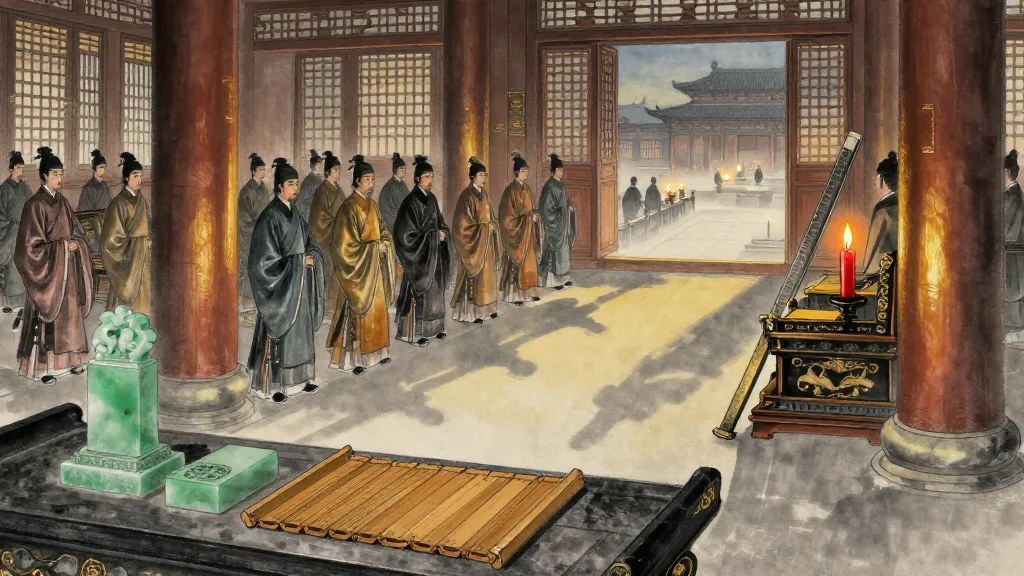
硃公居陶,生少子。少子及壯,而硃公中男殺人,囚於楚。硃公曰:"殺人而死,職也。然吾聞千金之子不死於市。"告其少子往視之。乃裝黃金千溢,置褐器中,載以一牛車。且遣其少子,硃公長男固請欲行,硃公不聽。長男曰:"家有長子曰家督,今弟有罪,大人不遣,乃遺少弟,是吾不肖。"欲自殺。其母為言曰:"今遣少子,未必能生中子也,而先空亡長男,柰何?"硃公不得已而遣長子,為一封書遺故所善莊生。曰:"至則進千金於莊生所,聽其所為,慎無與爭事。"長男既行,亦自私齎數百金。
至楚,莊生家負郭,披藜藋到門,居甚貧。然長男發書進千金,如其父言。莊生曰:"可疾去矣,慎毋留!即弟出,勿問所以然。"長男既去,不過莊生而私留,以其私齎獻遺楚國貴人用事者。
莊生雖居窮閻,然以廉直聞於國,自楚王以下皆師尊之。及硃公進金,非有意受也,欲以成事後復歸之以為信耳。故金至,謂其婦曰:"此硃公之金。有如病不宿誡,後復歸,勿動。"而硃公長男不知其意,以為殊無短長也。
莊生間時入見楚王,言"某星宿某,此則害於楚"。楚王素信莊生,曰:"今為柰何?"莊生曰:"獨以德為可以除之。"楚王曰:"生休矣,寡人將行之。"王乃使使者封三錢之府。楚貴人驚告硃公長男曰:"王且赦。"曰:"何以也?"曰:"每王且赦,常封三錢之府。昨暮王使使封之。"硃公長男以為赦,弟固當出也,重千金虛棄莊生,無所為也,乃復見莊生。莊生驚曰:"若不去邪?"長男曰:"固未也。初為事弟,弟今議自赦,故辭生去。"莊生知其意欲復得其金,曰:"若自入室取金。"長男即自入室取金持去,獨自歡幸。
莊生羞為兒子所賣,乃入見楚王曰:"臣前言某星事,王言欲以修德報之。今臣出,道路皆言陶之富人硃公之子殺人囚楚,其家多持金錢賂王左右,故王非能恤楚國而赦,乃以硃公子故也。"楚王大怒曰:"寡人雖不德耳,柰何以硃公之子故而施惠乎!"令論殺硃公子,明日遂下赦令。硃公長男竟持其弟喪歸。
Tao Zhu Gong settled at Tao and fathered a youngest son. When the youngest son was grown, Zhu Gong's middle son killed a man and was imprisoned in Chu. Zhu Gong said: "To kill and die for it — that is proper. But I have heard that the son of a man worth a thousand in gold does not die in the marketplace." He told his youngest son to go see about it. He packed a thousand yi of gold, placed it in plain containers, and loaded it on a single ox-cart. He was about to send the youngest when the eldest son insisted on going. Zhu Gong refused. The eldest said: "The eldest son of a house is called the family head. My brother has committed a crime, yet father will not send me but instead sends the youngest — this says I am worthless." He threatened to kill himself. His mother pleaded: "If we send the youngest, the middle son may still not be saved — and we will first lose the eldest for nothing. What then?" Zhu Gong reluctantly sent the eldest, giving him a sealed letter for his old friend Zhuang Sheng, with instructions: "When you arrive, deliver the thousand in gold to Zhuang Sheng. Do whatever he says. Under no circumstances contest his arrangements." The eldest son set out, but also privately took along several hundred more in gold.
Arriving in Chu, he found Zhuang Sheng's house backed against the city wall, the path to the door choked with weeds — the man lived in deep poverty. The eldest delivered the letter and presented the thousand in gold as his father had instructed. Zhuang Sheng said: "Leave at once. Do not stay under any circumstances! When your brother is released, do not ask how it was done." The eldest departed from Zhuang Sheng but secretly remained in Chu, using his own private gold to bribe influential Chu officials.
Although Zhuang Sheng lived in a poor alley, he was known throughout the state for his integrity. From the King of Chu on down, everyone revered him as a teacher. He had not accepted Zhu Gong's gold with any intent to keep it — he meant to accomplish the task and return it afterward as proof of good faith. When the gold arrived, he told his wife: "This is Zhu Gong's gold. It is like a medical deposit for an illness — it will be returned later. Do not touch it." But Zhu Gong's eldest son did not understand this and thought the old man was doing nothing.
Zhuang Sheng found an opportune moment to visit the King of Chu and said: "A certain star is in a certain position — this will bring harm to Chu." The king had long trusted Zhuang Sheng and asked: "What should be done?" Zhuang Sheng said: "Only acts of virtue can dispel it." The king said: "Master, you may rest. I shall carry this out." The king then ordered his envoys to seal the three treasuries. Chu's nobles were alarmed and told Zhu Gong's eldest son: "The king is about to grant a general amnesty." "How do you know?" "Whenever the king is about to amnesty prisoners, he always seals the three treasuries. Last night the king sent envoys to seal them." The eldest son calculated that since an amnesty was coming, his brother would be released anyway. The thousand in gold given to Zhuang Sheng would be wasted to no purpose. He returned to Zhuang Sheng. Zhuang Sheng was startled: "You did not leave?" The eldest said: "No. I came for my brother's sake. Since my brother is about to be amnestied, I have come to take my leave of you, Master." Zhuang Sheng understood that the man wanted his gold back and said: "Go into the room and take the gold yourself." The eldest went in, took the gold, and left, privately delighted.
Zhuang Sheng, humiliated at being played by the boy, went to the King of Chu and said: "When I spoke of the star, Your Majesty said you would respond with virtue. Now I have gone out and the roads are full of talk that the rich man Zhu Gong of Tao has a son imprisoned in Chu for murder, and his family has lavished gold and bribes on the king's attendants. So the king is not granting amnesty out of concern for Chu but for the sake of Zhu Gong's son." The king was furious: "Though I may lack virtue, how can I grant favors because of Zhu Gong's son!" He ordered the middle son executed. The next day the amnesty was proclaimed. The eldest son brought his brother's corpse home.