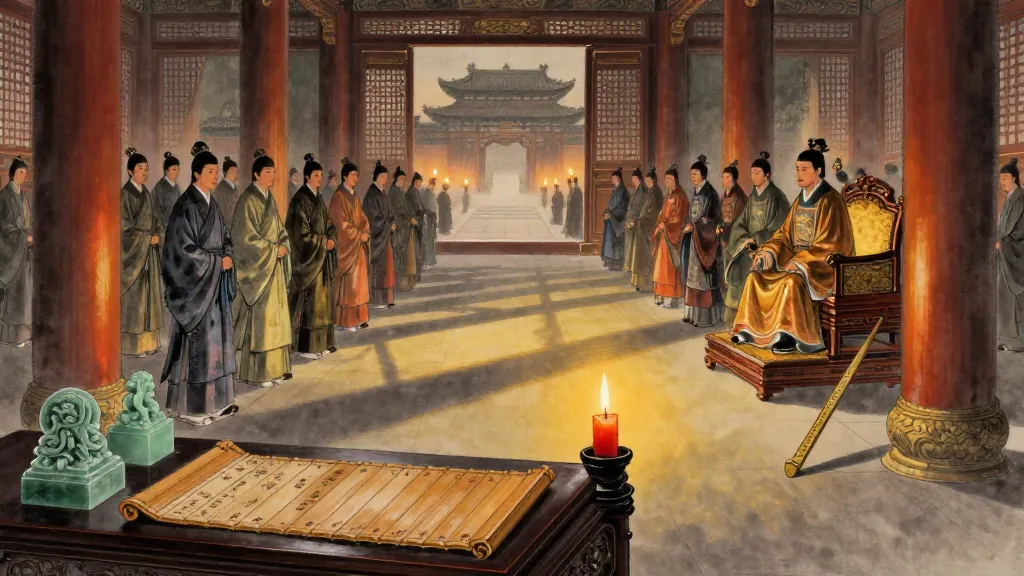
鄭世家 (Hereditary House of Zheng) — Chinese ink painting

Chapter 42 of 130

鄭世家

Hereditary House of Zheng

View:

桓公建國

Duke Huan Founds the State of Zheng

鄭桓公友者,周厲王少子而宣王庶弟也。宣王立二十二年,友初封於鄭。封三十三歲,百姓皆便愛之。幽王以為司徒。和集周民,周民皆說,河雒之間,人便思之。為司徒一歲,幽王以襃後故,王室治多邪,諸侯或畔之。於是桓公問太史伯曰:「王室多故,予安逃死乎?」太史伯對曰:「獨雒之東土,河濟之南可居。」公曰:「何以?」對曰:「地近虢、鄶,虢、鄶之君貪而好利,百姓不附。今公為司徒,民皆愛公,公誠請居之,虢、鄶之君見公方用事,輕分公地。公誠居之,虢、鄶之民皆公之民也。」公曰:「吾欲南之江上,何如?」對曰:「昔祝融為高辛氏火正,其功大矣,而其於周未有興者,楚其後也。周衰,楚必興。興,非鄭之利也。」公曰:「吾欲居西方,何如?」對曰:「其民貪而好利,難久居。」公曰:「周衰,何國興者?」對曰:「齊、秦、晉、楚乎?夫齊,姜姓,伯夷之後也,伯夷佐堯典禮。秦,嬴姓,伯翳之後也,伯翳佐舜懷柔百物。及楚之先,皆嘗有功於天下。而周武王克紂後,成王封叔虞於唐,其地阻險,以此有德與周衰並,亦必興矣。」桓公曰:「善。」於是卒言王,東徙其民雒東,而虢、鄶果獻十邑,竟國之。

二歲,犬戎殺幽王於驪山下,並殺桓公。鄭人共立其子掘突,是為武公。

Duke Huan of Zheng, named You, was a younger son of King Li of Zhou and a half-brother of King Xuan. In the twenty-second year of King Xuan's reign, You was first enfeoffed at Zheng. After thirty-three years in his fief, the common people all found him accessible and loved him. King You appointed him Minister of the Masses. He harmonized and gathered the Zhou people, and the Zhou people all approved. The people between the Yellow River and the Luo thought of him fondly. After one year as minister, King You — on account of Lady Bao — allowed the royal administration to go astray, and some of the feudal lords rebelled.

Duke Huan asked the Grand Historian Bo: "The royal house is beset by troubles. Where can I flee to escape death?" The Grand Historian replied: "Only the lands east of the Luo and south of the Yellow River and Ji Rivers are habitable." The duke asked: "Why?" The reply: "That land is near Guo and Kuai. The lords of Guo and Kuai are greedy and profit-seeking, and the people do not support them. You, my lord, serve as Minister of the Masses — the people all love you. If you sincerely petition to settle there, the lords of Guo and Kuai, seeing that you currently hold power, will readily cede you land. If you settle there in earnest, the people of Guo and Kuai will all become your people."

The duke said: "What if I go south to the Yangtze region?" The reply: "Long ago, Zhurong served as Fire Officer under Gaoxin — his merit was great — yet among his descendants under the Zhou, none have risen. Chu descends from him. When Zhou weakens, Chu will surely rise. Its rise would not be to Zheng's advantage." The duke said: "What about settling in the west?" The reply: "The people there are greedy and grasping — it would be hard to stay long." The duke said: "When Zhou declines, which states will rise?" The reply: "Qi, Qin, Jin, and Chu, I should think. Qi is of the Jiang surname, descended from Bo Yi, who assisted Yao in establishing ritual. Qin is of the Ying surname, descended from Bo Yi who assisted Shun in managing all creatures. And the ancestors of Chu all once performed great services for All-Under-Heaven. When King Wu of Zhou conquered King Zhou, King Cheng enfeoffed Shu Yu at Tang — the terrain there is rugged and strategic. With such virtue and with Zhou in decline, it too will surely rise." Duke Huan said: "Very well." He then petitioned the king, moved his people east of the Luo, and the lords of Guo and Kuai did indeed cede ten settlements. He consolidated them into a state.

Two years later, the Quanrong killed King You below Mount Li and killed Duke Huan as well. The people of Zheng together installed his son Juetu — this was Duke Wu.

Notes

1person鄭桓公Zhèng Huán Gōng

Duke Huan of Zheng (鄭桓公, d. 771 BC) founded the state of Zheng during the twilight of the Western Zhou dynasty. He died alongside King You when the Quanrong sacked the capital in 771 BC.

2place

Zheng's original fief was in the area of modern Huaxian County, Shaanxi. Its relocation east of the Luo placed it near modern Xinzheng, Henan, which remained its capital throughout its history.

3context

The Grand Historian Bo's geopolitical prophecy — identifying Qi, Qin, Jin, and Chu as the four states destined to rise when Zhou declined — is remarkably accurate as retrospective analysis. It establishes a framework that structures much of the Shiji's account of the Spring and Autumn period.

武公與莊公克段

Duke Wu and Duke Zhuang's Defeat of Duan

武公十年,娶申侯女為夫人,曰武姜。生太子寤生,生之難,及生,夫人弗愛。後生少子叔段,段生易,夫人愛之。二十七年,武公疾。夫人請公,欲立段為太子,公弗聽。是歲,武公卒,寤生立,是為莊公。

莊公元年,封弟段於京,號太叔。祭仲曰:「京大於國,非所以封庶也。」莊公曰:「武姜欲之,我弗敢奪也。」段至京,繕治甲兵,與其母武姜謀襲鄭。二十二年,段果襲鄭,武姜為內應。莊公發兵伐段,段走。伐京,京人畔段,段出走鄢。鄢潰,段出奔共。於是莊公遷其母武姜於城潁,誓言曰:「不至黃泉,毋相見也。」居歲餘,已悔思母。潁谷之考叔有獻於公,公賜食。考叔曰:「臣有母,請君食賜臣母。」莊公曰:「我甚思母,惡負盟,柰何?」考叔曰:「穿地至黃泉,則相見矣。」於是遂從之,見母。

In Duke Wu's tenth year, he married a daughter of the Lord of Shen as his consort, called Wu Jiang. She bore the heir apparent, Wusheng — the birth was difficult, and consequently the consort did not love him. Later she bore a younger son, Shu Duan. Duan's birth was easy, and the consort loved him. In the twenty-seventh year, Duke Wu fell ill. The consort begged the duke to install Duan as heir apparent; the duke refused. That year Duke Wu died, and Wusheng succeeded — this was Duke Zhuang.

In the first year of Duke Zhuang, he enfeoffed his brother Duan at Jing, with the title Grand Uncle. Zhai Zhong said: "Jing is larger than the capital. This is no way to enfeoff a younger son." Duke Zhuang said: "Wu Jiang desires it. I dare not refuse her." Duan went to Jing, repaired and built up his armor and weapons, and conspired with his mother Wu Jiang to attack Zheng. In the twenty-second year, Duan did indeed attack Zheng, with Wu Jiang acting as his agent inside the city. Duke Zhuang raised troops and attacked Duan. Duan fled. He attacked Jing, but the people of Jing turned against Duan. Duan fled to Yan. Yan fell, and Duan fled to Gong.

Duke Zhuang thereupon relocated his mother Wu Jiang to Chengying and swore an oath: "Until we reach the Yellow Springs, let us never meet again." After more than a year, he regretted his words and missed his mother. Kaobu of Yinggu brought tribute to the duke, and the duke bestowed food upon him. Kaobu said: "Your servant has a mother. May I bring your gift of food to her?" Duke Zhuang said: "I miss my mother terribly, but I loathe breaking my oath. What can I do?" Kaobu said: "Dig into the earth until you reach the yellow springs, and then you may meet." The duke followed his advice and was reunited with his mother.

Notes

1person鄭莊公Zhèng Zhuāng Gōng

Duke Zhuang of Zheng (鄭莊公, r. 743–701 BC) was one of the most powerful rulers of the early Spring and Autumn period. His defeat of his brother Duan and his later defiance of the Zhou king established Zheng as a major force.

2translation

The name 寤生 (Wusheng) means 'born feet-first' or 'born startlingly.' The difficult birth was taken as an inauspicious omen by his mother, who favored the easily-born younger son instead. This story is one of the most famous episodes in the Zuozhuan.

3context

The 'Yellow Springs tunnel' (黃泉) solution is one of the most celebrated acts of filial cleverness in Chinese literature. The oath said 'until we reach the Yellow Springs' (the underworld) — by digging a tunnel deep enough to reach groundwater, they technically fulfilled the condition without waiting for death.

莊公射王與鄭國鼎盛

Duke Zhuang Wounds the King and Zheng's Zenith

二十四年,宋繆公卒,公子馮奔鄭。鄭侵周地,取禾。二十五年,衛州吁弒其君桓公自立,與宋伐鄭,以馮故也。二十七年,始朝周桓王。桓王怒其取禾,弗禮也。二十九年,莊公怒周弗禮,與魯易祊、許田。三十三年,宋殺孔父。三十七年,莊公不朝周,周桓王率陳、蔡、虢、衛伐鄭。莊公與祭仲、高渠彌發兵自救,王師大敗。祝聸射中王臂。祝聸請從之,鄭伯止之,曰:「犯長且難之,況敢陵天子乎?」乃止。夜令祭仲問王疾。

三十八年,北戎伐齊,齊使求救,鄭遣太子忽將兵救齊。齊釐公欲妻之,忽謝曰:「我小國,非齊敵也。」時祭仲與俱,勸使取之,曰:「君多內寵,太子無大援將不立,三公子皆君也。」所謂三公子者,太子忽,其弟突,次弟子亹也。

In the twenty-fourth year, Duke Mu of Song died and Prince Feng fled to Zheng. Zheng encroached upon Zhou territory and seized its grain. In the twenty-fifth year, Zhou Xu of Wey assassinated his lord Duke Huan and took the throne himself, then joined Song in attacking Zheng on account of Feng. In the twenty-seventh year, Duke Zhuang first presented himself at the court of King Huan of Zhou. King Huan, angry about the grain seizure, treated him discourteously. In the twenty-ninth year, furious at Zhou's lack of courtesy, Duke Zhuang exchanged the fields of Beng and Xu with Lu. In the thirty-third year, Song killed Kong Fu. In the thirty-seventh year, Duke Zhuang did not attend the Zhou court. King Huan of Zhou led the forces of Chen, Cai, Guo, and Wey to attack Zheng.

Duke Zhuang, together with Zhai Zhong and Gao Qumi, raised troops to defend themselves. The royal army was badly defeated. Zhu Dan shot and hit the king in the arm. Zhu Dan asked to pursue him. The Lord of Zheng stopped him, saying: "To offend a superior is already difficult enough — would we dare to humiliate the Son of Heaven?" They halted. That night, he sent Zhai Zhong to inquire after the king's condition.

In the thirty-eighth year, the Northern Rong attacked Qi. Qi sent for help, and Zheng dispatched Crown Prince Hu to lead troops to Qi's rescue. Duke Xi of Qi wished to give him a bride. Hu declined: "We are a small state — no match for Qi." Zhai Zhong accompanied him and urged him to accept, saying: "The lord has many favorites in the inner palace. If the heir apparent has no powerful ally, he will not be installed. All three princes could become the lord." The three princes in question were Crown Prince Hu, his brother Tu, and the next brother Ziwei.

Notes

1context

The Battle of Xuge (繻葛之戰, 707 BC) — in which Zheng defeated and wounded King Huan of Zhou — is a watershed in Spring and Autumn history. It proved that the Zhou king's military power was hollow and that the feudal lords could defy the Son of Heaven with impunity.

2person祭仲Zhài Zhòng

Zhai Zhong (祭仲) was the most influential minister of Zheng during the late reign of Duke Zhuang and the succession crises that followed. He served multiple dukes as a consummate political survivor.

莊公後繼承亂局

The Succession Crisis After Duke Zhuang

四十三年,鄭莊公卒。初,祭仲甚有寵於莊公,莊公使為卿;公使娶鄧女,生太子忽,故祭仲立之,是為昭公。

莊公又娶宋雍氏女,生厲公突。雍氏有寵於宋。宋莊公聞祭仲之立忽,乃使人誘召祭仲而執之,曰:「不立突,將死。」亦執突以求賂焉。祭仲許宋,與宋盟。以突歸,立之。昭公忽聞祭仲以宋要立其弟突,九月丁亥,忽出奔衛。己亥,突至鄭,立,是為厲公。

厲公四年,祭仲專國政。厲公患之,陰使其婿雍糾欲殺祭仲。糾妻,祭仲女也,知之,謂其母曰:「父與夫孰親?」母曰:「父一而已,人盡夫也。」女乃告祭仲,祭仲反殺雍糾,戮之於市。厲公無柰祭仲何,怒糾曰:「謀及婦人,死固宜哉!」夏,厲公出居邊邑櫟。祭仲迎昭公忽,六月乙亥,復入鄭,即位。

In the forty-third year, Duke Zhuang of Zheng died. From the beginning, Zhai Zhong had been greatly favored by Duke Zhuang, who made him a minister. The duke had married a Deng woman who bore Crown Prince Hu, and so Zhai Zhong installed him — this was Duke Zhao.

Duke Zhuang had also married a woman of the Yong family of Song, who bore Duke Li, Tu. The Yong family had influence in Song. When Duke Zhuang of Song heard that Zhai Zhong had installed Hu, he lured Zhai Zhong into a trap and seized him, declaring: "If you do not install Tu, you will die." He also held Tu and demanded bribes. Zhai Zhong agreed, swore an oath with Song, and brought Tu back to install him. Duke Zhao Hu, hearing that Zhai Zhong had been coerced by Song into installing his brother Tu, fled to Wey on the dinghai day of the ninth month. On the jihai day, Tu arrived in Zheng and was enthroned — this was Duke Li.

In the fourth year of Duke Li, Zhai Zhong monopolized state governance. Duke Li resented this and secretly ordered his son-in-law Yong Jiu to assassinate Zhai Zhong. Jiu's wife was Zhai Zhong's daughter. She learned of the plot and asked her mother: "Which is closer — a father or a husband?" Her mother replied: "A father is the only one you will ever have, but any man can be a husband." The daughter then told Zhai Zhong. Zhai Zhong struck first, killed Yong Jiu, and exposed his corpse in the market. Duke Li, helpless against Zhai Zhong, cursed Yong Jiu: "He who shares his plans with a woman — death is only fitting!" In summer, Duke Li withdrew to the border town of Li. Zhai Zhong welcomed Duke Zhao Hu back, and on the yihai day of the sixth month, Hu re-entered Zheng and resumed the throne.

Notes

1context

The dialogue between Yong Jiu's wife and her mother — 'A father is the only one you will ever have, but any man can be a husband' (父一而已,人盡夫也) — became a proverbial expression about the inviolable bond between parent and child versus the replaceable nature of a spouse.

2person鄭厲公Zhèng Lì Gōng

Duke Li of Zheng (鄭厲公, Tu 突) was twice ruler of Zheng. His first reign (697–680 BC) was cut short by Zhai Zhong's power. After seventeen years in exile at Li, he returned and ruled until 673 BC.

昭公被弒與子亹之變

The Murder of Duke Zhao and the Affair of Ziwei

秋,鄭厲公突因櫟人殺其大夫單伯,遂居之。諸侯聞厲公出奔,伐鄭,弗克而去。宋頗予厲公兵,自守於櫟,鄭以故亦不伐櫟。

昭公二年,自昭公為太子時,父莊公欲以高渠彌為卿,太子忽惡之,莊公弗聽,卒用渠彌為卿。及昭公即位,懼其殺己,冬十月辛卯,渠彌與昭公出獵,射殺昭公於野。祭仲與渠彌不敢入厲公,乃更立昭公弟子亹為君,是為子亹也,無諡號。

子亹元年七月,齊襄公會諸侯於首止,鄭子亹往會,高渠彌相,從,祭仲稱疾不行。所以然者,子亹自齊襄公為公子之時,嘗會斗,相仇,及會諸侯,祭仲請子亹無行。子亹曰:「齊彊,而厲公居櫟,即不往,是率諸侯伐我,內厲公。我不如往,往何遽必辱,且又何至是!」卒行。於是祭仲恐齊並殺之,故稱疾。子亹至,不謝齊侯,齊侯怒,遂伏甲而殺子亹。高渠彌亡歸,歸與祭仲謀,召子亹弟公子嬰於陳而立之,是為鄭子。是歲,齊襄公使彭生醉拉殺魯桓公。

In autumn, Duke Li Tu, from his base at Li, used the men of Li to kill his minister Shan Bo and took up residence there. When the feudal lords heard that Duke Li had fled, they attacked Zheng but could not take it and withdrew. Song gave Duke Li some troops, and he defended himself at Li. Zheng therefore also refrained from attacking Li.

In the second year of Duke Zhao: ever since Duke Zhao had been crown prince, his father Duke Zhuang had wanted to make Gao Qumi a minister. Crown Prince Hu had opposed it, but Duke Zhuang did not listen and ultimately appointed Qumi as minister. When Duke Zhao took the throne, Qumi feared the duke would kill him. On the xinmao day of the tenth month of winter, Qumi accompanied Duke Zhao on a hunt and shot him dead in the field. Zhai Zhong and Qumi dared not invite Duke Li to return, so they installed Duke Zhao's younger brother Ziwei as ruler. This was Ziwei — he received no posthumous title.

In the seventh month of Ziwei's first year, Duke Xiang of Qi convened a meeting of the feudal lords at Shouzhi. Ziwei of Zheng went to the meeting, with Gao Qumi as his minister-escort. Zhai Zhong claimed illness and did not go. The reason was that when Duke Xiang of Qi was still a prince, he and Ziwei had once quarreled and become enemies. When the meeting was convened, Zhai Zhong begged Ziwei not to attend. Ziwei said: "Qi is powerful, and Duke Li is at Li. If I do not go, Qi will lead the lords to attack us and restore Duke Li. I had better go. Why should I necessarily be humiliated? It surely will not come to that!" He went. Zhai Zhong feared Qi would kill him too, and therefore feigned illness.

When Ziwei arrived, he did not apologize to the Lord of Qi. The Lord of Qi was furious, laid an ambush, and killed Ziwei. Gao Qumi fled back to Zheng. He conferred with Zhai Zhong, and they summoned Ziwei's younger brother, Prince Ying, from Chen and installed him — this was the Lord of Zheng. That year, Duke Xiang of Qi had Peng Sheng crush Duke Huan of Lu to death while drunk.

Notes

1context

Zheng's rapid succession of rulers — Duke Zhao, Duke Li, Duke Zhao again, Ziwei, Lord Ying — all within a few years reflects the state's internal fragmentation. Zhai Zhong's ability to survive through all these changes demonstrates his extraordinary political dexterity.

2person齊襄公Qí Xiāng Gōng

Duke Xiang of Qi (齊襄公, r. 697–686 BC) was notorious for his violence and sexual transgressions. His murder of Ziwei at a diplomatic conference and his assassination of Duke Huan of Lu are both recounted here in close succession.

厲公復入與文公時代

Duke Li's Return and the Era of Duke Wen

鄭子八年,齊人管至父等作亂,弒其君襄公。十二年,宋人長萬弒其君湣公。鄭祭仲死。

十四年,故鄭亡厲公突在櫟者使人誘劫鄭大夫甫假,要以求入。假曰:「舍我,我為君殺鄭子而入君。」厲公與盟,乃舍之。六月甲子,假殺鄭子及其二子而迎厲公突,突自櫟復入即位。初,內蛇與外蛇斗於鄭南門中,內蛇死。居六年,厲公果復入。入而讓其伯父原曰:「我亡國外居,伯父無意入我,亦甚矣。」原曰:「事君無二心,人臣之職也。原知罪矣。」遂自殺。厲公於是謂甫假曰:「子之事君有二心矣。」遂誅之。假曰:「重德不報,誠然哉!」

厲公突後元年,齊桓公始霸。

五年,燕、衛與周惠王弟穨伐王,王出奔溫,立弟穨為王。六年,惠王告急鄭,厲公發兵擊周王子穨,弗勝,於是與周惠王歸,王居於櫟。七年春,鄭厲公與虢叔襲殺王子穨而入惠王於周。

秋,厲公卒,子文公踕立。厲公初立四歲,亡居櫟,居櫟十七歲,復入,立七歲,與亡凡二十八年。

文公十七年,齊桓公以兵破蔡,遂伐楚,至召陵。

二十四年,文公之賤妾曰燕姞,夢天與之蘭,曰:「余為伯鯈。余,爾祖也。以是為而子,蘭有國香。」以夢告文公,文公幸之,而予之草蘭為符。遂生子,名曰蘭。

In the eighth year of the Lord of Zheng, Guan Zhifu and others in Qi staged a revolt and assassinated their lord Duke Xiang. In the twelfth year, Chang Wan of Song assassinated his lord Duke Min. Zhai Zhong of Zheng died.

In the fourteenth year, the exiled Duke Li Tu, still based at Li, sent agents to kidnap the Zheng minister Fu Jia and demanded entry. Fu Jia said: "Release me, and I will kill the Lord of Zheng and bring you in." Duke Li swore an oath with him and released him. On the jiazi day of the sixth month, Fu Jia killed the Lord of Zheng and his two sons and welcomed Duke Li Tu, who re-entered from Li and resumed the throne. Earlier, a snake from inside the city and a snake from outside had fought at the south gate of Zheng — the inside snake died. Six years later, Duke Li did indeed return from outside.

Upon his return, Duke Li rebuked his uncle Yuan: "I was exiled from my state, and you had no intention of bringing me back. That was very harsh." Yuan replied: "Serving one's lord with undivided loyalty is a minister's duty. Yuan acknowledges his fault." He then killed himself. Duke Li then said to Fu Jia: "You served your lord with divided loyalty." He had him executed. Fu Jia said: "It is true indeed — a great service goes unrewarded!"

In the first year of Duke Li's restored reign, Duke Huan of Qi first achieved hegemony.

In the fifth year, Yan and Wey, together with King Hui of Zhou's brother Tui, attacked the king. The king fled to Wen, and Tui was installed as king. In the sixth year, King Hui appealed to Zheng for help. Duke Li raised troops and attacked Prince Tui, but could not prevail. He then escorted King Hui home, and the king took up residence at Li. In the seventh year, spring, Duke Li of Zheng and the Earl of Guo ambushed and killed Prince Tui and restored King Hui to Zhou.

In autumn, Duke Li died. His son Duke Wen, Jie, succeeded. Duke Li had first reigned four years, then lived in exile at Li for seventeen years, then reigned again for seven years — twenty-eight years in all, including the exile.

In Duke Wen's seventeenth year, Duke Huan of Qi led troops to crush Cai, then attacked Chu, advancing as far as Zhaoling.

In the twenty-fourth year, Duke Wen's lowly concubine, Yan Ji, dreamed that heaven gave her an orchid and said: "I am Bo Chou. I am your ancestor. Take this as a token for your son — the orchid has the fragrance of a state." She told Duke Wen of her dream. He favored her and gave her a sprig of orchid as a token. She bore a son, named Lan.

Notes

1context

Duke Li's treatment of Yuan and Fu Jia presents a brutal paradox: Yuan, who loyally served Duke Li's rival, is given 'honorable' death, while Fu Jia, who betrayed his lord to bring Duke Li back, is executed for disloyalty. The message is that a ruler values loyalty to the institution above personal benefit.

2context

The omen of the two snakes fighting at the south gate — the inner snake dying, presaging that the insider ruler would lose to the outsider — is typical of the Shiji's interest in portents that foreshadow political events.

晉文公圍鄭與子蘭立太子

Duke Wen of Jin Besieges Zheng; Zi Lan Is Made Heir

三十六年,晉公子重耳過,文公弗禮。文公弟叔詹曰:「重耳賢,且又同姓,窮而過君,不可無禮。」文公曰:「諸侯亡公子過者多矣,安能盡禮之!」詹曰:「君如弗禮,遂殺之;弗殺,使即反國,為鄭憂矣。」文公弗聽。

三十七年春,晉公子重耳反國,立,是為文公。秋,鄭入滑,滑聽命,已而反與衛,於是鄭伐滑。周襄王使伯餜請滑。鄭文公怨惠王之亡在櫟,而文公父厲公入之,而惠王不賜厲公爵祿,又怨襄王之與衛滑,故不聽襄王請而囚伯餜。王怒,與翟人伐鄭,弗克。冬,翟攻伐襄王,襄王出奔鄭,鄭文公居王於氾。三十八年,晉文公入襄王成周。

四十一年,助楚擊晉。自晉文公之過無禮,故背晉助楚。四十三年,晉文公與秦穆公共圍鄭,討其助楚攻晉者,及文公過時之無禮也。初,鄭文公有三夫人,寵子五人,皆以罪蚤死。公怒,溉逐群公子。子蘭奔晉,從晉文公圍鄭。時蘭事晉文公甚謹,愛幸之,乃私於晉,以求入鄭為太子。晉於是欲得叔詹為僇。鄭文公恐,不敢謂叔詹言。詹聞,言於鄭君曰:「臣謂君,君不聽臣,晉卒為患。然晉所以圍鄭,以詹,詹死而赦鄭國,詹之原也。」乃自殺。鄭人以詹屍與晉。晉文公曰:「必欲一見鄭君,辱之而去。」鄭人患之,乃使人私於秦曰:「破鄭益晉,非秦之利也。」秦兵罷。晉文公欲入蘭為太子,以告鄭。鄭大夫石癸曰:「吾聞姞姓乃后稷之元妃,其後當有興者。子蘭母,其後也。且夫人子盡已死,餘庶子無如蘭賢。今圍急,晉以為請,利孰大焉!」遂許晉,與盟,而卒立子蘭為太子,晉兵乃罷去。

四十五年,文公卒,子蘭立,是為繆公。

In the thirty-sixth year, the Jin prince Chong'er passed through Zheng. Duke Wen treated him discourteously. Duke Wen's brother Shu Zhan said: "Chong'er is a worthy man and shares our royal surname. He passes through in dire straits — we cannot be discourteous." Duke Wen said: "Exiled princes of all the lords pass through here — how can we show full courtesy to every one?" Shu Zhan said: "If you will not show him courtesy, then kill him. If you do not kill him and he returns to his state, he will be a threat to Zheng." Duke Wen did not listen.

In the thirty-seventh year, spring, the Jin prince Chong'er returned to his state and was enthroned — this was Duke Wen of Jin. In autumn, Zheng invaded Hua, which submitted, but later defected to Wey. Zheng attacked Hua. King Xiang of Zhou sent Bo Guo to intercede for Hua. Duke Wen of Zheng resented the fact that when King Hui had been a fugitive at Li, Duke Wen's father Duke Li had restored him, yet King Hui never rewarded Duke Li with rank or emolument. He also resented King Xiang's support for Wey and Hua. He therefore ignored King Xiang's plea and imprisoned Bo Guo. The king was furious and attacked Zheng with the Di people but could not prevail. In winter, the Di attacked King Xiang, who fled to Zheng. Duke Wen of Zheng housed the king at Fan. In the thirty-eighth year, Duke Wen of Jin restored King Xiang to Chengzhou.

In the forty-first year, Zheng aided Chu against Jin — because Duke Wen of Jin had been discourtesied during his passage, Zheng turned against Jin and sided with Chu. In the forty-third year, Duke Wen of Jin and Duke Mu of Qin jointly besieged Zheng, to punish it for aiding Chu against Jin and for the earlier discourtesy when Duke Wen passed through. Duke Wen of Zheng had originally had three consorts whose five favored sons had all died early through their own transgressions. The duke was furious and had all his remaining princes expelled. Zi Lan fled to Jin and joined Duke Wen of Jin in besieging Zheng. At that time, Lan served Duke Wen of Jin with great deference and won his affection. He secretly negotiated with Jin to gain entry into Zheng as heir apparent. Jin then demanded that Shu Zhan be surrendered for punishment. Duke Wen of Zheng was afraid but dared not speak to Shu Zhan about it. Shu Zhan heard nonetheless and said to the Lord of Zheng: "I warned you, my lord, but you would not listen, and Jin has become our scourge. But since Jin besieges Zheng on my account, if I die and Zheng is spared, that is my wish." He then killed himself. The people of Zheng delivered Shu Zhan's corpse to Jin.

Duke Wen of Jin said: "I insist on seeing the Lord of Zheng in person — to humiliate him and then leave." The people of Zheng were alarmed and secretly sent word to Qin: "Destroying Zheng only strengthens Jin. That is not in Qin's interest." Qin withdrew its troops. Duke Wen of Jin then proposed installing Lan as heir apparent and informed Zheng. The Zheng minister Shi Gui said: "I have heard that the Ji surname was the original consort of Houji, and that her descendants are destined to flourish. Zi Lan's mother descends from that line. Moreover, all the consort's sons are dead, and among the remaining sons, none is as worthy as Lan. The siege presses hard, and Jin asks this as its condition — what greater benefit could there be?" Zheng agreed, swore an oath with Jin, and installed Zi Lan as heir apparent. Jin's army then withdrew.

In the forty-fifth year, Duke Wen died and Zi Lan succeeded — this was Duke Mu.

Notes

1context

The siege of Zheng by Jin and Qin (630 BC) is one of the most famous episodes of the Spring and Autumn period. The secret Zheng envoy's argument to Qin — 'Destroying Zheng only strengthens Jin' — exemplifies the balance-of-power diplomacy characteristic of the era. This episode is the basis of the famous Zuozhuan passage '燭之武退秦師' (Zhu Zhiwu persuades Qin to withdraw).

2person叔詹Shū Zhān

Shu Zhan (叔詹) of Zheng was an astute strategist who had warned Duke Wen about Chong'er. His self-sacrifice to save Zheng from Jin's siege makes him one of the chapter's most admired figures.

繆公至襄公與楚莊王

From Duke Mu to Duke Xiang and the Era of King Zhuang of Chu

繆公元年春,秦繆公使三將將兵欲襲鄭,至滑,逢鄭賈人弦高詐以十二牛勞軍,故秦兵不至而還,晉敗之於崤。初,往年鄭文公之卒也,鄭司城繒賀以鄭情賣之,秦兵故來。三年,鄭發兵從晉伐秦,敗秦兵於汪。

往年楚太子商臣弒其父成王代立。二十一年,與宋華元伐鄭。華元殺羊食士,不與其御羊斟,怒以馳鄭,鄭囚華元。宋贖華元,元亦亡去。晉使趙穿以兵伐鄭。

二十二年,鄭繆公卒,子夷立,是為靈公。

靈公元年春,楚獻黿於靈公。子家、子公將朝靈公,子公之食指動,謂子家曰:「佗日指動,必食異物。」及入,見靈公進黿羹,子公笑曰:「果然!」靈公問其笑故,具告靈公。靈公召之,獨弗予羹。子公怒,染其指,嘗之而出。公怒,欲殺子公。子公與子家謀先。夏,弒靈公。鄭人慾立靈公弟去疾,去疾讓曰:「必以賢,則去疾不肖;必以順,則公子堅長。」堅者,靈公庶弟,去疾之兄也。於是乃立子堅,是為襄公。

襄公七年,鄭與晉盟鄢陵。八年,楚莊王以鄭與晉盟,來伐,圍鄭三月,鄭以城降楚。楚王入自皇門,鄭襄公肉袒掔羊以迎,曰:「孤不能事邊邑,使君王懷怒以及弊邑,孤之罪也。敢不惟命是聽。君王遷之江南,及以賜諸侯,亦惟命是聽。若君王不忘厲、宣王,桓、武公,哀不忍絕其社稷,錫不毛之地,使復得改事君王,孤之原也,然非所敢望也。敢布腹心,惟命是聽。」莊王為卻三十里而後舍。楚群臣曰:「自郢至此,士大夫亦久勞矣。今得國舍之,何如?」莊王曰:「所為伐,伐不服也。今已服,尚何求乎?」卒去。

In the first year of Duke Mu, spring, Duke Mu of Qin sent three generals with troops to surprise-attack Zheng. When they reached Hua, they encountered Xian Gao, a Zheng merchant, who pretended to have been sent with twelve oxen to welcome the army. The Qin force therefore turned back without reaching Zheng, and Jin defeated them at Xiao. Earlier, when Duke Wen of Zheng had died the previous year, the Zheng Minister of Works Zeng He had sold intelligence about Zheng's situation — that is why the Qin troops had come. In the third year, Zheng sent troops to follow Jin in attacking Qin and defeated the Qin army at Wang.

The previous year, Crown Prince Shang Chen of Chu had assassinated his father King Cheng and taken the throne. In the twenty-first year, Zheng fought with Hua Yuan of Song when Song attacked Zheng. Hua Yuan had slaughtered a sheep and fed his troops but excluded his charioteer Yang Zhen. Yang Zhen, in his fury, drove straight into the Zheng lines. Zheng captured Hua Yuan. Song ransomed him, but he escaped on his own as well. Jin sent Zhao Chuan with troops to attack Zheng.

In the twenty-second year, Duke Mu of Zheng died and his son Yi succeeded — this was Duke Ling.

In the first year of Duke Ling, spring, Chu presented a softshell turtle to Duke Ling. Zi Jia and Zi Gong were about to attend court. Zi Gong's index finger twitched, and he told Zi Jia: "Whenever my finger twitches, I am always served some rare delicacy." When they entered and saw that Duke Ling was being served turtle soup, Zi Gong laughed and said: "Just as I predicted!" Duke Ling asked why he was laughing, and Zi Gong told him everything. Duke Ling summoned him but deliberately did not give him any soup. Zi Gong was furious, dipped his finger into the soup, tasted it, and left. The duke was enraged and wished to kill Zi Gong. Zi Gong and Zi Jia conspired and struck first. In summer, they assassinated Duke Ling.

The people of Zheng wished to install Duke Ling's brother Quji, but Quji demurred: "If it must be by merit, then Quji is unworthy. If it must be by seniority, then Prince Jian is elder." Jian was Duke Ling's half-brother and Quji's elder brother. They therefore installed Jian — this was Duke Xiang.

In Duke Xiang's seventh year, Zheng allied with Jin at Yanling. In the eighth year, King Zhuang of Chu, angered that Zheng had allied with Jin, attacked and besieged Zheng for three months. Zheng surrendered the city to Chu. The King of Chu entered through the Huang Gate. Duke Xiang of Zheng, stripped to the waist and leading a ram, came to greet him: "I was unable to serve your border towns, and I have brought your royal anger upon my humble city — the fault is mine. I dare not but submit to your commands. If Your Majesty would relocate us to south of the Yangtze, or bestow us upon the other lords, I submit to your commands. But if Your Majesty, remembering Kings Li and Xuan, and Dukes Huan and Wu, in your compassion cannot bear to extinguish our altars of state, and grants us barren land so that we may again serve Your Majesty — that would be my wish, though I dare not hope for it. I lay bare my heart and submit to your commands."

King Zhuang withdrew thirty li before encamping. His ministers said: "From Ying to here, the officers and men have labored long. Now that we have taken the state, shall we give it up?" King Zhuang said: "We attacked because they would not submit. Now they have submitted — what more should we seek?" He departed.

Notes

1person楚莊王Chǔ Zhuāng Wáng

King Zhuang of Chu (楚莊王, r. 613–591 BC) was one of the Five Hegemons. His magnanimous treatment of the defeated Duke Xiang of Zheng — withdrawing after receiving submission rather than annexing the state — became a model of hegemonic virtue.

2context

The incident of the twitching index finger (食指大動) became a proverbial expression in Chinese for anticipating a treat. The ludicrously trivial cause of the assassination of Duke Ling — soup denied — is one of the Shiji's darkly comic moments.

3person弦高Xián Gāo

Xian Gao (弦高) was a Zheng merchant who, encountering Qin's surprise invasion force en route, improvised a diplomatic ruse by pretending to be a state envoy bearing gifts. His quick thinking saved Zheng and became a celebrated example of citizen loyalty.

解揚不辱使命

Xie Yang Refuses to Betray His Mission

十一年,楚莊王伐宋,宋告急於晉。晉景公欲發兵救宋,伯宗諫晉君曰:「天方開楚,未可伐也。」乃求壯士得霍人解揚,字子虎,誆楚,令宋毋降。過鄭,鄭與楚親,乃執解揚而獻楚。楚王厚賜與約,使反其言,令宋趣降,三要乃許。於是楚登解揚樓車,令呼宋。遂負楚約而致其晉君命曰:「晉方悉國兵以救宋,宋雖急,慎毋降楚,晉兵今至矣!」楚莊王大怒,將殺之。解揚曰:「君能制命為義,臣能承命為信。受吾君命以出,有死無隕。」莊王曰:「若之許我,已而背之,其信安在?」解揚曰:「所以許王,欲以成吾君命也。」將死,顧謂楚軍曰:「為人臣無忘盡忠得死者!」楚王諸弟皆諫王赦之,於是赦解揚使歸。晉爵之為上卿。

In the eleventh year, King Zhuang of Chu attacked Song. Song appealed urgently to Jin. Duke Jing of Jin wished to send troops to rescue Song, but Bo Zong counseled the Lord of Jin: "Heaven is presently opening the way for Chu. It cannot yet be attacked." They therefore sought out a bold warrior and found Xie Yang of Huo, styled Zihu, to deceive Chu and tell Song not to surrender. Passing through Zheng — which was allied with Chu — he was seized and handed over to Chu.

The King of Chu bestowed lavish gifts upon him and made a deal: he was to reverse his message and tell Song to surrender at once. After three rounds of coercion, Xie Yang agreed. Chu then placed him on a tower-chariot and ordered him to call out to the Song defenders. But he broke his agreement with Chu and delivered his Lord of Jin's true message: "Jin is currently mobilizing its entire army to rescue Song. Though the situation is desperate, do not surrender to Chu under any circumstances — Jin's troops are arriving now!" King Zhuang was furious and prepared to execute him.

Xie Yang said: "When a ruler can give commands, that is righteousness. When a minister can carry out commands, that is faithfulness. I received my lord's command before departing — I will die, but I will not fail." The king said: "You agreed to my terms and then broke them — where is your faithfulness?" Xie Yang replied: "The reason I agreed to your terms was to accomplish my lord's command." As he was about to die, he turned to the Chu army and said: "Let all who serve as ministers never forget that a man may die for his loyalty!" The king's brothers all urged him to pardon Xie Yang, and the king released him and sent him home. Jin elevated him to the rank of senior minister.

Notes

1person解揚Xiè Yáng

Xie Yang (解揚) of Huo was a Jin envoy whose defiant loyalty — agreeing to the enemy's terms only to betray them and fulfill his own lord's orders — became a paradigm of ministerial faithfulness in Chinese tradition.

2context

The ethical logic is subtle: Xie Yang argues that his false promise to Chu was itself an act of loyalty to Jin, since the purpose of the deception was to carry out his true mission. King Zhuang ultimately respects this logic, recognizing a worthy enemy.

子產治鄭

Zi Chan Governs Zheng

釐公五年,鄭相子駟朝釐公,釐公不禮。子駟怒,使廚人藥殺釐公,赴諸侯曰「釐公暴病卒」。立釐公子嘉,嘉時年五歲,是為簡公。

簡公元年,諸公子謀欲誅相子駟,子駟覺之,反盡誅諸公子。二年,晉伐鄭,鄭與盟,晉去。冬,又與楚盟。子駟畏誅,故兩親晉、楚。三年,相子駟欲自立為君,公子子孔使尉止殺相子駟而代之。子孔又欲自立。子產曰:「子駟為不可,誅之,今又效之,是亂無時息也。」於是子孔從之而相鄭簡公。

十二年,簡公怒相子孔專國權,誅之,而以子產為卿。十九年,簡公如晉請衛君還,而封子產以六邑。子產讓,受其三邑。二十二年,吳使延陵季子於鄭,見子產如舊交,謂子產曰:「鄭之執政者侈,難將至,政將及子。子為政,必以禮;不然,鄭將敗。」子產厚遇季子。二十三年,諸公子爭寵相殺,又欲殺子產。公子或諫曰:「子產仁人,鄭所以存者子產也,勿殺!」乃止。

二十五年,鄭使子產於晉,問平公疾。平公曰:「卜而曰實沈、台駘為祟,史官莫知,敢問?」對曰:「高辛氏有二子,長曰閼伯,季曰實沈,居曠林,不相能也,日操干戈以相征伐。後帝弗臧,遷閼伯於商丘,主辰,商人是因,故辰為商星。遷實沈於大夏,主參,唐人是因,服事夏、商,其季世曰唐叔虞。」當武王邑姜方娠大叔,夢帝謂己:『余命而子曰虞,乃與之唐,屬之參而蕃育其子孫。』及生有文在其掌曰『虞』,遂以命之。及成王滅唐而國大叔焉。故參為晉星。由是觀之,則實沈,參神也。昔金天氏有裔子曰昧,為玄冥師,生允格、台駘。台駘能業其官,宣汾、洮,障大澤,以處太原。帝用嘉之,國之汾川。沈、姒、蓐、黃實守其祀。今晉主汾川而滅之。由是觀之,則台駘,汾、洮神也。然是二者不害君身。山川之神,則水旱之菑禜之;日月星辰之神,則雪霜風雨不時禜之;若君疾,飲食哀樂女色所生也。」平公及叔鄉曰:「善,博物君子也!」厚為之禮於子產。

In the fifth year of Duke Xi, the Zheng chancellor Zi Si attended court before Duke Xi. Duke Xi showed him no courtesy. Zi Si was furious and had his cook poison Duke Xi, announcing to the feudal lords that "Duke Xi died suddenly of illness." He installed Duke Xi's son Jia, who was five years old at the time — this was Duke Jian.

In the first year of Duke Jian, the princes plotted to kill Chancellor Zi Si. Zi Si discovered the plot and instead executed all the princes. In the second year, Jin attacked Zheng; Zheng allied with Jin, and Jin withdrew. In winter, Zheng also allied with Chu. Zi Si, fearing punishment, therefore cultivated ties with both Jin and Chu. In the third year, Chancellor Zi Si attempted to make himself ruler. Prince Zi Kong had Captain Yin Zhi kill Zi Si and replaced him. Zi Kong then also wished to make himself ruler. Zi Chan said: "Zi Si acted wrongly, and we executed him for it. Now to imitate him means the disorder will never cease." Zi Kong accepted this and served as chancellor to Duke Jian of Zheng.

In the twelfth year, Duke Jian, angered that Chancellor Zi Kong monopolized power, had him executed and appointed Zi Chan as minister. In the nineteenth year, Duke Jian went to Jin to petition for the return of the Lord of Wey and enfeoffed Zi Chan with six towns. Zi Chan declined and accepted only three. In the twenty-second year, Wu sent Ji Zha of Yanling to Zheng. He met Zi Chan as if they were old friends and said: "Those who govern Zheng are extravagant. Trouble approaches. The government will fall to you. When you govern, you must govern by ritual; otherwise Zheng will fail." Zi Chan received Ji Zha with great hospitality. In the twenty-third year, the princes competed for favor and killed one another, and some wanted to kill Zi Chan. Another prince remonstrated: "Zi Chan is a humane man. It is Zi Chan who has preserved Zheng. Do not kill him!" They desisted.

In the twenty-fifth year, Zheng sent Zi Chan to Jin to inquire after Duke Ping's illness. Duke Ping said: "The divination says the spirits Shi Chen and Tai Dai are causing the affliction. My historians cannot explain it — may I ask?" Zi Chan replied with a long discourse on the ancestral spirits of the stars and rivers associated with Jin's territory, tracing the genealogies from the sage-emperors through the founding of Tang and Jin, explaining how Shi Chen was the spirit of the constellation Shen (Orion) and Tai Dai was the spirit of the Fen and Tao rivers. He concluded: "But neither of these spirits is harming your body. For spirits of mountains and rivers, one performs exorcism rites against floods and drought. For spirits of the sun, moon, and constellations, one performs exorcism rites against unseasonable snow, frost, wind, and rain. As for your illness, it arises from food and drink, grief and joy, and women." Duke Ping and Shu Xiang said: "Excellent! A gentleman of vast learning!" They treated Zi Chan with the greatest honor.

Notes

1person子產Zǐ Chǎn

Zi Chan (子產, Gongsun Qiao 公孫僑, d. 522 BC) was one of the most admired statesmen of the Spring and Autumn period. He governed Zheng as chief minister for over two decades, implementing legal and land reforms. Confucius praised him as embodying 'the legacy of ancient kindness.'

2person季札Jì Zhá

Ji Zha (季札) of Yanling was a prince of Wu renowned for his learning and virtue. His friendship with Zi Chan is one of the celebrated cross-state intellectual friendships of the period.

3context

Zi Chan's diagnosis of Duke Ping's illness — dismissing the supernatural explanation in favor of a material one (diet, emotions, women) — is one of the earliest rationalist medical statements in Chinese literature. It stands in sharp contrast to the divination-based thinking that preceded it.

子產之死與鄭之衰亡

The Death of Zi Chan and Zheng's Decline and Fall

三十六年,簡公卒,子定公寧立。秋,定公朝晉昭公。

定公元年,楚公子棄疾弒其君靈王而自立,為平王。欲行德諸侯。歸靈王所侵鄭地於鄭。

四年,晉昭公卒,其六卿彊,公室卑。子產謂韓宣子曰:「為政必以德,毋忘所以立。」

六年,鄭火,公欲禳之。子產曰:「不如修德。」

八年,楚太子建來奔。十年,太子建與晉謀襲鄭。鄭殺建,建子勝奔吳。

十一年,定公如晉。晉與鄭謀,誅周亂臣,入敬王於周。

十三年,定公卒,子獻公蠆立。獻公十三年卒,子聲公勝立。當是時,晉六卿彊,侵奪鄭,鄭遂弱。

聲公五年,鄭相子產卒,鄭人皆哭泣,悲之如亡親戚。子產者,鄭成公少子也。為人仁愛人,事君忠厚。孔子嘗過鄭,與子產如兄弟雲。及聞子產死,孔子為泣曰:「古之遺愛也!」

八年,晉范、中行氏反晉,告急於鄭,鄭救之。晉伐鄭,敗鄭軍於鐵。

十四年,宋景公滅曹。二十年,齊田常弒其君簡公,而常相於齊。二十二年,楚惠王滅陳。孔子卒。

三十六年,晉知伯伐鄭,取九邑。

三十七年,聲公卒,子哀公易立。哀公八年,鄭人弒哀公而立聲公弟醜,是為共公。共公三年,三晉滅知伯。三十一年,共公卒,子幽公已立。幽公元年,韓武子伐鄭,殺幽公。鄭人立幽公弟駘,是為繻公。

繻公十五年,韓景侯伐鄭,取雍丘。鄭城京。

十六年,鄭伐韓,敗韓兵於負黍。二十年,韓、趙、魏列為諸侯。二十三年,鄭圍韓之陽翟。

二十五年,鄭君殺其相子陽。二十七年,子陽之黨共弒繻公駘而立幽公弟乙為君,是為鄭君。

鄭君乙立二年,鄭負黍反,復歸韓。十一年,韓伐鄭,取陽城。

二十一年,韓哀侯滅鄭,並其國。

In the thirty-sixth year, Duke Jian died and his son Duke Ding, Ning, succeeded. In autumn, Duke Ding attended the court of Duke Zhao of Jin.

In the first year of Duke Ding, Prince Qiji of Chu assassinated his lord King Ling and installed himself as King Ping. Wishing to bestow virtue upon the feudal lords, he returned to Zheng all the land King Ling had seized.

In the fourth year, Duke Zhao of Jin died. His six great ministers were powerful and the ducal house was weak. Zi Chan told Han Xuanzi: "To govern, you must use virtue. Do not forget the principles by which you were established."

In the sixth year, there was a fire in Zheng. The duke wished to perform exorcism rites. Zi Chan said: "Better to cultivate virtue."

In the eighth year, Crown Prince Jian of Chu came to Zheng as a refugee. In the tenth year, Prince Jian conspired with Jin to attack Zheng. Zheng killed Jian. His son Sheng fled to Wu.

In the eleventh year, Duke Ding visited Jin. Jin and Zheng together plotted to punish the disloyal ministers at Zhou and restore King Jing.

In the thirteenth year, Duke Ding died and his son Duke Xian, Chai, succeeded. Duke Xian reigned thirteen years and died. His son Duke Sheng, Sheng, succeeded. At this time, Jin's six great ministers were powerful and encroached upon Zheng. Zheng consequently weakened.

In the fifth year of Duke Sheng, Zi Chan, chancellor of Zheng, died. The people of Zheng all wept, grieving as though they had lost a parent. Zi Chan was a younger son of Duke Cheng of Zheng. He was a humane man who loved people and served his lord with loyal devotion. Confucius once passed through Zheng and treated Zi Chan as a brother. When he heard of Zi Chan's death, Confucius wept and said: "He was the legacy of ancient kindness!"

In the eighth year, the Fan and Zhonghang clans rebelled in Jin and appealed to Zheng for aid. Zheng rescued them. Jin attacked Zheng and defeated the Zheng army at Tie.

In the fourteenth year, Duke Jing of Song destroyed Cao. In the twentieth year, Tian Chang of Qi assassinated his lord Duke Jian and served as chancellor of Qi. In the twenty-second year, King Hui of Chu destroyed Chen. Confucius died.

In the thirty-sixth year, Zhi Bo of Jin attacked Zheng and took nine towns.

In the thirty-seventh year, Duke Sheng died and his son Duke Ai, Yi, succeeded. In Duke Ai's eighth year, the people of Zheng killed Duke Ai and installed Duke Sheng's brother Chou — this was Duke Gong. In Duke Gong's third year, the Three Jin destroyed Zhi Bo. In his thirty-first year, Duke Gong died and his son Duke You, Yi, succeeded. In the first year of Duke You, Han Wuzi attacked Zheng and killed Duke You. The people of Zheng installed Duke You's brother Tai — this was Duke Ru.

In Duke Ru's fifteenth year, Marquis Jing of Han attacked Zheng and took Yongqiu. Zheng fortified Jing.

In the sixteenth year, Zheng attacked Han and defeated Han's forces at Fushu. In the twentieth year, Han, Zhao, and Wei were ranked as feudal lords. In the twenty-third year, Zheng besieged Han's Yangzhai.

In the twenty-fifth year, the lord of Zheng killed his chancellor Ziyang. In the twenty-seventh year, Ziyang's partisans assassinated Duke Ru Tai and installed Duke You's brother Yi as ruler — this was Lord Zheng.

In the second year of Lord Zheng Yi, Fushu defected from Zheng and returned to Han. In the eleventh year, Han attacked Zheng and took Yangcheng.

In the twenty-first year, Marquis Ai of Han destroyed Zheng and annexed its territory.

Notes

1context

Zheng's destruction by Han in 375 BC ended a state that had been founded in the Western Zhou period. Zheng's fate — ground to pieces between larger powers — was the archetypal destiny of a medium-sized state in the Central Plain during the Warring States period.

2context

Confucius's eulogy for Zi Chan — 古之遺愛也 ('He was the legacy of ancient kindness') — is one of the most famous tributes in the Analects tradition. It recognizes Zi Chan as the last statesman who governed in the spirit of the ancient sages.

3place

Yangzhai (陽翟) was an important city that served as the capital of Han after Han absorbed Zheng. It is located at modern Yuzhou, Henan.

Edition & Source

Text
《史記》 Shiji
Edition
中華古詩文古書籍網 transcription
Commentary
裴駰《史記集解》、司馬貞《史記索隱》、張守節《史記正義》(Three Commentaries)