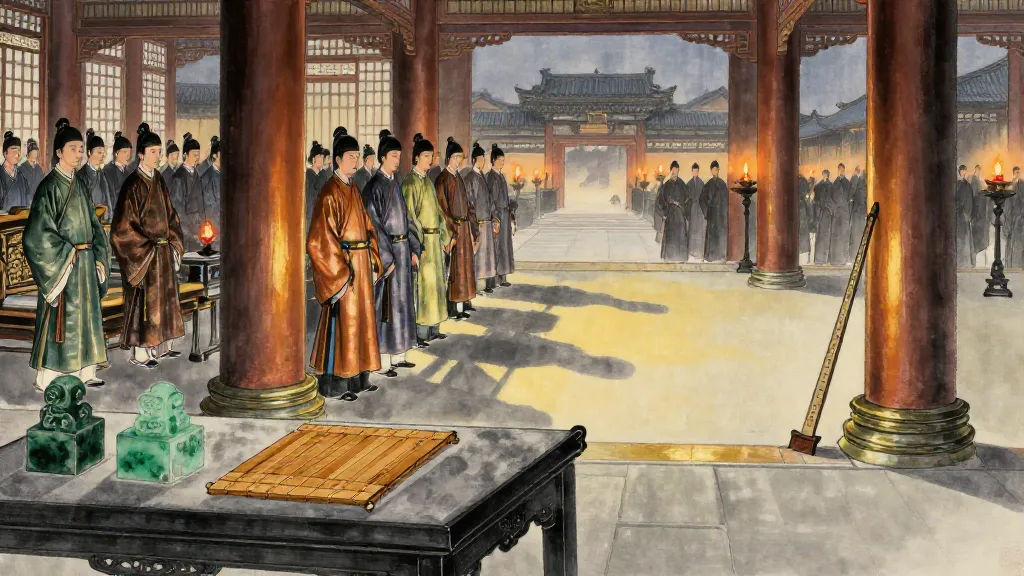
孔子出生與早年
The Birth and Early Years of Confucius
孔子生魯昌平鄉陬邑。其先宋人也,曰孔防叔。防叔生伯夏,伯夏生叔梁紇。紇與顏氏女野合而生孔子,禱於尼丘得孔子。魯襄公二十二年而孔子生。生而首上圩頂,故因名曰丘雲。字仲尼,姓孔氏。
丘生而叔梁紇死,葬於防山。防山在魯東,由是孔子疑其父墓處,母諱之也。孔子為兒嬉戲,常陳俎豆,設禮容。孔子母死,乃殯五父之衢,蓋其慎也。郰人輓父之母誨孔子父墓,然後往合葬於防焉。
孔子要絰,季氏饗士,孔子與往。陽虎絀曰:「季氏饗士,非敢饗子也。」孔子由是退。
孔子年十七,魯大夫孟釐子病且死,誡其嗣懿子曰:「孔丘,聖人之後,滅於宋。其祖弗父何始有宋而嗣讓厲公。及正考父佐戴、武、宣公,三命茲益恭,故鼎銘云:一命而僂,再命而傴,三命而俯,循牆而走,亦莫敢余侮。饘於是,粥於是,以餬余口。其恭如是。吾聞聖人之後,雖不當世,必有達者。今孔丘年少好禮,其達者歟?吾即沒,若必師之。」及釐子卒,懿子與魯人南宮敬叔往學禮焉。是歲,季武子卒,平子代立。
孔子貧且賤。及長,嘗為季氏史,料量平;嘗為司職吏而畜蕃息。由是為司空。已而去魯,斥乎齊,逐乎宋、衛,困於陳蔡之間,於是反魯。孔子長九尺有六寸,人皆謂之「長人」而異之。魯復善待,由是反魯。
Confucius was born in the township of Changping in Zou, in the state of Lu. His ancestors were men of Song. His great-grandfather was Kong Fangshu. Fangshu sired Bo Xia. Bo Xia sired Shu Lianghe. He and a woman of the Yan family conceived Confucius through an irregular union, having prayed at Mount Niqiu. Confucius was born in the twenty-second year of Duke Xiang of Lu. At birth, the top of his head was concave, and so he was named Qiu (meaning 'mound'). His courtesy name was Zhongni, and his surname was Kong.
Qiu was born and Shu Lianghe died. He was buried at Mount Fang. Mount Fang was east of Lu. Confucius was uncertain of his father's burial place because his mother kept it secret. As a child at play, Confucius would constantly set out ritual vessels and practice ceremonial postures. When his mother died, he placed her coffin at the crossroads of Wufu — out of caution. A woman of Zou, the mother of Man Fu, told Confucius where his father's grave was, and only then did he go and inter his mother alongside his father at Fang.
While Confucius was wearing mourning, the Ji family held a banquet for its retainers. Confucius went to attend. Yang Hu barred him, saying: "The Ji family is feasting its retainers — they did not presume to invite you." Confucius withdrew.
When Confucius was seventeen, the Lu grandee Meng Xizi lay ill and near death. He admonished his heir, Yizi: "Kong Qiu is a descendant of sages — his line perished in Song. His ancestor Fu Fuhe was first entitled to Song but yielded the succession to Duke Li. Then Zheng Kaofu served Dukes Dai, Wu, and Xuan, growing more reverential with each appointment. The inscription on his cauldron read: 'At the first appointment, I bowed; at the second, I bent double; at the third, I stooped low, walking along the wall — none dared insult me. I make my gruel in this, I make my porridge in this, to feed my mouth.' Such was his humility. I have heard that descendants of sages, even if they do not rule in their own generation, will surely produce a man who achieves greatness. Now Kong Qiu, though young, loves ritual — he is surely such a man. When I am gone, you must take him as your teacher." When Xizi died, Yizi and Nangong Jingshu of Lu went to study ritual under Confucius. That year, Ji Wuzi died and Pingzi succeeded him.
Confucius was poor and of low station. When he grew up, he once served as a clerk for the Ji family, keeping the accounts accurate and fair. He once served as a livestock officer, and the animals thrived. From this he was made Minister of Works. Afterward he left Lu, was rebuffed in Qi, expelled from Song and Wey, and trapped between Chen and Cai — then he returned to Lu. Confucius was nine chi and six cun tall. People all called him 'the tall one' and marveled at him. Lu again treated him well, and so he returned.
Notes
Confucius (孔子, Kong Qiu 孔丘, 551–479 BC) is the most influential thinker in Chinese history. Sima Qian grants him a 'Hereditary House' chapter — the rank of a feudal lord — rather than a mere 'Ranked Biography,' recognizing his civilizational significance. This is the longest and most detailed biographical account of Confucius from antiquity.
Zou (陬邑) was a small town in the state of Lu, near modern Qufu, Shandong. Mount Niqiu (尼丘), where his parents prayed, gave Confucius his courtesy name Zhongni (仲尼).
The term 野合 (irregular union) has been debated for millennia. It likely means that Shu Lianghe and the Yan woman were not properly married according to ritual, possibly due to their age difference (he was very old, she very young). Sima Qian records it without judgment.