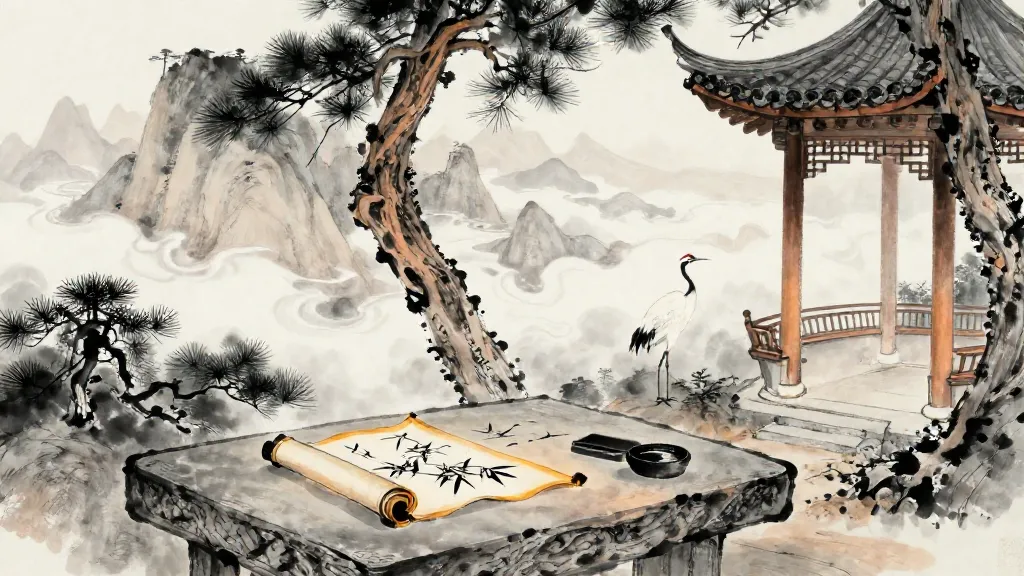
留侯世家 (Hereditary House of the Marquis of Liu) — Chinese ink painting

Chapter 55 of 130

留侯世家

Hereditary House of the Marquis of Liu

View:

張良家世與刺秦

Zhang Liang's Ancestry and the Assassination Attempt on Qin

留侯張良者,其先韓人也。大父開地,相韓昭侯、宣惠王、襄哀王。父平,相釐王、悼惠王。悼惠王二十三年,平卒。卒二十歲,秦滅韓。良年少,未宦事韓。韓破,良家僮三百人,弟死不葬,悉以家財求客刺秦王,為韓報仇,以大父、父五世相韓故。

良嘗學禮淮陽。東見倉海君。得力士,為鐵椎重百二十斤。秦皇帝東遊,良與客狙擊秦皇帝博浪沙中,誤中副車。秦皇帝大怒,大索天下,求賊甚急,為張良故也。良乃更名姓,亡匿下邳。

Zhang Liang, Marquis of Liu, was of Korean descent. His grandfather Kaidi had served as chancellor to Duke Zhao of Han, King Xuanhui, and King Xiang'ai. His father Ping served as chancellor to King Xi and King Daohui. In the twenty-third year of King Daohui, Ping died. Twenty years after his death, Qin destroyed Han. Liang was still young and had not yet entered Han's service. When Han fell, Liang had three hundred household servants. His younger brother had died but he left the body unburied, devoting his entire family fortune to recruiting an assassin to kill the King of Qin and avenge Han — because his grandfather and father had served as chancellor to Han for five generations.

Liang once studied ritual at Huaiyang. Traveling east, he visited Lord Canghai. He obtained a strongman and had a iron mace forged weighing one hundred and twenty catties. When the First Emperor of Qin went on an eastern tour, Liang and his agent ambushed the emperor at Bolangsha — but struck the wrong carriage, hitting the escort vehicle. The First Emperor was enraged and ordered a massive manhunt throughout the realm, searching for the assassin with extreme urgency — all on Zhang Liang's account. Liang changed his name and went into hiding at Xiapi.

Notes

1person張良Zhāng Liáng

Zhang Liang (張良, d. 186 BC), courtesy name Zifang (子房), was one of the 'Three Heroes of the Early Han' alongside Xiao He and Han Xin. A descendant of five generations of Korean chancellors, he devoted his youth to avenging the destruction of Han before becoming Liu Bang's chief strategist.

2place

Bolangsha (博浪沙) was a sandy stretch of road in modern Yuanyang County, Henan. The assassination attempt in 218 BC was one of the most famous incidents of resistance against the Qin dynasty.

3place

Xiapi (下邳) was a town in modern Pizhou, Jiangsu province. It was where Zhang Liang lived in hiding and where he received the mysterious book of strategy.

圯上受書

Receiving the Book on the Bridge

良嘗間從容步游下邳圯上,有一老父,衣褐,至良所,直墮其履圯下,顧謂良曰:“孺子,下取履!“良鄂然,欲毆之。為其老,彊忍,下取履。父曰:“履我!“良業為取履,因長跪履之。父以足受,笑而去。良殊大驚,隨目之。父去里所,復還,曰:“孺子可教矣。後五日平明,與我會此。“良因怪之,跪曰:“諾。“五日平明,良往。父已先在,怒曰:“與老人期,後,何也?“去,曰:“後五日早會。“五日雞鳴,良往。父又先在,復怒曰:“後,何也?“去,曰:“後五日復早來。“五日,良夜未半往。有頃,父亦來,喜曰:“當如是。“出一編書,曰:“讀此則為王者師矣。後十年興。十三年孺子見我濟北,穀城山下黃石即我矣。“遂去,無他言,不復見。旦日視其書,乃太公兵法也。良因異之,常習誦讀之。

居下邳,為任俠。項伯常殺人,從良匿。

Liang was once strolling leisurely across a bridge at Xiapi when an old man in rough brown cloth came to where Liang stood, deliberately dropped his shoe off the bridge, turned to Liang and said: "Boy! Go down and fetch my shoe!" Liang was stunned and wanted to strike him. But because the man was old, he forced himself to contain his anger, went down, and retrieved the shoe. The old man said: "Put it on me!" Since Liang had already fetched the shoe, he knelt and put it on the old man's foot. The old man received it with his foot, smiled, and walked away. Liang was utterly astonished and watched him go. The old man walked about a li, then came back and said: "You are teachable, boy. Meet me here at dawn in five days." Liang, mystified, knelt and said: "Yes." Five days later at dawn, Liang went. The old man was already there and said angrily: "You made an appointment with an old man and arrive late — what kind of conduct is this?" He left, saying: "Come earlier in five days." Five days later at cockcrow, Liang went. The old man was already there again and again said angrily: "Late again — why?" He left, saying: "Come earlier yet in five days." Five days later, Liang went before midnight. After a while, the old man also came and said with pleasure: "This is how it should be." He produced a bound text and said: "Read this and you will become the teacher of kings. In ten years, you will rise. In thirteen years, boy, you will see me in Jibei — the yellow stone at the foot of Mount Gucheng will be me." He departed without another word and was never seen again. At daylight Liang examined the book — it was the Grand Duke's Art of War. Liang marveled at it and studied it constantly, committing it to memory.

While living at Xiapi, Liang acted as a knight-errant. Xiang Bo, who had killed a man, came to Liang for refuge.

Notes

1context

The story of the old man on the bridge (圯上老人) is one of the most famous episodes in Chinese literature. It teaches the virtues of humility, patience, and the willingness to endure humiliation in pursuit of higher knowledge. The old man tested Zhang Liang's character before entrusting him with the text.

2context

The Grand Duke's Art of War (太公兵法) was attributed to Lü Shang (the Grand Duke of Qi, featured in Shiji chapter 32). Whether this refers to the actual Six Secret Teachings (六韜) or another lost text is debated, but the narrative link connects Zhang Liang to the founding strategist of the Zhou dynasty.

3person項伯Xiàng Bó

Xiang Bo (項伯) was Xiang Yu's uncle. Zhang Liang's harboring of him created a personal bond that would prove crucial at the Feast at Hong Gate, when Xiang Bo warned Liang of Xiang Yu's plan to attack Liu Bang.

從沛公入關滅秦

Following the Lord of Pei to Enter the Passes and Destroy Qin

後十年,陳涉等起兵,良亦聚少年百餘人。景駒自立為楚假王,在留。良欲往從之,道還沛公。沛公將數千人,略地下邳西,遂屬焉。沛公拜良為廄將。良數以太公兵法說沛公,沛公善之,常用其策。良為他人者,皆不省。良曰:“沛公殆天授。“故遂從之,不去見景駒。

及沛公之薛,見項梁。項梁立楚懷王。良乃說項梁曰:“君已立楚後,而韓諸公子橫陽君成賢,可立為王,益樹黨。“項梁使良求韓成,立以為韓王。以良為韓申徒,與韓王將千餘人西略韓地,得數城,秦輒復取之,往來為游兵潁川。

沛公之從雒陽南出轘轅,良引兵從沛公,下韓十餘城,擊破楊熊軍。沛公乃令韓王成留守陽翟,與良俱南,攻下宛,西入武關。沛公欲以兵二萬人擊秦嶢下軍,良說曰:“秦兵尚彊,未可輕。臣聞其將屠者子,賈豎易動以利。願沛公且留壁,使人先行,為五萬人具食,益為張旗幟諸山上,為疑兵,令鸝食其持重寶啗秦將。“秦將果畔,欲連和俱西襲鹹陽,沛公欲聽之。良曰:“此獨其將欲叛耳,恐士卒不從。不從必危,不如因其解擊之。“沛公乃引兵擊秦軍,大破之。北至藍田,再戰,秦兵竟敗。遂至鹹陽,秦王子嬰降沛公。

Ten years later, Chen She and others rose in rebellion. Liang likewise gathered over a hundred young men. Jing Ju had proclaimed himself Acting King of Chu and was at Liu. Liang intended to join him but encountered the Lord of Pei on the road. The Lord of Pei was leading several thousand men, campaigning west of Xiapi. Liang joined him. The Lord of Pei appointed Liang as Master of the Stables. Liang repeatedly explained the Grand Duke's Art of War to the Lord of Pei, who found it excellent and constantly employed his strategies. When Liang offered the same teachings to others, none could grasp them. Liang said: "The Lord of Pei is surely Heaven-sent." He therefore followed him and never went to see Jing Ju.

When the Lord of Pei reached Xue and met Xiang Liang, Xiang Liang established King Huai of Chu. Liang then persuaded Xiang Liang: "You have already installed a Chu heir. Among the princes of Han, the Lord of Hengyang, Cheng, is worthy — install him as king and gain another ally." Xiang Liang sent Liang to find Han Cheng and installed him as King of Han. Liang was appointed Han's Shentu and, together with the King of Han, led over a thousand men west to reclaim Han territory. They captured several cities, but Qin recaptured them each time, and they operated as guerrilla forces around Yingchuan.

When the Lord of Pei marched south from Luoyang through Huanyuan Pass, Liang brought his troops to join him. Together they took over ten cities in Han territory and destroyed Yang Xiong's army. The Lord of Pei ordered King Cheng of Han to hold Yangzhai while Liang accompanied him south to take Wan, then west through Wuguan. The Lord of Pei wanted to attack the Qin army below Yao Pass with twenty thousand men. Liang advised: "The Qin forces are still strong — they must not be taken lightly. I hear their general is a butcher's son, the sort of merchant who can be swayed by profit. I suggest you make camp, send agents ahead with provisions for fifty thousand men, plant extra banners on every hilltop as decoys, and have Li Yiji take valuables to bribe the Qin general." The Qin general did indeed agree to betray, proposing to join forces and march west together to seize Xianyang. The Lord of Pei was inclined to accept. Liang said: "Only the general wants to defect — the rank and file may not follow. If they refuse, the situation becomes dangerous. Better to strike while their guard is down." The Lord of Pei attacked the Qin army and routed it. Moving north to Lantian, they fought twice more and the Qin army was completely defeated. They advanced to Xianyang, and the Qin king Ziying surrendered to the Lord of Pei.

Notes

1person韓成Hán Chéng

Han Cheng (韓成) was installed as King of Han (the state, not the Han dynasty) at Zhang Liang's suggestion. Xiang Yu later refused to release Cheng to his kingdom, demoted him to a marquisate, and eventually killed him — an act that drove Zhang Liang permanently into Liu Bang's camp.

2translation

The term 廄將 (Master of the Stables) was a modest military rank. That the Lord of Pei gave Liang only this minor post initially reflects the informality of the early rebel organization.

霸上勸退與鴻門之危

The Warning at Ba Shang and the Crisis at Hong Gate

沛公入秦宮,宮室帷帳狗馬重寶婦女以千數,意欲留居之。樊噲諫沛公出舍,沛公不聽。良曰:“夫秦為無道,故沛公得至此。夫為天下除殘賊,宜縞素為資。今始入秦,即安其樂,此所謂'助桀為虐'。且'忠言逆耳利於行,毒藥苦口利於病',願沛公聽樊噲言。“沛公乃還軍霸上。

項羽至鴻門下,欲擊沛公,項伯乃夜馳入沛公軍,私見張良,欲與俱去。良曰:“臣為韓王送沛公,今事有急,亡去不義。“乃具以語沛公。沛公大驚,曰:“為將柰何?“良曰:“沛公誠欲倍項羽邪?“沛公曰:“鯫生教我距關無內諸侯,秦地可盡王,故聽之。“良曰:“沛公自度能卻項羽乎?“沛公默然良久,曰:“固不能也。今為柰何?“良乃固要項伯。項伯見沛公。沛公與飲為壽,結賓婚。令項伯具言沛公不敢倍項羽,所以距關者,備他盜也。及見項羽後解,語在項羽事中。

The Lord of Pei entered the Qin palace. The chambers and curtains, dogs and horses, precious treasures and women numbered in the thousands. He was inclined to stay and make it his residence. Fan Kuai urged him to withdraw, but the Lord of Pei would not listen. Liang said: "It is because Qin was lawless that you have been able to reach this place. To rid All-Under-Heaven of a cruel tyrant, you should adopt an austere manner. Yet you have barely entered Qin and already settle into its pleasures — this is what is called 'aiding Jie in his cruelty.' Moreover, 'honest words offend the ear but benefit conduct; bitter medicine is foul to the taste but cures disease.' I urge you to heed Fan Kuai's words." The Lord of Pei then withdrew his army to Ba Shang.

Xiang Yu arrived below Hong Gate, intending to attack the Lord of Pei. Xiang Bo rode through the night into the Lord of Pei's camp, sought out Zhang Liang in private, and proposed they flee together. Liang said: "I am here on behalf of the King of Han to escort the Lord of Pei. To abandon him in his hour of crisis would be dishonorable." He told the Lord of Pei everything. The Lord of Pei was alarmed: "What am I to do?" Liang said: "Does my lord truly intend to defy Xiang Yu?" The Lord of Pei said: "A petty scholar advised me to seal the passes and admit no other lords, saying all of Qin could be mine — so I listened to him." Liang said: "Does my lord believe he can resist Xiang Yu?" The Lord of Pei was silent for a long time, then said: "Of course I cannot. What now?" Liang then brought Xiang Bo to meet the Lord of Pei. The Lord of Pei drank with Xiang Bo, toasted his health, and arranged a marriage alliance between their families. He had Xiang Bo convey his assurance that he had no intention of defying Xiang Yu — that the sealing of the passes was only a precaution against bandits. The subsequent encounter with Xiang Yu resolved the crisis — the details are in the account of Xiang Yu.

Notes

1place

Ba Shang (霸上) was a highland east of Xianyang, near modern Xi'an. It was where the Lord of Pei encamped after entering Qin territory, demonstrating restraint that won popular support.

2context

The Feast at Hong Gate (鴻門宴, 206 BC) is one of the most dramatic episodes in Chinese history. Xiang Yu had 400,000 troops; the Lord of Pei had 100,000. Through Xiang Bo's mediation and Zhang Liang's diplomacy, the Lord of Pei escaped what seemed certain destruction.

3person樊噲Fán Kuài

Fan Kuai (樊噲, d. 189 BC) was one of Gaozu's most loyal followers, originally a dog butcher from Pei. His bold intervention at the Feast at Hong Gate, where he burst into Xiang Yu's tent, became legendary.

入漢中與韓王之死

Entering Hanzhong and the Death of the King of Han

漢元年正月,沛公為漢王,王巴蜀。漢王賜良金百溢,珠二斗,良具以獻項伯。漢王亦因令良厚遺項伯,使請漢中地。項王乃許之,遂得漢中地。漢王之國,良送至襃中,遣良歸韓。良因說漢王曰:“王何不燒絕所過棧道,示天下無還心,以固項王意。“乃使良還。行,燒絕棧道。

良至韓,韓王成以良從漢王故,項王不遣成之國,從與俱東。良說項王曰:“漢王燒絕棧道,無還心矣。“乃以齊王田榮反,書告項王。項王以此無西憂漢心,而發兵北擊齊。

項王竟不肯遣韓王,乃以為侯,又殺之彭城。良亡,間行歸漢王,漢王亦已還定三秦矣。復以良為成信侯,從東擊楚。至彭城,漢敗而還。至下邑,漢王下馬踞鞍而問曰:“吾欲捐關以東等棄之,誰可與共功者?“良進曰:“九江王黥布,楚梟將,與項王有郄;彭越與齊王田榮反梁地:此兩人可急使。而漢王之將獨韓信可屬大事,當一面。即欲捐之,捐之此三人,則楚可破也。“漢王乃遣隨何說九江王布,而使人連彭越。及魏王豹反,使韓信將兵擊之,因舉燕、代、齊、趙。然卒破楚者,此三人力也。

In the first month of the first year of Han, the Lord of Pei became King of Han, ruling Ba and Shu. The King of Han gave Liang a hundred yi of gold and two dou of pearls. Liang presented them all to Xiang Bo. The King of Han also had Liang send lavish gifts to Xiang Bo and ask him to request that Hanzhong be added to the Han domain. The Hegemon-King agreed, and they obtained Hanzhong. When the King of Han set out for his domain, Liang accompanied him as far as Baozhong, then was sent back to Han. Before parting, Liang advised the King of Han: "Why not burn the plank roads behind you as you go, to show All-Under-Heaven you have no intention of returning east, and put the Hegemon-King's mind at ease?" The King of Han had Liang return, and as he traveled, he burned the plank roads.

When Liang reached Han, the Hegemon-King refused to let King Cheng proceed to his domain — because Liang had accompanied the King of Han. Instead he kept Cheng with him and took him east. Liang told the Hegemon-King: "The King of Han has burned the plank roads — he has no thought of returning." He also informed the Hegemon-King by letter that Tian Rong, King of Qi, had rebelled. The Hegemon-King therefore put aside his western concerns about the King of Han and led his army north to attack Qi.

The Hegemon-King ultimately refused to release the King of Han, demoted him to a marquisate, and then killed him at Pengcheng. Liang fled, slipping through enemy lines to rejoin the King of Han, who by then had already returned to pacify the Three Qin. The King of Han reappointed Liang as Marquis of Chengxin and took him along on the eastern campaign against Chu. They reached Pengcheng but the Han army was defeated and retreated. At Xiayi, the King of Han dismounted, leaned against his saddle, and asked: "I am ready to abandon everything east of the passes — who is worthy to share the enterprise with me?" Liang stepped forward: "Qing Bu, King of Jiujiang, is a fearsome Chu general who has a grudge against the Hegemon-King. Peng Yue has joined Tian Rong's rebellion in the Liang region. These two can be deployed at once. Among Your Majesty's own generals, only Han Xin can be entrusted with a major independent command. If you wish to give territory away, give it to these three — and Chu can be destroyed." The King of Han sent Sui He to persuade Qing Bu, King of Jiujiang, and dispatched agents to liaise with Peng Yue. When King Bao of Wei rebelled, he sent Han Xin with an army to defeat him, and from there Han Xin went on to conquer Yan, Dai, Qi, and Zhao. In the end, it was the combined power of these three men that destroyed Chu.

Notes

1context

The burning of the plank roads (燒絕棧道) was a brilliant piece of strategic deception. The plank roads through the Qinling Mountains were the only route from Hanzhong back to the Central Plain. Burning them convinced Xiang Yu that Liu Bang had accepted exile — while secretly, Han Xin was preparing the alternative route through Chencang.

2context

Zhang Liang's analysis at Xiayi — identifying Qing Bu, Peng Yue, and Han Xin as the three decisive assets — is considered one of the finest examples of grand strategy in Chinese history. All three recommendations proved correct: these three men were indeed the keys to destroying Xiang Yu.

借箸論八難

The Eight Impossibilities: Arguing with Chopsticks

張良多病,未嘗特將也,常為畫策,時時從漢王。

漢三年,項羽急圍漢王滎陽,漢王恐憂,與鸝食其謀橈楚權。食其曰:“昔湯伐桀,封其後於杞。武王伐紂,封其後於宋。今秦失德棄義,侵伐諸侯社稷,滅六國之後,使無立錐之地。陛下誠能復立六國後世,畢已受印,此其君臣百姓必皆戴陛下之德,莫不鄉風慕義,願為臣妾。德義已行,陛下南鄉稱霸,楚必斂衽而朝。“漢王曰:“善。趣刻印,先生因行佩之矣。”

食其未行,張良從外來謁。漢王方食,曰:“子房前!客有為我計橈楚權者。“其以鸝生語告,曰:“於子房何如?“良曰:“誰為陛下畫此計者?陛下事去矣。“漢王曰:“何哉?“張良對曰:“臣請藉前箸為大王籌之。“曰:“昔者湯伐桀而封其後於杞者,度能制桀之死命也。今陛下能制項籍之死命乎?“曰:“未能也。”“其不可一也。武王伐紂封其後於宋者,度能得紂之頭也。今陛下能得項籍之頭乎?“曰:“未能也。”“其不可二也。武王入殷,表商容之閭,釋箕子之拘,封比干之墓。今陛下能封聖人之墓,表賢者之閭,式智者之門乎?“曰:“未能也。”“其不可三也。發鉅橋之粟,散鹿台之錢,以賜貧窮。今陛下能散府庫以賜貧窮乎?“曰:“未能也。”“其不可四矣。殷事已畢,偃革為軒,倒置干戈,覆以虎皮,以示天下不復用兵。今陛下能偃武行文,不復用兵乎?“曰:“未能也。”“其不可五矣。休馬華山之陽,示以無所為。今陛下能休馬無所用乎?“曰:“未能也。”“其不可六矣。放牛桃林之陰,以示不復輸積。今陛下能放牛不復輸積乎?“曰:“未能也。”“其不可七矣。且天下游士離其親戚,棄墳墓,去故舊,從陛下游者,徒欲日夜望咫尺之地。今復六國,立韓、魏、燕、趙、齊、楚之後,天下游士各歸事其主,從其親戚,反其故舊墳墓,陛下與誰取天下乎?其不可八矣。且夫楚唯無彊,六國立者復橈而從之,陛下焉得而臣之?誠用客之謀,陛下事去矣。“漢王輟食吐哺,罵曰:“豎儒,幾敗而公事!“令趣銷印。

Zhang Liang was frequently ill and never held an independent field command. He served as a strategist, accompanying the King of Han from time to time.

In the third year, Xiang Yu pressed a desperate siege on the King of Han at Xingyang. The King of Han was anxious and fearful. He consulted with Li Yiji on a plan to undermine Chu's authority. Li Yiji said: "In ancient times, Tang conquered Jie and enfeoffed Jie's descendants at Qi. King Wu conquered Zhou and enfeoffed his descendants at Song. Now Qin has abandoned virtue and righteousness, invaded the altars of the lords, extinguished the descendants of the Six Kingdoms, and left them without a foot of land. If Your Majesty could restore the descendants of the Six Kingdoms and give them their seals, their rulers, ministers, and people would all honor Your Majesty's virtue, turning toward you in admiration and willing to serve as your subjects. With virtue and righteousness thus demonstrated, Your Majesty could face south as hegemon, and Chu would certainly fold its garments and come to pay court." The King of Han said: "Excellent! Have the seals carved at once. You, sir, can deliver them as you go."

Before Li Yiji had departed, Zhang Liang arrived from outside to pay his respects. The King of Han was eating. He said: "Zifang, come forward! A guest has devised a plan to undermine Chu's authority." He relayed Li Yiji's proposal and asked: "What does Zifang think?" Liang said: "Who devised this plan for Your Majesty? Your cause is lost." The King of Han said: "How so?" Zhang Liang replied: "Allow me to borrow the chopsticks before you to lay out the calculation." He said: "When Tang conquered Jie and enfeoffed his heir at Qi, it was because he could command Jie's life and death. Can Your Majesty command Xiang Ji's life and death?" "Not yet." "That is the first impossibility. When King Wu conquered Zhou and enfeoffed his heir at Song, it was because he could take Zhou's head. Can Your Majesty take Xiang Ji's head?" "Not yet." "That is the second impossibility. When King Wu entered Yin, he honored Shang Rong's village, freed Jizi from prison, and sealed Bigan's tomb. Can Your Majesty seal the tombs of sages, honor the villages of the worthy, and bow before the gates of the wise?" "Not yet." "That is the third impossibility. He distributed the grain of the Juqiao granaries and scattered the wealth of the Deer Terrace to the poor. Can Your Majesty empty the treasury and give to the destitute?" "Not yet." "That is the fourth impossibility. When the Yin campaign was done, he converted war chariots to civilian carriages, turned weapons upside down, and covered them with tiger skins to show All-Under-Heaven that war was over. Can Your Majesty lay down arms and practice civil governance, never using troops again?" "Not yet." "That is the fifth impossibility. He pastured the war horses on the southern slopes of Mount Hua to show there was no further need for them. Can Your Majesty retire the horses?" "Not yet." "That is the sixth impossibility. He released the draft oxen in the shade of the Peach Grove to show he would no longer requisition supplies. Can Your Majesty release the oxen and stop requisitioning?" "Not yet." "That is the seventh impossibility. Moreover, the wandering scholars of All-Under-Heaven have left their families, abandoned their ancestral graves, and forsaken their old friends to follow Your Majesty — all in the hope of obtaining a small piece of land someday. If you now restore the Six Kingdoms and install the heirs of Han, Wei, Yan, Zhao, Qi, and Chu, every wandering scholar will return to serve his own lord, go back to his own kin and ancestral graves. With whom will Your Majesty then conquer All-Under-Heaven? That is the eighth impossibility. Furthermore, Chu's strength is unchallenged. If the six restored kingdoms bend to Chu once more, how would Your Majesty command their allegiance? If you truly follow the guest's plan, your cause is lost." The King of Han stopped eating, spat out the food in his mouth, and cursed: "Wretched pedant — he nearly ruined my enterprise!" He ordered the seals melted down at once.
Notes

1person酈食其Lì Yìjī

Li Yiji (酈食其, d. 203 BC) was an elderly Confucian persuader who served as Liu Bang's envoy. His plan to restore the Six Kingdoms reflected classical Confucian idealism. Zhang Liang's demolition of the plan with the 'Eight Impossibilities' is considered a masterclass in realpolitik.

2translation

藉前箸為大王籌之 ('borrow the chopsticks before you to lay it out') — Zhang Liang used the king's own chopsticks as counting rods to enumerate his objections. The phrase 借箸代籌 became an idiom meaning 'to plan on behalf of another.'

封留侯與安定群臣

Enfeoffment as Marquis of Liu and Pacifying the Ministers

漢四年,韓信破齊而欲自立為齊王,漢王怒。張良說漢王,漢王使良授齊王信印,語在淮陰事中。

其秋,漢王追楚至陽夏南,戰不利而壁固陵,諸侯期不至。良說漢王,漢王用其計,諸侯皆至。語在項籍事中。

漢六年正月,封功臣。良未嘗有戰鬥功,高帝曰:“運籌策帷帳中,決勝千里外,子房功也。自擇齊三萬戶。“良曰:“始臣起下邳,與上會留,此天以臣授陛下。陛下用臣計,幸而時中,臣願封留足矣,不敢當三萬戶。“乃封張良為留侯,與蕭何等俱封。

上已封大功臣二十餘人,其餘日夜爭功不決,未得行封。上在洛陽南宮,從復道望見諸將往往相與坐沙中語。上曰:“此何語?“留侯曰:“陛下不知乎?此謀反耳。“上曰:“天下屬安定,何故反乎?“留侯曰:“陛下起布衣,以此屬取天下,今陛下為天子,而所封皆蕭、曹故人所親愛,而所誅者皆生平所仇怨。今軍吏計功,以天下不足遍封,此屬畏陛下不能盡封,恐又見疑平生過失及誅,故即相聚謀反耳。“上乃憂曰:“為之柰何?“留侯曰:“上平生所憎,群臣所共知,誰最甚者?“上曰:“雍齒與我故,數嘗窘辱我。我欲殺之,為其功多,故不忍。“留侯曰:“今急先封雍齒以示群臣,群臣見雍齒封,則人人自堅矣。“於是上乃置酒,封雍齒為什方侯,而急趣丞相、御史定功行封。群臣罷酒,皆喜曰:“雍齒尚為侯,我屬無患矣。”

In the fourth year, Han Xin conquered Qi and wished to declare himself King of Qi. The King of Han was furious. Zhang Liang persuaded him, and the King of Han sent Liang to deliver the royal seal to Han Xin. The details are in the account of the Marquis of Huaiyin.

That autumn, the King of Han pursued Chu south of Yangxia, fought unsuccessfully, and fortified at Guling. The allied lords failed to arrive as promised. Liang advised the King of Han, who adopted his plan. The lords all came. The details are in the account of Xiang Ji.

In the first month of the sixth year, the meritorious ministers were enfeoffed. Liang had never fought in battle. Emperor Gaozu said: "Devising strategy within the command tent and determining victory a thousand li away — that is Zifang's achievement. Choose any thirty thousand households in Qi for yourself." Liang said: "I first rose at Xiapi and met Your Majesty at Liu — Heaven placed me in Your Majesty's service. Your Majesty used my plans, and I was fortunate that they sometimes succeeded. I wish only to be enfeoffed at Liu — I dare not accept thirty thousand households." He was therefore enfeoffed as Marquis of Liu, together with Xiao He and the others.

The Emperor had already enfeoffed over twenty of the most meritorious ministers. The rest quarreled day and night over their respective contributions without resolution, and no further enfeoffments were issued. The Emperor was at the Southern Palace in Luoyang. From the elevated corridor, he looked out and saw groups of generals sitting together on the sand, talking. The Emperor asked: "What are they discussing?" The Marquis of Liu said: "Does Your Majesty not know? They are plotting rebellion." The Emperor said: "The realm has just been settled — why would they rebel?" The Marquis of Liu said: "Your Majesty rose from common cloth and used these men to win All-Under-Heaven. Now that Your Majesty is Son of Heaven, those enfeoffed are all old friends and intimates of Xiao He and Cao Shen, while those executed are all men who had been Your Majesty's personal enemies. Now the military officers are tallying their merit and realizing that there is not enough land under Heaven to reward everyone. They fear that Your Majesty will be unable to enfeoff them all and may instead dredge up their past offenses and execute them. Therefore they gather to plot rebellion." The Emperor grew worried: "What is to be done?" The Marquis of Liu said: "Of all the people Your Majesty has despised, whom do the ministers all know you hate the most?" The Emperor said: "Yong Chi and I go back a long way. He repeatedly humiliated me. I have wanted to kill him, but his merit was too great, so I have held back." The Marquis of Liu said: "Enfeoff Yong Chi at once, and make sure the ministers see it. When they see that even Yong Chi has been made a marquis, every one of them will rest easy." The Emperor thereupon held a feast, enfeoffed Yong Chi as Marquis of Shifang, and urgently ordered the chancellor and censor to finalize the merit assessments and carry out the enfeoffments. When the ministers rose from the feast, they all said with relief: "If even Yong Chi can be made a marquis, we have nothing to worry about."

Notes

1translation

運籌策帷帳之中,決勝千里之外 ('devising strategy within the command tent, determining victory a thousand li away') became one of the most famous phrases in Chinese political and military culture, used to describe a master strategist.

2person雍齒Yōng Chǐ

Yong Chi (雍齒) was a native of Pei who had betrayed Liu Bang early in the rebellion, defecting to Wei and then to Xiang Yu. Despite this treachery, his enfeoffment was a brilliant stroke of political psychology — it signaled to all that old grudges would not override the reward of merit.

都關中之議

The Debate on Establishing the Capital at Guanzhong

劉敬說高帝曰:“都關中。“上疑之。左右大臣皆山東人,多勸上都洛陽:“洛陽東有成皋,西有殽黽,倍河,向伊洛,其固亦足恃。“留侯曰:“洛陽雖有此固,其中小,不過數百里,田地薄,四面受敵,此非用武之國也。夫關中左殽函,右隴蜀,沃野千里,南有巴蜀之饒,北有胡苑之利,阻三面而守,獨以一面東制諸侯。諸侯安定,河渭漕輓天下,西給京師;諸侯有變,順流而下,足以委輸。此所謂金城千里,天府之國也,劉敬說是也。“於是高帝即日駕,西都關中。

留侯從入關。留侯性多病,即道引不食穀,杜門不出歲餘。

Liu Jing proposed to Emperor Gaozu: "Make your capital at Guanzhong." The Emperor was uncertain. His senior ministers, most of whom were men from east of the mountains, urged him to establish the capital at Luoyang: "Luoyang has Chenggao to the east and the Xiao and Mian passes to the west. It backs against the Yellow River and faces the Yi and Luo rivers — its natural defenses are formidable enough." The Marquis of Liu said: "Luoyang may have these defenses, but the area within is small — no more than a few hundred li across. The farmland is poor, and it is exposed to attack from all four sides. This is not a land from which to project military power. Guanzhong, by contrast, has the Xiao and Hangu passes on the left, the Long and Shu highlands on the right, a thousand li of fertile fields, the abundance of Ba and Shu to the south, and the profit of the nomad pastures to the north. It is shielded on three sides and needs only one face to control the eastern lords. When the lords are at peace, the Yellow and Wei rivers transport the wealth of the realm westward to feed the capital. When the lords rebel, the current flows downstream, carrying men and supplies wherever needed. This is what they call a fortress of metal a thousand li across — a Heavenly Storehouse. Liu Jing's proposal is correct." Emperor Gaozu set out that very day, driving west to establish the capital at Guanzhong.

The Marquis of Liu followed him through the passes. The Marquis of Liu was constitutionally sickly. He immediately took up Daoist breath exercises and grain avoidance, shut his doors, and did not emerge for over a year.

Notes

1person劉敬Liú Jìng

Liu Jing (劉敬, originally Lou Jing 婁敬) was a common soldier who proposed both the capital move to Guanzhong and the heqin marriage alliance with the Xiongnu. He was granted the imperial surname Liu for his contributions.

2translation

金城千里,天府之國 ('a fortress of metal a thousand li across, a Heavenly Storehouse') became the classic description of Guanzhong's strategic value. The phrase 天府之國 is still used today to describe Sichuan province (which was part of the Guanzhong hinterland Zhang Liang described).

3context

Zhang Liang's adoption of Daoist practices (辟穀, grain avoidance; 道引, breathing exercises) after the empire was established marks his deliberate withdrawal from politics. He understood that the most dangerous time for a founding minister was after the dynasty was secured.

商山四皓與太子之爭

The Four Greybeards of Mount Shang and the Battle over the Heir

上欲廢太子,立戚夫人子趙王如意。大臣多諫爭,未能得堅決者也。呂后恐,不知所為。人或謂呂后曰:“留侯善畫計筴,上信用之。“呂后乃使建成侯呂澤劫留侯,曰:“君常為上謀臣,今上欲易太子,君安得高枕而臥乎?“留侯曰:“始上數在困急之中,幸用臣筴。今天下安定,以愛欲易太子,骨肉之間,雖臣等百餘人何益。“呂澤彊要曰:“為我畫計。“留侯曰:“此難以口舌爭也。顧上有不能致者,天下有四人。四人者年老矣,皆以為上慢侮人,故逃匿山中,義不為漢臣。然上高此四人。今公誠能無愛金玉璧帛,令太子為書,卑辭安車,因使辯士固請,宜來。來,以為客,時時從入朝,令上見之,則必異而問之。問之,上知此四人賢,則一助也。“於是呂后令呂澤使人奉太子書,卑辭厚禮,迎此四人。四人至,客建成侯所。

漢十一年,黥布反,上病,欲使太子將,往擊之。四人相謂曰:“凡來者,將以存太子。太子將兵,事危矣。“乃說建成侯曰:“太子將兵,有功則位不益太子;無功還,則從此受禍矣。且太子所與俱諸將,皆嘗與上定天下梟將也,今使太子將之,此無異使羊將狼也,皆不肯為盡力,其無功必矣。臣聞'母愛者子抱',今戚夫人日夜待御,趙王如意常抱居前,上曰'終不使不肖子居愛子之上',明乎其代太子位必矣。君何不急請呂后承間為上泣言:'黥布,天下猛將也,善用兵,今諸將皆陛下故等夷,乃令太子將此屬,無異使羊將狼,莫肯為用,且使布聞之,則鼓行而西耳。上雖病,彊載輜車,臥而護之,諸將不敢不盡力。上雖苦,為妻子自彊。'”於是呂澤立夜見呂后,呂后承間為上泣涕而言,如四人意。上曰:“吾惟豎子固不足遣,而公自行耳。“於是上自將兵而東,群臣居守,皆送至灞上。留侯病,自彊起,至曲郵,見上曰:“臣宜從,病甚。楚人剽疾,願上無與楚人爭鋒。“因說上曰:“令太子為將軍,監關中兵。“上曰:“子房雖病,彊臥而傅太子。“是時叔孫通為太傅,留侯行少傅事。

The Emperor wished to depose the heir apparent and install Ruyi, King of Zhao, the son of Lady Qi. Many ministers remonstrated, but none could make the Emperor abandon the idea. Empress Lü was terrified and did not know what to do. Someone told her: "The Marquis of Liu is skilled at strategy, and the Emperor trusts him." Empress Lü had the Marquis of Jiancheng, Lü Ze, press the Marquis of Liu: "You have always been the Emperor's chief strategist. Now he wishes to replace the heir. How can you sleep soundly?" The Marquis of Liu said: "In the past, the Emperor was often in dire straits and was kind enough to use my plans. Now that All-Under-Heaven is at peace, he wishes to change the heir out of personal affection. This is a matter of flesh and blood — even if a hundred ministers like me objected, it would make no difference." Lü Ze pressed him: "Devise a plan for me." The Marquis of Liu said: "This cannot be won by argument. There are four men the Emperor has been unable to recruit. They are old men who consider the Emperor rude and contemptuous, and have therefore hidden in the mountains, refusing on principle to serve the Han. Yet the Emperor holds them in the highest regard. If you could spare no expense in jade, silk, and treasure, have the heir compose a letter in humble language, send a comfortable carriage, and dispatch a persuasive envoy to earnestly invite them — they should come. When they come, keep them as honored guests. Have them accompany the heir to court from time to time, so the Emperor sees them. He will certainly be astonished and ask who they are. When he learns these four men are worthy, it will be a great asset." Empress Lü had Lü Ze send agents bearing the heir's letter, with humble words and generous gifts, to invite the four men. They came and were lodged at the Marquis of Jiancheng's residence.

In the eleventh year, Qing Bu rebelled. The Emperor was ill and wanted to send the heir to command the campaign. The four men deliberated: "The very reason we came was to protect the heir. If the heir leads the army, the situation becomes dangerous." They advised the Marquis of Jiancheng: "If the heir takes the field and wins, his position gains nothing — he is already heir. If he returns without success, disaster follows. Moreover, the generals the heir would command are all fierce veterans who helped the Emperor conquer All-Under-Heaven. Having the heir lead them is like making a sheep command wolves — none will exert themselves, and failure is certain. We have heard the saying: 'The child carried in the mother's arms is the one the father loves.' Lady Qi attends the Emperor day and night; King Ruyi of Zhao is always held in his arms. The Emperor has said, 'I will never place an unworthy son above the one I love' — it is clear he means to replace the heir. You must urgently ask Empress Lü to find a private moment to weep before the Emperor and say: 'Qing Bu is the fiercest general in All-Under-Heaven, an expert in warfare. The present generals are all Your Majesty's old comrades and equals. Making the heir command them is like making a sheep lead wolves — none will serve. And if Qing Bu hears of it, he will march west with drums beating. Though Your Majesty is ill, force yourself into a supply wagon and direct the campaign from your bed. The generals will not dare hold back. Though it means hardship, do it for the sake of your wife and children.'" That night, Lü Ze immediately went to see Empress Lü. She found her moment and tearfully delivered the argument, exactly as the four men had intended. The Emperor said: "I always knew that wretched boy was not fit to be sent. I shall go myself." He personally led the eastern campaign. The ministers remaining in the capital all escorted him to Ba Shang. The Marquis of Liu, though ill, forced himself to rise and met the Emperor at Quyu. He said: "I ought to follow, but my illness is severe. The Chu people are swift and fierce — I urge Your Majesty not to contest their sharp edge directly." He then advised: "Appoint the heir as General-in-Chief to oversee the garrison forces in Guanzhong." The Emperor said: "Though Zifang is ill, force yourself to serve as the heir's tutor from your sickbed." At that time Shusun Tong served as Grand Tutor; the Marquis of Liu served in the capacity of Junior Tutor.

Notes

1context

The Four Greybeards of Mount Shang (商山四皓) — Dongyuan Gong, Jiao Li Xiansheng, Qi Li Ji, and Xia Huanggong — were legendary hermits who had refused to serve the Qin and then the Han. Their presence at the heir's side was a powerful symbolic statement that the heir commanded moral authority the Emperor himself could not.

2person戚夫人Qī Fūrén

Lady Qi (戚夫人, d. 194 BC) was Emperor Gaozu's favorite consort and mother of Liu Ruyi, King of Zhao. After Gaozu's death, Empress Lü took terrible revenge — killing Ruyi by poisoning and mutilating Lady Qi into the infamous 'human swine' (人彘).

3person叔孫通Shūsūn Tōng

Shusun Tong (叔孫通) was the ritual specialist who designed the Han court ceremonies. His appointment as Grand Tutor reflected the Confucian emphasis on propriety in the heir's education.

四皓定太子與鴻鵠歌

The Four Greybeards Secure the Heir and the Song of the Swan

漢十二年,上從擊破布軍歸,疾益甚,愈欲易太子。留侯諫,不聽,因疾不視事。叔孫太傅稱說引古今,以死爭太子。上詳許之,猶欲易之。及燕,置酒,太子侍。四人從太子,年皆八十有餘,鬚眉皓白,衣冠甚偉。上怪之,問曰:“彼何為者?“四人前對,各言名姓,曰東園公,角里先生,綺里季,夏黃公。上乃大驚,曰:“吾求公數歲,公辟逃我,今公何自從吾兒游乎?“四人皆曰:“陛下輕士善罵,臣等義不受辱,故恐而亡匿。竊聞太子為人仁孝,恭敬愛士,天下莫不延頸欲為太子死者,故臣等來耳。“上曰:“煩公幸卒調護太子。”

四人為壽已畢,趨去。上目送之,召戚夫人指示四人者曰:“我欲易之,彼四人輔之,羽翼已成,難動矣。呂后真而主矣。“戚夫人泣,上曰:“為我楚舞,吾為若楚歌。“歌曰:“鴻鵠高飛,一舉千里。羽翮已就,橫絕四海。橫絕四海,當可柰何!雖有矰繳,尚安所施!“歌數闋,戚夫人噓唏流涕,上起去,罷酒。竟不易太子者,留侯本招此四人之力也。

In the twelfth year, the Emperor returned from crushing Qing Bu's army. His illness had worsened, and he was even more determined to replace the heir. The Marquis of Liu remonstrated, but the Emperor would not listen, and Liang withdrew on grounds of illness. Grand Tutor Shusun Tong argued the case by citing ancient and modern precedents, threatening to die for the heir's cause. The Emperor appeared to agree but still intended to make the change. At a court banquet, the heir was in attendance. The four men accompanied the heir. All were over eighty, with snowy beards and brows, wearing robes and caps of imposing dignity. The Emperor was startled and asked: "Who are these men?" The four stepped forward and each stated his name: Dongyuan Gong, the Elder of Jiao Li, Qi Li Ji, and Master Xia Huang. The Emperor was astonished: "I sought you gentlemen for years. You fled and hid from me. Now how is it you accompany my son?" The four men all said: "Your Majesty scorns scholars and is given to cursing. We would not endure such insult — so we fled in fear and hid. But we have heard that the heir is a man of benevolence and filial devotion, respectful and fond of scholars. All under Heaven strain their necks, wishing to die for the heir. That is why we came." The Emperor said: "I trouble you gentlemen to complete the task of guiding and protecting the heir."

The four men offered their toasts and withdrew. The Emperor watched them go, then summoned Lady Qi and, pointing at the four men, said: "I wished to replace him, but those four men assist him. His wings are fully formed — he cannot be moved. Empress Lü will truly be your master." Lady Qi wept. The Emperor said: "Dance the Chu dance for me. I will sing you a Chu song." He sang: "The swan soars high — a single beat, a thousand li. Its pinions are full-fledged — it crosses the four seas. It crosses the four seas — what can be done! Though there be stringed arrows — where could they reach!" He sang several verses. Lady Qi sobbed and wept. The Emperor rose and left, and the banquet was ended. That the heir was never replaced was ultimately due to the Marquis of Liu's stratagem of recruiting these four men.

Notes

1translation

The Song of the Swan (鴻鵠歌) uses the swan (鴻鵠) as a metaphor for the heir whose position is now unassailable. The 'stringed arrows' (矰繳) that cannot reach the swan represent the Emperor's own impotence to change the succession. It is one of the most poignant poems in the Shiji.

2context

The four old men's rebuke — 'Your Majesty scorns scholars and is given to cursing' — was entirely accurate. Liu Bang was famous for his crude manners, including once urinating into a Confucian scholar's hat. That these four men came for the heir but not for him was the ultimate proof that the heir's moral authority exceeded the Emperor's.

留侯歸隱與身後

The Marquis of Liu Withdraws from the World and His Legacy

留侯從上擊代,出奇計馬邑下,及立蕭何相國,所與上從容言天下事甚眾,非天下所以存亡,故不著。留侯乃稱曰:“家世相韓,及韓滅,不愛萬金之資,為韓報讎彊秦,天下振動。今以三寸舌為帝者師,封萬戶,位列侯,此布衣之極,於良足矣。願棄人間事,欲從赤松子游耳。“乃學辟穀,道引輕身。會高帝崩,呂后德留侯,乃彊食之,曰:“人生一世間,如白駒過隙,何至自苦如此乎!“留侯不得已,彊聽而食。

後八年卒,謚為文成侯。子不疑代侯。

子房始所見下邳圯上老父與太公書者,後十三年從高帝過濟北,果見穀城山下黃石,取而葆祠之。留侯死,並葬黃石。每上冢伏臘,祠黃石。

留侯不疑,孝文帝五年坐不敬,國除。

The Marquis of Liu followed the Emperor on the campaign against Dai, devising a remarkable stratagem at Mayi. He was also involved in establishing Xiao He as Chancellor of State, and the many matters of state he discussed privately with the Emperor were beyond count — but since they did not concern the survival or destruction of the realm, they are not recorded here. The Marquis of Liu declared: "My family served as chancellors of Han for generations. When Han was destroyed, I did not begrudge a fortune of ten thousand gold to avenge Han against mighty Qin, and All-Under-Heaven was shaken. Now with a three-inch tongue I have become teacher to an emperor, been enfeoffed with ten thousand households, and hold the rank of marquis. This is the summit a commoner can reach — for Liang, it is enough. I wish to abandon the affairs of the human world and follow Master Red Pine in his wanderings." He took up the practice of grain avoidance and Daoist breathing exercises to lighten the body. When Emperor Gaozu died, Empress Lü, grateful to the Marquis of Liu, forced him to eat, saying: "A human life lasts but a moment — like a white colt glimpsed through a crack. Why torment yourself so?" The Marquis of Liu could not refuse and grudgingly ate.

Eight years later he died. He received the posthumous title Marquis Wencheng — "the Cultured and Accomplished." His son Buyi succeeded to the marquisate.

Thirteen years after his encounter with the old man on the bridge at Xiapi, the Marquis of Liu was traveling with Emperor Gaozu through Jibei and indeed found the yellow stone at the foot of Mount Gucheng, exactly as foretold. He took it and had it enshrined. When the Marquis of Liu died, the yellow stone was buried with him. At every winter and summer sacrifice when the family visited the tomb, they made offerings to the yellow stone.

The Marquis of Liu's son Buyi, in the fifth year of Emperor Wen, was convicted of disrespect and the marquisate was abolished.

Notes

1person赤松子Chì Sōng Zǐ

Master Red Pine (赤松子) was a legendary Daoist immortal said to have been a rain-master during the time of the Divine Farmer (Shennong). Zhang Liang's desire to 'follow Red Pine' expressed his wish to withdraw entirely from worldly affairs and pursue immortality.

2translation

白駒過隙 ('a white colt glimpsed through a crack') is from the Zhuangzi and became a standard idiom for the brevity of human life. Empress Lü quotes it to argue against Zhang Liang's ascetic self-denial.

3context

Zhang Liang's deliberate withdrawal was both spiritual and political. Of the 'Three Heroes of the early Han,' Han Xin was executed, Xiao He was imprisoned, but Zhang Liang alone escaped unscathed — precisely because he renounced power before it could be used against him.

太史公論贊

The Grand Historian's Appraisal

太史公曰:學者多言無鬼神,然言有物。至如留侯所見老父予書,亦可怪矣。高祖離困者數矣,而留侯常有功力焉,豈可謂非天乎?上曰:“夫運籌筴帷帳之中,決勝千里外,吾不如子房。“余以為其人計魁梧奇偉,至見其圖,狀貌如婦人好女。蓋孔子曰:“以貌取人,失之子羽。“留侯亦云。

留侯倜儻,志懷憤惋。五代相韓,一朝歸漢。進履宜假,運籌神算。橫陽既立,申徒作扞。灞上扶危,固陵靜亂。人稱三傑,辯推八難。赤松原游,白駒難絆。嗟彼雄略,曾非魁岸。

The Grand Historian remarks: Most scholars deny the existence of spirits, yet assert there are mysterious forces. Take the case of the old man the Marquis of Liu met, who gave him the book — it is truly uncanny. Emperor Gaozu escaped from peril time and again, and the Marquis of Liu was always instrumental. Can this be called anything but fate? The Emperor said: "For devising strategy within the command tent and determining victory a thousand li away, I am no match for Zifang." I imagined such a man must be imposing and extraordinary in stature. But when I saw his portrait, his face and figure were delicate as a beautiful woman's. As Confucius once said: "To judge a man by his appearance is to err as I did with Ziyu." The Marquis of Liu is proof of the same.

The Marquis of Liu — spirited and unconventional, his heart burning with righteous grief. Five generations of chancellors serving Han, then in a single morning, allegiance transferred to the Han dynasty. Presenting the shoe earned him the book; his strategic calculations were divine. He installed the Lord of Hengyang, and as Shentu stood guard. At Ba Shang he averted disaster; at Guling he resolved the crisis. People call him one of the Three Heroes; his argument of the Eight Impossibilities has no equal. He wished to wander with Red Pine — a white colt that could not be tethered. What heroic vision — and yet his frame was anything but imposing.

Notes

1context

Sima Qian's surprise at Zhang Liang's delicate appearance is one of the most humanizing moments in the Shiji. The allusion to Confucius and Ziyu (子羽, i.e., Tantai Mieming 澹台滅明), an ugly disciple whom Confucius initially underestimated, reinforces the theme that appearance is deceptive.

2context

The 'Three Heroes' (三傑) of the early Han are Zhang Liang, Xiao He, and Han Xin — identified by Gaozu himself as the three men most responsible for the Han victory. Zhang Liang provided strategy, Xiao He logistics, and Han Xin military genius.

Edition & Source

Text
《史記》 Shiji
Edition
中華古詩文古書籍網 transcription
Commentary
裴駰《史記集解》、司馬貞《史記索隱》、張守節《史記正義》(Three Commentaries)