張儀出身與蘇秦激勵
Zhang Yi's Origins and Su Qin's Provocation
張儀者,魏人也。始嘗與蘇秦俱事鬼谷先生,學術,蘇秦自以不及張儀。
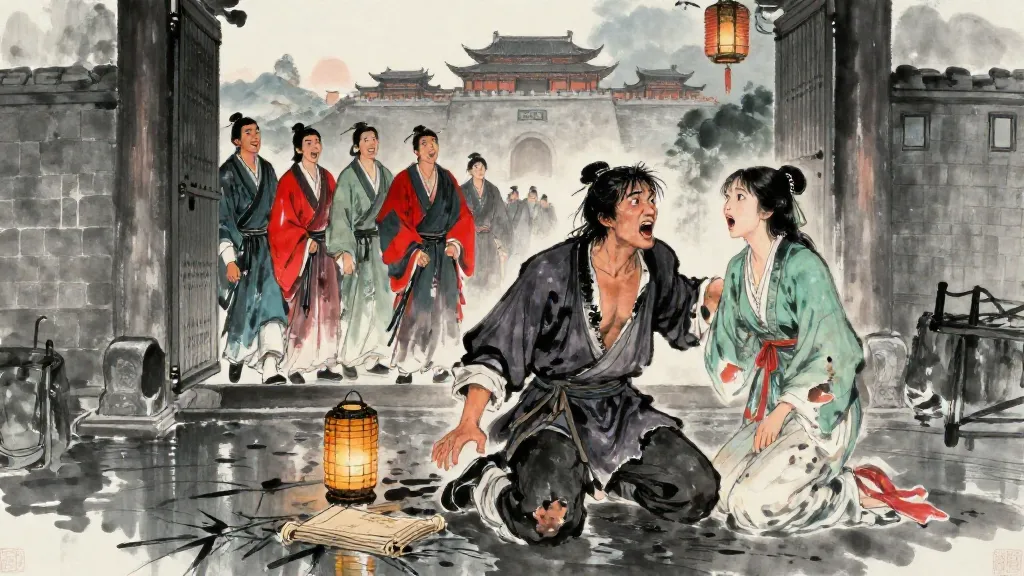
張儀已學遊說諸侯。嘗從楚相飲,已而楚相亡璧,門下意張儀,曰:「儀貧無行,必此盜相君之璧。」共執張儀,掠笞數百,不服,醳之。其妻曰:「廻!子毋讀書遊說,安得此辱乎?」張儀謂其妻曰:「視吾舌尚在不?」其妻笑曰:「舌在也。」儀曰:「足矣。」
蘇秦已說趙王而得相約從親,然恐秦之攻諸侯,敗約後負,念莫可使用於秦者,乃使人微感張儀曰:「子始與蘇秦善,今秦已當路,子何不往游,以求通子之原?」張儀於是之趙,上謁求見蘇秦。蘇秦乃誡門下人不為通,又使不得去者數日。已而見之,坐之堂下,賜仆妾之食。因而數讓之曰:「以子之材能,乃自令困辱至此。吾寧不能言而富貴子,子不足收也。」謝去之。張儀之來也,自以為故人,求益,反見辱,怒,念諸侯莫可事,獨秦能苦趙,乃遂入秦。
蘇秦已而告其舍人曰:「張儀,天下賢士,吾殆弗如也。今吾幸先用,而能用秦柄者,獨張儀可耳。然貧,無因以進。吾恐其樂小利而不遂,故召辱之,以激其意。子為我陰奉之。」乃言趙王,發金幣車馬,使人微隨張儀,與同宿舍,稍稍近就之,奉以車馬金錢,所欲用,為取給,而弗告。張儀遂得以見秦惠王。惠王以為客卿,與謀伐諸侯。
蘇秦之舍人乃辭去。張儀曰:「賴子得顯,方且報德,何故去也?」舍人曰:「臣非知君,知君乃蘇君。蘇君憂秦伐趙敗從約,以為非君莫能得秦柄,故感怒君,使臣陰奉給君資,盡蘇君之計謀。今君已用,請歸報。」張儀曰:「嗟乎,此在吾術中而不悟,吾不及蘇君明矣!吾又新用,安能謀趙乎?為吾謝蘇君,蘇君之時,儀何敢言。且蘇君在,儀寧渠能乎!」張儀既相秦,為文檄告楚相曰:「始吾從若飲,我不盜而璧,若笞我。若善守汝國,我顧且盜而城!」
Zhang Yi was a native of Wei. In his youth he studied under Master Guigu together with Su Qin. Su Qin considered himself inferior to Zhang Yi in ability.
After completing his studies, Zhang Yi traveled among the feudal lords seeking employment as a persuader. Once he was drinking with the Prime Minister of Chu. Afterward the minister's jade disc went missing, and the household suspected Zhang Yi: "Yi is poor and has no scruples — he must have stolen the minister's disc." They seized Zhang Yi and flogged him several hundred strokes. He refused to confess, and they released him. His wife said: "Enough! If you had never studied persuasion, how would you have come to this humiliation?" Zhang Yi said to his wife: "Look at my tongue — is it still there?" His wife laughed and said: "It is still there." Yi said: "That is all that matters."
Su Qin had already persuaded the King of Zhao, obtained the position of chief minister, and forged the Vertical Alliance. Yet he feared that Qin would attack the allied states, breaking the pact and leaving him disgraced. He could think of no one capable of wielding power in Qin on his behalf, so he sent an agent to subtly provoke Zhang Yi: "You and Su Qin were once close friends. Now Su Qin holds the road to power — why not go to him and seek his help in advancing your career?" Zhang Yi accordingly went to Zhao and requested an audience with Su Qin. But Su Qin instructed his gatekeepers to deny him entry, and kept him waiting for several days. When he finally received him, Su Qin seated him below the hall and served him the food of servants and concubines. He berated him repeatedly: "With your talents, you have let yourself sink to such degradation. I could certainly put in a word and make you rich and honored, but you are not worth helping." Then he dismissed him. Zhang Yi had come expecting the warmth of an old friend and hoping for assistance; instead he was humiliated. In his fury he considered which state to serve, concluded that only Qin had the power to make Zhao suffer, and entered Qin.
Afterward Su Qin told his retainer: "Zhang Yi is the most capable man in the world — I am probably not his equal. I was fortunate to be employed first, but the only person who can wield the levers of Qin is Zhang Yi. Yet he is poor and has no means to advance. I feared he would settle for some petty advantage and never fulfill his potential, so I summoned and insulted him to fire his ambition. I want you to secretly support him." Su Qin then spoke to the King of Zhao, who provided gold, silk, carriages, and horses. An agent was sent to follow Zhang Yi covertly, to lodge at the same inns, to gradually befriend him, and to supply him with carriages, horses, and money for whatever he needed — all without revealing who was behind it. Zhang Yi was thus able to gain an audience with King Hui of Qin. The king appointed him as guest minister and consulted him on campaigns against the other states.
Su Qin's retainer then took his leave. Zhang Yi said: "It is thanks to you that I have risen. I was about to repay your kindness — why are you leaving?" The retainer said: "It was not I who understood you, sir. It was Lord Su. Lord Su feared that Qin would attack Zhao and break the Vertical Alliance. He believed that no one but you could wield power in Qin, so he deliberately provoked your anger and sent me to secretly provide you with funds. It was all Lord Su's design. Now that you are established, I beg leave to return and report." Zhang Yi sighed: "Alas! This was all within my field of expertise and yet I did not see it. I am clearly not Su Qin's equal in insight! Moreover, I am newly appointed — how could I plot against Zhao? Convey my thanks to Lord Su. As long as Lord Su lives, I would not dare make any move. With Su Qin in place, how could I possibly act against him?"
Once Zhang Yi became Prime Minister of Qin, he sent a formal letter to the Prime Minister of Chu declaring: "When I drank with you, I did not steal your disc, yet you flogged me. You had best guard your state well, for now I intend to steal your cities!"
Notes
Zhang Yi (張儀, d. 309 BC) was a native of Wei and the foremost advocate of the Horizontal Alliance (連橫), the diplomatic strategy of aligning the eastern states individually with Qin. He served as Prime Minister of Qin under King Hui (惠王) and is the great counterpart to Su Qin, champion of the Vertical Alliance (合縱).
Master Guigu (鬼谷先生) was the legendary teacher of diplomacy and strategy, said to have lived in a secluded valley. Both Su Qin and Zhang Yi are traditionally credited as his students. Historicity is debated.
The tongue episode is one of the most famous anecdotes in Chinese political history. Zhang Yi's point is that a persuader's only true instrument is his tongue — as long as he can speak, he can recover from any setback.
Su Qin (蘇秦, d. c. 284 BC) was the architect of the Vertical Alliance (合縱), the north-south coalition of six states against Qin. His biography is Shiji chapter 69. His deliberate humiliation of Zhang Yi is presented as a masterstroke — by enraging Zhang Yi, he ensured Zhang Yi would go to Qin and wield its power responsibly rather than aggressively against the alliance.
King Hui of Qin (秦惠王, also 秦惠文王, r. 337–311 BC) was the Qin ruler who employed Zhang Yi and elevated Qin to a dominant position among the Warring States. He adopted the title 'King' (王) in 325 BC.
Guest minister (客卿) was a rank given to foreign-born advisors serving a state other than their homeland — a common practice in the Warring States period, when talent freely crossed borders.