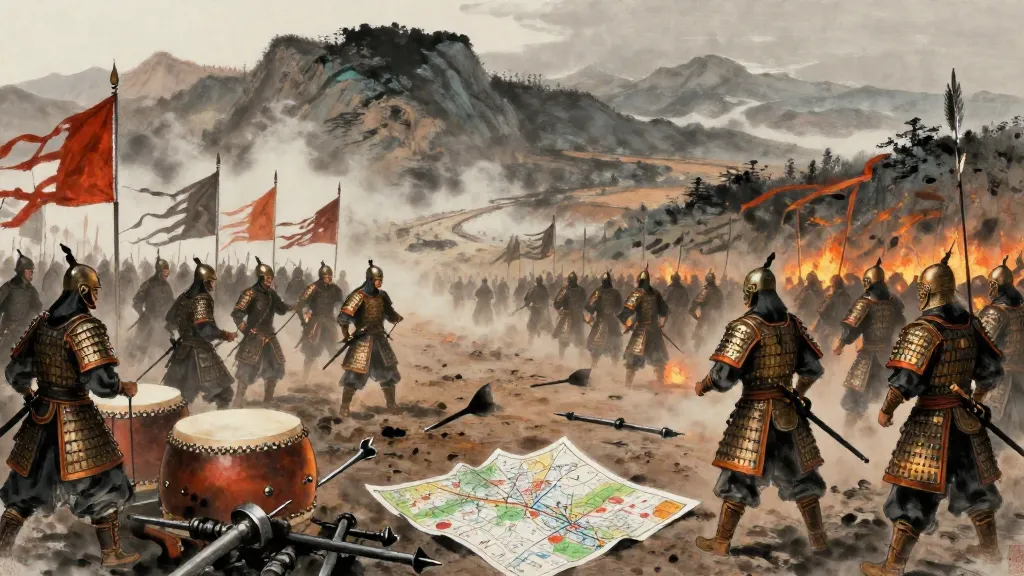
孟嘗君列傳 (Biography of Lord Mengchang) — Chinese ink painting

Chapter 75 of 130

孟嘗君列傳

Biography of Lord Mengchang

View:

田嬰用事於齊

Tian Ying's Rise in Qi

孟嘗君名文,姓田氏。文之父曰靖郭君田嬰。田嬰者,齊威王少子而齊宣王庶弟也。田嬰自威王時任職用事,與成侯鄒忌及田忌將而救韓伐魏。成侯與田忌爭寵,成侯賣田忌。田忌懼,襲齊之邊邑,不勝,亡走。會威王卒,宣王立,知成侯賣田忌,乃復召田忌以為將。宣王二年,田忌與孫臏、田嬰俱伐魏,敗之馬陵,虜魏太子申而殺魏將龐涓。宣王七年,田嬰使於韓、魏,韓、魏服於齊。嬰與韓昭侯、魏惠王會齊宣王東阿南,盟而去。明年,復與梁惠王會甄。是歲,梁惠王卒。宣王九年,田嬰相齊。齊宣王與魏襄王會徐州而相王也。楚威王聞之,怒田嬰。明年,楚伐敗齊師於徐州,而使人逐田嬰。田嬰使張醜說楚威王,威王乃止。田嬰相齊十一年,宣王卒,湣王即位。即位三年,而封田嬰於薛。

Lord Mengchang's personal name was Wen; his surname was Tian. Wen's father was Lord Jingguo, Tian Ying. Tian Ying was a younger son of King Wei of Qi and a half-brother of King Xuan of Qi. From the time of King Wei, Tian Ying held office and wielded authority. He served alongside the Marquis of Cheng, Zou Ji, and Tian Ji as generals in the campaign to rescue Han and attack Wei. The Marquis of Cheng competed with Tian Ji for favor and slandered him. Tian Ji, fearing for his life, attempted to seize a Qi border town but failed and fled into exile. When King Wei died and King Xuan took the throne, the new king learned that the Marquis of Cheng had slandered Tian Ji, and recalled Tian Ji to serve as general. In the second year of King Xuan, Tian Ji, Sun Bin, and Tian Ying together attacked Wei and defeated them at Maling, capturing Crown Prince Shen of Wei and killing General Pang Juan. In King Xuan's seventh year, Tian Ying was sent as envoy to Han and Wei, and both states submitted to Qi. Ying joined with Marquis Zhao of Han and King Hui of Wei in meeting King Xuan of Qi south of Dong'e, where they swore an oath and departed. The following year, he again met with King Hui of Liang at Zhen. That same year, King Hui of Liang died. In King Xuan's ninth year, Tian Ying became chancellor of Qi. King Xuan of Qi and King Xiang of Wei met at Xuzhou and mutually recognized each other as kings. When King Wei of Chu heard of this, he was furious at Tian Ying. The following year, Chu attacked and defeated the Qi army at Xuzhou and sent men to pursue Tian Ying. Tian Ying dispatched Zhang Chou to persuade King Wei of Chu, who then relented. Tian Ying served as chancellor of Qi for eleven years. King Xuan died and King Min succeeded him. Three years after his accession, King Min enfeoffed Tian Ying at Xue.

Notes

1person孟嘗君田文Mèngcháng Jūn Tián Wén

Lord Mengchang (孟嘗君), personal name Tian Wen (田文, d. c. 279 BC), was one of the 'Four Lords' of the Warring States, famous for maintaining over three thousand retainers at his fief of Xue. His father Tian Ying was a member of the Qi royal house.

2person田嬰Tián Yīng

Tian Ying (田嬰, d. c. 279 BC), posthumously titled Lord Jingguo (靖郭君), was a son of King Wei of Qi who served as chancellor and founded the Xue power base that his son Lord Mengchang would make famous.

3person鄒忌Zōu Jì

Zou Ji (鄒忌), titled Marquis of Cheng (成侯), was a celebrated advisor and chancellor of Qi under King Wei. He is famous for his mirror analogy about flattery in Shiji chapter 46.

4place

Xue (薛) was Lord Mengchang's fief, located near modern Tengzhou (滕州), Shandong. It became a gathering place for thousands of retainers and wandering knights.

田文不當舉而生

Tian Wen: The Child Who Should Not Have Lived

初,田嬰有子四十餘人。其賤妾有子名文,文以五月五日生。嬰告其母曰:"勿舉也。"其母竊舉生之。及長,其母因兄弟而見其子文於田嬰。田嬰怒其母曰:"吾令若去此子,而敢生之,何也?"文頓首,因曰:"君所以不舉五月子者,何故?"嬰曰:"五月子者,長與戶齊,將不利其父母。"文曰:"人生受命於天乎?將受命於戶邪?"嬰默然。文曰:"必受命於天,君何憂焉。必受命於戶,則可高其戶耳,誰能至者!"嬰曰:"子休矣。"

Previously, Tian Ying had over forty sons. A lowly concubine bore a son named Wen, who was born on the fifth day of the fifth month. Ying told the boy's mother: "Do not raise him." But his mother secretly kept and raised him. When Wen had grown up, his mother arranged through her brothers for her son to be presented to Tian Ying. Tian Ying was furious at the mother: "I ordered you to get rid of this child — how dare you raise him?" Wen prostrated himself and said: "Why is it, my lord, that you will not raise a child born in the fifth month?" Ying replied: "A child born in the fifth month will grow to the height of the doorframe and will bring harm to his father and mother." Wen said: "Is a person's fate determined by Heaven, or by the doorframe?" Ying was silent. Wen continued: "If fate is determined by Heaven, what is there to worry about? If fate is determined by the doorframe, then simply raise the doorframe higher — who could reach it?" Ying said: "Enough — say no more."

Notes

1context

The superstition that children born on the fifth day of the fifth month (later the Dragon Boat Festival) would grow dangerously tall and harm their parents was widespread in ancient China. Several historical figures were said to have narrowly escaped infanticide for this reason.

田文諫父養士

Tian Wen Admonishes His Father to Patronize the Worthy

久之,文承間問其父嬰曰:"子之子為何?"曰:"為孫。""孫之孫為何?"曰:"為玄孫。""玄孫之孫為何?"曰:"不能知也。"文曰:"君用事相齊,至今三王矣,齊不加廣而君私家富累萬金,門下不見一賢者。文聞將門必有將,相門必有相。今君後宮蹈綺縠而士不得褐,仆妾餘粱肉而士不厭糟。今君又尚厚積餘藏,欲以遺所不知何人,而忘公家之事日損,文竊怪之。"於是嬰乃禮文,使主家待賓客。賓客日進,名聲聞於諸侯。諸侯皆使人請薛公田嬰以文為太子,嬰許之。嬰卒,謚為靖郭君。而文果代立於薛,是為孟嘗君。

Some time later, Wen found a private moment to ask his father: "What is your son's son called?" "A grandson," Ying replied. "And a grandson's grandson?" "A great-grandson." "And a great-grandson's grandson?" "I cannot say." Wen said: "You have served in power as Qi's chancellor through three kings now, yet Qi's territory has not expanded while your private wealth has accumulated to ten thousand in gold. Among your household, not a single man of worth is to be seen. I have heard that a general's household will produce generals, and a chancellor's household will produce chancellors. Now the women of your inner chambers tread on fine silks while worthy men cannot get coarse cloth; your servants and concubines have surplus grain and meat while worthy men cannot even get chaff. You continue to amass and hoard, intending to leave it to some unknown descendants, while the affairs of the state deteriorate by the day. I find this deeply perplexing."

At this, Ying treated Wen with respect and appointed him to manage the household and receive guests. Guests arrived in increasing numbers, and his reputation spread among the lords. The lords all sent envoys requesting that Lord Xue, Tian Ying, designate Wen as his heir. Ying consented. When Ying died, he was posthumously titled Lord Jingguo. Wen succeeded him at Xue — this was Lord Mengchang.

Notes

1context

Wen's argument — that wealth hoarded for unknown future descendants is wasted, while patronizing worthy men yields immediate political returns — expresses the core philosophy of the Warring States patron-client system. The Four Lords all built their power on this principle.

孟嘗君養士

Lord Mengchang Patronizes His Retainers

孟嘗君在薛,招致諸侯賓客及亡人有罪者,皆歸孟嘗君。孟嘗君舍業厚遇之,以故傾天下之士。食客數千人,無貴賢一與文等。孟嘗君待客坐語,而屏風後常有侍史,主記君所與客語,問親戚居處。客去,孟嘗君已使使存問,獻遺其親戚。孟嘗君曾待客夜食,有一人蔽火光。客怒,以飯不等,輟食辭去。孟嘗君起,自持其飯比之。客慚,自剄。士以此多歸孟嘗君。孟嘗君客無所擇,皆善遇之。人人各自以為孟嘗君親己。

Lord Mengchang, based at Xue, recruited guests and retainers from among the lords, as well as fugitives and criminals — all flocked to Lord Mengchang. Lord Mengchang gave up his own estate income to treat them generously, and by this means drew the best men from across the realm. His retainers numbered several thousand, and whether noble or lowly, he treated them all equally. When Lord Mengchang sat with his guests in conversation, a clerk always sat behind a screen recording what was discussed and noting the whereabouts of each guest's relatives. After a guest departed, Lord Mengchang would already have sent someone to call on and present gifts to the guest's family. Once, when Lord Mengchang was dining with a guest at night, someone blocked the lamplight. The guest, angered — thinking his food was inferior to the lord's — put down his chopsticks and prepared to leave. Lord Mengchang rose, brought his own dish over, and placed it beside the guest's to show they were the same. The guest was ashamed and cut his own throat. After this, men flocked to Lord Mengchang in even greater numbers. Lord Mengchang made no distinctions among his guests, treating all of them well. Every man believed that Lord Mengchang held him personally dear.

Notes

1context

The story of the guest who killed himself over a perceived slight at dinner illustrates both the extreme honor-sensitivity of Warring States retainers and the extraordinary lengths to which Lord Mengchang went to maintain equal treatment. The clerk behind the screen shows the systematic nature of his patronage network.

雞鳴狗盜

The Cock-Crow and the Dog-Thief

秦昭王聞其賢,乃先使涇陽君為質於齊,以求見孟嘗君。孟嘗君將入秦,賓客莫欲其行,諫,不聽。蘇代謂曰:"今旦代從外來,見木禺人與土禺人相與語。木禺人曰:'天雨,子將敗矣。'土禺人曰:'我生於土,敗則歸土。今天雨,流子而行,未知所止息也。'今秦,虎狼之國也,而君欲往,如有不得還,君得無為土禺人所笑乎?"孟嘗君乃止。

齊湣王二十五年,復卒使孟嘗君入秦,昭王即以孟嘗君為秦相。人或說秦昭王曰:"孟嘗君賢,而又齊族也,今相秦,必先齊而後秦,秦其危矣。"於是秦昭王乃止。囚孟嘗君,謀欲殺之。孟嘗君使人抵昭王幸姬求解。幸姬曰:"妾願得君狐白裘。"此時孟嘗君有一狐白裘,直千金,天下無雙,入秦獻之昭王,更無他裘。孟嘗君患之,遍問客,莫能對。最下坐有能為狗盜者,曰:"臣能得狐白裘。"乃夜為狗,以入秦宮臧中,取所獻狐白裘至,以獻秦王幸姬。幸姬為言昭王,昭王釋孟嘗君。孟嘗君得出,即馳去,更封傳,變名姓以出關。夜半至函谷關。秦昭王後悔出孟嘗君,求之已去,即使人馳傳逐之。孟嘗君至關,關法雞鳴而出客,孟嘗君恐追至,客之居下坐者有能為雞鳴,而雞齊鳴,遂發傳出。出如食頃,秦追果至關,已後孟嘗君出,乃還。始孟嘗君列此二人於賓客,賓客盡羞之,及孟嘗君有秦難,卒此二人拔之。自是之後,客皆服。

King Zhao of Qin heard of Lord Mengchang's reputation and first sent the Lord of Jingyang as a hostage to Qi, requesting to meet Lord Mengchang. Lord Mengchang was preparing to travel to Qin. His retainers all opposed the trip and remonstrated, but he would not listen. Su Dai said to him: "This morning I was coming from outside and saw a wooden figure and a clay figure talking to each other. The wooden figure said: 'When it rains, you will be ruined.' The clay figure replied: 'I was born from earth — if I am ruined, I return to earth. But when the rain comes and washes you away, who knows where you will end up?' Now Qin is a land of tigers and wolves. If you go and cannot return, will you not be laughed at by the clay figure?" Lord Mengchang then called off the trip.

In the twenty-fifth year of King Min of Qi, the king finally compelled Lord Mengchang to enter Qin. King Zhao immediately appointed Lord Mengchang as Qin's chancellor. But someone persuaded King Zhao: "Lord Mengchang is a man of ability, and moreover he is of the Qi royal house. As Qin's chancellor, he will surely put Qi first and Qin second — Qin will be endangered." King Zhao then reversed course, imprisoned Lord Mengchang, and plotted to kill him. Lord Mengchang sent someone to appeal to King Zhao's favorite consort for help. The consort said: "I wish to have the lord's white fox-fur coat." Lord Mengchang had possessed one white fox-fur coat, worth a thousand in gold and without equal in the realm, but he had already presented it to King Zhao upon entering Qin and had no other. Lord Mengchang was greatly distressed and asked all his retainers, but none had a solution. A man seated at the very lowest position said: "I can get the fox-fur coat." That night he disguised himself as a dog, broke into the Qin palace storeroom, stole back the fox-fur coat, and presented it to King Zhao's consort. The consort spoke to King Zhao, and King Zhao released Lord Mengchang.

Once freed, Lord Mengchang galloped away at once, altered the travel documents, changed his name, and headed for the border. He reached Hangu Pass at midnight. The pass regulations required that travelers could only exit at cock-crow. Lord Mengchang feared the pursuit would catch up. Among his retainers in the lowest seats was one who could imitate a rooster's crow. He crowed, and all the real roosters crowed in response. The pass was opened and they passed through. About the time it takes to eat a meal after they had left, the Qin pursuers indeed arrived at the pass — but Lord Mengchang had already gone, and they turned back.

When Lord Mengchang had first ranked these two men among his retainers, the other guests had all been ashamed of them. But when Lord Mengchang was in danger in Qin, it was precisely these two who rescued him. From then on, all the retainers were convinced.

Notes

1person秦昭王Qín Zhāo Wáng

King Zhao of Qin (秦昭王, also known as King Zhaoxiang 秦昭襄王, r. 306–251 BC) was the Qin ruler who oversaw the state's decisive military expansion, including the devastating victory at Changping (260 BC).

2person蘇代Sū Dài

Su Dai (蘇代) was a persuader and the younger brother of Su Qin. He served various states as a diplomatic advisor.

3place

Hangu Pass (函谷關) was the principal strategic pass guarding entry to the Qin heartland from the east, located near modern Lingbao, Henan. It was Qin's most important defensive barrier.

4context

The 'cock-crow and dog-thief' (雞鳴狗盜) became one of the most famous idioms in Chinese, referring to people with seemingly low or disreputable skills that prove useful in a crisis. The episode is also central to the philosophical debate about whether Lord Mengchang was truly a patron of 'worthy men' — critics argued that his willingness to harbor criminals and tricksters actually prevented true worthies from serving him.

孟嘗君相齊

Lord Mengchang as Chancellor of Qi

孟嘗君過趙,趙平原君客之。趙人聞孟嘗君賢,出觀之,皆笑曰:"始以薛公為魁然也,今視之,乃眇小丈夫耳。"孟嘗君聞之,怒。客與俱者下,斫擊殺數百人,遂滅一縣以去。

齊湣王不自得,以其遣孟嘗君。孟嘗君至,則以為齊相,任政。

孟嘗君怨秦,將以齊為韓、魏攻楚,因與韓、魏攻秦,而借兵食於西周。蘇代為西周謂曰:"君以齊為韓、魏攻楚九年,取宛、葉以北以彊韓、魏,今復攻秦以益之。韓、魏南無楚憂,西無秦患,則齊危矣。韓、魏必輕齊畏秦,臣為君危之。君不如令敝邑深合於秦,而君無攻,又無借兵食。君臨函谷而無攻,令敝邑以君之情謂秦昭王曰'薛公必不破秦以彊韓、魏。其攻秦也,欲王之令楚王割東國以與齊,而秦出楚懷王以為和'。君令敝邑以此惠秦,秦得無破而以東國自免也,秦必欲之。楚王得出,必德齊。齊得東國益彊,而薛世世無患矣。秦不大弱,而處三晉之西,三晉必重齊。"薛公曰:"善。"因令韓、魏賀秦,使三國無攻,而不借兵食於西周矣。是時,楚懷王入秦,秦留之,故欲必出之。秦不果出楚懷王。

Lord Mengchang passed through Zhao, where Lord Pingyuan received him as a guest. When the people of Zhao heard that Lord Mengchang was a man of renown, they came out to see him. They all laughed and said: "We had imagined Lord Xue to be an imposing figure — now we see he is just a short little man." Lord Mengchang heard this and was enraged. His retainers leapt down and cut and struck, killing several hundred people, then destroyed an entire district before departing.

King Min of Qi was uneasy at having sent Lord Mengchang away. When Lord Mengchang returned, the king made him chancellor of Qi, entrusting him with the government.

Lord Mengchang, harboring resentment against Qin, planned to use Qi's forces alongside Han and Wei to attack Chu, then with Han and Wei attack Qin, borrowing troops and provisions from Western Zhou. Su Dai, speaking on behalf of Western Zhou, said: "My lord, you have used Qi's forces to help Han and Wei attack Chu for nine years, seizing the territory north of Wan and Ye to strengthen Han and Wei. Now you would attack Qin to benefit them further. If Han and Wei have no Chu threat to the south and no Qin threat to the west, then Qi will be endangered. Han and Wei will certainly take Qi lightly and fear only Qin. I am worried for you. You would do better to have our humble domain form a deep alliance with Qin, while you refrain from attacking and stop borrowing troops and provisions. March to Hangu Pass but do not attack. Have our domain tell King Zhao of Qin on your behalf: 'Lord Xue will certainly not destroy Qin to strengthen Han and Wei. His attack on Qin is meant to make Your Majesty order the King of Chu to cede the eastern territories to Qi, while Qin releases King Huai of Chu as a peace settlement.' If you have our domain present this to Qin, Qin can avoid destruction by using the eastern territories to buy its way out — Qin will certainly agree. If the King of Chu is released, he will be grateful to Qi. Qi will gain the eastern territories and grow stronger, and Xue will be safe for generations. Qin will not be greatly weakened but will remain west of the Three Jin, and the Three Jin will therefore value Qi." Lord Xue said: "Good." He then ordered Han and Wei to congratulate Qin, brought the three states to a truce, and stopped borrowing troops and provisions from Western Zhou. At that time, King Huai of Chu had entered Qin and been detained, which is why Lord Mengchang had wanted to secure his release. But in the end Qin did not release King Huai.

Notes

1person齊湣王Qí Mǐn Wáng

King Min of Qi (齊湣王, r. 300–284 BC) was the Qi ruler whose overreach — particularly the destruction of Song — eventually provoked the five-state invasion that nearly annihilated Qi.

2context

The massacre of the Zhao townspeople who mocked Lord Mengchang's short stature reveals the violent underside of the retainer system. The retainers' honor was bound to their patron's, and an insult to the lord was an insult to them all.

3person楚懷王Chǔ Huái Wáng

King Huai of Chu (楚懷王, r. 328–299 BC) was infamously lured to Qin and detained there in 299 BC. He died in captivity in 296 BC, never having been released. His fate became a cautionary tale about trusting Qin's diplomacy.

馮驩彈鋏

Feng Huan Strums His Sword

初,馮驩聞孟嘗君好客,躡蹻而見之。孟嘗君曰;"先生遠辱,何以教文也?"馮驩曰:"聞君好士,以貧身歸於君。"孟嘗君置傳舍十日,孟嘗君問傳舍長曰:"客何所為?"答曰:"馮先生甚貧,猶有一劍耳,又蒯緱。彈其劍而歌曰'長鋏歸來乎,食無魚'。"孟嘗君遷之幸舍,食有魚矣。五日,又問傳舍長。答曰:"客復彈劍而歌曰'長鋏歸來乎,出無輿'。"孟嘗君遷之代舍,出入乘輿車矣。五日,孟嘗君復問傳舍長。舍長答曰:"先生又嘗彈劍而歌曰'長鋏歸來乎,無以為家'。"孟嘗君不悅。

Earlier, Feng Huan had heard that Lord Mengchang was fond of retainers and came to see him wearing straw sandals. Lord Mengchang said: "Sir, you have honored me by coming from far away. What instruction do you have for me?" Feng Huan replied: "I heard that you are fond of worthy men, so I have come, poor as I am, to place myself in your service." Lord Mengchang lodged him in the basic guesthouse. After ten days, Lord Mengchang asked the guesthouse steward: "What has the guest been doing?" The steward answered: "Master Feng is very poor — he has nothing but a sword, and even that has a cord-wrapped hilt. He strums the sword and sings: 'Long sword, let us go home — there is no fish to eat.'" Lord Mengchang moved him to the middle-grade quarters, where there was fish at his meals. After five days, he again asked the steward. The steward answered: "The guest strums his sword again and sings: 'Long sword, let us go home — there is no carriage when I go out.'" Lord Mengchang moved him to the upper quarters, where he had a carriage for coming and going. After five more days, Lord Mengchang again asked the steward. The steward answered: "The gentleman has again been strumming his sword and singing: 'Long sword, let us go home — there is no way to support my family.'" Lord Mengchang was displeased.

Notes

1person馮驩Féng Huān

Feng Huan (馮驩, also written 馮諼 Feng Xuan in the Zhanguoce version) is one of the most celebrated retainers in Warring States literature. His seemingly shameless escalation of demands concealed strategic genius. The 'strumming the sword' (彈鋏) episode became proverbial for a worthy man signaling his unrecognized talents.

馮驩焚券市義

Feng Huan Burns the Debt Tallies to Buy Goodwill

居期年,馮驩無所言。孟嘗君時相齊,封萬戶於薛。其食客三千人。邑入不足以奉客,使人出錢於薛。歲餘不入,貸錢者多不能與其息,客奉將不給。孟嘗君憂之,問左右:"何人可使收債於薛者?"傳舍長曰:"代舍客馮公形容狀貌甚辯,長者,無他伎能,宜可令收債。"孟嘗君乃進馮驩而請之曰:"賓客不知文不肖,幸臨文者三千餘人,邑入不足以奉賓客,故出息錢於薛。薛歲不入,民頗不與其息。今客食恐不給,原先生責之。"馮驩曰;"諾。"辭行,至薛,召取孟嘗君錢者皆會,得息錢十萬。乃多釀酒,買肥牛,召諸取錢者,能與息者皆來,不能與息者亦來,皆持取錢之券書合之。齊為會,日殺牛置酒。酒酣,乃持券如前合之,能與息者,與為期;貧不能與息者,取其券而燒之。曰:"孟嘗君所以貸錢者,為民之無者以為本業也;所以求息者,為無以奉客也。今富給者以要期,貧窮者燔券書以捐之。諸君彊飲食。有君如此,豈可負哉!"坐者皆起,再拜。

孟嘗君聞馮驩燒券書,怒而使使召驩。驩至,孟嘗君曰:"文食客三千人,故貸錢於薛。文奉邑少,而民尚多不以時與其息,客食恐不足,故請先生收責之。聞先生得錢,即以多具牛酒而燒券書,何?"馮驩曰:"然。不多具牛酒即不能畢會,無以知其有餘不足。有餘者,為要期。不足者,雖守而責之十年,息愈多,急,即以逃亡自捐之。若急,終無以償,上則為君好利不愛士民,下則有離上抵負之名,非所以厲士民彰君聲也。焚無用虛債之券,捐不可得之虛計,令薛民親君而彰君之善聲也,君有何疑焉!"孟嘗君乃拊手而謝之。

After a full year, Feng Huan had said nothing of note. Lord Mengchang was then serving as chancellor of Qi with a fief of ten thousand households at Xue. His three thousand retainers could not be supported from the fief's revenue alone, so he had lent money at interest to the people of Xue. After more than a year, the income had not come in — many borrowers could not pay their interest, and the retainers' provisions were running short. Lord Mengchang was troubled and asked his attendants: "Who can be sent to collect the debts at Xue?" The guesthouse steward said: "The guest Feng, from the upper quarters — his manner and bearing are very capable, he is an elder of good character, and he has no other special skills. He would be suitable for collecting debts." Lord Mengchang summoned Feng Huan and said: "My guests, unaware of my unworthiness, have honored me by gathering here — over three thousand of them. The fief's income is insufficient to support them, which is why I lent money at interest in Xue. The annual income has not been collected, and many of the people are not paying their interest. I fear the guests' provisions will run short. I beg you, sir, to go and collect the debts." Feng Huan said: "Very well."

He took his leave, traveled to Xue, and summoned all those who owed Lord Mengchang money, collecting interest payments totaling a hundred thousand. He then ordered a great quantity of wine brewed and fat oxen purchased, and summoned all the debtors — those who could pay and those who could not alike — telling each to bring his debt tally for verification. He prepared a feast and slaughtered oxen for the gathering. When the wine was flowing freely, he held up the debt tallies and verified them one by one. For those who could pay, he set a schedule. For those who were too poor to pay, he took their tallies and burned them. He declared: "The reason Lord Mengchang lent you money was to give those who had nothing the capital to pursue their livelihoods. The reason he sought interest was to have the means to support his guests. Now the wealthy shall pay on schedule; the poor shall have their debts forgiven. Drink heartily, all of you! With a lord like this, how could you bear to fail him?" Everyone present rose and bowed twice.

When Lord Mengchang heard that Feng Huan had burned the debt tallies, he was furious and sent a messenger to summon him. When Feng Huan arrived, Lord Mengchang said: "I feed three thousand guests and therefore lent money in Xue. My fief's income is small, and many people still will not pay their interest on time — I feared the guests' food would run short, which is why I asked you to collect the debts. I hear that you took the money, used it all to buy oxen and wine for a feast, and then burned the tallies. What is the meaning of this?" Feng Huan replied: "Just so. Without a lavish feast of oxen and wine, I could not have assembled all the debtors and had no way to distinguish those who could pay from those who could not. Those who can pay have been given a schedule. As for those who cannot — even if you hound them for ten years, the interest will only mount, and in desperation they will simply flee and abandon the debt. If you press them and they can never repay, you will gain above a reputation for greed and indifference to your people, and below a name for driving men to disloyalty and default. That is no way to encourage your people or enhance your reputation. By burning the worthless tallies of uncollectable phantom debts, I have made the people of Xue love you and spread your good name. What is there to doubt?" Lord Mengchang clapped his hands and thanked him.

Notes

1context

Feng Huan's burning of the debt tallies (焚券市義, 'burning tallies to buy goodwill') became one of the most celebrated acts of strategic generosity in Chinese history. The phrase 市義 — literally 'buying righteousness' — captures his argument that political loyalty is a better return on investment than interest payments.

馮驩為孟嘗君復位

Feng Huan Restores Lord Mengchang to Power

齊王惑於秦、楚之毀,以為孟嘗君名高其主而擅齊國之權,遂廢孟嘗君。諸客見孟嘗君廢,皆去。馮驩曰:"借臣車一乘,可以入秦者,必令君重於國而奉邑益廣,可乎?"孟嘗君乃約車幣而遣之。馮驩乃西說秦王曰:"天下之游士馮軾結靷西入秦者,無不欲彊秦而弱齊;馮軾結靷東入齊者,無不欲彊齊而弱秦。此雄雌之國也,勢不兩立為雄,雄者得天下矣。"秦王跽而問之曰:"何以使秦無為雌而可?"馮驩曰:"王亦知齊之廢孟嘗君乎?"秦王曰:"聞之。"馮驩曰:"使齊重於天下者,孟嘗君也。今齊王以毀廢之,其心怨,必背齊;背齊入秦,則齊國之情,人事之誠,盡委之秦,齊地可得也,豈直為雄也!君急使使載幣陰迎孟嘗君,不可失時也。如有齊覺悟,復用孟嘗君,則雌雄之所在未可知也。"秦王大悅,乃遣車十乘黃金百鎰以迎孟嘗君。馮驩辭以先行,至齊,說齊王曰:"天下之游士馮軾結靷東入齊者,無不欲彊齊而弱秦者;馮軾結靷西入秦者,無不欲彊秦而弱齊者。夫秦齊雄雌之國,秦彊則齊弱矣,此勢不兩雄。今臣竊聞秦遣使車十乘載黃金百鎰以迎孟嘗君。孟嘗君不西則已,西入相秦則天下歸之,秦為雄而齊為雌,雌則臨淄、即墨危矣。王何不先秦使之未到,復孟嘗君,而益與之邑以謝之?孟嘗君必喜而受之。秦雖彊國,豈可以請人相而迎之哉!折秦之謀,而絕其霸彊之略。"齊王曰:"善。"乃使人至境候秦使。秦使車適入齊境,使還馳告之,王召孟嘗君而復其相位,而與其故邑之地,又益以千戶。秦之使者聞孟嘗君復相齊,還車而去矣。

The King of Qi, misled by slanders from Qin and Chu, concluded that Lord Mengchang's reputation overshadowed his own and that Mengchang had monopolized the power of Qi. He dismissed Lord Mengchang. When the guests saw that Lord Mengchang had been dismissed, they all left. Feng Huan said: "Lend me a single carriage that can reach Qin, and I will certainly restore your standing in the state and expand your fief. Will you allow it?" Lord Mengchang prepared a carriage and gifts and dispatched him.

Feng Huan traveled west and addressed the King of Qin: "Every traveling scholar who grips the crossbar and hitches the traces to go west to Qin wishes to strengthen Qin and weaken Qi; every one who goes east to Qi wishes to strengthen Qi and weaken Qin. These are the two contending powers — they cannot both be dominant, and the dominant one will win the realm." The King of Qin knelt forward and asked: "How can Qin avoid being the weaker?" Feng Huan said: "Does Your Majesty know that Qi has dismissed Lord Mengchang?" The king said: "I have heard so." Feng Huan continued: "The man who made Qi powerful in the realm was Lord Mengchang. Now the King of Qi has dismissed him on slander. His heart is full of resentment, and he will certainly turn against Qi. If he turns against Qi and enters Qin, then Qi's state secrets and the true disposition of its affairs will all be delivered to Qin. You can take the territory of Qi — it goes beyond merely being the dominant power! Your Majesty should urgently send envoys with gifts to secretly welcome Lord Mengchang. Do not miss this opportunity. If Qi realizes its mistake and restores Lord Mengchang, then which state will be dominant is anyone's guess."

The King of Qin was greatly pleased. He dispatched ten chariots loaded with a hundred measures of gold to welcome Lord Mengchang. Feng Huan took his leave and raced ahead to Qi, where he said to the King of Qi: "Every traveling scholar who goes east to Qi wishes to strengthen Qi and weaken Qin; every one who goes west to Qin wishes to strengthen Qin and weaken Qi. Qin and Qi are the two contending powers. If Qin is strong, Qi is weak — the two cannot both be dominant. Now I have learned in secret that Qin has dispatched ten chariots loaded with a hundred measures of gold to welcome Lord Mengchang. If Lord Mengchang does not go west, that is the end of it. But if he enters Qin and becomes its chancellor, All-Under-Heaven will follow Qin. Qin will be dominant and Qi will be subordinate — and then Linzi and Jimo will be in danger. Would it not be better for Your Majesty, before the Qin envoys arrive, to restore Lord Mengchang and grant him additional towns as an apology? Lord Mengchang will surely be pleased and accept. Though Qin is a powerful state, can it really request another state's chancellor and take him away? This will break Qin's stratagem and cut off its hegemonic designs." The King of Qi said: "Good." He sent men to the border to watch for the Qin envoys. The moment the Qin chariots crossed into Qi's territory, the scouts galloped back to report. The king summoned Lord Mengchang, restored his chancellorship, returned his original fief, and added a thousand households. When the Qin envoys heard that Lord Mengchang had been restored as chancellor of Qi, they turned their chariots around and left.

Notes

1context

Feng Huan's scheme — using one identical argument (the Qin-Qi rivalry) to manipulate both courts simultaneously — is a masterpiece of Warring States diplomacy. He told Qin what Qin wanted to hear (that Mengchang would betray Qi) and told Qi what Qi feared most (that Mengchang would serve Qin). Neither claim was true; both were effective.

2place

Linzi (臨淄) was the capital of Qi; Jimo (即墨) was its most important eastern stronghold, near modern Pingdu, Shandong. These were Qi's two indispensable cities.

客如朝市

Guests Are Like the Morning Market

自齊王毀廢孟嘗君,諸客皆去。後召而復之,馮驩迎之。未到,孟嘗君太息嘆曰:"文常好客,遇客無所敢失,食客三千有餘人,先生所知也。客見文一日廢,皆背文而去,莫顧文者。今賴先生得復其位,客亦有何面目復見文乎?如復見文者,必唾其面而大辱之。"馮驩結轡下拜。孟嘗君下車接之,曰:"先生為客謝乎?"馮驩曰:"非為客謝也,為君之言失。夫物有必至,事有固然,君知之乎?"孟嘗君曰:"愚不知所謂也。"曰:"生者必有死,物之必至也;富貴多士,貧賤寡友,事之固然也。君獨不見夫趣市者乎?明旦,側肩爭門而入;日暮之後,過市朝者掉臂而不顧。非好朝而惡暮,所期物忘其中。今君失位,賓客皆去,不足以怨士而徒絕賓客之路。原君遇客如故。"孟嘗君再拜曰:"敬從命矣。聞先生之言,敢不奉教焉。"

From the time the King of Qi had slandered and dismissed Lord Mengchang, all his guests had left. When the king later recalled and restored him, Feng Huan went out to welcome him. Before they had met, Lord Mengchang heaved a great sigh and said: "I have always been fond of my guests and have never dared slight any of them. I have fed over three thousand men, as you well know. Yet the moment they saw me dismissed, every one of them turned their backs and left — not one looked back. Now, thanks to you, I have recovered my position. But what face do any of these guests have to come see me again? If any of them dares show his face, I will spit on him and heap abuse on him."

Feng Huan reined in his horse and dismounted to bow. Lord Mengchang stepped down from his carriage to receive him and said: "Are you apologizing on behalf of the guests?" Feng Huan replied: "I am not apologizing for the guests — I am correcting your words. There are things that must come to pass, and there are things that are naturally so. Do you understand? Lord Mengchang said: "I am too foolish to grasp your meaning." Feng Huan said: "The living must die — that is what must come to pass. The rich and powerful attract many followers; the poor and lowly have few friends — that is what is naturally so. Have you not seen those who flock to the market? In the morning they press shoulder to shoulder, fighting to get through the gate. After sunset, those who pass the marketplace swing their arms and do not even glance inside. It is not that they love morning and hate evening — what they came for is simply no longer there. Now you have lost your position and your guests have all left. That is no reason to resent them and thereby close the door to future guests. I beg you to treat your guests as before."

Lord Mengchang bowed twice and said: "I respectfully obey. Having heard your words, how could I not follow your teaching?"

Notes

1context

The marketplace analogy (市朝之喻) became one of the most quoted passages on the nature of political loyalty in Chinese literature. Feng Huan's point is unsentimental: retainers serve patrons not out of personal love but out of mutual interest, just as market-goers come for goods, not for the market itself. To expect otherwise is to misunderstand the system.

孟嘗君之末與太史公論

Lord Mengchang's Final Years and the Grand Historian's Appraisal

孟嘗君相齊,其舍人魏子為孟嘗君收邑入,三反而不致一入。孟嘗君問之,對曰:"有賢者,竊假與之,以故不致入。"孟嘗君怒而退魏子。居數年,人或毀孟嘗君於齊湣王曰:"孟嘗君將為亂。"及田甲劫湣王,湣王意疑孟嘗君,孟嘗君乃奔。魏子所與粟賢者聞之,乃上書言孟嘗君不作亂,請以身為盟,遂自剄宮門以明孟嘗君。湣王乃驚,而蹤跡驗問,孟嘗君果無反謀,乃復召孟嘗君。孟嘗君因謝病,歸老於薛。湣王許之。

其後,秦亡將呂禮相齊,欲困蘇代。代乃謂孟嘗君曰:"周最於齊,至厚也,而齊王逐之,而聽親弗相呂禮者,欲取秦也。齊、秦合,則親弗與呂禮重矣。有用,齊、秦必輕君。君不如急北兵,趨趙以和秦、魏,收周最以厚行,且反齊王之信,又禁天下之變。齊無秦,則天下集齊,親弗必走,則齊王孰與為其國也!"

孟嘗君懼,乃遺秦相穰侯魏厓書曰:"吾聞秦欲以呂禮收齊,齊,天下之彊國也,子必輕矣。齊秦相取以臨三晉,呂禮必並相矣,是子通齊以重呂禮也。若齊免於天下之兵,其讎子必深矣。子不如勸秦王伐齊。齊破,吾請以所得封子。齊破,秦畏晉之彊,秦必重子以取晉。晉國敝於齊而畏秦,晉必重子以取秦。是子破齊以為功,挾晉以為重;是子破齊定封,秦、晉交重子。若齊不破,呂禮復用,子必大窮。"

後齊湣王滅宋,益驕,欲去孟嘗君。孟嘗君恐,乃如魏。魏昭王以為相,西合於秦、趙,與燕共伐破齊。齊湣王亡在莒,遂死焉。齊襄王立,而孟嘗君中立於諸侯,無所屬。齊襄王新立,畏孟嘗君,與連和,復親薛公。文卒,謚為孟嘗君。諸子爭立,而齊魏共滅薛。孟嘗絕嗣無後也。

太史公曰:吾嘗過薛,其俗閭里率多暴桀子弟,與鄒、魯殊。問其故,曰:"孟嘗君招致天下任俠,奸人入薛中蓋六萬餘家矣。"世之傳孟嘗君好客自喜,名不虛矣。

While Lord Mengchang was chancellor of Qi, his household manager Wei Zi went to collect the fief income three times but returned without a single payment. Lord Mengchang asked why, and Wei Zi replied: "There was a worthy man there, and I secretly lent the income to him. That is why I brought nothing back." Lord Mengchang was angry and dismissed Wei Zi. Some years later, someone slandered Lord Mengchang to King Min of Qi, saying he planned a revolt. When Tian Jia seized King Min, the king suspected Lord Mengchang, and Lord Mengchang fled. The worthy man to whom Wei Zi had given the grain heard of this, submitted a memorial declaring that Lord Mengchang was not plotting rebellion, pledged his own life as surety, and then cut his own throat at the palace gate to prove Lord Mengchang's innocence. King Min was shocked. He investigated and verified that Lord Mengchang had indeed planned no revolt, and recalled him. Lord Mengchang then pleaded illness and retired to Xue. King Min consented.

Afterward, the renegade Qin general Lü Li became chancellor of Qi and sought to undermine Su Dai. Su Dai told Lord Mengchang of a counter-strategy involving Zhou Zui, the balance of Qi and Qin, and the manipulation of the Marquis of Rang, Wei Ran, Qin's chancellor. Lord Mengchang wrote to Wei Ran proposing that Qin attack Qi — and offering Wei Ran territory from the conquered lands in return. His argument was that if Qi allied with Qin, Lü Li would gain power at Wei Ran's expense, whereas if Qi were broken, Wei Ran would be indispensable to both Qin and the Three Jin.

Later, King Min of Qi destroyed Song and grew increasingly arrogant, wishing to remove Lord Mengchang. Lord Mengchang, fearing for his life, went to Wei. King Zhao of Wei appointed him chancellor. From Wei, he allied westward with Qin and Zhao, and together with Yan they invaded and shattered Qi. King Min fled to Ju, where he was killed. King Xiang of Qi took the throne, but Lord Mengchang stood neutral among the lords, belonging to no state. The newly enthroned King Xiang, fearing Lord Mengchang, formed an alliance with him and renewed ties with Lord Xue. When Wen died, he was posthumously titled Lord Mengchang. His sons fought over the succession, and Qi and Wei together destroyed Xue. Lord Mengchang's line was extinguished and had no heirs.

The Grand Historian remarks: I once passed through Xue. The local customs are rough — the neighborhoods are full of violent and unruly young men, quite unlike neighboring Zou and Lu. When I asked why, the people said: "Lord Mengchang recruited knights-errant and outlaws from across the realm — some sixty thousand households of such people settled in Xue." The tradition that Lord Mengchang took pride in his love of guests is indeed no empty reputation.

Notes

1person魏冉Wèi Rǎn

Wei Ran (魏冉), titled Marquis of Rang (穰侯), was the maternal uncle of King Zhao of Qin and the power behind the throne for decades. His rivalry with other Qin ministers drove much of the era's diplomacy.

2context

Lord Mengchang's role in the five-state invasion of Qi (284 BC) — serving as Wei's chancellor and coordinating the attack on his own native state — is one of the most remarkable acts of the Warring States period. It reflects both his personal grievance against King Min and the fluid loyalties of the era.

3place

Ju (莒) was a city in southeastern Shandong (modern Ju County 莒縣) where King Min of Qi fled after the invasion. He was killed there by Nao Chi, a Chu general.

4context

Sima Qian's appraisal is characteristically double-edged. He confirms Lord Mengchang's fame as a patron but also notes that the legacy of that patronage was a population of thugs and outlaws — suggesting that indiscriminate hospitality breeds disorder rather than virtue.

Edition & Source

Text
《史記》 Shiji
Edition
中華古詩文古書籍網 transcription
Commentary
裴駰《史記集解》、司馬貞《史記索隱》、張守節《史記正義》(Three Commentaries)