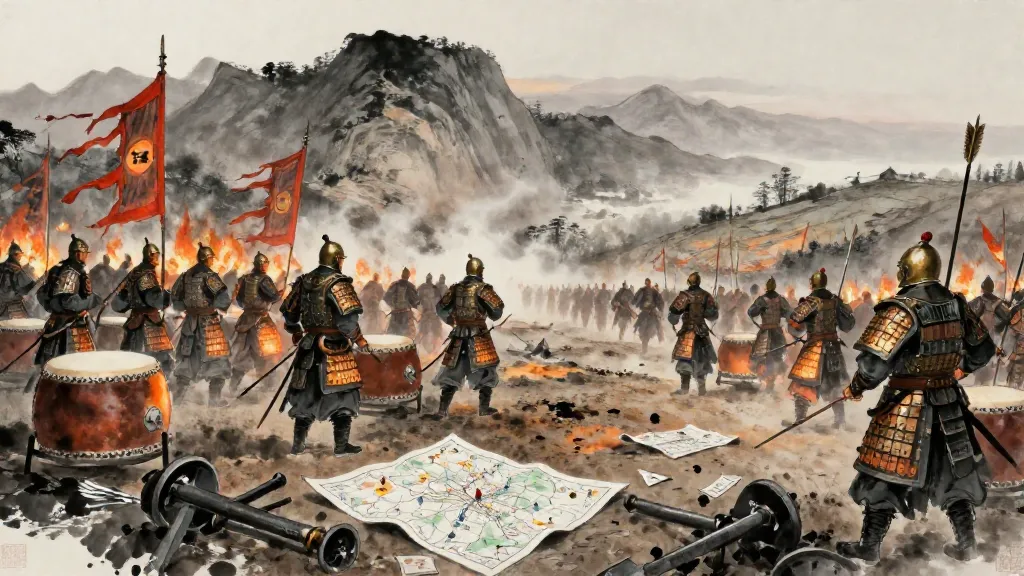
春申君列傳 (Biography of Lord Chunshen) — Chinese ink painting

Chapter 78 of 130

春申君列傳

Biography of Lord Chunshen

View:

黃歇上書說秦

Huang Xie Submits a Memorial to Persuade Qin

春申君者,楚人也,名歇,姓黃氏。遊學博聞,事楚頃襄王。頃襄王以歇為辯,使於秦。秦昭王使白起攻韓、魏,敗之於華陽,禽魏將芒卯,韓、魏服而事秦。秦昭王方令白起與韓、魏共伐楚,未行,而楚使黃歇適至於秦,聞秦之計。當是之時,秦已前使白起攻楚,取巫、黔中之郡,拔鄢郢,東至竟陵,楚頃襄王東徙治於陳縣。黃歇見楚懷王之為秦所誘而入朝,遂見欺,留死於秦。頃襄王,其子也,秦輕之,恐壹舉兵而滅楚。歇乃上書說秦昭王曰:

天下莫彊於秦、楚。今聞大王欲伐楚,此猶兩虎相與斗。兩虎相與斗而駑犬受其弊,不如善楚。臣請言其說:臣聞物至則反,冬夏是也;致至則危,累釭是也。今大國之地,遍天下有其二垂,此從生民已來,萬乘之地未嘗有也。先帝文王、莊王之身,三世不妄接地於齊,以絕從親之要。今王使盛橋守事於韓,盛橋以其地入秦,是王不用甲,不信威,而得百里之地。王可謂能矣。王又舉甲而攻魏,杜大梁之門,舉河內,拔燕、酸棗、虛、桃,入邢,魏之兵雲翔而不敢捄。王之功亦多矣。王休甲息眾,二年而後復之;又並蒲、衍、首、垣,以臨仁、平丘,黃、濟陽嬰城而魏氏服;王又割濮之北,注齊秦之要,絕楚趙之脊,天下五合六聚而不敢救。王之威亦單矣。

Lord Chunshen was a man of Chu, named Xie, of the Huang clan. Widely traveled and deeply learned, he served King Qingxiang of Chu. The king, recognizing Xie's eloquence, sent him as envoy to Qin. King Zhao of Qin had dispatched Bai Qi to attack Han and Wei, defeating them at Huayang and capturing the Wei general Mang Mao. Han and Wei submitted and served Qin. King Zhao was now preparing to order Bai Qi and the forces of Han and Wei to jointly invade Chu — but the campaign had not yet begun when Chu's envoy Huang Xie arrived in Qin and learned of the plan.

At that time, Qin had already sent Bai Qi against Chu in an earlier campaign, seizing the commanderies of Wu and Qianzhong, taking Yan and Ying, and advancing east to Jingling. King Qingxiang of Chu had been forced to relocate his court eastward to Chen. Huang Xie had witnessed how King Huai of Chu had been lured to Qin, deceived, detained, and left to die there. King Qingxiang was his son. Qin held him in contempt and was poised to destroy Chu in a single campaign.

Xie therefore submitted a memorial to King Zhao of Qin:

"No states under Heaven are mightier than Qin and Chu. Now I hear Your Majesty intends to attack Chu — this is like two tigers fighting each other. While two tigers fight, a worthless dog profits from their exhaustion. Better to make peace with Chu. Allow me to explain.

"I have heard that when things reach their extreme, they reverse — as winter and summer show; when accumulation reaches its peak, it becomes precarious — as stacked cups demonstrate. Now Your Majesty's territory covers two-thirds of All-Under-Heaven. Since the beginning of human civilization, no state of ten thousand chariots has ever held so much. Through the reigns of the former kings — King Wen and King Zhuang — across three generations, Qin refrained from rashly seizing Qi's territory, in order to sever the essential link of the north-south alliance. Then Your Majesty stationed Sheng Qiao in Han, and Sheng Qiao delivered his territory to Qin — without deploying armor or brandishing force, Your Majesty gained a hundred li of land. That may be called ability. Your Majesty then raised an army to attack Wei, sealed the gates of Daliang, seized Henei, took Yan, Suanzao, Xu, and Tao, and entered Xing. Wei's forces circled helplessly without daring to fight. Your Majesty's achievements are indeed great. Your Majesty then rested the army for two years before resuming; you annexed Pu, Yan, Shou, and Yuan, loomed over Ren and Pingqiu, and the cities of Huang and Jiyang pulled up their drawbridges as Wei submitted. Your Majesty further carved off the territory north of Pu, commanding the vital junction between Qi and Qin, severing the spine that connects Chu and Zhao. The states assembled five and six times but dared not rescue one another. Your Majesty's prestige is already supreme."

Notes

1person黃歇Huáng Xiē

Lord Chunshen (春申君), personal name Huang Xie (黃歇, d. 238 BC), was the last of the Four Lords of the Warring States. He served as chancellor of Chu for over twenty-five years and was enfeoffed at Wu (modern Suzhou area), where he developed the region.

2person楚頃襄王Chǔ Qīngxiāng Wáng

King Qingxiang of Chu (楚頃襄王, r. 298–263 BC) was the son of King Huai, who had died in Qin captivity. His reign saw Chu's catastrophic loss of its heartland and the relocation of the capital eastward.

3place

Chen (陳) was the city to which Chu relocated its capital after losing Ying to Qin in 278 BC. It is modern Huaiyang (淮陽), Henan. Chu would later move again to Shouchun (壽春, modern Shouxian, Anhui).

4place

Huayang (華陽) was the site of a major Qin victory in 273 BC, near modern Zhengzhou, Henan. Bai Qi's destruction of the combined Han-Wei army there forced both states into submission.

黃歇論秦不宜伐楚

Huang Xie Argues That Qin Should Not Attack Chu

王若能持功守威,絀攻取之心而肥仁義之地,使無後患,三王不足四,五伯不足六也。王若負人徒之眾,仗兵革之彊,乘毀魏之威,而欲以力臣天下之主,臣恐其有後患也。詩曰"靡不有初,鮮克有終"。易曰"狐涉水,濡其尾"。此言始之易,終之難也。何以知其然也?昔智氏見伐趙之利而不知榆次之禍,吳見伐齊之便而不知乾隧之敗。此二國者,非無大功也,沒利於前而易患於後也。吳之信越也,從而伐齊,既勝齊人於艾陵,還為越王禽三渚之浦。智氏之信韓、魏也,從而伐趙,攻晉陽城,勝有日矣,韓、魏叛之,殺智伯瑤於鑿台之下。今王妒楚之不毀也,而忘毀楚之彊韓、魏也,臣為王慮而不取也。

且王攻楚將惡出兵?王將借路於仇讎之韓、魏乎?兵出之日而王憂其不返也,是王以兵資於仇讎之韓、魏也。王若不借路於仇讎之韓、魏,必攻隨水右壤。隨水右壤,此皆廣川大水,山林谿谷,不食之地也,王雖有之,不為得地。是王有毀楚之名而無得地之實也。

且王攻楚之日,四國必悉起兵以應王。秦、楚之兵構而不離,魏氏將出而攻留、方與、銍、湖陵、碭、蕭、相,故宋必盡。齊人南面攻楚,泗上必舉。此皆平原四達,膏腴之地,而使獨攻。王破楚以肥韓、魏於中國而勁齊。韓、魏之彊,足以校於秦。齊南以泗水為境,東負海,北倚河,而無後患,天下之國莫彊於齊、魏,齊、魏得地葆利而詳事下吏,一年之後,為帝未能,其於禁王之為帝有餘矣。

夫以王壤土之博,人徒之眾,兵革之彊,壹舉事而樹怨於楚,遲令韓、魏歸帝重於齊,是王失計也。臣為王慮,莫若善楚。秦、楚合而為一以臨韓,韓必斂手。王施以東山之險,帶以曲河之利,韓必為關內之侯。若是而王以十萬戍鄭,梁氏寒心,許、鄢陵嬰城,而上蔡、召陵不往來也,如此而魏亦關內侯矣。王壹善楚,而關內兩萬乘之主注地於齊,齊右壤可拱手而取也。王之地一經兩海,要約天下,是燕、趙無齊、楚,齊、楚無燕、趙也。然後危動燕、趙,直搖齊、楚,此四國者不待痛而服矣。

昭王曰:"善。"於是乃止白起而謝韓、魏。發使賂楚,約為與國。

"If Your Majesty can hold your achievements, maintain your prestige, restrain the impulse to attack and conquer, and instead cultivate the ground of benevolence and righteousness, ensuring no future troubles — then the Three Kings would not suffice to make a fourth, and the Five Hegemons would not suffice to make a sixth. But if Your Majesty relies on the mass of your people, the strength of your armaments, and the momentum of Wei's destruction, and attempts to subjugate the lords of the realm by force alone, I fear there will be consequences. The Odes say: 'None fail to make a beginning; few manage to see it through.' The Changes say: 'The fox fords the water and wets its tail.' These speak of how easy it is to begin and how hard to finish.

"How do we know this? In the past, the Zhi clan saw the profit in attacking Zhao but did not foresee the disaster at Yuci. Wu saw the advantage in attacking Qi but did not foresee the defeat at Gansui. These were not states without great achievements — they were swallowed by the profit before them and caught unawares by the peril behind. Wu trusted Yue and went to attack Qi. Having defeated Qi at Ailing, Wu returned only to be captured by the King of Yue at the marsh of Sanzhu. The Zhi clan trusted Han and Wei and went to attack Zhao, besieging the city of Jinyang with victory in sight. But Han and Wei turned against them and killed Zhi Bo Yao beneath the Zuotai. Now Your Majesty is jealous that Chu has not been destroyed, but forgets that destroying Chu will strengthen Han and Wei. This is a course I cannot recommend.

"Moreover, when Your Majesty attacks Chu, where will the army advance from? Will you borrow passage through hostile Han and Wei? From the day the army departs, you will worry it will not return — you would be placing your forces at the mercy of your enemies. If you do not borrow passage through Han and Wei, you must attack through the territory west of the Sui River — all broad rivers and deep waters, mountains and forests and gorges, land that produces no food. Even if you take it, it is worthless. You would have the reputation of destroying Chu without the reality of gaining territory.

"Furthermore, on the day you attack Chu, four states will certainly raise their armies in response. While Qin and Chu are locked in battle and cannot disengage, Wei will seize Liu, Fangyu, Zhi, Huling, Dang, Xiao, and Xiang — all of the former Song territory. Qi will attack southward and take everything above the Si River. These are all flat, rich, fertile lands — and you will be fighting alone. By breaking Chu, you will fatten Han and Wei in the Central States and invigorate Qi. Han and Wei, once strengthened, will be able to contest with Qin. Qi, with the Si River as its southern border, the sea to its east, and the Yellow River to its north, will face no threats. No states in the realm would be mightier than Qi and Wei. Once Qi and Wei have secured territory and consolidated their gains, they may not be able to claim the imperial title within a year, but they will certainly be able to prevent Your Majesty from claiming it.

"With Your Majesty's vast territory, huge population, and powerful army — to undertake a single campaign, make an enemy of Chu, and in the end hand the imperial balance to Han, Wei, and Qi: that is a miscalculation. I recommend instead: make peace with Chu. If Qin and Chu unite and bear down on Han, Han will fold its hands and submit. Deploy the advantages of the eastern mountains and the winding Yellow River, and Han becomes a vassal within the passes. Station a hundred thousand at Zheng, and the Liang clan will lose heart — Xu and Yanling will pull up their drawbridges, and Shangcai and Shaoling will be cut off. Wei too becomes a vassal within the passes. One act of friendship toward Chu, and two states of ten thousand chariots each are forced to pour their territory into Qi. Qi's western flank can then be taken without effort. Your Majesty's territory will span from sea to sea, commanding All-Under-Heaven. Yan and Zhao will be severed from Qi and Chu; Qi and Chu from Yan and Zhao. Then unsettle Yan and Zhao, shake Qi and Chu directly — these four states will submit before they even feel the pain."

King Zhao said: "Good." He thereupon halted Bai Qi and dismissed Han and Wei. He sent envoys bearing gifts to Chu and agreed to an alliance.

Notes

1context

Huang Xie's memorial is one of the longest diplomatic arguments preserved in the Shiji. Its core strategy — that Qin should ally with Chu rather than destroy it, because destroying Chu would disproportionately benefit the middling states of Han, Wei, and Qi — is a classic application of the 'distant friendship, near attack' (遠交近攻) principle that would later become Qin's official strategy under Fan Sui.

2context

The Zhi clan (智氏) episode refers to 453 BC, when Zhi Bo besieged Zhao at Jinyang but was destroyed when his allies Han and Wei defected. This event split Jin into three states and is traditionally considered the beginning of the Warring States period.

3context

Wu's defeat by Yue at Sanzhu (三渚) refers to King Fuchai of Wu's destruction by King Goujian of Yue in 473 BC. Wu had been distracted by its northern ambitions against Qi, allowing Yue to strike from behind — the exact scenario Huang Xie warns Qin about.

黃歇出身送太子歸楚

Huang Xie Risks His Life to Send the Crown Prince Home

黃歇受約歸楚,楚使歇與太子完入質於秦,秦留之數年。楚頃襄王病,太子不得歸。而楚太子與秦相應侯善,於是黃歇乃說應侯曰:"相國誠善楚太子乎?"應侯曰:"然。"歇曰:"今楚王恐不起疾,秦不如歸其太子。太子得立,其事秦必重而德相國無窮,是親與國而得儲萬乘也。若不歸,則鹹陽一布衣耳;楚更立太子,必不事秦。夫失與國而絕萬乘之和,非計也。原相國孰慮之。"應侯以聞秦王。秦王曰:"令楚太子之傅先往問楚王之疾,返而後圖之。"黃歇為楚太子計曰:"秦之留太子也,欲以求利也。今太子力未能有以利秦也,歇憂之甚。而陽文君子二人在中,王若卒大命,太子不在,陽文君子必立為後,太子不得奉宗廟矣。不如亡秦,與使者俱出;臣請止,以死當之。"楚太子因變衣服為楚使者御以出關,而黃歇守舍,常為謝病。度太子已遠,秦不能追,歇乃自言秦昭王曰:"楚太子已歸,出遠矣。歇當死,原賜死。"昭王大怒,欲聽其自殺也。應侯曰:"歇為人臣,出身以徇其主,太子立,必用歇,故不如無罪而歸之,以親楚。"秦因遣黃歇。

Huang Xie returned to Chu with the agreement. Chu then sent Xie and Crown Prince Wan to Qin as hostages. Qin detained them for several years. When King Qingxiang of Chu fell ill, the crown prince was not permitted to return. The Chu crown prince had formed a friendship with the Marquis of Ying, Qin's chancellor. Huang Xie therefore went to persuade the Marquis of Ying: "Does the chancellor truly care for the Chu crown prince?" The Marquis of Ying said: "I do." Xie continued: "The King of Chu will likely not recover. Qin should send the crown prince home. If the prince takes the throne, he will serve Qin with the utmost gravity and be endlessly grateful to the chancellor — you will have made a friend of an allied state and secured the heir of a state of ten thousand chariots. If you do not send him back, he will be nothing but a commoner in Xianyang. Chu will install a different heir, one who will certainly not serve Qin. To lose an ally and sever relations with a state of ten thousand chariots is poor strategy. I beg the chancellor to consider carefully."

The Marquis of Ying reported this to the King of Qin. The king said: "Have the crown prince's tutor go ahead to inquire after the King of Chu's illness. When he returns, we will decide." Huang Xie then counseled the crown prince: "Qin is holding you to extract concessions. At present, you have nothing to offer Qin, and I am gravely worried. Lord Yangwen's two sons are at court in Chu. If the king dies while you are absent, Lord Yangwen's son will certainly be installed as heir, and you will lose the ancestral temples. You should escape from Qin — disguise yourself as a Chu envoy's driver and leave through the pass. I will stay behind to face the consequences with my life."

The crown prince changed his clothes, posed as a chariot-driver for a Chu envoy, and left through the pass. Huang Xie remained at their lodgings, continually declining visitors on the pretext of illness. When he judged that the prince was far enough away that Qin could not catch him, Xie went before King Zhao of Qin and declared: "The Chu crown prince has returned. He is already far away. I deserve death — I beg to be executed."

King Zhao was furious and was inclined to let Xie kill himself. The Marquis of Ying intervened: "Xie served his master by putting his own life at risk. When the crown prince takes the throne, he will certainly employ Xie. Better to release him without punishment, as a gesture of goodwill toward Chu." Qin accordingly sent Huang Xie home.

Notes

1person楚考烈王Chǔ Kǎoliè Wáng

Crown Prince Wan (太子完) later became King Kaolie of Chu (楚考烈王, r. 262–238 BC). His escape from Qin, engineered by Huang Xie, secured the Chu succession and made Huang Xie the most powerful man in Chu for the next quarter-century.

2context

Huang Xie's willingness to face execution so the crown prince could escape echoes the ethic of the Warring States retainer: absolute devotion to one's lord, even unto death. The Marquis of Ying's pragmatic argument for releasing him — that executing a loyal minister would only alienate the new Chu king — shows the diplomatic calculus that ultimately saved Xie's life.

春申君相楚

Lord Chunshen as Chancellor of Chu

歇至楚三月,楚頃襄王卒,太子完立,是為考烈王。考烈王元年,以黃歇為相,封為春申君,賜淮北地十二縣。後十五歲,黃歇言之楚王曰:"淮北地邊齊,其事急,請以為郡便。"因並獻淮北十二縣。請封於江東。考烈王許之。春申君因城故吳墟,以自為都邑。

春申君既相楚,是時齊有孟嘗君,趙有平原君,魏有信陵君,方爭下士,招致賓客,以相傾奪,輔國持權。

春申君為楚相四年,秦破趙之長平軍四十餘萬。五年,圍邯鄲。邯鄲告急於楚,楚使春申君將兵往救之,秦兵亦去,春申君歸。春申君相楚八年,為楚北伐滅魯,以荀卿為蘭陵令。當是時,楚復彊。

趙平原君使人於春申君,春申君舍之於上舍。趙使欲夸楚,為玳瑁簪,刀劍室以珠玉飾之,請命春申君客。春申君客三千餘人,其上客皆躡珠履以見趙使,趙使大慚。

Three months after Xie reached Chu, King Qingxiang died and Crown Prince Wan took the throne — this was King Kaolie. In the first year of King Kaolie's reign, he appointed Huang Xie as chancellor and enfeoffed him as Lord Chunshen, granting him twelve counties north of the Huai River. Fifteen years later, Huang Xie told the King of Chu: "The territory north of the Huai borders Qi, and the situation there is precarious. I request that it be converted into a commandery for administrative convenience." He then returned all twelve counties and requested instead to be enfeoffed in the region east of the Yangtze. King Kaolie agreed. Lord Chunshen fortified the ruins of the old Wu capital and made it his seat.

When Lord Chunshen became chancellor, Qi had Lord Mengchang, Zhao had Lord Pingyuan, and Wei had Lord Xinling. They were all competing to humble themselves before the worthy, recruiting guests and retainers, vying to outdo each other, bolstering their states and wielding power.

In his fourth year as chancellor, Qin destroyed the Zhao army at Changping — over four hundred thousand men. In his fifth year, Qin besieged Handan. Handan sent urgently to Chu for rescue. Chu dispatched Lord Chunshen with an army to relieve the siege. Qin's forces also withdrew, and Lord Chunshen returned. In his eighth year as chancellor, he led a northern campaign that destroyed the state of Lu, and he appointed Xun Qing as magistrate of Lanling. At that time, Chu was once again powerful.

When Lord Pingyuan of Zhao sent an envoy to Lord Chunshen, the lord lodged him in the finest guesthouse. The Zhao envoy, wishing to impress Chu, wore a tortoiseshell hairpin and decorated his sword-scabbard with pearls and jade, then requested to meet Lord Chunshen's retainers. Lord Chunshen's retainers numbered over three thousand. His most honored guests all appeared wearing pearl-studded shoes. The Zhao envoy was deeply mortified.

Notes

1place

The 'ruins of the old Wu capital' (故吳墟) refers to the former capital of the state of Wu, near modern Suzhou (蘇州), Jiangsu. Lord Chunshen's development of this region contributed to the area's rise as an economic center.

2person荀子Xún Zǐ

Xun Qing (荀卿) is Xunzi (荀子, c. 310–235 BC), one of the greatest Confucian philosophers. Lord Chunshen appointed him magistrate of Lanling (蘭陵, in modern Cangshan County, Shandong), where Xunzi spent his later years teaching — among his students were the Legalists Han Fei and Li Si.

3context

Chu's destruction of Lu in 256 BC eliminated one of the oldest states in China, the homeland of Confucius. That Lord Chunshen simultaneously appointed the Confucian philosopher Xunzi to office in the conquered territory is a notable irony.

合從伐秦失敗

The Alliance Campaign Against Qin Fails

春申君相十四年,秦莊襄王立,以呂不韋為相,封為文信侯。取東周。

春申君相二十二年,諸侯患秦攻伐無已時,乃相與合從,西伐秦,而楚王為從長,春申君用事。至函谷關,秦出兵攻,諸侯兵皆敗走。楚考烈王以咎春申君,春申君以此益疏。

客有觀津人硃英,謂春申君曰:"人皆以楚為彊而君用之弱,其於英不然。先君時善秦二十年而不攻楚,何也?秦逾黽隘之塞而攻楚,不便;假道於兩周,背韓、魏而攻楚,不可。今則不然,魏旦暮亡,不能愛許、鄢陵,其許魏割以與秦。秦兵去陳百六十里,臣之所觀者,見秦、楚之日斗也。"楚於是去陳徙壽春;而秦徙衛野王,作置東郡。春申君由此就封於吳,行相事。

In Lord Chunshen's fourteenth year as chancellor, King Zhuangxiang of Qin took the throne and appointed Lü Buwei as chancellor, enfeoffing him as Marquis Wenxin. Qin annexed Eastern Zhou.

In Lord Chunshen's twenty-second year as chancellor, the lords, alarmed that Qin's attacks and annexations would never cease, formed a north-south alliance and marched west to attack Qin. The King of Chu served as leader of the alliance, with Lord Chunshen directing affairs. When they reached Hangu Pass, Qin sallied out and attacked. The allied armies were all defeated and routed. King Kaolie of Chu blamed Lord Chunshen, and their relationship grew increasingly distant.

Among Lord Chunshen's retainers was Zhu Ying, a man from Guanjin, who said: "Everyone considers Chu strong and is surprised that you have used it weakly. I see it differently. In the previous reign, Qin maintained friendly relations with Chu for twenty years without attacking. Why? To cross the Mian'ai pass and attack Chu was impractical; to borrow passage through the two Zhous and turn against Han and Wei to attack Chu was impossible. But now things are different. Wei is on the verge of collapse and cannot hold Xu and Yanling — it will have to cede them to Qin. Once Qin's forces are only a hundred and sixty li from Chen, what I foresee is Qin and Chu fighting every day."

Chu accordingly abandoned Chen and moved its capital to Shouchun. Qin relocated Wei to Yewang and established the Eastern Commandery. Lord Chunshen thereupon took up residence at his fief of Wu to conduct the business of the chancellorship.

Notes

1person呂不韋Lǚ Bùwéi

Lü Buwei (呂不韋, c. 291–235 BC) was a merchant who engineered the accession of King Zhuangxiang of Qin and became chancellor. He compiled the Lüshi Chunqiu (呂氏春秋) and was later forced to commit suicide by the First Emperor.

2person朱英Zhū Yīng

Zhu Ying (朱英) was a retainer from Guanjin (觀津, in modern Wuyi County, Hebei) who served as Lord Chunshen's most prescient advisor. He correctly foresaw both the strategic threat to Chu and Lord Chunshen's personal danger.

3place

Shouchun (壽春) was Chu's final capital, modern Shouxian (壽縣), Anhui. The move from Chen to Shouchun reflected the continuing erosion of Chu's northern territories.

李園獻女之謀

Li Yuan's Plot to Offer His Sister

楚考烈王無子,春申君患之,求婦人宜子者進之,甚眾,卒無子。趙人李園持其女弟,欲進之楚王,聞其不宜子,恐久毋寵。李園求事春申君為舍人,已而謁歸,故失期。還謁,春申君問之狀,對曰:"齊王使使求臣之女弟,與其使者飲,故失期。"春申君曰:"娉入乎?"對曰:"未也。"春申君曰:"可得見乎?"曰:"可。"於是李園乃進其女弟,即幸於春申君。知其有身,李園乃與其女弟謀。園女弟承間以說春申君曰:"楚王之貴幸君,雖兄弟不如也。今君相楚二十餘年,而王無子,即百歲後將更立兄弟,則楚更立君後,亦各貴其故所親,君又安得長有寵乎?非徒然也,君貴用事久,多失禮於王兄弟,兄弟誠立,禍且及身,何以保相印江東之封乎?今妾自知有身矣,而人莫知。妾幸君未久,誠以君之重而進妾於楚王,王必幸妾;妾賴天有子男,則是君之子為王也,楚國盡可得,孰與身臨不測之罪乎?"春申君大然之,乃出李園女弟,謹舍而言之楚王。楚王召入幸之,遂生子男,立為太子,以李園女弟為王后。楚王貴李園,園用事。

King Kaolie of Chu had no son. Lord Chunshen was troubled by this and presented him with many women likely to bear children, but in the end none produced an heir. A man of Zhao named Li Yuan had a younger sister whom he wished to present to the King of Chu. Hearing that the king seemed unable to sire children, he feared she would fail to win lasting favor.

Li Yuan contrived to enter Lord Chunshen's service as a household retainer. After some time, he requested leave to go home and deliberately returned late. When he reported back, Lord Chunshen asked what had happened. Li Yuan replied: "The King of Qi sent an envoy to request my sister's hand in marriage. I drank with his envoy, and that is why I was late." Lord Chunshen asked: "Has the betrothal been formally entered?" "Not yet." "May I see her?" "You may." Li Yuan then presented his sister, and she immediately became Lord Chunshen's lover.

When she knew she was pregnant, Li Yuan and his sister concocted their scheme. Finding a private moment, Li Yuan's sister said to Lord Chunshen: "The King of Chu's favor toward you exceeds even what he shows his own brothers. You have served as chancellor for over twenty years, yet the king has no son. When the king dies, a brother will succeed him. When a new king is installed, each will naturally favor his own circle of intimates — how will you retain your position? Worse still, you have wielded power so long that you have given offense to many of the king's brothers. If one of them truly takes the throne, disaster will fall on you. How will you preserve the chancellor's seal and your fief in the east?

"Now I know that I am with child, though no one else does. I have been your lover only a short time. If you use your influence to present me to the King of Chu, the king will certainly take me. If, by Heaven's grace, I bear a son — then your son will be king. All of Chu can be yours. Is that not better than facing unimaginable punishment?"

Lord Chunshen found this argument compelling. He sent Li Yuan's sister away, lodged her in proper quarters, and spoke to the King of Chu. The king summoned her, took her as his consort, and she bore a son who was made crown prince. Li Yuan's sister was made queen. The king elevated Li Yuan, and Li Yuan wielded power.

Notes

1person李園Lǐ Yuán

Li Yuan (李園, d. after 238 BC) was a schemer from Zhao who used his sister to infiltrate first Lord Chunshen's household, then the Chu royal palace. His conspiracy has obvious parallels with Lü Buwei's similar scheme involving the future First Emperor's mother — which Sima Qian notes at the chapter's end.

2context

The scheme — having a pregnant woman transferred from a powerful minister to the king, so that the minister's biological child becomes heir to the throne — mirrors the story of Lü Buwei and Lady Zhao in Shiji chapter 85. Sima Qian's placement of these two stories in close proximity invites comparison.

春申君之死

The Death of Lord Chunshen

李園既入其女弟,立為王后,子為太子,恐春申君語泄而益驕,陰養死士,欲殺春申君以滅口,而國人頗有知之者。

春申君相二十五年,楚考烈王病。硃英謂春申君曰:"世有毋望之福,又有毋望之禍。今君處毋望之世,事毋望之主,安可以無毋望之人乎?"春申君曰:"何謂毋望之福?"曰:"君相楚二十餘年矣,雖名相國,實楚王也。今楚王病,旦暮且卒,而君相少主,因而代立當國,如伊尹、周公,王長而反政,不即遂南面稱孤而有楚國?此所謂毋望之福也。"春申君曰:"何謂毋望之禍?"曰:"李園不治國而君之仇也,不為兵而養死士之日久矣,楚王卒,李園必先入據權而殺君以滅口。此所謂毋望之禍也。"春申君曰:"何謂毋望之人?"對曰:"君置臣郎中,楚王卒,李園必先入,臣為君殺李園。此所謂毋望之人也。"春申君曰:"足下置之,李園,弱人也,仆又善之,且又何至此!"硃英知言不用,恐禍及身,乃亡去。後十七日,楚考烈王卒,李園果先入,伏死士於棘門之內。春申君入棘門,園死士俠刺春申君,斬其頭,投之棘門外。於是遂使吏盡滅春申君之家。而李園女弟初幸春申君有身而入之王所生子者遂立,是為楚幽王。

是歲也,秦始皇帝立九年矣。嫪毐亦為亂於秦,覺,夷其三族,而呂不韋廢。

Once Li Yuan had installed his sister as queen and her son as crown prince, he feared that Lord Chunshen would let the secret slip. Growing increasingly arrogant, Li Yuan secretly maintained a corps of assassins, intending to kill Lord Chunshen to silence him. Many in the state were aware of this.

In Lord Chunshen's twenty-fifth year as chancellor, King Kaolie of Chu fell ill. Zhu Ying said to Lord Chunshen: "In this world there is unhoped-for fortune, and there is unhoped-for disaster. You now live in an unhoped-for age, serving an unhoped-for master. Can you afford not to have an unhoped-for man at your side?"

Lord Chunshen asked: "What is unhoped-for fortune?" Zhu Ying replied: "You have served as Chu's chancellor for over twenty years. In name you are chancellor; in reality you are the King of Chu. Now the king is ill and will die any day. You could serve as regent for the young heir, ruling the state as Yiyin and the Duke of Zhou once did. When the heir comes of age, you return power — or else you face south, declare yourself king, and take Chu for your own. This is unhoped-for fortune."

"What is unhoped-for disaster?" "Li Yuan holds no government office, yet he is your mortal enemy. He commands no army, yet he has maintained assassins for a long time. When the king dies, Li Yuan will certainly rush in first, seize power, and kill you to silence you. This is unhoped-for disaster."

"What is an unhoped-for man?" "Station me as a palace guard. When the king dies and Li Yuan rushes in, I will kill Li Yuan for you. This is the unhoped-for man."

Lord Chunshen said: "Enough. Li Yuan is a weak man. I am on good terms with him. How could things come to that?" Zhu Ying knew his counsel had been rejected and feared the danger would reach himself. He fled.

Seventeen days later, King Kaolie of Chu died. Li Yuan indeed was the first to enter the palace, stationing his assassins inside the Thorn Gate. When Lord Chunshen entered the Thorn Gate, Li Yuan's assassins attacked him from both sides, cut off his head, and threw it outside the gate. Li Yuan then ordered officials to exterminate Lord Chunshen's entire clan. The son that Li Yuan's sister had conceived by Lord Chunshen and borne after entering the king's household was installed on the throne — this was King You of Chu.

In that same year, the First Emperor of Qin had been on the throne for nine years. Lao Ai had also attempted a revolt in Qin; it was discovered, his three clans were exterminated, and Lü Buwei was dismissed.

Notes

1context

Zhu Ying's 'three unhoped-for things' (三毋望) is a brilliantly structured advisory speech: he offers Lord Chunshen supreme power (the fortune), warns of assassination (the disaster), and volunteers to prevent it (the man). Lord Chunshen's refusal — dismissing Li Yuan as 'weak' — is the fatal error of a man who has grown complacent after decades in power.

2context

The phrase 當斷不斷,反受其亂 ('when you should cut, if you do not cut, you bring chaos upon yourself'), which Sima Qian quotes in his appraisal, became a proverb for indecisive leadership. Lord Chunshen had every warning but chose to trust his enemy.

3person楚幽王Chǔ Yōu Wáng

King You of Chu (楚幽王, r. 238–228 BC) was allegedly the biological son of Lord Chunshen rather than King Kaolie. If true, this means the last decades of Chu's royal line were illegitimate — a detail that Sima Qian parallels with the similar question about the First Emperor's parentage.

4person嫪毐Lào Ǎi

Lao Ai (嫪毐) was a court favorite of Queen Dowager Zhao (the First Emperor's mother) who staged a failed coup in 238 BC. Sima Qian's note linking Lao Ai's revolt and Lord Chunshen's assassination in the same year suggests a parallel between Chu and Qin: both states were convulsed by sexual intrigue at court in the same moment.

太史公論贊

The Grand Historian's Appraisal

太史公曰:吾適楚,觀春申君故城,宮室盛矣哉!初,春申君之說秦昭王,及出身遣楚太子歸,何其智之明也!後制於李園,旄矣。語曰:"當斷不斷,反受其亂。"春申君失硃英之謂邪?

The Grand Historian remarks: I traveled to Chu and observed Lord Chunshen's former residence. How magnificent its halls were! In the beginning, when Lord Chunshen presented his memorial to King Zhao of Qin and risked his life to send the Chu crown prince home — how brilliant his intelligence was! Yet later he was manipulated by Li Yuan. He had grown old and dim. As the saying goes: "When you should cut and do not cut, the chaos falls upon you." Was this not what Zhu Ying meant when he warned Lord Chunshen?

Notes

1context

Sima Qian's appraisal traces a single arc: from Lord Chunshen's youthful brilliance (the memorial to Qin, the daring escape) to his senescent folly (trusting Li Yuan, dismissing Zhu Ying). The word 旄 (old and confused) is Sima Qian's devastating one-word diagnosis. The magnificent palace he describes visiting is an ironic monument — built by a man who could not protect himself within it.

Edition & Source

Text
《史記》 Shiji
Edition
中華古詩文古書籍網 transcription
Commentary
裴駰《史記集解》、司馬貞《史記索隱》、張守節《史記正義》(Three Commentaries)