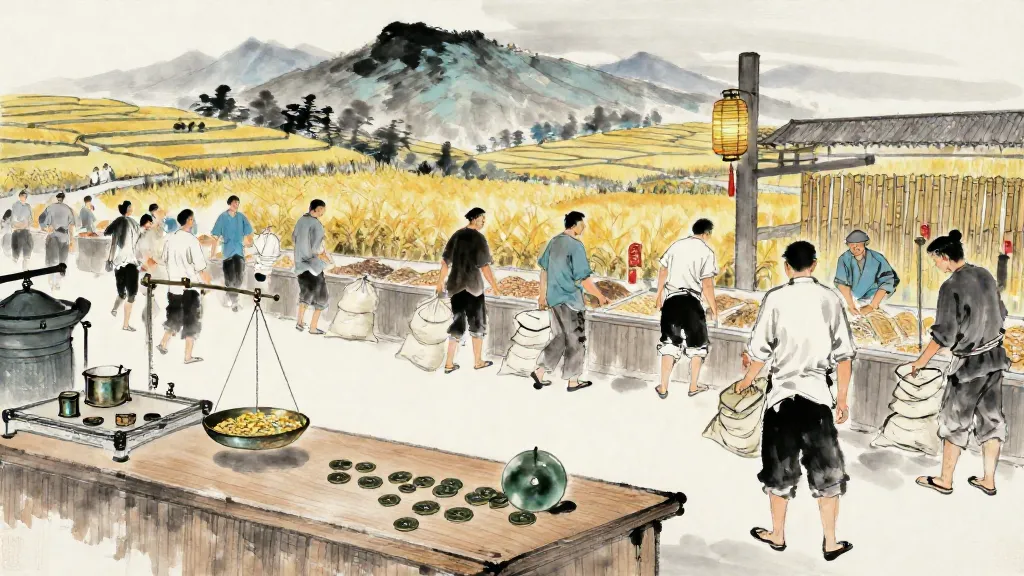
呂不韋列傳 (Biography of Lü Buwei) — Chinese ink painting

Chapter 85 of 130

呂不韋列傳

Biography of Lü Buwei

View:

奇貨可居

A Rare Commodity Worth Investing In

呂不韋者,陽翟大賈人也。往來販賤賣貴,家累千金。

秦昭王四十年,太子死。其四十二年,以其次子安國君為太子。安國君有子二十餘人。安國君有所甚愛姬,立以為正夫人,號曰華陽夫人。華陽夫人無子。安國君中男名子楚,子楚母曰夏姬,毋愛。子楚為秦質子於趙。秦數攻趙,趙不甚禮子楚。

子楚,秦諸庶孽孫,質於諸侯,車乘進用不饒,居處困,不得意。呂不韋賈邯鄲,見而憐之,曰"此奇貨可居"。乃往見子楚,說曰:"吾能大子之門。"子楚笑曰:"且自大君之門,而乃大吾門!"呂不韋曰:"子不知也,吾門待子門而大。"子楚心知所謂,乃引與坐,深語。呂不韋曰:"秦王老矣,安國君得為太子。竊聞安國君愛幸華陽夫人,華陽夫人無子,能立適嗣者獨華陽夫人耳。今子兄弟二十餘人,子又居中,不甚見幸,久質諸侯。即大王薨,安國君立為王,則子毋幾得與長子及諸子旦暮在前者爭為太子矣。"子楚曰:"然。為之柰何?"呂不韋曰:"子貧,客於此,非有以奉獻於親及結賓客也。不韋雖貧,請以千金為子西遊,事安國君及華陽夫人,立子為適嗣。"子楚乃頓首曰:"必如君策,請得分秦國與君共之。"

Lü Buwei was a great merchant of Yangzhai. He traveled buying cheap and selling dear, and accumulated a fortune of a thousand gold pieces.

In the fortieth year of King Zhao of Qin, the crown prince died. In his forty-second year, his second son, Lord Anguo, was made crown prince. Lord Anguo had more than twenty sons. He had a beloved consort whom he made his principal wife, known as Lady Huayang. Lady Huayang had no sons. One of Lord Anguo's middle sons was named Zichu. Zichu's mother was a concubine called Lady Xia, who was not favored. Zichu was serving as a hostage prince in Zhao. Qin had attacked Zhao repeatedly, so Zhao showed Zichu little courtesy.

Zichu, a grandson of minor standing among the Qin royal house, was held hostage among the lords. His carriages and provisions were inadequate, his circumstances were straitened, and he was discontented. Lü Buwei, doing business in Handan, saw him, pitied him, and said: "This is a rare commodity worth investing in." He went to see Zichu and said: "I can elevate your house." Zichu laughed and said: "Better elevate your own house first, and then talk of elevating mine!" Lü Buwei replied: "You do not understand. My house can only become great through yours." Zichu understood what he meant, drew him to a seat, and they spoke in confidence. Lü Buwei said: "The King of Qin is old. Lord Anguo has been made crown prince. I have heard that Lord Anguo's beloved is Lady Huayang, and that Lady Huayang has no son. The only person who can determine the designated heir is Lady Huayang alone. Now you have more than twenty brothers, you rank somewhere in the middle, you are not particularly favored, and you have been a hostage for a long time. If the king should die and Lord Anguo becomes king, you would have no chance of competing for the position of crown prince against the eldest son or those who are at his side day and night." Zichu said: "True. What is to be done?" Lü Buwei said: "You are poor, a guest here, with nothing to offer your parents or to attract followers. Though I am of modest means, allow me to spend a thousand gold pieces traveling west on your behalf, to serve Lord Anguo and Lady Huayang and have you established as the designated heir." Zichu bowed his head to the ground and said: "If your plan succeeds, I ask to divide the state of Qin with you."

Notes

1person呂不韋Lǚ Bùwéi

Lü Buwei (呂不韋, d. 235 BC) was a merchant who became Chancellor of Qin by engineering the succession of his client, Zichu (later King Zhuangxiang). He later compiled the encyclopedic Lüshi Chunqiu (呂氏春秋). His fall from power and suicide followed the Lao Ai scandal.

2place

Yangzhai (陽翟) was a major commercial center, located at modern Yuzhou (禹州) in Henan province.

3person子楚Zǐ Chǔ

Zichu (子楚), later renamed Yiren (異人), became King Zhuangxiang of Qin (秦莊襄王, r. 249–247 BC). He was the father of Ying Zheng, the future First Emperor.

4translation

奇貨可居 (qí huò kě jū) — 'a rare commodity worth hoarding/investing in' — has become one of the most famous idioms in Chinese, used for a long-term speculative investment, whether in commerce or politics.

5place

Handan (邯鄲) was the capital of the state of Zhao, located at modern Handan, Hebei. It was where Zichu was held hostage and where the future First Emperor was born.

呂不韋謀立子楚

Lü Buwei's Campaign to Install Zichu

呂不韋乃以五百金與子楚,為進用,結賓客;而復以五百金買奇物玩好,自奉而西遊秦,求見華陽夫人姊,而皆以其物獻華陽夫人。因言子楚賢智,結諸侯賓客遍天下,常曰"楚也以夫人為天,日夜泣思太子及夫人"。夫人大喜。不韋因使其姊說夫人曰:"吾聞之,以色事人者,色衰而愛弛。今夫人事太子,甚愛而無子,不以此時蚤自結於諸子中賢孝者,舉立以為適而子之,夫在則重尊,夫百歲之後,所子者為王,終不失勢,此所謂一言而萬世之利也。不以繁華時樹本,即色衰愛弛後,雖欲開一語,尚可得乎?今子楚賢,而自知中男也,次不得為適,其母又不得幸,自附夫人,夫人誠以此時拔以為適,夫人則竟世有寵於秦矣。"華陽夫人以為然,承太子間,從容言子楚質於趙者絕賢,來往者皆稱譽之。乃因涕泣曰:"妾幸得充後宮,不幸無子,原得子楚立以為適嗣,以託妾身。"安國君許之,乃與夫人刻玉符,約以為適嗣。安國君及夫人因厚餽遺子楚,而請呂不韋傅之,子楚以此名譽益盛於諸侯。

Lü Buwei gave five hundred gold pieces to Zichu for living expenses and to cultivate followers, and spent another five hundred on rare treasures and curiosities. He took these and traveled west to Qin, seeking an audience with Lady Huayang's elder sister. Through her, he presented all these gifts to Lady Huayang. He then spoke of how wise and capable Zichu was, how he had built connections with guests and retainers among all the lords, and how he always said: "Zichu regards Lady Huayang as Heaven itself, and weeps for the Crown Prince and Lady day and night." Lady Huayang was greatly pleased. Lü Buwei then had her sister persuade Lady Huayang, saying: "I have heard that one who serves through beauty will find that when beauty fades, affection cools. Now you serve the Crown Prince with great affection but have no son. If you do not take this opportunity to bind yourself to the most worthy and filial among his sons, raising him up as the designated heir and adopting him as your own, then while your husband lives you will be doubly honored, and after his death, the son you have made your own will be king — you will never lose your position. This is what they call 'one word that secures ten thousand generations of advantage.' If you do not plant the root while in your bloom, then once beauty fades and affection cools, even if you wish to utter a single word, will you still be able?" She continued: "Now Zichu is talented, and he knows that as a middle son he cannot become the designated heir. His mother is not favored either. He naturally looks to you, Lady. If you seize this moment and raise him to be the designated heir, you will enjoy favor in Qin for the rest of your life." Lady Huayang agreed. She found a moment with the Crown Prince and casually mentioned that Zichu, the hostage in Zhao, was extremely talented — everyone who had traveled back and forth praised him. Then, weeping, she said: "I was fortunate to be admitted to the inner palace, but unfortunately I have no son. I wish to have Zichu designated as the heir, to secure my future." Lord Anguo consented. He and Lady Huayang carved a jade token as a pledge to designate Zichu as heir. Lord Anguo and Lady Huayang then sent generous gifts to Zichu and asked Lü Buwei to serve as his tutor. From this point on, Zichu's reputation grew ever greater among the lords.

Notes

1person華陽夫人Huáyáng Fūrén

Lady Huayang (華陽夫人) was the principal consort of Lord Anguo (later King Xiaowen of Qin). By adopting Zichu as her son, she secured her own political position and inadvertently set in motion the chain of events that produced the First Emperor.

2context

The jade token (玉符) was split in half between the two parties as a physical pledge — each half was worthless alone but when matched together confirmed the agreement. This was standard practice for important political contracts.

獻姬與嬴政之生

The Gift of the Concubine and the Birth of Ying Zheng

呂不韋取邯鄲諸姬絕好善舞者與居,知有身。子楚從不韋飲,見而說之,因起為壽,請之。呂不韋怒,念業已破家為子楚,欲以釣奇,乃遂獻其姬。姬自匿有身,至大期時,生子政。子楚遂立姬為夫人。

秦昭王五十年,使王齮圍邯鄲,急,趙欲殺子楚。子楚與呂不韋謀,行金六百斤予守者吏,得脫,亡赴秦軍,遂以得歸。趙欲殺子楚妻子,子楚夫人趙豪家女也,得匿,以故母子竟得活。秦昭王五十六年,薨,太子安國君立為王,華陽夫人為王后,子楚為太子。趙亦奉子楚夫人及子政歸秦。

秦王立一年,薨,謚為孝文王。太子子楚代立,是為莊襄王。莊襄王所母華陽後為華陽太后,真母夏姬尊以為夏太后。莊襄王元年,以呂不韋為丞相,封為文信侯,食河南雒陽十萬戶。

Lü Buwei had taken as his consort a woman from among the dancing girls of Handan, one of surpassing beauty and skill, and she had become pregnant. Zichu was drinking at Lü Buwei's house, saw her, and was delighted. He rose to toast his host and asked for her. Lü Buwei was furious, but then reflected that he had already ruined his fortune for Zichu's sake and was angling for the extraordinary prize — so he gave her up. The woman concealed her pregnancy, and when the full term came, she bore a son: Zheng. Zichu thereupon made her his principal wife.

In the fiftieth year of King Zhao of Qin, the king sent Wang Yi to besiege Handan. The situation grew desperate, and Zhao wanted to kill Zichu. Zichu and Lü Buwei plotted together, bribed the guards with six hundred catties of gold, and escaped. They fled to the Qin army and made their way home. Zhao wanted to kill Zichu's wife and child, but his wife was from a powerful Zhao family and managed to go into hiding. Mother and son both survived. In the fifty-sixth year of King Zhao of Qin, the king died. The Crown Prince, Lord Anguo, succeeded as king, Lady Huayang became queen, and Zichu became crown prince. Zhao also returned Zichu's wife and son Zheng to Qin.

The new king reigned only one year before dying, and was posthumously titled King Xiaowen. Crown Prince Zichu succeeded him — this was King Zhuangxiang. Lady Huayang, whom King Zhuangxiang treated as his mother, became the Huayang Empress Dowager. His birth mother, Lady Xia, was honored as the Xia Empress Dowager. In the first year of King Zhuangxiang, Lü Buwei was appointed Chancellor and enfeoffed as Marquis Wenxin, with a fief of one hundred thousand households at Luoyang in Henan.

Notes

1person嬴政Yíng Zhèng

Zheng (政) is Ying Zheng (嬴政), the future Qin Shi Huang — the First Emperor of China (r. 246–210 BC). Sima Qian's account here implies that Zheng was actually Lü Buwei's biological son, a claim that remains one of the most debated questions in Chinese historiography.

2context

大期 (dà qī) means 'the full term of pregnancy.' Sima Qian's phrasing is deliberately ambiguous — it could mean a normal full-term birth or an overdue one, leaving open the question of paternity.

3place

Luoyang (雒陽/洛陽) in Henan was the old Zhou capital and one of the wealthiest cities in China. A fief of 100,000 households there was an extraordinarily rich endowment.

呂氏春秋與嫪毐之亂

The Lüshi Chunqiu and the Lao Ai Scandal

莊襄王即位三年,薨,太子政立為王,尊呂不韋為相國,號稱"仲父"。秦王年少,太后時時竊私通呂不韋。不韋家僮萬人。

當是時,魏有信陵君,楚有春申君,趙有平原君,齊有孟嘗君,皆下士喜賓客以相傾。呂不韋以秦之彊,羞不如,亦招致士,厚遇之,至食客三千人。是時諸侯多辯士,如荀卿之徒,著書布天下。呂不韋乃使其客人人著所聞,集論以為八覽、六論、十二紀,二十餘萬言。以為備天地萬物古今之事,號曰呂氏春秋。布鹹陽市門,懸千金其上,延諸侯游士賓客有能增損一字者予千金。

始皇帝益壯,太后淫不止。呂不韋恐覺禍及己,乃私求大陰人嫪毐以為舍人,時縱倡樂,使毐以其陰關桐輪而行,令太后聞之,以啗太后。太后聞,果欲私得之。呂不韋乃進嫪毐,詐令人以腐罪告之。不韋又陰謂太后曰:"可事詐腐,則得給事中。"太后乃陰厚賜主腐者吏,詐論之,拔其鬚眉為宦者,遂得侍太后。太后私與通,絕愛之。有身,太后恐人知之,詐卜當避時,徙宮居雍。嫪毐常從,賞賜甚厚,事皆決於嫪毐。嫪毐家僮數千人,諸客求宦為嫪毐舍人千餘人。

King Zhuangxiang reigned three years and died. Crown Prince Zheng succeeded as King of Qin and honored Lü Buwei as Chancellor of State, calling him "Second Father." The King of Qin was young, and the Queen Dowager secretly carried on an affair with Lü Buwei. Lü Buwei's household had ten thousand servants.

At that time, Wei had Lord Xinling, Chu had Lord Chunshen, Zhao had Lord Pingyuan, and Qi had Lord Mengchang — all of them humbled themselves before men of talent and delighted in hosting retainers, competing for prestige. Lü Buwei, relying on the strength of Qin, was ashamed to be outdone. He too attracted scholars and treated them generously, until his retainers numbered three thousand. The lords at that time had many skilled debaters — followers of Xunzi and the like — who wrote books that circulated throughout the realm. Lü Buwei therefore had each of his retainers write down what he knew, and collected these into the Eight Surveys, Six Discussions, and Twelve Almanacs — over two hundred thousand characters in all. He claimed it encompassed all matters of heaven, earth, and the myriad things, past and present, and titled it the Springs and Autumns of Lü. He had it displayed at the market gate of Xianyang with a thousand gold pieces hung above it, inviting any traveling scholar from the lords' states who could add or remove a single character to claim the reward.

As the First Emperor grew into manhood, the Queen Dowager's licentiousness did not cease. Lü Buwei feared that discovery would bring calamity upon himself, so he secretly found Lao Ai, a man of exceptional endowment, and made him a retainer. He had Lao Ai parade his abilities in public entertainments, ensuring the Queen Dowager heard of it, to entice her. The Queen Dowager heard and indeed wished to have him in secret. Lü Buwei then presented Lao Ai, arranging a false accusation of a crime requiring castration. He also secretly told the Queen Dowager: "If we fake the castration, he can be admitted to the inner palace." The Queen Dowager secretly bribed the official in charge of the punishment, had the sentence falsified, plucked Lao Ai's beard and eyebrows to pass him off as a eunuch, and thereby got him admitted to her presence. The Queen Dowager carried on an affair with him and was utterly besotted. She became pregnant, and fearing discovery, faked a divination recommending temporary relocation, and moved her residence to Yong. Lao Ai constantly attended her, receiving lavish gifts, and all matters were decided by him. His household had several thousand servants, and over a thousand men seeking office attached themselves to him as retainers.

Notes

1context

The Four Lords (四公子) — Xinling, Chunshen, Pingyuan, and Mengchang — were the most famous patron-statesmen of the late Warring States period, each maintaining thousands of retainers. Lü Buwei's rivalry with them represents the extension of this patron culture to the court of Qin.

2context

The Lüshi Chunqiu (呂氏春秋, Springs and Autumns of Lü) is a major encyclopedic work of the late Warring States period, blending Confucian, Daoist, Legalist, and other thought. The 'thousand gold pieces for one character' challenge (一字千金) became a famous idiom for literary perfection.

3person嫪毐Lào Ǎi

Lao Ai (嫪毐, d. 238 BC) was a man whom Lü Buwei introduced to the Queen Dowager as a fake eunuch. He fathered two secret sons by her and eventually attempted a coup, which led to his execution and the downfall of Lü Buwei.

4place

Yong (雍) was an old Qin capital in modern Fengxiang County, Shaanxi, where the Queen Dowager relocated to conceal her pregnancy.

嫪毐敗亡與呂不韋之死

The Fall of Lao Ai and the Death of Lü Buwei

始皇七年,莊襄王母夏太后薨。孝文王后曰華陽太后,與孝文王會葬壽陵。夏太后子莊襄王葬芷陽,故夏太后獨別葬杜東,曰"東望吾子,西望吾夫。後百年,旁當有萬家邑"。

始皇九年,有告嫪毐實非宦者,常與太后私亂,生子二人,皆匿之。與太后謀曰"王即薨,以子為後"。於是秦王下吏治,具得情實,事連相國呂不韋。九月,夷嫪毐三族,殺太后所生兩子,而遂遷太后於雍。諸嫪毐舍人皆沒其家而遷之蜀。王欲誅相國,為其奉先王功大,及賓客辯士為遊說者眾,王不忍致法。

秦王十年十月,免相國呂不韋。及齊人茅焦說秦王,秦王乃迎太后於雍,歸復鹹陽,而出文信侯就國河南。

歲餘,諸侯賓客使者相望於道,請文信侯。秦王恐其為變,乃賜文信侯書曰:"君何功於秦?秦封君河南,食十萬戶。君何親於秦?號稱仲父。其與家屬徙處蜀!"呂不韋自度稍侵,恐誅,乃飲酖而死。秦王所加怒呂不韋、嫪毐皆已死,乃皆復歸嫪毐舍人遷蜀者。

始皇十九年,太后薨,謚為帝太后,與莊襄王會葬茝陽。

In the seventh year of the First Emperor's reign, the Xia Empress Dowager — mother of King Zhuangxiang — died. The consort of King Xiaowen, the Huayang Empress Dowager, was buried alongside King Xiaowen at Shouling. King Zhuangxiang was buried at Zhiyang, so the Xia Empress Dowager was buried separately east of Du. She had said: "Looking east I see my son; looking west I see my husband. In a hundred years there will be a city of ten thousand households beside me."

In the ninth year of the First Emperor, someone reported that Lao Ai was not truly a eunuch, that he had been carrying on an affair with the Queen Dowager, and that they had secretly produced two sons. He and the Queen Dowager had conspired, saying: "If the king should die, we will make our son his successor." The King of Qin referred the matter to the judicial officials, and every detail was confirmed. The case implicated Chancellor of State Lü Buwei. In the ninth month, Lao Ai's three clans were exterminated, the Queen Dowager's two sons were killed, and the Queen Dowager herself was confined at Yong. All of Lao Ai's retainers had their property confiscated and were deported to Shu. The king wished to execute the Chancellor as well, but because of his great service to the late king and because so many retainers and skilled debaters came forward to plead his case, the king could not bring himself to carry out the sentence.

In the tenth month of the tenth year of the First Emperor, the Chancellor of State Lü Buwei was dismissed. When the Qi man Mao Jiao persuaded the King of Qin, the king had the Queen Dowager brought back from Yong and restored her to Xianyang, while Marquis Wenxin was sent away to his fief in Henan.

After more than a year, envoys and retainers from the lords' states streamed along the roads to call on Marquis Wenxin. The King of Qin, fearing an upheaval, sent Marquis Wenxin a letter: "What service have you rendered to Qin? Qin has enfeoffed you in Henan with a hundred thousand households. What kinship do you have with Qin? Yet you are called 'Second Father.' Take your household and relocate to Shu!" Lü Buwei, perceiving that the pressure was tightening and fearing execution, drank poison and died. The King of Qin's wrath against both Lü Buwei and Lao Ai was now spent — both were dead — so he pardoned those of Lao Ai's retainers who had been deported to Shu and allowed them to return.

In the nineteenth year of the First Emperor, the Queen Dowager died. She was posthumously titled Empress Dowager and was buried alongside King Zhuangxiang at Zhiyang.

Notes

1place

Shu (蜀) refers to the Sichuan basin, conquered by Qin in 316 BC. It served as a place of exile for political offenders — remote but economically productive.

2person茅焦Máo Jiāo

Mao Jiao (茅焦) was a man from Qi who boldly remonstrated with the young First Emperor about his treatment of his mother. His persuasion led to the Queen Dowager's recall from exile.

3context

Lü Buwei's suicide by drinking poison (飲酖) marks the end of the merchant-chancellor's career — from 'rare commodity' speculator to the second most powerful man in Qin, and finally to a forced death by his own former protégé, the First Emperor.

太史公曰

The Grand Historian's Comment

太史公曰:不韋及嫪毐貴,封號文信侯。人之告嫪毐,毐聞之。秦王驗左右,未發。上之雍郊,毐恐禍起,乃與黨謀,矯太后璽發卒以反蘄年宮。發吏攻毐,毐敗亡走,追斬之好畤,遂滅其宗。而呂不韋由此絀矣。孔子之所謂"聞"者,其呂子乎?

不韋釣奇,委質子楚。華陽立嗣,邯鄲獻女。及封河南,乃號仲父。徙蜀懲謗,懸金作語。籌策既成,富貴斯取。

The Grand Historian comments: While both Lü Buwei and Lao Ai enjoyed wealth and honor, and Lü Buwei was enfeoffed as Marquis Wenxin — when someone informed on Lao Ai, Lao Ai heard of it. The King of Qin investigated those around him but had not yet acted. When the king went to perform the suburban sacrifice at Yong, Lao Ai feared disaster was imminent and conspired with his confederates, forging the Queen Dowager's seal to mobilize troops in rebellion at the Qinian Palace. Officials were dispatched to attack Lao Ai. He was defeated, fled, was pursued and beheaded at Haozhui, and his clan was exterminated. Lü Buwei was brought down by this affair. The type Confucius described as having mere "reputation" rather than true virtue — is that not Lü Buwei?

Lü Buwei angled for the extraordinary, pledging himself to Zichu. Lady Huayang designated the heir; at Handan, the concubine was given away. He was enfeoffed in Henan and called Second Father. Exiled to Shu to punish slander, he hung gold above his writings. His stratagems achieved their aim — wealth and honor were his to take.

Notes

1context

Sima Qian's reference to Confucius concerns the Analerta 12.20, where Confucius distinguishes between genuine virtue (達, 'attainment') and mere fame (聞, 'reputation'). The implication is that Lü Buwei's renown was built on scheming rather than moral substance.

2place

Haozhui (好畤) was a location in the Qin heartland, near modern Qianxian, Shaanxi, where Lao Ai was caught and executed.

Edition & Source

Text
《史記》 Shiji
Edition
中華古詩文古書籍網 transcription
Commentary
裴駰《史記集解》、司馬貞《史記索隱》、張守節《史記正義》(Three Commentaries)