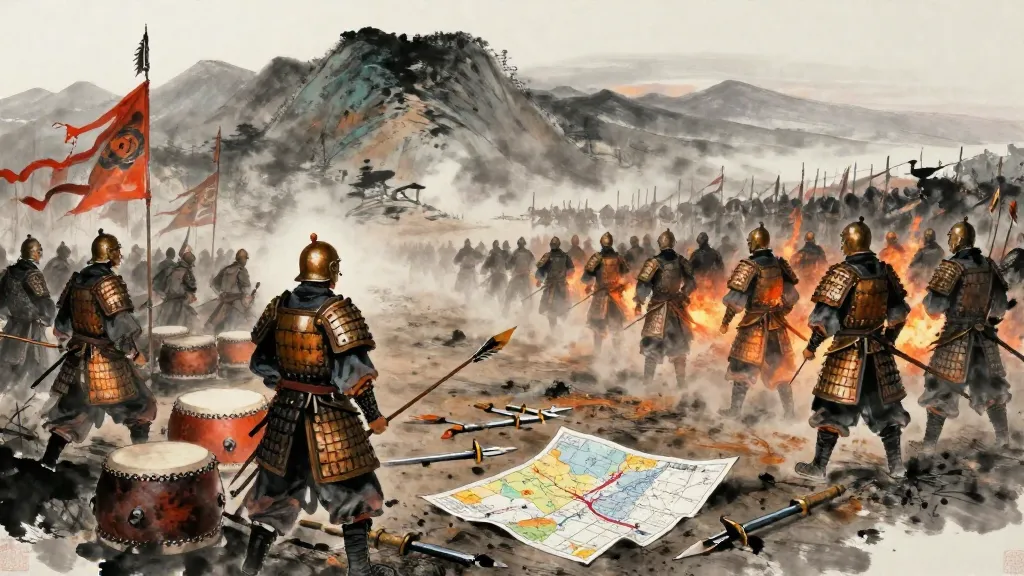
蒙恬列傳 (Biography of Meng Tian) — Chinese ink painting

Chapter 88 of 130

蒙恬列傳

Biography of Meng Tian

View:

蒙氏三代事秦

Three Generations of the Meng Clan Serving Qin

蒙恬者,其先齊人也。恬大父蒙驁,自齊事秦昭王,官至上卿。秦莊襄王元年,蒙驁為秦將,伐韓,取成皋、滎陽,作置三川郡。二年,蒙驁攻趙,取三十七城。始皇三年,蒙驁攻韓,取十三城。五年,蒙驁攻魏,取二十城,作置東郡。始皇七年,蒙驁卒。驁子曰武,武子曰恬。恬嘗書獄典文學。始皇二十三年,蒙武為秦裨將軍,與王翦攻楚,大破之,殺項燕。二十四年,蒙武攻楚,虜楚王。蒙恬弟毅。

Meng Tian's ancestors were originally from Qi. His grandfather Meng Ao left Qi to serve King Zhao of Qin and rose to the rank of Senior Minister. In the first year of King Zhuangxiang of Qin, Meng Ao served as a Qin general and attacked Han, taking Chenggao and Xingyang, whereupon the Sanchuan Commandery was established. In the second year, Meng Ao attacked Zhao and took thirty-seven cities. In the third year of the First Emperor, Meng Ao attacked Han and took thirteen cities. In the fifth year, Meng Ao attacked Wei and took twenty cities, whereupon the Dong Commandery was established. In the seventh year of the First Emperor, Meng Ao died. Ao's son was named Wu, and Wu's son was named Tian. Tian had once served as a judicial clerk and was learned in legal texts. In the twenty-third year of the First Emperor, Meng Wu served as assistant general of Qin and, together with Wang Jian, attacked Chu, inflicting a crushing defeat and killing Xiang Yan. In the twenty-fourth year, Meng Wu attacked Chu and captured the King of Chu. Meng Tian's younger brother was named Yi.

Notes

1person蒙恬Méng Tián

Meng Tian (蒙恬, d. 210 BC) was the foremost military commander of the Qin dynasty. He commanded 300,000 troops on the northern frontier, drove back the Xiongnu, and supervised the construction of the Great Wall from Lintao to Liaodong. He was forced to commit suicide after the death of the First Emperor through a plot by Zhao Gao.

2person蒙驁Méng Áo

Meng Ao (蒙驁, d. 240 BC) was the founder of the Meng military dynasty, originally from Qi. He served three Qin kings and was instrumental in Qin's expansion eastward.

3person王翦Wáng Jiǎn

Wang Jian (王翦) was Qin's most celebrated general, who conquered Chu, Yan, and Zhao. Xiang Yan (項燕) was a Chu general and grandfather of Xiang Yu.

北逐匈奴築長城

Driving Back the Xiongnu and Building the Great Wall

始皇二十六年,蒙恬因家世得為秦將,攻齊,大破之,拜為內史。秦已並天下,乃使蒙恬將三十萬眾北逐戎狄,收河南。築長城,因地形,用制險塞,起臨洮,至遼東,延袤萬餘里。於是渡河,據陽山,逶蛇而北。暴師於外十餘年,居上郡。是時蒙恬威振匈奴。始皇甚尊寵蒙氏,信任賢之。而親近蒙毅,位至上卿,出則參乘,入則御前。恬任外事而毅常為內謀,名為忠信,故雖諸將相莫敢與之爭焉。

In the twenty-sixth year of the First Emperor, Meng Tian, owing to his family's military heritage, was made a Qin general. He attacked Qi and inflicted a crushing defeat, and was appointed Prefect of the Capital. After Qin had unified all under Heaven, the First Emperor sent Meng Tian with 300,000 troops northward to drive back the Rong and Di barbarians and recover the Ordos region south of the Yellow River. He built the Great Wall, following the natural terrain to create fortified passes, from Lintao in the west to Liaodong in the east, stretching over ten thousand li. He crossed the Yellow River, occupied the Yinshan mountains, and wound his way northward. He kept his army encamped in the field for more than ten years, stationed at Shang Commandery. At this time Meng Tian's authority awed the Xiongnu. The First Emperor greatly honored and favored the Meng clan and trusted in their worth. He was particularly close to Meng Yi, who held the rank of Senior Minister — when the Emperor went out, Yi rode in the same chariot; when at court, Yi served at the Emperor's side. Tian managed external military affairs while Yi consistently served as internal counselor. They were reputed for loyalty and trustworthiness, so that none among the other generals and ministers dared contend with them.

Notes

1place

Lintao (臨洮) is in modern Min County, Gansu province. Liaodong (遼東) corresponds to modern southern Liaoning province. The Great Wall Meng Tian supervised was not the Ming-dynasty wall visible today, but an earlier rammed-earth fortification.

2context

The 'Ordos region south of the Yellow River' (河南地) refers to the Hetao area, a fertile loop of land within the great bend of the Yellow River in modern Inner Mongolia, strategically vital as both agricultural land and a buffer against nomadic incursions.

3person蒙毅Méng Yì

Meng Yi (蒙毅) was Meng Tian's younger brother and the First Emperor's most trusted court adviser. He was executed by Zhao Gao shortly after the Emperor's death.

趙高與蒙氏之怨

Zhao Gao's Grudge Against the Meng Clan

趙高者,諸趙疏遠屬也。趙高昆弟數人,皆生隱宮,其母被刑僇,世世卑賤。秦王聞高彊力,通於獄法,舉以為中車府令。高既私事公子胡亥,喻之決獄。高有大罪,秦王令蒙毅法治之。毅不敢阿法,當高罪死,除其宦籍。帝以高之敦於事也,赦之,復其官爵。

始皇欲游天下,道九原,直抵甘泉,乃使蒙恬通道,自九原抵甘泉,巉山堙谷,千八百里。道未就。

Zhao Gao was a distant relation of the Zhao royal house. Zhao Gao and his several brothers were all born in the palace's service quarters, and their mother had been condemned and punished — the family had been of low status for generations. The King of Qin heard that Gao was capable and strong and well versed in penal law, and so appointed him Director of Palace Carriages. Gao had privately attached himself to Prince Huhai and instructed him in legal cases. When Gao committed a serious crime, the King of Qin ordered Meng Yi to try him according to the law. Yi did not dare bend the law and sentenced Gao to death, removing him from the palace registers. But the Emperor, considering Gao diligent in his duties, pardoned him and restored his office and rank.

The First Emperor wished to travel throughout the realm, taking the route from Jiuyuan straight to Ganquan Palace. He therefore ordered Meng Tian to build a road from Jiuyuan to Ganquan, cutting through mountains and filling in valleys, for 1,800 li. The road was not yet completed.

Notes

1person趙高Zhào Gāo

Zhao Gao (趙高, d. 207 BC) was the eunuch official who masterminded the succession plot after the First Emperor's death. He installed the puppet Huhai as Second Emperor, then murdered him and attempted to seize the throne himself before being killed by Ziying.

2place

The Straight Road (直道) from Jiuyuan (modern Baotou, Inner Mongolia) to Ganquan Palace (near modern Chunhua County, Shaanxi) was a major military highway designed to enable rapid troop deployment to the northern frontier.

沙丘之變與蒙氏之難

The Conspiracy at Sand Dunes and the Persecution of the Meng Clan

始皇三十七年冬,行出遊會稽,並海上,北走琅邪。道病,使蒙毅還禱山川,未反。

始皇至沙丘崩,祕之,群臣莫知。是時丞相李斯、公子胡亥、中車府令趙高常從。高雅得幸於胡亥,欲立之,又怨蒙毅法治之而不為己也。因有賊心,乃與丞相李斯、公子胡亥陰謀,立胡亥為太子。太子已立,遣使者以罪賜公子扶蘇、蒙恬死。扶蘇已死,蒙恬疑而復請之。使者以蒙恬屬吏,更置。胡亥以李斯舍人為護軍。使者還報,胡亥已聞扶蘇死,即欲釋蒙恬。趙高恐蒙氏復貴而用事,怨之。

毅還至,趙高因為胡亥忠計,欲以滅蒙氏,乃言曰:「臣聞先帝欲舉賢立太子久矣,而毅諫曰'不可'。若知賢而俞弗立,則是不忠而惑主也。以臣愚意,不若誅之。」胡亥聽而系蒙毅於代。前已囚蒙恬於陽周。喪至鹹陽,已葬,太子立為二世皇帝,而趙高親近,日夜毀惡蒙氏,求其罪過,舉劾之。

In the winter of the thirty-seventh year of the First Emperor, the Emperor set out on a tour to Kuaiji, traveling along the coast and northward to Langya. He fell ill on the road and sent Meng Yi back to pray at the sacred mountains and rivers. Yi had not yet returned.

The First Emperor reached Sand Dunes and died. The death was kept secret; none of the ministers knew. At that time, Chancellor Li Si, Prince Huhai, and the Director of Palace Carriages Zhao Gao were in constant attendance. Gao had long enjoyed Huhai's favor and wished to enthrone him. He also bore a grudge against Meng Yi for having sentenced him according to the law without taking his side. With treacherous intent, he therefore conspired with Chancellor Li Si and Prince Huhai to install Huhai as heir apparent. Once the heir was installed, they dispatched envoys with charges of crimes, ordering Prince Fusu and Meng Tian to commit suicide. Fusu killed himself, but Meng Tian harbored doubts and requested a review. The envoys placed Meng Tian under official custody with substitute guards. Huhai appointed one of Li Si's retainers as protector of the army. When the envoys returned to report, Huhai — having already heard of Fusu's death — actually wanted to release Meng Tian. But Zhao Gao feared the Meng clan would regain power and influence, and bore a grudge against them.

When Meng Yi returned, Zhao Gao devised what he called a loyal plan for Huhai's benefit, intending to destroy the Meng clan. He said: "I have heard that the late Emperor wished to select a worthy heir and establish a crown prince for a long time, but Yi remonstrated, saying 'It cannot be done.' If he knew the worthy choice yet persistently refused to support it, that is disloyalty and misleading the sovereign. In my humble opinion, we should execute him." Huhai agreed and had Meng Yi imprisoned at Dai. Meng Tian had already been imprisoned at Yangzhou. The funeral cortege reached Xianyang and the burial was completed. The heir was enthroned as the Second Emperor, and Zhao Gao drew close to him, day and night slandering the Meng clan, seeking out charges against them and filing accusations.

Notes

1place

Sand Dunes (沙丘) was a place in modern Guangzong County, Hebei, where the First Emperor died in 210 BC. It was also where the Zhao king Wuling had been starved to death in 295 BC.

2person扶蘇Fú Sū

Fusu (扶蘇) was the First Emperor's eldest son and expected heir. He had been sent to the northern frontier to serve under Meng Tian, reportedly as punishment for criticizing the burning of books. When the forged edict arrived ordering his death, he killed himself without question.

3person李斯Lǐ Sī

Li Si (李斯, c. 284–208 BC) was the Chancellor who helped the First Emperor unify China. He reluctantly joined Zhao Gao's conspiracy, only to be later turned on by Zhao Gao and executed by the Five Punishments.

子嬰諫與蒙毅之死

Ziying's Remonstrance and the Death of Meng Yi

子嬰進諫曰:「臣聞故趙王遷殺其良臣李牧而用顏聚,燕王喜陰用荊軻之謀而倍秦之約,齊王建殺其故世忠臣而用後勝之議。此三君者,皆各以變古者失其國而殃及其身。今蒙氏,秦之大臣謀士也,而主欲一旦棄去之,臣竊以為不可。臣聞輕慮者不可以治國,獨智者不可以存君。誅殺忠臣而立無節行之人,是內使群臣不相信而外使鬥士之意離也,臣竊以為不可。」

胡亥不聽。而遣御史曲宮乘傳之代,令蒙毅曰:「先主欲立太子而卿難之。今丞相以卿為不忠,罪及其宗。朕不忍,乃賜卿死,亦甚幸矣。卿其圖之!」毅對曰:「以臣不能得先主之意,則臣少宦,順幸沒世。可謂知意矣。以臣不知太子之能,則太子獨從,周鏇天下,去諸公子絕遠,臣無所疑矣。夫先主之舉用太子,數年之積也,臣乃何言之敢諫,何慮之敢謀!非敢飾辭以避死也,為羞累先主之名,原大夫為慮焉,使臣得死情實。且夫順成全者,道之所貴也;刑殺者,道之所卒也。昔者秦穆公殺三良而死,罪百里奚而非其罪也,故立號曰'繆'。昭襄王殺武安君白起。楚平王殺伍奢。吳王夫差殺伍子胥。此四君者,皆為大失,而天下非之,以其君為不明,以是籍於諸侯。故曰'用道治者不殺無罪,而罰不加於無辜'。唯大夫留心!」使者知胡亥之意,不聽蒙毅之言,遂殺之。

Ziying came forward to remonstrate: "I have heard that the former King Qian of Zhao killed his loyal minister Li Mu and employed Yan Ju; King Xi of Yan secretly used Jing Ke's plot and broke his treaty with Qin; King Jian of Qi killed his long-serving loyal ministers and followed the counsel of Hou Sheng. All three of these rulers lost their states and brought disaster upon themselves by abandoning proven ways. Now the Meng clan are Qin's great ministers and counselors, and yet Your Majesty wishes to discard them overnight. I venture to say this should not be done. I have heard that one who deliberates lightly cannot govern a state, and one who relies on his judgment alone cannot preserve his lord. To execute loyal ministers and elevate men without integrity is to create internal distrust among your officials and externally alienate the will of your fighting men. I venture to say this should not be done."

Huhai would not listen. He dispatched the Censor Qu Gong by relay carriage to Dai and delivered this message to Meng Yi: "The former sovereign wished to establish the crown prince, and you objected. The Chancellor considers you disloyal, and the guilt extends to your entire clan. I cannot bear it, so I grant you death — you should consider this a great mercy. Reflect on it." Yi replied: "If I am charged with failing to understand the late sovereign's intent, then consider that I served him from my youth and faithfully attended him until his death. One may say I understood his intent. If I am charged with not recognizing the crown prince's ability, then consider that the crown prince alone accompanied the late sovereign, traveling with him throughout the realm, set far apart from all the other princes — I had no reason to doubt him. The late sovereign's decision to employ the crown prince was the accumulation of years of deliberation. What words of mine would dare to remonstrate, what plans of mine would dare to interfere? I do not presume to embellish words to avoid death, but I fear that my case would stain the late sovereign's name. I ask you, sir, to consider this, so that I may die for the truth. Completing what accords with the Way is what the Way values; inflicting punishment and death is where the Way ends. In former times, Duke Mu of Qin killed the Three Good Men at his death and unjustly condemned Baili Xi, so he was given the posthumous name 'Remorseful.' King Zhaoxiang killed Lord Wuan, Bai Qi. King Ping of Chu killed Wu She. King Fuchai of Wu killed Wu Zixu. All four rulers committed grave errors, and the world condemned them, considering them unenlightened sovereigns, and recorded their deeds among the feudal lords. Therefore it is said: 'One who rules by the Way does not kill the innocent, and punishment does not fall upon the blameless.' I beg you, sir, to take this to heart." The envoy, knowing Huhai's intent, ignored Meng Yi's words and executed him.

Notes

1person子嬰Zǐ Yīng

Ziying (子嬰) was a member of the Qin royal family whose exact relationship to the First Emperor is debated. He later became the last ruler of Qin (reigning only 46 days as King of Qin), surrendering to Liu Bang in 206 BC before being executed by Xiang Yu.

2person李牧Lǐ Mù

Li Mu (李牧, d. 229 BC) was Zhao's greatest general, who repeatedly defeated the Xiongnu and Qin armies. King Qian of Zhao was persuaded by Qin agents to execute him, after which Zhao quickly fell.

蒙恬之死

The Death of Meng Tian

二世又遣使者之陽周,令蒙恬曰:「君之過多矣,而卿弟毅有大罪,法及內史。」恬曰:「自吾先人,及至子孫,積功信於秦三世矣。今臣將兵三十餘萬,身雖囚系,其勢足以倍畔,然自知必死而守義者,不敢辱先人之教,以不忘先主也。昔周成王初立,未離襁褓,周公旦負王以朝,卒定天下。及成王有病甚殆,公旦自揃其爪以沈於河,曰:'王未有識,是旦執事。有罪殃,旦受其不祥。'乃書而藏之記府,可謂信矣。及王能治國,有賊臣言:'周公旦欲為亂久矣,王若不備,必有大事。'王乃大怒,周公旦走而奔於楚。成王觀於記府,得周公旦沈書,乃流涕曰:'孰謂周公旦欲為亂乎!'殺言之者而反周公旦。故周書曰'必參而伍之'。今恬之宗,世無二心,而事卒如此,是必孽臣逆亂,內陵之道也。夫成王失而復振則卒昌;桀殺關龍逢,紂殺王子比干而不悔,身死則國亡。臣故曰過可振而諫可覺也。察於參伍,上聖之法也。凡臣之言,非以求免於咎也,將以諫而死,原陛下為萬民思從道也。」使者曰:「臣受詔行法於將軍,不敢以將軍言聞於上也。」蒙恬喟然太息曰:「我何罪於天,無過而死乎?」良久,徐曰:「恬罪固當死矣。起臨洮屬之遼東,城巉萬餘里,此其中不能無絕地脈哉?此乃恬之罪也。」乃吞藥自殺。

The Second Emperor sent another envoy to Yangzhou to deliver a message to Meng Tian: "Your offenses are many, and your brother Yi has committed a grave crime — the law extends to you as Prefect of the Capital." Tian said: "From my forebears down to their children and grandchildren, my family has accumulated merit and trust in service to Qin for three generations. Now I command more than 300,000 troops. Though I am held prisoner, my power would be sufficient to mount a rebellion. But knowing I must die and holding to righteousness, I dare not dishonor the teachings of my ancestors or forget my late sovereign. In former times, when King Cheng of Zhou first came to the throne, he was still in swaddling clothes. The Duke of Zhou carried the young king on his back to hold court and ultimately brought stability to all under Heaven. When King Cheng fell gravely ill, the Duke of Zhou cut his own fingernails and cast them into the Yellow River, saying: 'The king has not yet come of age — it is I, Dan, who conduct affairs. If there be guilt or calamity, let Dan bear the misfortune.' He wrote this down and stored it in the archive. One may call this trustworthiness. When the king was old enough to govern, a treacherous minister said: 'The Duke of Zhou has been plotting rebellion for a long time. If Your Majesty does not prepare, there will be a great upheaval.' The king flew into a rage, and the Duke of Zhou fled to Chu. When King Cheng examined the archive, he found the Duke of Zhou's pledged document, and wept: 'Who says the Duke of Zhou wished to rebel?' He executed the slanderer and recalled the Duke of Zhou. Therefore the Zhou Documents say: 'You must cross-check from three and five sources.' Now my clan has never harbored divided loyalties across the generations, yet events have come to this. This can only be the work of traitorous ministers in internal subversion. When King Cheng erred but recovered, he ultimately flourished. Jie killed Guan Longfeng, and Zhou killed Prince Bigan without regret — and they died and their kingdoms perished. Therefore I say: errors can be corrected and remonstrances can be heeded. To examine by cross-checking is the method of the supreme sages. All that I say is not to seek exemption from blame, but to offer remonstrance even in death. I wish that Your Majesty would consider following the Way for the sake of all the people." The envoy said: "I have received the edict to carry out the law upon you, General. I dare not convey the General's words to the Emperor." Meng Tian heaved a deep sigh: "What crime have I committed against Heaven, that I should die without fault?" After a long silence, he said slowly: "Tian's crime indeed deserves death. From Lintao extending to Liaodong, I built fortifications cutting through the earth for over ten thousand li. In all that distance, could I have avoided severing the earth's veins? This is Tian's crime." He then swallowed poison and died.

Notes

1context

Meng Tian's final remark about 'severing the earth's veins' (絕地脈) reflects the concept of fengshui and the belief that the earth has vital channels (龍脈, dragon veins) that must not be disrupted. Sima Qian, in his commentary below, dismisses this as Meng Tian deflecting from his real culpability.

2context

The Duke of Zhou (周公旦) story Meng Tian cites is the classic paradigm of a loyal regent falsely accused. It appears in the Shangshu and was frequently invoked by officials protesting unjust charges.

太史公論贊

The Grand Historian's Assessment

太史公曰:吾適北邊,自直道歸,行觀蒙恬所為秦築長城亭障,塹山堙谷,通直道,固輕百姓力矣。夫秦之初滅諸侯,天下之心未定,痍傷者未瘳,而恬為名將,不以此時彊諫,振百姓之急,養老存孤,務修眾庶之和,而阿意興功,此其兄弟遇誅,不亦宜乎!何乃罪地脈哉?

The Grand Historian remarks: I once traveled to the northern frontier and returned by the Straight Road. Along the way I observed the Great Wall, watchtowers, and ramparts that Meng Tian had built for Qin — cutting through mountains and filling in valleys, opening the Straight Road. He certainly treated the people's strength as a light thing. When Qin had just destroyed the feudal lords, the hearts of the realm were not yet settled and the wounded had not yet recovered. Yet Tian, as a famous general, did not use this moment to press vigorous remonstrance, relieve the people's distress, nurture the old, and protect the orphaned, or work to cultivate harmony among the multitudes. Instead, he complied with his sovereign's wishes and raised great public works. That he and his brother met execution — is this not fitting? Why blame it on the earth's veins?

Notes

1context

Sima Qian's assessment is notably unsympathetic to Meng Tian, blaming him not for disloyalty but for failing to remonstrate against the First Emperor's excessive labor conscription. This reflects Sima Qian's consistent Confucian critique that good ministers must speak truth to power, not merely serve competently.

Edition & Source

Text
《史記》 Shiji
Edition
中華古詩文古書籍網 transcription
Commentary
裴駰《史記集解》、司馬貞《史記索隱》、張守節《史記正義》(Three Commentaries)