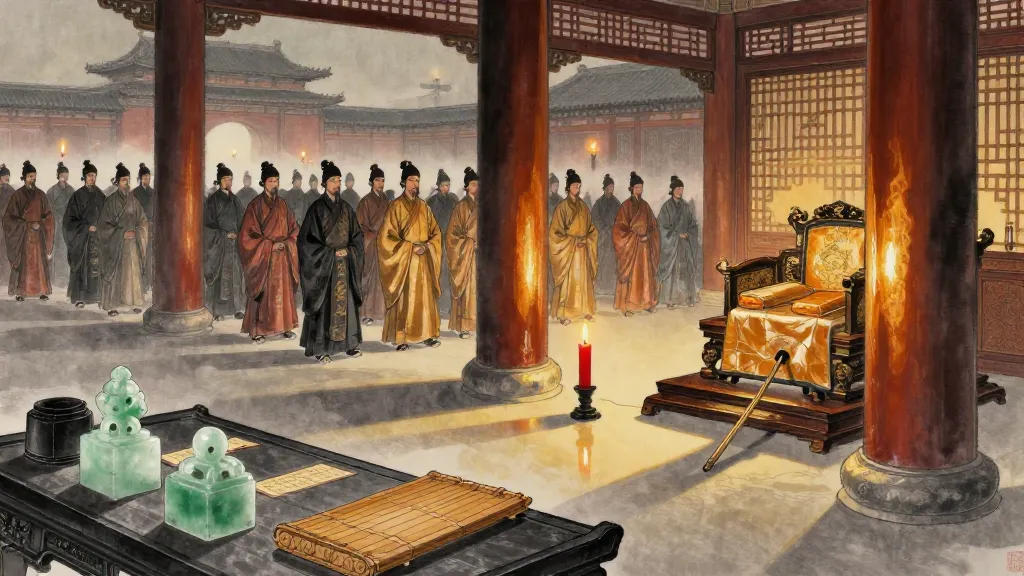
張耳陳餘列傳 (Biographies of Zhang Er and Chen Yu) — Chinese ink painting

Chapter 89 of 130

張耳陳餘列傳

Biographies of Zhang Er and Chen Yu

View:

張耳陳餘少年交誼

The Youthful Bond Between Zhang Er and Chen Yu

張耳者,大梁人也。其少時,及魏公子毋忌為客。張耳嘗亡命游外黃。外黃富人女甚美,嫁庸奴,亡其夫,去抵父客。父客素知張耳,乃謂女曰:“必欲求賢夫,從張耳。”女聽,乃卒為請決,嫁之張耳。張耳是時脫身游,女家厚奉給張耳,張耳以故致千里客。乃宦魏為外黃令。名由此益賢。陳餘者,亦大梁人也,好儒術,數游趙苦陘。富人公乘氏以其女妻之,亦知陳餘非庸人也。餘年少,父事張耳,兩人相與為刎頸交。

秦之滅大梁也,張耳家外黃。高祖為布衣時,嘗數從張耳游,客數月。秦滅魏數歲,已聞此兩人魏之名士也,購求有得張耳千金,陳餘五百金。張耳、陳餘乃變名姓,俱之陳,為里監門以自食。

Zhang Er was a man of Daliang. In his youth, he served as a retainer of Lord Xinling of Wei, Wuji. He once fled the law and traveled to Waihuang, where a wealthy man's beautiful widowed daughter married him on a guest's recommendation. The woman's family provided generously, and through their support Zhang Er attracted retainers from a thousand li around. He entered Wei's service as magistrate of Waihuang. Chen Yu was also from Daliang, a Confucian scholar who frequently traveled in Zhao. A wealthy Gongcheng clan gave him a daughter in marriage. Chen Yu was younger and treated Zhang Er as a father figure; the two became sworn brothers who would die for each other.

When Qin destroyed Daliang, Zhang Er was living in Waihuang. The future Emperor Gaozu often visited him as a commoner. Qin posted bounties of a thousand gold for Zhang Er and five hundred for Chen Yu. The two changed their names and went to Chen, where they served as ward gate-watchers to support themselves.

Notes

1person張耳Zhāng Ěr

Zhang Er (張耳, d. 202 BC) was a prominent figure during the Qin-Han transition. Originally a retainer of Lord Xinling of Wei, he later became King of Zhao under the Han.

2person陳餘Chén Yú

Chen Yu (陳餘, d. 205 BC) was Zhang Er's sworn brother who became his mortal enemy. He was killed by Han Xin's forces at the Battle of Jingxing.

3context

The 'bond of the severed neck' (刎頸交) was the most solemn form of sworn brotherhood — an oath to die together. The irony of this chapter is that it was broken by power and jealousy.

從陳涉起兵與趙國自立

Joining Chen She's Uprising and the Founding of Zhao

陳涉起蘄,至入陳,兵數萬。張耳、陳餘上謁陳涉。陳涉問此兩人,兩人對曰:“原將軍毋王,急引兵而西,遣人立六國後,自為樹黨,為秦益敵也。”陳涉不聽,遂立為王。

陳餘乃復說陳王,請奇兵北略趙地。於是陳王以武臣為將軍,以張耳、陳餘為左右校尉,予卒三千人,北略趙地。武臣等下趙數十城。至邯鄲,張耳、陳餘乃說武臣自立為趙王。

Chen She rose in revolt at Qi and marched into Chen with tens of thousands. Zhang Er and Chen Yu went to see him. They advised: "Do not take the title of king. March west at once, restore the heirs of the six destroyed states, and multiply Qin's enemies." Chen She did not listen and declared himself king.

Chen Yu then proposed sending a detached force north to take Zhao. King Chen appointed Wu Chen as general with Zhang Er and Chen Yu as colonels, giving them three thousand troops. They took dozens of Zhao cities. At Handan, Zhang Er and Chen Yu persuaded Wu Chen to declare himself King of Zhao.

Notes

1person陳涉Chén Shè

Chen She (陳涉, also Chen Sheng 陳勝, d. 208 BC) led the first major revolt against Qin in 209 BC but was killed within six months.

2context

Their advice to build a coalition rather than seize the throne was strategically sound. Chen She's refusal foreshadowed his rapid downfall.

鉅鹿之圍與刎頸交之裂

The Siege of Julu and the Breaking of the Sworn Bond

章邯引兵至邯鄲,皆徙其民河內,夷其城郭。張耳與趙王歇走入鉅鹿城,王離圍之。陳餘北收常山兵,得數萬人,軍鉅鹿北。數月,張耳大怒,使張黶、陳澤往讓陳餘曰:“始吾與公為刎頸交,今王與耳旦暮且死,而公擁兵數萬,不肯相救,安在其相為死!”陳餘曰:“吾度前終不能救趙,徒盡亡軍。”乃使五千人令張黶、陳澤先嘗秦軍,至皆沒。

項羽悉引兵渡河,遂破章邯。張耳與陳餘相見,責讓陳餘。陳餘怒曰:“不意君之望臣深也!”乃脫解印綬,推予張耳。客說張耳取之。由此二人遂有卻。

Zhang Han led his army to Handan, relocated its people, and razed the walls. Zhang Er and King Xie of Zhao fled into Julu, which Wang Li besieged. Chen Yu gathered tens of thousands north of Julu but judged his forces too few to attack Qin. After months, Zhang Er was furious and sent envoys to reproach Chen Yu: "We swore to die for each other, yet you sit with tens of thousands and refuse to help!" Chen Yu replied: "Advancing would only destroy my army for nothing." He gave five thousand men to probe the Qin lines — they were wiped out to the last.

Xiang Yu brought his entire army across the river and shattered Zhang Han's forces. When Zhang Er and Chen Yu met afterward, Zhang Er bitterly reproached him. Chen Yu, furious, threw down his seal of office. On a retainer's advice, Zhang Er took it. From this point on, the rift between them became irreconcilable.

Notes

1place

Julu (鉅鹿), in modern Xingtai, Hebei, was the site of one of the most decisive battles of the anti-Qin uprising (207 BC).

2context

The siege of Julu broke the bond irrevocably. Chen Yu's military logic was sound — a direct assault would have been suicidal — but Zhang Er, facing death, could not forgive the refusal.

項羽分封與韓信破趙

Xiang Yu's Enfeoffments and Han Xin's Destruction of Zhao

項羽立諸侯王,張耳雅游,人多為之言,乃分趙立張耳為常山王。陳餘以不從入關,即以南皮旁三縣封之。陳餘愈益怒。及齊王田榮畔楚,陳餘因悉三縣兵襲張耳。張耳敗走漢。

漢三年,韓信已定魏地,遣張耳與韓信擊破趙井陘,斬陳餘泜水上。漢立張耳為趙王。漢五年,張耳薨,謚為景王。子敖嗣立。高祖長女魯元公主為趙王敖後。

Xiang Yu established the kings. Zhang Er had broad connections, and many lobbied for him, so he was made King of Changshan. Chen Yu, who had not followed the army into the Pass, received only three counties — and was furious. When Tian Rong of Qi revolted, Chen Yu used the opportunity to attack and defeat Zhang Er, who fled to Han.

In the third year of Han, Han Xin, having pacified Wei, marched with Zhang Er to break through Zhao at Jingxing. They killed Chen Yu at the Zhi River. Han installed Zhang Er as King of Zhao. In the fifth year, Zhang Er died (posthumous title: King Jing). His son Ao succeeded, and Emperor Gaozu's eldest daughter, Princess Lu Yuan, became his queen.

Notes

1person韓信Hán Xìn

Han Xin (韓信, d. 196 BC), Marquis of Huaiyin, was one of the three great generals of the Han founding. His 'backs to the river' formation at Jingxing is one of the most celebrated maneuvers in Chinese military history.

2place

Jingxing (井陘) is a strategic pass in the Taihang Mountains, in modern Jingxing County, Hebei.

貫高之變與太史公論

The Plot of Guan Gao and the Grand Historian's Assessment

漢七年,高祖從平城過趙。高祖箕踞詈,甚慢易之。趙相貫高乃怒曰:“吾王孱王也!”說王殺高祖。張敖齧其指出血,曰:“君何言之誤!”

漢九年,貫高之謀泄露,上並逮捕趙王、貫高等。吏治榜笞數千,刺剟,身無可擊者,終不復言。上乃赦趙王。貫高曰:“今王已出,吾責已塞,死不恨矣。”乃仰絕骯,遂死。

太史公曰:張耳、陳餘始居約時,相然信以死;及據國爭權,卒相滅亡。豈非以勢利交哉?

In the seventh year of Han, Emperor Gaozu passed through Zhao, sitting with legs sprawled and cursing King Ao contemptuously. The Zhao chancellor Guan Gao was furious: "Our king is a weakling!" He proposed assassinating the Emperor, but King Ao bit his finger until it bled and refused.

In the ninth year, the plot was exposed. Guan Gao was flogged thousands of strokes and pierced with awls until no spot remained to strike, but he never implicated King Ao. The Emperor pardoned the King. Guan Gao said: "Now that my king is free, my duty is fulfilled. I have no regret in dying." He severed his own throat.

The Grand Historian remarks: When Zhang Er and Chen Yu lived in humble circumstances, they trusted each other to the death. When they gained kingdoms and competed for power, they destroyed each other. Was their friendship not founded on advantage and self-interest?

Notes

1person貫高Guàn Gāo

Guan Gao (貫高) was a Zhao retainer whose refusal to implicate his king under extreme torture became one of the most celebrated examples of loyalty in Chinese history.

2context

Sima Qian's concluding judgment contrasts Zhang Er and Chen Yu with the selfless Taibo and Jizi of Yanling, implying their famous friendship was ultimately hollow — a bond of convenience that shattered when real power was at stake.

Edition & Source

Text
《史記》 Shiji
Edition
中華古詩文古書籍網 transcription
Commentary
裴駰《史記集解》、司馬貞《史記索隱》、張守節《史記正義》(Three Commentaries)