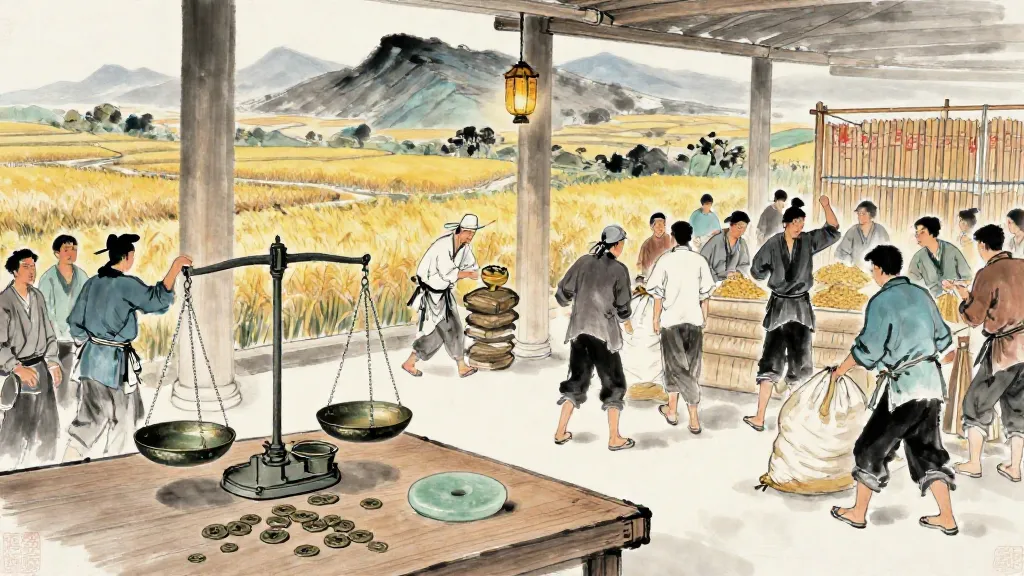
淮陰侯列傳 (Biography of Han Xin, Marquis of Huaiyin) — Chinese ink painting

Chapter 92 of 130

淮陰侯列傳

Biography of Han Xin, Marquis of Huaiyin

View:

韓信少時

Han Xin's Youth

淮陰侯韓信者,淮陰人也。始為布衣時,貧無行,不得推擇為吏,又不能治生商賈,常從人寄食飲,人多厭之者,常數從其下鄉南昌亭長寄食,數月,亭長妻患之,乃晨炊蓐食。食時信往,不為具食。信亦知其意,怒,竟絕去。

信釣於城下,諸母漂,有一母見信飢,飯信,竟漂數十日。信喜,謂漂母曰:“吾必有以重報母。”母怒曰:“大丈夫不能自食,吾哀王孫而進食,豈望報乎!”

淮陰屠中少年有侮信者,曰:“若雖長大,好帶刀劍,中情怯耳。”眾辱之曰:“信能死,刺我;不能死,出我袴下。”於是信孰視之,俛出袴下,蒲伏。一市人皆笑信,以為怯。

Han Xin, the Marquis of Huaiyin, was a man of Huaiyin. When he was still a commoner, he was poor and had no notable conduct. He could not be selected for minor office, nor could he make a living in trade. He constantly depended on others for food, and most people detested him for it. He frequently ate at the home of the village head of Nanchang Pavilion in Xiaxiang, staying for months on end, until the village head's wife grew resentful and began cooking breakfast early, eating in bed before Han Xin arrived. When Han Xin came at the usual hour and found no meal prepared for him, he understood her meaning. Angry, he broke off relations and left for good.

Han Xin was fishing beneath the city wall, where a group of old women were rinsing silk. One of the women saw that he was hungry and gave him a meal. This continued for dozens of days until her work was finished. Han Xin was delighted and said to the washerwoman: "I will certainly repay you handsomely one day." The old woman said angrily: "A grown man who cannot feed himself! I fed you out of pity for a young gentleman — did I do it expecting repayment?"

Among the butchers' youths of Huaiyin, there was one who taunted Han Xin: "You may be tall and fond of wearing a sword, but inside you are a coward." He humiliated Han Xin before everyone, saying: "If you have the nerve to die, stab me. If you haven't the nerve, crawl between my legs." Han Xin stared at him for a long time, then bent down and crawled between the youth's legs on all fours. The whole marketplace laughed at Han Xin, thinking him a coward.

Notes

1person韓信Hán Xìn

Han Xin (韓信, d. 196 BC) was the greatest military strategist of the Chu-Han Contention. He served as King of Qi and later King of Chu under Liu Bang, winning decisive campaigns that destroyed Xiang Yu's power. He was eventually executed on charges of treason.

2place

Huaiyin (淮陰) is modern Huai'an, Jiangsu province.

3context

The 'crawling between the legs' (胯下之辱) incident became one of the most famous anecdotes in Chinese history, cited as an example of the ability to endure humiliation in pursuit of greater ambitions. It became a proverb: 'the humiliation beneath the crotch' (胯下之辱).

歸漢與蕭何追韓信

Joining Han and Xiao He's Pursuit

及項梁渡淮,信杖劍從之,居戲下,無所知名。項梁敗,又屬項羽,羽以為郎中。數以策乾項羽,羽不用。漢王之入蜀,信亡楚歸漢,未得知名,為連敖。坐法當斬,其輩十三人皆已斬,次至信,信乃仰視,適見滕公,曰:“上不欲就天下乎?何為斬壯士!”滕公奇其言,壯其貌,釋而不斬。與語,大說之。言於上,上拜以為治粟都尉,上未之奇也。

信數與蕭何語,何奇之。至南鄭,諸將行道亡者數十人,信度何等已數言上,上不我用,即亡。何聞信亡,不及以聞,自追之。人有言上曰:“丞相何亡。”上大怒,如失左右手。居一二日,何來謁上,上且怒且喜,罵何曰:“若亡,何也?”何曰:“臣不敢亡也,臣追亡者。”上曰:“若所追者誰何?”曰:“韓信也。”上復罵曰:“諸將亡者以十數,公無所追;追信,詐也。”何曰:“諸將易得耳。至如信者,國士無雙。王必欲長王漢中,無所事信;必欲爭天下,非信無所與計事者。顧王策安所決耳。”王曰:“吾亦欲東耳,安能鬱郁久居此乎?”何曰:“王計必欲東,能用信,信即留;不能用,信終亡耳。”王曰:“吾為公以為將。”何曰:“雖為將,信必不留。”王曰:“以為大將。”何曰:“幸甚。”於是王欲召信拜之。何曰:“王素慢無禮,今拜大將如呼小兒耳,此乃信所以去也。王必欲拜之,擇良日,齋戒,設壇場,具禮,乃可耳。”王許之。諸將皆喜,人人各自以為得大將。至拜大將,乃韓信也,一軍皆驚。

When Xiang Liang crossed the Huai River, Han Xin took up his sword and followed him, but remained at his headquarters without gaining any reputation. After Xiang Liang's defeat, Han Xin served under Xiang Yu, who made him a gentleman-attendant. He repeatedly offered stratagems to Xiang Yu, but Xiang Yu never adopted them. When the King of Han entered Shu, Han Xin deserted Chu and joined Han, but still won no recognition and was given the minor post of Grain Transport Officer. He was convicted of a crime and sentenced to death. Thirteen of his companions had already been beheaded, and it was about to be his turn, when he looked up and happened to see Lord Teng. He called out: "Does His Majesty not wish to win All-Under-Heaven? Why then does he behead brave men?" Lord Teng was struck by his words and impressed by his bearing, and released him. After conversing with Han Xin, Lord Teng was greatly pleased and recommended him to the king. The king appointed him Superintendent of Grain, but took no special notice of him.

Han Xin conversed frequently with Xiao He, and Xiao He came to regard him as extraordinary. When they reached Nanzheng, dozens of officers deserted along the road. Han Xin reckoned that Xiao He had already spoken to the king on his behalf several times, but the king would not employ him, so he too deserted. When Xiao He heard that Han Xin had fled, there was no time to inform the king — he chased after him personally. Someone told the king: "Chancellor Xiao has deserted." The king flew into a rage, as though he had lost both his right and left hands. After a day or two, Xiao He came to see the king. The king was both furious and relieved, and berated him: "You deserted — why?" Xiao He replied: "I would not dare desert. I was pursuing a deserter." The king asked: "Who were you pursuing?" "Han Xin." The king cursed again: "Dozens of officers have deserted and you pursued none of them. Pursuing Han Xin — you are lying." Xiao He said: "Those other officers are easy to replace. But someone like Han Xin is a man without equal in the realm. If Your Majesty is content to remain King of Hanzhong forever, then you have no need of Han Xin. But if you intend to contend for All-Under-Heaven, there is no one but Han Xin with whom you can plan this enterprise. It depends entirely on what Your Majesty decides." The king said: "I too wish to march east — how could I stay bottled up here forever?" Xiao He said: "If Your Majesty has decided to march east, and you employ Han Xin, he will stay. If you cannot employ him, he will leave in the end." The king said: "For your sake, I will make him a general." Xiao He said: "Even as a general, Han Xin will not stay." The king said: "Then I will make him Grand General." Xiao He said: "Excellent." The king then wanted to summon Han Xin and appoint him casually. Xiao He said: "Your Majesty has always been careless and discourteous. To appoint a Grand General as though calling a boy — this is exactly why Han Xin left. If Your Majesty truly wishes to appoint him, choose an auspicious day, fast and purify yourself, erect an altar, and perform the full ceremony — only then will it do." The king agreed. All the officers were delighted, each man thinking he would be the one named Grand General. When the Grand General was announced, it was Han Xin — and the entire army was astonished.

Notes

1person項梁Xiàng Liáng

Xiang Liang (項梁, d. 208 BC) was Xiang Yu's uncle who raised the initial rebellion against Qin in the south.

2person夏侯嬰Xiàhóu Yīng

Lord Teng (滕公) is Xiahou Ying (夏侯嬰), one of Liu Bang's earliest followers. He served as the king's carriage driver throughout the wars.

3person蕭何Xiāo Hé

Xiao He (蕭何, d. 193 BC) was Liu Bang's Chancellor (丞相) and chief civil administrator throughout the Chu-Han Contention. His 'moonlit chase of Han Xin' (蕭何月下追韓信) became one of the most celebrated episodes in Chinese history.

4place

Nanzheng (南鄭) was the capital of the Han kingdom (漢中), located in modern Nanzheng District, Hanzhong, Shaanxi.

5translation

國士無雙 (guóshì wúshuāng) — 'a man without equal in the realm.' This phrase, coined by Xiao He in this passage, became a standard expression in Chinese for supreme talent.

韓信論項羽之失

Han Xin's Analysis of Xiang Yu's Failings

信拜禮畢,上坐。王曰:“丞相數言將軍,將軍何以教寡人計策?”信謝,因問王曰:“今東鄉爭權天下,豈非項王邪?”漢王曰:“然。”曰:“大王自料勇悍仁彊孰與項王?”漢王默然良久,曰:“不如也。”信再拜賀曰:“惟信亦為大王不如也。然臣嘗事之,請言項王之為人也。項王喑噁叱吒,千人皆廢,然不能任屬賢將,此特匹夫之勇耳。項王見人恭敬慈愛,言語嘔嘔,人有疾病,涕泣分食飲,至使人有功當封爵者,印刓敝,忍不能予,此所謂婦人之仁也。項王雖霸天下而臣諸侯,不居關中而都彭城。有背義帝之約,而以親愛王,諸侯不平。諸侯之見項王遷逐義帝置江南,亦皆歸逐其主而自王善地。項王所過無不殘滅者,天下多怨,百姓不親附,特劫於威彊耳。名雖為霸,實失天下心。故曰其彊易弱。今大王誠能反其道:任天下武勇,何所不誅!以天下城邑封功臣,何所不服!以義兵從思東歸之士,何所不散!且三秦王為秦將,將秦子弟數歲矣,所殺亡不可勝計,又欺其眾降諸侯,至新安,項王詐阬秦降卒二十餘萬,唯獨邯、欣、翳得脫,秦父兄怨此三人,痛入骨髓。今楚彊以威王此三人,秦民莫愛也。大王之入武關,秋豪無所害,除秦苛法,與秦民約,法三章耳,秦民無不欲得大王王秦者。於諸侯之約,大王當王關中,關中民鹹知之。大王失職入漢中,秦民無不恨者。今大王舉而東,三秦可傳檄而定也。”於是漢王大喜,自以為得信晚。遂聽信計,部署諸將所擊。

After the ceremony of appointment was complete, Han Xin took his seat in the place of honor. The king said: "The Chancellor has spoken of you many times. What strategy would the General teach me?" Han Xin thanked him, then asked: "The one who contends with you for supremacy as you march east — is that not Xiang Yu?" The King of Han said: "It is." Han Xin asked: "In Your Majesty's own estimation, in courage, ferocity, benevolence, and strength, how do you compare with Xiang Yu?" The King of Han was silent for a long while. "I am inferior," he said. Han Xin bowed twice and congratulated him: "I too believe Your Majesty is inferior. However, I once served Xiang Yu, so allow me to speak of his character. When Xiang Yu roars in fury, a thousand men freeze in terror — but he cannot delegate authority to capable generals. This is merely the courage of a common man. When Xiang Yu meets people, he is respectful and kind; his words are gentle and solicitous. When someone falls ill, he weeps and shares his food and drink. But when someone has won merit and deserves enfeoffment, he fingers the seal until it is worn smooth, unable to bring himself to hand it over. This is what is called 'the benevolence of a woman.' Though Xiang Yu has made himself hegemon of All-Under-Heaven and subjugated the lords, he did not occupy the strategic heartland of Guanzhong but established his capital at Pengcheng. He violated the Righteous Emperor's covenant and enfeoffed those he personally favored as kings — the lords resented this. When the lords saw Xiang Yu banish the Righteous Emperor to the south, they too drove out their own rulers and claimed the best territories for themselves. Wherever Xiang Yu's armies passed, nothing was left unravaged. The realm is full of grievances; the common people do not rally to him willingly but submit only through fear of his power. Though he is called hegemon in name, he has in truth lost the hearts of All-Under-Heaven. Therefore his strength can easily be turned to weakness. Now if Your Majesty can truly reverse his course — employ the brave men of the realm, what enemy cannot be destroyed? Enfeoff meritorious officers with cities and territories, and who will not submit? Lead a righteous army composed of soldiers who long to march east and go home, and what force will not scatter before you? Moreover, the three kings of Qin were formerly Qin generals who led Qin's sons and brothers for years — the number they killed and lost is beyond counting. They deceived their own troops into surrendering to the lords, and at Xin'an, Xiang Yu treacherously buried alive more than two hundred thousand surrendered Qin soldiers. Only Zhang Han, Sima Xin, and Dong Yi escaped. The fathers and elder brothers of Qin hate these three men to the marrow of their bones. Now Chu has forced these three men upon the Qin people as their kings, and the people of Qin feel no love for them. When Your Majesty entered through Wu Pass, you did not harm so much as a hair. You abolished the harsh laws of Qin and made a covenant with the people of Qin — the law of three articles only. Every person in Qin wished for Your Majesty to be their king. By the covenant of the lords, Your Majesty was to be King of Guanzhong, and every person in Guanzhong knows it. When Your Majesty was deprived of his rightful position and sent to Hanzhong, the people of Qin were all indignant. Now, if Your Majesty raises his army and marches east, the Three Qin can be conquered by sending a single dispatch." The King of Han was overjoyed and felt he had found Han Xin too late. He then followed Han Xin's plan and deployed his generals for the campaign.

Notes

1person項羽Xiàng Yǔ

Xiang Yu (項羽, 232–202 BC), the Hegemon-King of Western Chu (西楚霸王), was Liu Bang's chief rival in the Chu-Han Contention.

2translation

匹夫之勇 (pǐfū zhī yǒng), 'the courage of a common man,' and 婦人之仁 (fùrén zhī rén), 'the benevolence of a woman' — both became standard Chinese idioms from this passage, describing superficial virtues that lack strategic substance.

3context

The Righteous Emperor (義帝) was the puppet Chu king Xiong Xin (熊心), whom Xiang Yu nominally served. Xiang Yu had him murdered after the fall of Qin, which undermined his legitimacy.

4context

The massacre at Xin'an (新安, modern Xin'an County, Henan) in 206 BC, where Xiang Yu buried alive over 200,000 surrendered Qin soldiers, was one of the most notorious atrocities of the era and a key factor in turning the people of the former Qin heartland against Chu.

5context

The 'law of three articles' (約法三章) — prohibiting only murder, injury, and theft — was Liu Bang's famously lenient legal code proclaimed upon entering the Qin capital. It won him widespread popular support.

破魏定代

Conquering Wei and Subduing Dai

八月,漢王舉兵東出陳倉,定三秦。漢二年,出關,收魏、河南,韓、殷王皆降。合齊、趙共擊楚。四月,至彭城,漢兵敗散而還。信復收兵與漢王會滎陽,復擊破楚京、索之間,以故楚兵卒不能西。

漢之敗卻彭城,塞王欣、翟王翳亡漢降楚,齊、趙亦反漢與楚和。六月,魏王豹謁歸視親疾,至國,即絕河關反漢,與楚約和。漢王使酈生說豹,不下。其八月,以信為左丞相,擊魏。魏王盛兵蒲坂,塞臨晉,信乃益為疑兵,陳船欲度臨晉,而伏兵從夏陽以木罌鮓渡軍,襲安邑。魏王豹驚,引兵迎信,信遂虜豹,定魏為河東郡。漢王遣張耳與信俱,引兵東,北擊趙、代。後九月,破代兵,禽夏說閼與。信之下魏破代,漢輒使人收其精兵,詣滎陽以距楚。

In the eighth month, the King of Han raised his army and marched east through Chencang, conquering the Three Qin. In the second year of Han, he came out of the passes and took Wei and Henan; the kings of Han and Yin both surrendered. He allied with Qi and Zhao to strike Chu together. In the fourth month they reached Pengcheng, but the Han army was defeated and scattered in retreat. Han Xin rallied the troops and rejoined the King of Han at Xingyang, then defeated Chu between Jing and Suo, preventing the Chu forces from advancing west.

After Han's defeat at Pengcheng, the King of Sai, Xin, and the King of Di, Yi, deserted Han and surrendered to Chu. Qi and Zhao also turned against Han and came to terms with Chu. In the sixth month, King Bao of Wei asked leave to visit his ailing family. Upon reaching his territory, he immediately severed the Yellow River crossing and revolted against Han, concluding an alliance with Chu. The King of Han sent Li Yiji to persuade Bao, without success. In the eighth month, he appointed Han Xin as Left Chancellor and ordered him to attack Wei. The King of Wei massed his troops at Puban and blocked the Linjin crossing. Han Xin deployed decoy forces, lining up boats as if to cross at Linjin, while sending his real army from Xiayang, crossing the river on improvised wooden-vessel rafts to attack Anyi by surprise. King Bao of Wei was shocked and led his troops to meet Han Xin, but Han Xin captured him and annexed Wei as the Hedong Commandery. The King of Han then dispatched Zhang Er to join Han Xin, and they led their troops east and north to strike Zhao and Dai. In the intercalary ninth month, they destroyed the army of Dai and captured Xia Yue at Eyu. Whenever Han Xin conquered a territory, the King of Han would send someone to take the best troops and bring them to Xingyang to resist Chu.

Notes

1place

Chencang (陳倉) is modern Baoji, Shaanxi. Han Xin's 'secretly crossing at Chencang' (明修棧道,暗渡陳倉) became a famous military stratagem.

2person魏王豹Wèi Wáng Bào

King Bao of Wei (魏王豹) was one of the eighteen kings installed by Xiang Yu after the fall of Qin. He defected from Han after the defeat at Pengcheng.

3place

Xingyang (滎陽) is in modern Xingyang, Henan, and was the principal battlefront where Han and Chu faced each other for three years.

4person張耳Zhāng Ěr

Zhang Er (張耳, d. 202 BC) was a veteran of the anti-Qin uprising who later became King of Zhao under Han patronage.

背水一戰

The Battle with Backs to the Water

信與張耳以兵數萬,欲東下井陘擊趙。趙王、成安君陳餘聞漢且襲之也,聚兵井陘口,號稱二十萬。廣武君李左車說成安君曰:“聞漢將韓信涉西河,虜魏王,禽夏說,新喋血閼與,今乃輔以張耳,議欲下趙,此乘勝而去國遠斗,其鋒不可當。臣聞千里餽糧,士有飢色,樵蘇後爨,師不宿飽。今井陘之道,車不得方軌,騎不得成列,行數百里,其勢糧食必在其後。原足下假臣奇兵三萬人,從間道絕其輜重;足下深溝高壘,堅營勿與戰。彼前不得斗,退不得還,吾奇兵絕其後,使野無所掠,不至十日,而兩將之頭可致於戲下。原君留意臣之計。否,必為二子所禽矣。”成安君,儒者也,常稱義兵不用詐謀奇計,曰:“吾聞兵法十則圍之,倍則戰。今韓信兵號數萬,其實不過數千。能千里而襲我,亦已罷極。今如此避而不擊,後有大者,何以加之!則諸侯謂吾怯,而輕來伐我。”不聽廣武君策,廣武君策不用。

韓信使人間視,知其不用,還報,則大喜,乃敢引兵遂下。未至井陘口三十里,止舍。夜半傳發,選輕騎二千人,人持一赤幟,從間道萆山而望趙軍,誡曰:“趙見我走,必空壁逐我,若疾入趙壁,拔趙幟,立漢赤幟。”令其裨將傳飧,曰:“今日破趙會食!”諸將皆莫信,詳應曰:“諾。”謂軍吏曰:“趙已先據便地為壁,且彼未見吾大將旗鼓,未肯擊前行,恐吾至阻險而還。”信乃使萬人先行,出,背水陳。趙軍望見而大笑。平旦,信建大將之旗鼓,鼓行出井陘口,趙開壁擊之,大戰良久。於是信、張耳詳棄鼓旗,走水上軍。水上軍開入之,復疾戰。趙果空壁爭漢鼓旗,逐韓信、張耳。韓信、張耳已入水上軍,軍皆殊死戰,不可敗。信所出奇兵二千騎,共候趙空壁逐利,則馳入趙壁,皆拔趙旗,立漢赤幟二千。趙軍已不勝,不能得信等,欲還歸壁,壁皆漢赤幟,而大驚,以為漢皆已得趙王將矣,兵遂亂,遁走,趙將雖斬之,不能禁也。於是漢兵夾擊,大破虜趙軍,斬成安君泜水上,禽趙王歇。

With an army of only tens of thousands, Han Xin and Zhang Er prepared to march east through the Jingxing Pass to attack Zhao. The King of Zhao and Lord Cheng'an, Chen Yu, heard that Han was coming to attack them and massed their troops at the mouth of Jingxing — two hundred thousand by their own claim. The Lord of Guangwu, Li Zuoche, advised Lord Cheng'an: "I hear that the Han general Han Xin crossed the Western River, captured the King of Wei, seized Xia Yue, and has freshly shed blood at Eyu. Now with Zhang Er to assist him, he plans to take Zhao. He rides the momentum of victory and fights far from his base — his edge cannot be withstood. I have heard that when provisions are carted a thousand li, the soldiers wear the look of hunger; when they must gather firewood before they cook, the army never eats its fill. The road through Jingxing is so narrow that chariots cannot ride abreast and cavalry cannot form ranks. Marching hundreds of li in single file, their supply train must lag behind. Grant me thirty thousand troops for an unorthodox flanking force. I will take a side road and cut off their baggage. You, my lord, dig deep trenches and raise high ramparts, hold your position and refuse battle. They will be unable to advance to fight, unable to retreat and return home. My flanking force will cut them off from behind, and there will be nothing for them to forage in the countryside. Within ten days, the heads of both their generals can be delivered to your command tent. I beg my lord to consider this plan carefully. If you do not, you will surely be captured by those two." But Lord Cheng'an was a Confucian who constantly insisted that a righteous army does not employ deceit or unorthodox stratagems. He said: "I have heard that the art of war says: surround when you outnumber them ten to one; give battle when you outnumber them two to one. Han Xin's army is called tens of thousands but is in truth no more than several thousand. Having marched a thousand li to attack us, they must be utterly exhausted. If we avoid them and refuse to fight, and later a larger force comes, how will we face it? The lords will say we are cowards and come to attack us without fear." He rejected the Lord of Guangwu's strategy.

Han Xin sent scouts to verify this, and when they returned with the report that the plan had been rejected, he was overjoyed. Only then did he dare lead his army forward. He halted thirty li short of the Jingxing pass and made camp. At midnight, he issued orders to march and selected two thousand light cavalry, each carrying a red Han banner. He sent them by a hidden trail to conceal themselves in the hills overlooking the Zhao camp, with these instructions: "When Zhao sees us retreating, they will empty their ramparts and chase us. Rush into the Zhao camp, tear down their banners, and plant these red Han banners." He then ordered his officers to distribute a light meal, saying: "Today we shall dine after defeating Zhao!" None of the officers believed him; they answered with feigned assent. Han Xin told his staff: "Zhao has already occupied the advantageous position and fortified it. Until they see my grand general's flags and drums, they will not commit to attacking our vanguard — they will fear that we may turn back at the difficult terrain." Han Xin then sent ten thousand men ahead to deploy with their backs to the river. The Zhao army saw this and laughed.

At dawn, Han Xin raised the grand general's flags and drums and marched out of the Jingxing pass with drums beating. Zhao opened their ramparts and attacked. A fierce battle raged for a long time. Then Han Xin and Zhang Er made a show of abandoning their flags and drums and fled to the army by the river. The riverside force opened its ranks to admit them, and the fighting resumed with desperate intensity. The Zhao forces, as expected, poured out of their ramparts to seize the Han flags and drums and pursue Han Xin and Zhang Er. But once Han Xin and Zhang Er reached the riverside army, every soldier fought to the death, and they could not be broken. The two thousand cavalry Han Xin had sent waited until Zhao emptied their fortifications in pursuit of plunder, then galloped into the Zhao camp, tore down every Zhao banner, and planted two thousand red Han flags. When the Zhao troops could not overcome Han Xin's forces and tried to return to their camp, they saw nothing but red Han flags everywhere and were seized with panic, believing that Han had already captured the Zhao king and all his generals. The army fell into chaos and fled. Although the Zhao officers cut down deserters, they could not restore order. The Han forces then attacked from both sides, utterly crushing the Zhao army. They killed Lord Cheng'an at the Si River and captured King Xie of Zhao.

Notes

1place

Jingxing (井陘) is a narrow mountain pass in the Taihang Mountains, in modern Jingxing County, Hebei. It was one of the 'Eight Xing' (八陘), the major passes through the Taihang range.

2person李左車Lǐ Zuǒchē

Li Zuoche (李左車), the Lord of Guangwu, was a Zhao strategist whose rejected advice proved prophetic. Han Xin later sought him out as an adviser — one of the episode's most celebrated details.

3person陳餘Chén Yú

Chen Yu (陳餘), Lord Cheng'an, was a former ally of Zhang Er who became his bitter enemy. A bookish man, he fatally insisted on conventional warfare against Han Xin's unorthodox tactics.

4context

The 'battle with backs to the water' (背水一戰) became one of the most famous episodes in Chinese military history. Han Xin's deliberate violation of conventional tactical wisdom — placing troops in a death ground with no retreat — is a textbook application of the principle from the Art of War: 'Place them in a death ground and they will live' (陷之死地而後生).

師事廣武君

Taking the Lord of Guangwu as Teacher

信乃令軍中毋殺廣武君,有能生得者購千金。於是有縛廣武君而致戲下者,信乃解其縛,東鄉坐,西鄉對,師事之。

諸將效首虜,畢賀,因問信曰:“兵法右倍山陵,前左水澤,今者將軍令臣等反背水陳,曰破趙會食,臣等不服。然竟以勝,此何術也?”信曰:“此在兵法,顧諸君不察耳。兵法不曰'陷之死地而後生,置之亡地而後存'?且信非得素拊循士大夫也,此所謂'驅市人而戰之',其勢非置之死地,使人人自為戰;今予之生地,皆走,寧尚可得而用之乎!”諸將皆服曰:“善。非臣所及也。”

於是信問廣武君曰:“仆欲北攻燕,東伐齊,何若而有功?”廣武君辭謝曰:“臣聞敗軍之將,不可以言勇,亡國之大夫,不可以圖存。今臣敗亡之虜,何足以權大事乎!”信曰:“仆聞之,百里奚居虞而虞亡,在秦而秦霸,非愚於虞而智於秦也,用與不用,聽與不聽也。誠令成安君聽足下計,若信者亦已為禽矣。以不用足下,故信得侍耳。”因固問曰:“仆委心歸計,原足下勿辭。”廣武君曰:“臣聞智者千慮,必有一失;愚者千慮,必有一得。故曰'狂夫之言,聖人擇焉'。顧恐臣計未必足用,原效愚忠。夫成安君有百戰百勝之計,一旦而失之,軍敗鄗下,身死泜上。今將軍涉西河,虜魏王,禽夏說閼與,一舉而下井陘,不終朝破趙二十萬眾,誅成安君。名聞海內,威震天下,農夫莫不輟耕釋耒,褕衣甘食,傾耳以待命者。若此,將軍之所長也。然而眾勞卒罷,其實難用。今將軍欲舉倦弊之兵,頓之燕堅城之下,欲戰恐久力不能拔,情見勢屈,曠日糧竭,而弱燕不服,齊必距境以自彊也。燕齊相持而不下,則劉項之權未有所分也。若此者,將軍所短也。臣愚,竊以為亦過矣。故善用兵者不以短擊長,而以長擊短。”韓信曰:“然則何由?”廣武君對曰:“方今為將軍計,莫如案甲休兵,鎮趙撫其孤,百里之內,牛酒日至,以饗士大夫醳兵,北首燕路,而後遣辯士奉咫尺之書,暴其所長於燕,燕必不敢不聽從。燕已從,使諠言者東告齊,齊必從風而服,雖有智者,亦不知為齊計矣。如是,則天下事皆可圖也。兵固有先聲而後實者,此之謂也。”韓信曰:“善。”從其策,發使使燕,燕從風而靡。乃遣使報漢,因請立張耳為趙王,以鎮撫其國。漢王許之,乃立張耳為趙王。

Han Xin ordered that no one in the army was to kill the Lord of Guangwu — anyone who captured him alive would receive a reward of a thousand pieces of gold. Presently someone brought the Lord of Guangwu bound before him. Han Xin personally untied his bonds, seated him in the place of honor facing east, and sat facing west in the position of a student, treating him as his teacher.

When the officers had presented their tallies of heads and prisoners and finished their congratulations, they asked Han Xin: "The art of war says to keep the hills and high ground to the right and rear, and water and marshes to the front and left. Yet the General ordered us to form up with our backs to the river, and said we would dine after defeating Zhao. We did not believe it. Yet somehow we won. What technique was this?" Han Xin replied: "This is in the art of war — you gentlemen simply did not notice it. Does the art of war not say, 'Place them in a death ground and they will live; put them in a ground of extinction and they will survive'? Moreover, I have not had the chance to train and bond with these soldiers over time. This is what they call 'driving marketplace rabble into battle.' Under such circumstances, there was no choice but to place them in a death ground so that each man would fight for his own survival. Had I given them a way out, they would all have fled — how could I have made any use of them?" All the officers submitted, saying: "Brilliant. This is beyond us."

Han Xin then asked the Lord of Guangwu: "I wish to attack Yan to the north and campaign against Qi to the east. How should I proceed to succeed?" The Lord of Guangwu demurred: "I have heard that the general of a defeated army should not speak of courage, and the minister of a ruined state should not plan for survival. I am a captive from a defeated, ruined cause — how can I weigh in on great affairs?" Han Xin said: "I have heard that Baili Xi lived in Yu and Yu perished, then went to Qin and Qin rose to supremacy. It was not that he was stupid in Yu and wise in Qin — it was a matter of whether his advice was used or rejected. Had Lord Cheng'an listened to your strategy, someone like me would already have been captured. It is precisely because he did not use you that I am here to serve you now." He pressed further: "I entrust my plans to you with an open heart. I beg you not to refuse." The Lord of Guangwu said: "I have heard that a wise man, after a thousand deliberations, will make at least one mistake; a fool, after a thousand deliberations, will hit upon at least one good idea. Therefore it is said, 'A sage considers even a madman's words.' I fear my counsel may not be worth much, but I offer my foolish loyalty. Lord Cheng'an had a strategy that should have won a hundred battles, yet he lost it in a single morning — his army was crushed below Hao and he died at the Si River. Now the General has crossed the Western River, captured the King of Wei, seized Xia Yue at Eyu, taken Jingxing in a single stroke, and in less than a morning destroyed Zhao's two hundred thousand. You have killed Lord Cheng'an. Your name is heard within the four seas and your might shakes All-Under-Heaven. Every farmer has set down his plow, put on his finest clothes, eaten his fill, and waits with pricked ears for your command. This is the General's strength. But your troops are weary and exhausted, and in truth difficult to employ further. If the General now leads his spent army and batters it against the strong walls of Yan, you may fight but will likely be unable to take them. As your situation becomes apparent and your momentum fades, with each passing day your supplies will dwindle. If even weak Yan will not submit, Qi will certainly fortify its borders against you. With Yan and Qi deadlocked against you, the balance between Liu and Xiang will remain undecided. This is the General's weakness. In my foolish opinion, that course would be a mistake. The skillful commander does not attack his enemy's strengths with his own weaknesses, but attacks the enemy's weaknesses with his own strengths." Han Xin asked: "Then what course should I take?" The Lord of Guangwu replied: "The best plan for the General now is to rest the army and hold Zhao in peace, caring for its orphans and widows. Within a hundred li, let oxen and wine arrive daily to feast the soldiers. Then face the army north toward the road to Yan and send an eloquent envoy with a brief letter displaying your strengths to Yan. Yan will not dare refuse submission. Once Yan has submitted, send a herald east to announce it to Qi, and Qi will bend with the wind and submit. Even a brilliant strategist would not know how to plan for Qi's defense. In this way, all affairs under Heaven can be settled. There is a principle in warfare: 'First the reputation, then the reality.' This is what it means." Han Xin said: "Excellent." He followed this strategy and dispatched an envoy to Yan. Yan bent with the wind and submitted. He then sent a messenger to report to the King of Han, requesting that Zhang Er be installed as King of Zhao to pacify the territory. The King of Han approved, and Zhang Er was installed as King of Zhao.

Notes

1translation

智者千慮必有一失,愚者千慮必有一得 — 'A wise man in a thousand deliberations must make one mistake; a fool in a thousand deliberations must stumble on one good idea.' This became one of the most quoted proverbs in Chinese, originating from this passage.

2context

先聲後實 — 'first the reputation, then the reality.' Li Zuoche's strategy of using the momentum of the Jingxing victory to secure diplomatic capitulation rather than fighting exhausted troops against fresh enemies is a classic example of strategic leverage.

破齊殺龍且

The Conquest of Qi and the Death of Long Ju

楚數使奇兵渡河擊趙,趙王耳、韓信往來救趙,因行定趙城邑,發兵詣漢。楚方急圍漢王於滎陽,漢王南出,之宛、葉間,得黥布,走入成皋,楚又復急圍之。六月,漢王出成皋,東渡河,獨與滕公俱,從張耳軍脩武。至,宿傳舍。晨自稱漢使,馳入趙壁。張耳、韓信未起,即其臥內上奪其印符,以麾召諸將,易置之。信、耳起,乃知漢王來,大驚。漢王奪兩人軍,即令張耳備守趙地。拜韓信為相國,收趙兵未發者擊齊。

信引兵東,未渡平原,聞漢王使酈食其已說下齊,韓信欲止。范陽辯士蒯通說信曰:“將軍受詔擊齊,而漢獨發間使下齊,寧有詔止將軍乎?何以得毋行也!且酈生一士,伏軾掉三寸之舌,下齊七十餘城,將軍將數萬眾,歲餘乃下趙五十餘,為將數歲,反不如一豎儒之功乎?”於是信然之,從其計,遂渡河。齊已聽酈生,即留縱酒,罷備漢守御信因襲齊歷下軍,遂至臨菑。齊王田廣以酈生賣己,乃烹之,而走高密,使使之楚請救。韓信已定臨菑,遂東追廣至高密西。楚亦使龍且將,號稱二十萬,救齊。

齊王廣、龍且並軍與信戰,未合。人或說龍且曰:“漢兵遠斗窮戰,其鋒不可當。齊、楚自居其地戰,兵易敗散。不如深壁,令齊王使其信臣招所亡城,亡城聞其王在,楚來救,必反漢。漢兵二千里客居,齊城皆反之,其勢無所得食,可無戰而降也。”龍且曰:“吾平生知韓信為人,易與耳。且夫救齊不戰而降之,吾何功?今戰而勝之,齊之半可得,何為止!”遂戰,與信夾濰水陳。韓信乃夜令人為萬餘囊,滿盛沙,壅水上流,引軍半渡,擊龍且,詳不勝,還走。龍且果喜曰:“固知信怯也。”遂追信渡水。信使人決壅囊,水大至。龍且軍大半不得渡,即急擊,殺龍且。龍且水東軍散走,齊王廣亡去。信遂追北至城陽,皆虜楚卒。

Chu repeatedly sent raiding forces across the river to attack Zhao. King Er of Zhao and Han Xin moved back and forth to defend Zhao, pacifying its cities and towns along the way, and dispatching troops to join the King of Han. Meanwhile Chu was pressing the siege of the King of Han at Xingyang. The King of Han broke out southward and traveled between Wan and Ye, where he recruited Qing Bu. He then fled into Chenggao, but Chu besieged him there again. In the sixth month, the King of Han escaped Chenggao, crossed the Yellow River eastward with only Lord Teng for company, and joined Zhang Er's army at Xiuwu. Upon arriving, he spent the night at a relay station. At dawn, he identified himself as a Han envoy, galloped into the Zhao camp, and — while Zhang Er and Han Xin were still asleep — entered their sleeping quarters and seized their seals and tallies of command. He then summoned the generals and reassigned them all. When Han Xin and Zhang Er awoke and learned that the King of Han had come, they were dumbfounded. The King of Han took both men's armies, ordered Zhang Er to hold Zhao, and appointed Han Xin as Chancellor of State to gather the remaining Zhao troops and attack Qi.

Han Xin led his army east. Before crossing the Pingyuan crossing, he heard that the King of Han had already sent Li Yiji as envoy to persuade Qi to surrender, and he wanted to halt. But the persuader Kuai Tong of Fanyang said to him: "The General received orders to attack Qi, yet the King of Han has separately sent a secret envoy to bring Qi over. Was there an order to halt the General? How can you justify stopping? Besides, Li Yiji is a single scholar who leaned on his carriage rail and wagged his three-inch tongue to bring over seventy-odd cities of Qi. The General, commanding tens of thousands, has taken over a year to conquer fifty-odd cities of Zhao. After years as a general, are you really inferior in achievement to a single petty Confucian?" Han Xin agreed and followed his advice, crossing the river. Qi had already listened to Li Yiji and was relaxing with wine, having dismantled its defenses against Han. Han Xin struck the Qi army at Lixia by surprise and advanced to Linzi. King Tian Guang of Qi, concluding that Li Yiji had betrayed him, had him boiled alive and fled to Gaomi, sending envoys to Chu for help. Han Xin took Linzi and pursued Guang eastward to the west of Gaomi. Chu sent the general Long Ju with an army they claimed numbered two hundred thousand to rescue Qi.

King Guang and Long Ju combined forces to face Han Xin, but before they engaged, someone advised Long Ju: "The Han troops have fought their way far from home and are spent — their edge is irresistible, but Qi and Chu, fighting on their own ground, have troops that scatter easily. It would be better to fortify deeply and have the King of Qi send trusted ministers to call back the cities that have fallen. When those cities hear that their king survives and that Chu has come to the rescue, they will surely turn against Han. The Han army, two thousand li from home, with every Qi city revolting against it, will have no way to obtain food and will surrender without a battle." Long Ju said: "I have always known what kind of man Han Xin is — easy to deal with. Besides, if I rescue Qi without fighting and they surrender on their own, what merit do I earn? If I fight and win, half of Qi can be mine. Why hold back?" He joined battle, and the two armies faced each other across the Wei River. That night, Han Xin ordered his men to fill more than ten thousand sacks with sand and dam the upper course of the river. He then led half his force across and attacked Long Ju, feigning defeat and retreating. Long Ju was delighted: "I always knew Han Xin was a coward." He pursued Han Xin across the river. Han Xin then had his men break the dam. The water came crashing down. The greater part of Long Ju's army could not cross. Han Xin struck hard and killed Long Ju. Long Ju's forces east of the river scattered and fled. King Guang of Qi escaped. Han Xin pursued the routed army northward to Chengyang, capturing all the Chu soldiers.

Notes

1person酈食其Lì Yìjī

Li Yiji (酈食其, d. 203 BC) was a Confucian persuader in Liu Bang's service. His diplomatic success in Qi was undone by Han Xin's invasion, and King Tian Guang had him boiled alive for his perceived treachery.

2person蒯通Kuǎi Tōng

Kuai Tong (蒯通), also known as Kuai Che, was a rhetorician from Fanyang who became Han Xin's principal adviser. He later urged Han Xin to declare independence — advice that Han Xin fatally rejected.

3person龍且Lóng Jū

Long Ju (龍且) was one of Xiang Yu's most senior generals. His death at the Wei River was a catastrophic blow to Chu's military strength.

4place

Linzi (臨菑/臨淄) was the ancient capital of Qi, in modern Linzi District, Zibo, Shandong.

求封齊王

Requesting the Title of King of Qi

漢四年,遂皆降平齊。使人言漢王曰:“齊偽詐多變,反覆之國也,南邊楚,不為假王以鎮之,其勢不定。原為假王便。”當是時,楚方急圍漢王於滎陽,韓信使者至,發書,漢王大怒,罵曰:“吾困於此,旦暮望若來佐我,乃欲自立為王!”張良、陳平躡漢王足,因附耳語曰:“漢方不利,寧能禁信之王乎?不如因而立,善遇之,使自為守。不然,變生。”漢王亦悟,因復罵曰:“大丈夫定諸侯,即為真王耳,何以假為!”乃遣張良往立信為齊王,徵其兵擊楚。

In the fourth year of Han, Han Xin brought all of Qi to submission. He sent a messenger to tell the King of Han: "Qi is a land of deception and constant rebellion. It borders Chu to the south. Unless an acting king is installed to hold it, the situation will not stabilize. I request to be made acting king as a matter of expedience." At that moment, Chu was pressing its siege of the King of Han at Xingyang. When Han Xin's messenger arrived and the king opened the letter, he flew into a rage and cursed: "I am trapped here, looking day and night for you to come to my aid, and instead you want to make yourself king!" Zhang Liang and Chen Ping stepped on the King of Han's foot and whispered in his ear: "Han's situation is desperate — can you actually forbid Han Xin from becoming king? Better to go along with it and treat him well, so he holds his territory for us. Otherwise, there will be trouble." The King of Han caught on. He cursed again, this time saying: "When a real man has conquered the lords, he should be a real king — why settle for 'acting'?" He then sent Zhang Liang to install Han Xin as King of Qi and summoned his troops to attack Chu.

Notes

1person張良Zhāng Liáng

Zhang Liang (張良, d. 186 BC) was Liu Bang's chief strategist, one of the 'Three Heroes of Early Han.' His quick thinking here — stepping on the king's foot — averted a potentially catastrophic rupture.

2person陳平Chén Píng

Chen Ping (陳平, d. 178 BC) was Liu Bang's other key adviser, renowned for his cunning and unorthodox stratagems.

3context

This episode marks a turning point: Han Xin now holds the balance of power between Liu Bang and Xiang Yu. His request for the kingship, and Liu Bang's barely concealed fury, foreshadow the tragic end of their relationship.

武涉與蒯通之說

The Persuasions of Wu She and Kuai Tong

楚已亡龍且,項王恐,使盱眙人武涉往說齊王信曰:“天下共苦秦久矣,相與戮力擊秦。秦已破,計功割地,分土而王之,以休士卒。今漢王復興兵而東,侵人之分,奪人之地,已破三秦,引兵出關,收諸侯之兵以東擊楚,其意非盡吞天下者不休,其不知厭足如是甚也。且漢王不可必,身居項王掌握中數矣,項王憐而活之,然得脫,輒倍約,復擊項王,其不可親信如此。今足下雖自以與漢王為厚交,為之盡力用兵,終為之所禽矣。足下所以得須臾至今者,以項王尚存也。當今二王之事,權在足下。足下右投則漢王勝,左投則項王勝。項王今日亡,則次取足下。足下與項王有故,何不反漢與楚連和,參分天下王之?今釋此時,而自必於漢以擊楚,且為智者固若此乎!”韓信謝曰:“臣事項王,官不過郎中,位不過執戟,言不聽,畫不用,故倍楚而歸漢。漢王授我上將軍印,予我數萬眾,解衣衣我,推食食我,言聽計用,故吾得以至於此。夫人深親信我,我倍之不祥,雖死不易。幸為信謝項王!”

武涉已去,齊人蒯通知天下權在韓信,欲為奇策而感動之,以相人說韓信曰:“仆嘗受相人之術。”韓信曰:“先生相人何如?”對曰:“貴賤在於骨法,憂喜在於容色,成敗在於決斷,以此參之,萬不失一。”韓信曰:“善。先生相寡人何如?”對曰:“原少間。”信曰:“左右去矣。”通曰:“相君之面,不過封侯,又危不安。相君之背,貴乃不可言。”韓信曰:“何謂也?”蒯通曰:“天下初發難也,俊雄豪桀建號壹呼,天下之士雲合霧集,魚鱗櫜鵷,熛至風起。當此之時,憂在亡秦而已。今楚漢分爭,使天下無罪之人肝膽塗地,父子暴骸骨於中野,不可勝數。楚人起彭城,轉斗逐北,至於滎陽,乘利席捲,威震天下。然兵困於京、索之間,迫西山而不能進者,三年於此矣。漢王將數十萬之眾,距鞏、雒,阻山河之險,一日數戰,無尺寸之功,折北不救,敗滎陽,傷成皋,遂走宛、葉之間,此所謂智勇俱困者也。夫銳氣挫於險塞,而糧食竭於內府,百姓罷極怨望,容容無所倚。以臣料之,其勢非天下之賢聖固不能息天下之禍。當今兩主之命縣於足下。足下為漢則漢勝,與楚則楚勝。臣原披腹心,輸肝膽,效愚計,恐足下不能用也。誠能聽臣之計,莫若兩利而俱存之,參分天下,鼎足而居,其勢莫敢先動。夫以足下之賢聖,有甲兵之眾,據彊齊,從燕、趙,出空虛之地而制其後,因民之欲,西鄉為百姓請命,則天下風走而回響矣,孰敢不聽!割大弱彊,以立諸侯,諸侯已立,天下服聽而歸德於齊。案齊之故,有膠、泗之地,懷諸侯以德,深拱揖讓,則天下之君王相率而朝於齊矣。蓋聞天與弗取,反受其咎;時至不行,反受其殃。原足下孰慮之。”

韓信曰:“漢王遇我甚厚,載我以其車,衣我以其衣,食我以其食。吾聞之,乘人之車者載人之患,衣人之衣者懷人之憂,食人之食者死人之事,吾豈可以鄉利倍義乎!”蒯生曰:“足下自以為善漢王,欲建萬世之業,臣竊以為誤矣。始常山王、成安君為布衣時,相與為刎頸之交,後爭張黶、陳澤之事,二人相怨。常山王背項王,奉項嬰頭而竄,逃歸於漢王。漢王借兵而東下,殺成安君泜水之南,頭足異處,卒為天下笑。此二人相與,天下至驩也。然而卒相禽者,何也?患生於多欲而人心難測也。今足下欲行忠信以交於漢王,必不能固於二君之相與也,而事多大於張黶、陳澤。故臣以為足下必漢王之不危己,亦誤矣。大夫種、范蠡存亡越,霸句踐,立功成名而身死亡。野獸已盡而獵狗烹。夫以交友言之,則不如張耳之與成安君者也;以忠信言之,則不過大夫種、范蠡之於句踐也。此二人者,足以觀矣。原足下深慮之。且臣聞勇略震主者身危,而功蓋天下者不賞。臣請言大王功略:足下涉西河,虜魏王,禽夏說,引兵下井陘,誅成安君,徇趙,脅燕,定齊,南摧楚人之兵二十萬,東殺龍且,西鄉以報,此所謂功無二於天下,而略不世出者也。今足下戴震主之威,挾不賞之功,歸楚,楚人不信;歸漢,漢人震恐:足下欲持是安歸乎?夫勢在人臣之位而有震主之威,名高天下,竊為足下危之。”韓信謝曰:“先生且休矣,吾將念之。”

後數日,蒯通復說曰:“夫聽者事之候也,計者事之機也,聽過計失而能久安者,鮮矣。聽不失一二者,不可亂以言;計不失本末者,不可紛以辭。夫隨廝養之役者,失萬乘之權;守儋石之祿者,闕卿相之位。故知者決之斷也,疑者事之害也,審豪氂之小計,遺天下之大數,智誠知之,決弗敢行者,百事之禍也。故曰'猛虎之猶豫,不若蜂蠆之致螫;騏驥之跼躅,不如駑馬之安步;孟賁之狐疑,不如庸夫之必至也;雖有舜禹之智,吟而不言,不如瘖聾之指麾也'。此言貴能行之。夫功者難成而易敗,時者難得而易失也。時乎時,不再來。原足下詳察之。”韓信猶豫不忍倍漢,又自以為功多,漢終不奪我齊,遂謝蒯通。蒯通說不聽,已詳狂為巫。

After Chu lost Long Ju, Xiang Yu was alarmed. He sent Wu She of Xuyi to persuade the King of Qi, Han Xin: "All-Under-Heaven suffered long under Qin, and everyone joined forces to destroy it. After Qin fell, territory was divided according to merit and each man was made king, so the soldiers could rest. Now the King of Han raises armies again and marches east, seizing others' territories — he broke the Three Qin, led his troops out of the passes, and collected all the lords' soldiers to march east and attack Chu. He will not stop until he has swallowed All-Under-Heaven whole — his greed is insatiable. Moreover, the King of Han cannot be trusted. He has been in Xiang Yu's grasp multiple times, and Xiang Yu took pity and let him live. Yet the moment he escaped, he broke his word and attacked Xiang Yu again. Such a man cannot be trusted. Now, though you believe yourself close to the King of Han and fight with all your strength on his behalf, in the end you will be seized by him. The only reason you have survived this long is that Xiang Yu still exists. The fate of both kings now rests with you. If you lean right, the King of Han wins; if you lean left, Xiang Yu wins. If Xiang Yu falls today, you are next. You have ties with Xiang Yu — why not turn against Han, ally with Chu, and divide All-Under-Heaven three ways? To let this moment pass and commit yourself to Han against Chu — is this really what a wise man would do?" Han Xin declined: "When I served Xiang Yu, my rank was no higher than gentleman-attendant, my position no higher than halberd-bearer. My advice was not heeded, my plans were not used. That is why I left Chu for Han. The King of Han gave me the seal of Supreme General, entrusted me with tens of thousands of troops, took off his own coat to clothe me, and pushed his own food before me to feed me. He listens to my words and employs my plans — that is how I have come to this. A man who trusts me so deeply — to betray him would be inauspicious. I will not change my mind, even in death. Please convey my regards to Xiang Yu."

After Wu She left, Kuai Tong, a man of Qi, recognized that the fate of All-Under-Heaven rested with Han Xin and wished to move him with an extraordinary plan. He approached Han Xin through the art of physiognomy: "I once studied the art of reading faces." Han Xin asked: "How do you read people?" He answered: "Nobility and baseness lie in the bones; joy and sorrow lie in the complexion; success and failure lie in decisiveness. Cross-reference these three, and you will never be wrong." Han Xin said: "Very well. What do you see in me?" Kuai Tong replied: "I request a private audience." Han Xin said: "My attendants have withdrawn." Kuai Tong said: "Reading your face, you will rise no higher than a marquis — and even that is precarious. But reading your back, your nobility is beyond words." Han Xin asked: "What do you mean?" Kuai Tong said: "When the rebellion first began, heroes and bold men proclaimed themselves and called the realm to arms. Warriors gathered like clouds and mist, clustered like fish scales, converging like sparks in a storm. At that time, the only concern was destroying Qin. Now Chu and Han are locked in struggle, causing innocent people to spill their liver and gall on the ground and fathers and sons to leave their bones exposed in the open fields beyond counting. The men of Chu rose from Pengcheng, fought their way pursuing the enemy north to Xingyang, riding their momentum to sweep all before them, their might shaking All-Under-Heaven. Yet their army has been pinned between Jing and Suo, pressed against the western mountains, unable to advance — for three years now. The King of Han commands hundreds of thousands and holds the line at Gong and Luo, behind the barrier of mountains and rivers, fighting several battles a day without gaining an inch of ground, suffering defeat after defeat — routed at Xingyang, beaten at Chenggao, fleeing to the region between Wan and Ye. This is what they call 'wisdom and courage both exhausted.' Their keen edge has been blunted at the passes, their provisions depleted in the treasury. The common people are worn out and resentful, drifting without direction. In my assessment, unless a sage arises, no one can end the calamity of All-Under-Heaven. The lives of both rulers now hang upon you. If you support Han, Han wins. If you go with Chu, Chu wins. I would lay bare my heart and liver and offer my foolish plan, but I fear you will not use it. If you would truly listen: the best course is to preserve both sides and divide All-Under-Heaven in three, standing like the three legs of a tripod — then no one will dare make the first move. With your sagacity, your armored host, your hold on mighty Qi, with Yan and Zhao at your back, striking into the empty ground behind them and seizing their rear — and, following the people's desire, marching west to plead the people's cause — then All-Under-Heaven will run toward you like the wind and echo your call. Who would dare resist? Carve up the great and weaken the strong, install the lords as you see fit. Once the lords are installed, All-Under-Heaven will obey and give its allegiance to Qi. Settled upon the foundation of Qi, with the lands of the Jiao and Si rivers, embracing the lords with virtue, bowing and yielding with deep humility — then the kings of All-Under-Heaven will lead one another to pay court at Qi. I have heard that when Heaven gives and you do not take, you will be punished for it; when the moment comes and you do not act, you will suffer for it. I beg you to think carefully."

Han Xin said: "The King of Han has treated me with great generosity. He carried me in his own carriage, clothed me in his own robes, fed me from his own plate. I have heard that one who rides another's carriage should share his burdens, one who wears another's clothes should share his worries, and one who eats another's food should serve his cause unto death. How can I turn toward profit and betray what is right?" Kuai Tong said: "You believe yourself on good terms with the King of Han and wish to build an enterprise for ten thousand generations — but I fear you are mistaken. When the King of Changshan and Lord Cheng'an were commoners, they swore to die for each other. Later they quarreled over the affair of Zhang Yan and Chen Ze, and the two became enemies. The King of Changshan turned against Xiang Yu, fled with Xiang Ying's head, and escaped to the King of Han. The King of Han lent him troops and marched east, killing Lord Cheng'an south of the Si River — head and feet in different places — and in the end both became a laughingstock for All-Under-Heaven. These two men's friendship was as close as any in the realm. Yet in the end, one destroyed the other. Why? Because trouble is born from excessive desire and the human heart is unfathomable. Your bond with the King of Han cannot possibly be deeper than theirs was, and the stakes are far higher than their petty dispute. Therefore I believe you are mistaken to think the King of Han will never turn against you. Minister Zhong and Fan Li saved the doomed state of Yue and made Goujian a hegemon — they achieved great merit and lasting fame, yet one was put to death and the other fled. 'When the wild game is gone, the hunting dogs are cooked.' In terms of friendship, yours falls short of Zhang Er and Lord Cheng'an. In terms of loyal service, you have done no more than Minister Zhong and Fan Li did for Goujian. These two cases should give you pause. Moreover, I have heard that one whose courage and strategy overawe the sovereign is in danger, and one whose merit overshadows All-Under-Heaven will not be rewarded. Let me catalogue your achievements: you crossed the Western River and captured the King of Wei, seized Xia Yue, led your army through Jingxing, killed Lord Cheng'an, overran Zhao, coerced Yan, conquered Qi, smashed two hundred thousand of Chu's troops to the south, killed Long Ju to the east, and reported your victories to the west. Your merit has no equal under Heaven, your strategy appears once in a generation. Now you carry a reputation that terrifies the sovereign and hold achievements that cannot be rewarded. If you go to Chu, the men of Chu will not trust you. If you return to Han, the men of Han will tremble with fear. Where do you intend to go? When a subject holds a position that overawes the sovereign and a fame that towers over All-Under-Heaven — I am deeply worried for you." Han Xin said: "Please say no more, sir. I will consider it."

Some days later, Kuai Tong tried again: "Listening is the sentinel of affairs; planning is the pivot of action. One who listens wrongly and plans badly yet enjoys lasting security is rare indeed. One whose listening never errs cannot be confused by words; one whose planning never misses can not be distracted by rhetoric. He who follows the servant's drudgery loses the authority of ten thousand chariots; he who clings to a petty salary forfeits the seat of minister and chancellor. The wise are distinguished by their decisiveness; doubt is the bane of all enterprise. To calculate petty gains and lose sight of the grand scheme, to know what is right but lack the courage to act — this is the root of calamity in a hundred affairs. Therefore it is said: 'The hesitation of a fierce tiger is no match for the sting of a wasp; the prancing of a thoroughbred is no match for the steady trot of a nag; the vacillation of a Meng Ben is no match for the certainty of an ordinary man; the wisdom of a Shun or Yu, mumbled but never spoken, is no match for the gestures of a deaf-mute.' These sayings all teach the same thing: what matters is the ability to act. Achievement is hard to build and easy to destroy; the right moment is hard to seize and easy to lose. Time — ah, time! — does not come again. I beg you to think it through." Han Xin wavered but could not bring himself to betray Han. He also convinced himself that his merit was so great that the King of Han would never take Qi away from him. He declined Kuai Tong's advice. Kuai Tong, his counsel rejected, feigned madness and became a shaman.
Notes

1person武涉Wǔ Shè

Wu She (武涉) was Xiang Yu's envoy from Xuyi (盱眙, modern Xuyi County, Jiangsu). His arguments echoed the Warring States tradition of balance-of-power diplomacy.

2translation

'When the wild game is gone, the hunting dogs are cooked' (野獸已盡而獵狗烹) — a variant of the famous 'when the cunning hares are dead, the hunting dogs are cooked' (狡兔死,走狗烹). This proverb warns that rulers discard useful servants once the crisis has passed.

3person范蠡Fàn Lǐ

Fan Li (范蠡) and Minister Zhong (大夫種/文種) were the two key advisers who helped King Goujian of Yue (越王句踐) recover from humiliating defeat to destroy the state of Wu. Fan Li fled; Zhong was forced to commit suicide by Goujian.

4context

Kuai Tong's 'three-way division' (三分天下) plan would have created a tripod of Han, Chu, and Qi, with Han Xin as the decisive swing power. His refusal is the central tragedy of the chapter — loyalty over self-preservation.

功成封楚與降為淮陰侯

Victory, Enfeoffment as King of Chu, and Demotion to Marquis of Huaiyin

漢王之困固陵,用張良計,召齊王信,遂將兵會垓下。項羽已破,高祖襲奪齊王軍。漢五年正月,徙齊王信為楚王,都下邳。

信至國,召所從食漂母,賜千金。及下鄉南昌亭長,賜百錢,曰:“公,小人也,為德不卒。”召辱己之少年令出胯下者以為楚中尉。告諸將相曰:“此壯士也。方辱我時,我寧不能殺之邪?殺之無名,故忍而就於此。”

項王亡將鍾離眛家在伊廬,素與信善。項王死後,亡歸信。漢王怨眛,聞其在楚,詔楚捕眛。信初之國,行縣邑,陳兵出入。漢六年,人有上書告楚王信反。高帝以陳平計,天子巡狩會諸侯,南方有雲夢,發使告諸侯會陳:“吾將游雲夢。”實欲襲信,信弗知。高祖且至楚,信欲發兵反,自度無罪,欲謁上,恐見禽。人或說信曰:“斬眛謁上,上必喜,無患。”信見未計事。眛曰:“漢所以不擊取楚,以眛在公所。若欲捕我以自媚於漢,吾今日死,公亦隨手亡矣。”乃罵信曰:“公非長者!”卒自剄。信持其首,謁高祖於陳。上令武士縛信,載後車。信曰:“果若人言,'狡兔死,良狗亨;高鳥盡,良弓藏;敵國破,謀臣亡。'天下已定,我固當亨!”上曰:“人告公反。”遂械繫信。至雒陽,赦信罪,以為淮陰侯。

When the King of Han was trapped at Guling, he used Zhang Liang's stratagem to summon the King of Qi, Han Xin, who then brought his army to join the decisive battle at Gaixia. After Xiang Yu was destroyed, the Emperor seized Han Xin's army by surprise. In the first month of the fifth year of Han, Han Xin was transferred from King of Qi to King of Chu, with his capital at Xiapi.

Upon reaching his kingdom, Han Xin summoned the washerwoman who had fed him and rewarded her with a thousand pieces of gold. He summoned the village head of Nanchang Pavilion in Xiaxiang and gave him a hundred copper coins, saying: "You are a small man. Your generosity could not last." He summoned the young butcher who had made him crawl between his legs and appointed him Lieutenant of Chu. He told his generals and ministers: "This man is brave. When he humiliated me, could I not have killed him? But killing him would have won me no renown, so I endured it to reach where I am today."

Zhong Limei, a fugitive general of Xiang Yu's, had his family home at Yilu and had long been on good terms with Han Xin. After Xiang Yu's death, he fled to Han Xin for refuge. The Emperor bore a grudge against Zhong Limei and, learning he was in Chu, ordered Chu to arrest him. When Han Xin first arrived in his kingdom, he toured the counties and cities with a military escort wherever he went. In the sixth year of Han, someone submitted a memorial accusing King Xin of Chu of plotting rebellion. The Emperor, using Chen Ping's stratagem, announced an imperial tour to meet the lords, saying he would "visit the marshes of Yunmeng" in the south — but in truth intended to surprise Han Xin. Han Xin did not know this. As the Emperor approached Chu, Han Xin considered raising troops in revolt, but judged himself guiltless and thought of going to present himself — yet feared being seized. Someone advised him: "Kill Zhong Limei and present yourself to the Emperor. The Emperor will surely be pleased, and you will have nothing to fear." Han Xin went to consult with Zhong Limei. Zhong Limei said: "The reason Han has not attacked and seized Chu is that I am here with you. If you intend to arrest me to ingratiate yourself with Han, I will die today, but you will follow me soon after." He cursed Han Xin: "You are no man of honor!" And cut his own throat. Han Xin took his head and presented himself to the Emperor at Chen. The Emperor ordered warriors to bind Han Xin and load him into a trailing carriage. Han Xin said: "It is just as people say: 'When the cunning hares are dead, the good hounds are cooked; when the high-flying birds are gone, the good bows are put away; when the enemy state is destroyed, the strategist perishes.' All-Under-Heaven is settled — of course I was meant to be cooked!" The Emperor said: "Someone has accused you of rebellion." He had Han Xin shackled and transported him to Luoyang, where he pardoned his offense and demoted him to Marquis of Huaiyin.

Notes

1place

Gaixia (垓下) was the site of the final battle in the Chu-Han Contention (202 BC), in modern Lingbi County, Anhui, where Xiang Yu was decisively defeated and killed.

2person鍾離眛Zhōng Lí Mèi

Zhong Limei (鍾離眛) was one of Xiang Yu's bravest generals. His suicide and Han Xin's betrayal of his trust illustrate the impossible position of fugitives in the new political order.

3translation

狡兔死,良狗亨;高鳥盡,良弓藏;敵國破,謀臣亡 — 'When the cunning hares are dead, the good hounds are cooked; when the high-flying birds are gone, the good bows are stored away; when the enemy state is destroyed, the strategist perishes.' This proverb, attributed to both Fan Li and Han Xin, became the definitive expression of the fate of meritorious servants under a new dynasty.

多多益善與密謀陳豨

'The More the Better' and the Conspiracy with Chen Xi

信知漢王畏惡其能,常稱病不朝從。信由此日夜怨望,居常鞅鞅,羞與絳、灌等列。信嘗過樊將軍噲,噲跪拜送迎,言稱臣,曰:“大王乃肯臨臣!”信出門,笑曰:“生乃與噲等為伍!”上常從容與信言諸將能不,各有差。上問曰:“如我能將幾何?”信曰:“陛下不過能將十萬。”上曰:“於君何如?”曰:“臣多多而益善耳。”上笑曰:“多多益善,何為為我禽?”信曰:“陛下不能將兵,而善將將,此乃言之所以為陛下禽也。且陛下所謂天授,非人力也。”

陳豨拜為鉅鹿守,辭於淮陰侯。淮陰侯挈其手,辟左右與之步於庭,仰天嘆曰:“子可與言乎?欲與子有言也。”豨曰:“唯將軍令之。”淮陰侯曰:“公之所居,天下精兵處也;而公,陛下之信幸臣也。人言公之畔,陛下必不信;再至,陛下乃疑矣;三至,必怒而自將。吾為公從中起,天下可圖也。”陳豨素知其能也,信之,曰:“謹奉教!”

Han Xin knew that the Emperor feared and resented his abilities, so he constantly feigned illness and neither attended court nor accompanied the Emperor. From this point on, Han Xin nursed his grievances day and night. He was perpetually resentful and felt ashamed to be ranked alongside men like the Marquis of Jiang and the Marquis of Guan. Once, Han Xin visited General Fan Kuai. Fan Kuai knelt, bowed, and escorted him in and out, addressing him as "Your Majesty" and saying: "That Your Majesty deigns to visit this humble servant!" When Han Xin emerged, he laughed: "So it has come to this — I keep company with the likes of Fan Kuai!"

The Emperor once chatted with Han Xin about the abilities of the various generals, ranking each one. He asked: "How many troops could someone like me command?" Han Xin replied: "Your Majesty could command no more than a hundred thousand." The Emperor asked: "And you?" Han Xin said: "For me, the more the better." The Emperor laughed: "The more the better — then why were you captured by me?" Han Xin replied: "Your Majesty cannot command soldiers, but you are skilled at commanding generals. This is why I was captured by Your Majesty. Moreover, Your Majesty's power is given by Heaven, not something human effort can match."

When Chen Xi was appointed Governor of Julu and came to take his leave of the Marquis of Huaiyin, Han Xin took his hand, dismissed his attendants, and walked with him in the courtyard. Looking up at the sky, he sighed: "Can I speak freely with you? There is something I wish to say." Chen Xi said: "I await the General's command." The Marquis of Huaiyin said: "The territory you govern is where the empire's finest troops are stationed. And you are the Emperor's trusted favorite. If someone accuses you of revolt, the Emperor will at first not believe it. If the accusation comes a second time, he will begin to doubt. If it comes a third time, he will be furious and lead his own army against you. I will raise an insurrection from within the capital on your behalf, and All-Under-Heaven can be ours." Chen Xi, who had long known Han Xin's abilities, believed him and said: "I shall respectfully follow your instruction!"

Notes

1translation

多多益善 (duōduō yìshàn) — 'the more, the better.' This phrase, originating from this passage, became one of the most commonly used Chinese idioms.

2person樊噲Fán Kuài

Fan Kuai (樊噲, d. 189 BC) was one of Liu Bang's earliest followers and bravest fighters. The Marquis of Jiang (絳侯) is Zhou Bo; the Marquis of Guan (灌) is Guan Ying — all rough military men whom Han Xin considered beneath him.

3person陳豨Chén Xī

Chen Xi (陳豨) was a Han general who governed the strategic northern frontier at Julu (modern Pingxiang, Hebei). He revolted in 197 BC, triggering the events that led to Han Xin's death.

韓信之死

The Death of Han Xin

漢十年,陳豨果反。上自將而往,信病不從。陰使人至豨所,曰:“弟舉兵,吾從此助公。”信乃謀與家臣夜詐詔赦諸官徒奴,欲發以襲呂后、太子。部署已定,待豨報。其舍人得罪於信,信囚,欲殺之。舍人弟上變,告信欲反狀於呂后。呂后欲召,恐其黨不就,乃與蕭相國謀,詐令人從上所來,言豨已得死,列侯群臣皆賀。相國紿信曰:“雖疾,彊入賀。”信入,呂后使武士縛信,斬之長樂鍾室。信方斬,曰:“吾悔不用蒯通之計,乃為兒女子所詐,豈非天哉!”遂夷信三族。

高祖已從豨軍來,至,見信死,且喜且憐之,問:“信死亦何言?”呂后曰:“信言恨不用蒯通計。”高祖曰:“是齊辯士也。”乃詔齊捕蒯通。蒯通至,上曰:“若教淮陰侯反乎?”對曰:“然,臣固教之。豎子不用臣之策,故令自夷於此。如彼豎子用臣之計,陛下安得而夷之乎!”上怒曰:“亨之。”通曰:“嗟乎,冤哉亨也!”上曰:“若教韓信反,何冤?”對曰:“秦之綱絕而維弛,山東大擾,異姓並起,英俊烏集。秦失其鹿,天下共逐之,於是高材疾足者先得焉。蹠之狗吠堯,堯非不仁,狗因吠非其主。當是時,臣唯獨知韓信,非知陛下也。且天下銳精持鋒欲為陛下所為者甚眾,顧力不能耳。又可盡亨之邪?”高帝曰:“置之。”乃釋通之罪。

In the tenth year of Han, Chen Xi revolted as expected. The Emperor personally led the campaign against him. Han Xin claimed illness and did not accompany him. He secretly sent a messenger to Chen Xi, saying: "Raise your troops now — I will support you from within the capital." Han Xin then plotted with his household retainers to forge an imperial decree releasing the convicts and government slaves by night, intending to mobilize them for an attack on Empress Lü and the Crown Prince. The arrangements were complete, and he waited for word from Chen Xi. But one of his retainers had offended him, and Han Xin had imprisoned the man and intended to kill him. The retainer's younger brother submitted a report to Empress Lü, revealing Han Xin's plot. Empress Lü wished to summon him but feared his confederates would not cooperate. She conferred with Chancellor Xiao He and devised a scheme: they sent someone pretending to come from the Emperor's camp, announcing that Chen Xi had been captured and killed and that all the lords and ministers were gathering to offer congratulations. The Chancellor deceived Han Xin, saying: "Though you are ill, you must come and offer your congratulations." When Han Xin entered, Empress Lü had warriors seize him and beheaded him in the bell chamber of the Changle Palace. As he was about to die, Han Xin said: "I regret not following Kuai Tong's plan. To be deceived by a woman and a child — was this not fate!" His clan was exterminated to the third degree.

When the Emperor returned from the campaign against Chen Xi's forces and learned that Han Xin was dead, he was both pleased and pitied him. He asked: "What did Han Xin say before he died?" Empress Lü said: "He said he regretted not following Kuai Tong's plan." The Emperor said: "That is the rhetorician from Qi." He issued a decree to arrest Kuai Tong in Qi. When Kuai Tong was brought before him, the Emperor asked: "Did you teach the Marquis of Huaiyin to rebel?" Kuai Tong replied: "Yes, I did advise him. The wretch did not follow my strategy, and so brought ruin on himself. Had that wretch used my plan, how could Your Majesty have destroyed him?" The Emperor was furious: "Boil him!" Kuai Tong cried: "How unjust to be boiled!" The Emperor said: "You taught Han Xin to rebel — what injustice?" Kuai Tong replied: "When Qin's bonds snapped and its cords went slack, the lands east of the mountains erupted in chaos. Men of different surnames rose up together, heroes gathered like crows. Qin lost its deer, and All-Under-Heaven chased it — the man of greatest talent and swiftest feet caught it first. The Robber Zhi's dog barked at Yao — not because Yao was not benevolent, but because a dog barks at anyone who is not its master. At that time, I knew only Han Xin — I did not know Your Majesty. Moreover, there were many in All-Under-Heaven who sharpened their blades and wished to do what Your Majesty did — they simply lacked the ability. Are you going to boil all of them too?" The Emperor said: "Let him go." And pardoned Kuai Tong.

Notes

1person呂后Lǚ Hòu

Empress Lü (呂后, Lü Zhi 呂雉, 241–180 BC) was Liu Bang's wife and the effective ruler after his death. She personally orchestrated Han Xin's execution — which Han Xin bitterly referenced as being 'deceived by a woman and a child.'

2context

The bitter irony of Xiao He's role: the man who recognized Han Xin's genius and chased him under the moonlight was the same man who lured him to his death. This gave rise to the saying: '成也蕭何,敗也蕭何' — 'Made by Xiao He, undone by Xiao He.'

3translation

秦失其鹿,天下共逐之 — 'Qin lost its deer, and All-Under-Heaven chased it.' The 'deer' (鹿) is a metaphor for sovereign power. The phrase became a standard expression for the scramble for dynastic succession.

太史公曰

The Grand Historian's Judgment

太史公曰:吾如淮陰,淮陰人為余言,韓信雖為布衣時,其志與眾異。其母死,貧無以葬,然乃行營高敞地,令其旁可置萬家。余視其母冢,良然。假令韓信學道謙讓,不伐己功,不矜其能,則庶幾哉,於漢家勛可以比周、召、太公之徒,後世血食矣。不務出此,而天下已集,乃謀畔逆,夷滅宗族,不亦宜乎!

君臣一體,自古所難。相國深薦,策拜登壇。沈沙決水,拔幟傳餐。與漢漢重,歸楚楚安。三分不議,偽游可嘆。

The Grand Historian remarks: When I visited Huaiyin, the people of Huaiyin told me that even when Han Xin was a commoner, his ambitions were different from ordinary men. When his mother died, he was too poor to afford a burial, yet he surveyed the area and chose a high, open site, with room for ten thousand households around it. I visited his mother's grave myself, and it was indeed so. Had Han Xin learned the way of humility and deference, had he not boasted of his achievements or flaunted his abilities, then his contributions to the Han dynasty might have been compared to those of the Duke of Zhou, the Duke of Shao, and the Grand Duke — and his descendants would have received sacrificial offerings for generations. Instead, he neglected this path. Once All-Under-Heaven was settled, he plotted rebellion, and his clan was exterminated. Was this not fitting?

For sovereign and minister to be as one — this has been difficult since antiquity. The Chancellor's deep recommendation, the strategy, the altar of investiture. Sinking sandbags, breaking the dam; planting banners, sharing the meal. When he went to Han, Han grew powerful; had he returned to Chu, Chu would have found peace. He refused the three-way partition; the feigned tour is cause for sighs.

Notes

1context

Sima Qian's judgment is characteristically ambivalent. He acknowledges Han Xin's unmatched genius but condemns his inability to practice the humility that would have saved him. The closing verse recapitulates the entire chapter in compressed form — from Xiao He's recommendation to the final betrayal.

2translation

血食 (xuèshí) — 'blood offerings,' i.e., sacrificial food offered to the dead by their descendants. To receive blood offerings implies that one's line continues and one's memory is honored.

Edition & Source

Text
《史記》 Shiji
Edition
中華古詩文古書籍網 transcription
Commentary
裴駰《史記集解》、司馬貞《史記索隱》、張守節《史記正義》(Three Commentaries)