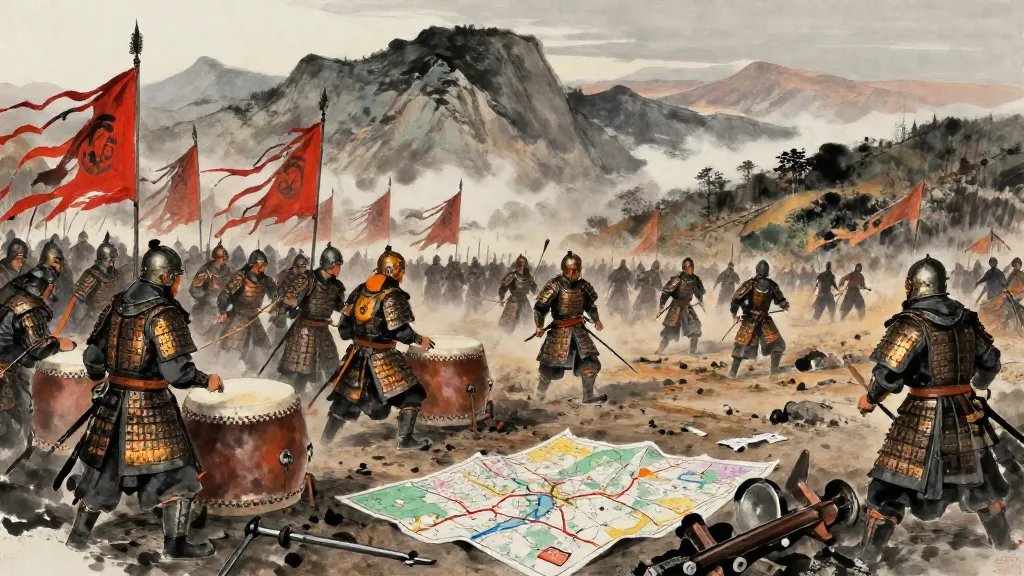
四器象兵
Four Inventions as Metaphors for Warfare
孫子曰:夫陷齒戴角,前爪後距,喜而合,怒而斗,天之道也,不可止也。故無天兵者自為備,聖人之事也。黃帝作劍,以陣象之。羿作弓弩,以勢象之。禹作舟車,以變象之。湯、武作長兵,以權象之。凡此四者,兵之用也。
Sun Bin said: Those with sinking teeth and upraised horns, with front claws and rear spurs, coming together in joy and fighting in anger — this is the Way of heaven and cannot be stopped. Therefore providing one's own defenses when lacking nature's weapons — this is the work of the sage. The Yellow Emperor invented the sword, which serves as a metaphor for formation. Yi invented the bow and crossbow, which serves as a metaphor for momentum. Yu invented boats and chariots, which serve as a metaphor for adaptability. Tang and King Wu invented the long weapon, which serves as a metaphor for tactical leverage. These four things are the applications of warfare.
Notes
Yi (羿), also known as Hou Yi, is a mythical archer who shot down nine of ten suns threatening to scorch the earth. Here he is credited with inventing the bow and crossbow.
The four sage-inventors — Yellow Emperor (sword/formation), Yi (bow/momentum), Yu (boats-chariots/adaptability), and Tang-Wu (long weapons/leverage) — establish that military technology is a natural and necessary extension of human civilization, not something to be morally condemned.