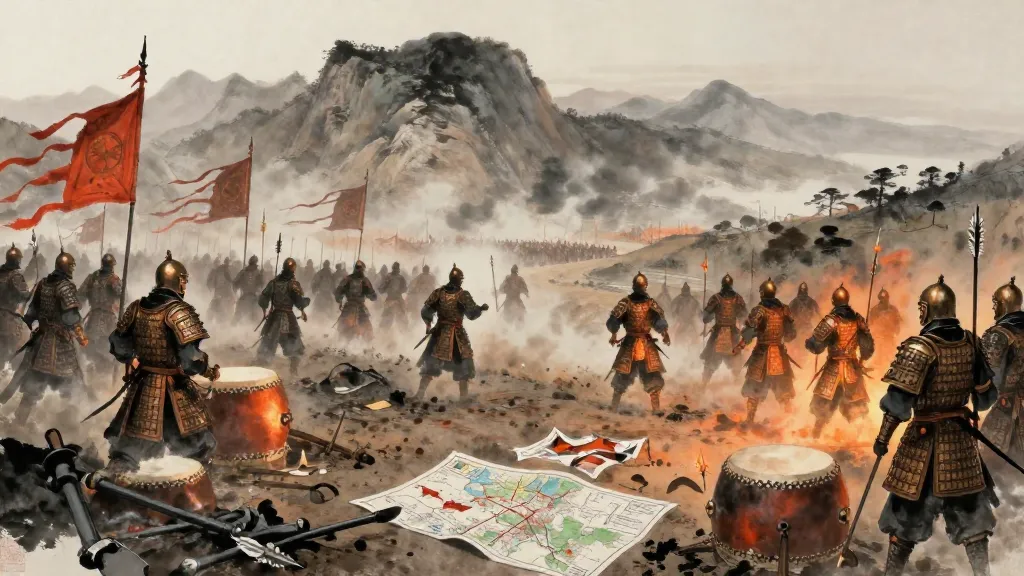
弩矢之喻
The Crossbow Metaphor
孫子曰:"若欲知兵之情,弩矢其法也。矢,卒也。弩,將也。發者,主也。矢,金在前,羽在後,故犀而善走。前..今治卒則後重而前輕,陣之則辨,趣之敵則不聽,人治卒不法矢也。弩者,將也。弩張柄不正,偏強偏弱而不和,其兩洋之送矢也不壹,矢雖輕重得,前後適,猶不中[招也]..將之用心不和..得,猶不勝敵也。矢輕重得,前[後]適,而弩張正,其送矢壹,發者非也,猶不中招也。卒輕重得,前..兵..猶不勝敵也。故曰,弩之中彀合於四,兵有功..將也,卒也,□也,故曰,兵勝敵也,不異於弩之中招也。此兵之道也。"
Sun Bin said: 'If you wish to understand the nature of warfare, the crossbow and bolt provide the model. The bolt represents the troops. The crossbow represents the general. The one who releases it represents the ruler. The bolt has metal at the front and feathers at the rear, so it flies sharp and true. [But] now in organizing troops, they place the weight at the rear and lightness at the front — when deployed in formation they are distinguishable, but when directed at the enemy they do not respond. People organize troops without following the model of the bolt. The crossbow represents the general. If the crossbow is drawn with its stock not straight, if one side is strong and the other weak and they are not in harmony, the two arms will not propel the bolt consistently. Even if the bolt's weight is right and its front and rear are balanced, it still will not hit the target [...]. If the general's application of mind is not harmonious [...] he still cannot defeat the enemy. If the bolt's weight is right and front and rear are balanced, and the crossbow is drawn straight and propels the bolt consistently, but the one who releases it is wrong, it still will not hit the target. If the troops' weight is right and front [...] warfare [...] still cannot defeat the enemy. Therefore it is said: the crossbow hitting within range depends on four elements coming together. Military success [...] the general, the troops, and [the ruler]. Therefore it is said: an army defeating an enemy is no different from a crossbow hitting its target. This is the Way of warfare.'
Notes
The crossbow metaphor is one of Sun Bin's most original contributions to military thought. The three components — bolt (troops), crossbow (general), and trigger-puller (ruler) — must all function correctly for the weapon to hit its target. This systematically defines the division of responsibility: the ruler decides when to act, the general directs the force, and the troops execute. Failure at any level causes the entire system to fail.