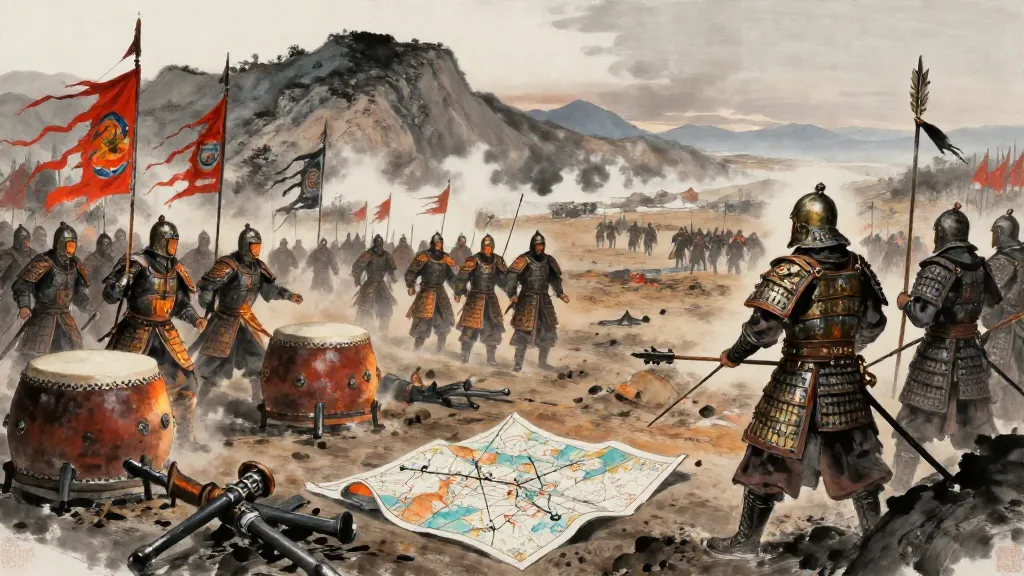
十陣 (The Ten Formations) — Chinese ink painting

孫臏兵法 Sun Bin Bingfa · Chapter 16

十陣

The Ten Formations

View:

十陣概論

Overview of the Ten Formations

凡陣有十:有方陣,有圓陣,有疏陣,有數陣,有錐行之陣,有雁行之陣,有鉤行之陣,有玄襄之陣,有火陣,有水陣。此皆有所利。方陣者,所以也。圓陣者,所以也。疏陣者,所以也。數陣者,為不可掇。錐行之陣者,所以決絕也。雁行之陣者,所以接射也。鉤行之陣者,所以變質易慮也。玄襄之陣者,所以疑眾難故也。火陣者,所以拔也。水陣者,所以倀固也。

Formations number ten in all: the square formation, the circular formation, the sparse formation, the dense formation, the wedge formation, the goose formation, the hook formation, the mysterious-shield formation, the fire formation, and the water formation. Each has its particular advantage. The square formation is used for [lacuna]. The circular formation is used for [lacuna]. The sparse formation is used for [lacuna]. The dense formation is made so it cannot be disrupted. The wedge formation is used for decisive breakthrough. The goose formation is used for engaging with missile fire. The hook formation is used for changing dispositions and altering plans. The mysterious-shield formation is used for creating confusion and complicating the enemy's situation. The fire formation is used for seizure. The water formation is used for holding firm positions.

Notes

1context

The ten formations represent a comprehensive tactical system. Some purposes have been lost due to damage to the bamboo strips (particularly for the square, circular, and sparse formations). The 'mysterious-shield formation' (玄襄之陣) is unique to this text and appears designed for psychological warfare — creating confusion about one's true dispositions.

疏陣與數陣之法

Methods of the Sparse and Dense Formations

方陣之法,必薄中厚方,居陣在後。中之薄也,將以也。重□其□,將以也。居陣在後,所以..疏陣之法,其甲寡而人之少也,是故堅之。武者在兵旗,是人者在兵。故必疏矩間,多其旌旗羽旄,砥刃以為旁。疏而不可蹙,數而不可軍者,在於慎。車毋馳,徒人毋趨。凡疏陣之法,在為數醜,或進或退,或擊或,或與之徵,或要其衰。然則疏可以取銳矣。

The method of the square formation: the center must be thin and the flanks thick; the command post is in the rear. The center is thin in order to [lacuna]. The weight [lacuna] in order to [lacuna]. The command post is in the rear in order to [...]. The method of the sparse formation: when armor is few and men are scarce, it must therefore be strengthened. Warriors are placed at the weapon-flags; these men are in the weapons line. Therefore the intervals must be widened, with many banners, pennants, and feathered standards, and blades sharpened along the sides. The sparse formation must not be compressible, and the dense formation must not be disorderly — this depends on caution. Chariots must not charge; infantry must not rush. The general method of the sparse formation involves creating multiple detachments that either advance or retreat, either strike or [lacuna], either engage the enemy directly or intercept his weakness. Thus the sparse formation can overcome the sharp.

數陣與錐行之法

Methods of the Dense and Wedge Formations

數陣之法,毋疏矩間,戚而行首,積刃而信之,前後相保,變□□□,甲恐則坐,以聲坐□,往者弗送。來者弗止,或擊其迂,或辱其銳,笲之而無間,山而退。然則數不可掇也。錐行之陣,卑之若劍,末不銳則不入,刃不薄則不,本不厚則不可以列陣。是故末必銳,刃必薄,本必鴻。然則錐行之陣可以決絕矣。

The method of the dense formation: do not widen the intervals. Press close at the head of the column. Mass the blades and extend them. Front and rear protect each other. Change [lacuna]. If the armored troops are afraid, have them sit. Use sound to [settle them]. Do not pursue those who leave. Do not stop those who come. Either strike their flanks or insult their sharp edge. Press them without gaps, then withdraw like a mountain. Thus the dense formation cannot be disrupted. The wedge formation: lower it like a sword. If the tip is not sharp, it will not penetrate. If the edge is not thin, it will not cut. If the base is not thick, it cannot form up in array. Therefore the tip must be sharp, the edge thin, and the base massive. Thus the wedge formation can achieve decisive breakthrough.

Notes

1context

The sword metaphor for the wedge formation — sharp tip, thin edge, thick base — is a remarkably vivid tactical description. The formation concentrates the best troops at the point to pierce the enemy line, with progressively heavier forces behind to widen the breach.

火陣與水陣

The Fire and Water Formations

火戰之法,溝壘已成,重為溝塹,五步積薪,必均疏數,從役有數,令人為屬枇,必輕必利,風辟..火既自覆,與之戰弗克,坐行而北。水戰之法,必眾其徒而寡其車,令之為鉤楷蓯柤貳輯□絳皆具。進則必遂,退則不蹙,方蹙從流,以敵之人為招。

The method of fire combat: once moats and ramparts are built, construct additional ditches. Stack firewood at intervals of five paces, uniformly distributed between sparse and dense. Laborers are numbered and assigned; have them make connected rafts — they must be light and serviceable. [When the] wind [shifts]... once the fire turns back on itself, fight them. If you cannot overcome them, march seated and retreat northward. The method of water combat: use many foot soldiers and few chariots. Have them prepare hooked ladders, poles, oars, planks, double hulls, [lacuna], and ropes — all must be ready. When advancing, advance to completion. When retreating, do not bunch up. If pressed, follow the current and use the enemy's own men as targets.

Edition & Source

Text
《孫臏兵法》 Sun Bin Bingfa
Edition
中華古詩文古書籍網 transcription (Yinqueshan bamboo strips reconstruction)
Commentary
Modern reconstruction from 1972 Yinqueshan tomb excavation