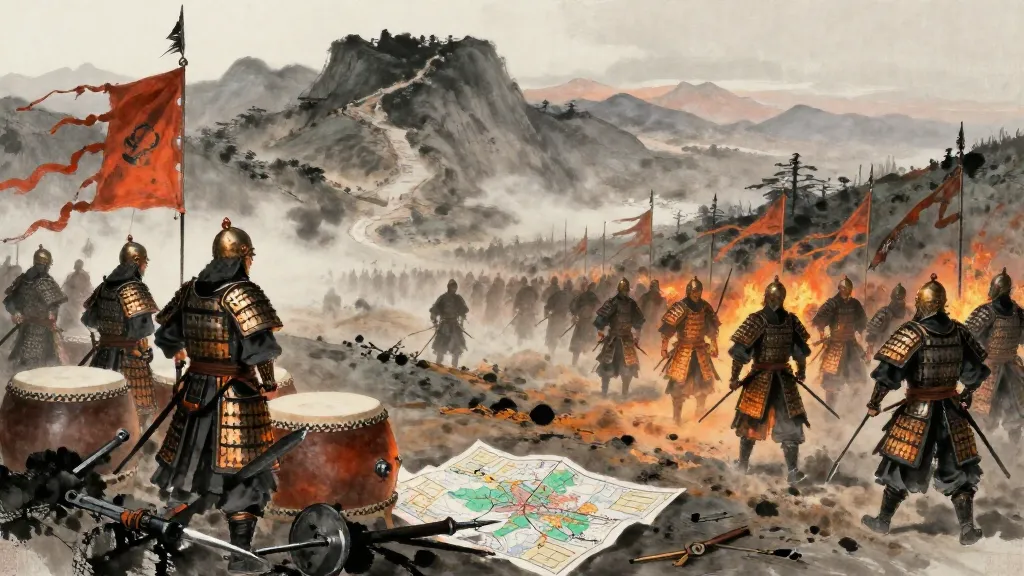
五名五恭 (Five Designations and Five Restraints) — Chinese ink painting

孫臏兵法 Sun Bin Bingfa · Chapter 21

五名五恭

Five Designations and Five Restraints

View:

兵有五名

Five Designations of Armies

兵有五名:一曰威強,二曰軒驕,三曰剛至,四曰助忌,五曰重柔。夫威強之兵,則屈軟而待之;軒驕之兵,則恭敬而久之;剛至之兵,則誘而取之;忌之兵,則薄其前,噪其旁,深溝高壘而難其糧;重柔之兵,則噪而恐之,振而捅之,出則擊之,不出則回之。

Armies have five designations: first, the awe-inspiring and strong; second, the arrogant and proud; third, the hard and direct; fourth, the suspicious and jealous; fifth, the heavy and soft. Against an awe-inspiring and strong army, yield softly and bide your time. Against an arrogant and proud army, treat them with respect and outlast them. Against a hard and direct army, lure and take them. Against a suspicious and jealous army, press their front, create commotion on their flanks, dig deep moats and raise high ramparts to cut off their supplies. Against a heavy and soft army, raise a clamor to frighten them, shake and push them; if they come out, strike them; if they do not come out, encircle them.

Notes

1context

This typology classifies enemy armies by their dominant character trait and prescribes a specific counter for each. The approach is fundamentally psychological — matching your response to the enemy's temperament. This echoes the Wuzi's five causes of war and five types of armies, suggesting a shared tradition of military classification.

五恭五暴

Five Restraints and Five Aggressions

兵有五恭、五暴。何謂五恭?入境而恭,軍失其常。再舉而恭,軍無所糧。三舉而恭,軍失其事。四舉而恭,軍無食。五舉而恭,軍不及事。入境而暴,謂之客。再舉而暴,謂之華。三舉而暴,主人懼。四舉而暴,卒士見詐。五舉而暴,兵必大耗。故五恭、五暴,必使相錯也。

Armies have five restraints and five aggressions. What are the five restraints? Entering enemy territory with restraint — the army loses its momentum. Launching a second action with restraint — the army has no supplies to draw upon. Launching a third action with restraint — the army loses its purpose. Launching a fourth action with restraint — the army has no food. Launching a fifth action with restraint — the army cannot accomplish its mission. Entering enemy territory with aggression — this is called being the guest. Launching a second action with aggression — this is called display. Launching a third action with aggression — the host becomes fearful. Launching a fourth action with aggression — the soldiers see through the deception. Launching a fifth action with aggression — the army will surely suffer great attrition. Therefore the five restraints and five aggressions must be interspersed with each other.

Notes

1context

The five-stage model shows the diminishing returns of both pure restraint and pure aggression across a campaign's progression. Too much restraint drains the army's resources and purpose; too much aggression exposes deception and causes attrition. Sun Bin's prescription — intersperse the two — advocates for strategic rhythm, alternating between aggressive and restrained postures.

Edition & Source

Text
《孫臏兵法》 Sun Bin Bingfa
Edition
中華古詩文古書籍網 transcription (Yinqueshan bamboo strips reconstruction)
Commentary
Modern reconstruction from 1972 Yinqueshan tomb excavation