用兵之費
The Cost of Raising an Army
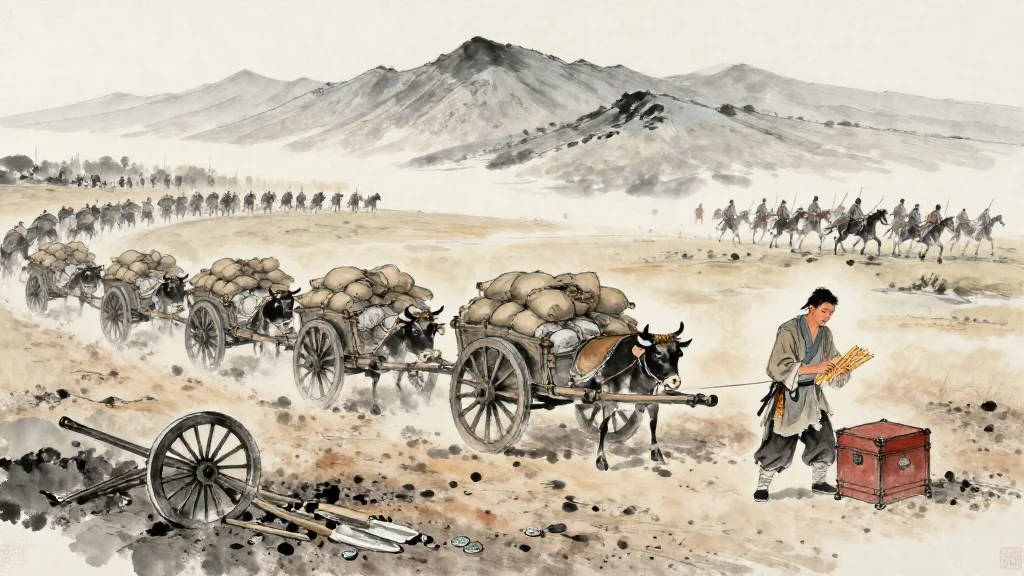
孫子曰:凡用兵之法,馳車千駟,革車千乘,帶甲十萬,千里饋糧,則內外之費,賓客之用,膠漆之材,車甲之奉,日費千金,然後十萬之師舉矣。
Master Sun said: In the conduct of war — with a thousand swift chariots, a thousand heavy wagons, a hundred thousand armored troops, and provisions transported over a thousand li — the domestic and foreign expenditures, the costs of receiving envoys and advisors, the materials for glue and lacquer, the maintenance of chariots and armor: all this runs to a thousand pieces of gold per day. Only then can an army of a hundred thousand be put in the field.
Notes
作戰 (zuo zhan) is often mistranslated as 'waging war' in the sense of fighting battles. The chapter is actually about the economics of military operations — the logistics, costs, and fiscal strain of sustained campaigning. A more precise translation would be 'initiating operations.'
馳車 (chi che, 'swift chariots') were light, fast four-horse war chariots. 革車 (ge che, 'leather wagons') were heavy supply wagons covered with hide. By the late Warring States these numbers were conventional rather than precise — infantry had largely supplanted chariot warfare.
千里 (qian li, 'a thousand li'): one li in the Warring States period was approximately 415 meters, so a thousand li is roughly 415 km. This represents a major expeditionary campaign far from home territory.
膠漆之材 ('materials for glue and lacquer'): glue (膠) and lacquer (漆) were essential military supplies used to reinforce bows, seal armor, and maintain chariots. Their mention here underscores Sunzi's attention to logistics.