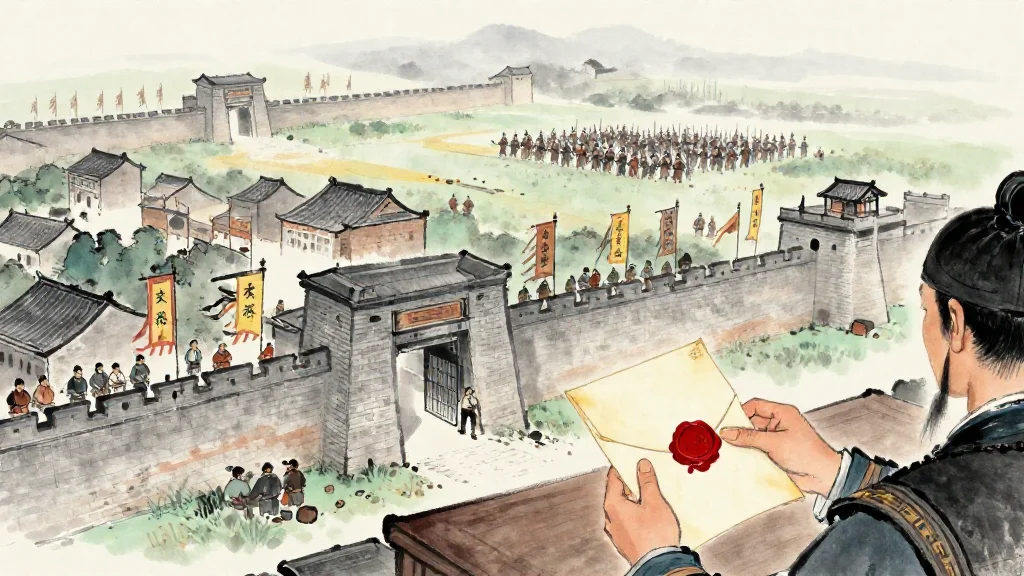
不戰而屈人之兵
Subduing the Enemy Without Fighting
孫子曰:凡用兵之法,全國為上,破國次之;全軍為上,破軍次之;全旅為上,破旅次之;全卒為上,破卒次之;全伍為上,破伍次之。是故百戰百勝,非善之善者也;不戰而屈人之兵,善之善者也。
Master Sun said: In the conduct of war, it is best to take the enemy's state whole and intact; to shatter and destroy it is inferior. It is best to capture the enemy's army whole; to destroy it is inferior. It is best to capture a brigade whole; to destroy it is inferior. It is best to capture a company whole; to destroy it is inferior. It is best to capture a squad whole; to destroy it is inferior.
Therefore, to win a hundred battles in a hundred engagements is not the highest excellence. The highest excellence is to subdue the enemy's army without fighting at all.
Notes
The descending hierarchy from 國 (state) to 軍 (army, ~12,500 men) to 旅 (brigade, ~500 men) to 卒 (company, ~100 men) to 伍 (squad, 5 men) follows the standard Zhou military organization. Sunzi applies the principle of 'taking whole' at every level.
全 (quan, 'whole/intact') vs 破 (po, 'shatter/break') — this is the central opposition of the chapter. 全 means to gain control without destruction; 破 means to gain control through destruction. Sunzi regards destruction as wasteful: you inherit ruins instead of resources.
不戰而屈人之兵 ('subdue the enemy's army without fighting') is perhaps the single most famous line in the Sunzi. It encapsulates his entire strategic philosophy: the supreme commander wins through superior planning, diplomacy, and positioning, making actual battle unnecessary.