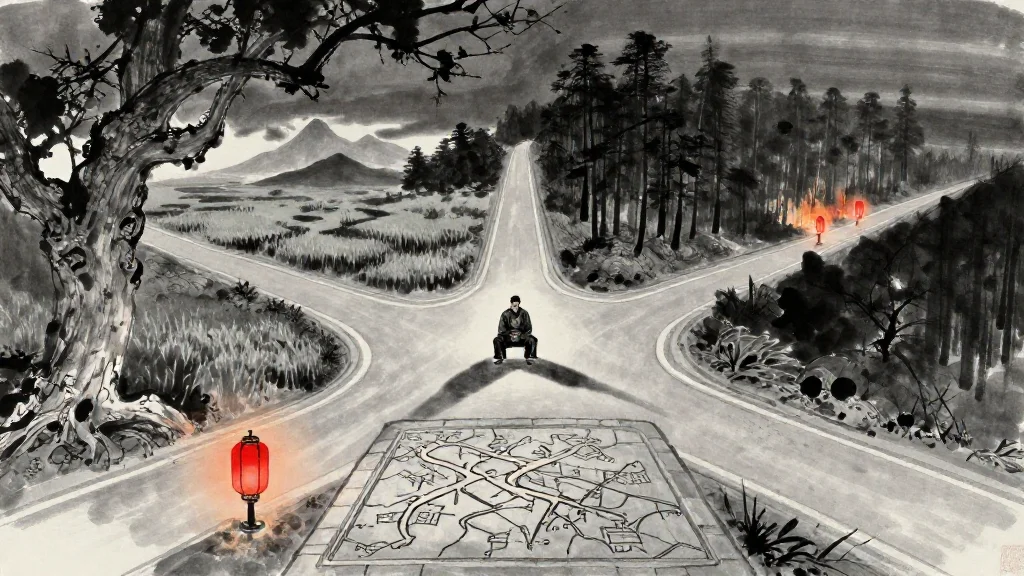
九變 (Variation in Tactics) — Chinese ink painting

Chapter 8 of 13

九變

Variation in Tactics

View:

九變之法

The Method of the Nine Variations

孫子曰:凡用兵之法,將受命於君,合軍聚眾。圮地無舍,衢地合交,絕地無留,圍地則謀,死地則戰。途有所不由,軍有所不擊,城有所不攻,地有所不爭,君命有所不受。故將通於九變之利者,知用兵矣;將不通於九變之利,雖知地形,不能得地之利矣;治兵不知九變之術,雖知地利,不能得人之用矣。

Master Sun said: In the general principles of war, the commander receives his mandate from the sovereign, assembles the army and musters the troops.

On ruinous ground, do not encamp. On intersecting ground, form alliances. On desperate ground, do not linger. On enclosed ground, devise stratagems. On deadly ground, fight.

There are roads not to take. There are armies not to strike. There are cities not to besiege. There are positions not to contest. There are sovereign commands not to obey.

A commander who masters the advantages of the nine variations knows how to wage war. A commander who does not master the nine variations, even if he knows the terrain, cannot exploit its advantages. One who commands troops without understanding the art of the nine variations, even if he knows the terrain's advantages, cannot get the best from his men.

Notes

1context

九變 (nine variations): the exact enumeration of 'nine' is debated among commentators. Some count nine specific situations listed in the passage; others take 九 loosely to mean 'many' or 'inexhaustible.' The core meaning is tactical adaptability — the ability to deviate from standard procedure when circumstances demand it.

2context

The five categories of ground mentioned here (圮地, 衢地, 絕地, 圍地, 死地) are elaborated more fully in Chapter 11 (Nine Grounds). Here they appear as abbreviated references: 圮地 (ruinous ground) = marshy, difficult terrain; 衢地 (intersecting ground) = where borders of multiple states meet; 絕地 (desperate ground) = isolated, cut-off terrain; 圍地 (enclosed ground) = ground with narrow access and limited escape; 死地 (deadly ground) = ground where survival requires immediate battle.

3translation

君命有所不受 (there are sovereign commands not to obey): one of the most radical statements in the Sunzi. It asserts that the field commander must exercise independent judgment. Once deployed, the general's authority supersedes the ruler's instructions when circumstances on the ground have changed. This principle was frequently invoked in later Chinese military and political thought.

4textual

This chapter is the shortest in the Sunzi and some scholars believe it is incomplete, with portions lost. The abrupt listing of terrain types without full explanation, and the repetition of the opening formula from Chapter 7, suggest the text may have been damaged in transmission.

利害相雜

The Interplay of Advantage and Harm

是故智者之慮,必雜於利害,雜於利而務可信也,雜於害而患可解也。是故屈諸侯者以害,役諸侯者以業,趨諸侯者以利。

The wise commander's deliberations always weigh both advantage and harm together. By factoring advantage into his calculations, he makes his endeavors reliable. By factoring harm, he ensures that threats can be neutralized.

Subdue rival lords by threatening what they value. Keep rival lords occupied by creating problems for them. Drive rival lords to action by dangling gains before them.

Notes

1translation

雜於利害 (weigh advantage and harm together): 雜 means 'to mix' or 'intermingle.' Sunzi's point is that every advantage contains hidden dangers, and every threat contains latent opportunities. Sound strategy requires seeing both simultaneously.

2translation

屈 (subdue), 役 (keep occupied), 趨 (drive to action): three distinct modes of manipulating rival states. 屈 implies forcing them into submission through threats to their vital interests; 役 implies exhausting them by creating constant crises; 趨 implies luring them into action with apparent profit.

有備無患

Rely on Preparedness, Not on Hope

故用兵之法,無恃其不來,恃吾有以待之;無恃其不攻,恃吾有所不可攻也。

The principle of war: do not rely on the enemy not coming — rely on your own readiness to receive him. Do not rely on the enemy not attacking — rely on having made your position unassailable.

Notes

1context

This passage is one of Sunzi's most quoted maxims. It encapsulates the principle of self-reliance in defense: security comes from one's own preparations, never from assumptions about the enemy's intentions. It was later condensed into the four-character proverb 有備無患 (have preparations, be without anxiety).

將之五危

The Five Dangers of a Commander

故將有五危︰必死,可殺也﹔必生,可虜也﹔忿速,可侮也﹔廉潔,可辱也﹔愛民,可煩也。凡此五者,將之過也,用兵之災也。覆軍殺將,必以五危,不可不察也。

A commander faces five dangers:

Reckless courage — he can be killed. Cowardly caution — he can be captured. A hot temper — he can be provoked. Excessive pride in honor — he can be shamed into rash action. Excessive concern for his men — he can be harassed and worn down.

These five are the commander's faults and the army's calamities. When an army is destroyed and its commander slain, it is always because of these five dangers. They must be carefully studied.

Notes

1translation

必死 (determined to die) and 必生 (determined to live): these are extremes on a spectrum. A commander who is recklessly brave charges into danger and is easily killed in an ambush. A commander obsessed with self-preservation will sacrifice his position to avoid risk and can be captured.

2translation

忿速 (quick to anger): 速 intensifies 忿 (angry). A hot-tempered commander is easily goaded into impulsive decisions by enemy provocations — feigned insults, harassing raids, or deliberate affronts.

3translation

廉潔可辱 (pride in honor, vulnerable to shame): 廉潔 denotes a rigid sense of personal honor. The enemy can exploit this by engineering humiliating situations that force the commander to act rashly to salvage his reputation.

4translation

愛民可煩 (love of the people, vulnerable to harassment): 愛民 is ordinarily a virtue, but Sunzi identifies its tactical shadow. A commander who cannot bear to see his people suffer will exhaust himself responding to every feint and raid, stretching his forces thin.

5context

Sunzi's analysis is notable for identifying virtues taken to extremes as vulnerabilities. Courage, caution, passion, honor, and compassion are all desirable qualities — but each becomes a liability when it is predictable and inflexible. The enemy's job is to identify which excess the opposing commander possesses and exploit it.

Edition & Source

Text
《孫子兵法》 Sunzi Bingfa
Edition
《武經七書》(Seven Military Classics) canonical text
Commentary
Cao Cao (曹操) and the Eleven Commentators tradition