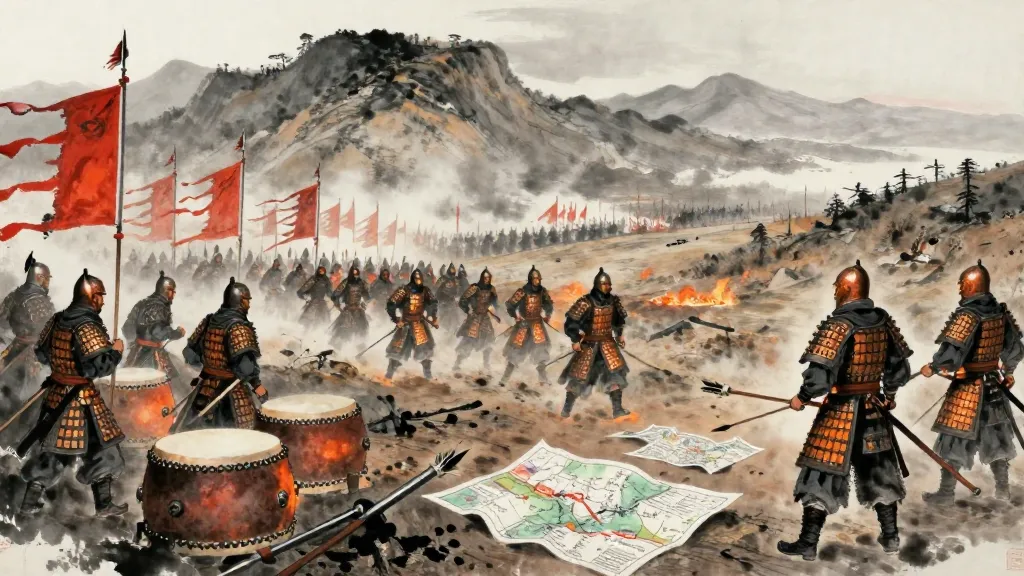
重刑令 (Ordinance on Severe Punishments) — Chinese ink painting

尉繚子 Weiliaozi · Chapter 13

重刑令

Ordinance on Severe Punishments

View:

國賊之罪

The Crime of 'Traitor to the State'

夫將自千人以上,有戰而北,守而降,離地逃眾,命曰「國賊」。身戮家殘,去其籍,發其墳墓,暴其骨於市,男女公於官。

Any commander of a thousand men or above who flees in battle, surrenders while on defense, or abandons his position and deserts his troops is designated a 'Traitor to the State.' He shall be executed, his family destroyed, his household registration revoked, his ancestral graves exhumed, and his bones exposed in the marketplace. His male and female family members shall be seized and made state slaves.

Notes

1context

國賊 (guo zei, 'traitor to the state') is the most severe designation in the Weiliaozi's system of military crimes. The punishment extends beyond execution to include desecration of ancestral graves (發其墳墓, 暴其骨於市) -- an extreme measure designed to threaten not just the living but the dead. In a culture that practiced ancestor veneration, this was the ultimate deterrent.

2context

男女公於官: literally 'males and females made public to the officials.' This means the commander's family members of both sexes are confiscated by the state as government slaves (官奴婢). Collective punishment of families was standard Legalist practice, codified in the Qin legal system found at Shuihudi.

軍賊之罪與重刑之用

The Crime of 'Military Traitor' and the Purpose of Severe Punishments

自百人以上,有戰而北,守而降,離地逃眾,命曰「軍賊」。身死家殘,男女公於官。使民內畏重刑,則外輕敵。故先王明制度於前,重威刑於後。刑重則內畏,內畏則外堅矣。

Any commander of a hundred men or above who flees in battle, surrenders while on defense, or abandons his position and deserts his troops is designated a 'Military Traitor.' He shall be executed, his family destroyed, and his male and female family members seized and made state slaves.

When the people fear severe punishments within, they take the enemy lightly without. Therefore the former kings first made the regulations clear, then enforced them with the weight of punishment. When punishments are severe, there is fear within; when there is fear within, the army is unyielding without.

Notes

3context

The distinction between 國賊 (traitor to the state, for commanders of 1,000+) and 軍賊 (military traitor, for commanders of 100+) creates a graduated scale of culpability based on rank. Higher rank means harsher punishment -- the 國賊 suffers posthumous desecration that the 軍賊 does not.

4context

內畏則外堅 ('fear within makes you unyielding without') is the fundamental Legalist theory of military motivation. Soldiers who fear their own punishments more than the enemy will not break. This same logic appears in Shang Yang's reforms and the Qin military system.

Edition & Source

Text
《尉繚子》 Weiliaozi
Edition
中華古詩文古書籍網 transcription
Commentary
Traditional military commentaries