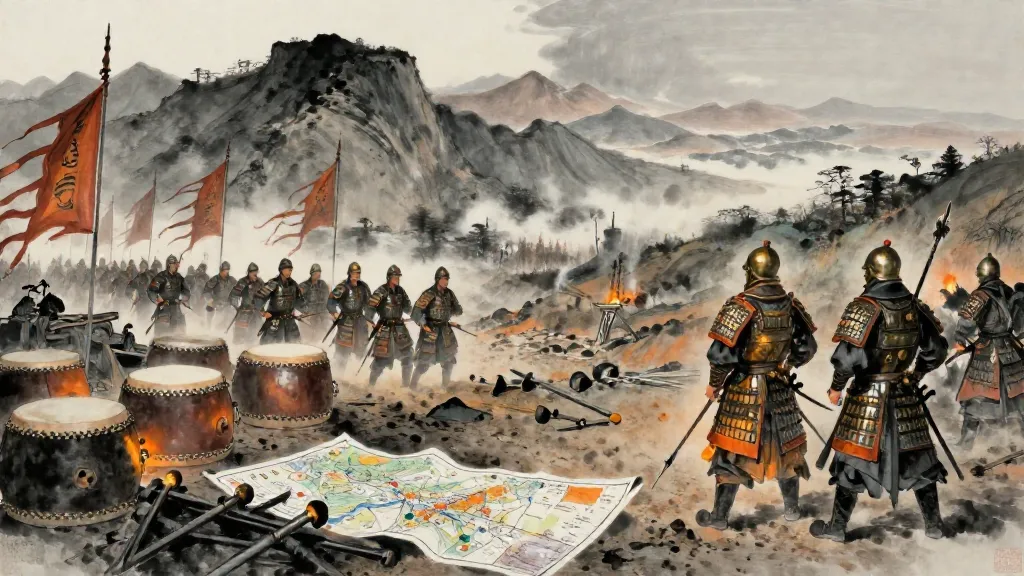
授斧鉞受命
Receiving the Axe and Battle-Axe of Command
將軍受命,君必先謀於廟,行令於廷,君身以斧鉞授將,曰:「左、右、中軍皆有分職,若逾分而上請者死。軍無二令,二令者誅,留令者誅,失令者誅。」
When the general receives his commission, the ruler must first deliberate in the ancestral temple and issue orders in the court. The ruler personally bestows the axe and battle-axe upon the general, saying: 'The left, right, and center divisions each have their designated responsibilities. Anyone who oversteps his authority to petition upward shall die. The army shall have no dual orders: anyone who issues a countermanding order shall be executed, anyone who withholds an order shall be executed, and anyone who loses an order shall be executed.'
Notes
The ceremony of bestowing the 斧鉞 (fu yue, axe and battle-axe) was the formal delegation of sovereign killing authority to the general. The axe symbolized the power of life and death. This ritual is described in multiple Warring States military texts and was practiced through the Han dynasty.
軍無二令 ('the army shall have no dual orders') establishes the principle of unified command. Once the general receives his commission, he is the sole source of authority in the field. This prevents interference from the court -- a principle the Sunzi also emphasizes with 'there are ruler's commands that need not be obeyed' (君命有所不受).