十二勝法
The Twelve Methods of Certain Victory
臣聞人君有必勝之道,故能併兼廣大,以一其制度,則威加天下。有十二焉:一曰連刑,謂同罪保伍也;二曰地禁,謂禁止行道,以網外奸也;三曰全軍,謂甲首相附,三五相同,以結其聯也;四曰開塞,謂分地以限,各死其職而堅守也;五曰分限,謂左右相禁,前後相待,垣車為固,以逆以止也;六曰號別,謂前列務進,以別其後者,不得爭先登不次也;七曰五章,謂彰明行列,始卒不亂也;八曰全曲,謂曲折相從,皆有分部也;九曰金鼓,謂興有功,致有德也;十曰陳車,謂接連前矛,馬冒其目也;十一曰死士,謂眾軍之中有材力者,乘於戰車,前後縱橫,出奇制敵也;十二曰力卒,謂經旗全曲,不麾不動也。此十二者教成,犯令不捨。兵弱能強之,主卑能尊之,令弊能起之,民流能親之,人眾能治之,地大能守之。國車不出於閫,組甲不出於橐,而威服天下矣。
Your servant has heard that a ruler possesses a path to certain victory, enabling him to annex and expand broadly. By unifying his institutions, his authority extends over All-Under-Heaven. There are twelve methods:
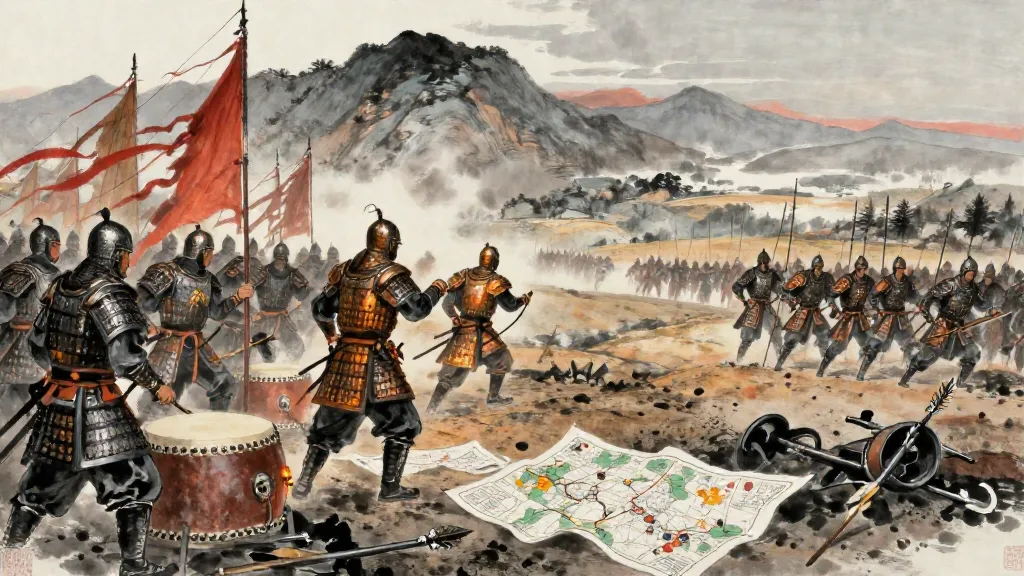
First, 'linked punishment' -- meaning collective liability through the mutual guarantee of squads. Second, 'territorial prohibition' -- meaning restricting movement on roads to net external enemies. Third, 'complete army' -- meaning squad leaders stay with their men and groups of three and five remain together, binding them in cohesion. Fourth, 'opening and blocking' -- meaning dividing territory into sectors where each man guards his post to the death. Fifth, 'dividing boundaries' -- meaning left and right flanks check each other, front and rear echelons support each other, with walled wagons forming strongpoints to resist and halt the enemy. Sixth, 'distinguishing by call-signs' -- meaning front ranks press forward to distinguish themselves from those behind, preventing disorder from men competing to be first. Seventh, 'five badges' -- meaning making ranks and files visually clear so that order holds from start to finish. Eighth, 'complete formations' -- meaning all turns and maneuvers are coordinated, with each unit having its assigned sector. Ninth, 'gongs and drums' -- meaning using them to promote merit and recognize virtue. Tenth, 'arrayed chariots' -- meaning linking forward spears in a continuous line with the horses' eyes blinkered. Eleventh, 'death warriors' -- meaning selecting the strongest men from the army to ride war chariots, ranging forward and back, east and west, to launch surprise attacks against the enemy. Twelfth, 'steadfast troops' -- meaning maintaining flags and complete formations, never moving unless waved forward.
When these twelve methods are fully trained, no violations of orders are tolerated. A weak army can be made strong, a humble ruler can be made respected, decayed orders can be revived, wandering people can be brought together, large populations can be governed, and vast territories can be defended. War chariots need not pass beyond the threshold, nor armor leave its cases, yet the whole world will submit in awe.
Notes
The twelve methods summarize the entire military system presented in the preceding chapters: 連刑 (Ch. 13-14), 地禁 (Ch. 15), 全軍 (Ch. 16), 開塞 (Ch. 15), 分限 (Ch. 15), 號別 (Ch. 17), 五章 (Ch. 17), 全曲 (Ch. 17), 金鼓 (Ch. 18), 陳車/死士/力卒 (tactical doctrine). This chapter serves as a systematic recapitulation.
馬冒其目 ('blinkering the horses' eyes') prevented war horses from panicking at the sight of enemy formations. Blinkered chariot horses could maintain a steady charge directly into enemy lines -- an essential tactical requirement for the dense chariot formations described here.