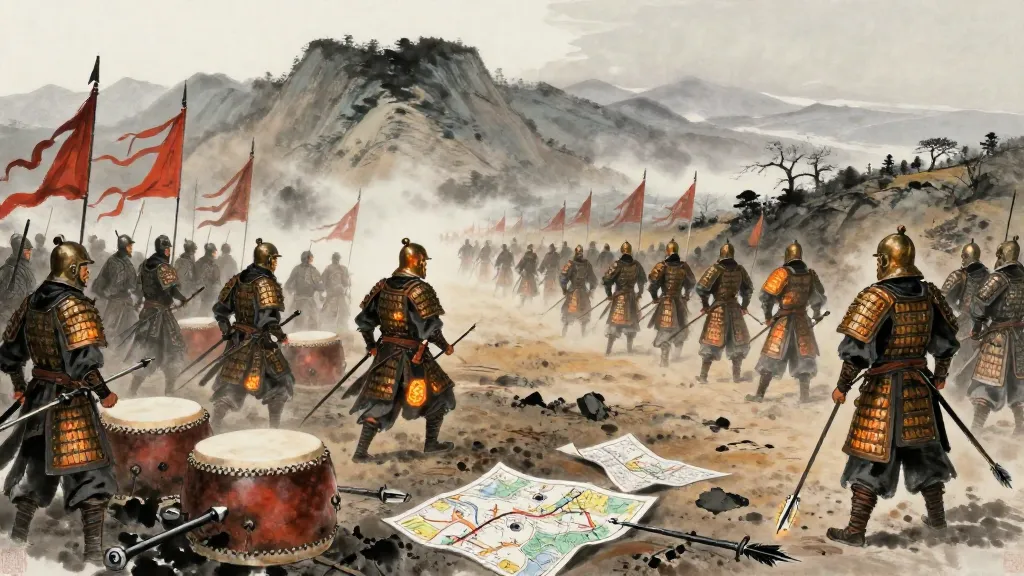
料敵 (Assessing the Enemy) — Chinese ink painting

吳子 Wuzi · Chapter 2

料敵

Assessing the Enemy

View:

六國之俗

The Customs of the Six States

武侯謂吳起曰:“今秦脅吾西,楚帶吾南,趙沖吾北,齊臨吾東,燕絕吾後,韓居吾前,六國兵四守,勢甚不便,憂此奈何?”

起對曰:“夫安國家之道,先戒為寶。今君已戒,禍其遠矣。臣請論六國之俗:夫齊陳重而不堅,秦陳散而自斗,楚陳整而不久,燕陳守而不走,三晉陳治而不用。”

Marquis Wu said to Wu Qi: "Now Qin threatens us from the west, Chu girds us on the south, Zhao presses us from the north, Qi faces us on the east, Yan cuts off our rear, and Han sits at our front. The armies of six states guard against us on all sides — the strategic position is extremely unfavorable. What can be done about this?"

Wu Qi replied: "The method for securing a state begins with vigilance — that is the most precious thing. Since my lord is already vigilant, disaster is far away. Allow me to analyze the customs of the six states. Qi's formations are heavy but not solid. Qin's formations are dispersed but self-fighting. Chu's formations are orderly but cannot sustain. Yan's formations hold their ground but will not flee. The Three Jin states' formations are well-organized but ineffective."

Notes

1context

The Three Jin (三晉) refers to the states of Wei, Han, and Zhao, which were created from the partition of the state of Jin in 403 BC. Here Wu Qi analyzes the other two (Han and Zhao) since he is speaking from within Wei.

破六國之道

Methods for Defeating the Six States

“夫齊性剛,其國富,君臣驕奢而簡於細民,其政寬而祿不均,一陳兩心,前重後輕,故重而不堅。擊此之道,必三分之,獵其左右,脅而從之,其陳可壞。秦性強,其地險,其政嚴,其賞罰信,其人不讓,皆有斗心,故散而自戰。擊此之道,必先示之以利而引去之,士貪於得而離其將,乘乖獵散,設伏投機,其將可取。楚性弱,其地廣,其政騷,其民疲,故整而不久。擊此之道,襲亂其屯,先奪其氣,輕進速退,弊而勞之,勿與戰爭,其軍可敗。燕性愨,其民慎,好勇義,寡詐謀,故守而不走。擊此之道,觸而迫之,陵而遠之,馳而後之,則上疑而下懼,謹我車騎必避之路,其將可虜。三晉者,中國也,其性和,其政平,其民疲於戰,習於兵,輕其將,薄其祿,士無死志,故治而不用。擊此之道,阻陳而壓之,眾來則拒之,去則追之,以倦其師。此其勢也。”

"The Qi temperament is fierce, their state is wealthy, their rulers and ministers are arrogant and extravagant and neglect the common people. Their governance is lax and stipends are unequal. Their formations have divided loyalties — heavy in front, light in the rear — so they are weighty but not solid. The method for attacking them: divide your force into three, harry their flanks, press and follow up — their formations can be broken. The Qin temperament is tough, their terrain is perilous, their governance is strict, their rewards and punishments are reliable, and their people yield to no one — all have the will to fight. So they are dispersed yet each man fights on his own. The method for attacking them: first display profit to lure them away. Their soldiers, greedy for gain, will separate from their commander. Exploit the disorder, hunt down the scattered, set ambushes and seize the opportunity — their general can be captured. The Chu temperament is pliant, their territory is vast, their governance is chaotic, and their people are exhausted. So they are orderly but cannot sustain. The method for attacking them: strike to disrupt their encampments, first strip away their fighting spirit, advance lightly and withdraw quickly, wear them down and exhaust them, do not engage in pitched battle — their army can be defeated. The Yan temperament is honest, their people are cautious, they love bravery and duty but lack cunning. So they hold their ground and will not retreat. The method for attacking them: make contact and press them, then overrun them and pull back to a distance, charge and fall behind them. Their commanders will grow suspicious and their troops fearful. Deploy your chariots and cavalry to block their escape routes — their general can be captured. The Three Jin states are in the heartland. Their temperament is moderate, their governance is even-handed, their people are weary of war though accustomed to military service. They look down on their generals and their pay is meager; soldiers have no will to fight to the death. So they are well-organized but ineffective. The method for attacking them: block their formations and press them. When they mass, resist them; when they withdraw, pursue them — exhaust their army. This is the strategic reality."

選虎賁之士

Selecting Elite Warriors

“然則一軍之中,必有虎賁之士,力輕扛鼎,足輕戎馬,搴旗斬將,必有能者。若此之等,選而別之,愛而貴之,是謂軍命。其有工用五兵、材力健疾、志在吞敵者,必加其爵列,可以決勝。厚其父母妻子,勸賞畏罰,此堅陳之士,可與持久,能審料此,可以擊倍。”

武侯曰:“善!”

"Furthermore, within any army there must be warriors of extraordinary valor — men whose strength can lift a cauldron, whose speed matches a war horse, who can seize the enemy's banner and cut down his general. Such men assuredly exist. Select them, set them apart, cherish them, and honor them — this is called the army's lifeline. Those who are skilled with all five weapons, physically powerful and fast, and whose ambition is to devour the enemy — promote them in rank. This will decide victory. Provide generously for their parents, wives, and children. Encourage them with rewards and hold them in check with punishments. These are the soldiers who solidify formations, who can endure prolonged campaigns. If you can accurately assess such men, you can defeat an enemy of double your numbers."

Marquis Wu said: "Excellent!"

Notes

1translation

虎賁 (tiger warriors) was a term for elite guards and shock troops. The phrase later became a formal military title in the Han dynasty and beyond. 五兵 (five weapons) traditionally refers to the sword, spear, halberd, bow, and crossbow.

不卜而戰者八

Eight Situations to Attack Without Divination

吳子曰:“凡料敵有不卜而與之戰者八。一曰:疾風大寒,早興寐遷,刊木濟水,不憚艱難。二曰:盛夏炎熱,晏興無間,行驅饑渴,務於取遠。三曰:師既淹久,糧食無有,百姓怨怒,妖祥數起,上不能止。四曰:軍資既竭,薪芻既寡,天多陰雨,欲掠無所。五曰:徒眾不多,水地不利,人馬疾疫,四鄰不至。六曰:道遠日暮,士眾勞懼,倦而未食,解甲而息。七曰:將薄吏輕,士卒不固,三軍數驚,師徒無助。八曰:陳而未定,舍而未畢,行坂涉險,半隱半出。諸如此者,擊之無疑。”

Wu Qi said: "In assessing the enemy, there are eight situations where you should attack without consulting the oracle. First: in fierce wind and bitter cold, the enemy rises early and moves camp while half asleep, felling trees and fording rivers, heedless of hardship. Second: in the heat of high summer, the enemy rises late without respite, marching through hunger and thirst, straining to cover great distance. Third: the army has been in the field too long, provisions are exhausted, the people are resentful and angry, ill omens have appeared repeatedly, and the commanders cannot restore order. Fourth: military supplies are depleted, fuel and fodder are scarce, the sky brings constant overcast rain, and there is nowhere to forage. Fifth: their troops are not numerous, the terrain and water sources are unfavorable, men and horses are struck by epidemic, and no allies are coming to their aid. Sixth: the road is long, dusk is falling, the soldiers are exhausted and afraid, weary and unfed, and they have removed their armor to rest. Seventh: their general lacks authority, their officers lack respect, the troops have no cohesion, the entire army has been startled repeatedly, and their forces have no support. Eighth: their formations are not yet set, their encampment is not yet complete, they are traversing slopes and crossing rough terrain, half concealed and half exposed. In any of these situations, attack without hesitation."

不占而避者六

Six Situations to Avoid Without Divination

“有不占而避之者六。一曰:土地廣大,人民富眾。二曰:上愛其下,惠施流布。三曰:賞信刑察,發必得時。四曰:陳功居列,任賢使能。五曰:師徒之眾,兵甲之精。六曰:四鄰之助,大國之援。凡此不如敵人,避之勿疑。所謂見可而進,知難而退也。”

"There are six situations where you should avoid battle without consulting the oracle. First: the enemy's territory is vast and its population wealthy and numerous. Second: the rulers care for their subordinates and their generosity is widely distributed. Third: their rewards are reliable and their punishments are discerning, and their mobilizations are always timely. Fourth: they rank men by merit and employ the worthy and capable. Fifth: their forces are numerous and their weapons and armor are of excellent quality. Sixth: they receive aid from neighboring states and support from a great power. In any case where you are inferior to the enemy in these respects, avoid battle without hesitation. This is what is meant by 'advance when you see opportunity; withdraw when you recognize difficulty.'"

觀敵之外知其內

Reading the Enemy's Exterior to Know the Interior

武侯問曰:“吾欲觀敵之外以知其內,察其進以知其止,以定勝負,可得聞乎?”

起對曰:“敵人之來,蕩蕩無慮,旌旗煩亂,人馬數顧,一可擊十,必使無措。諸侯未會,君臣未和,溝壘未成,禁令未施,三軍匈匈,欲前不能,欲去不敢,以半擊倍,百戰不殆。”

Marquis Wu asked: "I wish to observe the enemy's exterior to understand his interior, and study his advance to know when he will halt, in order to determine victory or defeat. May I hear about this?"

Wu Qi replied: "When the enemy approaches carelessly and without precaution, his banners in disorder, his men and horses constantly looking back — then one can strike ten and you will certainly throw them into confusion. When the lords have not yet assembled, ruler and ministers are not yet in accord, field fortifications are not yet complete, prohibitions and orders have not yet been imposed, and the entire army is in an uproar — wanting to advance but unable, wanting to retreat but not daring — then with half their numbers you can attack double, and fight a hundred battles without danger."

敵必可擊之道

Conditions Under Which the Enemy Can Certainly Be Struck

武侯問敵必可擊之道。

起對曰:“用兵必須審敵虛實而趨其危。敵人遠來新至,行列未定,可擊;既食未設備,可擊;奔走,可擊;勤勞,可擊;未得地利,可擊;失時不從,可擊;旌旗亂動,可擊;涉長道後行未息,可擊;涉水半渡,可擊;險道狹路,可擊;陳數移動,可擊;將離士卒,可擊;心怖,可擊。凡若此者,選銳沖之,分兵繼之,急擊勿疑。”

Marquis Wu asked about the conditions under which the enemy can certainly be struck.

Wu Qi replied: "In employing military force, you must assess the enemy's strengths and weaknesses and move against his vulnerabilities. When the enemy has come from afar and just arrived, his ranks not yet formed — strike. When he has just eaten but not yet set his defenses — strike. When he is in flight — strike. When he is fatigued from labor — strike. When he has not secured advantageous terrain — strike. When he has missed his timing and lost coordination — strike. When his banners are moving in disorder — strike. When he has traveled a long road and the rear columns have not yet rested — strike. When he is crossing water and half his force is across — strike. When he is on a dangerous road or narrow path — strike. When his formations are repeatedly shifting — strike. When his general is separated from his troops — strike. When his men are terrified — strike. In all such cases, select your elite troops to spearhead the assault, divide your forces to follow up, and attack urgently without hesitation."

Edition & Source

Text
《吳子》 Wuzi
Edition
《武經七書》(Seven Military Classics) canonical text
Commentary
Traditional military commentaries