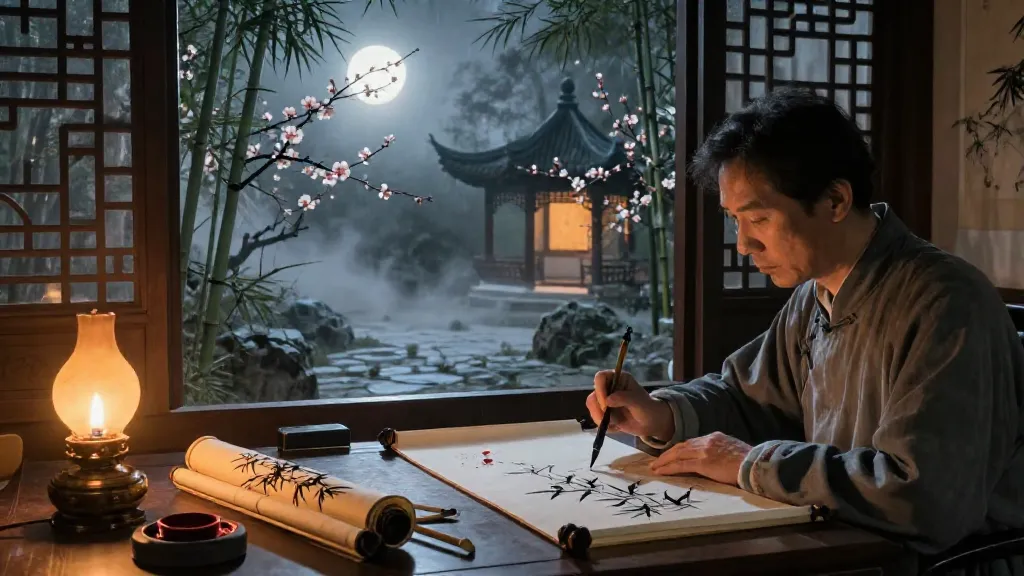
修身 (Cultivating the Self) — Chinese ink painting

荀子 Xunzi · Chapter 2

修身

Cultivating the Self

View:

見善修然自存

Seeing Good and Examining Oneself

見善,修然必以自存也;見不善,愀然必以自省也。善在身,介然必以自好也;不善在身,菑然必以自惡也。故非我而當者,吾師也;是我而當者,吾友也;諂諛我者,吾賊也。故君子隆師而親友,以致惡其賊。好善無厭,受諫而能誡,雖欲無進,得乎哉!小人反是:致亂而惡人之非己也;致不肖而欲人之賢己也;心如虎狼,行如禽獸,而又惡人之賊己也。諂諛者親,諫爭者疏,修正為笑,至忠為賊,雖欲無滅亡,得乎哉!

When one sees what is good, one must solemnly examine whether one possesses it. When one sees what is not good, one must gravely examine oneself with concern. When goodness resides in oneself, one should hold firmly to it with satisfaction. When badness resides in oneself, one should regard it with the same revulsion as a calamity. Therefore the one who criticizes me fairly is my teacher; the one who affirms me fairly is my friend; the one who flatters me is my enemy. Thus the gentleman honors his teachers and draws close to his friends, and in consequence he detests his enemies. He loves goodness without satiation and accepts remonstrance and takes it to heart — could he fail to make progress even if he wished to? The petty person is the opposite: he creates disorder yet hates those who criticize him; he achieves worthlessness yet wants others to consider him worthy; his heart is like a tiger or wolf, his conduct like beasts, yet he hates those who point this out. He draws close to flatterers and distances those who remonstrate, considers self-correction laughable and utmost loyalty to be enmity — could he avoid destruction even if he wished to?

禮之正身

Ritual as the Means of Rectifying the Self

扁善之度——以治氣養生,則後彭祖;以修身自名,則配堯禹。宜於時通,利以處窮,禮信是也。凡用血氣、志意、知慮,由禮則治通,不由禮則勃亂提僈;食飲,衣服、居處、動靜,由禮則和節,不由禮則觸陷生疾;容貌、態度、進退、趨行,由禮則雅,不由禮則夷固、僻違、庸眾而野。故人無禮則不生,事無禮則不成,國家無禮則不寧。

The measure of comprehensive goodness — in regulating one's vital energy and nourishing life, one can match Pengzu in longevity; in cultivating the self and establishing one's name, one can equal Yao and Yu. What is fitting in times of success and beneficial in times of hardship is ritual propriety and trustworthiness. In all employment of one's vital energy, will, and deliberation — if one follows ritual then all is well-ordered; if one does not follow ritual then all becomes confused and negligent. In eating and drinking, clothing, dwelling, movement and rest — if one follows ritual then all is harmonious and regulated; if one does not follow ritual then one stumbles into transgression and generates illness. In countenance, bearing, advancing and retreating, walking and running — if one follows ritual then all is elegant; if one does not follow ritual then all becomes coarse, deviant, vulgar, and uncouth. Therefore without ritual, people cannot sustain their lives; without ritual, undertakings cannot succeed; without ritual, states cannot be at peace.

Notes

1person彭祖Péng Zǔ

Pengzu (彭祖) is a legendary figure said to have lived for over 800 years, a symbol of longevity in Chinese tradition.

治氣養心之術

The Art of Regulating Vital Energy and Nurturing the Mind

治氣養心之術:血氣剛強,則柔之以調和;知慮漸深,則一之以易良;勇膽猛戾,則輔之以道順;齊給便利,則節之以動止;狹隘褊小,則廓之以廣大;卑濕重遲貪利,則抗之以高志;庸眾駑散,則劫之以師友;怠慢僄棄,則照之以禍災;愚款端愨,則合之以禮樂,通之以思索。凡治氣養心之術,莫徑由禮,莫要得師,莫神一好。夫是之謂治氣養心之術也。

The art of regulating vital energy and nurturing the mind: if one's temperament is hard and unyielding, soften it with harmony and balance. If one's deliberations grow excessively deep, unify them with straightforward goodness. If one's courage is fierce and violent, assist it with the guidance of the Way. If one is nimble, quick, and cunning, regulate it with measured action. If one is narrow and petty, broaden it with expansive vision. If one is base, sluggish, heavy, slow, and greedy for profit, elevate it with lofty aspirations. If one is mediocre, dull, and scattered, galvanize it through teachers and friends. If one is negligent, insolent, and reckless, illuminate it with the prospect of disaster. If one is simple-minded, sincere, and solid, harmonize it with ritual and music, and open it up through reflection and inquiry. In all arts of regulating vital energy and nurturing the mind, nothing is more direct than following ritual, nothing more essential than finding a teacher, and nothing more efficacious than focusing devotion on one thing. This is what is called the art of regulating vital energy and nurturing the mind.

君子役物

The Gentleman Commands Things

志意修則驕富貴,道義重則輕王公;內省而外物輕矣。傳曰:「君子役物,小人役於物。」此之謂矣。身勞而心安,為之;利少而義多,為之;事亂君而通,不如事窮君而順焉。故良農不為水旱不耕,良賈不為折閱不市,士君子不為貧窮怠乎道。

When one's aspirations are cultivated, one looks down on wealth and rank. When the Way and duty weigh heavily, one thinks little of kings and lords. When one examines within, external things become light. The tradition says: 'The gentleman commands things; the petty person is commanded by things.' This is what it means. If the body is labored but the mind is at peace — do it. If the profit is small but the duty is great — do it. Serving a disordered lord and getting ahead is not as good as serving a struggling lord and remaining upright. Therefore the good farmer does not stop plowing because of flood or drought, the good merchant does not stop trading because of losses, and the scholar-gentleman does not neglect the Way because of poverty.

君子之求利也略

The Gentleman's Pursuit of Profit Is Modest

君子之求利也略,其遠害也早,其避辱也懼,其行道理也勇。君子貧窮而志廣,富貴而體恭,安燕而血氣不惰,勞倦而容貌不枯,怒不過奪,喜不過予。君子貧窮而志廣,隆仁也;富貴而體恭,殺埶也;安燕而血氣不衰,柬理也;勞倦而容貌不枯,好交也;怒不過奪,喜不過予,是法勝私也。

The gentleman's pursuit of profit is restrained; his avoidance of harm comes early; his evasion of disgrace is fearful; his practice of the Way is courageous. When poor, the gentleman's ambitions remain broad. When wealthy, his bearing remains respectful. In ease and comfort, his vitality does not grow slack. In weariness and exhaustion, his countenance does not wither. In anger he does not take too much; in joy he does not give too much. That his ambitions remain broad in poverty comes from exalting benevolence. That his bearing remains respectful in wealth comes from restraining the influence of position. That his vitality does not decline in comfort comes from disciplining himself with principle. That his countenance does not wither in exhaustion comes from loving proper conduct. That he does not take too much in anger nor give too much in joy — this is principle overcoming private impulse.

Edition & Source

Text
《荀子》 Xunzi
Edition
《四部叢刊》本
Commentary
Traditional commentaries