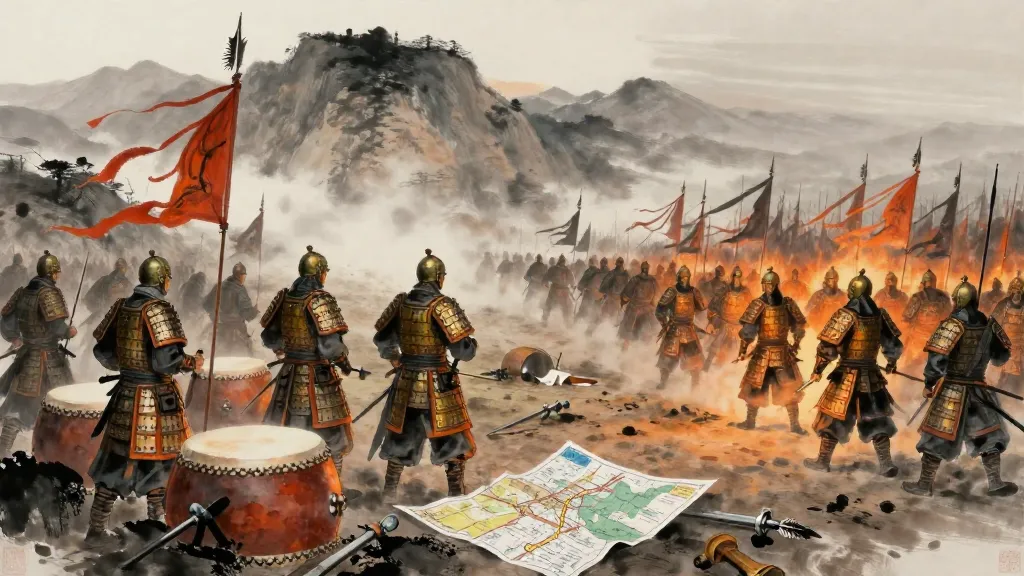
榮辱 (Honor and Disgrace) — Chinese ink painting

荀子 Xunzi · Chapter 4

榮辱

Honor and Disgrace

View:

恭儉偋五兵

Humility Deflects All Weapons

憍泄者,人之殃也;恭儉者,偋五兵也。雖有戈矛之刺,不如恭儉之利也。故與人善言,暖於布帛;傷人之言,深於矛戟。

Arrogance and recklessness are the bane of people; humility and frugality are a shield against all weapons. Even the piercing of halberds and spears is not as sharp as the power of humility. Therefore kind words spoken to others are warmer than cloth and silk; words that wound others cut deeper than spears and halberds.

榮辱之大分

The Great Division of Honor and Disgrace

榮辱之大分,安危利害之常體:先義而後利者榮,先利而後義者辱;榮者常通,辱者常窮;通者常制人,窮者常制於人:是榮辱之大分也。材愨者常安利,盪悍者常危害;安利者常樂易,危害者常憂險;樂易者常壽長,憂險者常夭折:是安危利害之常體也。

The great division of honor and disgrace, the constant pattern of security and danger, benefit and harm: those who put duty before profit are honored; those who put profit before duty are disgraced. The honored are always successful; the disgraced are always impoverished. The successful always command others; the impoverished are always commanded by others — this is the great division of honor and disgrace. Those of solid and sincere character are always secure and prosperous; the reckless and violent always face danger and harm. The secure and prosperous are always joyful and at ease; those in danger and harm are always anxious and imperiled. The joyful and at ease live long; the anxious and imperiled die young — this is the constant pattern of security and danger, benefit and harm.

人之生固小人

Humans Are Born as Petty Persons

人之生固小人,無師無法則唯利之見耳。人之生固小人,又以遇亂世,得亂俗,是以小重小也,以亂得亂也。

Human beings are by birth petty persons. Without teachers and without standards, they see only profit. Being born as petty persons, if they also encounter a disordered age and acquire disordered customs, then pettiness is compounded with pettiness, and disorder produces more disorder.

Notes

1context

This passage foreshadows Xunzi's most famous thesis in Chapter 23 (Human Nature is Bad). Here he argues that humans in their natural state are oriented only toward profit, and require the civilizing influence of teachers, ritual, and law to become good.

Edition & Source

Text
《荀子》 Xunzi
Edition
《四部叢刊》本
Commentary
Traditional commentaries