楚策二 (Stratagems of Chu II) — Chinese ink painting

Chapter 15 of 33 · Chu state

楚策二

Stratagems of Chu II

View:

魏相翟強死

The Wei Minister Zhai Qiang Dies

魏相翟強死。為甘茂謂楚王曰:「魏之幾相者,公子勁也。勁也相魏,魏、秦之交必勞。秦、魏之交完,則楚輕矣。故王不如與齊約,相甘茂於魏。齊王好高人以名。今為其行人請魏之相,齊必喜。魏氏不聽,交惡於齊。齊、魏之交惡,必爭事楚。魏氏聽,甘茂與樗里疾,貿首之讎也;而魏、秦之交必惡,又交重楚也。」

The Wei minister Zhai Qiang died. Someone, speaking on behalf of Gan Mao, said to the King of Chu: "The man most likely to become Wei's next minister is Prince Jin. If Jin becomes Wei's minister, the Wei-Qin alliance will be strengthened. If the Qin-Wei alliance is complete, Chu's weight diminishes. Your Majesty should instead join with Qi to install Gan Mao as Wei's minister.

"The King of Qi loves to enhance his reputation by elevating others. If you ask Qi's envoy to request the Wei ministerial post, Qi will be pleased. If Wei refuses, it sours relations with Qi. When Qi-Wei relations sour, both will compete to court Chu. If Wei accepts, Gan Mao and Quli Ji are mortal enemies — so the Wei-Qin alliance will collapse, and both will again compete to court Chu."

Notes

1person翟強Zhái Qiáng

Zhai Qiang (翟強) was Wei's prime minister. His death creates a vacancy that becomes the subject of interstate maneuvering.

2person樗里疾Chūlǐ Jí

Quli Ji (樗里疾, also known as Quli Zi) was a Qin prince and strategist, half-brother of King Hui of Qin. The phrase 貿首之讎 ('enemies to the point of trading heads') means they would kill each other on sight.

3context

This is a no-lose scheme: install your man in Wei, and either way — whether Wei accepts or refuses — Chu's position improves. The anonymous strategist has designed a fork where every branch leads to 'both sides compete to court Chu.' It is the diplomatic equivalent of a heads-I-win-tails-you-lose coin flip.

齊秦約攻楚

Qi and Qin Plan to Attack Chu

齊、秦約攻楚,楚令景翠以六城賂齊,太子為質。昭雎謂景翠曰:「秦恐且因景鯉、蘇厲而效地於楚。公出地以取齊,鯉與厲且以收地取秦,公事必敗。公不如令王重賂景鯉、蘇厲,使入秦,秦恐,必不求地而合於楚。若齊不求,是公與約也。」

Qi and Qin agreed to attack Chu. Chu ordered Jing Cui to offer six cities as a bribe to Qi, with the Crown Prince as hostage. Zhao Sui said to Jing Cui: "Qin may soon use Jing Li and Su Li as intermediaries to offer territory to Chu for peace. If you give away territory to win over Qi, while Jing Li and Su Li recover territory from Qin, your mission will be undermined. You should instead have the king richly bribe Jing Li and Su Li and send them into Qin. Qin, alarmed, will refrain from demanding territory and align with Chu instead. If Qi also drops its demands, you will have achieved the alliance on your own terms."

Notes

1person景翠Jǐng Cuì

Jing Cui (景翠) was a Chu general and diplomat who appears in multiple Zhanguoce episodes.

2person蘇厲Sū Lì

Su Li (蘇厲) was a brother of Su Qin, also active as an itinerant diplomat. Jing Li (景鯉) was another member of the powerful Jing clan in Chu.

3context

Zhao Sui's concern is entirely about bureaucratic turf: if Jing Li and Su Li get credit for the Qin deal, Jing Cui's Qi mission becomes irrelevant. The advice is less about grand strategy than about making sure the right person controls the negotiation.

術視伐楚

Shu Shi Attacks Chu

術視伐楚,楚令昭鼠以十萬軍漢中。昭雎勝秦於重丘,蘇厲謂宛公昭鼠曰:「王欲昭雎之乘秦也,必分公之兵以益之。秦知公兵之分也,必出漢中。請為公令辛戎謂王曰:『秦兵巴出漢中。』則公之兵全矣。」

Shu Shi attacked Chu. Chu ordered Zhao Shu to garrison Hanzhong with a hundred thousand troops. Zhao Sui defeated Qin at Chongqiu. Su Li said to the Duke of Wan, Zhao Shu: "The king wants Zhao Sui to press his advantage against Qin, and will surely split your forces to reinforce him. Once Qin learns your army has been divided, it will strike out of Hanzhong. Let me have Xin Rong tell the king: 'Qin's forces have already left Hanzhong.' Then your army will remain intact."

Notes

1place

Hanzhong (漢中) was the strategically vital region between Qin and Chu, in the upper Han River valley (modern Hanzhong, Shaanxi). Control of Hanzhong was a persistent flashpoint between the two states.

2context

Su Li's advice is pure self-preservation for Zhao Shu: spread false intelligence to prevent the king from stripping your garrison. It works because the king, far from the front, cannot independently verify the report. This is one of those passages that illuminates how unreliable battlefield intelligence was in the Warring States — and how easily it could be manipulated.

四國伐楚

Four States Attack Chu

四國伐楚,楚令昭雎將以距秦,楚王欲擊秦。昭侯不欲。桓臧為昭雎謂楚王口:「雎戰勝,三國惡楚之強也,恐秦之變而聽楚也,必深攻楚以勁秦。秦王怒於戰不勝,必悉起而擊楚,是王與秦相罷,而以利二國也。戰不勝秦,秦進兵而攻,不如益昭雎之兵,令之示秦必戰。秦王惡與楚相弊而令天下,秦可以少割而收害也。秦、楚之合,而燕、趙、魏不敢不聽。三國可定也。」

Four states attacked Chu. Chu ordered Zhao Sui to command the defense against Qin. The King of Chu wanted to engage Qin; the Marquis of Zhao did not. Huan Zang, speaking for Zhao Sui, said to the King of Chu:

"If Zhao Sui wins, the three other states, fearing Chu's strength and worrying that Qin might change sides to appease Chu, will attack Chu more fiercely to bolster Qin. If the King of Qin, enraged by defeat, throws in his full force against Chu, then Your Majesty and Qin exhaust each other while the other two states profit.

"If we lose to Qin, Qin advances and attacks further. Better to reinforce Zhao Sui and signal to Qin that we will fight to the end. The King of Qin, loath to exhaust himself against Chu while the rest of the world watches, can be induced to accept minor territorial concessions and withdraw. Once Qin and Chu align, Yan, Zhao, and Wei will not dare resist. The three states can be brought to heel."

Notes

1context

Huan Zang's analysis is sophisticated: whether Chu wins or loses against Qin, the other coalition members benefit. The only good outcome is to avoid the battle entirely by convincing Qin that war is too costly, then pivot to a Qin-Chu alliance that dominates everyone else. It is a strategy of deterrence followed by realignment.

楚懷王拘張儀

King Huai of Chu Imprisons Zhang Yi

楚懷王拘張儀,將欲殺之。靳尚為儀謂楚王曰:「拘張儀,秦王必怒。天下見楚之無秦也,楚必輕矣。」又謂王之幸夫人鄭袖曰:「子亦自知且賤於王乎?」鄭袖曰:「何也?」尚曰:「張儀者,秦王之忠信有功臣也。今楚拘之,秦王欲出之。秦王有愛女而美,又簡擇宮中佳翫麗好翫習音者,以歡從之;資之金玉寶器。奉以上庸六縣為湯沐邑,欲因張儀內之楚王。楚王必愛,秦女依強秦以為重,挾寶地以為資,勢為王妻以臨於楚。王惑於虞樂,必厚尊敬親愛之而忘子.子益賤而日疏矣。」鄭袖曰:「願委之於公,為之奈何?」曰:「子何不急言王,出張子。張子得出,德子無已時,秦女必不來,而秦必重子。子內擅楚之貴,外結秦之交。畜張子以為用,子之子孫必為楚太子矣,此非布衣之利也。」鄭袖遽說楚王出張子。

King Huai of Chu imprisoned Zhang Yi and intended to execute him. Jin Shang, speaking on Zhang Yi's behalf, said to the King of Chu: "If you imprison Zhang Yi, the King of Qin will be furious. When All-Under-Heaven sees that Chu has broken with Qin, Chu's standing will diminish."

He then said to the king's favored consort, Lady Zheng Xiu: "Are you aware that you are about to fall from grace?"

Zheng Xiu said: "What do you mean?"

Jin Shang said: "Zhang Yi is the King of Qin's most trusted and meritorious minister. Chu has imprisoned him, and the King of Qin wants him freed. The King of Qin has a beloved daughter, beautiful, accompanied by a handpicked retinue of fine playthings, lovely attendants, and skilled musicians, outfitted with gold, jade, and precious vessels, and endowed with the six counties of Shangyong as her personal estate. He intends to send her through Zhang Yi into the King of Chu's court. The king will certainly love her. A Qin princess backed by mighty Qin's power, armed with rich territory — she will become the king's chief wife and dominate Chu. The king, lost in pleasure, will lavish honor and affection on her and forget you. You will sink lower and grow more distant by the day."

Zheng Xiu said: "I place myself in your hands. What should I do?"

"Why not urgently persuade the king to release Zhang Yi? Once Zhang Yi is free, he will be grateful to you without end. The Qin princess will certainly not come, and Qin will treat you with respect. Internally you will monopolize Chu's highest position; externally you will command Qin's friendship. Keep Zhang Yi as your asset, and your sons and grandsons will become Crown Princes of Chu. This is no commoner's advantage."

Zheng Xiu immediately persuaded the King of Chu to release Zhang Yi.

Notes

1person楚懷王Chǔ Huái Wáng

King Huai of Chu (楚懷王, r. 328–299 BC) is one of the most tragic figures in Chinese history. He was repeatedly outmaneuvered by Zhang Yi and eventually died in captivity in Qin. The poet Qu Yuan's laments are addressed to this king.

2person靳尚Jìn Shàng

Jin Shang (靳尚) was a Chu courtier notorious for corruption and for undermining Qu Yuan's advice to the king. Here he works to free Zhang Yi by manipulating the king's consort.

3person鄭袖Zhèng Xiù

Zheng Xiu (鄭袖) was King Huai's favorite consort, famous in Chinese tradition as a scheming woman who wielded great influence at court. The Zhanguoce portrays her as easily manipulated through appeals to self-interest.

4context

Jin Shang runs the same con on Zheng Xiu that a thousand lobbyists have run since: 'a rival is coming to replace you, but if you act now, you can prevent it and increase your own power.' The beauty of the scheme is that the Qin princess may not even exist — but the threat is plausible enough to panic Zheng Xiu into action. Zhang Yi walks free because a consort's jealousy is more reliable than a king's judgment.

5place

Shangyong (上庸) was a strategic region in modern northwestern Hubei, on the border between Qin and Chu.

楚王將出張子

The King of Chu Releases Zhang Yi

楚王將出張子,恐其敗己也,靳尚謂楚王曰:「臣請隨之。儀事王不善,臣請殺之。」

楚小臣,靳尚之仇也,謂張旄曰:「以張儀之知,而有秦、楚之用,君必窮矣。君不如使人微要靳尚而刺之,楚王必大怒儀也。彼儀窮,則子重矣。楚、秦相難,則魏無患矣。」

張旄果令人要靳尚刺之。楚王大怒,秦構兵而戰。秦、楚爭事魏,張旄果大重。

The King of Chu was about to release Zhang Yi but feared Zhang Yi would work against him. Jin Shang said to the king: "Allow me to follow him. If Zhang Yi acts against Your Majesty, I will kill him."

A minor Chu official, an enemy of Jin Shang, said to Zhang Mao: "Given Zhang Yi's intelligence and his usefulness to both Qin and Chu, you will certainly be marginalized. You should have someone secretly intercept and assassinate Jin Shang. The King of Chu will be furious at Zhang Yi. With Zhang Yi in disgrace, your own importance rises. When Chu and Qin clash, Wei will have nothing to worry about."

Zhang Mao did send someone to waylay and stab Jin Shang. The King of Chu was enraged. Qin and Chu went to war. Both Qin and Chu competed to court Wei, and Zhang Mao's influence indeed grew greatly.

Notes

1person張旄Zhāng Máo

Zhang Mao (張旄) was a Wei diplomat or minister who benefited from the Qin-Chu conflict. By engineering Jin Shang's assassination, he ensured both great powers would compete for Wei's favor.

2context

A delightfully cynical chain of manipulations: Jin Shang saved Zhang Yi to serve his own interests; a minor official exploits Jin Shang's vulnerability to serve Zhang Mao's interests; Zhang Mao has Jin Shang killed to profit Wei. Everyone in this episode is running a con on someone else, and the only person who seems genuinely surprised is the King of Chu.

秦敗楚漢中

Qin Defeats Chu at Hanzhong

秦敗楚漢中。楚王入秦,秦王留之。游騰為楚謂秦王曰:「王挾楚王,而與天下攻楚,則傷行矣。不與天下共攻之,則失利矣。王不如與之盟而歸之。楚王畏,必不敢倍盟。王因與三國攻之,義也。」

Qin defeated Chu at Hanzhong. The King of Chu entered Qin and the King of Qin detained him. You Teng, speaking for Chu, said to the King of Qin: "If Your Majesty holds the King of Chu hostage and attacks Chu together with All-Under-Heaven, it will damage your reputation. If you do not join the other states in attacking, you lose the advantage. Better to make a covenant with him and send him home. The King of Chu, intimidated, will certainly not dare violate the covenant. Then Your Majesty can join the three states in attacking Chu — and it will be righteous."

Notes

1context

This episode refers to King Huai of Chu's fateful visit to Qin in 299 BC, from which he never returned — he died in Qin captivity in 296 BC. You Teng's advice was apparently not taken, or taken too late. The historical outcome was one of the great cautionary tales of the Warring States: never enter the territory of a state of tigers and wolves.

2person游騰Yóu Téng

You Teng (游騰) was a diplomat who tried to negotiate King Huai's release. His argument is clever — release the king, let him break the treaty, then attack with 'justification' — but Qin apparently preferred the simpler strategy of keeping a valuable hostage.

楚襄王為太子之時

King Xiang of Chu When He Was Crown Prince

楚襄王為太子之時,質於齊。懷王薨,太子辭於齊王而歸。齊王隘之:「予我東地五百里,乃歸子。子不予我,不得歸。」太子曰:「臣有傅,請追而問傅。」傅慎子曰:「獻之地,所以為身也。愛地不送死父,不義。臣故曰獻之便。」太子入,致命齊王曰:「敬獻地五百里。」齊王歸楚太子。

太子歸,即位為王。齊使車五十乘,來取東地於楚。楚王告慎子曰:「齊使來求東地,為之奈何?」慎子曰:「王明日朝群臣,皆令獻其計。」

上柱國子良入見。王曰:「寡人之得求反,王墳墓復群臣、歸社稷也,以東地五百里許齊。齊令使來求地,為之奈何?」子良曰:「王不可不與也。王身出玉聲,許強萬乘之齊而不與,則不信。後不可以約結諸侯。請與而復攻之。與之信,攻之武,臣故曰與之。」

子良出,昭常入見。王曰:「齊使來求東地五百里,為之奈何?」昭常曰:「不可與也。萬乘者,以地大為萬乘。今去東地五百里,是去戰國之半也,有萬乘之號,而無千乘之用也,不可。臣故曰勿與。常請守之。」

昭常出,景鯉入見。王曰:「齊使來求東地五百里,為之奈何?」景鯉曰:「不可與也。雖然,楚不能獨守。王身出玉聲,許萬乘之強齊也而不與,負不義於天下,楚亦不能獨守。臣請西索救於秦。」

景鯉出,慎子入。王以三大夫計告慎子曰:「子良見寡人曰:『不可不與也,與而復攻之。』常見寡人曰:『不可與也,常請守之。』鯉見寡人曰:『不可與也,雖然,楚不能獨守也,臣請索救於秦。』寡人誰用於三子之計?」慎子對曰:「王皆用之!」王怫然作色曰:「何謂也?」慎子曰:「臣請效其說,而王且見其誠然也。王發上柱國子良車五十乘,而北獻地五百里於齊。發子良之明日,遣昭常為大司馬,令往守東地。遣昭常之明日,遣景鯉車五十乘,西索救於秦。」王曰:「善。」乃遣子良北獻地於齊。遣子良之明日,立昭常為大司馬,使守東地。又遣景鯉西索救於秦。

子良至齊,齊使人以甲受東地。昭常應齊使曰:「我典主東地,且與死生。悉五尺至六十,三十餘萬弊甲鈍兵,願承下塵。」齊王謂子良曰:「大夫來獻地,今常守之何如?」子良曰:「臣身受弊邑之王,是常矯也。王攻之。」齊王於是大興兵,攻東地,伐昭常。未涉疆,秦以五十萬臨齊右壤。曰:「夫隘楚太子弗出,不仁;又欲奪之東地五百里,不義。其縮甲則可,不然,則願待戰。」齊王恐焉,乃請子良南道楚,西使秦,解齊患。士卒不用,東地復全。

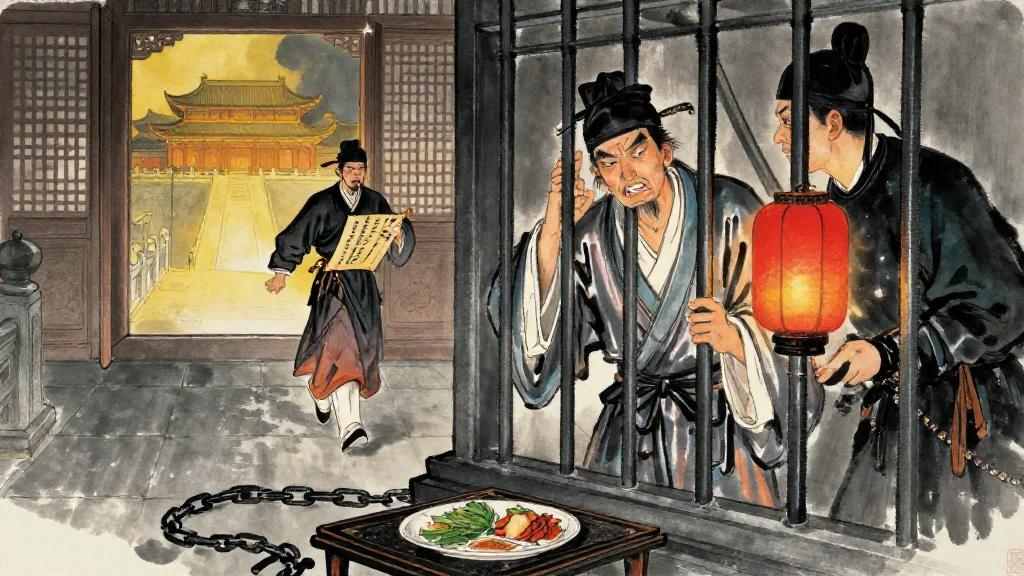
King Xiang of Chu, when he was Crown Prince, was held as a hostage in Qi. When King Huai died, the Crown Prince asked leave of the King of Qi to return home. The King of Qi blocked him: "Give me five hundred li of eastern territory, and I will let you go. If you refuse, you cannot leave."

The Crown Prince said: "I have a tutor. Allow me to consult him." His tutor Shenzi said: "Offer the territory. It is for the sake of your person. To love territory and refuse to attend your dead father's funeral is unjust. I therefore say: offer it."

The Crown Prince entered and told the King of Qi: "I respectfully offer five hundred li of territory." The King of Qi released him.

The Crown Prince returned home and was enthroned as king. Qi sent fifty chariots to collect the eastern territory from Chu. The King of Chu said to Shenzi: "Qi's envoys have come to demand the eastern territory. What should I do?"

Shenzi said: "Tomorrow at court, have all your ministers present their plans."

The Pillar of the State, Ziliang, entered and was received. The king said: "When I was permitted to return, to visit the royal tombs, rejoin my ministers, and recover the state, I promised Qi five hundred li of eastern territory. Now Qi sends envoys to demand it. What should I do?"

Ziliang said: "Your Majesty must give it. You personally gave your royal word, promising mighty Qi of ten thousand chariots. To refuse is to break faith. You will never again be able to make treaties with the feudal lords. Give the land, then attack to take it back. Giving shows good faith; attacking shows martial strength. I say: give it."

Ziliang departed. Zhao Chang entered. The king said: "Qi's envoys demand five hundred li of eastern territory. What should I do?"

Zhao Chang said: "You must not give it. A state of ten thousand chariots depends on the extent of its territory. To give up five hundred li of eastern land is to give up half of a warring state's resources — to have the title of ten thousand chariots without even a thousand chariots' substance. It is impossible. I say: refuse. I will defend the territory."

Zhao Chang departed. Jing Li entered. The king said: "Qi's envoys demand five hundred li of eastern territory. What should I do?"

Jing Li said: "You must not give it. However, Chu cannot defend alone. Your Majesty gave your royal word to mighty Qi and now refuses — bearing the charge of injustice before All-Under-Heaven, Chu cannot hold out alone. I will go west to seek rescue from Qin."

Jing Li departed. Shenzi entered. The king reported the three ministers' plans and said: "Ziliang says I must give the land and then attack. Zhao Chang says I must not give it and will defend. Jing Li says I must not give it but Chu cannot stand alone and he will seek Qin's aid. Which of the three plans should I follow?"

Shenzi replied: "Use all three!"

The king flushed with anger: "What do you mean?"

Shenzi said: "Allow me to explain, and Your Majesty will see the sense of it. Send the Pillar of the State Ziliang with fifty chariots north to offer Qi five hundred li of territory. The day after Ziliang departs, appoint Zhao Chang as Grand Marshal and order him to defend the eastern territory. The day after Zhao Chang departs, send Jing Li with fifty chariots west to seek rescue from Qin."

The king said: "Excellent." He sent Ziliang north to offer the territory to Qi. The day after Ziliang's departure, he appointed Zhao Chang as Grand Marshal to defend the eastern territory. He then sent Jing Li west to seek Qin's aid.

When Ziliang reached Qi, Qi sent armed troops to accept the eastern territory. Zhao Chang replied to Qi's envoys: "I am the governor of the eastern territory and will live or die with it. I have mustered everyone from fifteen to sixty — over three hundred thousand — with battered armor and dull weapons, and await your arrival."

The King of Qi said to Ziliang: "You came to offer the territory, but now Zhao Chang defends it. What is this?"

Ziliang said: "I personally received my king's commission. Zhao Chang is acting without authorization. Attack him."

So the King of Qi raised a great army to attack the eastern territory and assault Zhao Chang. Before they crossed the border, Qin advanced five hundred thousand troops to Qi's western flank, declaring: "To blockade Chu's Crown Prince and refuse to release him was inhumane. To now seize five hundred li of his eastern territory is unjust. Withdraw your armor, or we await battle."

The King of Qi was frightened. He asked Ziliang to travel south through Chu and west to Qin to resolve the crisis. Not a single soldier was lost, and the eastern territory was preserved intact.
Notes

1person楚襄王Chǔ Xiāng Wáng

King Xiang of Chu (楚襄王, r. 298–263 BC) succeeded his father King Huai, who died in Qin captivity. His accession was complicated by his status as a hostage in Qi.

2person慎子Shèn Zǐ

Shenzi (慎子) was the Crown Prince's tutor and the architect of this triple-play strategy. His real name is uncertain; 'Shenzi' may be an honorific.

3context

This is one of the great set pieces of the Zhanguoce: three contradictory plans deployed simultaneously, each making the others work. Ziliang's surrender gives Qi false confidence; Zhao Chang's defiance creates a fait accompli; Jing Li's Qin diplomacy provides the military threat that makes Qi back down. The genius is Shenzi's — he sees that the three 'contradictory' plans are actually complementary. It is also a masterclass in controlled chaos: the left hand genuinely does not know what the right hand is doing, and that is the point.

4translation

玉聲 ('jade sound') refers to the king's spoken word — literally the sound that comes from a mouth as precious as jade. 矯 means 'to forge an order' or 'to act without proper authorization.'

女阿謂蘇子

Lady A Advises Su Qin

女阿謂蘇子曰:「秦棲楚王,危太子者,公也。今楚王歸,太子南,公必危。公不如令人謂太子曰:『蘇子知太子之怨己也,必且務不利太子。太子不如善蘇子,蘇子必且為太子入矣。』」蘇子乃令人謂太子,太子復請善於蘇子。

Lady A said to Su Qin: "It was you who caused the King of Chu to be trapped in Qin and endangered the Crown Prince. Now the King of Chu has returned and the Crown Prince is heading south — you will certainly be in danger."

"You should send someone to tell the Crown Prince: 'Su Qin knows that the Crown Prince resents him and will inevitably work against the Crown Prince. The Crown Prince would do better to reconcile with Su Qin, and Su Qin will then work on the Crown Prince's behalf.'"

Su Qin sent someone to relay this to the Crown Prince, and the Crown Prince agreed to make peace with Su Qin.

Notes

1context

This is threat laundering: Lady A tells Su Qin to warn the Crown Prince that Su Qin will be his enemy — unless the Crown Prince reconciles first. The message is essentially 'befriend me or I will destroy you,' but it is packaged as friendly advice from a third party. The Crown Prince, calculating that a hostile Su Qin is more dangerous than a friendly one, makes the rational choice. Su Qin converts a liability into an alliance.

2person女阿Nǚ Ā

Lady A (女阿) is otherwise unknown. She appears only in this passage, offering Su Qin shrewd political counsel.

Edition & Source

Text
《戰國策》 Zhanguoce
Edition
中華古詩文古書籍網 transcription
Commentary
鮑彪 (Bao Biao) Song dynasty commentary