魏策一 (Stratagems of Wei I) — Chinese ink painting

Chapter 22 of 33 · Wei state

魏策一

Stratagems of Wei I

View:

知伯索地於魏桓子

Zhi Bo Demands Land from Lord Huan of Wei

知伯索地於魏桓子,魏桓子弗予。任章曰:「何故弗予?」桓子曰:「無故索地,故弗予。」任章曰:「無故索地,鄰國必恐;重欲無厭,天下必懼。君予之地,知伯必憍。憍而輕敵,鄰國懼而相親。以相親之兵,待輕敵之國,知氏之命不長矣!《周書》曰:『將欲敗之,必姑輔之;將欲取之,必姑與之。』君不如與之,以驕知伯。君何釋以天下圖知氏,而獨以吾國為知氏質乎?」君曰:「善。」乃與之萬家之邑一。知伯大說,因索蔡、皋梁於趙,趙弗與,因圍晉陽。韓、魏反於外,趙氏應之於內,知氏遂亡。

Zhi Bo demands land from Lord Huan of Wei, and Lord Huan refuses. Ren Zhang says: "Why refuse?" Lord Huan says: "He demands land without cause — that is why I refuse." Ren Zhang says: "If he demands land without cause, neighboring states will be alarmed. If his greed is insatiable, All-Under-Heaven will be frightened. If you give him the land, Zhi Bo will grow arrogant. Once arrogant, he will underestimate his enemies; once the neighbors are frightened, they will draw close to one another. When allied troops confront a state that underestimates its enemies, the Zhi clan's life will not be long. The Book of Zhou says: 'If you would defeat someone, first support him; if you would take from someone, first give to him.' Better to give and let Zhi Bo grow proud. Why would you give up the chance to let All-Under-Heaven conspire against the Zhi, and instead make our state alone the target of Zhi aggression?"

The lord says: "Good." He gives Zhi Bo a town of ten thousand households. Zhi Bo is greatly pleased and proceeds to demand Cai and Gaoliang from Zhao. Zhao refuses. Zhi Bo besieges Jinyang. Han and Wei turn against him from outside; the Zhao respond from within. The Zhi clan is destroyed.

Notes

1person知伯Zhì Bó

Zhi Bo (知伯), also known as Zhi Yao (知瑤), was the head of the Zhi clan and the most powerful minister in the state of Jin circa 455 BC. His overreach led to the famous Partition of Jin, which created the states of Han, Zhao, and Wei — the event that conventionally marks the beginning of the Warring States period.

2person魏桓子Wèi Huán Zǐ

Lord Huan of Wei (魏桓子) was the head of the Wei clan within Jin, predecessor to the independent Wei state.

3person任章Rèn Zhāng

Ren Zhang (任章) was an advisor to the Wei clan. His counsel here is a textbook lesson in the strategic value of giving your enemy enough rope — a principle the Zhanguoce never tires of illustrating.

4context

The quotation from the Book of Zhou (周書) also appears in the Laozi (ch. 36), suggesting a shared proverbial tradition. The logic is pure judo: feed the opponent's worst instincts until he destroys himself.

5place

Jinyang (晉陽) was the Zhao clan's stronghold, near modern Taiyuan, Shanxi. The siege of Jinyang in 453 BC is one of the defining events of Chinese political history.

韓趙相難

Han and Zhao in Conflict

韓、趙相難。韓索兵於魏曰:「願得借師以伐趙。」魏文侯曰:「寡人與趙兄弟,不敢從。」趙又索兵以攻韓,文侯曰:「寡人與韓兄弟,不敢從。」二國不得兵,怒而反。已乃知文侯以構與己也,皆朝魏。

Han and Zhao are in conflict. Han requests troops from Wei, saying: "We wish to borrow your army to attack Zhao." Marquis Wen of Wei says: "I consider Zhao a brother — I dare not comply." Zhao likewise requests troops to attack Han, and Marquis Wen says: "I consider Han a brother — I dare not comply."

Both states fail to obtain troops and depart in anger. But afterward they realize that Marquis Wen has reconciled them with each other, and both present themselves at the Wei court.

Notes

1person魏文侯Wèi Wén Hóu

Marquis Wen of Wei (魏文侯, r. 445–396 BC) was the founder of Wei as an independent state and one of the most celebrated rulers of the early Warring States period. His refusal to take sides here is diplomacy of the highest order — he turns two would-be clients into two grateful subordinates without lifting a sword.

2context

The Three Jin (三晉) — Han, Zhao, and Wei — had just partitioned the state of Jin among themselves. Calling them 'brothers' is both literally apt (they shared a common origin) and a neat diplomatic fiction that lets Marquis Wen refuse both requests without offending either party.

樂羊為魏將而攻中山

Yue Yang Conquers Zhongshan for Wei

樂羊為魏將而攻中山。其子在中山,中山之君烹其子而遺之羹,樂羊坐於幕下而啜之,盡一盃。文侯謂睹師贊曰:「樂羊以我之故,食其子之肉。」贊對曰:「其子之肉尚食之,其誰不食!」樂羊既罷中山,文侯賞其功而疑其心。

Yue Yang serves as general of Wei and attacks Zhongshan. His son is in Zhongshan. The lord of Zhongshan boils his son and sends Yue Yang the broth. Yue Yang sits beneath his tent canopy, sips it, and drains the entire cup.

Marquis Wen says to Dushi Zan: "Yue Yang ate his own son's flesh for my sake." Zan replies: "If he will eat his own son's flesh, whose flesh will he not eat?"

After Yue Yang conquers Zhongshan, Marquis Wen rewards his merit but suspects his character.

Notes

1person樂羊Yuè Yáng

Yue Yang (樂羊) was a Wei general under Marquis Wen. His willingness to drink the broth of his own son was meant to demonstrate absolute loyalty, but the anecdote cuts both ways — as Dushi Zan instantly perceives. A man without human feeling is useful right up until the moment he isn't.

2place

Zhongshan (中山) was a small state in modern Hebei, founded by the White Di (a non-Zhou people). Wei conquered it around 406 BC, lost it, and it was later destroyed by Zhao in 296 BC.

3context

The story is a compact study in the paradox of total commitment: the very act that proves Yue Yang's loyalty also proves he is someone who cannot be trusted. Marquis Wen, to his credit, sees both sides.

西門豹為鄴令

Ximen Bao Appointed Magistrate of Ye

西門豹為鄴令,而辭乎魏文侯。文侯曰:「子往矣,必就子之功,而成子之名。」西門豹曰:「敢問就功成名,亦有術乎?」文侯曰:「有之。夫鄉邑老者而先受坐之士,子入而問其賢良之士而師事之,求其好掩人之美而揚人之醜者而參驗之。夫物多相類而非也,幽莠之幼也似禾,驪牛之黃也似虎,白骨疑象,武夫類玉,此皆似之而非者也。」

Ximen Bao is appointed magistrate of Ye and takes his leave from Marquis Wen of Wei. Marquis Wen says: "Go now. You will surely achieve merit and build a name for yourself."

Ximen Bao asks: "May I ask — is there a method for achieving merit and building a name?"

Marquis Wen says: "There is. Among the elders and gentry of the district, seek out those who are considered worthy and treat them as your teachers. But also look for those who like to conceal others' merits and broadcast their faults, and use them as a check. Many things resemble what they are not: young darnel looks like grain; a black ox's yellow markings look like a tiger's stripes; bleached bone can be mistaken for ivory; and martial stone resembles jade. All these look alike but are not the same."

Notes

1person西門豹Xīmén Bào

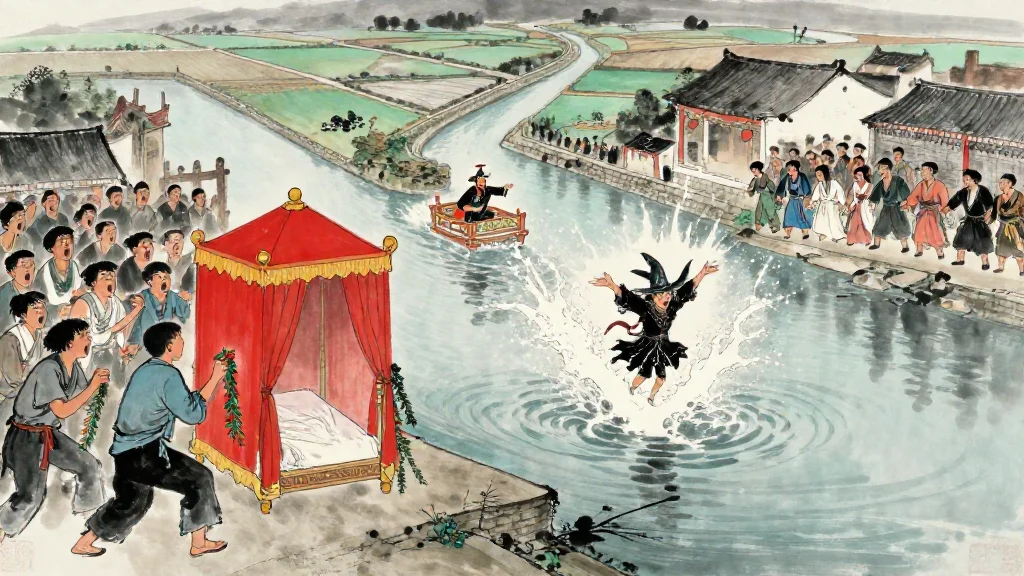
Ximen Bao (西門豹) was a famous Wei administrator, best known for his reforms at Ye, where he ended the practice of 'marrying' young women to the River God (河伯) — i.e., drowning them. He is celebrated in later tradition as a model rational administrator.

2place

Ye (鄴) was located near modern Linzhang, Hebei / Anyang, Henan border area. It was an important Wei administrative center.

3context

Marquis Wen's advice is essentially: gather intelligence from multiple sources, including the malicious ones. Gossips and critics are unreliable narrators, but they notice things that flatterers miss. Cross-reference everything.

文侯與虞人期獵

Marquis Wen Keeps His Appointment with the Gamekeeper

文侯與虞人期獵。是日,飲酒樂,天雨。文侯將出,左右曰:「今日飲酒樂,天又雨,公將焉之?」文侯曰:「吾與虞人期獵,雖樂,豈可不一會期哉!」乃往,身自罷之。魏於是乎始強。

Marquis Wen has scheduled a hunt with his gamekeeper. On the day, he is drinking wine and enjoying himself, and it rains. Marquis Wen prepares to go out. His attendants say: "Today you are drinking and enjoying yourself, and it is raining besides. Where would you go?"

Marquis Wen says: "I have an appointment with the gamekeeper to hunt. Pleasant as this is, how can I fail to keep my word?"

He goes in person and cancels the hunt himself. It is from this point that Wei begins to grow strong.

Notes

1person虞人yú rén

The gamekeeper (虞人) was a minor forestry official. That Marquis Wen would leave a comfortable drinking party in the rain to honor a commitment to such a low-ranking functionary is the entire point of the anecdote.

2context

The punchline — 'Wei begins to grow strong from this point' — is doing a lot of work. The text is arguing that keeping faith with a gamekeeper is the foundation of state power. It's a deliberately extreme claim, but the logic is sound: a ruler who honors even trivial commitments will be trusted in consequential ones.

魏文侯與田子方飲酒而稱樂

Marquis Wen Drinks with Tian Zifang and Praises the Music

魏文侯與田子方飲酒而稱樂。文侯曰:「鐘聲不比乎,左高。」田子方笑。文侯曰:「奚笑?」子方曰:「臣聞之,君明則樂官,不明則樂音。今君審於聲,臣恐君之聾於官也。」文侯曰:「善,敬聞命。」

Marquis Wen of Wei is drinking wine with Tian Zifang and praising the music. Marquis Wen says: "The bell tones are not in tune — the left one is pitched too high."

Tian Zifang laughs. Marquis Wen says: "Why do you laugh?"

Zifang says: "I have heard that an enlightened ruler takes pleasure in his officials, while an unenlightened one takes pleasure in sounds. Now you are discerning about musical pitch — I fear you may be deaf when it comes to officials."

Marquis Wen says: "Good. I respectfully accept the lesson."

Notes

1person田子方Tián Zǐfāng

Tian Zifang (田子方) was a scholar and advisor at the Wei court, reportedly a student of Zixia (子夏), one of Confucius's disciples. He appears several times in the Zhanguoce and Lüshi Chunqiu as a straight-talking advisor.

2context

The rebuke is elegant: a ruler who can identify a slightly sharp bell but can't identify a good minister has his priorities exactly backwards. Marquis Wen's willingness to take the criticism gracefully is itself presented as proof of his fitness to rule.

魏武侯與諸大夫浮於西河

Marquis Wu of Wei Sails the West River with His Ministers

魏武侯與諸大夫浮於西河,稱曰:「河山之險,豈不亦信固哉!」王鍾侍王,曰:「此晉國之所以強也。若善修之,則霸王之業具矣。」吳起對曰:「吾君之言,危國之道也;而子又附之,是危也。」武侯忿然曰:「子之言有說乎?」

吳起對曰:「河山之險,信不足保也;是伯王之業,不從此也。昔者三苗之居,左彭蠡之波,右有洞庭之水,文山在其南,而衡山在其北。恃此險也,為政不善,而禹放逐之。夫夏桀之國,左天門之陰,而右天溪之陽,廬、睪在其北,伊、洛出其南。有此險也,然為政不善,而湯伐之。殷紂之國,左孟門而右漳、釜,前帶河,後被山。有此險也,然為政不善,而武王伐之。且君親從臣而勝降城,城非不高也,人民非不眾也,然而可得並者,政惡故也。從是觀之,地形險阻,奚足以霸王矣!」

武侯曰:「善。吾乃今日聞聖人之言也!西河之政,專委之子矣。」

Marquis Wu of Wei is sailing the West River with his ministers. He declares: "The defenses of these mountains and rivers — are they not truly formidable!"

Wang Zhong, attending the marquis, says: "This is what made the old state of Jin strong. If you maintain these defenses well, the foundations for hegemony are complete."

Wu Qi responds: "My lord's remark points the way to a state's ruin, and you have seconded it — this is dangerous."

Marquis Wu flushes with anger: "Can you justify that statement?"

Wu Qi replies: "Mountain and river defenses are truly not enough to rely upon. Hegemony does not come from geography. In ancient times the Three Miao dwelt with the waves of Pengli to their left, the waters of Dongting to their right, Mount Wen to their south, and Mount Heng to their north. They relied on these natural defenses, governed badly, and Yu drove them out. The kingdom of Xia Jie had the shadow of the Heavenly Gate on its left, the sun of the Heavenly Stream on its right, Lu and Gao to its north, and the Yi and Luo rivers issuing from its south. It had these defenses, governed badly, and Tang attacked it. The kingdom of Yin Zhou had Mengmen on its left, the Zhang and Fu rivers on its right, the Yellow River as its belt in front, and mountains at its back. It had these defenses, governed badly, and King Wu attacked it. Moreover, you yourself, my lord, personally led your troops and conquered the surrendered cities — their walls were not low, their people were not few, but they could still be taken because their governance was corrupt. Viewed from this perspective, how can terrain and natural barriers suffice for hegemony?"

Marquis Wu says: "Good! Only today have I heard the words of a sage. The governance of the West River region — I entrust it entirely to you."

Notes

1person魏武侯Wèi Wǔ Hóu

Marquis Wu of Wei (魏武侯, r. 396–370 BC) was the son and successor of Marquis Wen.

2person吳起Wú Qǐ

Wu Qi (吳起, d. 381 BC) was one of the most famous generals and statesmen of the Warring States period. He served Wei, then Chu. His treatise on warfare, the Wuzi, survives. He is consistently presented as brilliant and blunt — not always a survival-friendly combination.

3place

The West River (西河) refers to the region west of the Yellow River in modern Shaanxi, a contested border zone between Wei and Qin. Wu Qi's appointment as governor there was one of Wei's most successful strategic moves.

4context

Wu Qi's argument — that geography is no substitute for governance — is one of the Zhanguoce's recurring themes. The historical examples pile up with deadpan cumulative force: every state that trusted in its natural barriers got conquered. The flattering Wang Zhong, who tells the ruler what he wants to hear, is implicitly contrasted with Wu Qi, who tells him what he needs to hear.

魏公叔痤為魏將

Gongshu Cuo Serves as General of Wei

魏公叔痤為魏將,而與韓、趙戰澮北,禽樂祚。魏王說,迎郊,以賞田百萬祿之。公叔痤反走,再拜辭曰:「夫使士卒不崩,直而不倚,撓揀而不辟者,此吳起余教也,臣不能為也。前脈形地之險阻,決利害之備,使三軍之士不迷惑者,巴寧、爨襄之力也。懸賞罰於前,使民昭然信之於後者,王之明法也。見敵之可也鼓之不敢怠倦者,臣也。王特為臣之右手不倦賞臣,何也?若以臣之有功,臣何力之有乎?」王曰:「善。」於是索吳起之後,賜之田二十萬。巴寧、爨襄田各十萬。

王曰:「公叔豈非長者哉!既為寡人勝強敵矣,又不遺賢者之後,不掩能士之跡,公叔何可無益乎?」故又與田四十萬,加之百萬之上,使百四十萬。故《老子》曰:「聖人無積,盡以為人,己愈有;既以與人,己愈多。」公叔當之矣。

Gongshu Cuo serves as general of Wei and fights Han and Zhao north of the Hui River, capturing Yue Zuo. The King of Wei is pleased, welcomes him in the suburbs, and rewards him with a fief yielding a million mu.

Gongshu Cuo steps back, bows twice, and declines: "Keeping the soldiers from breaking, standing firm without wavering, bending under pressure without fleeing — this is the legacy of Wu Qi's training, not something I accomplished. Scouting the terrain's hazards, determining the best dispositions, and keeping the army from confusion — this is the work of Ba Ning and Cuan Xiang. Posting rewards and punishments so clearly that the people trust them afterward — this is Your Majesty's wise laws. Seeing the moment to strike and drumming the attack without slacking — that is all I did. Your Majesty rewards me merely because my right hand did not tire at the drumsticks — why? If you credit me with the merit, what power did I really exert?"

The king says: "Good." He searches for Wu Qi's descendants and awards them fields of two hundred thousand mu. Ba Ning and Cuan Xiang each receive one hundred thousand mu.

The king says: "Is Gongshu Cuo not a man of true greatness! He wins against a powerful enemy for me, and then he does not neglect the descendants of worthy men, nor does he conceal the achievements of capable officers. How can I not reward Gongshu Cuo further?" So he gives an additional four hundred thousand mu on top of the million, making one million four hundred thousand in all.

Thus the Laozi says: 'The sage accumulates nothing; the more he does for others, the more he has; the more he gives to others, the more he gains.' Gongshu Cuo exemplifies this perfectly.

Notes

1person公叔痤Gōngshū Cuó

Gongshu Cuo (公叔痤), also called Gongshu, was a Wei minister and general, and the teacher's husband who features in the next section recommending Shang Yang. His modesty here is either genuinely noble or a masterclass in the art of receiving more by refusing less — the text, characteristically, lets you decide.

2context

The quotation from the Laozi (ch. 81) at the end is a rare editorial intrusion by the compilers. The point is that Gongshu Cuo's generosity in distributing credit ended up earning him far more than hoarding it would have. Whether this is Daoist selflessness or simply very good accounting is left as an exercise for the reader.

魏公叔痤病

Gongshu Cuo Falls Ill

魏公叔痤病,惠王往問之。曰:「公叔病,即不可諱,將奈社稷何?」公叔痤對曰:「痤有御庶子公孫鞅,願王以國事聽之也。為弗能聽,勿使出竟。」王弗應,出而謂左右曰:「豈不悲哉!以公叔之賢,而謂寡人必以國事聽鞅,不亦悖乎!」

公叔痤死,公孫鞅聞之,已葬,西之秦,孝公受而用之。秦果日以強,魏日以削。此非公叔之悖也,惠王之悖也。悖者之患,固以不悖者為悖。

Gongshu Cuo falls ill. King Hui goes to visit him. He says: "If your illness cannot be spoken around, what shall become of the state?"

Gongshu Cuo replies: "I have a household retainer named Gongsun Yang. I beg Your Majesty to entrust state affairs to him. If you cannot bring yourself to employ him, then do not let him leave the country."

The king makes no reply. He goes out and tells his attendants: "Is it not tragic! A man as wise as Gongshu Cuo tells me I must entrust state affairs to this Yang fellow — is that not absurd!"

Gongshu Cuo dies. Gongsun Yang hears of it. After the burial, he goes west to Qin, where Duke Xiao receives and employs him. Qin grows stronger by the day; Wei grows weaker by the day. This was not Gongshu Cuo's folly — it was King Hui's folly. The trouble with fools is that they invariably take the wise for fools.

Notes

1person魏惠王Wèi Huì Wáng

King Hui of Wei (魏惠王, r. 370–319 BC) was the ruler who moved the Wei capital to Daliang (Kaifeng) and is accordingly sometimes called King Hui of Liang (梁惠王). He is the same king who appears in the Mencius, and he does not come off well in either text.

2person公孫鞅 / 商鞅Gōngsūn Yāng / Shāng Yāng

Gongsun Yang (公孫鞅), better known as Shang Yang (商鞅) or Lord Shang, became the architect of Qin's Legalist reforms — arguably the single most consequential political transformation in Chinese history. That Wei let him walk out the door is one of history's great personnel blunders.

3context

Gongshu Cuo's deathbed advice is perfectly rational: either use Shang Yang or kill him — just don't let him work for someone else. King Hui ignores both options. The narrator's closing remark — 'the trouble with fools is that they take the wise for fools' — is one of the sharpest editorial comments in the entire Zhanguoce.

蘇子為趙合從說魏王

Su Qin Persuades the King of Wei to Join the North-South Coalition for Zhao

蘇子為趙合從,說魏王曰:「大王之地,南有鴻溝、陳、汝南,有許、鄢、昆陽、邵陵、舞陽、新郪;東有淮、穎、沂、黃、煮棗、海鹽、無疏;西有長城之界;北有河外、卷、衍、燕、酸棗,地方千里。地名雖小,然而廬田廡舍,曾無所芻牧牛馬之地。人民之眾,車馬之多,日夜行不休已,無以異於三軍之眾。臣竊料之,大王之國不下於楚。然橫人謀王,外交強虎狼之秦,以侵天下,卒有國患,不被其禍。夫挾強秦之勢,以內劫其主,罪無過此者。且魏,天下之強國也;大王,天下之賢主也。今乃有意西面而事秦,稱東藩,築帝宮,受冠帶,祠春秋,臣竊為大王媿之。

「臣聞越王勾踐以散卒三千,禽夫差於乾遂;武王卒三千人,革車三百乘,斬紂於牧之野。豈其士卒眾哉?誠能振其威也。今竊聞大王之卒,武力二十餘萬,蒼頭二千萬,奮擊二十萬,廝徒十萬,車六百乘,騎五千匹。此其過越王勾踐、武王遠矣。今乃於辟臣之說,而欲臣事秦。夫事秦必割地效質,故兵未用而國已虧矣。凡群臣之言事秦者,皆奸臣,非忠臣也。夫為人臣,割其主之地以求外交,偷取一旦之功而不顧其後,破公家而成私門,外挾強秦之勢以內劫其主,以求割地,願大王之熟察之也。

「《周書》曰:『綿綿不絕,縵縵奈何?毫毛不拔,將成斧柯。前慮不定,後有大患。將奈之何?』大王誠能聽臣,六國從親,專心併力,則必無強秦之患。故敝邑趙王使使臣獻愚計,奉明約,在大王詔之。」魏王曰:「寡人不肖,未嘗得聞明教。今主君以趙王之詔詔之,敬以國從。」

Su Qin, acting for Zhao to form a north-south coalition, addresses the King of Wei: "Your Majesty's territory extends south to the Hong Canal, Chen, and Runan, including Xu, Yan, Kunyang, Shaoling, Wuyang, and Xinqi; east to the Huai, Ying, Yi, and Huang rivers, Zhuzao, Haiyan, and Wushu; west to the boundary of the Long Wall; and north beyond the River to Juan, Yan, Yan, and Suanzao — a domain of a thousand li square. Though the individual place-names may sound modest, the farmsteads and dwellings are so dense there is no room left to graze cattle and horses. The teeming population and multitude of chariots and horses move ceaselessly day and night, no different from a host of three armies. In my private estimation, Your Majesty's state is no less than Chu.

"Yet the pro-Qin partisans counsel you to form external ties with the tiger-wolf state of Qin and assault All-Under-Heaven, only to bring calamity upon the state while escaping none of its consequences themselves. To lean on Qin's power in order to coerce one's own sovereign internally — there is no greater crime than this. Wei is the strongest state in All-Under-Heaven; Your Majesty is the most worthy ruler in All-Under-Heaven. Yet now you contemplate facing west to serve Qin, calling yourself Qin's eastern vassal, building a palace for the Qin emperor, accepting Qin's cap and sash, and offering seasonal sacrifices to Qin. I am privately ashamed for Your Majesty.

"I have heard that King Goujian of Yue, with a ragtag force of three thousand, captured Fu Chai at Gansu; that King Wu, with three thousand men and three hundred war chariots, slew Zhou at the Wilds of Mu. Were their soldiers so numerous? They were simply able to project their martial authority. Now I hear Your Majesty's forces include over two hundred thousand crack troops, twenty million conscripts, two hundred thousand shock troops, one hundred thousand support troops, six hundred chariots, and five thousand cavalry horses — far surpassing Goujian and King Wu. Yet you would heed the counsel of crooked ministers and serve Qin as a vassal. To serve Qin requires ceding territory and surrendering hostages; thus before your armies are even deployed, the state is already diminished. Any minister who advocates serving Qin is a traitor, not a loyalist. Such a minister carves up his lord's territory to secure foreign connections, grabs a day's advantage without considering the aftermath, ruins the public house to build his private fortune, and leverages Qin's power to coerce his own sovereign into ceding land. I beg Your Majesty to examine this carefully.

"The Book of Zhou says: 'What is thin and unbroken — how will you deal with it when it spreads? A fine hair left unplucked will become an axe-handle. Plans not settled in advance will produce great calamity later — what then?' If Your Majesty can truly heed me, and the six states unite as kin, concentrating heart and strength, there will be no danger from mighty Qin. Therefore my lord the King of Zhao has sent your humble servant to present this modest plan and offer a solemn pact, awaiting Your Majesty's command."

The King of Wei says: "I am unworthy and have never before received such enlightened instruction. Now that you bring the King of Zhao's summons, I respectfully commit my state to the coalition."

Notes

1person蘇秦Sū Qín

Su Qin (蘇秦, d. c. 284 BC) was the most famous advocate of the north-south coalition (合縱) strategy, which sought to unite the six eastern states against Qin. His historical existence and the details of his career are debated, but in the Zhanguoce he is the archetype of the itinerant persuader — all rhetoric, no army, and somehow reshaping the political map.

2context

Su Qin's pitch follows the standard Zhanguoce template for coalition speeches: (1) flatter the state's resources, (2) shame the ruler for considering submission, (3) invoke heroic precedents, (4) denounce pro-Qin advisors as traitors, (5) close with a classical quotation. It is a masterpiece of the form, which is to say it is largely interchangeable with the same speech delivered to every other king in chapters 14–30.

3textual

The figure '二千萬' (twenty million) for 'grey-headed troops' (蒼頭) is almost certainly corrupt or hyperbolic. Some scholars emend to 二十萬 (two hundred thousand), which is still a large number but at least plausible.

張儀為秦連橫說魏王

Zhang Yi Persuades the King of Wei to Join the East-West Alignment for Qin

張儀為秦連橫,說魏王曰:「魏地方不至千里,卒不過三十萬人。地四平,諸侯四通,條達輻湊,無有名山大川之阻。從鄭至梁,不過百里;從陳至梁,二百餘里。馬馳人趨,不待倦而至梁。南與楚境,西與韓境,北與趙境,東與齊境,卒戍四方。守亭障者參列。粟糧漕庾,不下十萬。魏之地勢,故戰場也。魏南與楚而不與齊,則齊攻其東;東與齊而不與趙,則趙攻其北;不合於韓,則韓攻其西;不親於楚,則楚攻其南。此所謂四分五裂之道也。

「且夫諸侯之為從者,以安社稷、尊主、強兵、顯名也。合從者,一天下,約為兄弟,刑白馬以盟於洹水之上,以相堅也。夫親昆弟,同父母,尚有爭錢財。而欲恃詐偽反覆蘇秦之餘謀,其不可以成亦明矣。

「大王不事秦,秦下兵攻河外,拔卷、衍、燕、酸棗,劫衛取晉陽,則趙不南;趙不南則魏不北,魏不北,則從道絕。從道絕,則大王之國欲求無危,不可得也。秦挾韓而攻魏,韓劫於秦,不敢不聽。秦、韓為一國,魏之亡可立而須也,此臣之所以為大王患也。為大王計,莫如事秦,事秦則楚、韓必不敢動;無楚、韓之患,則大王高枕而臥,國必無憂矣。

「且夫秦之所欲弱莫如楚,而能弱楚者莫若魏。楚雖有富大之名,其實空虛;其卒雖眾,多言而輕走,易北,不敢堅戰。魏之兵南面而伐,勝楚必矣。夫虧楚而益魏,攻楚而適秦,內嫁禍安國,此善事也。大王不聽臣,秦甲出而東,雖欲事秦而不可得也。

「且夫從人多奮辭而寡可信,說一諸侯之王,出而乘其車;約一國而反,成而封侯之基。是故天下之游士,莫不日夜搤腕瞋目切齒以言從之便,以說人主。人主覽其辭,牽其說,惡得無眩哉?臣聞積羽沉舟,群輕折軸,眾口鑠金,故願大王之熟計之也。」

魏王曰:「寡人蠢愚,前計失之。請稱東藩,築帝宮,受冠帶,祠春秋,效河外。」

Zhang Yi, acting for Qin to form an east-west alignment, addresses the King of Wei: "Wei's territory does not reach a thousand li square, and its soldiers number no more than three hundred thousand. The land is flat on all sides, open to the other states in every direction, with roads converging like spokes — no famous mountains or great rivers to serve as barriers. From Zheng to Daliang is barely a hundred li; from Chen to Daliang, just over two hundred li. A galloping horse can reach Daliang before tiring. Wei borders Chu to the south, Han to the west, Zhao to the north, and Qi to the east. Your soldiers garrison all four directions. Guard-post troops are arrayed in triple lines. Grain transport stores are no fewer than a hundred thousand. Wei's terrain is a natural battlefield. If Wei sides with Chu but not Qi, then Qi attacks from the east; if Wei sides with Qi but not Zhao, then Zhao attacks from the north; if Wei does not ally with Han, Han attacks from the west; if Wei does not befriend Chu, Chu attacks from the south. This is the path to being torn apart in four directions and split into five.

"Moreover, those lords who pursue the coalition claim to secure the state, honor the ruler, strengthen the army, and glorify the name. The coalition-makers unite All-Under-Heaven, pledge to be brothers, and sacrifice a white horse to swear oaths above the Huan River, binding each other in trust. But true brothers, born of the same parents, still quarrel over money. To rely on the fraudulent, duplicitous, and ever-reversing leftover schemes of Su Qin — that this cannot succeed is perfectly obvious.

"If Your Majesty does not serve Qin, Qin will send armies to attack beyond the River, seize Juan, Yan, Yan, and Suanzao, coerce Wey, and take Jinyang. Then Zhao will not move south; if Zhao does not move south, Wei cannot move north; if Wei cannot move north, the coalition route is severed. Once severed, Your Majesty's state cannot hope to avoid danger. Qin will co-opt Han and attack Wei; Han, coerced by Qin, will not dare refuse. With Qin and Han as one state, Wei's destruction can be expected at any moment. This is what worries me on Your Majesty's behalf.

"My counsel for Your Majesty: nothing is better than serving Qin. If you serve Qin, Chu and Han will not dare make trouble; free of trouble from Chu and Han, Your Majesty may rest on a high pillow, and the state will be without worry.

"Furthermore, the state Qin most wants to weaken is Chu, and the state best able to weaken Chu is Wei. Chu may have a reputation for wealth and size, but in reality it is hollow. Its soldiers may be numerous, but they are all talk and quick to flee — easily routed, they dare not fight a pitched battle. If Wei's armies march south, victory over Chu is certain. To diminish Chu and augment Wei, to attack Chu and please Qin, to export the disaster and secure the state — this is a good policy. If Your Majesty does not heed me, when Qin's armor marches east, you will wish to serve Qin but it will be too late.

"Coalition advocates are heavy on grand rhetoric and light on credibility. They persuade one king, walk out, and ride in his chariot; they bind one state and return home to lay the foundation of a marquisate. Thus every itinerant persuader in All-Under-Heaven seizes his wrists, glares, grinds his teeth, and speaks day and night of the coalition's advantages to persuade his sovereign. When a ruler examines their rhetoric and is led along by their arguments, how can he not be dazzled? I have heard that accumulated feathers can sink a boat, many light things can break an axle, and many mouths can melt gold. I beg Your Majesty to consider carefully."

The King of Wei says: "I have been stupid and foolish — my previous calculations were mistaken. I request to be called Qin's eastern vassal, to build a palace for the Qin emperor, to accept Qin's cap and sash, to offer seasonal sacrifices, and to cede the lands beyond the River."

Notes

1person張儀Zhāng Yí

Zhang Yi (張儀, d. 309 BC) was the chief advocate of the east-west alignment (連橫) strategy, serving as Qin's chancellor and roving diplomat. Where Su Qin unites, Zhang Yi divides — and the Zhanguoce gives each of them a speech for nearly every state, so you get to watch the same king be convinced of opposite things in back-to-back chapters.

2context

Zhang Yi's speech is the mirror image of Su Qin's in the previous section. Where Su Qin flatters Wei's strength, Zhang Yi emphasizes its vulnerability. Where Su Qin denounces pro-Qin advisors as traitors, Zhang Yi denounces pro-coalition advisors as grifters. The King of Wei agrees with both of them, which tells you everything you need to know about the King of Wei.

3place

Daliang (大梁), here called Liang (梁), was the Wei capital, located at modern Kaifeng, Henan. Zhang Yi's point about its accessibility is accurate and devastating: Daliang sat on an open plain with no natural defenses, making it acutely vulnerable to attack from any direction.

齊魏約而伐楚

Qi and Wei Agree to Attack Chu

齊、魏約而伐楚,魏以董慶為質於齊。楚攻齊,大敗之,而魏弗救。田嬰怒,將殺董慶。旰夷為董慶謂田嬰曰:「楚攻齊,大敗之,而不敢深入者,以魏為將內之於齊而擊其後。今殺董慶,是示楚無魏也。魏怒合於楚,齊必危矣。不如貴董慶以善魏,而疑之於楚也。」

Qi and Wei agree to attack Chu, and Wei sends Dong Qing as a hostage to Qi. Chu attacks Qi and inflicts a major defeat, but Wei does not come to the rescue. Tian Ying is furious and prepares to execute Dong Qing.

Gan Yi, speaking on Dong Qing's behalf, says to Tian Ying: "Chu attacked Qi and defeated it badly, yet dares not push deep into Qi's territory because Chu fears that Wei will enter Qi and strike from behind. If you execute Dong Qing, you show Chu that Wei is no longer with you. Wei will be enraged and join Chu, and Qi will be in real danger. Better to honor Dong Qing, strengthen ties with Wei, and make Chu suspicious of the Wei-Qi alliance."

Notes

1person田嬰Tián Yīng

Tian Ying (田嬰) was a Qi minister and the father of the famous Lord Mengchang (孟嘗君). He held significant power at the Qi court.

2context

Gan Yi's argument is purely strategic: killing the hostage feels satisfying but announces to your enemy that your alliance has collapsed. The hostage is worth more alive as a bluff than dead as revenge.

蘇秦拘於魏

Su Qin Is Detained in Wei

蘇秦拘於魏,欲走而之韓,魏氏閉關而不通。齊使蘇厲為之謂魏王曰:「齊請以宋地封涇陽君,而秦不受也。夫秦非不利有齊而得宋地也,然其所以不受者,不信齊王與蘇秦也。今秦見齊、魏之不合也,如此其甚也,則齊必不欺秦,而秦信齊矣。齊、秦合而涇陽君有宋地,則非魏之利也。故王不如復東蘇秦,秦必疑齊而不聽也。夫齊、秦不合,天下無憂,伐齊成,則地廣矣。」

Su Qin is detained in Wei and wishes to flee to Han, but Wei has closed its borders and will not let him pass. Qi sends Su Li to speak on his behalf to the King of Wei:

"Qi has offered to enfeoff Lord Jingyang with Song territory, but Qin has refused. It is not that Qin would not benefit from allying with Qi and gaining Song's land — the reason Qin refuses is that it does not trust the King of Qi and Su Qin. Now, if Qin sees that the rift between Qi and Wei is this severe, then Qi will certainly not dare deceive Qin, and Qin will trust Qi. If Qi and Qin ally and Lord Jingyang obtains Song territory, that is not in Wei's interest. Better for Your Majesty to release Su Qin back east. Qin will then suspect Qi and refuse the deal. With Qi and Qin unable to unite, All-Under-Heaven will have nothing to worry about, and if the campaign against Qi succeeds, your territory will expand."

Notes

1person蘇厲Sū Lì

Su Li (蘇厲) was Su Qin's younger brother and fellow itinerant diplomat. Running the family trade, apparently.

2person涇陽君Jīngyáng Jūn

Lord Jingyang (涇陽君) was a member of the Qin royal family, sometimes identified as a younger brother of King Zhaoxiang of Qin.

3context

Su Li's argument is delightfully convoluted: holding Su Qin prisoner makes Qi and Wei look hostile, which makes Qin trust Qi, which lets Qi and Qin ally — which is bad for Wei. So Wei should release Su Qin to keep Qin suspicious of Qi. The logic is sound, but you need a whiteboard to follow it.

陳軫為秦使於齊

Chen Zhen on Mission from Qin to Qi Passes Through Wei

陳軫為秦使於齊,過魏,求見犀首。犀首謝陳軫。陳軫曰:「軫之所以來者,事也。公不見軫,軫且行,不得待異日矣。」犀首乃見之。陳軫曰:「公惡事乎?何為飲食而無事?無事必來。」犀首曰:「衍不肖,不能得事焉,何敢惡事?」陳軫曰:「請移天下之事於公。」犀首曰:「奈何?」陳軫曰:「魏王使李從以車百乘使於楚,公可以居其中而疑之。公謂魏王曰:『臣與燕、趙故矣,數令人召臣也,曰無事必來。今臣無事,請謁而往。無久,旬、五之期。』王必無辭以止公。公得行,因自言於廷曰:『臣急使燕、趙,急約車為行具。』」犀首曰:「諾。」謁魏王,王許之,即明言使燕、趙。

諸侯客聞之,皆使人告其王曰:「李從以車百乘使楚,犀首又以車三十乘使燕、趙。」齊王聞之,恐後天下得魏,以事屬犀首,犀首受齊事。魏王止其行使。燕、趙聞之,亦以事屬犀首。楚王聞之,曰:「李從約寡人,今燕、齊、趙皆以事因犀首,犀首必欲寡人,寡人慾之。」乃倍李從,而以事因犀首。魏王曰:「所以不使犀首者,以為不可。令四國屬以事。寡人亦以事因焉。」犀首遂主天下之事,復相魏。

Chen Zhen is on a mission from Qin to Qi and passes through Wei, requesting an audience with Xiushou. Xiushou declines. Chen Zhen says: "I have come on business. If you will not see me, I will be on my way — there will be no other opportunity." Xiushou agrees to meet him.

Chen Zhen says: "Do you dislike having business? Why are you sitting around eating and drinking with nothing to do? When you have nothing to do, I come along." Xiushou says: "I am unworthy and cannot find employment — how would I dare dislike business?" Chen Zhen says: "Allow me to deliver All-Under-Heaven's business to you."

Xiushou says: "How?" Chen Zhen says: "The King of Wei has sent Li Cong with a hundred chariots on a mission to Chu. You can position yourself in the middle and create suspicion. Tell the King of Wei: 'I have old connections with Yan and Zhao. They have repeatedly sent word that when I have free time, I should visit. I have no business now — allow me to pay them a call. It will not be long, just ten or fifteen days.' The king will have no grounds to stop you. Once you have permission, announce openly at court: 'I must urgently depart for Yan and Zhao — prepare my chariots at once.'"

Xiushou agrees, obtains the king's permission, and publicly announces his mission to Yan and Zhao.

The resident diplomats of the various states all send word to their kings: "Li Cong has gone to Chu with a hundred chariots, and now Xiushou is going to Yan and Zhao with thirty chariots." The King of Qi hears this and, fearing he will be the last to secure Wei, entrusts his affairs to Xiushou. Xiushou accepts Qi's commission. The King of Wei halts Xiushou's departure. Yan and Zhao hear and likewise entrust their affairs to Xiushou. The King of Chu hears and says: "Li Cong made agreements with me, but now Yan, Qi, and Zhao are all going through Xiushou. Xiushou must want me too, and I want him." He abandons Li Cong and commits his business to Xiushou.

The King of Wei says: "The reason I did not employ Xiushou was that I thought him unsuitable. Now four states entrust their business to him — I had better do the same." Xiushou thus takes charge of All-Under-Heaven's affairs and is restored as chancellor of Wei.

Notes

1person犀首 / 公孫衍Xī Shǒu / Gōngsūn Yǎn

Xiushou (犀首) is the sobriquet of Gongsun Yan (公孫衍), a major Wei diplomat and advocate of the coalition strategy. The name literally means 'Rhinoceros Head' — probably an official title rather than a comment on his appearance.

2person陳軫Chén Zhěn

Chen Zhen (陳軫) was an itinerant strategist who served multiple states. Here he manufactures a diplomatic career for Xiushou out of thin air — pure information warfare, no armies required.

3context

This is one of the most delightful con jobs in the Zhanguoce. Chen Zhen's scheme works entirely through manufactured perception: Xiushou has no actual commissions, but by publicly announcing a diplomatic tour, he triggers a FOMO cascade in which every state rushes to hire him before the others do. The King of Wei, who refused to employ Xiushou in the first place, ends up employing him because everyone else did. It is a flawless illustration of how reputation and perceived demand create their own reality.

張儀惡陳軫於魏王

Zhang Yi Slanders Chen Zhen to the King of Wei

張儀惡陳軫於魏王曰:「軫善事楚,為求壤地也甚力之。」左華謂陳軫曰:「儀善於魏王,魏王甚愛之。公雖百說之,猶不聽也。公不如儀之言為資,而反於楚王。」陳軫曰:「善。」因使人先言於楚王。

Zhang Yi slanders Chen Zhen to the King of Wei, saying: "Chen Zhen serves Chu well and works hard to obtain territory for it."

Zuo Hua says to Chen Zhen: "Zhang Yi is on good terms with the King of Wei, and the king is very fond of him. Even if you argue your case a hundred times, the king will not listen. You would do better to use Zhang Yi's slander as your credentials and return to the King of Chu."

Chen Zhen says: "Good." He sends someone ahead to inform the King of Chu.

Notes

1context

Zuo Hua's advice is a brilliant pivot: Zhang Yi's accusation that Chen Zhen loyally serves Chu is meant as a smear in Wei, but it becomes a recommendation letter in Chu. One man's slander is another man's résumé.

張儀欲窮陳軫

Zhang Yi Tries to Trap Chen Zhen

張儀欲窮陳軫,令魏王召而相之,來將悟之。將行,其子陳應止其公之行,曰:「物之湛者,不可不察也。鄭強出秦曰,應為知。夫魏欲絕楚、齊,必重迎公。郢中不善公者,欲公之去也,必勸王多公之車。公至宋,道稱疾而毋行,使人謂齊王曰『魏之所以迎我者,欲以絕齊、楚也。」

齊王曰:「子果無之魏而見寡人也,請封子。」因以魯侯之車迎之。

Zhang Yi wants to ruin Chen Zhen. He arranges for the King of Wei to summon Chen Zhen and offer him the chancellorship, intending to entrap him when he arrives. As Chen Zhen prepares to travel, his son Chen Ying stops him, saying:

"Things submerged beneath the surface must be examined carefully. Zheng Qiang, upon leaving Qin, said I should be aware: Wei wants to sever Chu's and Qi's ties, so it will make a grand show of welcoming you. Those in Ying who dislike you will want you gone, so they will urge the king to provide you with a lavish escort. When you reach Song, feign illness and halt your journey. Send someone to tell the King of Qi: 'The reason Wei welcomes me so grandly is to sever Qi and Chu's connections.'"

The King of Qi says: "If you will truly not go to Wei but instead come to see me, I will enfeoff you." He sends the carriages of the Marquis of Lu to welcome him.

Notes

1person陳應Chén Yìng

Chen Ying (陳應) was Chen Zhen's son. His ability to see through Zhang Yi's trap and improvise a counter-scheme suggests the family talent for strategic thinking was hereditary.

2context

The scheme-within-a-scheme here is elegant: Zhang Yi's trap is to lure Chen Zhen to Wei on false pretenses. Chen Ying's counter is to accept the lure publicly but stop halfway — then use the visible spectacle of Wei courting his father as leverage to extract a better offer from Qi. The trap becomes the bait for a different fish.

張儀走之魏

Zhang Yi Flees to Wei

張儀走之魏,魏將迎之。張醜諫於王,欲勿內,不得於王。張醜退,復諫於王曰:「王亦聞老妾事其主婦者乎?子長色衰,重家而已。今臣之事王,若老妾之事其主婦者。」魏王因不納張儀。

Zhang Yi flees to Wei, and Wei prepares to welcome him. Zhang Chou remonstrates with the king, urging him not to admit Zhang Yi, but fails to persuade him. Zhang Chou withdraws, then remonstrates again:

"Has Your Majesty ever heard of an old concubine serving her mistress? Her son is grown, her beauty faded — all she cares about is preserving the household. My service to Your Majesty is like that old concubine's service to her mistress."

The King of Wei thereupon refuses to admit Zhang Yi.

Notes

1person張醜Zhāng Chǒu

Zhang Chou (張醜) was a Wei minister. His self-deprecating analogy — comparing himself to an aging concubine — is disarming enough to succeed where direct argument failed. Sometimes the best way to be persuasive is to make yourself pathetic.

張儀欲以魏合於秦韓

Zhang Yi Seeks to Align Wei with Qin and Han

張儀欲以魏合於秦、韓而攻齊、楚。惠施欲以魏合於齊、楚以案兵。人多為張子於王所。惠子謂王曰:「小事也,謂可者謂不可者正半,況大事乎?以魏合於秦、韓而攻齊、楚,大事也,而王之群臣皆以為可。不知是其可也,如是其明耶?而群臣之知術也,如是其同耶?是其可也,未如是其明也,而群臣之知術也,又非皆同也,是有其半塞也。所謂劫主者,失其半者也。」

Zhang Yi wants Wei to align with Qin and Han to attack Qi and Chu. Hui Shi wants Wei to align with Qi and Chu and keep its troops at rest. Many people advocate for Zhang Yi at court.

Hui Shi says to the king: "In small matters, those who say 'yes' and those who say 'no' are roughly half and half — how much more so in great matters? Aligning Wei with Qin and Han to attack Qi and Chu is a great matter, yet your ministers all say it is feasible. Is the case really so clear? And is your ministers' strategic judgment really so uniform? The case is not that clear, and their judgment is not that uniform — which means half the picture is blocked out. When a ruler loses sight of half the picture, that is what it means to be held hostage by his ministers."

Notes

1person惠施Huì Shī

Hui Shi (惠施, c. 370–310 BC) was the famous logician and philosopher, a contemporary and intellectual sparring partner of Zhuangzi. He served as Wei's chancellor. His argument here is characteristically analytical: unanimous agreement on a complex question is not a sign of clarity — it is a sign that dissent has been suppressed.

2context

Hui Shi's point is essentially a Warring States version of 'when everyone agrees, nobody is thinking.' The statistical reasoning — in normal circumstances you'd expect roughly half the opinions to go each way — is surprisingly modern.

張子儀以秦相魏

Zhang Yi Serves as Qin's Chancellor in Wei

張子儀以秦相魏,齊、楚怒而欲攻魏。雍沮謂張子曰:「魏之所以相公者,以公相則國家安,而百姓無患。今公相而魏受兵,是魏計過也。齊、楚攻魏,公必危矣。」張子曰:「然則奈何?」雍沮曰:「請令齊、楚解攻。」雍沮謂齊、楚之君曰:「王亦聞張儀之約秦王乎?曰:『王若相儀於魏,齊、楚惡儀,必攻魏。魏戰而勝,是齊、楚之兵折,而儀固得魏矣;若不勝魏,魏必多秦以持其國,必割地以賂王。若欲復攻,其敝不足以應秦。』此儀之所以與秦王陰相結也。今儀相魏而攻之,是使儀之計當與秦也,非所以窮儀之道也。」齊、楚之王曰:「善。」乃遽解攻於魏。

Zhang Yi, as Qin's man, serves as chancellor of Wei. Qi and Chu are furious and want to attack Wei. Yong Ju says to Zhang Yi: "The reason Wei made you chancellor was that under your leadership the state would be secure and the people safe. Now you are chancellor and Wei is under attack — Wei miscalculated. If Qi and Chu attack Wei, you will be in danger."

Zhang Yi says: "What then should I do?"

Yong Ju says: "Allow me to get Qi and Chu to call off their attack." He tells the kings of Qi and Chu: "Have your majesties heard about Zhang Yi's private agreement with the King of Qin? He said: 'If you install me as chancellor in Wei, Qi and Chu will hate me and attack Wei. If Wei wins, Qi and Chu's armies are broken while I retain Wei. If Wei loses, Wei will lean heavily on Qin to sustain itself and will cede territory to bribe you. If they try to attack again, their weakened forces will be no match for Qin.' This is the secret pact between Zhang Yi and the King of Qin. By attacking Wei now that Zhang Yi is chancellor, you are making Zhang Yi's plan work exactly as designed. That is not the way to ruin Zhang Yi."

The kings of Qi and Chu say: "Good." They immediately call off the attack on Wei.

Notes

1context

Yong Ju's gambit is pure bluff — we have no evidence Zhang Yi actually made any such pact with Qin. But by fabricating a plausible-sounding conspiracy, Yong Ju reframes the attack on Wei as playing into Zhang Yi's hands. Qi and Chu back off not because the threat is real, but because it could be. In the Zhanguoce, the appearance of a trap is as effective as an actual trap.

張儀欲並相秦魏

Zhang Yi Seeks to Serve as Chancellor of Both Qin and Wei

張儀欲並相秦、魏,故謂魏王曰:「儀請以秦攻三川,王以其間約南陽,韓氏亡。」史厭謂趙獻曰:「公何不以楚佐儀求相之於魏,韓恐亡,必南走楚。儀兼相秦、魏,則公亦必並相楚、韓也。」

Zhang Yi wants to serve simultaneously as chancellor of both Qin and Wei. He tells the King of Wei: "Allow me to use Qin to attack the Three Rivers region while Your Majesty secures Nanyang in the interval — and Han will be destroyed."

Shi Yan says to Zhao Xian: "Why not use Chu's support to help Zhang Yi obtain the Wei chancellorship? If Han fears destruction, it will flee south to Chu. If Zhang Yi holds the chancellorship of both Qin and Wei, then you will certainly hold the chancellorship of both Chu and Han."

Notes

1place

The Three Rivers (三川) refers to the area around modern Luoyang, Henan — the territory of the old Zhou royal domain, which Han controlled. It was named for the three rivers (Yellow, Yi, and Luo) that converged there.

2context

Everyone in this passage is trying to accumulate multiple chancellorships across rival states — the Warring States equivalent of holding board seats at competing companies. Shi Yan's logic is perfectly cynical: if Zhang Yi can double-dip, so can we.

魏王將相張儀

The King of Wei Prepares to Make Zhang Yi Chancellor

魏王將相張儀,犀首弗利,故令人謂韓公叔曰:「張儀以合秦、魏矣。其言曰:『魏攻南陽,秦攻三川,韓氏必亡。』且魏王所以貴張子者,欲得地,則韓之南陽舉矣。子盍少委焉,以為衍功,則秦、魏之交可廢矣。如此,則魏必圖秦而棄儀,收韓而相衍。」公叔以為信,因而委之,犀首以為功,果相魏。

The King of Wei is about to make Zhang Yi his chancellor. This is disadvantageous for Xiushou, so he sends someone to tell Gongshu of Han: "Zhang Yi has united Qin and Wei. His words are: 'Wei will attack Nanyang, Qin will attack the Three Rivers — Han will certainly be destroyed.' The reason the King of Wei values Zhang Yi is that he wants territory, and Han's Nanyang is the prize. Why don't you cede a little of it, and credit the concession to me? Then the Qin-Wei alliance can be broken. If so, Wei will turn against Qin and discard Zhang Yi, embrace Han, and make me chancellor."

Gongshu believes him and makes the concession. Xiushou takes credit for it and indeed becomes chancellor of Wei.

Notes

1context

Xiushou's maneuver is ruthlessly efficient: he persuades Han to cede territory by framing it as a way to block Zhang Yi, then takes personal credit for the diplomatic win. Han gives up land, Zhang Yi loses his chancellorship, and Xiushou gets the job — the only person who benefits from every step of the arrangement.

楚許魏六城

Chu Promises Wei Six Cities

楚許魏六城,與之伐齊而存燕。張儀欲敗之,謂魏王曰:「齊畏三國之合也,必反燕地以下楚,楚、趙必聽之,而不與魏六城。是王失謀於楚、趙,而樹怨於齊、秦也。齊遂伐趙,取乘丘,收侵地,虛、頓丘危。楚破南陽九夷,內沛,許、鄢陵危。王之所得者,新觀也。而道塗宋、衛為制,事敗為趙驅,事成功縣宋、衛。」魏王弗聽也。

Chu promises Wei six cities in exchange for jointly attacking Qi and preserving Yan. Zhang Yi wants to sabotage this and says to the King of Wei: "Qi fears the three states' alliance and will certainly return Yan's territory to appease Chu. Chu and Zhao will accept this, and will not give Wei the six cities. Thus Your Majesty will have been outmaneuvered by Chu and Zhao while making enemies of Qi and Qin. Qi will then attack Zhao, seize Chengqiu, reclaim its lost territory, and Xu and Dunqiu will be in danger. Chu will break through Nanyang's nine Yi tribes, press inward to Pei, and Xu and Yanling will be at risk. All Your Majesty gains is Xinguan. And the routes through Song and Wey will be contested; if the enterprise fails, you become Zhao's pawn; if it succeeds, the gains go to Song and Wey."

The King of Wei does not listen.

Notes

1context

For once, the King of Wei does not fold immediately under pressure from a persuader. Whether this represents wisdom or stubbornness is left to the reader — the text offers Zhang Yi's warning without explicitly saying he was right.

張儀告公仲

Zhang Yi Tells Gongzhong

張儀告公仲,令以飢故,賞韓王以近河外。魏王懼,問張子。張子曰:「秦欲救齊,韓欲攻南陽,秦、韓合而欲攻南陽,無異也。且以遇卜王,王不遇秦,韓之卜也決矣。」魏王遂尚遇秦,信韓、廣魏、救趙,尺楚人,遽於萆下。伐齊之事遂敗。

Zhang Yi tells Gongzhong to use the famine as a pretext to offer the King of Han territory near the area beyond the River. The King of Wei is alarmed and asks Zhang Yi about it. Zhang Yi says: "Qin wants to rescue Qi; Han wants to attack Nanyang. If Qin and Han combine to attack Nanyang, it makes no difference. Moreover, if you use the meeting as a test — and Your Majesty does not meet with Qin — then Han's decision is already made."

The King of Wei thereupon meets with Qin, trusts Han, expands Wei, rescues Zhao, pushes back Chu, and hurries to the area below Bi. The campaign against Qi accordingly falls apart.

Notes

1textual

This passage is unusually compressed and may be corrupt in places. The phrase '尺楚人' is obscure, and some commentators emend or reinterpret it. The general sense — that Zhang Yi's maneuvering disrupted a planned campaign against Qi — is clear enough even where individual phrases are not.

徐州之役

The Campaign at Xuzhou

徐州之役,犀首謂梁王曰:「何不陽與齊而陰結於楚?二國恃王,齊、楚必戰。齊戰勝楚,而與乘之,必取方城之外;楚戰勝齊敗,而與乘之,是太子之仇報矣。」

During the campaign at Xuzhou, Xiushou says to the King of Liang: "Why not openly side with Qi while secretly allying with Chu? If both states rely on you, Qi and Chu will certainly fight. If Qi defeats Chu, you ride the victory and will surely take the territory beyond Fangcheng. If Chu defeats Qi, you ride that victory — and the crown prince's vendetta will be avenged."

Notes

1place

Xuzhou (徐州) here refers to a campaign in the area of modern Tengzhou, Shandong — not the modern city of Xuzhou in Jiangsu.

2context

Xiushou's advice is a classic two-way bet: back both sides secretly and profit from whichever one wins. The moral elegance is approximately zero, but the strategic logic is impeccable.

秦敗東周

Qin Defeats Eastern Zhou and Fights Wei at Yique

秦敗東周,與魏戰於伊闕,殺犀武。魏令公孫衍乘勝而留於境,請卑辭割地,以講於秦。為竇屢謂魏王曰:「臣不知衍之所以聽於秦之少多,然而臣能半衍之割,而令秦講於王。」王曰:「奈何?」對曰:「王不若與竇屢關內侯,而令趙。王重其行而厚奉之。因揚言曰:『聞周、魏令竇屢以割魏於奉陽君,而聽秦矣。』夫周君、竇屢、奉陽君之與穰侯,貿首之仇也。今行和者,竇屢也;制割者,奉陽君也。太后恐其不因穰侯也,而欲敗之,必以少割請合於王,而和於東周與魏也。」

Qin defeats Eastern Zhou and fights Wei at Yique, killing Xiwu. Wei orders Gongsun Yan to capitalize on the situation by remaining at the border, offering humble words and territorial concessions to make peace with Qin.

Someone says to the King of Wei on behalf of Dou Lü: "I do not know how much Gongsun Yan intends to concede to Qin, but I can reduce the concession by half and still get Qin to make peace with Your Majesty."

The king says: "How?"

The reply: "Give Dou Lü the title of Marquis Within the Pass and send him to Zhao. Make his departure conspicuous and his provisions lavish. Then spread the word: 'We hear that Zhou and Wei have sent Dou Lü to negotiate Wei's territorial concession through Lord Fengyang, and have already agreed to Qin's terms.' Now, the Lord of Zhou, Dou Lü, and Lord Fengyang are mortal enemies of the Marquis of Rang. If the one conducting the peace is Dou Lü and the one controlling the concessions is Lord Fengyang, the Queen Dowager will fear that the deal bypasses the Marquis of Rang and will want to spoil it. She will necessarily offer to accept a smaller concession from Your Majesty in order to make peace with Eastern Zhou and Wei herself."

Notes

1place

Yique (伊闕), also known as the Dragon Gate, is a pass near modern Luoyang, Henan. The Battle of Yique in 293 BC was one of Qin's most devastating victories, reportedly killing 240,000 Han-Wei soldiers.

2person穰侯 / 魏冉Ráng Hóu / Wèi Rǎn

The Marquis of Rang (穰侯) is Wei Ran (魏冉), the powerful Qin minister and uncle of the Queen Dowager Xuan. He controlled Qin's foreign policy for decades. Lord Fengyang (奉陽君) was a Zhao noble, Li Dui (李兌).

3context

The scheme exploits internal Qin rivalries: by routing the peace negotiation through the Marquis of Rang's enemies, the Queen Dowager's faction will undercut the deal to preserve its own influence. The result: Qin accepts less territory just to keep the negotiation in-house. It is diplomacy as bureaucratic sabotage.

齊王將見燕趙楚之相於衛

The King of Qi Plans to Meet Yan, Zhao, and Chu's Ministers in Wey

齊王將見燕、趙、楚之相於衛,約外魏。魏王懼,恐其謀伐魏也,告公孫衍。公孫衍曰:「王與臣百金,臣請敗之。」王為約車,載百金。犀首期齊王至之曰,先以車五十乘至衛間齊,行以百金以請先見齊王,乃得見。因久坐安,從容談三國之相怨。

謂齊王曰:「王與三國約外魏,魏使公孫衍來,今久與之談,是王謀三國也也。」齊王曰:「魏王聞寡人來,使公孫子勞寡人,寡人無與之語也。」三國之不相信齊王之遇,遇事遂敗。

The King of Qi plans to meet the ministers of Yan, Zhao, and Chu in Wey to form an agreement excluding Wei. The King of Wei is alarmed, fearing they plan to attack Wei, and tells Gongsun Yan.

Gongsun Yan says: "Give me a hundred gold, and I will wreck their meeting." The king prepares a chariot and loads it with a hundred gold.

Xiushou times his arrival for the day the King of Qi is due. He arrives first in Wey with fifty chariots, intercepts Qi, spends the hundred gold to secure an audience with the King of Qi, and succeeds. He then sits at length, relaxed and unhurried, chatting amiably about the mutual grievances among the three states.

He then tells the King of Qi: "Your Majesty arranged to meet three states and exclude Wei. Wei has sent Gongsun Yan — and now you have been in long conversation with him. The three states will think you are plotting against them."

The King of Qi says: "The King of Wei heard I was coming and sent Gongsun Yan to pay his respects — I have said nothing of substance to him."

But the three states do not believe the King of Qi's account of the encounter. The planned agreement falls apart.

Notes

1context

Gongsun Yan spends a hundred gold to do nothing more than sit and chat with the King of Qi — in full view of the other states' representatives. The mere appearance of a lengthy private audience is enough to poison the well. It is sabotage through optics: the meeting itself is the weapon.

魏令公孫衍請和於秦

Wei Sends Gongsun Yan to Request Peace with Qin

魏令公孫衍請和於秦,綦母恢教之語曰:「無多割。曰,和成,固有秦重和,以與王遇;和不成,則後必莫能以魏合於秦者矣。」

Wei sends Gongsun Yan to request peace with Qin. Qimu Hui coaches him on what to say: "Do not concede too much. Say: if peace is achieved, Qin values the peace and will meet with the king as an equal; if peace is not achieved, then no one in the future will be able to align Wei with Qin."

Notes

1context

Qimu Hui's coaching is a textbook negotiation frame: whether the deal succeeds or fails, Gongsun Yan should present the outcome as costly for Qin. If peace works, Qin should be grateful; if it doesn't, Qin loses its last bridge to Wei. Heads I win, tails you lose.

公孫衍為魏將

Gongsun Yan Serves as General of Wei

公孫衍為魏將,與其相田繻不善。季子為衍謂梁王曰:「王獨不見夫服牛驂驥乎?不可以行百步。今王以衍為可使將,故用之也;而聽相之計,是服牛驂驥也。牛馬俱死,而不能成其功,王之國必傷矣!願王察之。」

Gongsun Yan serves as general of Wei and is on bad terms with the chancellor Tian Xu. Ji Zi, speaking for Gongsun Yan, says to the King of Liang:

"Has Your Majesty never seen what happens when you yoke an ox alongside a thoroughbred horse? They cannot go a hundred paces. Now Your Majesty has appointed Gongsun Yan as general because you considered him capable, yet you also follow the chancellor's plans — this is yoking an ox with a thoroughbred. Both the ox and the horse will die, the mission will fail, and the state will suffer. I beg Your Majesty to consider this carefully."

Notes

1context

The ox-and-horse metaphor is vivid: a general and a chancellor pulling in different directions will destroy both the army and the state. The unstated implication, of course, is that Gongsun Yan is the thoroughbred and the chancellor is the ox — though the chancellor might have put it the other way around.

Edition & Source

Text
《戰國策》 Zhanguoce
Edition
中華古詩文古書籍網 transcription
Commentary
鮑彪 (Bao Biao) Song dynasty commentary