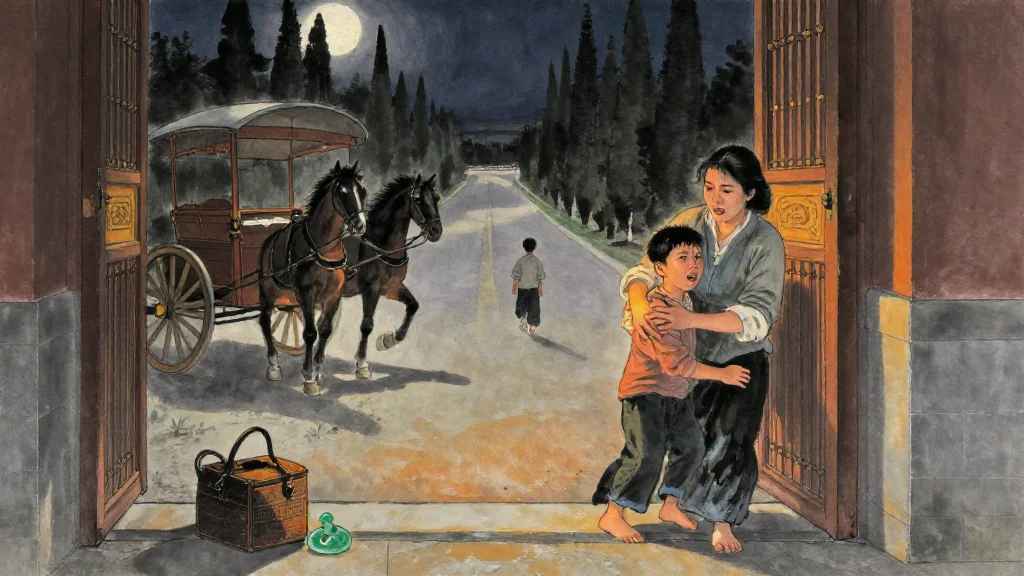
趙策四 (Stratagems of Zhao IV) — Chinese ink painting

Chapter 21 of 33 · Zhao state

趙策四

Stratagems of Zhao IV

View:

為齊獻書趙王

A Memorial on Qi's Behalf to the King of Zhao

為齊獻書趙王,使臣與復醜曰:「臣一見,而能令王坐而天下致名寶。而臣竊怪王之不試見臣,而窮臣也。群臣必多以臣為不能者,故王重見臣也。以臣為不能者非他,欲用王之兵,成其私者也。非然,則交有所偏者也;非然,則知不足者也;非然,則欲以天下之重恐王,而取行於王者也。臣以齊循事王,王能亡燕,能亡韓、魏,能攻秦,能孤秦。臣以為齊致尊名於王,天下孰敢不致尊名於王?臣以齊為王求名於燕及韓、魏,孰敢辭之?臣之能也,其前可見也已。齊先重王,故天下盡重王;無齊,天下必盡輕王也。秦之疆,以無齊之故重王,燕、魏自以無齊故重王。今王無齊獨安得無重天下?故勸王無齊者,非知不足也,則不忠者也。非然,則欲用王之兵成其私者也;非然,則欲輕王以天下之重,取引於王者也;非然,則位尊而能卑者也。願王之熟慮無齊之利害也。」

A memorial is presented to the King of Zhao on Qi's behalf. The envoy, together with Fu Chou, says:

"I need only one audience, and I can make Your Majesty sit while All-Under-Heaven delivers its most precious treasures to you. I am puzzled that Your Majesty has not tried seeing me and instead leaves me stranded.

Your ministers must have told you I am incompetent — that is why Your Majesty is reluctant to see me. Those who call me incompetent are either people who want to use Your Majesty's troops for their own private ends, or people whose alliances are biased, or people whose judgment is insufficient, or people who want to frighten Your Majesty with the weight of All-Under-Heaven's affairs in order to gain influence.

If I use Qi to serve Your Majesty faithfully, you can destroy Yan, destroy Han and Wei, attack Qin, or isolate Qin. If Qi presents Your Majesty with an honored title, who in All-Under-Heaven will dare withhold their own? If Qi seeks recognition for Your Majesty from Yan, Han, and Wei, who will dare refuse?

My ability to deliver this — the evidence is already before you. Qi led the way in respecting Your Majesty, and therefore All-Under-Heaven respected you. Without Qi, All-Under-Heaven will certainly treat you with contempt. Qin, however powerful, only respects you because Qi does. Yan and Wei only respect you because Qi does. If Your Majesty has no Qi, how can you avoid losing the respect of All-Under-Heaven?

Therefore, those who advise Your Majesty to abandon Qi are either lacking in judgment or lacking in loyalty — or they wish to use your troops for private purposes, or they wish to diminish you while gaining leverage over you, or they hold high rank but low ability. I beg Your Majesty to weigh carefully the consequences of having or not having Qi."

Notes

1context

A standard 'why won't the king see me' petition, but the rhetorical structure is interesting: the envoy systematically categorizes every possible reason for being blocked (selfish ministers, biased alliances, insufficient judgment, manipulation) and argues that all of them point to bad faith by the king's advisors. The underlying argument — that Qi is the linchpin of Zhao's diplomatic weight — is sound: without a strong ally, Zhao's position deteriorates.

齊欲攻宋

Qi Wishes to Attack Song; Qin Forbids It

齊欲攻宋,秦令起賈禁之。齊乃捄趙以伐宋。秦王怒,屬怨於趙。李兌約五國以伐秦,無功,留天下之兵成皋,而陰構於秦。又欲與秦攻魏,以解其怨而取封焉。

魏王不說。之齊,謂齊王曰:「臣為足下謂魏王曰:『三晉皆有秦患。今之攻秦也,為趙也。五國伐趙,趙必亡矣。秦逐李兌,李兌必死。今之伐秦也,以救李子之於死也。今趙留天下之甲於成皋,而陰鬻之於秦,已講,則令秦攻魏以成其私封,王之事趙也何得矣?且王嘗濟於漳,而身朝於邯鄲,抱陰、成,負蒿、葛、薜,以為趙蔽,而趙無為王行也。今又以何陽、姑密封其子,而乃令秦攻王,以便取陰。人比然而後如賢不,如王若用所以事趙之半收齊,天下有敢謀王者乎?王之事齊也,無入朝之辱,無割地之費。齊為王之故,虛國於燕、趙之前,用兵於二千里之外,故攻城野戰,未嘗不為王先被矢石也。得二都,割河東,盡效之於王。自是之後,秦攻魏,齊甲未嘗不歲至於王之境也。請問王之所以報齊者可乎?韓呡處於趙,去齊三千里,王以此疑齊,曰有秦陰。今王又挾故薛公以為相,善韓徐以為上交,尊虞商以為大客,王固可以反疑齊乎?』於魏王聽此言也甚詘,其欲事王也甚循。甚怨於趙。臣願王之日聞魏而無庸見惡也,臣請為王推其怨於趙,願王之陰重趙,而無使秦之見王之重趙也。秦見之且亦重趙。齊、秦交重趙,臣必見燕與韓、魏亦且重趙也,皆且無敢與趙治。五國事趙,趙從親以合於秦,必為王高矣。臣故欲王之偏劫天下,而皆私甘之也。王使臣以韓、魏與燕劫趙,使丹也甘之;以趙劫韓、魏,使臣也甘之;以三晉劫秦,使順也甘之;以天下劫楚,使順也甘之。則天下皆呡秦以事王,而不敢相私也。交定,然後王擇焉。」

Qi wishes to attack Song, but Qin sends Qi Jia to forbid it. Qi then enlists Zhao's aid to attack Song. The King of Qin is furious and directs his resentment at Zhao.

Li Dui organizes a five-state coalition against Qin, which achieves nothing. He stations All-Under-Heaven's troops at Chenggao while secretly negotiating with Qin. He then plans to join Qin in attacking Wei to resolve Qin's resentment and secure a fief for himself.

The King of Wei is not pleased. An envoy goes to Qi and tells the King of Qi:

"I told the King of Wei: 'All the Three Jin have Qin troubles. The current attack on Qin was for Zhao's sake. If five states attacked Zhao, Zhao would certainly perish. If Qin drove out Li Dui, Li Dui would certainly die. The attack on Qin was to save Li Dui from death.

"'Now Zhao stations All-Under-Heaven's troops at Chenggao while secretly selling out to Qin. Once they settle, Zhao will have Qin attack Wei to secure its own private fief. What has Your Majesty's service to Zhao gained you?

"'Moreover, Your Majesty once crossed the Zhang and personally attended court at Handan, holding Yin and Cheng, shouldering Hao, Ge, and Bei as shields for Zhao — yet Zhao has done nothing in return. Now Zhao enfeoffs its prince with Heyang and Gumi, then has Qin attack you to conveniently take Yin.

"'If Your Majesty would use half the effort you spend serving Zhao to cultivate Qi instead, would anyone in All-Under-Heaven dare plot against you? Your service to Qi involves no humiliation of attending court, no expense of ceding territory. Qi has emptied its state before Yan and Zhao for your sake, deployed troops two thousand li away, and in every siege and field battle has taken the first arrows and stones on your behalf. It won two capitals, carved up Hedong, and delivered everything to you. Since then, whenever Qin attacks Wei, Qi's troops have come to your border every year. May I ask: how have you repaid Qi?'

"The King of Wei was deeply chastened by these words. His desire to serve Your Majesty is great, and his resentment toward Zhao is deep.

"I wish Your Majesty to hear about Wei daily without showing displeasure. Allow me to redirect Wei's resentment toward Zhao. I hope Your Majesty will quietly increase Zhao's importance while concealing this from Qin. If Qin sees that you value Zhao, it will also value Zhao. Once both Qi and Qin value Zhao, Yan, Han, and Wei will follow suit — and none will dare challenge Zhao.

"Once five states serve Zhao, Zhao will use the north-south coalition to unite with Qin, which will certainly elevate Your Majesty. Therefore I wish Your Majesty to leverage each state covertly while privately placating each one. Use Han, Wei, and Yan to pressure Zhao, with Dan placating them; use Zhao to pressure Han and Wei, with me placating them; use the Three Jin to pressure Qin, with Shun placating them; use All-Under-Heaven to pressure Chu, with Shun placating them.

"Then All-Under-Heaven will all pay tribute to Qin in order to serve Your Majesty, and none will dare act privately. Once the alliances are settled, Your Majesty may choose."

Notes

1context

This is an extraordinarily complex piece of multilateral manipulation. The speaker proposes that Qi become the hidden puppet-master of all interstate relationships: each state is pressured by a subset of the others while being privately mollified by a Qi agent. The vision is of Qi as the hub of a spoke-and-wheel system where no bilateral relationship is independent.

2person李兌Lǐ Duì

Li Dui (李兌) appears here in his familiar role as Lord Fengyang, the Zhao power broker. His five-state coalition against Qin that 'achieved nothing' and then secretly sold out to Qin is a neat summary of why the anti-Qin coalitions kept failing: the organizers were often pursuing private goals.

齊將攻宋而秦楚禁之

Qi Plans to Attack Song; Qin and Chu Forbid It

齊將攻宋,而秦、楚禁之。齊因欲與趙,趙不聽。齊乃令公孫衍說李兌以攻宋而定封焉。李兌乃謂齊王曰:「臣之所以堅三晉以攻秦者,非以為齊得利秦之毀也,欲以使攻宋也。而宋置太子以為王,下親其上而守堅,臣是以欲足下之速歸休士民也。今太子走,諸善太子者,皆有死心。若復攻之,其國必有亂,而太子在外,此亦舉宋之時也。

「臣為足下使公孫衍說奉陽君曰:『君之身老矣,封不可不早定也。為君慮封,莫若於宋,他國莫可。夫秦人貪,韓、魏危,燕、楚辟,中山之地薄,莫如於陰。失今之時,不可復得已。宋之罪重,齊之怒深,殘亂宋,得大齊,定身封,此百代之一時也。』以奉陽君甚食之,唯得大封,齊無大異。臣願足下之大發攻宋之舉,而無庸致兵,姑待已耕,以觀奉陽君之應足下也。縣陰以甘之,循有燕以臨之,而臣待忠之封,事必大成。臣又願足下有地效於襄安君以資臣也。足下果殘宋,此兩地之時也,足下何愛焉?若足下不得志於宋,與國何敢望也。足下以此資臣也,臣循燕觀趙,則足下擊潰而決天下矣。」

Qi is about to attack Song, but Qin and Chu forbid it. Qi seeks to ally with Zhao, but Zhao will not listen. Qi has Gongsun Yan persuade Li Dui to support the attack on Song and secure his fief through it.

Li Dui tells the King of Qi: "The reason I consolidated the Three Jin for an attack on Qin was not so that Qi could profit from Qin's damage — I wanted to enable the attack on Song. Song has set up its crown prince as king; the people below support those above, and the defense is firm. I therefore wished you to quickly bring your troops home and rest them.

"Now the crown prince has fled, and all those loyal to him are ready to die. If you attack again now, the state will certainly be in chaos — and with the crown prince abroad, this is the moment to take Song.

"I had Gongsun Yan tell Lord Fengyang: 'Your Lordship is growing old. Your fief must be settled soon. For a fief, nowhere is better than Song — no other state will work. Qin is greedy, Han and Wei are endangered, Yan and Chu are peripheral, Zhongshan's land is poor. Nothing compares to Yin. Miss this moment and it will not come again. Song's offenses are grave, Qi's anger is deep. Destroy chaotic Song, win great Qi's favor, and secure your fief — this is a once-in-a-hundred-generations opportunity.'

"Lord Fengyang was delighted. He only wants a grand fief; Qi's interests are not far different.

"I wish Your Majesty to make a great show of preparing the Song campaign without actually deploying troops yet. Wait until after the planting season, and observe how Lord Fengyang responds. Dangle Yin to entice him, maintain the threat from Yan to press him, and let me await my own loyal fief. The enterprise will certainly succeed.

"I also wish Your Majesty to grant some territory to Lord Xiang'an to fund my operations. If you destroy Song, this is the moment for both territories — why hold back? If you fail to achieve your aims in Song, your allies would not dare expect anything either. With these resources, I will work through Yan and watch Zhao — and Your Majesty will break through and determine All-Under-Heaven."

Notes

1context

Li Dui is simultaneously managing multiple principals: he uses the anti-Qin coalition as cover for the Song campaign, uses personal ambition (Lord Fengyang's desire for a fief) as a lever, and positions himself to profit from the outcome. The entire three-state coalition against Qin turns out to be a side-show for what Li Dui really wants: to destroy Song and get a fief.

五國伐秦無功

The Five-State Coalition Against Qin Fails

五國伐秦無功,罷於成皋。趙欲構於秦,楚與魏、韓將應之,秦弗欲。蘇代謂齊王曰:「臣以為足下見奉陽君矣。臣謂奉陽君曰:『天下散而事秦,秦必據宋。魏冉必妒君之有陰也。秦王貪,魏冉妒,則陰不可得已矣。君無構,齊必攻宋。齊攻宋,則楚必攻宋,魏必攻宋,燕,趙助之。五國據宋,不至一二月,陰必得矣。得陰而構,秦雖有變,則君無患矣。若不得已而必構,則願五國復堅約。願得趙,足下雄飛,與韓氏大吏東免,齊王必無召呡也。使臣守約,若與有倍約者,以四國攻之。無倍約者,而秦侵約,五國復堅而賓之。今韓、魏與齊相疑也,若復不堅約而講,臣恐與國之大亂也。齊、秦非複合也,必有踦重者矣。後合與踦重者,皆非趙之利也。且天下散而事秦,是秦制天下也。秦制天下,將何以天下為?臣願君之蚤計也。

「天下爭秦有六舉,皆不利趙矣。天下爭秦,秦王受負海內之國,合負親之交,以據中國,而求利於三晉,是秦之一舉也。秦行是計,不利於趙,而君終不得陰,一矣。天下爭秦,秦王內韓呡於齊,內成陽君於韓,相魏懷於魏,複合衍交兩王,王賁、韓他之曹,皆起而行事,是秦之一舉也。秦行是計也,不利於趙,而君又不得陰,二矣。天下爭秦,秦王受齊受趙,三疆三親,以據魏而求安邑,是秦之一舉也。秦行是計,齊、趙應之,魏不待伐,抱安邑而信秦,秦得安邑之饒,魏為上交,韓必入朝秦,過趙已安邑矣,是秦之一舉也。秦行是計,不利於趙,而君必不得陰,三矣。天下爭秦,秦堅燕、趙之交,以伐齊收楚,與韓呡而攻魏,是秦之一舉也。秦行是計,而燕、趙應之。燕、趙伐齊,兵始用,秦因收楚而攻魏,不至一二月,魏必破矣。秦舉安邑而塞女戟,韓之太原絕,下軹道、南陽、高,伐魏,絕韓,包二周,即趙自消爍矣。國燥於秦,兵分於齊,非趙之利也。而君終身不得陰,四矣。天下爭秦,秦堅三晉之交攻齊,國破曹屈,而兵東分於齊,秦桉兵攻魏,取安邑,是秦之一舉也。秦行是計也,君桉救魏,是以攻齊之已弊,救與秦爭戰也;君不救也,韓、魏焉免西合?國在謀之中,而君有終身不得陰,五矣。天下爭秦,秦按為義,存亡繼絕,固危扶弱,定無罪之君,必起中山與勝焉。秦起中山與勝,而趙、宋同命,何暇言陰?六矣。故曰君必無講,則陰必得矣。』

「奉陽君曰:『善。』乃絕和於秦,而收齊、魏以成取陰。」

The five-state coalition against Qin fails and disbands at Chenggao. Zhao wants to make peace with Qin; Chu, Wei, and Han are prepared to follow. Qin, however, is unwilling.

Su Dai tells the King of Qi: "I believe you should meet with Lord Fengyang. I told Lord Fengyang:

'If All-Under-Heaven scatters and serves Qin individually, Qin will certainly seize Song. Wei Ran will certainly be jealous of your holding Yin. The King of Qin is greedy, Wei Ran is jealous — then Yin becomes impossible to obtain.

"Do not make peace. If you don't, Qi will certainly attack Song. If Qi attacks Song, then Chu, Wei, Yan, and Zhao will follow. With five states bearing down on Song, within a month or two Yin will certainly be yours. Obtain Yin first and then negotiate — even if Qin changes its stance, you will be safe.

"The world competing for Qin's favor produces six scenarios, all unfavorable to Zhao:

First: Qin receives coastal states and assembles favorable alliances to dominate the central states and extract profit from the Three Jin — unfavorable to Zhao, and you never get Yin.

Second: Qin installs its agents as chancellors in Han and Wei — unfavorable to Zhao, and you never get Yin.

Third: Qin courts both Qi and Zhao to pressure Wei for Anyi — once Qin has Anyi, Wei and Han submit, and Zhao has already lost — unfavorable, and you never get Yin.

Fourth: Qin firms up the Yan-Zhao alliance to attack Qi, absorbs Chu, then strikes Wei — unfavorable, and you never get Yin.

Fifth: Qin firms up the Three Jin to attack Qi, then pivots and strikes Wei for Anyi — unfavorable, and you never get Yin.

Sixth: Qin acts as champion of righteousness, restoring destroyed states — then Zhao and Song share the same fate, and Yin becomes irrelevant.

Therefore: refuse to make peace, and Yin will certainly be yours.'

"Lord Fengyang said: 'Good.' He then broke off negotiations with Qin and joined with Qi and Wei to take Yin."

Notes

1person蘇代Sū Dài

Su Dai (蘇代) was Su Qin's brother (or at least a member of the same Su clan of persuaders). He operates in the same diplomatic milieu with a similarly fluid relationship to factional loyalty.

2context

Su Dai's 'six scenarios' analysis is a tour de force of strategic forecasting. He systematically walks through every possible outcome if the states compete individually for Qin's favor, and in each case Zhao loses and Lord Fengyang never gets his fief at Yin. The conclusion — 'refuse to make peace' — is the only option that preserves Lord Fengyang's personal interests.

樓緩將使伏事辭行

Lou Huan Departs on a Mission and Predicts He Will Never Return

樓緩將使,伏事,辭行,謂趙王曰:「臣雖盡力竭知,死不復見於王矣。」王曰:「是何言也?固且為書而厚寄卿。」樓子曰:「王不聞公子牟夷之於宋乎?非肉不食。文張善宋,惡公子牟夷,寅然。今臣之於王,非宋之於公子牟夷也,而惡臣者過文張。故臣死不復見於王矣。」王曰:「子勉行矣,寡人與子有誓言矣。」樓子遂行。

後以中牟反,入梁。候者來言,而王弗聽,曰:「昔已與樓子有言矣。」

Lou Huan is about to depart on a mission. He prostrates himself, takes his leave, and says to the King of Zhao: "Though I exhaust my strength and drain my wisdom, I will never see Your Majesty again in this life."

The king says: "What kind of talk is that? I will certainly write to you and treat you generously."

Lou Huan says: "Has Your Majesty not heard of Prince Mouyi in Song? He would eat nothing but meat. Wen Zhang was on good terms with Song and hostile to Prince Mouyi — intensely so. Now my relationship with Your Majesty is not as close as Song's with Prince Mouyi, yet those who hate me surpass Wen Zhang. Therefore I will die without seeing Your Majesty again."

The king says: "Go with my best wishes. You and I have sworn an oath."

Lou Huan departs.

Later, he uses the city of Zhongmou to rebel and enters Wei. Informants come to report, but the king will not listen, saying: "I already gave my word to Lou Huan."

Notes

1context

Lou Huan predicts his own betrayal — or rather, he constructs a narrative in which his future disloyalty is someone else's fault. By telling the king 'your enemies at court will drive me away,' he pre-frames any subsequent rebellion as the natural consequence of the king's failure to protect him. And the king, having sworn an oath, refuses to believe the informants — making himself complicit in the very rebellion he was warned about.

虞卿請趙王

Yu Qing Asks the King of Zhao to Eliminate Fan Zuo in Wei

虞卿請趙王曰:「人之情,寧朝人乎?寧朝於人也?」趙王曰:「人亦寧朝人耳,何故寧朝於人?」虞卿曰:「夫魏為從主,而違者范座也。今王能以百里之地,若萬戶之都,請殺范座於魏。范座死,則從事可移於趙。」趙王曰:「善。」乃使人以百里之地,請殺范座於魏。魏王許諾,使司徒執范座,而未殺也。

范座獻書魏王曰:「臣聞趙王以百里之地請殺座之身。夫殺無罪范座,座薄故也;而得百里之地,大利也。臣竊為大王美之。雖然,而有一焉,百里之地不可得,而死者不可復生也,則主必為天下笑矣!臣竊以為與其以死人市,不若以生人市使也。」

又遺其後相信陵君書曰:「夫趙、魏,敵戰之國也。趙王以咫尺之書來,而魏王輕為之殺無罪之座,座雖不肖,故魏之免相望也。嘗以魏之故,得罪於趙。夫國內無用臣,外雖得地,勢不能守。然今能守魏者,莫如君矣。王聽趙殺座之後,強秦襲趙之欲,倍趙之割,則君將何以止之?此君之累也。」信陵君曰:「善。」遽言之王而出之。

Yu Qing asks the King of Zhao: "Human nature being what it is — would a man rather have others attend his court, or attend another's court?"

The king says: "Obviously he would rather have others attend his court."

Yu Qing says: "Wei is the leader of the coalition, and the one who opposes it is Fan Zuo. If Your Majesty can offer a hundred li of territory and request that Wei execute Fan Zuo, then once Fan Zuo is dead, the coalition leadership can shift to Zhao."

The king agrees. He sends an envoy to Wei offering territory in exchange for Fan Zuo's execution. The King of Wei assents and orders Fan Zuo arrested — but has not yet executed him.

Fan Zuo submits a memorial to the King of Wei: "I hear that the King of Zhao has offered a hundred li of territory to have me killed. To execute an innocent Fan Zuo — that is because I am insignificant. To gain a hundred li — that is a great profit. I privately consider this a fine deal for Your Majesty.

"However, there is one problem: if the hundred li cannot actually be obtained, and the dead cannot be brought back to life, then Your Majesty will certainly be laughed at by All-Under-Heaven. I humbly suggest that trading with a live man is better than trading with a dead one."

He also writes to Lord Xinling, who is about to become chancellor: "Zhao and Wei are rival states. The King of Zhao sends a brief letter and the King of Wei lightly agrees to kill an innocent man. Though I am unworthy, I was formerly on the short list for Wei's chancellorship. I once incurred Zhao's displeasure on Wei's behalf. A state that has no useful ministers internally cannot hold territory externally. The one who can currently defend Wei is you. If the king agrees to Zhao's demand and kills me, and then Qin follows Zhao's example and demands twice the concessions, how will you stop it?"

Lord Xinling says: "He is right." He immediately speaks to the king and has Fan Zuo released.

Notes

1context

Fan Zuo's self-defense is a masterclass in survival rhetoric. His memorial to the king agrees that killing him would be rational if the hundred li were guaranteed — but adds that if they're not, the king looks like a fool. His letter to Lord Xinling shifts the frame from 'should Fan Zuo die' to 'what precedent does this set for Qin's future demands.' Both arguments are self-serving, but both are also correct.

燕封宋人榮蚠為高陽君

Yan Enfeoffs Rong Fen as Lord of Gaoyang to Attack Zhao

燕封宋人榮蚠為高陽君,使將而攻趙。趙王因割濟東三城令盧、高唐、平原陵地封邑市五十七,命以與齊,而以求安平君而將之。馬服君謂平原君曰:「國奚無人甚哉!君致安平君而將之,乃割濟東三令城市邑五十七以與齊,此夫子與敵國戰,覆軍殺將之所取、割地於敵國者也。今君以此與齊,而求安平君而將之,國莫無人甚也!且君奚不將奢也?奢嘗抵罪居燕,燕以奢為上谷守,燕之通谷要塞,奢習知之。百日之內,天下之兵未聚,奢已舉燕矣。然則君奚求安平君而為將乎?」平原君曰:「將軍釋之矣,仆已言之仆主矣。仆主幸以聽仆也。將軍無言已。」馬服君曰:「君過矣!君之所以求安平君者,以齊之於燕也,茹肝涉血之仇耶。其於奢不然。使安平君愚,固不能當榮蚠;使安平君知,又不肯與燕人戰。此兩言者,安平君必處一焉。雖然,兩者有一也。使安平君知,則奚以趙之強為?趙強則齊不復霸矣。今得強趙之兵,以杜燕將,曠日持久數歲,令士大夫餘子之力,盡於溝壘,車甲羽毛裂敝,府庫倉廩虛,兩國交以習之,乃引其兵而歸。夫盡兩國之兵,無明此者矣。」夏,軍也縣釜而炊。得三城也,城大無能過百雉者,果如馬服之言也。

Yan enfeoffs Rong Fen of Song as Lord of Gaoyang and sends him to lead an attack on Zhao. The King of Zhao responds by ceding three cities east of the Ji — Linglu, Gaotang, and the Pingyuan district — plus fifty-seven towns and market settlements, giving them all to Qi in exchange for obtaining Lord Anping to command Zhao's defense.

The Lord of Mafu tells the Lord of Pingyuan: "How desperately short of talent is this state! To recruit Lord Anping as commander, you cede three cities and fifty-seven towns to Qi — the kind of territory normally taken only when you defeat an enemy army and kill its general. Now you simply hand this to Qi in exchange for one general. The state could not be more bereft!

"Moreover, why not appoint me? I once committed a crime and was exiled to Yan, where Yan made me governor of Shanggu. I know Yan's valleys and strategic passes intimately. Within a hundred days — before any other state's troops have gathered — I can take Yan."

The Lord of Pingyuan says: "Please let it go. I have already spoken to my lord about it, and he has agreed."

The Lord of Mafu says: "You are wrong! The reason you want Lord Anping is that Qi and Yan are mortal enemies. But if Lord Anping is foolish, he cannot match Rong Fen. If he is wise, he will not willingly fight Yan's people. He must be one or the other.

"Suppose he is wise: then why would he want Zhao to become strong? A strong Zhao means Qi can never dominate again. With Zhao's powerful army at his disposal, he will drag out the campaign for years, exhausting both sides — and then march home. Exhausting two states' armies without anyone noticing — nothing could be more clever."

In summer, the army is reduced to cooking with suspended pots. The three cities gained are so small that none exceeds a hundred zhi in walls — exactly as the Lord of Mafu predicted.

Notes

1person安平君Ānpíng Jūn

Lord Anping (安平君) is Tian Dan, the famous Qi general. Zhao She's argument — that Tian Dan has no incentive to fight vigorously for Zhao — is a textbook analysis of principal-agent problems in coalition warfare.

2context

Zhao She's prediction is devastatingly accurate: Tian Dan drags out the campaign, exhausts both sides, and brings home only three insignificant cities. The 'cooking with suspended pots' detail confirms extreme deprivation in the field.

三國攻秦趙攻中山

Three States Attack Qin While Zhao Attacks Zhongshan

三國攻秦,趙攻中山,取扶柳,五年以擅呼沲。齊人戎郭、宋突謂仇郝曰:「不如盡歸中山之新地。中山案此言於齊曰,四國將假道於衛,以過章子之路。齊聞此,必效鼓。」

Three states attack Qin while Zhao attacks Zhongshan, taking Fuliu. After five years, Zhao dominates the Hutuo River region. The Qi men Rong Guo and Song Tu tell Qiu Hao: "Better to return all of Zhongshan's newly taken territory. Then Zhongshan will report to Qi that four states plan to borrow a passage through Wey. When Qi hears this, it will certainly hand over Gu."

Notes

1place

The Hutuo River (呼沲 / 滹沱) flows through modern Hebei. Zhao's domination of this region marked the final stages of its conquest of Zhongshan.

趙使趙莊合從

Zhao Sends Zhao Zhuang to Organize the Coalition

趙使趙莊合從,欲伐齊。齊請效地,趙因賤趙莊。齊明為謂趙王曰:「齊畏從人之合也,故效地。今聞趙莊賤,張勤貴,齊必不效地矣。」趙王曰:「善。」乃召趙莊而貴之。

Zhao sends Zhao Zhuang to organize the coalition with the intention of attacking Qi. Qi offers to cede territory as a preemptive settlement. Zhao then demotes Zhao Zhuang.

Qi Mingwei tells the King of Zhao: "Qi fears the coalition forming, which is why it offers territory. But now it hears that Zhao Zhuang has been demoted — Qi will certainly stop offering territory."

The King of Zhao says: "Good point." He recalls Zhao Zhuang and restores his status.

Notes

1context

A compact lesson in diplomatic signaling: Qi offers concessions because it fears the coalition organizer. If Zhao demotes the organizer, it signals that the coalition is not serious, and Qi withdraws its offer.

翟章從梁來

Di Zhang Comes from Wei and Wins the King's Favor

翟章從梁來,甚善趙王。趙王三延之以相,翟章辭不受。田駟謂柱國韓向曰:「臣請為卿刺之。客若死,則王必怒而誅建信君。建信君死,則卿必為相矣。建信君不死,以為交,終身不敝,卿因以德建信君矣。」

Di Zhang comes from Wei and greatly pleases the King of Zhao. The king offers him the chancellorship three times; Di Zhang declines each time.

Tian Si tells the Pillar of State, Han Xiang: "Allow me to assassinate Di Zhang for you. If the guest dies, the king will certainly be furious and execute Lord Jianxin. With Lord Jianxin dead, you will certainly become chancellor. If Lord Jianxin does not die but is merely implicated, you gain his lasting gratitude — either way you benefit."

Notes

1context

This is dark even by Zhanguoce standards: Tian Si proposes assassination as a career planning tool, framing it as a win-win regardless of the outcome.

馮忌為廬陵君謂趙王

Feng Ji Defends Lord Luling Against Expulsion

馮忌為廬陵君謂趙王曰:「王之逐廬陵君,為燕也。」王曰:「吾所以重者,無燕、秦也。」對曰:「秦三以虞卿為言,而王不逐也。今燕一以廬陵君為言,而王逐之。是王輕強秦而重弱燕也。」王曰:「吾非為燕也,吾固將逐之。」「然則王逐廬陵君,又不為燕也。行逐愛弟,又兼無燕、秦,臣竊為大王不取也。」

Feng Ji, speaking on behalf of Lord Luling, tells the King of Zhao: "Your Majesty's expulsion of Lord Luling is done for Yan's sake."

The king says: "What I value is freedom from both Yan and Qin."

"Qin has three times demanded the removal of Yu Qing, yet Your Majesty has not expelled him. Now Yan makes one demand regarding Lord Luling, and Your Majesty expels him. This means Your Majesty takes mighty Qin lightly but takes weak Yan seriously."

The king says: "It is not for Yan's sake. I intended to expel him anyway."

"In that case, the expulsion is not for Yan and not for Qin. You are expelling your beloved younger brother while gaining nothing from either. I privately consider this ill-advised."

Notes

1context

Feng Ji's argument is a logical fork: if the king expelled Lord Luling for Yan's sake, he is prioritizing a weak state over a strong one. If he did it independently, he gains nothing while alienating his own brother. Either way, it is a bad deal.

馮忌請見趙王

Feng Ji Requests an Audience and Argues for Candor

馮忌請見趙王,行人見之。馮忌接手免首,欲言而不敢。王問其故,對曰:「客有見人於服子者,已而請其罪。服子曰:『公之客獨有三罪:望我而笑,是狎也;談語不稱師,是倍也;交淺而言深,是亂也。』客曰:『不然。夫望人而笑,是和也;言而不稱師,是庸說也;交淺而言深,是忠也。昔者堯見舜於草茅之中,席隴畝而蔭庇桑,陰移而授天下傳。伊尹負鼎俎而乾湯,姓名未著而受三公。使夫交淺者不可以深談,則天下不傳,而三公不得也。』」趙王曰:「甚善。」馮忌曰:「今外臣交淺而欲深談,可乎?」王曰:「請奉教。」於是馮忌乃談。

Feng Ji requests an audience with the King of Zhao. The usher brings him in. Feng Ji clasps his hands and bows, wanting to speak but not daring.

The king asks why. Feng Ji says:

"A guest was once introduced to Master Fu, who afterward listed his three faults: 'He looked at me and smiled — that is presumptuous. He spoke without citing his teacher — that is disrespectful. The acquaintance is shallow yet his words are deep — that is disorder.'

The guest replied: 'Not so. Looking at someone and smiling is being friendly. Speaking without citing one's teacher is being original. A shallow acquaintance speaking deep words is being loyal.

In ancient times, Yao encountered Shun among thatch huts, and as the shadow moved, he transmitted All-Under-Heaven. Yi Yin shouldered a cauldron to approach Tang, his name still unknown, and received the rank of the Three Dukes. If shallow acquaintances were forbidden to speak deeply, All-Under-Heaven would never have been transmitted.'"

The King of Zhao says: "Excellent."

Feng Ji says: "Now, I am a visiting minister whose acquaintance with Your Majesty is shallow, yet I wish to speak deeply. May I?"

The king says: "Please instruct me." And Feng Ji speaks.

Notes

1context

Feng Ji uses a meta-narrative to negotiate the terms of his own audience: before delivering his actual argument, he tells a story about whether strangers should be allowed to speak frankly. The three-faults-become-three-virtues inversion is a standard rhetorical move, but the examples of Shun and Yi Yin give it weight.

客見趙王

A Visitor Uses the Horse-Buying Parable to Criticize Lord Jianxin

客見趙王曰:「臣聞王之使人買馬也,有之乎?」王曰:「有之。」「何故至今不遣?」王曰:「未得相馬之工也。」對曰:「王何不遣建信君乎?」王曰:「建信君有國事,又不知相馬。」曰:「王何不遣紀姬乎?」王曰:「紀姬,婦人也,不知相馬。」對曰:「買馬而善,何補於國?」王曰:「無補於國。」「買馬而惡,何危於國。」王曰:「無危於國。」對曰:「然則買馬善而若惡,皆無危補於國。然而王之買馬也,必將待工。今治天下,舉錯非也,國家為虛戾,而社稷不血食,然而王不待工,而與建信君,何也?」趙王未之應也。客曰:「燕郭之法,有所謂桑雍者,王知之乎?」王曰:「未之聞也。」「所謂桑雍者,便辟左右之近者,及夫人優愛孺子也。此皆能乘王之醉昏,而求所欲於王者也。是能得之乎內,則大臣為之枉法於外矣。故日月暉於外,其賊在於內,謹備其所憎,而禍在於所愛。」

A visitor says to the King of Zhao: "I hear Your Majesty has sent someone to buy horses. Is that so?"

"It is." "Why has the purchase not been made?" "I have not found a skilled appraiser." "Why not send Lord Jianxin?" "He has state affairs and does not know horses." "Why not Lady Ji?" "She is a woman and does not know horses."

"If the purchase goes well, what benefit to the state?" "None." "If it goes poorly, what harm?" "None."

"So whether the horse purchase goes well or poorly, there is no consequence for the state. Yet Your Majesty insists on a skilled appraiser. But for governing All-Under-Heaven — where errors mean the state becomes a ruin and the ancestral altars go unfed — Your Majesty does not wait for a skilled person but entrusts it to Lord Jianxin. Why?"

The king makes no reply.

"In the laws of Yan Guo, there is something called 'mulberry parasites.' These are the favorites, attendants, and intimates around the ruler — including the consort's beloved young attendants. These can exploit the king's drunkenness or drowsiness to obtain what they want. If they succeed inside, then the great ministers will bend the law for them outside. Thus the sun and moon shine abroad, but the threat lies within. Guard carefully against what you hate, for the disaster lies in what you love."

Notes

1context

The horse-buying parable follows the same structure as Prince Mou's silk-and-cap metaphor in chapter 20: professional expertise for trivial matters, but unqualified favorites for the state. The 'mulberry parasites' warning extends the critique to the entire inner court. The final aphorism — 'the disaster lies in what you love' — is one of the Zhanguoce's sharpest observations about power.

秦攻魏取寧邑

Qin Takes Ningyi; Liang Yi Negotiates Brilliantly

秦攻魏,取寧邑,諸侯皆賀。趙王使往賀,三反不得通。趙王憂之,謂左右曰:「以秦之強,得寧邑,以制齊、趙。諸侯皆賀,吾往賀而獨不得通,此必加兵我,為之奈何?」左右曰:「使者三往不得通者,必所使者非其人也。曰諒毅者,辨士也,大王可試使之。」

諒毅親受命而往。至秦,獻書秦王曰:「大王廣地寧邑,諸侯皆賀,敝邑寡君亦竊嘉之,不敢寧居,使下臣奉其幣物三至王廷,而使不得通。使若無罪,願大王無絕其歡;若使有罪,願得請之。」秦王使使者報曰:「吾所使趙國者,小大皆聽吾言,則受書幣。若不從吾言,則使者歸矣。」諒毅對曰:「下臣之來,固願承大國之意也,豈敢有難?大王若有以令之,請奉而西行之,無所敢疑。」

於是秦王乃見使者曰:「趙豹、平原君數欺弄寡人,趙能殺此二人,則可。若不能殺,請今率諸侯受命邯鄲城下。」諒毅曰:「趙豹、平原君,親寡君之母弟也,猶大王之有葉陽、涇陽君也。大王以孝治聞於天下,衣服使之便於體,膳啖使之嗛於口,未嘗不分於葉陽、涇陽君。葉陽君、涇陽君之車馬衣服,無非大王之服御者。臣聞之:『有覆巢毀卵,而鳳皇不翔;刳胎焚夭,而麒麟不至。』今使臣受大王之令以還報,敝邑之君,畏懼不敢不行,無乃傷葉陽君、涇陽君之心乎?」

秦王曰:「諾,勿使從政。」諒毅曰:「敝邑之君,有母弟不能教誨,以惡大國,請黜之,勿使與政事,以稱大國。」秦王乃喜,受其幣而厚遇之。

Qin attacks Wei and takes Ningyi. All the feudal lords send congratulations. The King of Zhao sends congratulations too, but the envoy is turned back three times.

The king is worried: "Qin has taken Ningyi and can now dominate Qi and Zhao. All the feudal lords are received; I alone am turned away. This means Qin will attack me."

His attendants say: "The wrong person was sent. There is one Liang Yi, a skilled debater — try sending him."

Liang Yi arrives in Qin and presents a letter: "Your Majesty has expanded your territory. All the feudal lords congratulate you. Our humble lord rejoices too and sent a minister bearing gifts three times to your court, yet was not admitted. If the envoy has no fault, I beg you not to cut off our goodwill. If he has committed an offense, I beg to be informed."

The King of Qin replies: "If Zhao obeys my word in all matters, I will accept. Otherwise, the envoy may return."

Liang Yi says: "I have come precisely to receive your instructions."

The King of Qin then says: "Zhao Bao and the Lord of Pingyuan have repeatedly deceived me. If Zhao executes these two men, that is acceptable. If not, I will lead the feudal lords to your capital."

Liang Yi says: "Zhao Bao and the Lord of Pingyuan are the maternal brothers of our lord — just as Your Majesty has Lord Yeyang and Lord Jingyang. Your Majesty is known for filial governance. You have never failed to share with your own brothers. Their carriages, horses, and clothing are all from your own wardrobe.

"I have heard: 'When nests are overturned and eggs destroyed, the phoenix will not fly there. When wombs are cut open and the young burned, the qilin will not come.'

If I carry Your Majesty's command home — and our lord, in fear, dares not disobey — would this not wound the hearts of Lord Yeyang and Lord Jingyang?"

The King of Qin says: "Very well — but do not let them participate in governance."

Liang Yi says: "Our lord has brothers he has failed to instruct properly, who have given offense to your great state. I request they be barred from political affairs, in accordance with your wishes."

The King of Qin is pleased, accepts the gifts, and treats the envoy generously.

Notes

1context

Liang Yi's negotiation is a masterpiece. Qin demands the execution of two Zhao royal brothers. Liang Yi invokes Qin's own family relationships, making the demand sound like asking the King of Qin to execute his own brothers. The phoenix-and-qilin allusion adds moral weight. The compromise — merely bar them from politics — is face-saving for both sides.

2person諒毅Liàng Yì

Liang Yi (諒毅) appears only in this episode. His diplomatic skill — turning an impossible demand into a trivial concession — marks him as one of the most capable minor figures in the Zhanguoce.

趙使姚賈約韓魏

Zhao Sends Yao Jia to Negotiate with Han and Wei

趙使姚賈約韓、魏,韓、魏以友之。舉茅為姚賈謂趙王曰:「賈也,王之忠臣也。韓、魏欲得之,故友之,將使王逐之,而己因受之。今王逐之。是韓、魏之欲得,而王之忠臣有罪也。故王不如勿逐,以明王之賢,而折韓、魏招之。」

Zhao sends Yao Jia to negotiate with Han and Wei. Both states befriend him. Ju Mao tells the King of Zhao: "Yao Jia is Your Majesty's loyal minister. Han and Wei wish to recruit him — that is why they befriend him, planning to make you expel him so they can receive him. Better not to expel him — this demonstrates your wisdom and thwarts their scheme."

Notes

1context

A compact warning about how enemy states can manipulate a ruler into discarding his own talent: befriend the minister, which makes the king suspicious, which causes the king to fire the minister, which lets the enemy hire him.

魏敗楚於陘山

Wei Defeats Chu at Xingshan

魏敗楚於陘山,禽唐明。楚王懼,令昭應奉太子以委和於薛公。主父欲敗之,乃結秦連楚、宋之交,令仇郝相宋,樓緩相秦。楚王禽趙、宋,魏之和卒敗。

Wei defeats Chu at Xingshan and captures Tang Ming. The King of Chu is alarmed and orders Zhao Ying to bring the crown prince to Lord Xue to sue for peace.

The Lord Father wishes to sabotage this. He binds Qin and connects with Chu and Song, appointing Qiu Hao as chancellor of Song and Lou Huan as chancellor of Qin. The King of Chu seizes the Zhao and Song envoys, and Wei's peace deal collapses.

Notes

1place

Xingshan (陘山) was in the border region between Wei and Chu, near modern Henan.

秦召春平侯

Qin Summons Lord Chunping and Detains Him

秦召春平侯,因留之。世鈞為之謂文信侯曰:「春平侯者,趙王之所甚愛也,而郎中甚妒之,故相與謀曰:『春平侯入秦,秦必留之。』故謀而入之秦。今君留之,是空絕趙,而郎中之計中也。故君不如遣春平侯而留平都侯。春平侯者言行於趙王,必厚割趙以事君,而贖平都侯。」文信侯曰:「善。」因與接意而遣之。

Qin summons Lord Chunping and detains him. Shi Jun tells Lord Wenxin: "Lord Chunping is deeply loved by the King of Zhao, but the palace guards are jealous and conspired to send him to Qin, knowing Qin would detain him.

If you detain him, you sever relations with Zhao and the guards' scheme succeeds. Better to release Lord Chunping and detain Lord Pingdu instead. Lord Chunping has the king's ear — he will arrange generous concessions to ransom Lord Pingdu."

Lord Wenxin agrees, arranges the exchange, and releases him.

Notes

1context

Shi Jun reframes the detention as the palace guards' political victory rather than Qin's strategic gain. By releasing Lord Chunping (who will be grateful) and holding Lord Pingdu (whom no one is desperate to save), Qin gains a friendly asset while denying the palace faction their objective.

趙太后新用事

The Dowager Queen and the Sending of Lord Chang'an as Hostage

趙太后新用事,秦急攻之。趙氏求救於齊。齊曰:「必以長安君為質,兵乃出。」太后不肯,大臣強諫。太后明謂左右:「有復言令長安君為質者,老婦必唾其面。」

左師觸讋願見太后。太后盛氣而揖之。入而徐趨,至而自謝,曰:「老臣病足,曾不能疾走,不得見久矣。竊自恕,而恐太后玉體之有所郤也,故願望見太后。」太后曰:「老婦恃輦而行。」曰:「日食飲得無衰乎?」曰:「恃粥耳。」曰:「老臣今者殊不欲食,乃自強步,日三四里,少益耆食,和於身也。」太后曰:「老婦不能。」太后之色少解。

左師公曰:「老臣賤息舒祺,最少,不肖。而臣衰,竊愛憐之,願令得補黑衣之數,以衛王宮,沒死以聞。」太后曰:「敬諾。年幾何矣?」對曰:「十五歲矣。雖少,願及未填溝壑而托之。」太后曰:「丈夫亦愛憐其少子乎?」對曰:「甚於婦人。」太后笑曰:「婦人異甚。」對曰:「老臣竊以為媼之愛燕後賢於長安君。」曰:「君過矣,不若長安君之甚。」左師公曰:「父母之愛子,則為之計深遠。媼之送燕後也,持其踵為之泣,念悲其遠也,亦哀之矣。已行,非弗思也,祭祀必祝之,祝曰:『必勿使反。』豈非計久長,有子孫相繼為王也哉?」太后曰:「然。」左師公曰:「今三世以前,至於趙之為趙,趙主之子孫侯者,其繼有在者乎?」曰:「無有。」曰:「微獨趙,諸侯有在者乎?」曰:「老婦不聞也。」「此其近者禍及身,遠者及其子孫。豈人主之子孫則必不善哉?位尊而無功,奉厚而無勞,而挾重器多也。今媼尊長安君之位,而封之以膏腴之地,多予之重器,而不及今令有功於國。一旦山陵崩,長安君何以自托於趙?老臣以媼為長安君計短也,故以為其愛不若燕後。」太后曰:「諾。恣君之所使之。」於是為長安君約車百乘,質於齊,齊兵乃出。

子義聞之曰:「人主之子也,骨肉之親也,猶不能恃無功之尊,無勞之奉,而守金玉之重也,而況人臣乎?」

The Dowager Queen of Zhao has recently taken charge. Qin presses its attack. Zhao seeks help from Qi. Qi says: "Lord Chang'an must be sent as a hostage. Only then will we dispatch troops." The queen refuses. Her ministers urge her strongly. She declares: "If anyone again suggests sending Lord Chang'an as a hostage, I will spit in his face."

The Left Tutor, Chu Zhe, requests an audience. The queen receives him bristling with anger. He enters slowly, shuffling, and apologizes: "My old legs are ailing. I can barely walk. I feared Your Majesty's health might also have declined, so I wished to see you."

The queen says: "I depend on a palanquin." "Are your meals holding up?" "I survive on porridge." "Lately I have had no appetite. But I force myself to walk three or four li a day, and it slightly improves my desire for food." The queen says: "I cannot manage that." Her expression softens slightly.

The Left Tutor says: "My worthless youngest son, Shu Qi, is fifteen. I am old and love him dearly. I wish to have him join the palace guard while I still can."

The queen says: "Certainly. How old?" "Fifteen. Though he is young, I wish to see him settled before I fill my grave."

"Do men also dote on their youngest sons?" "More than women do." The queen laughs: "Women are far worse!"

"I privately believe Your Majesty's love for the Queen of Yan exceeds your love for Lord Chang'an." "You are wrong — it does not compare to my love for Lord Chang'an."

The Left Tutor says: "When parents love a child, they plan far ahead. When you sent the Queen of Yan away, you held her heel and wept, grieving at the distance. But once she had gone, every time you made sacrifices, you prayed: 'Above all, do not let her be sent back.' Was this not planning for the long term — so that her children and grandchildren would succeed as kings?"

"Yes."

"Going back three generations to Zhao's founding — among the rulers' children and grandchildren who were enfeoffed as lords, are any of their lines still continuing?" "None." "Not only in Zhao — among all the feudal lords?" "I have not heard of any."

"Some met disaster in their own persons; others, in their children and grandchildren. Is it that rulers' descendants are necessarily bad? No — their rank was high without merit, their stipends generous without labor, and they held too many precious tokens of power.

Now Your Majesty has elevated Lord Chang'an's rank, enfeoffed him with rich lands, and given him many treasures — yet you have not arranged for him to render service to the state. The day the mountain collapses, what will Lord Chang'an have to sustain his position?

I believe your planning for Lord Chang'an is shortsighted. That is why I consider your love for him less than your love for the Queen of Yan."

The queen says: "Very well. Dispose of him as you see fit." A hundred chariots are prepared. Lord Chang'an is sent as hostage to Qi. Qi dispatches its troops.

Zi Yi comments: "He is the son of a ruler, flesh and blood — yet even he cannot rely on rank without merit and stipends without labor. How much less can an ordinary minister!"

Notes

1context

This is the most famous passage in all four Zhao chapters and one of the most anthologized texts in classical Chinese. The Left Tutor's persuasion is a masterclass in indirect communication: health small talk, his own son, the queen's laughter, the Queen of Yan, and only then Lord Chang'an. The queen never realizes she is being persuaded until she has already agreed.

2person觸讋Chù Zhé

Chu Zhe (觸讋), the Left Tutor (左師), was a senior Zhao official. His patient, indirect approach has made this passage a canonical example of persuasion in Chinese rhetorical tradition.

3context

The key move is the comparison between the Queen of Yan and Lord Chang'an. The queen's prayer — 'do not let her be sent back' — is deep love disguised as harshness: she wants permanent success for her daughter. True love for Lord Chang'an means ensuring he has merit to sustain his position, not showering him with unearned gifts. Three generations of vanished Zhao nobles prove the point.

秦使王翦攻趙

Qin Sends Wang Jian to Attack Zhao; Li Mu Is Killed by Treachery

秦使王翦攻趙,趙使李牧、司馬尚御之。李牧數破走秦軍,殺秦將桓齮。王翦惡之,乃多與趙王寵臣郭開等金,使為反間,曰:「李牧、司馬尚欲與秦反趙,以多取封於秦。」趙王疑之,使趙蔥及顏最代將,斬李牧,廢司馬尚。後三月,王翦因急擊,大破趙,殺趙軍,虜趙王遷及其將顏最,遂滅趙。

Qin sends Wang Jian to attack Zhao. Zhao sends Li Mu and Sima Shang to resist him. Li Mu repeatedly defeats and routs the Qin forces and kills the Qin general Huan Yi.

Wang Jian, unable to defeat Li Mu on the battlefield, lavishes gold on Guo Kai and other of the King of Zhao's favorites, employing them as agents of disinformation: "Li Mu and Sima Shang intend to defect to Qin and betray Zhao, seeking rich enfeoffment from Qin."

The King of Zhao grows suspicious and sends Zhao Cong and Yan Zui to replace the generals. Li Mu is executed; Sima Shang is dismissed.

Three months later, Wang Jian launches a rapid attack, shatters the Zhao army, captures King Qian of Zhao along with his general Yan Zui, and annihilates the state of Zhao.

Notes

1person李牧Lǐ Mù

Li Mu (李牧) was Zhao's last great general and one of the finest commanders of the Warring States. His destruction — murdered by his own king on the basis of fabricated intelligence — is one of the most tragic episodes in Chinese military history.

2person王翦Wáng Jiǎn

Wang Jian (王翦) was Qin's supreme commander in the wars of unification. Unable to defeat Li Mu on the battlefield, he used bribery and disinformation instead — arguably one of the most consequential intelligence operations in Chinese history.

3person郭開Guō Kāi

Guo Kai (郭開) was a court favorite of King Qian. His acceptance of Qin gold to frame Li Mu made him one of the most reviled figures in Zhao's history. He had previously been responsible for sidelining Lian Po.

4context

This final section serves as an epitaph for the state of Zhao. Zhao had the general to survive — Li Mu was winning — but destroyed him from within. The three-month gap between Li Mu's execution and Zhao's annihilation makes the cause-and-effect brutally clear. The Zhanguoce's treatment of Zhao ends with the state's destruction attributable not to military failure but to the corruption of the king's inner circle — the very 'mulberry parasites' warned against two sections earlier.

Edition & Source

Text
《戰國策》 Zhanguoce
Edition
中華古詩文古書籍網 transcription
Commentary
鮑彪 (Bao Biao) Song dynasty commentary