魏策三 (Stratagems of Wei III) — Chinese ink painting

Chapter 24 of 33 · Wei state

魏策三

Stratagems of Wei III

View:

秦趙約而伐魏

Qin and Zhao Agree to Attack Wei

秦、趙約而伐魏,魏王患之。芒卯曰:「王勿憂也。臣請發張倚使謂趙王曰,夫鄴,寡人固形弗有也。今大王收秦而攻魏,寡人請以鄴事大王。」趙王喜,召相國而命之曰:「魏王請以鄴事寡人,使寡人絕秦。」相國曰:「收秦攻魏,利不過鄴。今不用兵而得鄴,請許魏。」

張倚因謂趙王曰:「敝邑之吏效城者,已在鄴矣。大王且何以報魏?」趙王因令閉關絕秦。秦、趙大惡。

芒卯應趙使曰:「敝邑所以事大王者,為完鄴也。今郊鄴者,使者之罪也,卯不知也。」趙王恐魏承秦之怒,遽割五城以合於魏而支秦。

Qin and Zhao agree to attack Wei. The King of Wei is alarmed. Mang Mao says: "Do not worry, Your Majesty. Allow me to send Zhang Yi as envoy to tell the King of Zhao: 'Ye is territory we were never really able to hold. Since Your Majesty has allied with Qin to attack Wei, I request to present Ye to Your Majesty.'"

The King of Zhao is pleased. He summons his chancellor and tells him: "The King of Wei offers me Ye in exchange for my breaking with Qin." The chancellor says: "The profit from allying with Qin to attack Wei would not exceed Ye. To gain Ye without deploying troops — accept Wei's offer."

Zhang Yi then says to the King of Zhao: "Our officials charged with handing over the city are already in Ye. What will Your Majesty give Wei in return?" The King of Zhao orders his borders sealed against Qin. The Qin-Zhao relationship collapses.

Mang Mao then tells Zhao's envoy: "The reason we were offering service to Your Majesty was to keep Ye intact. Now the suburbs of Ye have been damaged — that is the fault of your envoy, not something I know anything about."

The King of Zhao, fearing that Wei will take advantage of Qin's anger, hastily cedes five cities to patch things up with Wei and shore up against Qin.

Notes

1person芒卯Máng Mǎo

Mang Mao (芒卯) was a Wei general and diplomat. His scheme here is a multi-step con: promise Zhao something to break the Qin-Zhao alliance, then renege on the promise, then exploit Zhao's resulting vulnerability to extract even more.

2place

Ye (鄴) was located near the modern Hebei-Henan border area, near Linzhang. It was a strategically important city that Wei used here as bait it never intended to deliver.

3context

The scheme is beautifully ruthless. Wei offers Ye to break the Qin-Zhao alliance, Zhao bites and alienates Qin, then Wei claims the handover fell through due to a misunderstanding. Now Zhao has lost its Qin alliance, never received Ye, and is so frightened it gives Wei five cities for protection. Wei started the chapter under threat of a two-front invasion and ended it five cities richer. Mang Mao may be the most underrated swindler in the Zhanguoce.

芒卯謂秦王

Mang Mao Addresses the King of Qin

芒卯謂秦王曰:「王之士未有為之中者也。臣聞明王不肯中而行。王之所欲於魏者,長羊、王屋、洛林之地也。王能使臣為魏之司徒,則臣能使魏獻之。」秦王曰:「善。」因任之以為魏之司徒。

謂魏王曰:「王所患者上地也。秦之所欲於魏者,長羊、王屋、洛林之地也。王獻之秦,則上地無憂患。因請以下兵東擊齊,攘地必遠矣。」魏王曰:「善。」因獻之秦。

地入數月,而秦兵不下。魏王謂芒卯曰:「地已入數月,而秦兵不下,何也?」芒卯曰:「臣有死罪。雖然,臣死,則契折於秦,王無以責秦。王因赦其罪,臣為王責約於秦。」

乃之秦,謂秦王曰:「魏之所以獻長羊、王屋、洛林之地者,有意欲以下大王之兵東擊齊也。今地已入,而秦兵不可下,臣則死人也。雖然,後山東之士,無以利事王者矣。」秦王戄然曰:「國有事,未澹下兵也,今以兵從。」後十日,秦兵下。芒卯並將秦、魏之兵,以東擊齊,啟地二十二縣。

Mang Mao says to the King of Qin: "None of your officers has yet acted as intermediary in this matter. I have heard that an enlightened king does not proceed without a middleman. What Your Majesty desires from Wei is the territory of Changyang, Wangwu, and Luolin. If you can install me as Wei's Minister of Works, I can make Wei offer it."

The King of Qin says: "Good." He arranges for Mang Mao to be appointed Wei's Minister of Works.

Mang Mao then says to the King of Wei: "Your Majesty's worry is the Upper Region. What Qin desires from Wei is the territory of Changyang, Wangwu, and Luolin. If you offer it to Qin, the Upper Region will be free from worry. Then request that Qin send troops east to attack Qi — the territory gained will be vast."

The King of Wei says: "Good." He offers the territory to Qin.

Months pass after the land is handed over, but Qin's troops do not move. The King of Wei says to Mang Mao: "The land was given months ago, yet Qin's troops have not come. Why?"

Mang Mao says: "I deserve death for this. But if I die, the tally of the agreement breaks with Qin, and Your Majesty will have no way to hold Qin accountable. Better to pardon me — and I will hold Qin to its promise."

He goes to Qin and tells the King of Qin: "The reason Wei offered Changyang, Wangwu, and Luolin was with the intention that Your Majesty would send troops east to attack Qi. Now the territory has been delivered, but Qin's troops have not moved. I am a dead man. Even so — after this, no strategist east of the mountains will have any incentive to serve Your Majesty."

The King of Qin is startled and says: "There were state affairs that prevented the troop deployment. I will send the troops now." Ten days later, Qin's troops march. Mang Mao takes joint command of the Qin and Wei armies, strikes east at Qi, and opens up twenty-two counties of territory.

Notes

1context

Mang Mao is playing both sides with extraordinary nerve. He gets Qin to install him in the Wei government, then uses his Wei position to deliver territory to Qin, then leverages his credibility with Qin to force them to actually follow through. He is simultaneously a Qin agent in Wei and a Wei advocate in Qin — and somehow both sides trust him enough for the scheme to work. The final payoff (twenty-two counties) is real, which is what distinguishes Mang Mao from ordinary con artists.

2place

Wangwu (王屋) is a mountain range on the Henan-Shanxi border. Changyang (長羊) and Luolin (洛林) were in the same general area — territory on the contested border between Wei and Qin.

秦敗魏於華走芒卯而圍大梁

Qin Defeats Wei at Hua, Routs Mang Mao, and Besieges Daliang

秦敗魏於華,走芒卯而圍大梁。須賈為魏謂穰侯曰:「臣聞魏氏大臣父兄皆謂魏王曰:『初時惠王伐趙,戰勝乎三梁,十萬之軍拔邯鄲,趙氏不割,而邯鄲復歸。齊人攻燕,殺子之,破故國,燕不割,而燕國復歸。燕、趙之所以國全兵勁,而地不並乎諸侯者,以其能忍難而重出地也。宋、中山數伐數割,而隨以亡。臣以為燕、趙可法,而宋、中山可無為也。夫秦貪戾之國而無親,蠶食魏,盡晉國,戰勝睪子,割八縣,地未畢入而兵復出矣。夫秦何厭之有哉!今又走芒卯,人北地,此非但攻梁也,且劫王以多割也,王必勿聽也。今王循楚、趙而講,楚、趙怒麗與王爭事秦,秦必受之。秦挾楚、趙之兵以復攻,則國救亡不可得也已。願王之必無講也。王若欲講,必少割而有質;不然必欺。』是臣之所聞於魏也,願君之以是慮事也。

「《周書》曰:『維命不於常。』此言幸之不可數也。夫戰勝睪子,而割八縣,此非兵力之精,非計之工也,天幸為多矣。今又走芒卯,入北地,以攻大梁,是以天幸自為常也。知者不然。

「臣聞魏氏悉其百縣勝兵,以止戍大梁,臣以為不下三十萬。以三十萬之眾,守十仞之城,臣以為雖湯、武復生,弗易攻也。夫輕信楚、趙之兵,陵十仞之城,戰三十萬之眾,而志必舉之,臣以為自天下之始分以至於今,未嘗有之也。攻而不能拔,秦兵必罷,陰必亡,則前功必棄矣。今魏方疑,可以少割收也。願之及楚、趙之兵未任於大梁也,亟以少割收。魏方疑,而得以少割為和,必欲之,則君得所欲矣。楚、趙怒於魏之先己講也,必爭事秦。從是以散,而君後擇焉。且君之嘗割晉國取地也,何必以兵哉?夫兵不用,而魏效絳、安邑,又為陰啟兩機,盡故宋,衛效尤憚。秦兵已令,而君制之,何求而不得?何為而不成?臣願君之熟計而無行危也。」

穰侯曰:「善。」乃罷梁圍。

Qin defeats Wei at Hua, routs Mang Mao, and besieges Daliang. Xu Jia, speaking for Wei, addresses the Marquis of Rang:

"I have heard that Wei's senior ministers and elders have all told the King of Wei: 'In the beginning, King Hui attacked Zhao, won at Sanliang, and with a hundred-thousand-man army took Handan — yet Zhao did not cede territory, and Handan was returned. The men of Qi attacked Yan, killed Zizhi, and shattered the old state — yet Yan did not cede territory, and Yan was restored. The reason Yan and Zhao kept their states whole, their armies strong, and their territory undiminished by other states is that they could endure hardship and were reluctant to give up land. Song and Zhongshan were attacked repeatedly, ceded land repeatedly, and were destroyed in consequence. I believe Yan and Zhao are worthy models, and Song and Zhongshan are examples to avoid.

"'Qin is a greedy, violent state without bonds of affection. It has devoured Wei, consumed the old state of Jin, won the battle against Gao Zi, and taken eight counties — and before all the territory was even delivered, its armies marched again. Qin's appetite has no limit! Now it has routed Mang Mao, entered the northern territory, and this is not merely an attack on Liang — it is an attempt to coerce the king into larger concessions. The king must not agree. If the king follows Chu and Zhao in making peace, Chu and Zhao will be furious and will compete to serve Qin themselves. Qin will accept their service, and using Chu and Zhao's armies, will attack again — and then the state cannot be saved. I beg the king to refuse peace absolutely. If peace must be made, cede little and demand hostages; otherwise you will be deceived.'

"This is what I have heard from the Wei side. I beg you to consider the situation in this light.

"The Book of Zhou says: 'The Mandate does not rest in one place always.' This means that luck cannot be counted on. Winning the battle against Gao Zi and taking eight counties was not due to military excellence or strategic brilliance — it was largely luck. Now, having routed Mang Mao and entered the north to attack Daliang, you are treating luck as a constant. Wise men do not do this.

"I hear that Wei has mustered the fighting men of all its hundred counties to garrison Daliang — no fewer than three hundred thousand. With three hundred thousand men defending walls ten ren high, I submit that even if Tang and Wu were reborn, the city would not be easy to take. To casually rely on Chu and Zhao's troops, to assault walls ten ren high, to fight three hundred thousand men, and to be certain of capturing the city — I submit that from the first division of All-Under-Heaven until now, nothing like this has ever been achieved.

"If you attack and cannot take it, Qin's army will be exhausted, your hold on Yin will be lost, and all previous gains will be thrown away. Right now Wei is wavering — it can be secured with a modest concession. I urge you, before Chu and Zhao's troops reach Daliang, to quickly accept a small concession and settle. Wei is wavering and will be willing to make peace with a modest payment — which gives you what you want. Chu and Zhao, furious that Wei made peace ahead of them, will compete to serve Qin. The coalition will scatter, and you can pick among them at your leisure.

"Moreover, you have taken territory from the old state of Jin before — why must it always be by force? Without deploying troops, Wei offered Jiang and Anyi; you also opened two opportunities through Yin, took all of old Song, and received tribute from Wey. With Qin's armies at your command and you directing them, what can you seek and not obtain? What can you undertake and not achieve? I beg you to think carefully and not risk this."

The Marquis of Rang says: "Good." He lifts the siege of Daliang.

Notes

1person須賈Xū Jiǎ

Xu Jia (須賈) was a Wei diplomat best known for his role in the humiliation of Fan Sui (范雎), which is told in the Qin chapters of the Zhanguoce. Here he performs skillfully, persuading the Marquis of Rang to withdraw by appealing to rational self-interest rather than mercy.

2context

Xu Jia's speech is one of the most tactically sophisticated in the Zhanguoce. Rather than begging for mercy, he argues that Qin is overextended and that the siege is bad strategy. The key move is framing the withdrawal as a net gain for Qin: accept a small concession now, and the anti-Qin coalition will collapse as each state races to appease Qin individually. It is a masterclass in telling your enemy that winning would actually be losing.

3place

Hua (華) was near modern Huaxian, Henan. The Battle of Hua (c. 273 BC) was a major Qin victory that brought Qin's armies to the gates of the Wei capital.

秦敗魏於華魏王且入朝於秦

After Qin Defeats Wei at Hua, the King of Wei Prepares to Visit Qin

秦敗魏於華,魏王且入朝於秦。周訢謂王曰:「宋人有學者,三年反而名其母。其母曰:『子學三年,反而名我者何也?』其子曰:『吾所賢者,無過堯、舜,堯、舜名。吾所大者,無大天地,天地名。今母賢不過堯、舜,母大不過天地,是以名母也。』其母曰:『子之於學者,將盡行之乎?願子之有以易名母也。子之於學也,將有所不行乎?願子之且以名母為後也。』今王之事秦,尚有可以易入朝者乎?願王之有以易之,而以入朝為後。」魏王曰:「子患寡人入而不出邪?許綰為我祝曰:『入而不出,請殉寡人以頭。』」周訢對曰:「如臣之賤也,今人有謂臣曰,入不測之淵而必出,不出,請以一鼠首為女殉者,臣必不為也。今秦不可知之國也。猶不測之淵也;而許綰之首,猶鼠首也。內王於不可知之秦,而殉王以鼠首,臣竊為王不取也。且無梁孰與無河內急?」王曰:「梁急。」「無梁孰與無身急?」王曰:「身急。」曰:「以三者,身,上也;河內,其下也。秦未索其下,而王效其上,可乎?」

王尚未聽也。支期曰:「王視楚王。楚王入秦,王以三乘先之;楚王不入,楚、魏為一,尚足以捍秦。」王乃止,王謂支期曰:「吾始已諾於應侯矣,今不行者欺之矣。」支期曰:「王勿憂也。臣使長信侯請無內王,王待臣也。」

支期說於長信侯曰:「王命召相國。」長信侯曰:「王何以臣為?」支期曰:「臣不知也,王急召君。」長信侯曰:「吾內王於秦者,寧以為秦邪?吾以為魏也。」支期曰:「君無為魏計,君其自為計。且安死乎?安生乎?安窮乎?安貴乎?君其先自為計,後為魏計。」長信侯曰:「樓公將入矣,臣今從。」支期曰:「王急召君,君不行,血濺君襟矣。」

長信侯行,支期隨其後。且見王,支期先入謂王曰:「偽病者乎而見之,臣已恐之矣。」長信侯入見王,王曰:「病甚奈何!吾始已諾於應侯矣,意雖道死,行乎?」長信侯曰:「王毋行矣!臣能得之於應侯,願王無憂。」

After Qin defeats Wei at Hua, the King of Wei prepares to go to Qin to present himself at court. Zhou Xin says to the king:

"There was a man of Song who studied for three years and upon returning home addressed his mother by name. His mother said: 'You studied three years and now you call me by name — why?' Her son said: 'The worthiest people I know of are Yao and Shun — and Yao and Shun are called by name. The greatest things I know of are Heaven and Earth — and Heaven and Earth are called by name. Now Mother is no worthier than Yao and Shun, and no greater than Heaven and Earth — so I call you by name.' His mother said: 'If you intend to put into practice everything you learn, I hope you can find something to replace calling your mother by name. If there are things you will not put into practice, I hope calling your mother by name will be the first to go.'

"Now, in Your Majesty's dealings with Qin, is there anything you can offer instead of a personal visit? I beg Your Majesty to find a substitute, and leave the personal visit for last."

The King of Wei says: "Are you worried I will enter and not come out? Xu Wan has vowed on my behalf: 'If the king enters and does not return, I pledge my head as a forfeit.'"

Zhou Xin replies: "Humble as I am, if someone said to me, 'Enter an unfathomable abyss and you will certainly come out; if you do not, I pledge a rat's head as forfeit' — I would certainly not do it. Qin is an unknowable state, like an unfathomable abyss. Xu Wan's head is like a rat's head. To send Your Majesty into the unknowable depths of Qin with a rat's head as forfeit — I privately consider this a bad bargain.

"Moreover, which is more urgent — losing Daliang or losing the lands beyond the River?" The king says: "Losing Daliang." "Which is more urgent — losing Daliang or losing your person?" The king says: "Losing my person." Zhou Xin says: "Of these three, your person is the most important; the lands beyond the River the least. Qin has not yet demanded the least, and you are offering the most — is that acceptable?"

The king is still not persuaded. Zhi Qi says: "Watch what the King of Chu does. If the King of Chu enters Qin, Your Majesty can follow him with three chariots. If the King of Chu does not enter, then Chu and Wei are united — still enough to resist Qin."

The king stops. He says to Zhi Qi: "I had already given my word to the Marquis of Ying. If I do not go now, it is breaking my promise."

Zhi Qi says: "Do not worry, Your Majesty. Allow me to get Lord Changxin to request that Qin not receive you. Wait for me."

Zhi Qi says to Lord Changxin: "The king summons the chancellor." Lord Changxin says: "What does the king want with me?" Zhi Qi says: "I do not know — the king urgently summons you."

Lord Changxin says: "When I proposed sending the king to Qin, was it for Qin's sake? It was for Wei's sake." Zhi Qi says: "Do not plan for Wei — plan for yourself first. Would you rather die or live? Would you rather be ruined or honored? Plan for yourself first, then for Wei."

Lord Changxin says: "Lord Lou is about to enter Qin — I will follow him." Zhi Qi says: "The king urgently summons you. If you do not go, blood will stain your collar."

Lord Changxin goes. Zhi Qi follows behind him. Before the audience, Zhi Qi enters first and tells the king: "Feign illness and then receive him — I have already frightened him."

Lord Changxin enters and sees the king. The king says: "My illness is severe — what can I do! I had already given my word to the Marquis of Ying. Even if I should die on the road — should I go?"

Lord Changxin says: "Your Majesty must not go! I can arrange it with the Marquis of Ying. Please do not worry."

Notes

1person應侯 / 范雎Yīng Hóu / Fàn Suī

The Marquis of Ying (應侯) is Fan Sui (范雎), the powerful Qin chancellor. Lord Changxin (長信侯) was a Wei minister who had advocated for the king's visit to Qin.

2context

Zhou Xin's parable about the student who calls his mother by name is a gem: the son's logic is flawless (Yao and Shun are called by name, so why not Mother?) but his conclusions are absurd. The mother's reply — 'if there are things you will not put into practice, start by not calling me by name' — is the Zhanguoce's way of saying: just because submission to Qin follows logically from your premises doesn't mean you have to do it.

3context

Zhi Qi's handling of Lord Changxin is a miniature thriller: he fabricates an urgent summons, frightens the man with veiled threats of execution, then coaches the king to feign illness before the audience. The result: Lord Changxin, who originally pushed for the visit, is now the one begging the king not to go. The person who created the problem is manipulated into solving it.

華軍之戰

After the Battle of Hua

華軍之戰,魏不勝秦。明年。將使段乾崇割地而講。

孫臣謂魏王曰:「魏不以敗之上割,可謂善用不勝矣;而秦不以勝之上割,可謂不能用勝矣。今處期年乃欲割,是群臣之私而王不知也。且夫欲璽者,段乾子也,王因使之割地;欲地者,秦也,而王因使之受璽。夫欲璽者制地,而欲地者制璽,其勢必無魏矣!且夫奸臣固皆欲以地事秦。以地事秦,譬猶抱薪而救火也,薪不盡,則火不止。今王之地有盡,而秦之求無窮,是薪火之說也。」魏王曰:「善。雖然,吾已許秦矣,不可以革也。」對曰:「王獨不見夫博者之用梟邪?欲食則食,欲握則握。今君劫於群臣而許秦,因曰不可革,何用智之不若梟也!」魏王曰:「善。」乃案其行。

After the Battle of Hua, Wei does not defeat Qin. The following year, Wei plans to send Duan Gan Chong to cede territory and make peace.

Sun Chen says to the King of Wei: "Wei did not cede territory immediately after its defeat — which can be called making good use of a loss. Qin did not extract concessions immediately after its victory — which can be called failing to make use of a win. Now, a full year later, you want to cede territory — this is your ministers' private interest, not your awareness.

"Moreover, the one who wants the seal of office is Duan Gan Zi, and you are having him handle the territorial concession. The one who wants territory is Qin, and you are having Qin confer the seal. When the one who wants the seal controls the territory, and the one who wants the territory controls the seal, the result will be the end of Wei.

"Furthermore, treacherous ministers all want to appease Qin with territory. Appeasing Qin with territory is like carrying firewood to put out a fire — the fire will not stop until the firewood is gone. Now Your Majesty's territory is finite, but Qin's demands are infinite. This is the firewood-and-fire principle."

The King of Wei says: "Good. But I have already promised Qin — it cannot be undone."

Sun Chen replies: "Has Your Majesty never watched gamblers use the owl piece? When they want to eat, they eat; when they want to hold, they hold. Now you have been coerced by your ministers into promising Qin and say it cannot be undone — is your judgment worse than a gaming piece?"

The King of Wei says: "Good." He halts the mission.

Notes

1context

The 'carrying firewood to put out a fire' (抱薪救火) metaphor became one of the most famous idioms in Chinese political thought, cited for millennia afterward. The logic is devastating in its simplicity: appeasement that costs territory guarantees more demands, because each concession proves the strategy works.

2context

Sun Chen's analysis of the minister-Qin dynamic is sharp: Duan Gan Chong wants the prestige of being the peace negotiator (the seal), and Qin wants the territory. Each controls what the other wants, and the only loser in the exchange is the state itself. The warning that ministers' private interests drive bad foreign policy is a recurring Zhanguoce theme.

齊欲伐魏

Qi Wants to Attack Wei

齊欲伐魏,魏使人謂淳于髡曰:「齊欲伐魏,能解魏患,唯先生也。敝邑有寶璧二雙,文馬二駟,請致之先生。」淳于髡曰:「諾。」入說齊王曰:「楚,齊之仇敵也;魏,齊之與國也。夫伐與國,使仇敵制其餘敝,名醜而實危,為王弗取也。」齊王曰:「善。」乃不伐魏。

客謂齊王曰:「淳于髡言不伐魏者,受魏之璧、馬也。」王以謂淳于髡曰:「聞先生受魏之璧、馬,有諸?」曰:「有之。」「然則先生之為寡人計之何如?」淳于髡曰:「伐魏之事不便,魏雖刺髡,於王何益?若誠不便,魏雖封髡,於王何損?且夫王無伐與國之誹,魏無見亡之危,百姓無被兵之患,髡有璧、馬之寶,於王何傷乎?」

Qi wants to attack Wei. Wei sends someone to tell Chunyu Kun: "Qi wants to attack Wei. The only one who can resolve Wei's crisis is you, sir. Our humble city has two pairs of precious jade discs and two teams of ornamented horses — please accept them."

Chunyu Kun says: "Agreed." He enters and tells the King of Qi: "Chu is Qi's enemy; Wei is Qi's ally. To attack an ally and let your enemy profit from the damage — the reputation is shameful and the reality is dangerous. I would not advise it for Your Majesty."

The King of Qi says: "Good." He calls off the attack on Wei.

A courtier tells the King of Qi: "The reason Chunyu Kun argued against attacking Wei is that he accepted Wei's jade and horses." The king confronts Chunyu Kun: "I hear you accepted Wei's jade and horses. Is it true?"

Chunyu Kun says: "It is true."

"Then what kind of counsel have you been giving me?"

Chunyu Kun says: "If attacking Wei is genuinely inadvisable, then even if Wei assassinated me, how would that benefit Your Majesty? If it is genuinely inadvisable, then even if Wei enfeoffed me, how would that harm Your Majesty? Your Majesty avoids the disgrace of attacking an ally; Wei avoids the danger of destruction; the common people avoid the suffering of war; and Chunyu Kun has some jade and horses. Where is the harm to Your Majesty?"

Notes

1person淳于髡Chúnyú Kūn

Chunyu Kun (淳于髡) was a famous Qi court jester and advisor, known for his wit and persuasive skill. He appears in the Shiji as well, where Sima Qian describes him as short, bald, and devastatingly funny.

2context

Chunyu Kun's defense when caught taking bribes is one of the most brazen and logically airtight arguments in the Zhanguoce. His position is essentially: the advice was correct regardless of who paid for it. If the policy is sound, the payment is irrelevant. Everyone benefits: the king gets good policy, Wei gets survival, the people get peace, and Chunyu Kun gets some nice horses. He is not even slightly embarrassed, which is part of what makes the passage so memorable.

秦將伐魏

Qin Prepares to Attack Wei

秦將伐魏。魏王聞之,夜見孟嘗君,告之曰:「秦且攻魏,子為寡人謀,奈何?」孟嘗君曰:「有諸侯之救,則國可存也。」王曰:「寡人願子之行也。」重為之約車百乘。

孟嘗君之趙,謂趙王曰:「文願借兵以救魏。」趙王曰:「寡人不能。」孟嘗君曰:「夫敢借兵者,以忠王也。」王曰:「可得聞乎?」孟嘗君曰:「夫趙之兵,非能強於魏之兵;魏之兵,非能弱於趙也。然而趙之地不歲危而民不歲死,而魏之地歲危而民歲死者,何也?以其西為趙蔽也。今趙不救魏,魏歃盟於秦,是趙與強秦為界也,地亦且歲危,民亦且歲死矣。此文之所以忠於大王也。」趙王許諾,為趙兵十萬,車三百乘。

又北見燕王曰:「先日公子常約兩王之交矣。今秦且攻魏,願大王之救之。」燕王曰:「吾歲不熟二年矣,今又行數千里而以助魏,且奈何?」田文曰:「夫行數千里而救人者,此國之利也。今魏王出國門而望見軍,雖欲行數千里而助人,可得乎?」燕王尚未許也。田文曰:「臣效便計於王,王不用臣之忠計,文請行矣。恐天下將有大變也。」王曰:「大變可得聞乎?」曰:「秦攻魏未能克之也,而台已燔,游已奪矣。而燕不救魏,魏王折節割地,以國之半與秦,秦必去矣。秦已去魏,魏王悉韓、魏之兵,又西借秦兵,以因趙之眾,以四國攻燕,王且何利?利行數千里而助人乎?利出燕南門而望見軍乎?則道里近而輸又易矣,王何利?」燕王曰:「子行矣,寡人聽子。」乃為之起兵八萬,車二百乘,以從田文。

魏王大說,曰:「君得燕、趙之兵甚眾且亟矣。」秦王大恐,割地請講於魏。因歸燕、趙之兵,而封田文。

Qin prepares to attack Wei. The King of Wei hears of it and visits Lord Mengchang at night, telling him: "Qin is about to attack Wei. What plan can you devise for me?"

Lord Mengchang says: "If we can secure aid from the other states, the state can be saved." The king says: "I wish you to go." He prepares a lavish escort of a hundred chariots.

Lord Mengchang goes to Zhao and says to the King of Zhao: "I wish to borrow troops to rescue Wei." The King of Zhao says: "I cannot."

Lord Mengchang says: "My boldness in requesting troops is out of loyalty to Your Majesty." The king says: "Explain."

Lord Mengchang says: "Zhao's army is not stronger than Wei's, nor is Wei's weaker than Zhao's. Yet Zhao's territory is not endangered every year and its people do not die every year, while Wei's territory is endangered and its people die every year. Why? Because Wei serves as Zhao's western shield. If Zhao does not rescue Wei, Wei will swear an oath with Qin — and then Zhao will border mighty Qin directly. Zhao's territory will be endangered yearly and its people will die yearly. This is why my request is loyal to Your Majesty."

The King of Zhao agrees, providing a hundred thousand soldiers and three hundred chariots.

Lord Mengchang then goes north to see the King of Yan: "Previously, your prince arranged an alliance between our two kings. Now Qin is about to attack Wei — I beg Your Majesty to come to the rescue."

The King of Yan says: "My harvests have failed for two years. Now you ask me to march thousands of li to help Wei — how can I?"

Tian Wen says: "Marching thousands of li to rescue someone is in the state's interest. If the King of Wei steps outside his gate and sees enemy troops, do you think he can still afford to march thousands of li to help anyone else?"

The King of Yan is still not persuaded. Tian Wen says: "I have offered Your Majesty a sound plan, and you will not accept my loyal counsel. I will take my leave. But I fear a great upheaval is coming for All-Under-Heaven."

The king says: "What upheaval?"

Tian Wen says: "Qin attacks Wei but cannot conquer it — yet Wei's terraces are already burned and its parks seized. If Yan does not rescue Wei, the King of Wei will humble himself, cede territory, and give half his state to Qin. Qin will withdraw. Then the King of Wei will muster all of Han and Wei's armies, borrow Qin's troops from the west, rally Zhao's forces, and with four states attack Yan. Which would Your Majesty prefer — to march thousands of li to help someone, or to step outside your southern gate and see enemy troops? The marching distance is shorter and the logistics easier — what does Your Majesty prefer?"

The King of Yan says: "Go. I will do as you ask." He raises eighty thousand soldiers and two hundred chariots to follow Tian Wen.

The King of Wei is greatly pleased: "You have obtained Yan and Zhao's troops — a great host, and quickly!" The King of Qin is greatly alarmed. He cedes territory and requests peace with Wei. The Yan and Zhao troops are sent home, and Tian Wen is enfeoffed.

Notes

1person孟嘗君 / 田文Mèngcháng Jūn / Tián Wén

Lord Mengchang (孟嘗君), Tian Wen (田文), was one of the Four Lords of the Warring States (戰國四公子), famous for his three thousand retainers. Originally a Qi nobleman, he served multiple states. His diplomatic skill in this passage is exceptional — he tailors completely different arguments to Zhao and Yan.

2context

Lord Mengchang's argument to Zhao (you need Wei as a buffer) is strategic; his argument to Yan (if you don't help now, you'll face a four-state invasion later) is a threat disguised as friendly advice. Both are logically sound, but the Yan pitch is notably more coercive — he has to escalate from reasoned argument to veiled menace before the King of Yan agrees. The final result — Qin suing for peace without a battle — validates the entire approach: sometimes assembling a credible coalition is itself the strategy.

魏將與秦攻韓

Wei Plans to Join Qin in Attacking Han

魏將與秦攻韓,朱己謂魏王曰:「秦與戎、翟同俗,有虎狼之心,貪戾好利而無信,不識禮義德行。苟有利焉,不顧親戚兄弟,若禽獸耳。此天下之所同知也,非所施厚積德也。故太后母也,而以憂死;穰侯舅也,功莫大焉,而竟逐之;兩弟無罪,而再奪之國。此於其親戚兄弟若此,而又況於仇讎之敵國也!

「今大王與秦伐韓而益近秦,臣甚或之,而王弗識也,則不明矣。群臣知之,而莫以此諫,則不忠矣。今夫韓氏以一女子承一弱主,內有大亂,外安能支強秦、魏之兵,王以為不破乎?韓亡,秦盡有鄭地,與大梁鄰,王以為安乎?王欲得故地,而今負強秦之禍也,王以為利乎?

「秦非無事之國也,韓亡之後,必且便事;便事,必就易與利;就易與利,必不伐楚與趙矣。是何也?夫越山逾河,絕韓之上黨而攻強趙,則是復閼與之事也,秦必不為也。若道河內,倍鄴、朝歌,絕漳、滏之水,而以與趙兵決勝於邯鄲之郊,是受智伯之禍也,秦又不敢。伐楚,道涉而谷行三十里,而攻危隘之塞,所行者甚遠,而所攻者甚難,秦又弗為也。若道漢河外,背大梁,而右上蔡、召陵,以與楚兵決於陳郊,秦又不敢也。故曰,秦必不伐楚與趙矣,又不攻衛與齊矣。韓亡之後,兵出之日,非魏無攻矣。

「秦故有懷地刑丘、之城垝津,而以臨河內,河內之共、汲莫不危矣。秦有鄭地,得垣雍,決滎澤,而水大梁,大梁必亡矣。王之使者大過矣,乃惡安陵氏於秦,秦之欲許之久矣。然而秦之葉陽、昆陽與舞陽、高陵鄰,聽使者之惡也,隨安陵氏而欲亡之。秦繞舞陽之北,以東臨許,則南國必危矣。南國雖無危,則魏國豈得安哉?且夫憎韓不受安陵氏可也,夫不患秦之不愛南國,非也。

「異日者,秦乃在河西,晉國之去梁也,千里有餘,河山以蘭之,有周、韓而間之。從林軍以至於今,秦十攻魏,五入國中,邊城盡拔。文台墮,垂都焚,林木伐,糜鹿盡,而國繼以困。又長驅梁北,東至陶、衛之郊,北至平闞,所亡乎秦者,山北、河外、河內,大縣數百,名都數十。秦乃在河西,晉國之去大梁也尚千里,而禍若是矣。又況於使秦無韓而有鄭地,無河山以蘭之,無周、韓以間之,去大梁百里,禍必百此矣。異日者,從之不成矣,楚、魏疑而韓不可得而約也。今韓受兵三年矣,秦撓之以講,韓知亡,猶弗聽,投質於趙,而請為天下雁行頓刃。以臣之觀之,則楚、趙必與之攻矣。此何也?則皆知秦之無窮也,非盡亡天下之兵,而臣海內之民,必不休矣。是故臣願以從事乎王,王速受楚、趙之約,而挾韓、魏之質,以存韓為務,因求故地於韓,韓必效之。如此,則士民不勞而故地得,其功多於與秦共伐韓,然而無與強秦鄰之禍。

「夫存韓安魏而利天下,此亦王之大時已。通韓之上黨於共、莫,使道已通,因而關之,出入者賦之,是魏重質韓以其上黨也。共有其賦,足以富國,韓必德魏、愛魏、重魏、畏魏,韓必不敢反魏。韓是魏之縣也。魏得韓以為縣,則衛、大梁、河外必安矣。今不存韓,則二周必危,安陵必易。楚、趙楚大破,衛、齊甚畏。天下之西鄉而馳秦,入朝為臣之日不久。」

Wei plans to join Qin in attacking Han. Zhu Ji says to the King of Wei:

"Qin shares customs with the Rong and Di barbarians. It has the heart of a tiger and wolf — greedy, violent, profit-seeking, and faithless, knowing nothing of ritual, righteousness, or virtue. Where there is profit, it disregards kinship and brotherhood, like a beast. All-Under-Heaven knows this; Qin is not a state with which one builds deep bonds of trust. Its own Queen Dowager was a mother, yet died of grief; the Marquis of Rang was an uncle whose merits were unsurpassed, yet was driven out; two brothers were innocent, yet had their fiefs stripped twice. If Qin treats its own family this way, how much worse for enemy states!

"Now Your Majesty would join Qin to attack Han, bringing Qin closer — I am deeply troubled by this. If Your Majesty does not see the danger, that is a failure of discernment. If your ministers see it but do not remonstrate, that is a failure of loyalty.

"Han now has a single woman managing affairs for a weak ruler, with great disorder internally — how can it withstand the combined armies of Qin and Wei? Does Your Majesty think it will survive? When Han falls, Qin will possess all of Zheng's territory and border Daliang directly — does Your Majesty think that is secure? Your Majesty wants to recover old territory but will bear the burden of mighty Qin's enmity — does Your Majesty think that is profitable?

"Qin is not a state that rests idle. After Han falls, it will seek its next easy target. The easy and profitable target will not be Chu or Zhao. Why? To cross mountains and the Yellow River, cut through Han's Shangdang, and attack strong Zhao — that repeats the disaster of Eyu. Qin will not do it. To march through Henei, bypass Ye and Zhaoge, cross the Zhang and Fu rivers, and fight Zhao's armies before Handan — that invites the catastrophe of Zhi Bo. Qin will not dare. To attack Chu by winding through valleys for thirty li to assault a narrow, dangerous pass — the march is too long and the target too hard. Qin will not do it. To march along the Han River beyond the Yellow River, with Daliang at its back, and fight Chu's armies before Chen — Qin will not dare. Therefore Qin will certainly not attack Chu or Zhao, nor will it attack Wey or Qi. After Han falls, on the day Qin deploys its armies, the only target will be Wei.

"Qin already holds Huai, Xingqiu, and the city of Guijin, overlooking Henei — Gong and Ji in Henei are all in danger. If Qin holds Zheng's territory and gains Yuanyong, it can breach the Xing marshes and flood Daliang. Daliang will be destroyed.

"In former days, Qin was west of the River, and old Jin was more than a thousand li from Daliang, with mountains and the River between them, and Zhou and Han as buffers. From the battle of Lin to the present day, Qin has attacked Wei ten times and penetrated the interior five times. Every border city has fallen. The Wen Terrace was toppled, Chui capital burned, forests cut down, deer herds destroyed, and the state reduced to exhaustion. Qin then drove north of Daliang, east to the outskirts of Tao and Wey, north to Pingkan — territory lost to Qin includes the northern mountains, beyond the River, and the River interior: hundreds of major counties, dozens of named cities. And that was when Qin was still on the west side of the River, a thousand li away. How much worse when Qin has no Han as buffer, holds all of Zheng's territory, with no mountains or rivers as barriers, no Zhou or Han as screens, and sits a mere hundred li from Daliang — the disaster will be a hundred times greater.

"Previously the coalition failed because Chu and Wei were suspicious and Han could not be secured. Now Han has endured war for three years, Qin has pressured it with peace offers, and Han knows it will perish — yet still refuses to submit. It has sent hostages to Zhao and asks to serve as All-Under-Heaven's vanguard. In my view, Chu and Zhao will certainly join the fight. Why? Because they all know Qin's appetite is limitless — that Qin will not rest until it has destroyed every army in All-Under-Heaven and subjected all people within the seas.

"Therefore I urge Your Majesty to pursue the coalition strategy. Accept Chu and Zhao's alliance quickly, hold hostages from Han and Wei, and make preserving Han the priority. Then demand the return of your old territory from Han — Han will certainly hand it over. This way, your soldiers and people are not exhausted, your old territory is recovered, the achievement exceeds that of jointly attacking Han with Qin, and you avoid the disaster of bordering mighty Qin.

"To preserve Han, secure Wei, and benefit All-Under-Heaven — this is Your Majesty's great opportunity. Connect Han's Shangdang to Gong and Mo, establish the road, then levy tolls on traffic. This makes Wei the gatekeeper of Han's Shangdang. The customs revenue alone is enough to enrich the state. Han will be grateful to Wei, loyal to Wei, respectful of Wei, and fearful of Wei. Han will not dare turn against Wei. Han becomes Wei's county. With Han as its county, Wei's hold on Wey, Daliang, and the territory beyond the River is secure.

"If you do not preserve Han, the two Zhous will be endangered, Anling will change hands, Chu and Zhao will be shattered, Wey and Qi will be terrified. The day when All-Under-Heaven faces west and races to Qin, entering court as its vassals, will not be far off."
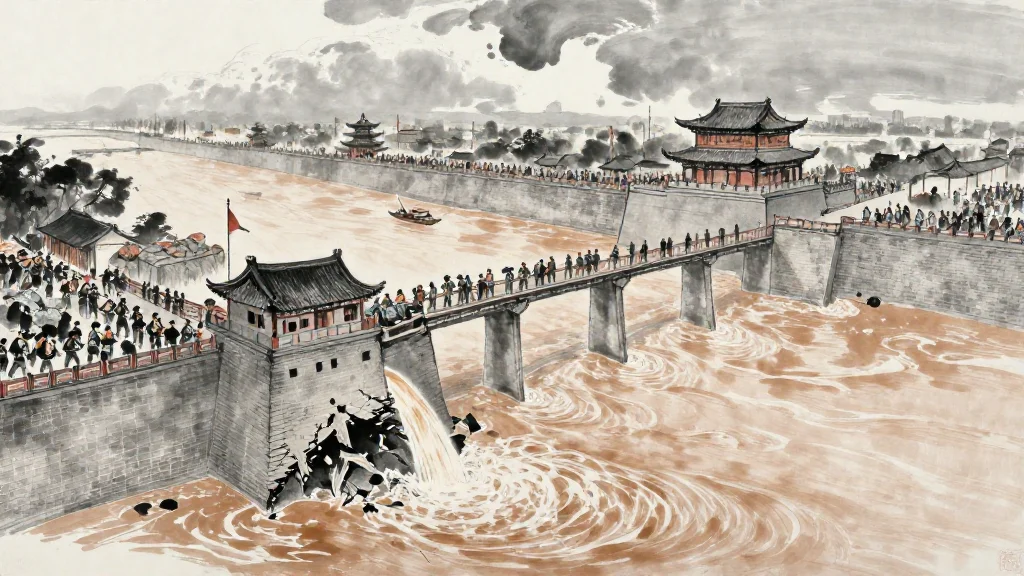
Notes

1person朱己Zhū Jǐ

Zhu Ji (朱己) was a Wei advisor. This is one of the longest and most strategically detailed speeches in the Zhanguoce, and it represents the anti-Qin position in its most fully developed form.

2context

Zhu Ji's speech is essentially a strategic assessment of what happens after Han falls: Qin will not attack Zhao (too mountainous), will not attack Chu (too far), and therefore will attack Wei (the easiest target). The analysis is geography-based and logically rigorous. His proposed alternative — preserve Han as a buffer state and use it as a Wei dependency — is one of the most sophisticated policy proposals in the text. The tragedy is that Wei probably did not take the advice, and Han eventually fell to Qin in 230 BC.

3place

Shangdang (上黨) was the highland region in southeastern Shanxi, strategically vital because it overlooked the approaches to both Zhao and Wei. Its control was one of the proximate causes of the Battle of Changping (260 BC).

葉陽君約魏

Lord Yeyang Makes an Agreement with Wei

葉陽君約魏,魏王將封其子。謂魏王曰:「王嘗身濟漳,朝邯鄲,抱葛、薛、陰、成以為趙羊養邑,而趙無為王有也。王能又封其子問陽、姑衣乎?臣為王不取也。」魏王乃止。

Lord Yeyang makes an agreement with Wei, and the King of Wei is about to enfeoff his son. Someone says to the King of Wei: "Your Majesty once crossed the Zhang in person, attended court at Handan, and presented Ge, Xue, Yin, and Cheng as tribute cities to Zhao — yet Zhao gave nothing in return. Can Your Majesty now also enfeoff Zhao's son with Wenyang and Guyi? I would not advise it."

The King of Wei stops.

Notes

1context

A brief but pointed intervention: the advisor reminds the king that Zhao has already taken without reciprocating, and adding more concessions is simply feeding a one-sided relationship.

秦使趙攻魏

Qin Orders Zhao to Attack Wei

秦使趙攻魏,魏謂趙王曰:「攻魏者,亡趙之始也。昔者晉人慾亡虞而伐虢,伐虢者,亡虞之始也。故荀息以馬與璧假道於虞,宮之奇諫而不聽,卒假晉道。晉人伐虢,反而取虞。故《春秋》書之,以罪虞公。今國莫強於趙,而並齊、秦,王賢而有聲者相之,所以為腹心之疾者,趙也。魏者,趙之虢也;趙者,魏之虞也。聽秦而攻魏者,虞之為也。願王熟計之也。」

Qin orders Zhao to attack Wei. Someone from Wei says to the King of Zhao: "Attacking Wei is the beginning of Zhao's destruction. In ancient times, the people of Jin wished to destroy Yu and attacked Guo. Attacking Guo was the beginning of Yu's destruction. Xun Xi offered horses and jade to borrow passage through Yu. Gong Zhiqi remonstrated, but was not heeded, and Yu lent Jin passage. Jin destroyed Guo, then turned around and took Yu. The Spring and Autumn Annals records this to assign blame to the lord of Yu.

"Now no state is stronger than Zhao, equal to Qi and Qin. Your Majesty has a worthy and renowned chancellor. The state Qin regards as its greatest threat is Zhao. Wei is Zhao's Guo; Zhao is Wei's Yu. To heed Qin and attack Wei is to play the role of Yu. I beg Your Majesty to consider this carefully."

Notes

1context

The lip-and-teeth metaphor (唇亡齒寒, 'when the lips are gone, the teeth are cold') is usually associated with this Guo-Yu story from the Zuo Zhuan. The Wei speaker applies it directly: if Zhao helps Qin destroy Wei, Zhao will be the next target. The historical parallel is apt — and historically, Zhao did not fare well against Qin.

魏太子在楚

The Wei Crown Prince Is in Chu

魏太子在楚。謂樓子於鄢陵曰:「公必且待齊、楚之合也,以救皮氏。今齊、楚之理,必不合矣。彼翟子之所惡於國者,無公矣。其人皆欲合齊、秦外楚以輕公,公必謂齊王曰:『魏之受兵,非秦賓首伐之也,楚惡魏之事王也,故勸秦攻魏。』齊王故欲伐楚,而又怒其不己善也,必令魏以地聽秦而為和。以張子之強,有秦、韓之重,齊王惡之,而魏王不敢據也。今以齊、秦之重,外楚以輕公,臣為公患之。鈞之出地,以為和於秦也,豈若有楚乎?秦疾攻楚,楚還兵,魏王必懼,公因寄汾北以予秦而為和,合親以孤齊,秦、楚重公,公必為相矣。臣意秦王與樗里疾之欲之也,臣請為公說之。」

乃請樗里子曰:「攻皮氏,此王之首事也,而不能拔,天下且以此輕秦。且有皮氏,於以攻韓、魏,利也。」樗里子曰:「吾已合魏矣,無所用之。」對曰:「臣願以鄙心意公,公無以為罪。有皮氏,國之大利也,而以與魏,公終自以為不能守也,故以與魏。今公之力有餘守之,何故而弗有也?」樗里子曰:「奈何?」曰:「魏王之所者恃者,齊、楚也;所用者,樓鼻、翟強也。今齊王謂魏王曰:『欲講攻於齊王兵之辭也,是弗救也。』楚王怒於魏之不用樓子,而使翟強為和也,怨顏已絕之矣。魏王之懼也見亡,翟強欲合齊、秦外楚,以輕樓鼻;樓鼻欲合秦、楚外齊,以輕翟強。公不如按魏之和,使人謂樓子曰:『子能以汾北與我乎?請合與楚外齊,以重公也,此吾事也。』樓子與楚王必疾矣。又謂翟子:『子能以汾北與我乎?必為合於齊外於楚,以重公也。』翟強與齊王必疾矣。是公外得齊、楚以為用,內得樓鼻、翟強以為佐,何故不能有地於河東乎?」

The Wei crown prince is in Chu. Someone says to Lou Zi at Yanling: "You are counting on a Qi-Chu alliance to rescue Pishi. But by all logic, Qi and Chu will not unite. Zhai Zi's faction at court wants to eliminate you. They all want to unite Qi and Qin, exclude Chu, and diminish your influence.

"You should tell the King of Qi: 'Wei is under attack not because Qin chose to invade of its own accord, but because Chu resented Wei's service to Your Majesty and urged Qin to attack.' The King of Qi already wants to attack Chu and is angry that Chu does not support him — he will certainly order Wei to cede territory to Qin for peace. With Zhang Yi's power and the weight of Qin and Han behind him, the King of Qi despises him but the King of Wei dares not resist.

"If Qi and Qin's combined weight is used to exclude Chu and diminish you, I worry for you. Since territory must be given up to make peace with Qin anyway, would it not be better to have Chu involved? If Qin attacks Chu fiercely and Chu recalls its armies, the King of Wei will be terrified. You can then deposit the territory north of the Fen with Qin for peace, form a close alliance to isolate Qi, and with Qin and Chu both valuing you, you will certainly become chancellor.

"I believe the King of Qin and Chuli Ji would welcome this. Allow me to make the case to them."

He then approaches Chuli Ji: "The siege of Pishi was your primary undertaking, and you have not been able to take it — All-Under-Heaven will regard Qin lightly for this. Moreover, holding Pishi would provide an advantage for attacking Han and Wei."

Chuli Ji says: "I have already come to terms with Wei — there is no use for this now."

The speaker replies: "Allow me to share a thought — do not take offense. Pishi is a great national asset. You gave it to Wei because you concluded you could not hold it. But now you have the strength to hold it — why not keep it?"

Chuli Ji says: "How?"

The speaker says: "What the King of Wei relies on is Qi and Chu; the ministers he uses are Lou Bi and Zhai Qiang. Now the King of Qi has told the King of Wei that requests for military aid are just diplomatic talk — he will not rescue Wei. The King of Chu is furious that Wei did not use Lou Zi but sent Zhai Qiang to negotiate peace — he has broken off relations completely. The King of Wei sees destruction approaching. Zhai Qiang wants to unite Qi and Qin, excluding Chu, to diminish Lou Bi. Lou Bi wants to unite Qin and Chu, excluding Qi, to diminish Zhai Qiang.

"You should hold off on accepting Wei's peace offer. Send word to Lou Zi: 'Can you give me the territory north of the Fen? I will arrange a union with Chu excluding Qi, to enhance your position — that is my commitment.' Lou Zi and the King of Chu will be eager. Then send word to Zhai Zi: 'Can you give me the territory north of the Fen? I will arrange a union with Qi excluding Chu, to enhance your position.' Zhai Qiang and the King of Qi will be eager. Externally you gain Qi and Chu as tools; internally you gain Lou Bi and Zhai Qiang as helpers. Why should you not be able to hold territory in the River East?"

Notes

1context

This is one of the most complex diplomatic passages in the Zhanguoce. The unnamed speaker is manipulating multiple parties simultaneously: Lou Zi, Zhai Qiang, Chuli Ji, the kings of Qi, Chu, and Wei. The key insight is that Wei's two internal factions (Lou Bi's pro-Chu and Zhai Qiang's pro-Qi) can each be offered the same deal — territory in exchange for their preferred alignment — and both will accept because each thinks it is getting an exclusive arrangement. Chuli Ji meanwhile collects territorial offers from both sides.

Edition & Source

Text
《戰國策》 Zhanguoce
Edition
中華古詩文古書籍網 transcription
Commentary
鮑彪 (Bao Biao) Song dynasty commentary