三晉已破智氏
The Three Jin Have Destroyed the Zhi Clan
三晉已破智氏,將分其地。段貴謂韓王曰:「分地必取成皋。」韓王曰:「成皋,石溜之地也,寡人無所用之。」段貴曰:「不然,臣聞一里之厚,而動千里之權者,地利也。文人之眾,而破三軍者,不意也。王用臣言,則韓必取鄭矣。」王曰:「善。」果取成皋。至韓之取鄭也,果從成皋始。
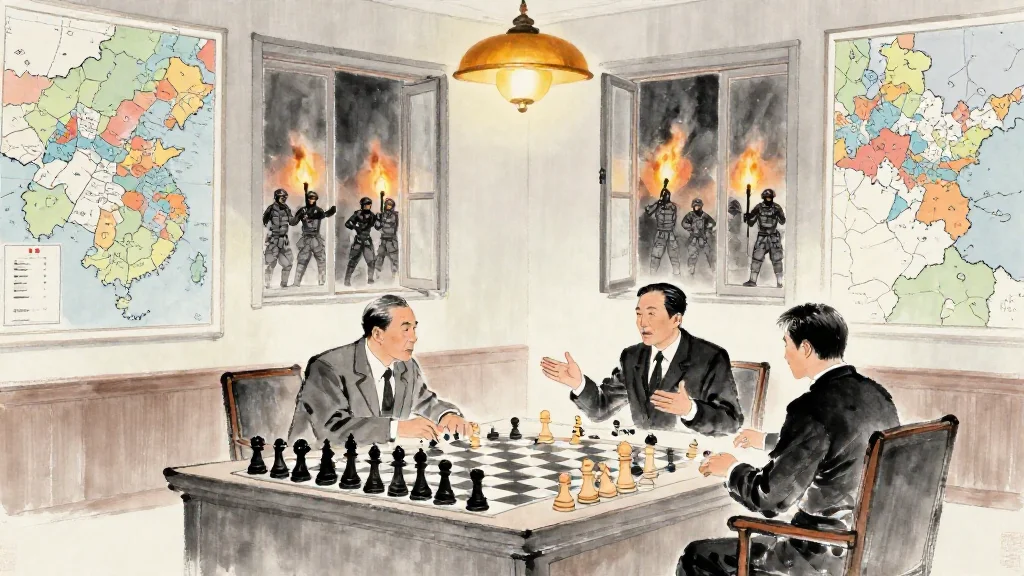
After the Three Jin have destroyed the Zhi clan, they are about to divide its territory. Duan Gui says to the King of Han: "In dividing the land, you must take Chenggao."
The King of Han says: "Chenggao is nothing but rocky, eroded terrain. I have no use for it."
Duan Gui says: "Not so. I have heard that a position one li deep that commands leverage over a thousand li — that is strategic advantage. A smaller force that shatters three armies — that is the element of surprise. If Your Majesty follows my advice, Han will certainly take Zheng."
The king says: "Very well." He does take Chenggao. And when Han eventually conquers Zheng, the campaign does indeed begin from Chenggao.
Notes
This passage is set at the founding moment of Han as an independent state. In 453 BC, the three great families of Jin — Han, Wei, and Zhao — destroyed the Zhi (智) clan and partitioned its territory, effectively splitting the state of Jin into three. This event marks the conventional beginning of the Warring States period.
Duan Gui (段貴) is otherwise unknown. His advice proves prescient: he understands that in terrain warfare, an apparently worthless chokepoint can be worth more than rich farmland.
Chenggao (成皋) is modern Xingyang, Henan — a narrow defile between mountains and the Yellow River that controls the east-west corridor into the Central Plain. It would remain one of the most fought-over chokepoints in Chinese military history, notably in the Chu-Han contention of 206–202 BC.
Zheng (鄭) was a small state in modern central Henan. Han conquered it in 375 BC and moved its capital to the former Zheng capital (modern Xinzheng), which is why Han's capital is sometimes called 'Zheng' in these texts.