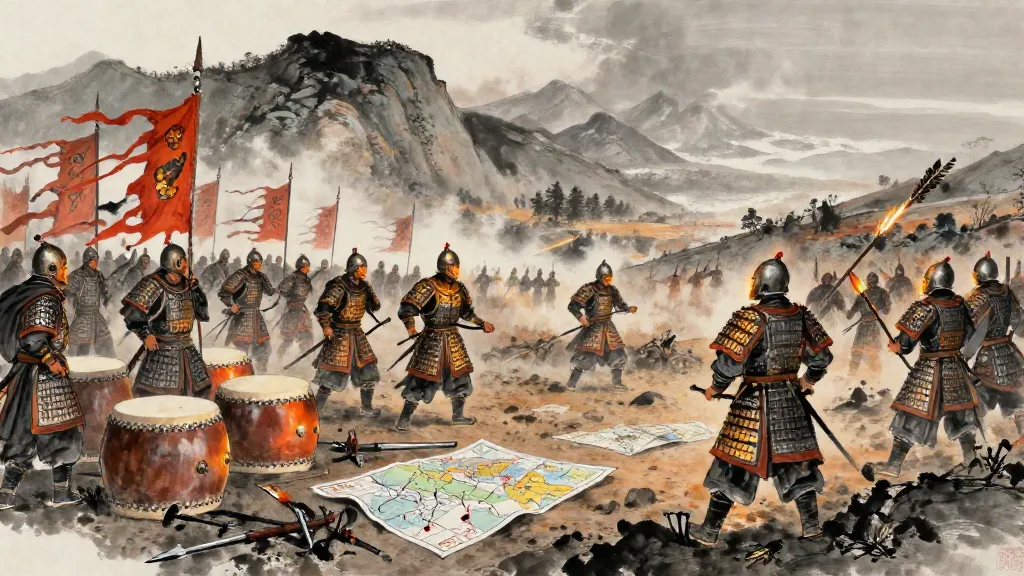
駢拇 (Webbed Toes) — Chinese ink painting

莊子 Zhuangzi · Chapter 8

駢拇

Webbed Toes

View:

駢枝之辯

The Argument from Extra Appendages

駢拇枝指出乎性哉,而侈於德;附贅縣疣出乎形哉,而侈於性;多方乎仁義而用之者,列於五藏哉,而非道德之正也。

Webbed toes and extra fingers — are they not born from one's nature, yet they are excrescences upon one's virtue? Warts and tumors — are they not formed from one's body, yet they are excrescences upon one's nature? Those who are overzealous in practicing benevolence and righteousness and apply them everywhere — are these not arranged among the five organs like extra fingers, rather than the proper form of the Way and its virtue?

Notes

1context

Chapter 8 opens the Outer Chapters with a provocative argument: benevolence (仁) and righteousness (義), the cardinal Confucian virtues, are compared to webbed toes and extra fingers — they may be natural growths, but they are deformities that distort our original nature. This sets the tone for the Outer Chapters' sustained critique of conventional morality.

鳧鶴之喻

The Parable of the Duck and the Crane

彼正正者,不失其性命之情。故合者不為駢,而枝者不為跂;長者不為有餘,短者不為不足。是故鳧脛雖短,續之則憂;鶴脛雖長,斷之則悲。故性長非所斷,性短非所續,無所去憂也。

Those who are correct in the true sense do not lose the essential nature of their life and destiny. What is joined is not webbed; what branches out is not extra. What is long is not excessive; what is short is not deficient. Therefore: the duck's legs are short, but if you try to lengthen them it will bring grief. The crane's legs are long, but if you try to shorten them it will bring sorrow. What is long by nature should not be cut; what is short by nature should not be stretched. There is nothing to worry about.

Notes

1context

The duck and crane parable is one of Zhuangzi's clearest statements of natural diversity: each being has its own proper nature, and suffering comes from trying to impose a single standard upon all. This applies to both physical nature and moral nature — one size does not fit all.

殉名殉利

Dying for Fame, Dying for Profit

天下盡殉也:彼其所殉仁義也,則俗謂之君子;其所殉貨財也,則俗謂之小人。其殉一也,則有君子焉,有小人焉。若其殘生損性,則盜跖亦伯夷已,又惡取君子小人於其間哉!

The whole world sacrifices itself: those who sacrifice themselves for benevolence and righteousness are called by convention 'gentlemen'; those who sacrifice themselves for goods and wealth are called by convention 'petty men.' Their sacrifice is the same, yet one is called a gentleman and the other a petty man. If we look at how they damage their life and harm their nature, then Robber Zhi is no different from Bo Yi — so where does the distinction between gentleman and petty man come in?

Notes

1person盜跖Dào Zhí

Robber Zhi (盜跖) was a legendary bandit chief, and Bo Yi (伯夷) was a paragon of righteousness who starved rather than serve an unjust dynasty. By equating them, Zhuangzi makes the radical point that self-sacrifice for any ideal — whether greed or virtue — equally damages one's nature.

Edition & Source

Text
《莊子》 Zhuangzi
Edition
《四部叢刊》本
Commentary
Traditional Daoist commentaries