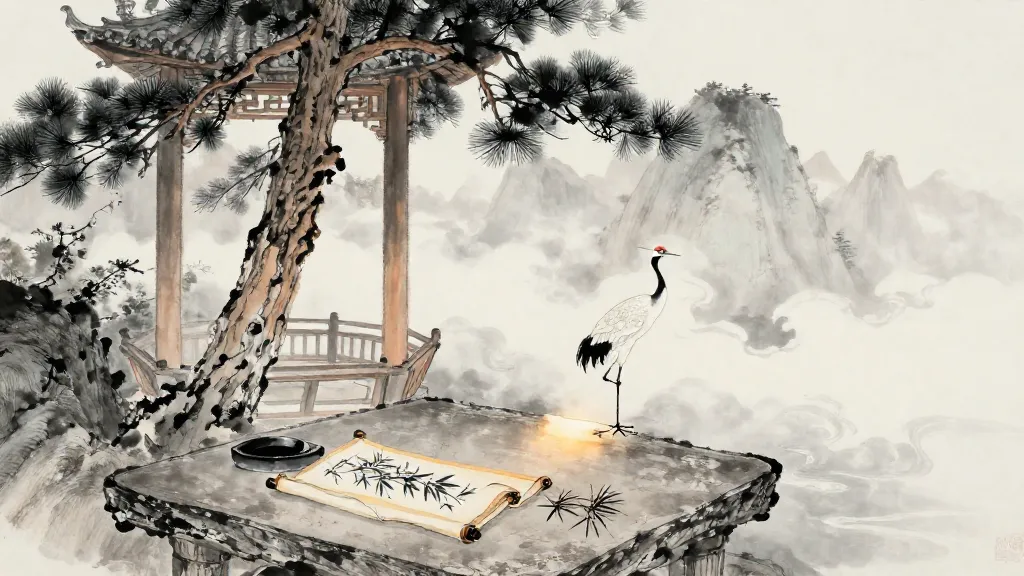
繕性 (Mending the Inborn Nature) — Chinese ink painting

莊子 Zhuangzi · Chapter 16

繕性

Mending the Inborn Nature

View:

以恬養知

Nourishing Knowledge with Tranquility

古之治道者,以恬養知。生而無以知為也,謂之以知養恬。知與恬交相養,而和理出其性。

Those who practiced the Way in ancient times nourished knowledge with tranquility. Knowledge was born in them, but they did not use it for action — this is called nourishing tranquility with knowledge. When knowledge and tranquility nourish each other, harmony and order emerge from one's inborn nature.

倒置之民

The Upside-Down People

今之所謂得志者,軒冕之謂也。軒冕在身,非性命也,物之儻來,寄也。寄之,其來不可圉,其去不可止。故不為軒冕肆志,不為窮約趨俗,其樂彼與此同,故無憂而已矣!今寄去則不樂。由是觀之,雖樂,未嘗不荒也。故曰:喪己於物,失性於俗者,謂之倒置之民。

What the world today calls 'achieving one's ambition' means carriages and caps of office. Carriages and caps on one's person are not part of one's nature and destiny — they are things that happen to come along, like lodgers. Since they are lodgers, their coming cannot be prevented and their going cannot be stopped. Therefore do not let carriages and caps indulge your ambition, and do not let poverty and hardship drive you to follow convention. The joy of one is the same as the joy of the other — so there is nothing to worry about! But now, when what was lodged departs, people are no longer happy. From this we can see that even when they were happy, they were really in a daze. Therefore it is said: those who lose themselves in things and lose their nature in convention are called the upside-down people.

Edition & Source

Text
《莊子》 Zhuangzi
Edition
《四部叢刊》本
Commentary
Traditional Daoist commentaries