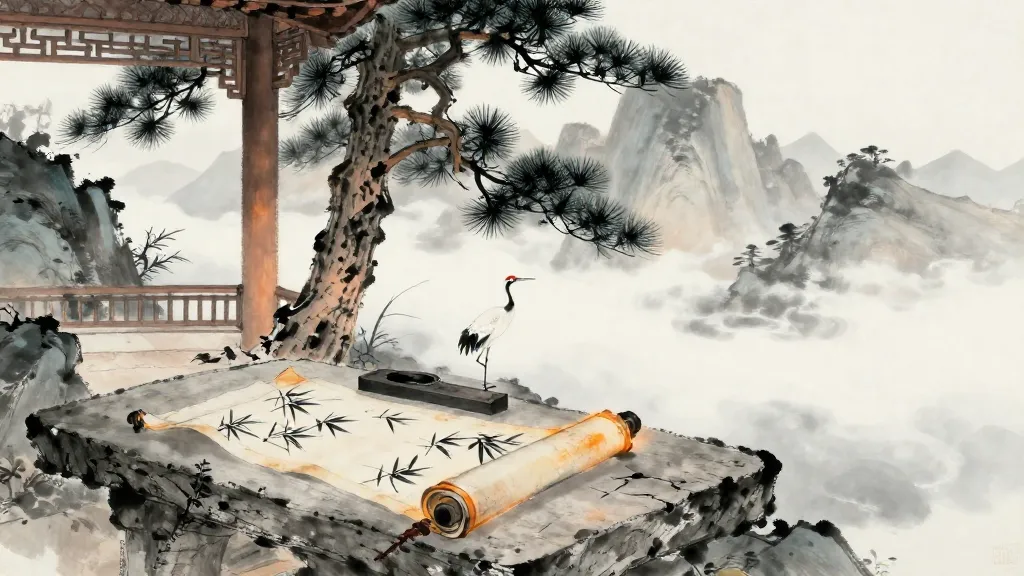
至樂 (Supreme Happiness) — Chinese ink painting

莊子 Zhuangzi · Chapter 18

至樂

Supreme Happiness

View:

至樂無樂

Supreme Happiness Is No Happiness

至樂活身,唯無為幾存。請嘗試言之:天無為以之清,地無為以之寧。故兩無為相合,萬物皆化生。

Supreme happiness, which keeps the body alive, is found only in non-action. Let me try to explain: Heaven does nothing — hence its clarity. Earth does nothing — hence its tranquility. When these two non-actions combine, all things are transformed and born.

鼓盆而歌

Drumming on the Pot and Singing

莊子妻死,惠子吊之,莊子則方箕踞鼓盆而歌。惠子曰:"與人居,長子、老、身死,不哭亦足矣,又鼓盆而歌,不亦甚乎!"莊子曰:"不然。是其始死也,我獨何能無概!然察其始而本無生;非徒無生也,而本無形;非徒無形也,而本無氣。雜乎芒芴之間,變而有氣,氣變而有形,形變而有生。今又變而之死。是相與為春秋冬夏四時行也。人且偃然寢於巨室,而我噭噭然隨而哭之,自以為不通乎命,故止也。"

When Zhuangzi's wife died, Huizi went to offer condolences. He found Zhuangzi sitting with his legs sprawled out, drumming on a pot and singing. Huizi said: 'You lived with her, she raised your children, she grew old. Not to weep at her death would be bad enough, but drumming on a pot and singing — isn't this going too far?' Zhuangzi said: 'Not so. When she first died, how could I not grieve? But I looked back at her beginning, and in the beginning she had no life. Not only no life, she had no form. Not only no form, she had no vital breath. In the midst of the swirling chaos, something changed and there was vital breath. The vital breath changed and there was form. The form changed and there was life. Now there is another change and she is dead. This is like the progression of the four seasons — spring, summer, autumn, winter. She is now lying peacefully in the great chamber of heaven and earth. If I were to follow her, wailing and sobbing, I would consider it a failure to understand destiny. So I stopped.'

Notes

1context

This is one of the most celebrated passages in the Zhuangzi. It does not deny grief but transforms it through understanding. Zhuangzi's initial grief is real, but reflection on the cosmic process — from non-being through breath, form, and life, and back again — reveals death as simply another turn of the great wheel. The 'great chamber' (巨室) is heaven and earth itself, a far grander resting place than any tomb.

Edition & Source

Text
《莊子》 Zhuangzi
Edition
《四部叢刊》本
Commentary
Traditional Daoist commentaries