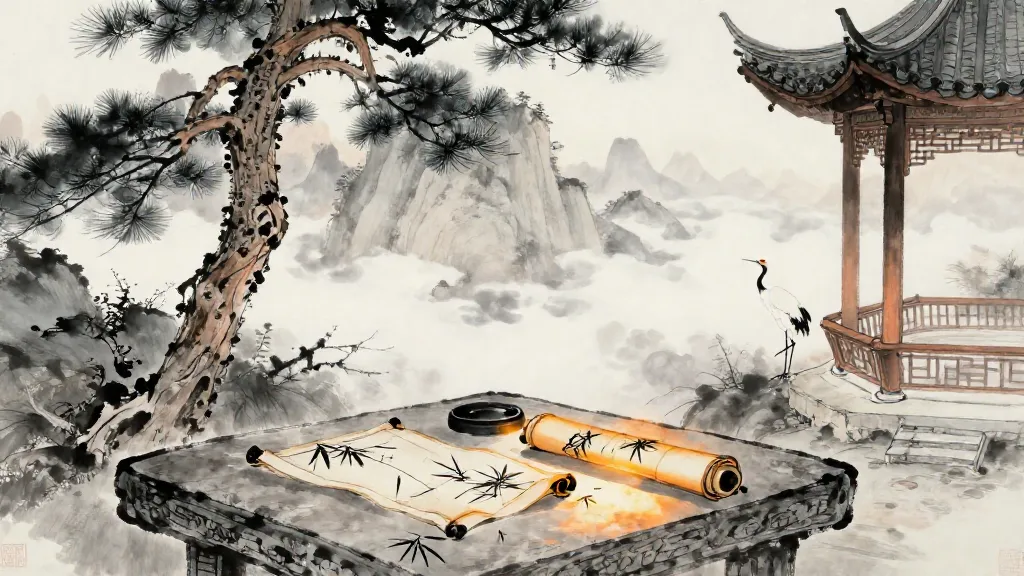
材與不材之間
Between Usefulness and Uselessness
莊子行於山中,見大木,枝葉盛茂。伐木者止其旁而不取也。問其故,曰:"無所可用。"莊子曰:"此木以不材得終其天年。"夫子出於山,舍於故人之家。故人喜,命豎子殺雁而烹之。豎子請曰:"其一能鳴,其一不能鳴,請奚殺?"主人曰:"殺不能鳴者。"明日,弟子問於莊子曰:"昨日山中之木,以不材得終其天年;今主人之雁,以不材死。先生將何處?"莊子笑曰:"周將處乎材與不材之間。"
Zhuangzi was walking in the mountains when he saw a great tree, its branches and leaves thick and flourishing. A woodcutter stopped beside it but did not touch it. Asked why, he said: 'It has no use.' Zhuangzi said: 'This tree, by being of no material use, will live out the years Heaven gave it.' Coming down from the mountain, Zhuangzi stayed at the house of an old friend. The friend was delighted and told his servant to kill a goose and cook it. The servant asked: 'One goose can cackle, the other cannot — which shall I kill?' The host said: 'Kill the one that cannot cackle.' The next day, a disciple asked Zhuangzi: 'Yesterday the tree in the mountain survived by being useless. Now the host's goose was killed for being useless. Where would you place yourself, Master?' Zhuangzi laughed and said: 'I would place myself between usefulness and uselessness.'
Notes
This parable acknowledges a problem in the 'uselessness' philosophy of chapters 4 and 7: uselessness does not always save you. The goose that cannot cackle is killed precisely for its uselessness. Zhuangzi's answer — 'between usefulness and uselessness' — suggests that no fixed position is safe. True freedom lies in flowing with circumstances, not in adopting any static stance.