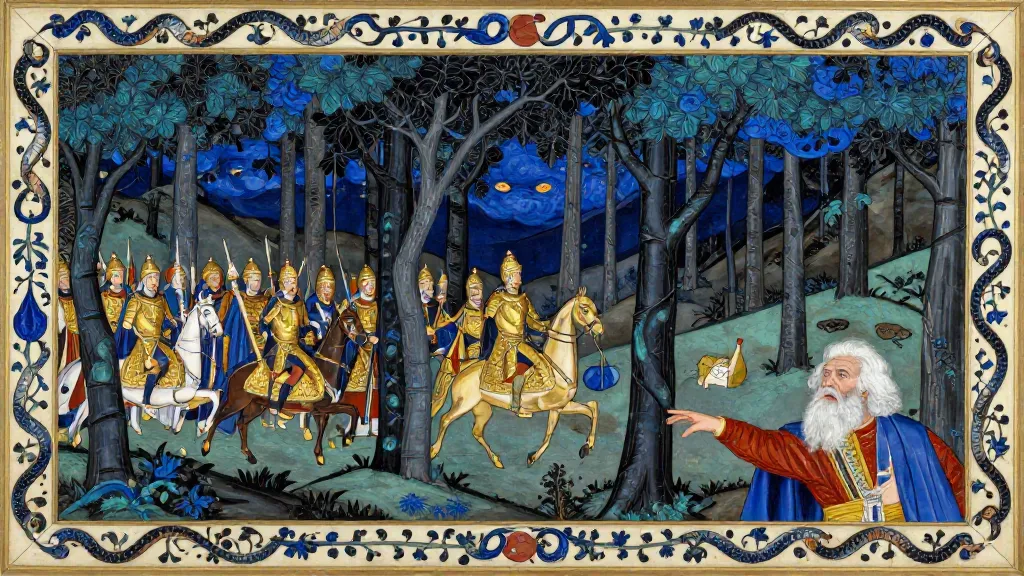
The Mazandaran Campaign (Part 1) — Persian miniature painting

Shahnameh · Fall of the Sasanians

The Mazandaran Campaign (Part 1)

رفتن کاوس به مازندران ۱

Zal presents Kavus with the entire institutional record — no king in the Kayanid line ever dared this campaign, the land is sealed by spells that cannot be broken by sword or treasure — and Kavus responds not with a counterargument but with a declaration of personal supremacy: my army is greater, my heart bolder, the world lies beneath my sharp sword. The refusal is not ignorance; Kavus has heard and understood every word. It is the purest form of royal hubris: the belief that personal magnitude exempts one from historical pattern. Zal departs with the sun and moon dark in his eyes, and the entire Iranian army follows its king into a catastrophe that was described to them in advance, in detail, by the one man qualified to know.

View:

پند دادن زال کاوس را

Zal Advises Kavus

همی رفت پیش اندرون زال زر پس او بزرگان زرّین کمر چو کاؤس را دید دستان سام نششسته بر اورنگ و دل شادکام بکش کرده دست وسر افگنده پست همی رفت تا جایگاه نشست چنین گفت کای کدخدای جهان سرافرازتر مهتر اندر مهان چو تو تخت نشنید وافسر ندید نه چون بخت تو چرخ گردان شنید همه ساله پیروزه باشی وشاد دلت پر زدانش سرت پر زداد بر خویش بر تخت بشناختش بپرسیدش از رنج راه دراز زگردان و از رستم سرفراز چنین گفت مر شاه را زال زر انوشه بزی شاه پیروزگر همه شاد وروشن ببخت تو ایم برافراخته سر بتخت تو ایم از آنپس یکی داستان برکشاد سخنهای بایسته را در کشاد چنین گفت کای پادشاه جهان سزاوار تختی وتاج مهان شنیدم یکی نو سخن بس گران زتو بیشتر پادشاه بوده اند که این راه هرگز نپیموده اند بسر بر مرا روز چندی گذشت سپهر از بر خاک چندی بگشت منوچهر شد زین جهان فراخ ازو مانده ایدر بسی گنج وکاخ همان زو ابا نوذر وکیقباد چه مایه بزرگان که داریم یاد ابا لشکر کشن وگرز گران که آن خانهٔ دیو افسونگرست طلسمست و در بند جادو درست مر آن بندرا هیچ نتوان کشاد مده رنج وزور ودرمرا بباد مر آنرا بشمشیر نتوان شکست بگنج وبدانش نیآید بدست همایون ندارد کس آنجا شدن وز ایدر کنون رای رفتن زدن سپهرا بدآن سو نباید کشید زشاهان کس آن رای فرّخ ندید گرین نامداران زتو کمترند چو تو بندگان جهان داورند تو از خون چندین سر نامدار زبهر فزونی درختی مکار که بار وبلندیش نفرین بود نه آئین شاهان پیشین بود

Zal the golden-haired rode at the head, and behind him came the great men with golden belts. When Dastan son of Sam beheld Kay Kavus seated upon the throne, content of heart, he bowed low, hands folded, and went to his place. He spoke: "O lord of the world, most exalted among the mighty — none has sat upon a throne or worn a crown like yours, nor has the turning sky heard of fortune such as yours. May you be victorious and glad for all time, your heart full of wisdom, your mind full of justice."

The king recognized him and welcomed him upon the throne, and asked of the hardships of his long road, of the champions, and of Rostam the proud. Zal answered: "May the victorious king live forever. We are all joyful and radiant in your fortune, our heads held high beneath your throne."

Then Zal opened a tale and laid out the words that needed saying. He said: "O king of the world, worthy of the throne and the crown of greatness — I have heard a grave new rumour. Kings mightier than you have ruled, yet none ever trod this path. Many days have passed over my head; the sky has turned many times above the earth. Manuchehr departed this wide world and left behind him treasure and palaces. After him came Nowzar and Kay Qobad — how many great ones we remember, with their massed armies and heavy maces. That land is the house of sorcerous demons; it is sealed with spells and bound by enchantment. No one can break those bonds. Do not cast your strength and treasure and wealth to the wind. That place cannot be conquered by the sword, nor won by riches or wisdom. No one counts it auspicious to go there. Do not lead your army in that direction — no king ever judged that a fortunate course. If these champions are lesser than you, still they too, like you, were masters of the world. For the sake of ambition, do not plant a tree whose fruit and height are a curse — that was never the way of the kings of old."

Notes

1personزالZal

Zal, the white-haired sage of Sistan, father of Rostam. Raised by the Simorgh on Mount Alborz, he is the elder statesman of the Kayanid dynasty and the voice of wisdom throughout the early Shahnameh.

2personکی‌کاوسKay Kavus

Kay Kavus, second king of the Kayanid dynasty. Brave but reckless, he repeatedly ignores counsel and plunges Iran into crisis — the Mazandaran campaign being the first and most dramatic example.

3personمنوچهرManuchehr

Manuchehr, an earlier Kayanid king who defeated the Turanians and restored the throne of Iran. Even he never attempted to conquer Mazandaran.

4placeمازندرانMazandaran

Mazandaran, a demon-haunted land south of the Caspian Sea. In the Shahnameh it is a realm of sorcery and darkness ruled by divs (demons). Historically, the forested Caspian littoral was remote and difficult terrain for Iranian armies.

5context

Zal's argument rests on historical precedent: not even Jamshid, Fereydun, or Manuchehr — kings of far greater repute — dared invade Mazandaran. The land's defenses are supernatural, not military.

آهنگ مازندران کردن کی کاوس

Kay Kavus Plans the Mazandaran Campaign

چنین پاسخ آورد کاؤس باز کز اندیشهٔ تو نیم بی نیاز ولیکن مرا از فریدون وجم فزونست مردی وزور ودرم همان از منوچهر واز کیقباد که مازندرانرا نکردند یاد سپاه و دل و گنجم افزونتر است جهان زیر شمشیر تیز اندر است چو برداشتی شد کشاده جهان از آهن چه داریم گیتی نهان شوم شان یکایک بدام آورم به آئین شاهان جنگ آورم اگر بر نهم ساو وباژ گران وگر کس نمانم بمازندران چنین خوار وزارند بر چشم من چه جادو چه دیوان آن انجمن بگوش تو آید خود این آگهی کزیشان شود روی گیتی تهی تو با رستم اکنون جهاندار باش نگهبان بیدار ایران باش جهان آفریننده یار منست سر نرّه دیوان شکار منست گرایدون که یارم نباشی بجنگ مفرمای بر گاه کردن درنگ چو از شاه بشنید زال این سخن ندید ایچ پیدا سرشرا زبن بدو گفت شاهی وما بنده ایم بدلسوزگی با تو گوینده ایم اگر داد گوئی همی یا ستم برای تو باید زدن گام ودم از اندیشه من دل بپرداختم سخن هرچه دانستم انداختم نه مرگ از تن خویش بتوان سپوخت نه چشم زمان کس بسوزن بدوخت بپرهیز هم کس نجست نیاز جهانجوی ازین سه نیابد جواز که روشن جهان بر تو فرخنده باد مبادا که پند من آیدت یاد پشیمان مبادی زکردار خویش تر باد روشن دل ودین وکیش سبک شاه را زال پدرود کرد دل از رفتنش پر غم ودود کرد برون آمد از پیش کاؤس شاه شده تیره بر چشم او هور وماه

Kay Kavus answered: "I do not scorn your counsel, yet my valor and strength and treasure surpass those of Fereydun and Jamshid, of Manuchehr and Kay Qobad — who never even spoke of Mazandaran. My army is greater, my heart bolder, the world lies beneath my sharp sword. When the standard is raised the world opens before it — why should we keep it hidden behind walls of iron? I will bring them one by one into my snare, in the manner of warlike kings. Whether I impose heavy tribute or leave no one standing in Mazandaran — these demons and sorcerers are contemptible in my eyes. You will hear the news yourself: the face of the earth will be emptied of them. You and Rostam — be the guardians of Iran while I am gone. The Creator is my ally; the heads of the mighty demons are my prey. If you will not be my companion in war, then do not delay me upon the throne."

When Zal heard these words he saw no distinction between wisdom and folly in them. He said: "You are the king and we are servants. We speak to you out of devotion. Whether you speak justice or injustice, we must march and breathe at your command. I have emptied my heart of its thoughts; every word I knew I have cast before you. No one can strip death from his own body, nor sew shut the eye of time with a needle, nor through caution alone escape need. The seeker of the world finds no exemption from these three. May the bright world be fortunate for you. May you never have cause to remember my counsel. May you never regret your deeds — may your heart, your faith, your creed remain radiant."

With that, Zal bade the king farewell and departed, his heart full of grief and smoke. He came out from the presence of Kay Kavus, and the sun and moon had gone dark in his eyes.

Notes

1context

Kavus's boast that he surpasses Jamshid, Fereydun, and Manuchehr in power is the classic Shahnameh pattern of royal hubris (farr-e izadi) — the divine glory that blinds its bearer to wisdom.

2personجمشیدJamshid

Jamshid (Yima in Avestan tradition), legendary king who ruled for seven hundred years before his pride caused him to lose the divine glory (farr). Even Jamshid, who commanded demons and fairies, never attempted Mazandaran.

3personفریدونFereydun

Fereydun, the king who overthrew the tyrant Zahhak. Learned in magic, even he did not venture into Mazandaran.

4translation

'No one can strip death from his own body, nor sew shut the eye of time with a needle' — Zal's farewell is a triple maxim on the futility of resisting fate: death cannot be removed, destiny cannot be blinded, and need cannot be avoided through caution alone.

5context

A demon disguised as a musician from Mazandaran had earlier sung to Kavus of the land's beauty and riches, inflaming his desire. Ahriman (the spirit of evil) sent this singer to lure the king into the trap.

رفتن کاوس به مازندران

Kavus Goes to Mazandaran and Is Captured

چو زال سپهبد زپهلو برفت دمادم سپه روی بنهاد وتفت بطوس وبگودرز بفرمود شاه کشیدن سپه سر نهادن براه چو شب روز شد شاه وکنداوران نهادند سر سوی مازندران بمیلاد بسپرد ایران زمین کلید در گنج و تاج ونگین بدو گفت اگر دشمن آید پدید ترا تیغ کینه نباید کشید زهر بد بزال وبرستم پناه که پشت سپاهند وزیبای گاه دگر روز برخاست آوای کوس سپهرا همی راند گودرز وطوس همی رفت کاؤس لشکر فروز بزد گاه بر پیش کوه اسپروز بجائی که پنهان شود آفتاب بدآنجایگه ساخت آرام وخواب کجا جای دیوان دژخیم بود بدآن جایگاه پیل را بیم بود بفرمود پس گیو را شهریار دوباره زلشکر گزین کن هزار کسی کو گراید بگرز گران هر آنکس که بینی زپیر وجوان چنان کن که اورا نباشد روان وزو هرچه آباد بینی بسوز شب آور هر آنجا که باشی بروز چنین تا بدیوان رسد آگهی جهان کن سراسر زجادو تهی چو یکهفته بگذشت ایرانیان زغارت کشادند یکیک میان خبر شد بر شاه مازندران دلش گشت پر درد وسر شد گران زدیوان به پیشش درون سنجه بود که جان ودلش زآن سخن رنجه بود بدو گفت شو نزد دیو سپید چنان رو چو بر چرخ گردنده شید بگویش که آمد بمازندران بغارت از ایران سپاهی گران همه شهر مازندران سوختند بجنگ آتش کینه افروختند جهانجوی کاؤس شان پیش رو زلشکر بسی جنگ سازان نو کنون گر نباشی تو فریادرس نبینی بمازندران نیز کس چو بشنید پیغام سنجه برفت بر دیو فرمان شه برد وتفت چنین پاسخش داد دیو سپید که از روزگارت مشو ناامید بیآیم کنون با سپاهی گران ببرّم پی او زمازندران بگفت این وچون کوه بر پای خاست سرش کشت با چرخ گردنده راست شب آمد یکی ابر شد بر سپاه جهان گشت چون روی زنگی سیاه چو دریای قارست گفتی جهان همه روشنائیش گشته نهان یکی خیمه زد بر سر از دود وقار سیه شد هوا چشمها گشت تار زگردون بسی سنگ بارید و خشت پراگنده شد لشکر ایران بدشت بسی راه ایران گرفتند پیش زکردار کاؤس دل گشته ریش چو بگذشت شب روز نزدیک شد جهانجوی را چشم تاریک شد زلشکر دو بهره شده تیره چشم سر نامداران او پر زخشم

As soon as Zal the commander departed, the army set its face to the road in haste. The king ordered Tus and Gudarz to lead the host forward. When night became day, the king and his warriors turned toward Mazandaran. He entrusted the land of Iran to Milad, along with the keys to the treasury, the crown, and the royal seal. He told him: "If an enemy appears, you must not draw the sword of vengeance yourself. In every danger take refuge with Zal and Rostam, for they are the backbone of the army and worthy of the throne."

The next day the drums sounded. Gudarz and Tus drove the army onward. Kavus, torch of the host, marched until he pitched camp before Mount Aspruz, at the place where the sun disappears — the haunt of savage demons, a place so fearsome that even elephants trembled there.

Then the king commanded Giv: "Choose two thousand men from the army, every one skilled with the heavy mace, young and old alike. Let none survive — and whatever settlements you find, put them to the torch. Turn night into day wherever you go, until word of it reaches the demons. Empty the world of sorcerers."

Giv went forth and carried out the command. He rained swords and heavy maces upon the city of Mazandaran. Neither women nor children nor men found mercy from his blade. He burned and plundered the city, pouring poison where there had been balm. He found a city like paradise — in every lane more than a thousand servants with torques and earrings, attendants with crowns and faces like the shining moon, treasuries heaped with gold and jewels. "Blessed be the singer who told me of this realm's glories," Kavus declared, and marched after Giv with the rest of his host. For seven days they never ceased plundering, nor could they be sated with the gold and gems they found.

On the eighth day, word of the Iranian plundering reached the King of Mazandaran, and his heart grew heavy with anguish. Among his demons was Sanjeh, and to him the king said: "Go to the White Div, swift as the turning sun upon the sky. Tell him that a mighty army has come from Iran to plunder Mazandaran. They have burned our cities and kindled the fire of vengeance. Kay Kavus leads them, with many eager warriors. If you do not come to our rescue, you will find no one left in Mazandaran."

Sanjeh went swiftly and bore the message. The White Div answered: "Do not lose hope. I will come with a heavy host and cut their foothold from Mazandaran." He spoke, and rose up like a mountain, his head level with the turning sky.

Night fell, and a black cloud spread over the Iranian army. The world became dark as the face of a Zangi — you would have said the world was a sea of pitch with all its light hidden away. A canopy of smoke and darkness was pitched overhead. The sky went black, eyes could see nothing. From the heavens stones and bricks rained down. The army of Iran scattered across the plain, and many took the road back toward Iran, their hearts bitter at what Kavus had brought upon them.

When night passed and day drew near, the world-seeker's eyes had gone dark. Two-thirds of the army had lost their sight. The leaders were full of fury. All their treasure was plundered, the army taken captive. The king — once young upon his throne — had become an old man.

The White Div thundered: "O king, fruitless as a willow — you arrayed yourself in pride, you saw your own strength like a maddened elephant and gave no one else a hand. You could not content yourself with crown and throne, and so deceived your own reason. You took many captives in Mazandaran and slew many with the heavy mace. Had you no knowledge of my power? You grew vain upon the throne of kings. Now you have found what you deserve — your heart has gained the desires it sought."

He chose twelve thousand sword-wielding demons to guard the Iranians, and set them over the captives. He gave them just enough food to survive — enough to drag from one day to the next, for he did not wish them to die, but gloried in their wretchedness. Then he handed all the king's treasure — crown, rubies, turquoise throne — over to Arzhang, the commander of Mazandaran. To the King of Mazandaran he sent word: "Seek no excuse from Ahriman now, for I have done everything that was needed. I have brought the whole flock to the dust. All the champions of Iran's army shall see neither sun nor moon. I did not kill them — so that Kavus may learn the difference between fortune and ruin, and his senses may leave him in misery, and no one else will ever dare attempt such a thing."

The White Div returned to his mountain lair, and Kavus remained in the land he had yearned for, his heart heavy, repeating: "This fault was mine."

Notes

1personطوسTus

Tus, son of Nowzar, one of the great Iranian generals. He commands the right wing in later battles.

2personگودرزGudarz

Gudarz, son of Keshvad, another of the leading Iranian commanders. Father of Giv.

3personگیوGiv

Giv, son of Gudarz, a fearless warrior who leads the vanguard assault on Mazandaran.

4placeکوه اسپروزMount Aspruz

Mount Aspruz (کوه اسپروز), a mountain at the border of Mazandaran where the sun 'hides' — marking the transition from the known world into demon territory.

5context

The ease of the initial conquest is deliberate narrative irony. Kavus's sacking of the demon city mirrors the singer's seductive description — paradise is found, but it is a trap. The White Div has not yet intervened.

6personدیو سپیدDiv-e Sepid

The White Div (Div-e Sepid), supreme demon of Mazandaran, dwelling in the Seven Mountains. His sorcery blinds the entire Iranian army — the central catastrophe that triggers Rostam's Seven Trials.

7personارژنگ دیوArzhang Div

Arzhang Div, the demon commander of Mazandaran's forces, to whom the White Div entrusts Kavus's captured treasure and army.

8context

The blinding of Kavus and his army is both literal and symbolic. In Zoroastrian cosmology, demons bring darkness; in narrative terms, Kavus's blindness is the physical consequence of his refusal to see the truth in Zal's counsel.

9translation

'Fruitless as a willow' (بی بر بکردار بید) — the White Div's taunt compares Kavus to a willow tree: tall but bearing no fruit. The image underscores the emptiness of Kavus's boasted strength.

پیغام کاوس به زال و رستم

Kavus's Message to Zal and Rostam

از آنپس جهانجوی خسته جگر برون کرد گردی چو مرغی بپر سوی زابلستان فرستاد زود بنزدیک دستان ورستم چو دود بگفتش که بر من چه آمد زبخت بخاک اندر آمد سر وتاج و تخت همان گنج وآن لشکر نامدار بیآراسته چون گل اندر بهار همه چرخ گردون بدیوان سپرد تو گفتی که باد اندر آمد ببرد کنون چشم خیره شد و تیره بخت نگونسار گشته تن وتاج وتخت چنین خسته در چنگ آهرمنم همی بگسلاند روان از تنم چو از پندهای تو یاد آورم همی از جگر سرد باد آورم نبودم بفرمان تو هوشمند زکم بخردی بر من آمد گزند اگر تو نبندی بدین در میان همه سود وسرمایه باشد زیان

After this, the world-seeker — his heart broken — sent out a rider swift as a bird on the wing, dispatching him like smoke toward Zabulistan, to Dastan and Rostam. The message read: "See what fate has brought upon me. My head, crown, and throne have fallen to the dust. That army, that treasure, arrayed like flowers in spring — the turning heavens handed them all to the demons. You would say the wind came and carried everything away. Now my eyes are dimmed, my fortune darkened, my body, crown, and throne overturned. Wounded, in the clutches of Ahriman, my soul is being torn from my body. When I remember your counsel, cold sighs rise from my heart. I did not heed you wisely; through my own lack of sense this calamity has fallen upon me. If you do not gird yourself for this cause, all gain and all capital will be lost."

When the messenger reached Dastan and he heard the news, his skin nearly tore from his body with grief. He hid it from stranger and friend alike, but with his clear mind he had long foreseen from afar the evils that would come.

Zal said to Rostam: "The sword has grown short in its sheath. We can no longer feast and take our ease and groom ourselves for the throne. The king of the world is in the jaws of a dragon, and upon all Iran there falls boundless calamity. Now you must saddle Rakhsh. You shall seek vengeance with your world-conquering sword. Surely it was for this day that I raised you on my knee. You are fit for this task now — my own years exceed two hundred. From this deed you will gain an everlasting name and deliver the king from harm. There can be no rest, no drawing of breath, while this work of Ahriman endures. Bind the tiger-skin upon your breast, clear your mind of all other thought. Whatever body has seen the point of your lance — who would say its soul found peace afterward? If you make war upon the sea it turns to blood; at your voice the mountains flatten to plains. Neither Arzhang nor the White Div, neither Sanjeh nor Pulad Ghandi nor Bid, must hold any hope of life from you."

Notes

1personرستمRostam

Rostam, the greatest champion (pahlavan) of Iran, son of Zal and Rudabeh. His Seven Trials (Haft Khan) to rescue Kavus form the dramatic heart of this story.

2placeزابلستانZabulistan

Zabulistan (Sistan), the homeland of the house of Sam — Zal and Rostam's domain in southeastern Iran, near modern Sistan-Baluchestan.

3personرخشRakhsh

Rakhsh, Rostam's legendary horse — the only steed strong enough to bear his weight. Rakhsh is almost a character in his own right, fighting alongside Rostam throughout the Seven Trials.

4context

Zal tells Rostam there are two roads to Mazandaran: the longer, safer route that Kavus took, and a shorter road beset with dangers. The shorter road becomes the path of the Seven Trials (Haft Khan).

5translation

'The sword has grown short in its sheath' — Zal's metaphor means that the time for restraint is over; the sword must be drawn. His own great age (over two hundred years in the mythic count) means the task falls to the younger generation.

خوان اول: جنگ رخش با شیری

First Trial: Rakhsh Fights a Lion

برون رفت از آن پهلو نیمروز زپیش پدر گرد گیتی فروز دو روزه بیکروز بگذاشتی تیره را روز پنداشتی برینسان پی رخش ببرّیده راه بتابنده روز وشبان سیاه تنش چون خورش جست وآمد بشور یکی دشت پیش آمدش پر زگور یکی گور را خواست بفشرد ران تگ گور شد با تگ او گران کمند کیانی بینداخت شیر بحلق اندر آورد گور دلیر زپیکان تیر آتشی بر فروخت برآن خار و هیزم همی بر بسوخت بر آن آتش تیز بریانش کرد از آن پس که بی توش و بی جانش کرد بخورد وبینداخت دور استخوان همین بود دیگ و همین بود خوان لگام از سر رخش بر داشت خوار چراننده بگذاشت در مرغزار یکی نیستان بستر خواب ساخت در بیم را جای ایمن شناخت در آن نیستان بیشهٔ شیر بود که پیلی نیارست از آن نی درود چو یک پاس بگذشت درّنده شیر به پیش کنام خود آند دلیر بنی بر یکی پیلتن خفته دید بر او یکی اسپ آشفته دید نخست اسپرا گفت باید شکست چو خواهم خود آید سوارم بدست سوی رخش رخشان بیآمد دمان چو آتش بجوشید رخش آن زمان دو دست اندر آورد وزد بر سرش همان تیز دندان بپشت اندرش همی زدش بر خاک تا پاره کرد ددیرا بدآن چاره بی چاره کرد چو بیدار شد رستم تیز چنگ جهان دید بر شیر درّنده تنگ چنین گفت با رخش کای هوشیار که گفتت که با شیر کن کارزار اگر تو شدی کشته بر دست اوی من این ببر واین مغفر جنگ جوی کمند وکمان تیغ و گرز گران

Rostam rode out from Nimruz, leaving his father behind — that dust-raising torch of the world. He covered two days' journey in one, treating darkness as daylight. In this way Rakhsh's hooves devoured the road through shining day and black night alike.

When his body craved food, he came upon a plain teeming with wild asses. He urged Rakhsh into a gallop, and the onager's speed was nothing against his. He cast the royal lasso, caught a fine beast by the throat, struck sparks from an arrowhead, gathered thorn-brush and scrub, and roasted the wild ass over a fierce fire. He ate it and flung the bones aside — that was his pot and his feast.

Then he removed the bridle from Rakhsh and set him loose to graze in the meadow. He made his bed among the reeds, taking a place of danger for a place of safety — for hidden in that reedbed was the lair of a lion so fearsome that no elephant dared pass nearby.

When one watch of the night had passed, the lion returned to its den and found a man of elephantine strength sleeping there, with a restless horse standing guard beside him. The lion thought: "First I will bring down the horse — then the rider will be easy prey." It lunged at Rakhsh. But Rakhsh surged like fire. He brought both forelegs crashing down on the lion's skull, sank his sharp teeth into its back, and hammered it against the ground until the beast was torn apart.

When Rostam woke and saw the lion's body sprawled in death, he said to Rakhsh: "O clever one — who told you to fight a lion? If you had been killed, how would I have carried this tiger-skin and war-helm, this lasso, bow, sword, and heavy mace to Mazandaran on foot? If my sleep had been disturbed, your battle with the lion would have been short." He spoke, then lay down and slept again — that bold and famous champion.

When the sun raised its head above the dark mountains, he groomed Rakhsh, set the saddle on his back, and gave thanks to God the giver of good.

Notes

1context

The First Trial (Khan-e Avval). Each of Rostam's Seven Trials tests a different quality. Here, Rakhsh's loyalty and ferocity are tested — the horse fights while the hero sleeps. Rostam's irritation at not being woken foreshadows the Third Trial, where the same pattern nearly kills him.

2placeنیمروزNimruz

Nimruz (نیمروز), literally 'midday' — another name for Sistan/Zabulistan, Rostam's homeland.

3translation

'That was his pot and his feast' (همین بود دیگ و همین بود خوان) — Ferdowsi's laconic humor. Rostam's meal is a whole roasted onager eaten with bare hands; the line underscores the raw, self-sufficient heroism of the road.

4context

The babr-e bayan (ببر بیان), Rostam's legendary tiger-skin armor, is virtually impenetrable. It becomes his signature garment throughout the Shahnameh.

خوان دوم: یافتن رستم چشمه‌ی آب را

Second Trial: Rostam Finds the Spring

یکی راه پیش آمدش ناگزیر همی رفت بایست بر خیره خیر بیابان بی آب و گرمای سخت کزو مرغ گشتی بتن لخت لخت چنان گرم گردید هامون ودشت تو گفتی که آتش برو بر گذشت تن اسپ و گویا زبان سوار زگرمی واز تشنگی شد زکار پیاده شد از اسپ وژوپین بدست همی رفت پویان بکردار مست نمی دید بر چاره جستن رهی سوی آسمان کرد روی آنگهی چنین گفت کای داور دادگر همه رنج و سختی تو آری بسر گرایدون که خشنودی از رنج من بدین گیتی آگنده شد گنج من بپویم همی تا مگر کردگار دهد شاه کاؤس را زینهار هم ایرانیانرا زچنگال دیو رهاند بی آزار گیهان خدیو گنهگار وافگندگان تو اند پرستنده و بندگان تو اند تن پیلوارش چو این گفته شد شد از تشنگی سست و آشفته شد بیفتاد رستم بدآن گرم خاک زبان گشته از تشنگی چاک چاک همانگه یکی میش فرّخ سرین بپیمود پیش تهمتن زمین از آن رفتن میش اندیشه خاست بدل گفت آبشخور این کجاست همانا که بخشایش کردگار فراز آمدست اندرین روزگار بیفشرد شمشیر بر دست راست بزور جهاندار بر پای خاست بشد بر پی میش آن تیغ بچنگ گرفته بدست دگر پالهنگ بره بر یکی چشمه آمد پدید که میش سرافراز آنجا رسید

A road opened before him that could not be avoided — a waterless desert of brutal heat, where birds would be torn apart in mid-flight by the burning air. The plain blazed as if fire had passed over it. Both the horse's body and the rider's eloquent tongue were struck dumb by the heat and thirst.

Rostam dismounted and walked on foot, javelin in hand, staggering like a drunkard. He could find no path to deliverance. He turned his face to the sky and spoke: "O just Creator, You bring all hardship and suffering to its end. If You are content with my suffering, then my treasure in this world is full. I press onward so that perhaps the Maker will grant Kay Kavus deliverance, and release the Iranians from the demons' claws without harm. They are sinners and outcasts — yet they are Your worshippers and servants."

As he finished speaking, his elephantine body went slack with thirst. He collapsed onto the burning sand, his tongue cracked and split. At that very moment a fine-haunched ram crossed the ground before him. The sight stirred a thought: "Where does this beast drink?" He said to himself: "Surely this is the mercy of the Creator, come upon me in my hour of need."

He gripped his sword in his right hand, rose to his feet by the strength of the Lord of the world, and followed the ram's tracks, blade in one hand and lasso in the other. Along the way a spring came into view — the very place the ram had reached. Rostam turned his face to the sky: "O just and truthful Creator — at this spring there is no sign of the ram; that wild creature of the plain is no kin of mine. When speech grows narrow and all hope is gone, seek refuge in none but the pure God, for whoever turns from the one just God has no hold on reason."

He blessed the ram: "May the turning sky do you no harm. May the grass of your plain and field stay green. May no hunter's bow and arrow ever find you — for through you the elephant-bodied champion was brought back to life, who otherwise was already thinking of his shroud."

He unsaddled Rakhsh, washed him in the pure water until the horse shone like the sun, drank his fill, then hunted a wild ass, roasted it, ate, drank again from the bright spring, and prepared for sleep. He said to Rakhsh: "Do not fight with anyone, and do not seek a mate. If an enemy comes, run to me — but do not make war on lions or demons yourself." Then he slept, and Rakhsh grazed and wandered until midnight.

Notes

1context

The Second Trial (Khan-e Dovvom). This is a trial of endurance and faith rather than combat. Rostam is brought to the edge of death by thirst, and deliverance comes through divine mercy in the form of a mysterious ram — a clear Zoroastrian motif of God's providence.

2translation

'His tongue cracked and split from thirst' (زبان گشته از تشنگی چاک چاک) — vivid physical imagery typical of Ferdowsi's desert passages. The hero who terrifies demons is helpless before nature.

3context

The vanishing ram that leads Rostam to water and then disappears is a divine guide — Rostam recognizes it as such and offers a formal prayer of thanksgiving and a blessing upon the animal. This pattern echoes Zoroastrian reverence for the fravashi (guardian spirits).

4context

Rostam's instruction to Rakhsh — 'if an enemy comes, run to me rather than fighting alone' — sets up the dramatic tension of the Third Trial, where the dragon appears and Rakhsh must decide whether to obey or to wake his master.

خوان سوم: جنگ رستم با اژدها

Third Trial: Rostam Fights the Dragon

زدشت اندر آمد یکی اژدها کزو پیل گفتی نیابد رها بدآن جایگه بودش آرامگاه نکردی ربیمش برو دیو راه بیآمد جهانجوی را خفته دید بر او یکی اسپ آشفته دید پر اندیشه بد تا که آمد پدید که یارد بدآنجایگه آرمید نیارست کردن کس آنجا گذر زدیوان وپیلان و شیران نر سوی رخش رخشنده بنهاد روی روان رخش شد نزد دیهیم جوی همیکوفت بر خاک روئینه سم همیکوفت سم و برافشاند دم تهمتن چو از خواب بیدار شد سر پر خرد پر زپیکار شد بگرد بیابان همی بنگرید شد آن اژدهای دژم ناپدید ابا رخش بر خیره پیکار کرد بدآن کو سر خفته بیدار کرد دگر باره در شد بخواب اندرون زتاریکی آن اژدها شد برون ببالین رستم تگ آورد رخش همی کند خاک و همی کرد پخش دگر باره بیدار شد خفته مرد بر آشفت ورخسارگان کرد زرد بیابان همه سر بسر بنگرید جز از تیرگی او بدیده ندید بدآن مهربان رخش بیدار گفت که تاریکئ شب نخواهی نهفت سرمرا همی باز داری زخواب به بیدارئ من گرفتت شتاب گرین بار سازی چنین رستخیز سرت را ببرّم بشمشیر تیز پیاده شوم سوی مازندران سوم ره خواب اندر آمد سرش بغرّید باز اژدهای دژم همی آتش افروخت گفتی بدم چراگاه بگذاشت رخش آن زمان نیارست رفتن بر پهلوان دلش زآن شکفتی بدو نیم بود کش از رستم واژدها بیم بود هم از مهر رستم دلش نارمید چو باد دمان پیش رستم دمید خروشید و جوشید وبرکند خاک زنعلش زمین شد همه چاک چاک چو بیدار شد رستم از خواب خوش بر آشفت بر بارهٔ دستکش چنین خواست روشن جهان آفرین که پنهان نکرد اژدها را زمین بدآن تیرگی رستم اورا بدید سبک تیغ تیز از نیام بر کشید

From the plain there came a dragon so vast that even an elephant could not escape it. That place was the dragon's lair — so fearsome that not even demons dared pass that way. The dragon approached and saw the world-seeker sleeping, with a restless horse standing above him. It marveled: who dared take his rest in such a place, where neither demons nor elephants nor lions ventured?

The dragon advanced toward Rakhsh. Rakhsh galloped to Rostam's side and struck the earth with his iron hooves, stamped and lashed his tail. Rostam woke, his keen mind ready for battle — but he searched the dark desert all around and the fearsome dragon had vanished. He turned on Rakhsh in anger for waking him from sleep, and went back to his rest.

A second time the dragon emerged from the darkness. Again Rakhsh rushed to Rostam's pillow, pawing the ground, scattering earth. Again Rostam woke, flushed with fury. He scanned the desert from end to end but saw nothing except blackness. He said to faithful Rakhsh: "You refuse to let the dark of night lie still. You keep dragging me from sleep. If you raise this commotion one more time, I will cut your head off with my sharp sword and walk on foot to Mazandaran."

A third time sleep came over him. A third time the dragon roared, its breath kindling fire. Rakhsh abandoned his grazing, yet did not dare approach his master — his heart was split in two, for he feared Rostam's wrath as much as the dragon. But love for Rostam would not let him rest. He rushed before Rostam like a raging wind, shrieked and stamped and tore the ground until the earth cracked beneath his hooves.

Rostam woke from sweet sleep and raged at the obedient steed — but this time the bright Creator of the world willed that the earth should not hide the dragon. In the darkness Rostam saw it. He drew his sharp sword from its sheath and roared like a spring thundercloud, setting the field ablaze with the fire of battle.

He called out: "Tell me your name, for after this you will never see the world in comfort. No nameless creature shall have its soul leave its dark body at my hand." The savage dragon answered: "No one escapes my claws. A hundred by a hundred, this place is mine — the high sky above it is my domain. No eagle dares fly over my head; the stars never see this ground even in dreams."

Rostam said: "I am Rostam. I am of Dastan and Sam, of the line of Nimruz. Alone I am an army; on bold Rakhsh I tread the earth. You shall see the hand I strike in battle — I will raise your head in dust this very moment."

The dragon lunged and coiled around him. When Rakhsh saw his master's peril, he sprang upon the dragon from behind, tore its flanks with his teeth as he had torn the lion, and ripped its haunches open like a lion itself. Rostam, astonished, drove his sword through the creature's body. Between the two of them the dragon was finished. He struck his blade and severed its head from its trunk, and a river of blood gushed forth. The ground vanished beneath the enormous carcass; a fountain of blood sprang up from it.

Rostam gazed at the fearsome body — its bulk, its venomous breath — and the whole desert lay buried under it. He trembled, and stood a long time in awe, calling upon the name of God. He washed his head and body in the water and spoke to God: "O just Creator, You gave me wisdom and strength and glory, so that before me a lion, a demon, or an elephant, a waterless desert or the Nile itself — whether the enemy be many or few — when my wrath rises, they are all as one before my eyes."

Notes

1context

The Third Trial (Khan-e Sevvom) is the most dramatically structured of the seven. The triple pattern — dragon appears, Rakhsh wakes Rostam, dragon vanishes — builds unbearable tension. Rostam nearly kills his own horse before the true enemy is revealed.

2translation

The dragon (اژدها, azhdaha) in Iranian mythology is not merely a large serpent but a cosmic force of chaos, associated with Ahriman. Its lair is a place where even demons fear to tread — placing it outside the normal hierarchy of evil.

3context

Rakhsh's dilemma — torn between fear of Rostam's anger and love for his master — is one of the most psychologically rich moments in the Shahnameh. Ferdowsi gives the horse genuine emotional interiority: 'his heart was split in two.'

4context

The exchange of names before combat is an epic convention found in both the Shahnameh and Homer's Iliad. Rostam demands the dragon identify itself because 'no nameless creature' deserves to die at his hand — a warrior's code of honor applied even to monsters.

Edition & Source

Author
فردوسی (Ferdowsi, c. 977–1010 CE)
Edition
شاهنامه — تصحیح ژول مل (Jules Mohl critical edition)