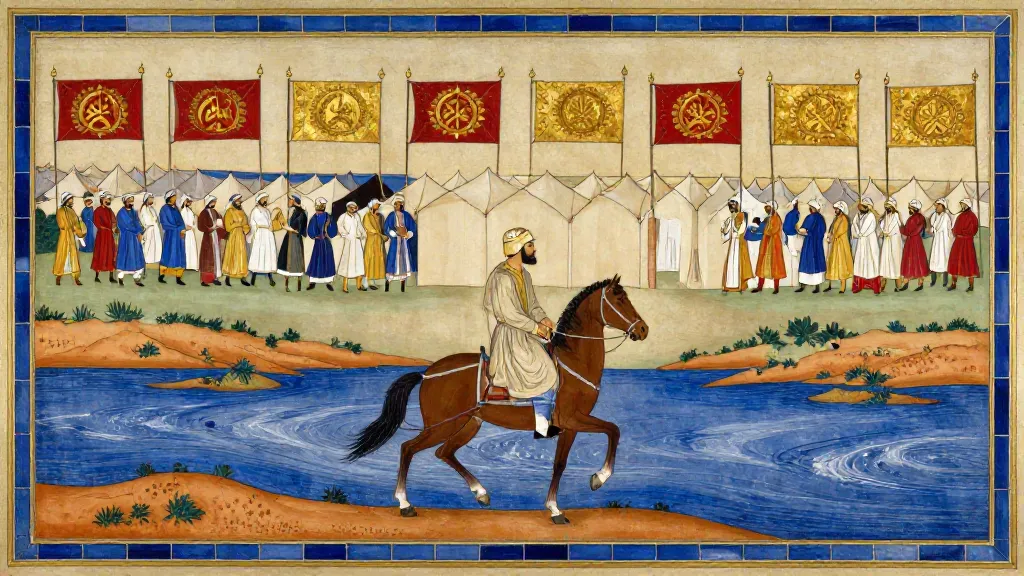
The Story of Siavash (Part 3) — Persian miniature painting

Shahnameh · Fall of the Sasanians

The Story of Siavash (Part 3)

داستان سیاوش ۳

View:

نامهٔ سیاوش به افراسیاب

Siavash's Letter to Afrasiab

دبیر پژوهنده را پیش خواند سخنهای آگنده را بر فشاند نخست آفریننده را یاد کرد که او بنده را از غم آزاد کرد از آنپس خرد را ستایش گرفت ابر شاه توران نیایش گرفت که ای شاه پیروز وبه روزگار زمانه مبادا زتو یادگار مرا خواستی شاد گشتم بدآن که بادا نشست تو با موبدان ودیگر فرنگیس را خواستی بمهر ووفا دل بیآراستی فرنگیس نالنده بود این زمان بلب ناچران وبتن ناچمان بخفت ومرا پیش بالین ببست میان دو گیتیش بینم نشست مرا دل پر از رای دیدار تست دو کشور پر از رنج وکردار تست زنالندگی چون سبکتر شود فدای تن شاه کشور شود بهانه مرا نیز آزار اوست نهان مرا درد وتیمار اوست

Siavash summoned a learned scribe and poured forth his thoughts. First he invoked the Creator who frees His servants from grief, then praised wisdom, then offered his respects to the king of Turan:

"O victorious king of fortunate days — may time never leave only your memory behind. You wished for me, and I was glad of that; may your seat ever be among the priests. And you wished for Farangis and adorned your heart with love and loyalty. Farangis has been ailing of late — unable to eat, unable to rest. She has been confined to bed, and I am bound at her bedside. I see her caught between two worlds. My heart is full of desire to see your face, and both kingdoms are burdened by your efforts. When her suffering grows lighter, she will be devoted to the king of the realm. My excuse for delay is her illness; my secret burden is grief and care for her."

He sealed the letter and gave it at once to the evil-natured Garsivaz. The bold man called for three swift horses and rode day and night without stopping, covering the long and steep road in three days. On the fourth day he came before the king — his tongue full of malice, his heart full of guilt.

When Afrasiab saw him road-worn and agitated, he said: "Why have you come in such haste? How did you traverse so long a road?" Garsivaz answered: "When times grow dark, sitting still is of no use. Siavash did not so much as glance at me. He did not come out to meet me on the road. He did not hear my words, did not read my message, and seated me at the foot of his throne. Letters come to him constantly from Iran. He has closed the gates of his city to us. He has armies from Rum and armies from China, and the earth trembles at every hour. If you delay in dealing with him, you may find yourself grasping at the wind. If you wait too long, he will bring war. He will seize both kingdoms by force. And if he marches his army toward Iran, who will dare stand before that avenger?"

Notes

1personگرسیوزGarsivaz

Garsivaz (گرسیوز), brother of Afrasiab and the principal villain of the Siavash cycle. He is consumed by jealousy of Siavash's position and systematically poisons Afrasiab's mind against the prince.

2personفرنگیسFarangis

Farangis (فرنگیس), daughter of Afrasiab and wife of Siavash. Her illness provides Siavash's excuse for not attending Afrasiab's court — an excuse that Garsivaz exploits to feed suspicion.

3context

Garsivaz's slander follows a classic pattern: he takes Siavash's polite letter and legitimate excuse (Farangis's illness), suppresses the letter entirely, and presents his own fabricated account of disrespect and conspiracy. This is the turning point that will lead to Siavash's death.

نامهٔ افراسیاب به سیاوش

Afrasiab's Letter to Siavash

چو بشنید افراسیاب این سخن یکی رای با دانش افگند بن دبیر جهاندیده را پیش خواند زبان برکشاد وسخن برفشاند نخستین که بر نامه بنهاد دست بعنبر سر خامه را کرد پست جهان آفرینرا ستایش گرفت بزرگی ودانش نیایش گرفت که او برترست از مکان وزمان بدو کی رسد بندگانرا گمان خداوند جان وروان وخرد خردمند را داد او پرورد

When Afrasiab heard these words, he laid the foundation of a plan built on wisdom. He summoned his world-experienced scribe, loosened his tongue, and poured forth his thoughts. First he dipped the pen in ambergris and praised the Creator of the world — His greatness and His knowledge — who is beyond place and time, whom the guesses of His servants cannot reach, the Lord of soul and spirit and reason, who nurtures justice in the wise.

"May blessings from Him be upon the prince — lord of the sword, mace, and helm, lord of modesty and lord of justice, whose heart takes no joy in crookedness or injustice. I have heard the message from end to end, delivered by the alert-hearted Zangeh of Shavaran. My heart grew sorrowful that the king of the world has turned so dark against you in secret.

"But what does a wise man of wakeful fortune seek from this world except crown and throne? All of this is here, prepared for you — whether kingship or riches. All the people of Turan bow before you. My own heart has come to need your love. You shall be the son and I the father — a father with his belt bound in service to his son.

"Know that Kay Kavus will never open his face to you in love the way I will — I who give freely my gates, my treasury, my hand. I will grant you throne and crown and seat, and keep you without hardship as my own child. You will be my memorial in the world. But if you pass through my kingdom and leave, the great and the small will reproach me.

"The way onward is hard from here. You would need to cross the Sea of China. God has freed you from that need — stay here and dwell in comfort. Army, fortress, and treasuries are all yours. You need seek no excuse for departing. And if the time comes when you wish to make peace with your father, I will give you treasure and a golden belt, and escort you to Iran with my army. The quarrel with your father cannot last long — he is old and may grow weary of strife. When the fire of sixty-five years has faded his face, the wind of old age brings hardship. Then Iran will be yours — its army, its treasury, its throne — and you will seek the crown from kingdom to kingdom.

"I have vowed before holy God that I will strive in goodness with all my soul and body. I will not command evil, nor bring it about, nor fashion evil even in the thought of my heart."

The king sealed the letter with his royal seal and commanded Zangeh to gird himself for swift departure. He prepared many gifts of silver and gold — a horse with a heavy golden bridle — and sent him forth. Zangeh came riding to the throne of Siavash and told him everything he had heard and seen.

Siavash was glad on one side and full of grief and anguish on the other. He had to make a friend of an enemy — but from fire, how can a cold wind blow? From an enemy comes nothing but enmity, no matter how much good you do.

Notes

1personافراسیابAfrasiab

Afrasiab (افراسیاب), king of Turan and Iran's ancestral enemy. His letter to Siavash is generous and seemingly sincere, but the reader knows from his terrifying prophetic dream that his hospitality is driven by fear, not love.

2context

Afrasiab's letter is a masterpiece of political rhetoric: he offers Siavash everything Kay Kavus denied — love, trust, autonomy, and the prospect of inheriting Iran peacefully. The irony is that every promise will be broken.

3translation

'From an enemy comes nothing but enmity, no matter how much good you do' (زدشمن نیآید مگر دشمنی / بفرجام هرچند نیکو کنی) — Ferdowsi's narrator voices the moral that Siavash himself cannot heed. The couplet functions as a tragic epigraph for the rest of the story.

پیمان کردن سیاوش به افراسیاب

Siavash Makes a Pact with Afrasiab

بشبگیر گرسیوز آمد بدر چنان چون سزد با کلاه وکمر بیآمد به پیش سیاوش زمین ببوسید وبر شاه کرد آفرین سیاوش بدو گفت چون بود دوش بلشکرگه وچشن وچندین خروش پس آنگه بگفتش که از کار تو پر اندیشه بودیم وگفتار تو کنون رای هر دو بدآن شد درست که از کینه دلها بخواهیم شست

At dawn, Garsivaz came to the gate, properly attired with crown and belt. He came before Siavash, kissed the ground, and blessed the king. Siavash asked him how the night had passed in the camp — the feast, the commotion. Then he said: "We have been full of thought about your affairs and your words. Now the resolve of both sides has become firm: we will wash hatred from our hearts.

"Carry this answer to Afrasiab: empty your head of enmity at once. Whoever sees the final consequence of evil should turn back from evil deeds. A heart adorned by wisdom is a treasury filled with riches. If there is no poison hidden beneath the honey, your heart need have no share of hardship and hatred.

"If you wish to make the pact secure, send me a hundred men of your own blood — men known to Rostam by name, whose names he can recite — as hostages and witnesses to your word. And further, withdraw from all the lands of Iran that you hold, and return to Turan, and rest a while from war and hatred. Let there be nothing but truth in the world; let none of us bind our waists for vengeance.

"I will send a letter to the king — perhaps he will call back his army in peace."

Garsivaz immediately dispatched a rider swift as the wind to Afrasiab: "We hurried like an arrow, and now we have gained everything we sought. He demands hostages from the king. If you want him to turn back from war, send them."

When the messenger arrived and delivered the news, Afrasiab was troubled. He said to himself: "If a hundred of my kinsmen are lost from the assembly, our strength at the battlefront will be broken and no one well-disposed will remain in this land. But if I refuse, Siavash will not believe my words, and the evils foretold will fall upon me." So he chose a hundred men allied to him by blood, as Rostam had named them one by one, and sent them to Siavash.

Afrasiab then commanded the trumpets to sound, struck camp with his army, and retreated to the region of Gang. He abandoned Bukhara, Samarkand, Chach, and Sepanjab without excuse or delay.

When Rostam learned of his departure, his suspicions of treachery shortened. He came to Siavash like the wind and recounted all he had heard. He said: "Now that affairs have been set right, it is fitting that Garsivaz return." He ordered gifts prepared — a robe, a crown, a belt, an Arab horse with golden bridle, an Indian sword in a golden scabbard — and sent Garsivaz on his way.

Garsivaz departed with blessings on his tongue. You would have said he rolled up the earth beneath him.

Notes

1context

The peace pact between Siavash and Afrasiab is the pivot of the entire story. Siavash demands hostages and territorial withdrawal — serious terms that Afrasiab accepts under the pressure of his prophetic dream. But Kay Kavus will reject this peace entirely, forcing Siavash to choose between his oath and his father's command.

2placeگنگGang

Gang (گنگ), Afrasiab's remote stronghold, deep in Turanian territory. He retreats here after ceding the border provinces.

3placeبخاراBukhara

Bukhara, Samarkand, Chach (Tashkent), and Sepanjab — major Central Asian cities that Afrasiab evacuates as part of the peace agreement. This represents an enormous territorial concession.

فرستادن سیاوش رستم را به نزد کاوس

Siavash Sends Rostam to Kavus

سیاوش نشست از بر تخت عاج بیآویخت نیز از بر عاج تاج همی رای زد تا یکی چرب گوی کسی کو سخنرا دهد رنگ وبوی زلشکر همی جست گرد وسوار که با او بسازد دم شهریار

Siavash sat upon the ivory throne, the crown hanging above the ivory. He deliberated, searching for a smooth-tongued speaker, someone who could give color and fragrance to words — a knight from the army who could match the king's temper.

Rostam said: "In this matter where speech must open the door, Kavus is the same as he has always been — his sharpness will not lessen but will increase. Perhaps I should go before the king of the world and make the hidden plain before him. I will cover the ground if you command it. You will see nothing but glory from my going."

Siavash was glad at his words, and the talk of other envoys became wind. The commander and Rostam sat together and spoke at length of the greater and the lesser. He ordered the scribe brought forth, and mixed thought with the milk of eloquence.

The letter began with praise of the Creator, from whom come power, glory, and skill — Lord of reason and time and strength, who nurtures wisdom with the soul. None can escape His command; whoever turns from His pact will see nothing in the world but diminishment.

"May blessings from the Creator of sun and moon, who augments crown and throne and diadem, be upon the king — lord of the world chosen from among the renowned, whose judgment has reached every good and evil, whose stature has become the pillar of wisdom.

"I came to Balkh in glad and verdant spring, and all was well. When Afrasiab learned of me, the sun went black in his eyes. He knew the task was hard, the world bewildered, his fortune brought low. His brother came with riches, seeking mercy from the king of the world, willing to surrender crown and throne. He would keep only his own borders and would never again tread the soil of Iran. He sent a hundred of his kinsmen to me as hostages. With this plea came Rostam the elephant-bodied champion. If the king pardons him, love is fitting, for his face testifies to his sincerity."

Rostam came before the king with banner and army. But Kay Kavus was furious when he heard the news. He said Siavash had acted like an infant and loaded reproaches upon Rostam, saying his counsel was vile. He swore he would be avenged upon Turan. He recalled all they had suffered at the hands of Afrasiab and said the tree of vengeance could not be uprooted. He commanded Rostam to return to Balkh and tell Siavash to destroy the hostages and fall upon Afrasiab again.

Rostam said: "O king, listen to my voice and do not do what is evil. Siavash will not break his oath to Afrasiab, nor will he destroy those men of Turan delivered into his hands."

Kay Kavus was enraged and upbraided Rostam, saying his evil counsel had caused Siavash to stray from the straight path. He told Rostam to go back to Sistan and said that Tus would go forth as champion to his son.

Rostam too was angered. He returned the king's reproaches and departed for his own kingdom. Kay Kavus sent Tus to the army at the borders and bade him convey his demands to Siavash.

Notes

1context

Kay Kavus's rejection of the peace deal is the catastrophic decision that drives Siavash out of Iran. He demands that Siavash kill the hostages and resume the war — acts that would violate Siavash's oath. The king's rage at Rostam, his most loyal champion, shows how far he has lost his judgment.

2personطوسTus

Tus, son of Nowzar, is sent to replace Rostam as military commander — a deliberate insult to both Rostam and Siavash, and a sign of Kay Kavus's reckless governance.

3context

Siavash is now trapped between two impossible choices: obey his father and commit treachery, or keep his oath and defy the king. This is the moral dilemma that will exile him to Turan.

دیدن سیاوش افراسیاب را

Siavash Meets Afrasiab

چو شد نزد افراسیاب آگهی که آمد سیاوخش با فرّهی پیاده بکوی آمد افراسیاب از ایوان میان بسته سر پر شتاب سیاوش چو اورا پیاده بدید پیاده شد از اشپ وپیشش دوید گرفتند مر یکدگررا به بر بسی بوسه دادند بر چشم وسر

When word reached Afrasiab that Siavash was coming in glory, the king of Turan came out on foot into the street from his palace, his waist girded and his head full of haste. When Siavash saw him on foot, he too dismounted and ran forward. They embraced, kissing each other's eyes and heads.

Afrasiab said: "Evil in the world has fallen asleep. No more will turmoil arise from war. The sheep and the leopard can drink at the same trough, for there is friendship now between our lands. The world was thrown into chaos by the bold Tur, but now the face of the land is weary of war. Two kingdoms that were always full of strife, whose hearts were far from peace — through you the age will be tamed, and blood will cease to boil.

"The people of Turan are now your servants. Their hearts are filled with love for you. My possessions, my life, my heart are all before you. The king is yours in body and soul. Like a father, I bring you love and turn a fierce face to smiles."

Siavash blessed him warmly and said: "May fortune never desert you in the world. Thanks be to God the Creator, from whom come peace and war and vengeance."

Afrasiab took Siavash by the hand and seated him beside him on the Kayanid throne. He gazed upon Siavash's face and said: "In all the world I know not his equal. No man of such face and stature and royal splendor exists." Then he said to Piran: "Kay Kavus is old and has little wisdom, to endure separation from such a son — this tall stature and these many skills. I saw his face in a dream, and my heart has been bewildered by his destiny ever since. That a man should have such a son and then cast his eyes to the ground in shame!"

He chose the finest palace for Siavash and carpeted the halls with gold-woven cloth. A golden throne was set before him, its legs carved like ox-heads. Every kind of instrument and provision was brought. The king commanded that in this palace Siavash should dwell at ease and sit in comfort.

When the royal feast was laid out, they summoned Siavash. They spoke of every kind of thing over the table and laid the foundation of joy. When the meal was done, they moved to music and wine, and all the lords sat together at the feast. They drank until the world grew dark and the heads of the wine-drinkers grew dizzy. Siavash went to his palace in gladness, and in his drunkenness he did not think of Iran.

Afrasiab gave his soul and heart to Siavash. He could not sleep without him. That same night the king commanded that the next morning Shideh and the chief lords should go with gifts and slaves and golden-bridled horses to the palace of Siavash, waking early and going in silence. And so they did, and for a week Afrasiab lavished upon him gifts beyond measure.

Notes

1personپیرانPiran

Piran (پیران), Afrasiab's wise vizier and commander, who will become Siavash's chief protector in Turan. He is the moral center of the Turanian court.

2context

Afrasiab's reception of Siavash is extraordinarily warm — he comes on foot to greet him, seats him on his own throne, and showers him with gifts. This is partly genuine affection, partly calculated diplomacy born of his terrifying prophetic dream about Siavash's son destroying Turan.

3translation

'The sheep and the leopard can drink at the same trough' (به آبشخور آیند میش وپلنگ) — a Persian image for impossible peace, echoing the Biblical 'lion and lamb.' The irony is that this peace will not last.

4personشیدهShideh

Shideh (شیده), one of Afrasiab's sons, sent with the first morning delegation of gifts to Siavash.

هنر نمودن سیاوش پیش افراسیاب

Siavash Shows His Skills Before Afrasiab

شبی با سیاوش چنین گفت شاه که فردا بسازیم هر دو پگاه ابا گوی وچوگان بمیدان شویم زمانی ببازیم وخندان شویم زهر کس شنیدم که چوگان تو نبینند گردان بمیدان تو

One night Afrasiab said to Siavash: "Tomorrow let us both rise early and go to the polo field with ball and mallet. Let us play for a while and be merry. I have heard from everyone that on the field, no warrior can match your mallet-stroke."

Siavash answered: "O king, may you live forever and may the hand of evil be far from you. Kings seek skill from you — who can surpass you in any matter? My bright day is at your command; I will seek from you both good and ill."

Afrasiab said: "O son, may you always be glad and victorious. You are the son of a king and worthy of the throne; you are the crown of the Kayanids and the backbone of the army."

At dawn the warriors went to the field, riding and laughing. Afrasiab said: "Let us choose sides for striking the ball. You shall be on one side and I on the other, with the company divided between us." Siavash said: "How could I ever strike the ball against you? Seek another opponent on the field. Since I am worthy to be your companion, I am your horseman on this broad field."

Afrasiab was delighted and said: "By the life and head of Kay Kavus — you shall be my partner and companion. Show your skill before my horsemen, so they will not say I chose poorly, and so my men will call down blessings upon you."

Afrasiab chose for his team Gulbad, Garsivaz, Jahn, Pulad, Piran, the combative Nastihen, and Human who could snatch the ball from the water. He sent to Siavash's side Ru'in, the famous Shideh, the bold Andriman, and Arjasp the lion who threw horses.

Siavash said: "O seeker of fame, which of them dares go before the ball? They are all the king's companions, and I am alone — the sole keeper of the mallet. If the king will grant me leave, I will bring Iranian horsemen to the field as my partners."

Afrasiab agreed. Siavash chose seven Iranians fit for combat. The drums thundered from the field until the dust merged with the sky. From the clamor of cymbals and the blast of trumpets, you would have said the earth was moving from its place.

Afrasiab struck a ball from the field — it rose into the clouds as was fitting. Siavash spurred his battle-horse forward and when the ball arrived, he did not let it touch the dust. He struck it just as he reached the field, and it vanished from sight — you would have said the heavens themselves drew it upward.

Then a second ball was brought. Siavash mounted a fresh horse, tossed the ball lightly in his hand, then put the mallet to work — and the ball made its meeting with the moon. The ball struck by his mallet vanished from sight. On the field no man had such a laughing face.

Afrasiab was delighted. The heads of the nobles snapped awake. They said aloud: "We have never seen such a horseman upon the saddle." The king said: "This is how it is for one who possesses the grace of God. In beauty, in bearing, in splendor, and in skill — seeing him is beyond any report."

They set up a target on a post. Siavash did not hesitate. He mounted a swift horse like a demon, pressed his knees, and gave a shout. He sent one arrow into the center of the target with all the warriors' eyes upon him. Then another four-feathered shaft he drove into the sky, splitting wide its force. He pierced the target twice in a single pass. Then he turned the reins right, struck again on the other side, hung the bow on his arm, and came before the king.

Afrasiab rose to his feet and said: "Your skill testifies to your lineage." They went together to the high palace in gladness, sat at the table, called for wine, and drank in Siavash's name.

At the feast the king laid out gifts: horses with golden bridles, throne and crown, garments of uncut cloth the like of which no one in the world had seen, gold coins and purses of silver, rubies and turquoise, attendants and slaves, and a cup brimming with gleaming rubies. He commanded that everything be counted and carried to the palace of Siavash. To every one of his kin in Turan who had shown Siavash kindness, he gave further generously. Then he said to the whole army: "Be his flock entire."

Notes

1context

The polo match and archery display serve as Siavash's formal introduction to Turanian society. His performance is so extraordinary that even the Turanian warriors acknowledge they have never seen his equal — a reaction that plants the seeds of jealousy in Garsivaz.

2personهومانHuman

Human (هومان), Piran's brother, a notable Turanian warrior. The text notes he 'could snatch the ball from the water' — a proverbial expression for polo skill.

3translation

'Your skill testifies to your lineage' (هنر گفت بر گوهرت بر گواست) — Afrasiab recognizes that Siavash's physical excellence is proof of his royal nature. In the Shahnameh, skill and noble blood are inseparable.

رفتن افراسیاب و سیاوش به شکار

Afrasiab and Siavash Go Hunting

بدآن شاهزاده چنین گفت شاه که یکروز با من بنخچیرگاه بیآ تا که دل شاد وخرّم کنیم روانرا بنخچیر بیغمم کنیم

Afrasiab said to the prince: "Come with me one day to the hunting ground. Let us make our hearts glad and carefree, and ease our souls with the chase."

Siavash said: "Whenever the desire comes upon you, wherever your heart leads."

The king rode out with hawk and cheetah. A company went with him from both Iran and Turan, swift in the pursuit of game. Siavash spotted a wild ass on the plain and burst forth from the midst of the army like a gale. His rein went light and his stirrup went heavy as he charged across the rises and hollows. He struck one wild ass in two with his sword — both halves balanced on his hands like the pans of a scale, not a grain's weight heavier on one side. The whole army stopped to watch.

They said together: "This is a proud swordsman indeed." They murmured to each other: "Trouble has come upon us from Iran, for the fame of our lords has been squeezed into a tight space. It is fitting that we make our struggle against this king."

Siavash rode to the hills, the valleys, and the open plain, hunting with sharp sword and lance. He made a pile of game at every spot and let the army rest from the chase. Then they all took the road back to the king's palace in gladness.

Whether Afrasiab was happy or grim, he would have no one about him but Siavash. Of Jahn and Garsivaz and all the rest, he shared secrets with none and found joy in none — except when Siavash was with him day and night, whose presence unlocked his lips in laughter. In this fashion they spent a year together, sharing grief and gladness equally.

Notes

1context

The hunting scene serves a double purpose: it further demonstrates Siavash's martial perfection and reveals the growing unease of the Turanian warriors. Their murmuring ('Trouble has come upon us from Iran') foreshadows the jealousy that Garsivaz will exploit.

2translation

'He struck one wild ass in two with his sword — both halves balanced on his hands like the pans of a scale' — a feat of sword-craft that demonstrates superhuman precision. The image of perfect balance (ترازو, scales) underscores Siavash's justice and equilibrium.

3context

Afrasiab's exclusive attachment to Siavash — preferring him over his own brother Garsivaz and his son Jahn — is the direct cause of Garsivaz's jealousy. The king's emotional dependence on Siavash makes him vulnerable to manipulation when that bond is poisoned.

Edition & Source

Author
فردوسی (Ferdowsi, c. 977–1010 CE)
Edition
شاهنامه — تصحیح ژول مل (Jules Mohl critical edition)