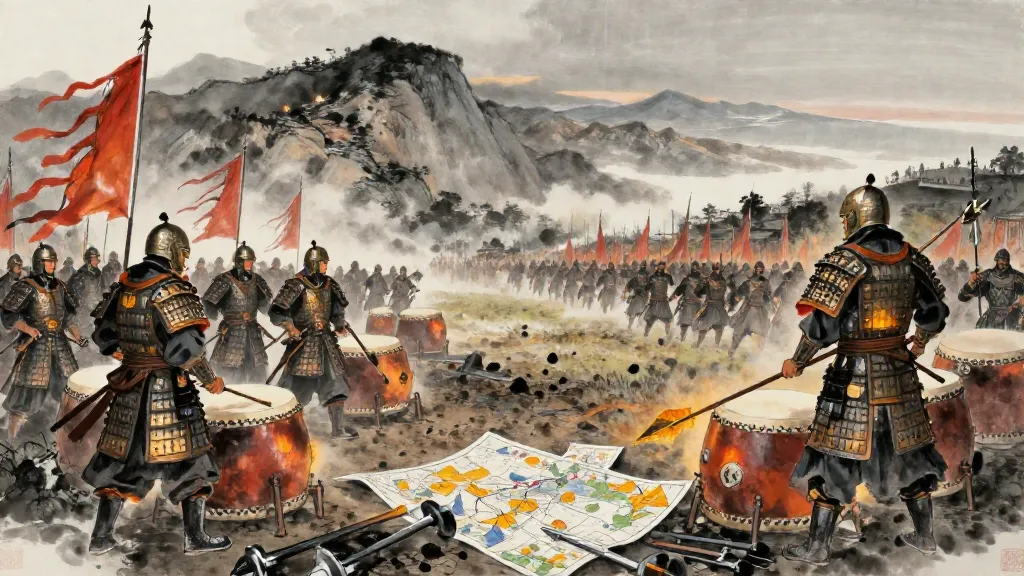
境內 (Within the Borders) — Chinese ink painting

商君書 Shangjunshu · Chapter 19

境內

Within the Borders

View:

民籍與庶子制

Population Registry and the Retainer System

四境之內,丈夫女子皆有名於上,生者著,死者削。

其有爵者乞無爵者以為庶子,級乞一人。其無役事也,其庶子役其大夫月六日;其役事也,隨而養之軍。

Within the four borders, every man and woman is registered with the authorities — the living are enrolled, the dead are removed.

Those who hold rank may claim those without rank as retainers — one retainer per rank level. When there is no military service, the retainer serves his master six days per month. When there is military service, the retainer accompanies and supports his master in the army.

Notes

1context

This chapter details the specific military rank system and reward structure of the Qin state under Shang Yang's reforms. It is the most administrative and technical chapter in the text, providing a detailed look at the twenty-level rank system (二十等爵) that became the foundation of Qin's meritocratic military order.

軍功爵制

The Military Merit Rank System

爵自一級已下至小夫,命曰校、徒、操,出公;爵自二級已上至不更,命曰卒。其戰也,五人來簿為伍,一人羽而輕其四人,能人得一首則復。夫勞爵,其縣過三日有不致士大夫勞爵,能。五人一屯長,百人一將。其戰,百將、屯長不得,斬首;得三十三首以上,盈論,百將、屯長賜爵一級。

五百主,短兵五十人;二五百主,將之主,短兵百。千石之令,短兵百人;八百之令,短兵八十人;七百之令,短兵七十人;六百之令,短兵六十人。國封尉,短兵千人。將,短兵四千人。

From rank one down to 'minor man,' the designations are 'school,' 'foot soldier,' and 'handler,' serving the duke. From rank two up to 'no-further-promotion,' the designation is 'soldier.' In battle, five men are registered together as a squad. If one distinguishes himself, the other four are penalized. Anyone who captures an enemy head is granted restoration. For merit-rank awards, if the county delays more than three days in conferring the ranks due to officers and grand officers — they are held accountable. Five men have one squad leader; a hundred men have one captain. In battle, if the captain and squad leaders fail to take heads, they are beheaded. If they take thirty-three heads or more, the quota is met, and the captain and squad leaders are each awarded one rank level.

A commander of five hundred has fifty close-combat troops. A commander of a thousand has the commander's own guard of a hundred close-combat troops. A magistrate of a thousand-shi district has a hundred close-combat troops; one of eight hundred shi has eighty; one of seven hundred has seventy; one of six hundred has sixty. A state-appointed commandant has a thousand close-combat troops. A general has four thousand close-combat troops.

爵賞田宅之制

The System of Rank Rewards in Fields and Housing

戰及死吏,而輕短兵,能一首則優。能攻城圍邑斬首八千已上,則盈論;野戰斬首二千,則盈論;吏自操及校以上大將盡賞。行間之吏也,故爵公士也,就為上造也;故爵上造,就為簪裊;就為不更;故爵為大夫。爵吏而為縣尉,則賜虜六,加五千六百。爵大夫而為國治,就為大夫;故爵大夫,就為公大夫;就為公乘;就為五大夫,則稅邑三百家。故爵五大夫;皆有賜邑三百家,有賜稅三百家。爵五大夫,有稅邑六百家者,受客。大將、御、參皆賜爵三級。故客卿相,論盈,就正卿。就為大庶長;故大庶長,就為左更;故四更也,就為大良造。

以戰故,暴首三,乃校,三日,將軍以不疑致士大夫勞爵。其縣四尉,訾由丞尉。

能得爵首一者,賞爵一級,益田一頃,益宅九畝,一除庶子一人,乃得人兵官之吏。

In battle, if an official dies in combat and the close-combat troops fail in their duties, anyone who takes a head receives distinction. In besieging a city and taking eight thousand or more heads, the quota is met. In field battle, taking two thousand heads meets the quota. Officials from handlers upward to the commanding general all receive rewards. For officers in the ranks: those previously holding the rank of 'ducal retainer' are promoted to 'superior maker'; those at 'superior maker' are promoted to 'hairpin and cap'; then to 'no-further-promotion'; then to 'grand officer.' An officer ranked grand officer serving as county commandant receives six captives plus a bonus of 5,600. A grand officer serving in state administration is promoted to grand officer; then to 'ducal grand officer'; then to 'ducal chariot rider'; then to 'fifth grand officer,' with a tax-fief of three hundred households. All those at the fifth grand officer rank receive a grant of three hundred households and a tax-fief of three hundred households. A fifth grand officer with a tax-fief of six hundred households may receive guests. The general, charioteer, and adjutant are each awarded three rank levels. A guest minister who fills the quota is promoted to chief minister. Promotion continues to 'great commoner chief'; then to 'left steward'; through the 'four stewards'; then to 'great superior maker.'

Due to battle, severed heads are displayed for three days, then verified. Within three days, the general must without delay confer the merit-ranks due to officers and grand officers. The county's four commandants are assessed by the vice-commandant.

Anyone who captures one enemy head is rewarded with one rank level, additional fields of one qing, additional housing of nine mu, the removal of one retainer from service obligation, and qualifies to be appointed as a military official.

Notes

1context

The twenty-level rank system (二十等爵) described here became the core institution of Qin's military meritocracy. The ranks mentioned — 公士 (ducal retainer), 上造 (superior maker), 簪裊 (hairpin and cap), 不更 (no-further-promotion), 大夫 (grand officer), 公大夫 (ducal grand officer), 公乘 (ducal chariot rider), 五大夫 (fifth grand officer), 大庶長 (great commoner chief), 左更 (left steward), 大良造 (great superior maker) — represent ascending levels with specific material rewards.

獄法與喪葬之制

Penal Law and Funeral Regulations

其獄法,高爵訾下爵級。高爵能,無給有爵人隸仆。爵自二級以上,有刑罪則貶。爵自一級以下,有刑罪則已。

小夫死,以上至大夫,其官級一等,其墓樹級一樹。

其攻城圍邑也,國司空訾其城之廣厚之數。國尉分地,以徒、校分積尺而攻之,為期,曰:"先已者當為最啟,後已者訾為最殿。再訾則廢。"內通則積薪,積薪則燔柱。陷隊之士,面十八人。陷隊之士,知疾斗,不得,斬首;隊五人,則陷隊之士,人賜爵一級;死,則一人後;不能死之,千人環,規諫,黥劓於城下。國尉分地,以中卒隨之。將軍為木壹,與國正監與王御史參望之。其先入者,舉為最啟;其後入者,舉為最殿。其陷隊也,盡其幾者;幾者不足,乃以欲級益之。

In penal law: higher-ranked may be assessed at a lower rank level. Higher-ranked persons of ability need not provide servants to those of rank. Those of rank two and above, if convicted of criminal offenses, are demoted. Those of rank one and below, if convicted, have their rank revoked entirely.

When a 'minor man' or above up to 'grand officer' dies, the burial grade corresponds to the official level — one rank, one tree at the tomb.

In besieging a city: the state Minister of Works assesses the dimensions of the city's walls — their breadth and thickness. The state Commandant divides the ground, and the foot soldiers and handlers are each assigned measured sections to attack within a deadline. The decree states: 'Those who finish first are rated highest achievement; those who finish last are rated lowest. Those rated lowest twice are dismissed.' Once a breach is opened, they pile up firewood; once firewood is piled, they burn the columns. The breach assault squad consists of eighteen men. The breach assault soldiers are to fight swiftly and fiercely. If they fail to take the breach, they are beheaded. If the squad of five men takes it, each breach assault soldier receives one rank level. If they die, one person carries on afterward. If they cannot take it at the cost of death, a thousand men surround them, admonish them, and brand and mutilate them beneath the city walls. The state Commandant divides the ground and follows up with the central troops. The general establishes the rallying standard, and together with the state Director and the King's Imperial Censor, they observe from three vantage points. Those who enter first are rated highest achievement; those who enter last are rated lowest. In the breach assault, they exhaust those near the quota; when the quota is not met, they supplement with rank-aspirants.

Edition & Source

Text
《商君書》 Shangjunshu
Edition
中華古詩文古書籍網 transcription
Commentary
Traditional commentaries