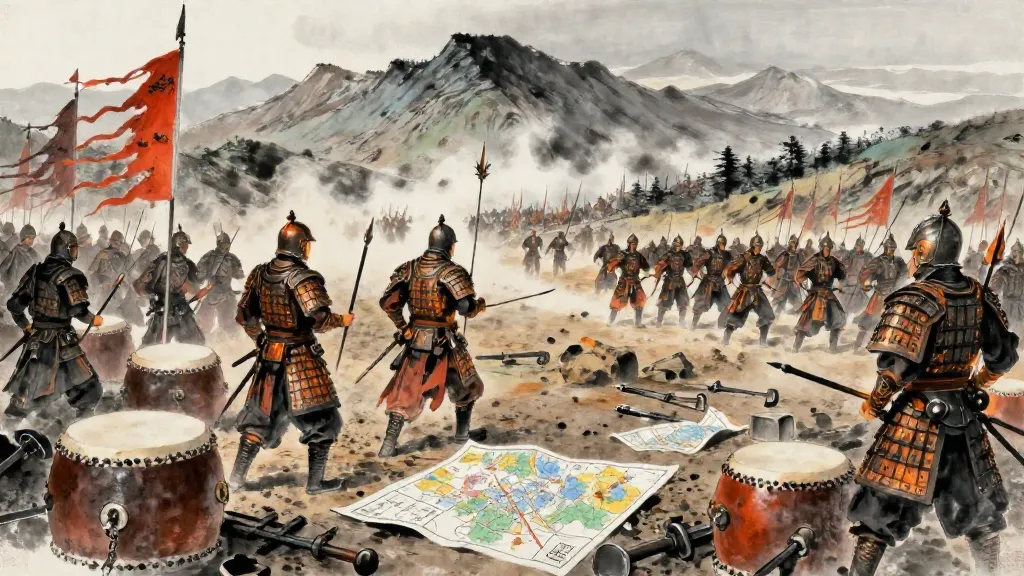
略甲諸法
Methods for Seizing Armored Forces
略甲之法,敵之人方陣□□無□....欲擊之,其勢不可,夫若此者,下之....以國章,欲戰若狂,夫昔此者,少陣....反,夫若此者,以眾卒從之,篡卒因之,必將....篡卒因之,必..左右旁伐以相趨,此謂鉤擊。..之氣不藏於心,三軍之眾□循之知不....將分□軍以修□□□□寡而民....威□□其難將之□也。分其眾,亂其....陣不厲,故列不....遠揄之,敵倦以遠....治,孤其將,盪其心,擊....其將勇,其卒眾....彼大眾將之....卒之道..
The method for seizing armored forces: when the enemy's men are in square formation [lacuna] ... if you wish to strike them but the strategic situation does not permit it, in such a case, [attack] below [...] using the state's banners — fight as though mad. In such a case, deploy a small formation [...] turn. In such a case, pursue with massed troops and follow up with elite troops; they must [...]. Follow up with elite troops; they must [...]. Strike from both flanks converging — this is called the hook strike. [...] The morale must not be hidden in the heart; the masses of the three armies [lacuna] know [...]. The general divides [lacuna] the army to deploy [lacuna] few, and the people [...]. Awe [lacuna] the difficulty of commanding [lacuna]. Divide his masses and disorder his [...]. The formation is not steeled, so the ranks do not [...]. Lure him from afar; when the enemy is exhausted from the distance [...]. Govern, isolate his general, shake his heart, strike [...]. His general is brave, his troops are numerous [...]. His great masses are commanded [...]. The way of troops [...].
Notes
This chapter is severely damaged, with much of the text lost from the bamboo strips. The surviving fragments describe methods for engaging armored (甲) enemy formations, including the 'hook strike' (鉤擊) — a pincer attack from both flanks — and the strategy of isolating and psychologically breaking the enemy general. The phrase 'fight as though mad' (欲戰若狂) suggests the use of berserker-like aggression to compensate for inferior position.