Thucydides · 4 chapters · 416–413 BC
Athens Devoured
Realism without restraint is indistinguishable from self-destruction — Athens' path from the Melian Dialogue to the Sicilian disaster is a straight line.
Commentary
In 416 BC, Athenian generals sat across from the Melian council and explained, with perfect lucidity, that the strong do what they can and the weak suffer what they must. It is the most famous sentence in the history of strategic thought. Three years later, the force that delivered that sentence was trapped in a harbor in Sicily, burning its own ships for timber, watching its navy disintegrate, and preparing for a retreat through mountain passes that would destroy the largest expeditionary force Athens had ever assembled.
The arc from Melos to Syracuse is not a story about fate punishing arrogance, though Thucydides allows that reading for those who need it. It is a story about the internal logic of unchecked realism. Once Athens had publicly declared that justice is irrelevant in power relationships, it had also declared something about itself — namely, that it would be governed entirely by appetite and opportunity. The Sicilian expedition followed that logic. Sicily was large, wealthy, and distant; Athens was powerful and idle; therefore, Athens should take Sicily. Nicias, who grasped the disaster waiting in the arithmetic, was overruled by Alcibiades, who was brilliant, ambitious, and had not yet defected to Sparta.
What Thucydides is tracing is not hubris but institutional decay: the progressive replacement of strategic judgment by strategic appetite, visible in the assembly's vote to expand the expedition mid-campaign, in the recall of Alcibiades that left the force without its best commander, and in the final, hallucinatory decision to fight a naval engagement in a confined harbor where Athenian seamanship was negated. The Melians predicted it. Athens could not hear them.
Chapters in this Arc
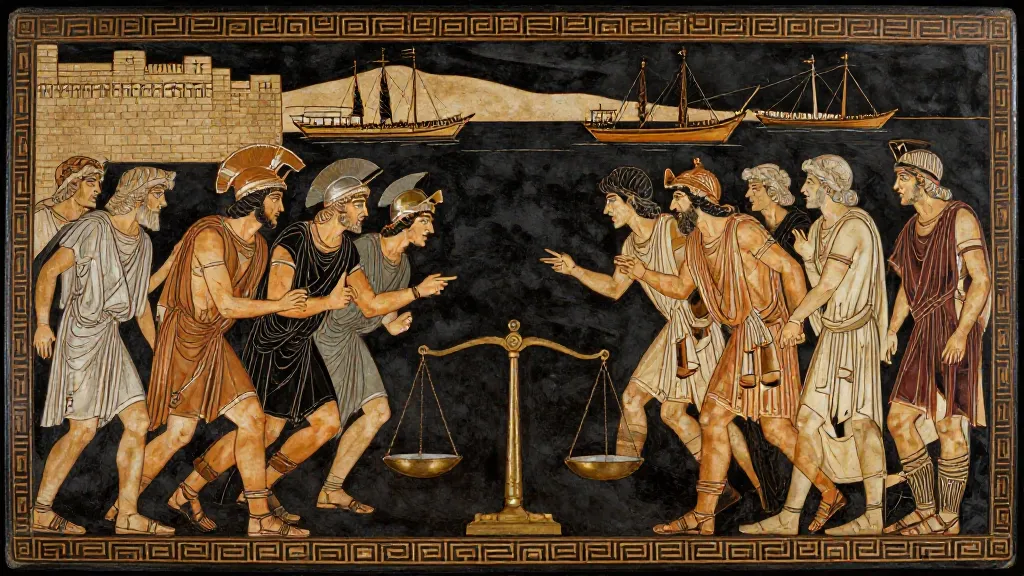
Athenian envoys articulate pure power-realism to the Melian council: justice is a constraint only among equals, and Athens and Melos are not equals.
Athens votes to invade Sicily on intelligence supplied by Egesta's theatrical gold plate, against Nicias's detailed arithmetic of catastrophe, driven by Alcibiades' rhetoric of limitless ambition.
Alcibiades defects to Sparta and reveals Athens' secret strategic ambitions — Sicily, Italy, Carthage, then the Peloponnese — while advising Sparta on the single move that will cripple Athens: fortifying Decelea.
The Athenian force attempts a land retreat after naval defeat; Nicias and Demosthenes are captured and executed; 7,000 survivors are worked to death in the Syracusan stone quarries.