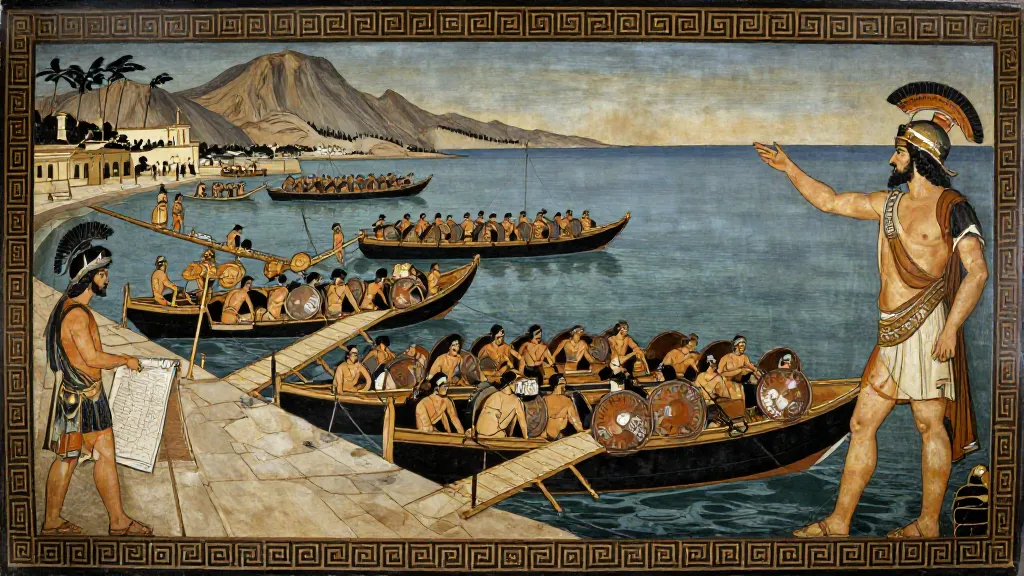
The Sicilian Expedition — Attic red-figure pottery painting

Thucydides · Book VI, Chapters 1–32

The Sicilian Expedition

Σικελικὴ Ἐκστρατεία

5,692 words · 966 unique lemmas

View:

Hover over any Greek word for its dictionary form and definition

τοῦ δ᾽ αὐτοῦ χειμῶνος Ἀθηναῖοι ἐβούλοντο αὖθις μείζονι παρασκευῇ τῆς μετὰ Λάχητος καὶ Εὐρυμέδοντος ἐπὶ Σικελίαν πλεύσαντες καταστρέψασθαι εἰ δύναιντο ἄπειροι οἱ πολλοὶ ὄντες τοῦ μεγέθους τῆς νήσου καὶ τῶν ἐνοικούντων τοῦ πλήθους καὶ Ἑλλήνων καὶ βαρβάρων καὶ ὅτι οὐ πολλῷ τινὶ ὑποδεέστερον πόλεμον ἀνῃροῦντο τὸν πρὸς Πελοποννησίους [ ] Σικελίας γὰρ περίπλους μέν ἐστιν ὁλκάδι οὐ πολλῷ τινὶ ἔλασσον ὀκτὼ ἡμερῶν καὶ τοσαύτη οὖσα ἐν εἰκοσισταδίῳ μάλιστα μέτρῳ τῆς θαλάσσης διείργεται τὸ μὴ ἤπειρος εἶναι

ᾠκίσθη δὲ ὧδε τὸ ἀρχαῖον καὶ τοσάδε ἔθνη ἔσχε τὰ ξύμπαντα παλαίτατοι μὲν λέγονται ἐν μέρει τινὶ τῆς χώρας Κύκλωπες καὶ Λαιστρυγόνες οἰκῆσαι ὧν ἐγὼ οὔτε γένος ἔχω εἰπεῖν οὔτε ὁπόθεν ἐσῆλθον ὅποι ἀπεχώρησαν ἀρκείτω δὲ ὡς ποιηταῖς τε εἴρηται καὶ ὡς ἕκαστός πῃ γιγνώσκει περὶ αὐτῶν [ ] Σικανοὶ δὲ μετ᾽ αὐτοὺς πρῶτοι φαίνονται ἐνοικισάμενοι ὡς μὲν αὐτοί φασι καὶ πρότεροι διὰ τὸ αὐτόχθονες εἶναι ὡς δὲ ἀλήθεια εὑρίσκεται Ἴβηρες ὄντες καὶ ἀπὸ τοῦ Σικανοῦ ποταμοῦ τοῦ ἐν Ἰβηρίᾳ ὑπὸ Λιγύων ἀναστάντες καὶ ἀπ᾽ αὐτῶν Σικανία τότε νῆσος ἐκαλεῖτο πρότερον Τρινακρία καλουμένη οἰκοῦσι δὲ ἔτι καὶ νῦν τὰ πρὸς ἑσπέραν τὴν Σικελίαν [ ] Ἰλίου δὲ ἁλισκομένου τῶν Τρώων τινὲς διαφυγόντες Ἀχαιοὺς πλοίοις ἀφικνοῦνται πρὸς τὴν Σικελίαν καὶ ὅμοροι τοῖς Σικανοῖς οἰκήσαντες ξύμπαντες μὲν Ἔλυμοι ἐκλήθησαν πόλεις δ᾽ αὐτῶν Ἔρυξ τε καὶ Ἔγεστα προσξυνῴκησαν δὲ αὐτοῖς καὶ Φωκέων τινὲς τῶν ἀπὸ Τροίας τότε χειμῶνι ἐς Λιβύην πρῶτον ἔπειτα ἐς Σικελίαν ἀπ᾽ αὐτῆς κατενεχθέντες [ ] Σικελοὶ δ᾽ ἐξ Ἰταλίας ἐνταῦθα γὰρ ᾤκουν διέβησαν ἐς Σικελίαν φεύγοντες Ὀπικούς ὡς μὲν εἰκὸς καὶ λέγεται ἐπὶ σχεδιῶν τηρήσαντες τὸν πορθμὸν κατιόντος τοῦ ἀνέμου τάχα ἂν δὲ καὶ ἄλλως πως ἐσπλεύσαντες εἰσὶ δὲ καὶ νῦν ἔτι ἐν τῇ Ἰταλίᾳ Σικελοί καὶ χώρα ἀπὸ Ἰταλοῦ βασιλέως τινὸς Σικελῶν τοὔνομα τοῦτο ἔχοντος οὕτως Ἰταλία ἐπωνομάσθη [ ] ἐλθόντες δὲ ἐς τὴν Σικελίαν στρατὸς πολὺς τούς τε Σικανοὺς κρατοῦντες μάχῃ ἀνέστειλαν πρὸς τὰ μεσημβρινὰ καὶ ἑσπέρια αὐτῆς καὶ ἀντὶ Σικανίας Σικελίαν τὴν νῆσον ἐποίησαν καλεῖσθαι καὶ τὰ κράτιστα τῆς γῆς ᾤκησαν ἔχοντες ἐπεὶ διέβησαν ἔτη ἐγγὺς τριακόσια πρὶν Ἕλληνας ἐς Σικελίαν ἐλθεῖν ἔτι δὲ καὶ νῦν τὰ μέσα καὶ τὰ πρὸς βορρᾶν τῆς νήσου ἔχουσιν [ ] ᾤκουν δὲ καὶ Φοίνικες περὶ πᾶσαν μὲν τὴν Σικελίαν ἄκρας τε ἐπὶ τῇ θαλάσσῃ ἀπολαβόντες καὶ τὰ ἐπικείμενα νησίδια ἐμπορίας ἕνεκεν τῆς πρὸς τοὺς Σικελούς ἐπειδὴ δὲ οἱ Ἕλληνες πολλοὶ κατὰ θάλασσαν ἐπεσέπλεον ἐκλιπόντες τὰ πλείω Μοτύην καὶ Σολόεντα καὶ Πάνορμον ἐγγὺς τῶν Ἐλύμων ξυνοικήσαντες ἐνέμοντο ξυμμαχίᾳ τε πίσυνοι τῇ τῶν Ἐλύμων καὶ ὅτι ἐντεῦθεν ἐλάχιστον πλοῦν Καρχηδὼν Σικελίας ἀπέχει βάρβαροι μὲν οὖν τοσοίδε Σικελίαν καὶ οὕτως ᾤκησαν

Ἑλλήνων δὲ πρῶτοι Χαλκιδῆς ἐξ Εὐβοίας πλεύσαντες μετὰ Θουκλέους οἰκιστοῦ Νάξον ᾤκισαν καὶ Ἀπόλλωνος Ἀρχηγέτου βωμὸν ὅστις νῦν ἔξω τῆς πόλεώς ἐστιν ἱδρύσαντο ἐφ᾽ ὅταν ἐκ Σικελίας θεωροὶ πλέωσι πρῶτον θύουσιν [ ] Συρακούσας δὲ τοῦ ἐχομένου ἔτους Ἀρχίας τῶν Ἡρακλειδῶν ἐκ Κορίνθου ᾤκισε Σικελοὺς ἐξελάσας πρῶτον ἐκ τῆς νήσου ἐν νῦν οὐκέτι περικλυζομένῃ πόλις ἐντός ἐστιν ὕστερον δὲ χρόνῳ καὶ ἔξω προστειχισθεῖσα πολυάνθρωπος ἐγένετο [ ] Θουκλῆς δὲ καὶ οἱ Χαλκιδῆς ἐκ Νάξου ὁρμηθέντες ἔτει πέμπτῳ μετὰ Συρακούσας οἰκισθείσας Λεοντίνους τε πολέμῳ τοὺς Σικελοὺς ἐξελάσαντες οἰκίζουσι καὶ μετ᾽ αὐτοὺς Κατάνην οἰκιστὴν δὲ αὐτοὶ Καταναῖοι ἐποιήσαντο Εὔαρχον

κατὰ δὲ τὸν αὐτὸν χρόνον καὶ Λάμις ἐκ Μεγάρων ἀποικίαν ἄγων ἐς Σικελίαν ἀφίκετο καὶ ὑπὲρ Παντακύου τε ποταμοῦ Τρώτιλόν τι ὄνομα χωρίον οἰκίσας καὶ ὕστερον αὐτόθεν τοῖς Χαλκιδεῦσιν ἐς Λεοντίνους ὀλίγον χρόνον ξυμπολιτεύσας καὶ ὑπὸ αὐτῶν ἐκπεσὼν καὶ Θάψον οἰκίσας αὐτὸς μὲν ἀποθνῄσκει οἱ δ᾽ ἄλλοι ἐκ τῆς Θάψου ἀναστάντες Ὕβλωνος βασιλέως Σικελοῦ προδόντος τὴν χώραν καὶ καθηγησαμένου Μεγαρέας ᾤκισαν τοὺς Ὑβλαίους κληθέντας [ ] καὶ ἔτη οἰκήσαντες πέντε καὶ τεσσαράκοντα καὶ διακόσια ὑπὸ Γέλωνος τυράννου Συρακοσίων ἀνέστησαν ἐκ τῆς πόλεως καὶ χώρας πρὶν δὲ ἀναστῆναι ἔτεσιν ὕστερον ἑκατὸν αὐτοὺς οἰκίσαι Πάμιλλον πέμψαντες Σελινοῦντα κτίζουσι καὶ ἐκ Μεγάρων τῆς μητροπόλεως οὔσης αὐτοῖς ἐπελθὼν ξυγκατῴκισεν [ ] Γέλαν δὲ Ἀντίφημος ἐκ Ῥόδου καὶ Ἔντιμος ἐκ Κρήτης ἐποίκους ἀγαγόντες κοινῇ ἔκτισαν ἔτει πέμπτῳ καὶ τεσσαρακοστῷ μετὰ Συρακουσῶν οἴκισιν καὶ τῇ μὲν πόλει ἀπὸ τοῦ Γέλα ποταμοῦ τοὔνομα ἐγένετο τὸ δὲ χωρίον οὗ νῦν πόλις ἐστὶ καὶ πρῶτον ἐτειχίσθη Λίνδιοι καλεῖται νόμιμα δὲ Δωρικὰ ἐτέθη αὐτοῖς [ ] ἔτεσι δὲ ἐγγύτατα ὀκτὼ καὶ ἑκατὸν μετὰ τὴν σφετέραν οἴκισιν Γελῷοι Ἀκράγαντα ᾤκισαν τὴν μὲν πόλιν ἀπὸ τοῦ Ἀκράγαντος ποταμοῦ ὀνομάσαντες οἰκιστὰς δὲ ποιήσαντες Ἀριστόνουν καὶ Πυστίλον νόμιμα δὲ τὰ Γελῴων δόντες [ ] Ζάγκλη δὲ τὴν μὲν ἀρχὴν ἀπὸ Κύμης τῆς ἐν Ὀπικίᾳ Χαλκιδικῆς πόλεως λῃστῶν ἀφικομένων ᾠκίσθη ὕστερον δὲ καὶ ἀπὸ Χαλκίδος καὶ τῆς ἄλλης Εὐβοίας πλῆθος ἐλθὸν ξυγκατενείμαντο τὴν γῆν καὶ οἰκισταὶ Περιήρης καὶ Κραταιμένης ἐγένοντο αὐτῆς μὲν ἀπὸ Κύμης δὲ ἀπὸ Χαλκίδος ὄνομα δὲ τὸ μὲν πρῶτον Ζάγκλη ἦν ὑπὸ τῶν Σικελῶν κληθεῖσα ὅτι δρεπανοειδὲς τὴν ἰδέαν τὸ χωρίον ἐστί τὸ δὲ δρέπανον οἱ Σικελοὶ ζάγκλον καλοῦσιν ὕστερον δ᾽ αὐτοὶ μὲν ὑπὸ Σαμίων καὶ ἄλλων Ἰώνων ἐκπίπτουσιν οἳ Μήδους φεύγοντες προσέβαλον Σικελίᾳ [ ] τοὺς δὲ Σαμίους Ἀναξίλας Ῥηγίνων τύραννος οὐ πολλῷ ὕστερον ἐκβαλὼν καὶ τὴν πόλιν αὐτὸς ξυμμείκτων ἀνθρώπων οἰκίσας Μεσσήνην ἀπὸ τῆς ἑαυτοῦ τὸ ἀρχαῖον πατρίδος ἀντωνόμασεν

καὶ Ἱμέρα ἀπὸ Ζάγκλης ᾠκίσθη ὑπὸ Εὐκλείδου καὶ Σίμου καὶ Σάκωνος καὶ Χαλκιδῆς μὲν οἱ πλεῖστοι ἦλθον ἐς τὴν ἀποικίαν ξυνῴκισαν δὲ αὐτοῖς καὶ ἐκ Συρακουσῶν φυγάδες στάσει νικηθέντες οἱ Μυλητίδαι καλούμενοι καὶ φωνὴ μὲν μεταξὺ τῆς τε Χαλκιδέων καὶ Δωρίδος ἐκράθη νόμιμα δὲ τὰ Χαλκιδικὰ ἐκράτησεν [ ] Ἄκραι δὲ καὶ Κασμέναι ὑπὸ Συρακοσίων ᾠκίσθησαν Ἄκραι μὲν ἑβδομήκοντα ἔτεσι μετὰ Συρακούσας Κασμέναι δ᾽ ἐγγὺς εἴκοσι μετὰ Ἄκρας [ ] καὶ Καμάρινα τὸ πρῶτον ὑπὸ Συρακοσίων ᾠκίσθη ἔτεσιν ἐγγύτατα πέντε καὶ τριάκοντα καὶ ἑκατὸν μετὰ Συρακουσῶν κτίσιν οἰκισταὶ δὲ ἐγένοντο αὐτῆς Δάσκων καὶ Μενέκωλος ἀναστάτων δὲ Καμαριναίων γενομένων πολέμῳ ὑπὸ Συρακοσίων δι᾽ ἀπόστασιν χρόνῳ Ἱπποκράτης ὕστερον Γέλας τύραννος λύτρα ἀνδρῶν Συρακοσίων αἰχμαλώτων λαβὼν τὴν γῆν τὴν Καμαριναίων αὐτὸς οἰκιστὴς γενόμενος κατῴκισε Καμάριναν καὶ αὖθις ὑπὸ Γέλωνος ἀνάστατος γενομένη τὸ τρίτον κατῳκίσθη ὑπὸ Γελῴων

τοσαῦτα ἔθνη Ἑλλήνων καὶ βαρβάρων Σικελίαν ᾤκει καὶ ἐπὶ τοσήνδε οὖσαν αὐτὴν οἱ Ἀθηναῖοι στρατεύειν ὥρμηντο ἐφιέμενοι μὲν τῇ ἀληθεστάτῃ προφάσει τῆς πάσης ἄρξαι βοηθεῖν δὲ ἅμα εὐπρεπῶς βουλόμενοι τοῖς ἑαυτῶν ξυγγενέσι καὶ τοῖς προσγεγενημένοις ξυμμάχοις [ ] μάλιστα δ᾽ αὐτοὺς ἐξώρμησαν Ἐγεσταίων [τε] πρέσβεις παρόντες καὶ προθυμότερον ἐπικαλούμενοι ὅμοροι γὰρ ὄντες τοῖς Σελινουντίοις ἐς πόλεμον καθέστασαν περί τε γαμικῶν τινῶν καὶ περὶ γῆς ἀμφισβητήτου καὶ οἱ Σελινούντιοι Συρακοσίους ἐπαγόμενοι ξυμμάχους κατεῖργον αὐτοὺς τῷ πολέμῳ καὶ κατὰ γῆν καὶ κατὰ θάλασσαν ὥστε τὴν γενομένην ἐπὶ Λάχητος καὶ τοῦ προτέρου πολέμου Λεοντίνων οἱ Ἐγεσταῖοι ξυμμαχίαν ἀναμιμνῄσκοντες τοὺς Ἀθηναίους ἐδέοντο σφίσι ναῦς πέμψαντας ἐπαμῦναι λέγοντες ἄλλα τε πολλὰ καὶ κεφάλαιον εἰ Συρακόσιοι Λεοντίνους τε ἀναστήσαντες ἀτιμώρητοι γενήσονται καὶ τοὺς λοιποὺς ἔτι ξυμμάχους αὐτῶν διαφθείροντες αὐτοὶ τὴν ἅπασαν δύναμιν τῆς Σικελίας σχήσουσι κίνδυνον εἶναι μή ποτε μεγάλῃ παρασκευῇ Δωριῆς τε Δωριεῦσι κατὰ τὸ ξυγγενὲς καὶ ἅμα ἄποικοι τοῖς ἐκπέμψασι Πελοποννησίοις βοηθήσαντες καὶ τὴν ἐκείνων δύναμιν ξυγκαθέλωσιν σῶφρον δ᾽ εἶναι μετὰ τῶν ὑπολοίπων ἔτι ξυμμάχων ἀντέχειν τοῖς Συρακοσίοις ἄλλως τε καὶ χρήματα σφῶν παρεξόντων ἐς τὸν πόλεμον ἱκανά [ ] ὧν ἀκούοντες οἱ Ἀθηναῖοι ἐν ταῖς ἐκκλησίαις τῶν τε Ἐγεσταίων πολλάκις λεγόντων καὶ τῶν ξυναγορευόντων αὐτοῖς ἐψηφίσαντο πρέσβεις πέμψαι πρῶτον ἐς τὴν Ἔγεσταν περί τε τῶν χρημάτων σκεψομένους εἰ ὑπάρχει ὥσπερ φασίν ἐν τῷ κοινῷ καὶ ἐν τοῖς ἱεροῖς καὶ τὰ τοῦ πολέμου ἅμα πρὸς τοὺς Σελινουντίους ἐν ὅτῳ ἐστὶν εἰσομένους

καὶ οἱ μὲν πρέσβεις τῶν Ἀθηναίων ἀπεστάλησαν ἐς τὴν Σικελίαν Λακεδαιμόνιοι δὲ τοῦ αὐτοῦ χειμῶνος καὶ οἱ ξύμμαχοι πλὴν Κορινθίων στρατεύσαντες ἐς τὴν Ἀργείαν τῆς τε γῆς ἔτεμον οὐ πολλὴν καὶ σῖτον ἀνεκομίσαντό τινα ζεύγη κομίσαντες καὶ ἐς Ὀρνεὰς κατοικίσαντες τοὺς Ἀργείων φυγάδας καὶ τῆς ἄλλης στρατιᾶς παρακαταλιπόντες αὐτοῖς ὀλίγους καὶ σπεισάμενοί τινα χρόνον ὥστε μὴ ἀδικεῖν Ὀρνεάτας καὶ Ἀργείους τὴν ἀλλήλων ἀπεχώρησαν τῷ στρατῷ ἐπ᾽ οἴκου [ ] ἐλθόντων δὲ Ἀθηναίων οὐ πολλῷ ὕστερον ναυσὶ τριάκοντα καὶ ἑξακοσίοις ὁπλίταις οἱ Ἀργεῖοι μετὰ τῶν Ἀθηναίων πανστρατιᾷ ἐξελθόντες τοὺς μὲν ἐν Ὀρνεαῖς μίαν ἡμέραν ἐπολιόρκουν ὑπὸ δὲ νύκτα αὐλισαμένου τοῦ στρατεύματος ἄπωθεν ἐκδιδράσκουσιν οἱ ἐκ τῶν Ὀρνεῶν καὶ τῇ ὑστεραίᾳ οἱ Ἀργεῖοι ὡς ᾔσθοντο κατασκάψαντες τὰς Ὀρνεὰς ἀνεχώρησαν καὶ οἱ Ἀθηναῖοι ὕστερον ταῖς ναυσὶν ἐπ᾽ οἴκου [ ] καὶ ἐς Μεθώνην τὴν ὅμορον Μακεδονίᾳ ἱππέας κατὰ θάλασσαν κομίσαντες Ἀθηναῖοι σφῶν τε αὐτῶν καὶ Μακεδόνων τοὺς παρὰ σφίσι φυγάδας ἐκακούργουν τὴν Περδίκκου [ ] Λακεδαιμόνιοι δὲ πέμψαντες παρὰ Χαλκιδέας τοὺς ἐπὶ Θρᾴκης ἄγοντας πρὸς Ἀθηναίους δεχημέρους σπονδάς ξυμπολεμεῖν ἐκέλευον Περδίκκᾳ οἱ δ᾽ οὐκ ἤθελον καὶ χειμὼν ἐτελεύτα καὶ ἕκτον καὶ δέκατον ἔτος ἐτελεύτα τῷ πολέμῳ τῷδε ὃν Θουκυδίδης ξυνέγραψεν

τοῦ δ᾽ ἐπιγιγνομένου θέρους ἅμα ἦρι οἱ τῶν Ἀθηναίων πρέσβεις ἧκον ἐκ τῆς Σικελίας καὶ οἱ Ἐγεσταῖοι μετ᾽ αὐτῶν ἄγοντες ἑξήκοντα τάλαντα ἀσήμου ἀργυρίου ὡς ἐς ἑξήκοντα ναῦς μηνὸς μισθόν ἃς ἔμελλον δεήσεσθαι πέμπειν [ ] καὶ οἱ Ἀθηναῖοι ἐκκλησίαν ποιήσαντες καὶ ἀκούσαντες τῶν τε Ἐγεσταίων καὶ τῶν σφετέρων πρέσβεων τά τε ἄλλα ἐπαγωγὰ καὶ οὐκ ἀληθῆ καὶ περὶ τῶν χρημάτων ὡς εἴη ἑτοῖμα ἔν τε τοῖς ἱεροῖς πολλὰ καὶ ἐν τῷ κοινῷ ἐψηφίσαντο ναῦς ἑξήκοντα πέμπειν ἐς Σικελίαν καὶ στρατηγοὺς αὐτοκράτορας Ἀλκιβιάδην τε τὸν Κλεινίου καὶ Νικίαν τὸν Νικηράτου καὶ Λάμαχον τὸν Ξενοφάνους βοηθοὺς μὲν Ἐγεσταίοις πρὸς Σελινουντίους ξυγκατοικίσαι δὲ καὶ Λεοντίνους ἤν τι περιγίγνηται αὐτοῖς τοῦ πολέμου καὶ τἆλλα τὰ ἐν τῇ Σικελίᾳ πρᾶξαι ὅπῃ ἂν γιγνώσκωσιν ἄριστα Ἀθηναίοις [ ] μετὰ δὲ τοῦτο ἡμέρᾳ πέμπτῃ ἐκκλησία αὖθις ἐγίγνετο καθ᾽ ὅτι χρὴ τὴν παρασκευὴν ταῖς ναυσὶ τάχιστα γίγνεσθαι καὶ τοῖς στρατηγοῖς εἴ του προσδέοιντο ψηφισθῆναι ἐς τὸν ἔκπλουν [ ] καὶ Νικίας ἀκούσιος μὲν ᾑρημένος ἄρχειν νομίζων δὲ τὴν πόλιν οὐκ ὀρθῶς βεβουλεῦσθαι ἀλλὰ προφάσει βραχείᾳ καὶ εὐπρεπεῖ τῆς Σικελίας ἁπάσης μεγάλου ἔργου ἐφίεσθαι παρελθὼν ἀποτρέψαι ἐβούλετο καὶ παρῄνει τοῖς Ἀθηναίοις τοιάδε

μὲν ἐκκλησία περὶ παρασκευῆς τῆς ἡμετέρας ἥδε ξυνελέγη καθ᾽ ὅτι χρὴ ἐς Σικελίαν ἐκπλεῖν ἐμοὶ μέντοι δοκεῖ καὶ περὶ αὐτοῦ τούτου ἔτι χρῆναι σκέψασθαι εἰ ἄμεινόν ἐστιν ἐκπέμπειν τὰς ναῦς καὶ μὴ οὕτω βραχείᾳ βουλῇ περὶ μεγάλων πραγμάτων ἀνδράσιν ἀλλοφύλοις πειθομένους πόλεμον οὐ προσήκοντα ἄρασθαι [ ] καίτοι ἔγωγε καὶ τιμῶμαι ἐκ τοῦ τοιούτου καὶ ἧσσον ἑτέρων περὶ τῷ ἐμαυτοῦ σώματι ὀρρωδῶ νομίζων ὁμοίως ἀγαθὸν πολίτην εἶναι ὃς ἂν καὶ τοῦ σώματός τι καὶ τῆς οὐσίας προνοῆται μάλιστα γὰρ ἂν τοιοῦτος καὶ τὰ τῆς πόλεως δι᾽ ἑαυτὸν βούλοιτο ὀρθοῦσθαι ὅμως δὲ οὔτε ἐν τῷ πρότερον χρόνῳ διὰ τὸ προτιμᾶσθαι εἶπον παρὰ γνώμην οὔτε νῦν ἀλλὰ ἂν γιγνώσκω βέλτιστα ἐρῶ [ ] καὶ πρὸς μὲν τοὺς τρόπους τοὺς ὑμετέρους ἀσθενὴς ἄν μου λόγος εἴη εἰ τά τε ὑπάρχοντα σῴζειν παραινοίην καὶ μὴ τοῖς ἑτοίμοις περὶ τῶν ἀφανῶν καὶ μελλόντων κινδυνεύειν ὡς δὲ οὔτε ἐν καιρῷ σπεύδετε οὔτε ῥᾴδιά ἐστι κατασχεῖν ἐφ᾽ ὥρμησθε ταῦτα διδάξω

φημὶ γὰρ ὑμᾶς πολεμίους πολλοὺς ἐνθάδε ὑπολιπόντας καὶ ἑτέρους ἐπιθυμεῖν ἐκεῖσε πλεύσαντας δεῦρο ἐπαγαγέσθαι [ ] καὶ οἴεσθε ἴσως τὰς γενομένας ὑμῖν σπονδὰς ἔχειν τι βέβαιον αἳ ἡσυχαζόντων μὲν ὑμῶν ὀνόματι σπονδαὶ ἔσονται οὕτω γὰρ ἐνθένδε τε ἄνδρες ἔπραξαν αὐτὰ καὶ ἐκ τῶν ἐναντίων σφαλέντων δέ που ἀξιόχρεῳ δυνάμει ταχεῖαν τὴν ἐπιχείρησιν ἡμῖν οἱ ἐχθροὶ ποιήσονται οἷς πρῶτον μὲν διὰ ξυμφορῶν ξύμβασις καὶ ἐκ τοῦ αἰσχίονος ἡμῖν κατ᾽ ἀνάγκην ἐγένετο ἔπειτα ἐν αὐτῇ ταύτῃ πολλὰ τὰ ἀμφισβητούμενα ἔχομεν [ ] εἰσὶ δ᾽ οἳ οὐδὲ ταύτην πω τὴν ὁμολογίαν ἐδέξαντο καὶ οὐχ οἱ ἀσθενέστατοι ἀλλ᾽ οἱ μὲν ἄντικρυς πολεμοῦσιν οἱ δὲ καὶ διὰ τὸ Λακεδαιμονίους ἔτι ἡσυχάζειν δεχημέροις σπονδαῖς καὶ αὐτοὶ κατέχονται [ ] τάχα δ᾽ ἂν ἴσως εἰ δίχα ἡμῶν τὴν δύναμιν λάβοιεν ὅπερ νῦν σπεύδομεν καὶ πάνυ ἂν ξυνεπιθοῖντο μετὰ Σικελιωτῶν οὓς πρὸ πολλῶν ἂν ἐτιμήσαντο ξυμμάχους γενέσθαι ἐν τῷ πρὶν χρόνῳ [ ] ὥστε χρὴ σκοπεῖν τινὰ αὐτὰ καὶ μὴ μετεώρῳ τε τῇ πόλει ἀξιοῦν κινδυνεύειν καὶ ἀρχῆς ἄλλης ὀρέγεσθαι πρὶν ἣν ἔχομεν βεβαιωσώμεθα εἰ Χαλκιδῆς γε οἱ ἐπὶ Θρᾴκης ἔτη τοσαῦτα ἀφεστῶτες ἀφ᾽ ἡμῶν ἔτι ἀχείρωτοί εἰσι καὶ ἄλλοι τινὲς κατὰ τὰς ἠπείρους ἐνδοιαστῶς ἀκροῶνται ἡμεῖς δὲ Ἐγεσταίοις δὴ οὖσι ξυμμάχοις ὡς ἀδικουμένοις ὀξέως βοηθοῦμεν ὑφ᾽ ὧν δ᾽ αὐτοὶ πάλαι ἀφεστώτων ἀδικούμεθα ἔτι μέλλομεν ἀμύνεσθαι

καίτοι τοὺς μὲν κατεργασάμενοι κἂν κατάσχοιμεν τῶν δ᾽ εἰ καὶ κρατήσαιμεν διὰ πολλοῦ γε καὶ πολλῶν ὄντων χαλεπῶς ἂν ἄρχειν δυναίμεθα ἀνόητον δ᾽ ἐπὶ τοιούτους ἰέναι ὧν κρατήσας τε μὴ κατασχήσει τις καὶ μὴ κατορθώσας μὴ ἐν τῷ ὁμοίῳ καὶ πρὶν ἐπιχειρῆσαι ἔσται [ ] Σικελιῶται δ᾽ ἄν μοι δοκοῦσιν ὥς γε νῦν ἔχουσι καὶ ἔτι ἂν ἧσσον δεινοὶ ἡμῖν γενέσθαι εἰ ἄρξειαν αὐτῶν Συρακόσιοι ὅπερ οἱ Ἐγεσταῖοι μάλιστα ἡμᾶς ἐκφοβοῦσιν [ ] νῦν μὲν γὰρ κἂν ἔλθοιεν ἴσως Λακεδαιμονίων ἕκαστοι χάριτι ἐκείνως δ᾽ οὐκ εἰκὸς ἀρχὴν ἐπὶ ἀρχὴν στρατεῦσαι γὰρ ἂν τρόπῳ τὴν ἡμετέραν μετὰ Πελοποννησίων ἀφέλωνται εἰκὸς ὑπὸ τῶν αὐτῶν καὶ τὴν σφετέραν διὰ τοῦ αὐτοῦ καθαιρεθῆναι [ ] ἡμᾶς δ᾽ ἂν οἱ ἐκεῖ Ἕλληνες μάλιστα μὲν ἐκπεπληγμένοι εἶεν εἰ μὴ ἀφικοίμεθα ἔπειτα δὲ καὶ εἰ δείξαντες τὴν δύναμιν δι᾽ ὀλίγου ἀπέλθοιμεν τὰ γὰρ διὰ πλείστου πάντες ἴσμεν θαυμαζόμενα καὶ τὰ πεῖραν ἥκιστα τῆς δόξης δόντα εἰ δὲ σφαλείημέν τι τάχιστ᾽ ἂν ὑπεριδόντες μετὰ τῶν ἐνθάδε ἐπιθοῖντο [ ] ὅπερ νῦν ὑμεῖς Ἀθηναῖοι ἐς Λακεδαιμονίους καὶ τοὺς ξυμμάχους πεπόνθατε διὰ τὸ παρὰ γνώμην αὐτῶν πρὸς ἐφοβεῖσθε τὸ πρῶτον περιγεγενῆσθαι καταφρονήσαντες ἤδη καὶ Σικελίας ἐφίεσθε [ ] χρὴ δὲ μὴ πρὸς τὰς τύχας τῶν ἐναντίων ἐπαίρεσθαι ἀλλὰ τὰς διανοίας κρατήσαντας θαρσεῖν μηδὲ Λακεδαιμονίους ἄλλο τι ἡγήσασθαι διὰ τὸ αἰσχρὸν σκοπεῖν ὅτῳ τρόπῳ ἔτι καὶ νῦν ἢν δύνωνται σφήλαντες ἡμᾶς τὸ σφέτερον ἀπρεπὲς εὖ θήσονται ὅσῳ καὶ περὶ πλείστου καὶ διὰ πλείστου δόξαν ἀρετῆς μελετῶσιν [ ] ὥστε οὐ περὶ τῶν ἐν Σικελίᾳ Ἐγεσταίων ἡμῖν ἀνδρῶν βαρβάρων ἀγών εἰ σωφρονοῦμεν ἀλλ᾽ ὅπως πόλιν δι᾽ ὀλιγαρχίας ἐπιβουλεύουσαν ὀξέως φυλαξόμεθα

καὶ μεμνῆσθαι χρὴ ἡμᾶς ὅτι νεωστὶ ἀπὸ νόσου μεγάλης καὶ πολέμου βραχύ τι λελωφήκαμεν ὥστε καὶ χρήμασι καὶ τοῖς σώμασιν ηὐξῆσθαι καὶ ταῦτα ὑπὲρ ἡμῶν δίκαιον ἐνθάδε εἶναι ἀναλοῦν καὶ μὴ ὑπὲρ ἀνδρῶν φυγάδων τῶνδε ἐπικουρίας δεομένων οἷς τό τε ψεύσασθαι καλῶς χρήσιμον καὶ τῷ τοῦ πέλας κινδύνῳ αὐτοὺς λόγους μόνον παρασχομένους κατορθώσαντας χάριν μὴ ἀξίαν εἰδέναι πταίσαντάς που τοὺς φίλους ξυναπολέσαι [ ] εἴ τέ τις ἄρχειν ἄσμενος αἱρεθεὶς παραινεῖ ὑμῖν ἐκπλεῖν τὸ ἑαυτοῦ μόνον σκοπῶν ἄλλως τε καὶ νεώτερος ὢν ἔτι ἐς τὸ ἄρχειν ὅπως θαυμασθῇ μὲν ἀπὸ τῆς ἱπποτροφίας διὰ δὲ πολυτέλειαν καὶ ὠφεληθῇ τι ἐκ τῆς ἀρχῆς μηδὲ τούτῳ ἐμπαράσχητε τῷ τῆς πόλεως κινδύνῳ ἰδίᾳ ἐλλαμπρύνεσθαι νομίσατε δὲ τοὺς τοιούτους τὰ μὲν δημόσια ἀδικεῖν τὰ δὲ ἴδια ἀναλοῦν καὶ τὸ πρᾶγμα μέγα εἶναι καὶ μὴ οἷον νεωτέρῳ βουλεύσασθαί τε καὶ ὀξέως μεταχειρίσαι

οὓς ἐγὼ ὁρῶν νῦν ἐνθάδε τῷ αὐτῷ ἀνδρὶ παρακελευστοὺς καθημένους φοβοῦμαι καὶ τοῖς πρεσβυτέροις ἀντιπαρακελεύομαι μὴ καταισχυνθῆναι εἴ τῴ τις παρακάθηται τῶνδε ὅπως μὴ δόξει ἐὰν μὴ ψηφίζηται πολεμεῖν μαλακὸς εἶναι μηδ᾽ ὅπερ ἂν αὐτοὶ πάθοιεν δυσέρωτας εἶναι τῶν ἀπόντων γνόντας ὅτι ἐπιθυμίᾳ μὲν ἐλάχιστα κατορθοῦνται προνοίᾳ δὲ πλεῖστα ἀλλ᾽ ὑπὲρ τῆς πατρίδος ὡς μέγιστον δὴ τῶν πρὶν κίνδυνον ἀναρριπτούσης ἀντιχειροτονεῖν καὶ ψηφίζεσθαι τοὺς μὲν Σικελιώτας οἷσπερ νῦν ὅροις χρωμένους πρὸς ἡμᾶς οὐ μεμπτοῖς τῷ τε Ἰονίῳ κόλπῳ παρὰ γῆν ἤν τις πλέῃ καὶ τῷ Σικελικῷ διὰ πελάγους τὰ αὑτῶν νεμομένους καθ᾽ αὑτοὺς καὶ ξυμφέρεσθαι [ ] τοῖς δ᾽ Ἐγεσταίοις ἰδίᾳ εἰπεῖν ἐπειδὴ ἄνευ Ἀθηναίων καὶ ξυνῆψαν πρὸς Σελινουντίους τὸ πρῶτον πόλεμον μετὰ σφῶν αὐτῶν καὶ καταλύεσθαι καὶ τὸ λοιπὸν ξυμμάχους μὴ ποιεῖσθαι ὥσπερ εἰώθαμεν οἷς κακῶς μὲν πράξασιν ἀμυνοῦμεν ὠφελίας δ᾽ αὐτοὶ δεηθέντες οὐ τευξόμεθα

καὶ σύ πρύτανι ταῦτα εἴπερ ἡγεῖ σοι προσήκειν κήδεσθαί τε τῆς πόλεως καὶ βούλει γενέσθαι πολίτης ἀγαθός ἐπιψήφιζε καὶ γνώμας προτίθει αὖθις Ἀθηναίοις νομίσας εἰ ὀρρωδεῖς τὸ ἀναψηφίσαι τὸ μὲν λύειν τοὺς νόμους μὴ μετὰ τοσῶνδ᾽ ἂν μαρτύρων αἰτίαν σχεῖν τῆς δὲ πόλεως κακῶς βουλευσαμένης ἰατρὸς ἂν γενέσθαι καὶ τὸ καλῶς ἄρξαι τοῦτ᾽ εἶναι ὃς ἂν τὴν πατρίδα ὠφελήσῃ ὡς πλεῖστα ἑκὼν εἶναι μηδὲν βλάψῃ

μὲν Νικίας τοιαῦτα εἶπε τῶν δὲ Ἀθηναίων παριόντες οἱ μὲν πλεῖστοι στρατεύειν παρῄνουν καὶ τὰ ἐψηφισμένα μὴ λύειν οἱ δέ τινες καὶ ἀντέλεγον [ ] ἐνῆγε δὲ προθυμότατα τὴν στρατείαν Ἀλκιβιάδης Κλεινίου βουλόμενος τῷ τε Νικίᾳ ἐναντιοῦσθαι ὢν καὶ ἐς τἆλλα διάφορος τὰ πολιτικὰ καὶ ὅτι αὐτοῦ διαβόλως ἐμνήσθη καὶ μάλιστα στρατηγῆσαί τε ἐπιθυμῶν καὶ ἐλπίζων Σικελίαν τε δι᾽ αὐτοῦ καὶ Καρχηδόνα λήψεσθαι καὶ τὰ ἴδια ἅμα εὐτυχήσας χρήμασί τε καὶ δόξῃ ὠφελήσειν [ ] ὢν γὰρ ἐν ἀξιώματι ὑπὸ τῶν ἀστῶν ταῖς ἐπιθυμίαις μείζοσιν κατὰ τὴν ὑπάρχουσαν οὐσίαν ἐχρῆτο ἔς τε τὰς ἱπποτροφίας καὶ τὰς ἄλλας δαπάνας ὅπερ καὶ καθεῖλεν ὕστερον τὴν τῶν Ἀθηναίων πόλιν οὐχ ἥκιστα [ ] φοβηθέντες γὰρ αὐτοῦ οἱ πολλοὶ τὸ μέγεθος τῆς τε κατὰ τὸ ἑαυτοῦ σῶμα παρανομίας ἐς τὴν δίαιταν καὶ τῆς διανοίας ὧν καθ᾽ ἓν ἕκαστον ἐν ὅτῳ γίγνοιτο ἔπρασσεν ὡς τυραννίδος ἐπιθυμοῦντι πολέμιοι καθέστασαν καὶ δημοσίᾳ κράτιστα διαθέντι τὰ τοῦ πολέμου ἰδίᾳ ἕκαστοι τοῖς ἐπιτηδεύμασιν αὐτοῦ ἀχθεσθέντες καὶ ἄλλοις ἐπιτρέψαντες οὐ διὰ μακροῦ ἔσφηλαν τὴν πόλιν [ ] τότε δ᾽ οὖν παρελθὼν τοῖς Ἀθηναίοις παρῄνει τοιάδε

καὶ προσήκει μοι μᾶλλον ἑτέρων Ἀθηναῖοι ἄρχειν ἀνάγκη γὰρ ἐντεῦθεν ἄρξασθαι ἐπειδή μου Νικίας καθήψατο καὶ ἄξιος ἅμα νομίζω εἶναι ὧν γὰρ πέρι ἐπιβόητός εἰμι τοῖς μὲν προγόνοις μου καὶ ἐμοὶ δόξαν φέρει ταῦτα τῇ δὲ πατρίδι καὶ ὠφελίαν [ ] οἱ γὰρ Ἕλληνες καὶ ὑπὲρ δύναμιν μείζω ἡμῶν τὴν πόλιν ἐνόμισαν τῷ ἐμῷ διαπρεπεῖ τῆς Ὀλυμπίαζε θεωρίας πρότερον ἐλπίζοντες αὐτὴν καταπεπολεμῆσθαι διότι ἅρματα μὲν ἑπτὰ καθῆκα ὅσα οὐδείς πω ἰδιώτης πρότερον ἐνίκησα δὲ καὶ δεύτερος καὶ τέταρτος ἐγενόμην καὶ τἆλλα ἀξίως τῆς νίκης παρεσκευασάμην νόμῳ μὲν γὰρ τιμὴ τὰ τοιαῦτα ἐκ δὲ τοῦ δρωμένου καὶ δύναμις ἅμα ὑπονοεῖται [ ] καὶ ὅσα αὖ ἐν τῇ πόλει χορηγίαις ἄλλῳ τῳ λαμπρύνομαι τοῖς μὲν ἀστοῖς φθονεῖται φύσει πρὸς δὲ τοὺς ξένους καὶ αὕτη ἰσχὺς φαίνεται καὶ οὐκ ἄχρηστος ἥδ᾽ ἄνοια ὃς ἂν τοῖς ἰδίοις τέλεσι μὴ ἑαυτὸν μόνον ἀλλὰ καὶ τὴν πόλιν ὠφελῇ [ ] οὐδέ γε ἄδικον ἐφ᾽ ἑαυτῷ μέγα φρονοῦντα μὴ ἴσον εἶναι ἐπεὶ καὶ κακῶς πράσσων πρὸς οὐδένα τῆς ξυμφορᾶς ἰσομοιρεῖ ἀλλ᾽ ὥσπερ δυστυχοῦντες οὐ προσαγορευόμεθα ἐν τῷ ὁμοίῳ τις ἀνεχέσθω καὶ ὑπὸ τῶν εὐπραγούντων ὑπερφρονούμενος τὰ ἴσα νέμων τὰ ὁμοῖα ἀνταξιούτω [ ] οἶδα δὲ τοὺς τοιούτους καὶ ὅσοι ἔν τινος λαμπρότητι προέσχον ἐν μὲν τῷ καθ᾽ αὑτοὺς βίῳ λυπηροὺς ὄντας τοῖς ὁμοίοις μὲν μάλιστα ἔπειτα δὲ καὶ τοῖς ἄλλοις ξυνόντας τῶν δὲ ἔπειτα ἀνθρώπων προσποίησίν τε ξυγγενείας τισὶ καὶ μὴ οὖσαν καταλιπόντας καὶ ἧς ἂν ὦσι πατρίδος ταύτῃ αὔχησιν ὡς οὐ περὶ ἀλλοτρίων οὐδ᾽ ἁμαρτόντων ἀλλ᾽ ὡς περὶ σφετέρων τε καὶ καλὰ πραξάντων [ ] ὧν ἐγὼ ὀρεγόμενος καὶ διὰ ταῦτα τὰ ἴδια ἐπιβοώμενος τὰ δημόσια σκοπεῖτε εἴ του χεῖρον μεταχειρίζω Πελοποννήσου γὰρ τὰ δυνατώτατα ξυστήσας ἄνευ μεγάλου ὑμῖν κινδύνου καὶ δαπάνης Λακεδαιμονίους ἐς μίαν ἡμέραν κατέστησα ἐν Μαντινείᾳ περὶ τῶν ἁπάντων ἀγωνίσασθαι ἐξ οὗ καὶ περιγενόμενοι τῇ μάχῃ οὐδέπω καὶ νῦν βεβαίως θαρσοῦσιν

καὶ ταῦτα ἐμὴ νεότης καὶ ἄνοια παρὰ φύσιν δοκοῦσα εἶναι ἐς τὴν Πελοποννησίων δύναμιν λόγοις τε πρέπουσιν ὡμίλησε καὶ ὀργῇ πίστιν παρασχομένη ἔπεισεν καὶ νῦν μὴ πεφόβησθε αὐτήν ἀλλ᾽ ἕως ἐγώ τε ἔτι ἀκμάζω μετ᾽ αὐτῆς καὶ Νικίας εὐτυχὴς δοκεῖ εἶναι ἀποχρήσασθε τῇ ἑκατέρου ἡμῶν ὠφελίᾳ [ ] καὶ τὸν ἐς τὴν Σικελίαν πλοῦν μὴ μεταγιγνώσκετε ὡς ἐπὶ μεγάλην δύναμιν ἐσόμενον ὄχλοις τε γὰρ ξυμμείκτοις πολυανδροῦσιν αἱ πόλεις καὶ ῥᾳδίας ἔχουσι τῶν πολιτῶν τὰς μεταβολὰς καὶ ἐπιδοχάς [ ] καὶ οὐδεὶς δι᾽ αὐτὸ ὡς περὶ οἰκείας πατρίδος οὔτε τὰ περὶ τὸ σῶμα ὅπλοις ἐξήρτυται οὔτε τὰ ἐν τῇ χώρᾳ νομίμοις κατασκευαῖς ὅτι δὲ ἕκαστος ἐκ τοῦ λέγων πείθειν οἴεται στασιάζων ἀπὸ τοῦ κοινοῦ λαβὼν ἄλλην γῆν μὴ κατορθώσας οἰκήσειν ταῦτα ἑτοιμάζεται [ ] καὶ οὐκ εἰκὸς τὸν τοιοῦτον ὅμιλον οὔτε λόγου μιᾷ γνώμῃ ἀκροᾶσθαι οὔτε ἐς τὰ ἔργα κοινῶς τρέπεσθαι ταχὺ δ᾽ ἂν ὡς ἕκαστοι εἴ τι καθ᾽ ἡδονὴν λέγοιτο προσχωροῖεν ἄλλως τε καὶ εἰ στασιάζουσιν ὥσπερ πυνθανόμεθα [ ] καὶ μὴν οὐδ᾽ ὁπλῖται οὔτ᾽ ἐκείνοις ὅσοιπερ κομποῦνται οὔτε οἱ ἄλλοι Ἕλληνες διεφάνησαν τοσοῦτοι ὄντες ὅσους ἕκαστοι σφᾶς αὐτοὺς ἠρίθμουν ἀλλὰ μέγιστον δὴ αὐτοὺς ἐψευσμένη Ἑλλὰς μόλις ἐν τῷδε τῷ πολέμῳ ἱκανῶς ὡπλίσθη [ ] τά τε οὖν ἐκεῖ ἐξ ὧν ἐγὼ ἀκοῇ αἰσθάνομαι τοιαῦτα καὶ ἔτι εὐπορώτερα ἔσται βαρβάρους [τε] γὰρ πολλοὺς ἕξομεν οἳ Συρακοσίων μίσει ξυνεπιθήσονται αὐτοῖς καὶ τὰ ἐνθάδε οὐκ ἐπικωλύσει ἢν ὑμεῖς ὀρθῶς βουλεύησθε [ ] οἱ γὰρ πατέρες ἡμῶν τοὺς αὐτοὺς τούτους οὕσπερ νῦν φασὶ πολεμίους ὑπολείποντας ἂν ἡμᾶς πλεῖν καὶ προσέτι τὸν Μῆδον ἐχθρὸν ἔχοντες τὴν ἀρχὴν ἐκτήσαντο οὐκ ἄλλῳ τινὶ τῇ περιουσίᾳ τοῦ ναυτικοῦ ἰσχύοντες [ ] καὶ νῦν οὔτε ἀνέλπιστοί πω μᾶλλον Πελοποννήσιοι ἐς ἡμᾶς ἐγένοντο εἴ τε καὶ πάνυ ἔρρωνται τὸ μὲν ἐς τὴν γῆν ἡμῶν ἐσβάλλειν κἂν μὴ ἐκπλεύσωμεν ἱκανοί εἰσι τῷ δὲ ναυτικῷ οὐκ ἂν δύναιντο βλάπτειν ὑπόλοιπον γὰρ ἡμῖν ἐστὶν ἀντίπαλον ναυτικόν

ὥστε τί ἂν λέγοντες εἰκὸς αὐτοὶ ἀποκνοῖμεν πρὸς τοὺς ἐκεῖ ξυμμάχους σκηπτόμενοι μὴ βοηθοῖμεν οἷς χρεών ἐπειδή γε καὶ ξυνωμόσαμεν ἐπαμύνειν καὶ μὴ ἀντιτιθέναι ὅτι οὐδὲ ἐκεῖνοι ἡμῖν οὐ γὰρ ἵνα δεῦρο ἀντιβοηθῶσι προσεθέμεθα αὐτούς ἀλλ᾽ ἵνα τοῖς ἐκεῖ ἐχθροῖς ἡμῶν λυπηροὶ ὄντες δεῦρο κωλύωσιν αὐτοὺς ἐπιέναι [ ] τήν τε ἀρχὴν οὕτως ἐκτησάμεθα καὶ ἡμεῖς καὶ ὅσοι δὴ ἄλλοι ἦρξαν παραγιγνόμενοι προθύμως τοῖς αἰεὶ βαρβάροις Ἕλλησιν ἐπικαλουμένοις ἐπεὶ εἴ γε ἡσυχάζοιεν πάντες φυλοκρινοῖεν οἷς χρεὼν βοηθεῖν βραχὺ ἄν τι προσκτώμενοι αὐτῇ περὶ αὐτῆς ἂν ταύτης μᾶλλον κινδυνεύοιμεν τὸν γὰρ προύχοντα οὐ μόνον ἐπιόντα τις ἀμύνεται ἀλλὰ καὶ ὅπως μὴ ἔπεισι προκαταλαμβάνει [ ] καὶ οὐκ ἔστιν ἡμῖν ταμιεύεσθαι ἐς ὅσον βουλόμεθα ἄρχειν ἀλλ᾽ ἀνάγκη ἐπειδήπερ ἐν τῷδε καθέσταμεν τοῖς μὲν ἐπιβουλεύειν τοὺς δὲ μὴ ἀνιέναι διὰ τὸ ἀρχθῆναι ἂν ὑφ᾽ ἑτέρων αὐτοῖς κίνδυνον εἶναι εἰ μὴ αὐτοὶ ἄλλων ἄρχοιμεν καὶ οὐκ ἐκ τοῦ αὐτοῦ ἐπισκεπτέον ὑμῖν τοῖς ἄλλοις τὸ ἥσυχον εἰ μὴ καὶ τὰ ἐπιτηδεύματα ἐς τὸ ὁμοῖον μεταλήψεσθε [ ] λογισάμενοι οὖν τάδε μᾶλλον αὐξήσειν ἐπ᾽ ἐκεῖνα ἢν ἴωμεν ποιώμεθα τὸν πλοῦν ἵνα Πελοποννησίων τε στορέσωμεν τὸ φρόνημα εἰ δόξομεν ὑπεριδόντες τὴν ἐν τῷ παρόντι ἡσυχίαν καὶ ἐπὶ Σικελίαν πλεῦσαι καὶ ἅμα τῆς Ἑλλάδος τῶν ἐκεῖ προσγενομένων πάσης τῷ εἰκότι ἄρξομεν κακώσομέν γε Συρακοσίους ἐν καὶ αὐτοὶ καὶ οἱ ξύμμαχοι ὠφελησόμεθα [ ] τὸ δὲ ἀσφαλές καὶ μένειν ἤν τι προχωρῇ καὶ ἀπελθεῖν αἱ νῆες παρέξουσιν ναυκράτορες γὰρ ἐσόμεθα καὶ ξυμπάντων Σικελιωτῶν [ ] καὶ μὴ ὑμᾶς Νικίου τῶν λόγων ἀπραγμοσύνη καὶ διάστασις τοῖς νέοις ἐς τοὺς πρεσβυτέρους ἀποτρέψῃ τῷ δὲ εἰωθότι κόσμῳ ὥσπερ καὶ οἱ πατέρες ἡμῶν ἅμα νέοι γεραιτέροις βουλεύοντες ἐς τάδε ἦραν αὐτά καὶ νῦν τῷ αὐτῷ τρόπῳ πειρᾶσθε προαγαγεῖν τὴν πόλιν καὶ νομίσατε νεότητα μὲν καὶ γῆρας ἄνευ ἀλλήλων μηδὲν δύνασθαι ὁμοῦ δὲ τό τε φαῦλον καὶ τὸ μέσον καὶ τὸ πάνυ ἀκριβὲς ἂν ξυγκραθὲν μάλιστ᾽ ἂν ἰσχύειν καὶ τὴν πόλιν ἐὰν μὲν ἡσυχάζῃ τρίψεσθαί τε αὐτὴν περὶ αὑτὴν ὥσπερ καὶ ἄλλο τι καὶ πάντων τὴν ἐπιστήμην ἐγγηράσεσθαι ἀγωνιζομένην δὲ αἰεὶ προσλήψεσθαί τε τὴν ἐμπειρίαν καὶ τὸ ἀμύνεσθαι οὐ λόγῳ ἀλλ᾽ ἔργῳ μᾶλλον ξύνηθες ἕξειν [ ] παράπαν τε γιγνώσκω πόλιν μὴ ἀπράγμονα τάχιστ᾽ ἄν μοι δοκεῖν ἀπραγμοσύνης μεταβολῇ διαφθαρῆναι καὶ τῶν ἀνθρώπων ἀσφαλέστατα τούτους οἰκεῖν οἳ ἂν τοῖς παροῦσιν ἤθεσι καὶ νόμοις ἢν καὶ χείρω ἥκιστα διαφόρως πολιτεύωσιν

τοιαῦτα μὲν Ἀλκιβιάδης εἶπεν οἱ δ᾽ Ἀθηναῖοι ἀκούσαντες ἐκείνου τε καὶ τῶν Ἐγεσταίων καὶ Λεοντίνων φυγάδων οἳ παρελθόντες ἐδέοντό τε καὶ τῶν ὁρκίων ὑπομιμνῄσκοντες ἱκέτευον βοηθῆσαι σφίσι πολλῷ μᾶλλον πρότερον ὥρμηντο στρατεύειν [ ] καὶ Νικίας γνοὺς ὅτι ἀπὸ μὲν τῶν αὐτῶν λόγων οὐκ ἂν ἔτι ἀποτρέψειε παρασκευῆς δὲ πλήθει εἰ πολλὴν ἐπιτάξειε τάχ᾽ ἂν μεταστήσειεν αὐτούς παρελθὼν αὐτοῖς αὖθις ἔλεγε τοιάδε

ἐπειδὴ πάντως ὁρῶ ὑμᾶς Ἀθηναῖοι ὡρμημένους στρατεύειν ξυνενέγκοι μὲν ταῦτα ὡς βουλόμεθα ἐπὶ δὲ τῷ παρόντι γιγνώσκω σημανῶ [ ] ἐπὶ γὰρ πόλεις ὡς ἐγὼ ἀκοῇ αἰσθάνομαι μέλλομεν ἰέναι μεγάλας καὶ οὔθ᾽ ὑπηκόους ἀλλήλων οὔτε δεομένας μεταβολῆς ἂν ἐκ βιαίου τις δουλείας ἄσμενος ἐς ῥᾴω μετάστασιν χωροίη οὐδ᾽ ἂν τὴν ἀρχὴν τὴν ἡμετέραν εἰκότως ἀντ᾽ ἐλευθερίας προσδεξαμένας τό τε πλῆθος ὡς ἐν μιᾷ νήσῳ πολλὰς τὰς Ἑλληνίδας [ ] πλὴν γὰρ Νάξου καὶ Κατάνης ἃς ἐλπίζω ἡμῖν κατὰ τὸ Λεοντίνων ξυγγενὲς προσέσεσθαι ἄλλαι εἰσὶν ἑπτά καὶ παρεσκευασμέναι τοῖς πᾶσιν ὁμοιοτρόπως μάλιστα τῇ ἡμετέρᾳ δυνάμει καὶ οὐχ ἥκιστα ἐπὶ ἃς μᾶλλον πλέομεν Σελινοῦς καὶ Συράκουσαι [ ] πολλοὶ μὲν γὰρ ὁπλῖται ἔνεισι καὶ τοξόται καὶ ἀκοντισταί πολλαὶ δὲ τριήρεις καὶ ὄχλος πληρώσων αὐτάς χρήματά τ᾽ ἔχουσι τὰ μὲν ἴδια τὰ δὲ καὶ ἐν τοῖς ἱεροῖς ἐστὶ Σελινουντίοις Συρακοσίοις δὲ καὶ ἀπὸ βαρβάρων τινῶν ἀπαρχὴ ἐσφέρεται δὲ μάλιστα ἡμῶν προύχουσιν ἵππους τε πολλοὺς κέκτηνται καὶ σίτῳ οἰκείῳ καὶ οὐκ ἐπακτῷ χρῶνται

πρὸς οὖν τοιαύτην δύναμιν οὐ ναυτικῆς καὶ φαύλου στρατιᾶς μόνον δεῖ ἀλλὰ καὶ πεζὸν πολὺν ξυμπλεῖν εἴπερ βουλόμεθα ἄξιον τῆς διανοίας δρᾶν καὶ μὴ ὑπὸ ἱππέων πολλῶν εἴργεσθαι τῆς γῆς ἄλλως τε καὶ εἰ ξυστῶσιν αἱ πόλεις φοβηθεῖσαι καὶ μὴ ἀντιπαράσχωσιν ἡμῖν φίλοι τινὲς γενόμενοι ἄλλοι Ἐγεσταῖοι ἀμυνούμεθα ἱππικόν [ ] αἰσχρὸν δὲ βιασθέντας ἀπελθεῖν ὕστερον ἐπιμεταπέμπεσθαι τὸ πρῶτον ἀσκέπτως βουλευσαμένους αὐτόθεν δὲ παρασκευῇ ἀξιόχρεῳ ἐπιέναι γνόντας ὅτι πολύ τε ἀπὸ τῆς ἡμετέρας αὐτῶν μέλλομεν πλεῖν καὶ οὐκ ἐν τῷ ὁμοίῳ στρατευσόμενοι καὶ ὅτε ἐν τοῖς τῇδε ὑπηκόοις ξύμμαχοι ἤλθετε ἐπί τινα ὅθεν ῥᾴδιαι αἱ κομιδαὶ ἐκ τῆς φιλίας ὧν προσέδει ἀλλ᾽ ἐς ἀλλοτρίαν πᾶσαν ἀπαρτήσοντες ἐξ ἧς μηνῶν οὐδὲ τεσσάρων τῶν χειμερινῶν ἄγγελον ῥᾴδιον ἐλθεῖν

ὁπλίτας τε οὖν πολλούς μοι δοκεῖ χρῆναι ἡμᾶς ἄγειν καὶ ἡμῶν αὐτῶν καὶ τῶν ξυμμάχων τῶν τε ὑπηκόων καὶ ἤν τινα ἐκ Πελοποννήσου δυνώμεθα πεῖσαι μισθῷ προσαγαγέσθαι καὶ τοξότας πολλοὺς καὶ σφενδονήτας ὅπως πρὸς τὸ ἐκείνων ἱππικὸν ἀντέχωσι ναυσί τε καὶ πολὺ περιεῖναι ἵνα καὶ τὰ ἐπιτήδεια ῥᾷον ἐσκομιζώμεθα τὸν δὲ καὶ αὐτόθεν σῖτον ἐν ὁλκάσι πυροὺς καὶ πεφρυγμένας κριθάς ἄγειν καὶ σιτοποιοὺς ἐκ τῶν μυλώνων πρὸς μέρος ἠναγκασμένους ἐμμίσθους ἵνα ἤν που ὑπὸ ἀπλοίας ἀπολαμβανώμεθα ἔχῃ στρατιὰ τὰ ἐπιτήδεια πολλὴ γὰρ οὖσα οὐ πάσης ἔσται πόλεως ὑποδέξασθαι τά τε ἄλλα ὅσον δυνατὸν ἑτοιμάσασθαι καὶ μὴ ἐπὶ ἑτέροις γίγνεσθαι μάλιστα δὲ χρήματα αὐτόθεν ὡς πλεῖστα ἔχειν τὰ δὲ παρ᾽ Ἐγεσταίων λέγεται ἐκεῖ ἑτοῖμα νομίσατε καὶ λόγῳ ἂν μάλιστα ἑτοῖμα εἶναι

ἢν γὰρ αὐτοὶ ἔλθωμεν ἐνθένδε μὴ ἀντίπαλον μόνον παρασκευασάμενοι πλήν γε πρὸς τὸ μάχιμον αὐτῶν τὸ ὁπλιτικόν ἀλλὰ καὶ ὑπερβάλλοντες τοῖς πᾶσι μόλις οὕτως οἷοί τε ἐσόμεθα τῶν μὲν κρατεῖν τὰ δὲ καὶ διασῶσαι [ ] πόλιν τε νομίσαι χρὴ ἐν ἀλλοφύλοις καὶ πολεμίοις οἰκιοῦντας ἰέναι οὓς πρέπει τῇ πρώτῃ ἡμέρᾳ ἂν κατάσχωσιν εὐθὺς κρατεῖν τῆς γῆς εἰδέναι ὅτι ἢν σφάλλωνται πάντα πολέμια ἕξουσιν [ ] ὅπερ ἐγὼ φοβούμενος καὶ εἰδὼς πολλὰ μὲν ἡμᾶς δέον εὖ βουλεύσασθαι ἔτι δὲ πλείω εὐτυχῆσαι χαλεπὸν δὲ ἀνθρώπους ὄντας ὅτι ἐλάχιστα τῇ τύχῃ παραδοὺς ἐμαυτὸν βούλομαι ἐκπλεῖν παρασκευῇ δὲ ἀπὸ τῶν εἰκότων ἀσφαλὴς ἐκπλεῦσαι ταῦτα γὰρ τῇ τε ξυμπάσῃ πόλει βεβαιότατα ἡγοῦμαι καὶ ἡμῖν τοῖς στρατευσομένοις σωτήρια εἰ δέ τῳ ἄλλως δοκεῖ παρίημι αὐτῷ τὴν ἀρχήν

μὲν Νικίας τοσαῦτα εἶπε νομίζων τοὺς Ἀθηναίους τῷ πλήθει τῶν πραγμάτων ἀποτρέψειν εἰ ἀναγκάζοιτο στρατεύεσθαι μάλιστ᾽ ἂν οὕτως ἀσφαλῶς ἐκπλεῦσαι [ ] οἱ δὲ τὸ μὲν ἐπιθυμοῦν τοῦ πλοῦ οὐκ ἐξῃρέθησαν ὑπὸ τοῦ ὀχλώδους τῆς παρασκευῆς πολὺ δὲ μᾶλλον ὥρμηντο καὶ τοὐναντίον περιέστη αὐτῷ εὖ τε γὰρ παραινέσαι ἔδοξε καὶ ἀσφάλεια νῦν δὴ καὶ πολλὴ ἔσεσθαι [ ] καὶ ἔρως ἐνέπεσε τοῖς πᾶσιν ὁμοίως ἐκπλεῦσαι τοῖς μὲν γὰρ πρεσβυτέροις ὡς καταστρεψομένοις ἐφ᾽ ἔπλεον οὐδὲν ἂν σφαλεῖσαν μεγάλην δύναμιν τοῖς δ᾽ ἐν τῇ ἡλικίᾳ τῆς τε ἀπούσης πόθῳ ὄψεως καὶ θεωρίας καὶ εὐέλπιδες ὄντες σωθήσεσθαι δὲ πολὺς ὅμιλος καὶ στρατιώτης ἔν τε τῷ παρόντι ἀργύριον οἴσειν καὶ προσκτήσεσθαι δύναμιν ὅθεν ἀίδιον μισθοφορὰν ὑπάρξειν [ ] ὥστε διὰ τὴν ἄγαν τῶν πλεόνων ἐπιθυμίαν εἴ τῳ ἄρα καὶ μὴ ἤρεσκε δεδιὼς μὴ ἀντιχειροτονῶν κακόνους δόξειεν εἶναι τῇ πόλει ἡσυχίαν ἦγεν

καὶ τέλος παρελθών τις τῶν Ἀθηναίων καὶ παρακαλέσας τὸν Νικίαν οὐκ ἔφη χρῆναι προφασίζεσθαι οὐδὲ διαμέλλειν ἀλλ᾽ ἐναντίον ἁπάντων ἤδη λέγειν ἥντινα αὐτῷ παρασκευὴν Ἀθηναῖοι ψηφίσωνται [ ] δὲ ἄκων μὲν εἶπεν ὅτι καὶ μετὰ τῶν ξυναρχόντων καθ᾽ ἡσυχίαν μᾶλλον βουλεύσοιτο ὅσα μέντοι ἤδη δοκεῖν αὐτῷ τριήρεσι μὲν οὐκ ἔλασσον ἑκατὸν πλευστέα εἶναι αὐτῶν δ᾽ Ἀθηναίων ἔσεσθαι ὁπλιταγωγοὺς ὅσαι ἂν δοκῶσι καὶ ἄλλας ἐκ τῶν ξυμμάχων μεταπεμπτέας εἶναι ὁπλίταις δὲ τοῖς ξύμπασιν Ἀθηναίων καὶ τῶν ξυμμάχων πεντακισχιλίων μὲν οὐκ ἐλάσσοσιν ἢν δέ τι δύνωνται καὶ πλέοσιν τὴν δὲ ἄλλην παρασκευὴν ὡς κατὰ λόγον καὶ τοξοτῶν τῶν αὐτόθεν καὶ ἐκ Κρήτης καὶ σφενδονητῶν καὶ ἤν τι ἄλλο πρέπον δοκῇ εἶναι ἑτοιμασάμενοι ἄξειν

ἀκούσαντες δ᾽ οἱ Ἀθηναῖοι ἐψηφίσαντο εὐθὺς αὐτοκράτορας εἶναι καὶ περὶ στρατιᾶς πλήθους καὶ περὶ τοῦ παντὸς πλοῦ τοὺς στρατηγοὺς πράσσειν ἂν αὐτοῖς δοκῇ ἄριστα εἶναι [Ἀθηναίοις ] [ ] καὶ μετὰ ταῦτα παρασκευὴ ἐγίγνετο καὶ ἔς τε τοὺς ξυμμάχους ἔπεμπον καὶ αὐτόθεν καταλόγους ἐποιοῦντο ἄρτι δ᾽ ἀνειλήφει πόλις ἑαυτὴν ἀπὸ τῆς νόσου καὶ τοῦ ξυνεχοῦς πολέμου ἔς τε ἡλικίας πλῆθος ἐπιγεγενημένης καὶ ἐς χρημάτων ἅθροισιν διὰ τὴν ἐκεχειρίαν ὥστε ῥᾷον πάντα ἐπορίζετο καὶ οἱ μὲν ἐν παρασκευῇ ἦσαν

ἐν δὲ τούτῳ ὅσοι Ἑρμαῖ ἦσαν λίθινοι ἐν τῇ πόλει τῇ Ἀθηναίων εἰσὶ δὲ κατὰ τὸ ἐπιχώριον τετράγωνος ἐργασία πολλοὶ καὶ ἐν ἰδίοις προθύροις καὶ ἐν ἱεροῖς μιᾷ νυκτὶ οἱ πλεῖστοι περιεκόπησαν τὰ πρόσωπα [ ] καὶ τοὺς δράσαντας ᾔδει οὐδείς ἀλλὰ μεγάλοις μηνύτροις δημοσίᾳ οὗτοί τε ἐζητοῦντο καὶ προσέτι ἐψηφίσαντο καὶ εἴ τις ἄλλο τι οἶδεν ἀσέβημα γεγενημένον μηνύειν ἀδεῶς τὸν βουλόμενον καὶ ἀστῶν καὶ ξένων καὶ δούλων [ ] καὶ τὸ πρᾶγμα μειζόνως ἐλάμβανον τοῦ τε γὰρ ἔκπλου οἰωνὸς ἐδόκει εἶναι καὶ ἐπὶ ξυνωμοσίᾳ ἅμα νεωτέρων πραγμάτων καὶ δήμου καταλύσεως γεγενῆσθαι

μηνύεται οὖν ἀπὸ μετοίκων τέ τινων καὶ ἀκολούθων περὶ μὲν τῶν Ἑρμῶν οὐδέν ἄλλων δὲ ἀγαλμάτων περικοπαί τινες πρότερον ὑπὸ νεωτέρων μετὰ παιδιᾶς καὶ οἴνου γεγενημέναι καὶ τὰ μυστήρια ἅμα ὡς ποιεῖται ἐν οἰκίαις ἐφ᾽ ὕβρει ὧν καὶ τὸν Ἀλκιβιάδην ἐπῃτιῶντο [ ] καὶ αὐτὰ ὑπολαμβάνοντες οἱ μάλιστα τῷ Ἀλκιβιάδῃ ἀχθόμενοι ἐμποδὼν ὄντι σφίσι μὴ αὐτοῖς τοῦ δήμου βεβαίως προεστάναι καὶ νομίσαντες εἰ αὐτὸν ἐξελάσειαν πρῶτοι ἂν εἶναι ἐμεγάλυνον καὶ ἐβόων ὡς ἐπὶ δήμου καταλύσει τά τε μυστικὰ καὶ τῶν Ἑρμῶν περικοπὴ γένοιτο καὶ οὐδὲν εἴη αὐτῶν ὅτι οὐ μετ᾽ ἐκείνου ἐπράχθη ἐπιλέγοντες τεκμήρια τὴν ἄλλην αὐτοῦ ἐς τὰ ἐπιτηδεύματα οὐ δημοτικὴν παρανομίαν

δ᾽ ἔν τε τῷ παρόντι πρὸς τὰ μηνύματα ἀπελογεῖτο καὶ ἑτοῖμος ἦν πρὶν ἐκπλεῖν κρίνεσθαι εἴ τι τούτων εἰργασμένος ἦν ἤδη γὰρ καὶ τὰ τῆς παρασκευῆς ἐπεπόριστο καὶ εἰ μὲν τούτων τι εἴργαστο δίκην δοῦναι εἰ δ᾽ ἀπολυθείη ἄρχειν [ ] καὶ ἐπεμαρτύρετο μὴ ἀπόντος πέρι αὐτοῦ διαβολὰς ἀποδέχεσθαι ἀλλ᾽ ἤδη ἀποκτείνειν εἰ ἀδικεῖ καὶ ὅτι σωφρονέστερον εἴη μὴ μετὰ τοιαύτης αἰτίας πρὶν διαγνῶσι πέμπειν αὐτὸν ἐπὶ τοσούτῳ στρατεύματι [ ] οἱ δ᾽ ἐχθροὶ δεδιότες τό τε στράτευμα μὴ εὔνουν ἔχῃ ἢν ἤδη ἀγωνίζηται τε δῆμος μὴ μαλακίζηται θεραπεύων ὅτι δι᾽ ἐκεῖνον οἵ τ᾽ Ἀργεῖοι ξυνεστράτευον καὶ τῶν Μαντινέων τινές ἀπέτρεπον καὶ ἀπέσπευδον ἄλλους ῥήτορας ἐνιέντες οἳ ἔλεγον νῦν μὲν πλεῖν αὐτὸν καὶ μὴ κατασχεῖν τὴν ἀναγωγήν ἐλθόντα δὲ κρίνεσθαι ἐν ἡμέραις ῥηταῖς βουλόμενοι ἐκ μείζονος διαβολῆς ἣν ἔμελλον ῥᾷον αὐτοῦ ἀπόντος ποριεῖν μετάπεμπτον κομισθέντα αὐτὸν ἀγωνίσασθαι καὶ ἔδοξε πλεῖν τὸν Ἀλκιβιάδην

μετὰ δὲ ταῦτα θέρους μεσοῦντος ἤδη ἀναγωγὴ ἐγίγνετο ἐς τὴν Σικελίαν τῶν μὲν οὖν ξυμμάχων τοῖς πλείστοις καὶ ταῖς σιταγωγοῖς ὁλκάσι καὶ τοῖς πλοίοις καὶ ὅση ἄλλη παρασκευὴ ξυνείπετο πρότερον εἴρητο ἐς Κέρκυραν ξυλλέγεσθαι ὡς ἐκεῖθεν ἁθρόοις ἐπὶ ἄκραν Ἰαπυγίαν τὸν Ἰόνιον διαβαλοῦσιν αὐτοὶ δ᾽ Ἀθηναῖοι καὶ εἴ τινες τῶν ξυμμάχων παρῆσαν ἐς τὸν Πειραιᾶ καταβάντες ἐν ἡμέρᾳ ῥητῇ ἅμα ἕῳ ἐπλήρουν τὰς ναῦς ὡς ἀναξόμενοι [ ] ξυγκατέβη δὲ καὶ ἄλλος ὅμιλος ἅπας ὡς εἰπεῖν ἐν τῇ πόλει καὶ ἀστῶν καὶ ξένων οἱ μὲν ἐπιχώριοι τοὺς σφετέρους αὐτῶν ἕκαστοι προπέμποντες οἱ μὲν ἑταίρους οἱ δὲ ξυγγενεῖς οἱ δὲ υἱεῖς καὶ μετ᾽ ἐλπίδος τε ἅμα ἰόντες καὶ ὀλοφυρμῶν τὰ μὲν ὡς κτήσοιντο τοὺς δ᾽ εἴ ποτε ὄψοιντο ἐνθυμούμενοι ὅσον πλοῦν ἐκ τῆς σφετέρας ἀπεστέλλοντο

καὶ ἐν τῷ παρόντι καιρῷ ὡς ἤδη ἔμελλον μετὰ κινδύνων ἀλλήλους ἀπολιπεῖν μᾶλλον αὐτοὺς ἐσῄει τὰ δεινὰ ὅτε ἐψηφίζοντο πλεῖν ὅμως δὲ τῇ παρούσῃ ῥώμῃ διὰ τὸ πλῆθος ἑκάστων ὧν ἑώρων τῇ ὄψει ἀνεθάρσουν οἱ δὲ ξένοι καὶ ἄλλος ὄχλος κατὰ θέαν ἧκεν ὡς ἐπ᾽ ἀξιόχρεων καὶ ἄπιστον διάνοιαν παρασκευὴ γὰρ αὕτη πρώτη ἐκπλεύσασα μιᾶς πόλεως δυνάμει Ἑλληνικῇ πολυτελεστάτη δὴ καὶ εὐπρεπεστάτη τῶν ἐς ἐκεῖνον τὸν χρόνον ἐγένετο [ ] ἀριθμῷ δὲ νεῶν καὶ ὁπλιτῶν καὶ ἐς Ἐπίδαυρον μετὰ Περικλέους καὶ αὐτὴ ἐς Ποτείδαιαν μετὰ Ἅγνωνος οὐκ ἐλάσσων ἦν τετράκις γὰρ χίλιοι ὁπλῖται αὐτῶν Ἀθηναίων καὶ τριακόσιοι ἱππῆς καὶ τριήρεις ἑκατόν καὶ Λεσβίων καὶ Χίων πεντήκοντα καὶ ξύμμαχοι ἔτι πολλοὶ ξυνέπλευσαν [ ] ἀλλὰ ἐπί τε βραχεῖ πλῷ ὡρμήθησαν καὶ παρασκευῇ φαύλῃ οὗτος δὲ στόλος ὡς χρόνιός τε ἐσόμενος καὶ κατ᾽ ἀμφότερα οὗ ἂν δέῃ καὶ ναυσὶ καὶ πεζῷ ἅμα ἐξαρτυθείς τὸ μὲν ναυτικὸν μεγάλαις δαπάναις τῶν τε τριηράρχων καὶ τῆς πόλεως ἐκπονηθέν τοῦ μὲν δημοσίου δραχμὴν τῆς ἡμέρας τῷ ναύτῃ ἑκάστῳ διδόντος καὶ ναῦς παρασχόντος κενὰς ἑξήκοντα μὲν ταχείας τεσσαράκοντα δὲ ὁπλιταγωγοὺς καὶ ὑπηρεσίας ταύταις τὰς κρατίστας τῶν δὲ τριηράρχων ἐπιφοράς τε πρὸς τῷ ἐκ δημοσίου μισθῷ διδόντων τοῖς θρανίταις τῶν ναυτῶν καὶ ταῖς ὑπηρεσίαις καὶ τἆλλα σημείοις καὶ κατασκευαῖς πολυτελέσι χρησαμένων καὶ ἐς τὰ μακρότατα προθυμηθέντος ἑνὸς ἑκάστου ὅπως αὐτῷ τινὶ εὐπρεπείᾳ τε ναῦς μάλιστα προέξει καὶ τῷ ταχυναυτεῖν τὸ δὲ πεζὸν καταλόγοις τε χρηστοῖς ἐκκριθὲν καὶ ὅπλων καὶ τῶν περὶ τὸ σῶμα σκευῶν μεγάλῃ σπουδῇ πρὸς ἀλλήλους ἁμιλληθέν [ ] ξυνέβη δὲ πρός τε σφᾶς αὐτοὺς ἅμα ἔριν γενέσθαι τις ἕκαστος προσετάχθη καὶ ἐς τοὺς ἄλλους Ἕλληνας ἐπίδειξιν μᾶλλον εἰκασθῆναι τῆς δυνάμεως καὶ ἐξουσίας ἐπὶ πολεμίους παρασκευήν [ ] εἰ γάρ τις ἐλογίσατο τήν τε τῆς πόλεως ἀνάλωσιν δημοσίαν καὶ τῶν στρατευομένων τὴν ἰδίαν τῆς μὲν πόλεως ὅσα τε ἤδη προετετελέκει καὶ ἔχοντας τοὺς στρατηγοὺς ἀπέστελλε τῶν δὲ ἰδιωτῶν τε περὶ τὸ σῶμά τις καὶ τριήραρχος ἐς τὴν ναῦν ἀνηλώκει καὶ ὅσα ἔτι ἔμελλεν ἀναλώσειν χωρὶς δ᾽ εἰκὸς ἦν καὶ ἄνευ τοῦ ἐκ τοῦ δημοσίου μισθοῦ πάντα τινὰ παρασκευάσασθαι ἐφόδιον ὡς ἐπὶ χρόνιον στρατείαν καὶ ὅσα ἐπὶ μεταβολῇ τις στρατιώτης ἔμπορος ἔχων ἔπλει πολλὰ ἂν τάλαντα ηὑρέθη ἐκ τῆς πόλεως τὰ πάντα ἐξαγόμενα [ ] καὶ στόλος οὐχ ἧσσον τόλμης τε θάμβει καὶ ὄψεως λαμπρότητι περιβόητος ἐγένετο στρατιᾶς πρὸς οὓς ἐπῇσαν ὑπερβολῇ καὶ ὅτι μέγιστος ἤδη διάπλους ἀπὸ τῆς οἰκείας καὶ ἐπὶ μεγίστῃ ἐλπίδι τῶν μελλόντων πρὸς τὰ ὑπάρχοντα ἐπεχειρήθη

ἐπειδὴ δὲ αἱ νῆες πλήρεις ἦσαν καὶ ἐσέκειτο πάντα ἤδη ὅσα ἔχοντες ἔμελλον ἀνάξεσθαι τῇ μὲν σάλπιγγι σιωπὴ ὑπεσημάνθη εὐχὰς δὲ τὰς νομιζομένας πρὸ τῆς ἀναγωγῆς οὐ κατὰ ναῦν ἑκάστην ξύμπαντες δὲ ὑπὸ κήρυκος ἐποιοῦντο κρατῆράς τε κεράσαντες παρ᾽ ἅπαν τὸ στράτευμα καὶ ἐκπώμασι χρυσοῖς τε καὶ ἀργυροῖς οἵ τε ἐπιβάται καὶ οἱ ἄρχοντες σπένδοντες [ ] ξυνεπηύχοντο δὲ καὶ ἄλλος ὅμιλος ἐκ τῆς γῆς τῶν τε πολιτῶν καὶ εἴ τις ἄλλος εὔνους παρῆν σφίσιν παιανίσαντες δὲ καὶ τελεώσαντες τὰς σπονδὰς ἀνήγοντο καὶ ἐπὶ κέρως τὸ πρῶτον ἐκπλεύσαντες ἅμιλλαν ἤδη μέχρι Αἰγίνης ἐποιοῦντο καὶ οἱ μὲν ἐς τὴν Κέρκυραν ἔνθαπερ καὶ τὸ ἄλλο στράτευμα τῶν ξυμμάχων ξυνελέγετο ἠπείγοντο ἀφικέσθαι [ ] ἐς δὲ τὰς Συρακούσας ἠγγέλλετο μὲν πολλαχόθεν τὰ περὶ τοῦ ἐπίπλου οὐ μέντοι ἐπιστεύετο ἐπὶ πολὺν χρόνον οὐδέν ἀλλὰ καὶ γενομένης ἐκκλησίας ἐλέχθησαν τοιοίδε λόγοι ἀπό τε ἄλλων τῶν μὲν πιστευόντων τὰ περὶ τῆς στρατείας τῆς τῶν Ἀθηναίων τῶν δὲ τὰ ἐναντία λεγόντων καὶ Ἑρμοκράτης Ἕρμωνος παρελθὼν αὐτοῖς ὡς σαφῶς οἰόμενος εἰδέναι τὰ περὶ αὐτῶν ἔλεγε καὶ παρῄνει τοιάδε

The Sicilian Expedition (Book VI, Chapter XVIII)

Seventeenth Year of the War — The Sicilian Campaign — Affair of the Hermae — Departure of the Expedition

The same winter the Athenians resolved to sail again to Sicily, with a

greater armament than that under Laches and Eurymedon, and, if

possible, to conquer the island; most of them being ignorant of its

size and of the number of its inhabitants, Hellenic and barbarian, and

of the fact that they were undertaking a war not much inferior to that

against the Peloponnesians. For the voyage round Sicily in a

merchantman is not far short of eight days; and yet, large as the

island is, there are only two miles of sea to prevent its being

mainland.

It was settled originally as follows, and the peoples that occupied it

are these. The earliest inhabitants spoken of in any part of the

country are the Cyclopes and Laestrygones; but I cannot tell of what

race they were, or whence they came or whither they went, and must

leave my readers to what the poets have said of them and to what may be

generally known concerning them. The Sicanians appear to have been the

next settlers, although they pretend to have been the first of all and

aborigines; but the facts show that they were Iberians, driven by the

Ligurians from the river Sicanus in Iberia. It was from them that the

island, before called Trinacria, took its name of Sicania, and to the

present day they inhabit the west of Sicily. On the fall of Ilium, some

of the Trojans escaped from the Achaeans, came in ships to Sicily, and

settled next to the Sicanians under the general name of Elymi; their

towns being called Eryx and Egesta. With them settled some of the

Phocians carried on their way from Troy by a storm, first to Libya, and

afterwards from thence to Sicily. The Sicels crossed over to Sicily

from their first home Italy, flying from the Opicans, as tradition says

and as seems not unlikely, upon rafts, having watched till the wind set

down the strait to effect the passage; although perhaps they may have

sailed over in some other way. Even at the present day there are still

Sicels in Italy; and the country got its name of Italy from Italus, a

king of the Sicels, so called. These went with a great host to Sicily,

defeated the Sicanians in battle and forced them to remove to the south

and west of the island, which thus came to be called Sicily instead of

Sicania, and after they crossed over continued to enjoy the richest

parts of the country for near three hundred years before any Hellenes

came to Sicily; indeed they still hold the centre and north of the

island. There were also Phoenicians living all round Sicily, who had

occupied promontories upon the sea coasts and the islets adjacent for

the purpose of trading with the Sicels. But when the Hellenes began to

arrive in considerable numbers by sea, the Phoenicians abandoned most

of their stations, and drawing together took up their abode in Motye,

Soloeis, and Panormus, near the Elymi, partly because they confided in

their alliance, and also because these are the nearest points for the

voyage between Carthage and Sicily.

These were the barbarians in Sicily, settled as I have said. Of the

Hellenes, the first to arrive were Chalcidians from Euboea with

Thucles, their founder. They founded Naxos and built the altar to

Apollo Archegetes, which now stands outside the town, and upon which

the deputies for the games sacrifice before sailing from Sicily.

Syracuse was founded the year afterwards by Archias, one of the

Heraclids from Corinth, who began by driving out the Sicels from the

island upon which the inner city now stands, though it is no longer

surrounded by water: in process of time the outer town also was taken

within the walls and became populous. Meanwhile Thucles and the

Chalcidians set out from Naxos in the fifth year after the foundation

of Syracuse, and drove out the Sicels by arms and founded Leontini and

afterwards Catana; the Catanians themselves choosing Evarchus as their

founder.

About the same time Lamis arrived in Sicily with a colony from Megara,

and after founding a place called Trotilus beyond the river Pantacyas,

and afterwards leaving it and for a short while joining the Chalcidians

at Leontini, was driven out by them and founded Thapsus. After his

death his companions were driven out of Thapsus, and founded a place

called the Hyblaean Megara; Hyblon, a Sicel king, having given up the

place and inviting them thither. Here they lived two hundred and

forty-five years; after which they were expelled from the city and the

country by the Syracusan tyrant Gelo. Before their expulsion, however,

a hundred years after they had settled there, they sent out Pamillus

and founded Selinus; he having come from their mother country Megara to

join them in its foundation. Gela was founded by Antiphemus from Rhodes

and Entimus from Crete, who joined in leading a colony thither, in the

forty-fifth year after the foundation of Syracuse. The town took its

name from the river Gelas, the place where the citadel now stands, and

which was first fortified, being called Lindii. The institutions which

they adopted were Dorian. Near one hundred and eight years after the

foundation of Gela, the Geloans founded Acragas (Agrigentum), so called

from the river of that name, and made Aristonous and Pystilus their

founders; giving their own institutions to the colony. Zancle was

originally founded by pirates from Cuma, the Chalcidian town in the

country of the Opicans: afterwards, however, large numbers came from

Chalcis and the rest of Euboea, and helped to people the place; the

founders being Perieres and Crataemenes from Cuma and Chalcis

respectively. It first had the name of Zancle given it by the Sicels,

because the place is shaped like a sickle, which the Sicels call

zanclon; but upon the original settlers being afterwards expelled by

some Samians and other Ionians who landed in Sicily flying from the

Medes, and the Samians in their turn not long afterwards by Anaxilas,

tyrant of Rhegium, the town was by him colonized with a mixed

population, and its name changed to Messina, after his old country.

Himera was founded from Zancle by Euclides, Simus, and Sacon, most of

those who went to the colony being Chalcidians; though they were joined

by some exiles from Syracuse, defeated in a civil war, called the

Myletidae. The language was a mixture of Chalcidian and Doric, but the

institutions which prevailed were the Chalcidian. Acrae and Casmenae

were founded by the Syracusans; Acrae seventy years after Syracuse,

Casmenae nearly twenty after Acrae. Camarina was first founded by the

Syracusans, close upon a hundred and thirty-five years after the

building of Syracuse; its founders being Daxon and Menecolus. But the

Camarinaeans being expelled by arms by the Syracusans for having

revolted, Hippocrates, tyrant of Gela, some time later receiving their

land in ransom for some Syracusan prisoners, resettled Camarina,

himself acting as its founder. Lastly, it was again depopulated by

Gelo, and settled once more for the third time by the Geloans.

Such is the list of the peoples, Hellenic and barbarian, inhabiting

Sicily, and such the magnitude of the island which the Athenians were

now bent upon invading; being ambitious in real truth of conquering the

whole, although they had also the specious design of succouring their

kindred and other allies in the island. But they were especially

incited by envoys from Egesta, who had come to Athens and invoked their

aid more urgently than ever. The Egestaeans had gone to war with their

neighbours the Selinuntines upon questions of marriage and disputed

territory, and the Selinuntines had procured the alliance of the

Syracusans, and pressed Egesta hard by land and sea. The Egestaeans now

reminded the Athenians of the alliance made in the time of Laches,

during the former Leontine war, and begged them to send a fleet to

their aid, and among a number of other considerations urged as a

capital argument that if the Syracusans were allowed to go unpunished

for their depopulation of Leontini, to ruin the allies still left to

Athens in Sicily, and to get the whole power of the island into their

hands, there would be a danger of their one day coming with a large

force, as Dorians, to the aid of their Dorian brethren, and as

colonists, to the aid of the Peloponnesians who had sent them out, and

joining these in pulling down the Athenian empire. The Athenians would,

therefore, do well to unite with the allies still left to them, and to

make a stand against the Syracusans; especially as they, the

Egestaeans, were prepared to furnish money sufficient for the war. The

Athenians, hearing these arguments constantly repeated in their

assemblies by the Egestaeans and their supporters, voted first to send

envoys to Egesta, to see if there was really the money that they talked

of in the treasury and temples, and at the same time to ascertain in

what posture was the war with the Selinuntines.

The envoys of the Athenians were accordingly dispatched to Sicily. The

same winter the Lacedaemonians and their allies, the Corinthians

excepted, marched into the Argive territory, and ravaged a small part

of the land, and took some yokes of oxen and carried off some corn.

They also settled the Argive exiles at Orneae, and left them a few

soldiers taken from the rest of the army; and after making a truce for

a certain while, according to which neither Orneatae nor Argives were

to injure each other’s territory, returned home with the army. Not long

afterwards the Athenians came with thirty ships and six hundred heavy

infantry, and the Argives joining them with all their forces, marched

out and besieged the men in Orneae for one day; but the garrison

escaped by night, the besiegers having bivouacked some way off. The

next day the Argives, discovering it, razed Orneae to the ground, and

went back again; after which the Athenians went home in their ships.

Meanwhile the Athenians took by sea to Methone on the Macedonian border

some cavalry of their own and the Macedonian exiles that were at

Athens, and plundered the country of Perdiccas. Upon this the

Lacedaemonians sent to the Thracian Chalcidians, who had a truce with

Athens from one ten days to another, urging them to join Perdiccas in

the war, which they refused to do. And the winter ended, and with it

ended the sixteenth year of this war of which Thucydides is the

historian.

Early in the spring of the following summer the Athenian envoys arrived

from Sicily, and the Egestaeans with them, bringing sixty talents of

uncoined silver, as a month’s pay for sixty ships, which they were to

ask to have sent them. The Athenians held an assembly and, after

hearing from the Egestaeans and their own envoys a report, as

attractive as it was untrue, upon the state of affairs generally, and

in particular as to the money, of which, it was said, there was

abundance in the temples and the treasury, voted to send sixty ships to

Sicily, under the command of Alcibiades, son of Clinias, Nicias, son of

Niceratus, and Lamachus, son of Xenophanes, who were appointed with

full powers; they were to help the Egestaeans against the Selinuntines,

to restore Leontini upon gaining any advantage in the war, and to order

all other matters in Sicily as they should deem best for the interests

of Athens. Five days after this a second assembly was held, to consider

the speediest means of equipping the ships, and to vote whatever else

might be required by the generals for the expedition; and Nicias, who

had been chosen to the command against his will, and who thought that

the state was not well advised, but upon a slight aid specious pretext

was aspiring to the conquest of the whole of Sicily, a great matter to

achieve, came forward in the hope of diverting the Athenians from the

enterprise, and gave them the following counsel:

“Although this assembly was convened to consider the preparations to be

made for sailing to Sicily, I think, notwithstanding, that we have

still this question to examine, whether it be better to send out the

ships at all, and that we ought not to give so little consideration to

a matter of such moment, or let ourselves be persuaded by foreigners

into undertaking a war with which we have nothing to do. And yet,

individually, I gain in honour by such a course, and fear as little as

other men for my person—not that I think a man need be any the worse

citizen for taking some thought for his person and estate; on the

contrary, such a man would for his own sake desire the prosperity of

his country more than others—nevertheless, as I have never spoken

against my convictions to gain honour, I shall not begin to do so now,

but shall say what I think best. Against your character any words of

mine would be weak enough, if I were to advise your keeping what you

have got and not risking what is actually yours for advantages which

are dubious in themselves, and which you may or may not attain. I will,

therefore, content myself with showing that your ardour is out of

season, and your ambition not easy of accomplishment.

“I affirm, then, that you leave many enemies behind you here to go

yonder and bring more back with you. You imagine, perhaps, that the

treaty which you have made can be trusted; a treaty that will continue

to exist nominally, as long as you keep quiet—for nominal it has

become, owing to the practices of certain men here and at Sparta—but

which in the event of a serious reverse in any quarter would not delay

our enemies a moment in attacking us; first, because the convention was

forced upon them by disaster and was less honourable to them than to

us; and secondly, because in this very convention there are many points

that are still disputed. Again, some of the most powerful states have

never yet accepted the arrangement at all. Some of these are at open

war with us; others (as the Lacedaemonians do not yet move) are

restrained by truces renewed every ten days, and it is only too

probable that if they found our power divided, as we are hurrying to

divide it, they would attack us vigorously with the Siceliots, whose

alliance they would have in the past valued as they would that of few

others. A man ought, therefore, to consider these points, and not to

think of running risks with a country placed so critically, or of

grasping at another empire before we have secured the one we have

already; for in fact the Thracian Chalcidians have been all these years

in revolt from us without being yet subdued, and others on the

continents yield us but a doubtful obedience. Meanwhile the Egestaeans,

our allies, have been wronged, and we run to help them, while the

rebels who have so long wronged us still wait for punishment.

“And yet the latter, if brought under, might be kept under; while the

Sicilians, even if conquered, are too far off and too numerous to be

ruled without difficulty. Now it is folly to go against men who could

not be kept under even if conquered, while failure would leave us in a

very different position from that which we occupied before the

enterprise. The Siceliots, again, to take them as they are at present,

in the event of a Syracusan conquest (the favourite bugbear of the

Egestaeans), would to my thinking be even less dangerous to us than

before. At present they might possibly come here as separate states for

love of Lacedaemon; in the other case one empire would scarcely attack

another; for after joining the Peloponnesians to overthrow ours, they

could only expect to see the same hands overthrow their own in the same

way. The Hellenes in Sicily would fear us most if we never went there

at all, and next to this, if after displaying our power we went away

again as soon as possible. We all know that that which is farthest off,

and the reputation of which can least be tested, is the object of

admiration; at the least reverse they would at once begin to look down

upon us, and would join our enemies here against us. You have

yourselves experienced this with regard to the Lacedaemonians and their

allies, whom your unexpected success, as compared with what you feared

at first, has made you suddenly despise, tempting you further to aspire

to the conquest of Sicily. Instead, however, of being puffed up by the

misfortunes of your adversaries, you ought to think of breaking their

spirit before giving yourselves up to confidence, and to understand

that the one thought awakened in the Lacedaemonians by their disgrace

is how they may even now, if possible, overthrow us and repair their

dishonour; inasmuch as military reputation is their oldest and chiefest

study. Our struggle, therefore, if we are wise, will not be for the

barbarian Egestaeans in Sicily, but how to defend ourselves most

effectually against the oligarchical machinations of Lacedaemon.

“We should also remember that we are but now enjoying some respite from

a great pestilence and from war, to the no small benefit of our estates

and persons, and that it is right to employ these at home on our own

behalf, instead of using them on behalf of these exiles whose interest

it is to lie as fairly as they can, who do nothing but talk themselves

and leave the danger to others, and who if they succeed will show no

proper gratitude, and if they fail will drag down their friends with

them. And if there be any man here, overjoyed at being chosen to

command, who urges you to make the expedition, merely for ends of his

own—specially if he be still too young to command—who seeks to be

admired for his stud of horses, but on account of its heavy expenses

hopes for some profit from his appointment, do not allow such a one to

maintain his private splendour at his country’s risk, but remember that

such persons injure the public fortune while they squander their own,

and that this is a matter of importance, and not for a young man to

decide or hastily to take in hand.

“When I see such persons now sitting here at the side of that same

individual and summoned by him, alarm seizes me; and I, in my turn,

summon any of the older men that may have such a person sitting next

him not to let himself be shamed down, for fear of being thought a

coward if he do not vote for war, but, remembering how rarely success

is got by wishing and how often by forecast, to leave to them the mad

dream of conquest, and as a true lover of his country, now threatened

by the greatest danger in its history, to hold up his hand on the other

side; to vote that the Siceliots be left in the limits now existing

between us, limits of which no one can complain (the Ionian sea for the

coasting voyage, and the Sicilian across the open main), to enjoy their

own possessions and to settle their own quarrels; that the Egestaeans,

for their part, be told to end by themselves with the Selinuntines the

war which they began without consulting the Athenians; and that for the

future we do not enter into alliance, as we have been used to do, with

people whom we must help in their need, and who can never help us in

ours.

“And you, Prytanis, if you think it your duty to care for the

commonwealth, and if you wish to show yourself a good citizen, put the

question to the vote, and take a second time the opinions of the

Athenians. If you are afraid to move the question again, consider that

a violation of the law cannot carry any prejudice with so many

abettors, that you will be the physician of your misguided city, and

that the virtue of men in office is briefly this, to do their country

as much good as they can, or in any case no harm that they can avoid.”

Such were the words of Nicias. Most of the Athenians that came forward

spoke in favour of the expedition, and of not annulling what had been

voted, although some spoke on the other side. By far the warmest

advocate of the expedition was, however, Alcibiades, son of Clinias,

who wished to thwart Nicias both as his political opponent and also

because of the attack he had made upon him in his speech, and who was,

besides, exceedingly ambitious of a command by which he hoped to reduce

Sicily and Carthage, and personally to gain in wealth and reputation by

means of his successes. For the position he held among the citizens led

him to indulge his tastes beyond what his real means would bear, both

in keeping horses and in the rest of his expenditure; and this later on

had not a little to do with the ruin of the Athenian state. Alarmed at

the greatness of his licence in his own life and habits, and of the

ambition which he showed in all things soever that he undertook, the

mass of the people set him down as a pretender to the tyranny, and

became his enemies; and although publicly his conduct of the war was as

good as could be desired, individually, his habits gave offence to

every one, and caused them to commit affairs to other hands, and thus

before long to ruin the city. Meanwhile he now came forward and gave

the following advice to the Athenians:

“Athenians, I have a better right to command than others—I must begin

with this as Nicias has attacked me—and at the same time I believe

myself to be worthy of it. The things for which I am abused, bring fame

to my ancestors and to myself, and to the country profit besides. The

Hellenes, after expecting to see our city ruined by the war, concluded

it to be even greater than it really is, by reason of the magnificence

with which I represented it at the Olympic games, when I sent into the

lists seven chariots, a number never before entered by any private

person, and won the first prize, and was second and fourth, and took

care to have everything else in a style worthy of my victory. Custom

regards such displays as honourable, and they cannot be made without

leaving behind them an impression of power. Again, any splendour that I

may have exhibited at home in providing choruses or otherwise, is

naturally envied by my fellow citizens, but in the eyes of foreigners

has an air of strength as in the other instance. And this is no useless

folly, when a man at his own private cost benefits not himself only,

but his city: nor is it unfair that he who prides himself on his

position should refuse to be upon an equality with the rest. He who is

badly off has his misfortunes all to himself, and as we do not see men

courted in adversity, on the like principle a man ought to accept the

insolence of prosperity; or else, let him first mete out equal measure

to all, and then demand to have it meted out to him. What I know is

that persons of this kind and all others that have attained to any

distinction, although they may be unpopular in their lifetime in their

relations with their fellow-men and especially with their equals, leave

to posterity the desire of claiming connection with them even without

any ground, and are vaunted by the country to which they belonged, not

as strangers or ill-doers, but as fellow-countrymen and heroes. Such

are my aspirations, and however I am abused for them in private, the

question is whether any one manages public affairs better than I do.

Having united the most powerful states of Peloponnese, without great

danger or expense to you, I compelled the Lacedaemonians to stake their

all upon the issue of a single day at Mantinea; and although victorious

in the battle, they have never since fully recovered confidence.

“Thus did my youth and so-called monstrous folly find fitting arguments

to deal with the power of the Peloponnesians, and by its ardour win

their confidence and prevail. And do not be afraid of my youth now, but

while I am still in its flower, and Nicias appears fortunate, avail

yourselves to the utmost of the services of us both. Neither rescind

your resolution to sail to Sicily, on the ground that you would be

going to attack a great power. The cities in Sicily are peopled by

motley rabbles, and easily change their institutions and adopt new ones

in their stead; and consequently the inhabitants, being without any

feeling of patriotism, are not provided with arms for their persons,

and have not regularly established themselves on the land; every man

thinks that either by fair words or by party strife he can obtain

something at the public expense, and then in the event of a catastrophe

settle in some other country, and makes his preparations accordingly.

From a mob like this you need not look for either unanimity in counsel

or concert in action; but they will probably one by one come in as they

get a fair offer, especially if they are torn by civil strife as we are

told. Moreover, the Siceliots have not so many heavy infantry as they

boast; just as the Hellenes generally did not prove so numerous as each

state reckoned itself, but Hellas greatly over-estimated their numbers,

and has hardly had an adequate force of heavy infantry throughout this

war. The states in Sicily, therefore, from all that I can hear, will be

found as I say, and I have not pointed out all our advantages, for we

shall have the help of many barbarians, who from their hatred of the

Syracusans will join us in attacking them; nor will the powers at home

prove any hindrance, if you judge rightly. Our fathers with these very

adversaries, which it is said we shall now leave behind us when we

sail, and the Mede as their enemy as well, were able to win the empire,

depending solely on their superiority at sea. The Peloponnesians had

never so little hope against us as at present; and let them be ever so

sanguine, although strong enough to invade our country even if we stay

at home, they can never hurt us with their navy, as we leave one of our

own behind us that is a match for them.

“In this state of things what reason can we give to ourselves for

holding back, or what excuse can we offer to our allies in Sicily for

not helping them? They are our confederates, and we are bound to assist

them, without objecting that they have not assisted us. We did not take

them into alliance to have them to help us in Hellas, but that they

might so annoy our enemies in Sicily as to prevent them from coming

over here and attacking us. It is thus that empire has been won, both

by us and by all others that have held it, by a constant readiness to

support all, whether barbarians or Hellenes, that invite assistance;

since if all were to keep quiet or to pick and choose whom they ought

to assist, we should make but few new conquests, and should imperil

those we have already won. Men do not rest content with parrying the

attacks of a superior, but often strike the first blow to prevent the

attack being made. And we cannot fix the exact point at which our

empire shall stop; we have reached a position in which we must not be

content with retaining but must scheme to extend it, for, if we cease

to rule others, we are in danger of being ruled ourselves. Nor can you

look at inaction from the same point of view as others, unless you are

prepared to change your habits and make them like theirs.

“Be convinced, then, that we shall augment our power at home by this

adventure abroad, and let us make the expedition, and so humble the

pride of the Peloponnesians by sailing off to Sicily, and letting them

see how little we care for the peace that we are now enjoying; and at

the same time we shall either become masters, as we very easily may, of

the whole of Hellas through the accession of the Sicilian Hellenes, or

in any case ruin the Syracusans, to the no small advantage of ourselves

and our allies. The faculty of staying if successful, or of returning,

will be secured to us by our navy, as we shall be superior at sea to

all the Siceliots put together. And do not let the do-nothing policy

which Nicias advocates, or his setting of the young against the old,

turn you from your purpose, but in the good old fashion by which our

fathers, old and young together, by their united counsels brought our

affairs to their present height, do you endeavour still to advance

them; understanding that neither youth nor old age can do anything the

one without the other, but that levity, sobriety, and deliberate

judgment are strongest when united, and that, by sinking into inaction,

the city, like everything else, will wear itself out, and its skill in

everything decay; while each fresh struggle will give it fresh

experience, and make it more used to defend itself not in word but in

deed. In short, my conviction is that a city not inactive by nature

could not choose a quicker way to ruin itself than by suddenly adopting

such a policy, and that the safest rule of life is to take one’s

character and institutions for better and for worse, and to live up to

them as closely as one can.”

Such were the words of Alcibiades. After hearing him and the Egestaeans

and some Leontine exiles, who came forward reminding them of their

oaths and imploring their assistance, the Athenians became more eager

for the expedition than before. Nicias, perceiving that it would be now

useless to try to deter them by the old line of argument, but thinking

that he might perhaps alter their resolution by the extravagance of his

estimates, came forward a second time and spoke as follows:

“I see, Athenians, that you are thoroughly bent upon the expedition,

and therefore hope that all will turn out as we wish, and proceed to

give you my opinion at the present juncture. From all that I hear we

are going against cities that are great and not subject to one another,

or in need of change, so as to be glad to pass from enforced servitude

to an easier condition, or in the least likely to accept our rule in

exchange for freedom; and, to take only the Hellenic towns, they are

very numerous for one island. Besides Naxos and Catana, which I expect

to join us from their connection with Leontini, there are seven others

armed at all points just like our own power, particularly Selinus and

Syracuse, the chief objects of our expedition. These are full of heavy

infantry, archers, and darters, have galleys in abundance and crowds to

man them; they have also money, partly in the hands of private persons,

partly in the temples at Selinus, and at Syracuse first-fruits from

some of the barbarians as well. But their chief advantage over us lies

in the number of their horses, and in the fact that they grow their

corn at home instead of importing it.

“Against a power of this kind it will not do to have merely a weak

naval armament, but we shall want also a large land army to sail with

us, if we are to do anything worthy of our ambition, and are not to be

shut out from the country by a numerous cavalry; especially if the

cities should take alarm and combine, and we should be left without

friends (except the Egestaeans) to furnish us with horse to defend

ourselves with. It would be disgraceful to have to retire under

compulsion, or to send back for reinforcements, owing to want of

reflection at first: we must therefore start from home with a competent

force, seeing that we are going to sail far from our country, and upon

an expedition not like any which you may undertaken undertaken the

quality of allies, among your subject states here in Hellas, where any

additional supplies needed were easily drawn from the friendly

territory; but we are cutting ourselves off, and going to a land

entirely strange, from which during four months in winter it is not

even easy for a messenger get to Athens.

“I think, therefore, that we ought to take great numbers of heavy

infantry, both from Athens and from our allies, and not merely from our

subjects, but also any we may be able to get for love or for money in

Peloponnese, and great numbers also of archers and slingers, to make

head against the Sicilian horse. Meanwhile we must have an overwhelming

superiority at sea, to enable us the more easily to carry in what we

want; and we must take our own corn in merchant vessels, that is to

say, wheat and parched barley, and bakers from the mills compelled to

serve for pay in the proper proportion; in order that in case of our

being weather-bound the armament may not want provisions, as it is not

every city that will be able to entertain numbers like ours. We must

also provide ourselves with everything else as far as we can, so as not

to be dependent upon others; and above all we must take with us from

home as much money as possible, as the sums talked of as ready at

Egesta are readier, you may be sure, in talk than in any other way.

“Indeed, even if we leave Athens with a force not only equal to that of

the enemy except in the number of heavy infantry in the field, but even

at all points superior to him, we shall still find it difficult to

conquer Sicily or save ourselves. We must not disguise from ourselves

that we go to found a city among strangers and enemies, and that he who

undertakes such an enterprise should be prepared to become master of

the country the first day he lands, or failing in this to find

everything hostile to him. Fearing this, and knowing that we shall have

need of much good counsel and more good fortune—a hard matter for

mortal man to aspire to—I wish as far as may be to make myself

independent of fortune before sailing, and when I do sail, to be as

safe as a strong force can make me. This I believe to be surest for the

country at large, and safest for us who are to go on the expedition. If

any one thinks differently I resign to him my command.”

With this Nicias concluded, thinking that he should either disgust the

Athenians by the magnitude of the undertaking, or, if obliged to sail

on the expedition, would thus do so in the safest way possible. The

Athenians, however, far from having their taste for the voyage taken

away by the burdensomeness of the preparations, became more eager for

it than ever; and just the contrary took place of what Nicias had

thought, as it was held that he had given good advice, and that the

expedition would be the safest in the world. All alike fell in love

with the enterprise. The older men thought that they would either

subdue the places against which they were to sail, or at all events,

with so large a force, meet with no disaster; those in the prime of

life felt a longing for foreign sights and spectacles, and had no doubt

that they should come safe home again; while the idea of the common

people and the soldiery was to earn wages at the moment, and make

conquests that would supply a never-ending fund of pay for the future.

With this enthusiasm of the majority, the few that liked it not, feared

to appear unpatriotic by holding up their hands against it, and so kept

quiet.

At last one of the Athenians came forward and called upon Nicias and

told him that he ought not to make excuses or put them off, but say at

once before them all what forces the Athenians should vote him. Upon

this he said, not without reluctance, that he would advise upon that

matter more at leisure with his colleagues; as far however as he could

see at present, they must sail with at least one hundred galleys—the

Athenians providing as many transports as they might determine, and

sending for others from the allies—not less than five thousand heavy

infantry in all, Athenian and allied, and if possible more; and the

rest of the armament in proportion; archers from home and from Crete,

and slingers, and whatever else might seem desirable, being got ready

by the generals and taken with them.

Upon hearing this the Athenians at once voted that the generals should

have full powers in the matter of the numbers of the army and of the

expedition generally, to do as they judged best for the interests of

Athens. After this the preparations began; messages being sent to the

allies and the rolls drawn up at home. And as the city had just

recovered from the plague and the long war, and a number of young men

had grown up and capital had accumulated by reason of the truce,

everything was the more easily provided.

In the midst of these preparations all the stone Hermae in the city of

Athens, that is to say the customary square figures, so common in the

doorways of private houses and temples, had in one night most of them

their fares mutilated. No one knew who had done it, but large public

rewards were offered to find the authors; and it was further voted that

any one who knew of any other act of impiety having been committed

should come and give information without fear of consequences, whether

he were citizen, alien, or slave. The matter was taken up the more

seriously, as it was thought to be ominous for the expedition, and part

of a conspiracy to bring about a revolution and to upset the democracy.

Information was given accordingly by some resident aliens and body

servants, not about the Hermae but about some previous mutilations of

other images perpetrated by young men in a drunken frolic, and of mock

celebrations of the mysteries, averred to take place in private houses.

Alcibiades being implicated in this charge, it was taken hold of by

those who could least endure him, because he stood in the way of their

obtaining the undisturbed direction of the people, and who thought that

if he were once removed the first place would be theirs. These

accordingly magnified the matter and loudly proclaimed that the affair

of the mysteries and the mutilation of the Hermae were part and parcel

of a scheme to overthrow the democracy, and that nothing of all this

had been done without Alcibiades; the proofs alleged being the general

and undemocratic licence of his life and habits.

Alcibiades repelled on the spot the charges in question, and also

before going on the expedition, the preparations for which were now

complete, offered to stand his trial, that it might be seen whether he

was guilty of the acts imputed to him; desiring to be punished if found

guilty, but, if acquitted, to take the command. Meanwhile he protested

against their receiving slanders against him in his absence, and begged

them rather to put him to death at once if he were guilty, and pointed

out the imprudence of sending him out at the head of so large an army,

with so serious a charge still undecided. But his enemies feared that

he would have the army for him if he were tried immediately, and that

the people might relent in favour of the man whom they already caressed

as the cause of the Argives and some of the Mantineans joining in the

expedition, and did their utmost to get this proposition rejected,

putting forward other orators who said that he ought at present to sail

and not delay the departure of the army, and be tried on his return

within a fixed number of days; their plan being to have him sent for

and brought home for trial upon some graver charge, which they would

the more easily get up in his absence. Accordingly it was decreed that

he should sail.

After this the departure for Sicily took place, it being now about

midsummer. Most of the allies, with the corn transports and the smaller

craft and the rest of the expedition, had already received orders to

muster at Corcyra, to cross the Ionian Sea from thence in a body to the

Iapygian promontory. But the Athenians themselves, and such of their

allies as happened to be with them, went down to Piraeus upon a day

appointed at daybreak, and began to man the ships for putting out to

sea. With them also went down the whole population, one may say, of the

city, both citizens and foreigners; the inhabitants of the country each

escorting those that belonged to them, their friends, their relatives,

or their sons, with hope and lamentation upon their way, as they

thought of the conquests which they hoped to make, or of the friends

whom they might never see again, considering the long voyage which they

were going to make from their country. Indeed, at this moment, when

they were now upon the point of parting from one another, the danger

came more home to them than when they voted for the expedition;

although the strength of the armament, and the profuse provision which

they remarked in every department, was a sight that could not but

comfort them. As for the foreigners and the rest of the crowd, they

simply went to see a sight worth looking at and passing all belief.

Indeed this armament that first sailed out was by far the most costly

and splendid Hellenic force that had ever been sent out by a single

city up to that time. In mere number of ships and heavy infantry that

against Epidaurus under Pericles, and the same when going against

Potidæa under Hagnon, was not inferior; containing as it did four

thousand Athenian heavy infantry, three hundred horse, and one hundred

galleys accompanied by fifty Lesbian and Chian vessels and many allies

besides. But these were sent upon a short voyage and with a scanty

equipment. The present expedition was formed in contemplation of a long

term of service by land and sea alike, and was furnished with ships and

troops so as to be ready for either as required. The fleet had been

elaborately equipped at great cost to the captains and the state; the

treasury giving a drachma a day to each seaman, and providing empty

ships, sixty men-of-war and forty transports, and manning these with

the best crews obtainable; while the captains gave a bounty in addition

to the pay from the treasury to the thranitae and crews generally,

besides spending lavishly upon figure-heads and equipments, and one and

all making the utmost exertions to enable their own ships to excel in

beauty and fast sailing. Meanwhile the land forces had been picked from

the best muster-rolls, and vied with each other in paying great

attention to their arms and personal accoutrements. From this resulted

not only a rivalry among themselves in their different departments, but

an idea among the rest of the Hellenes that it was more a display of

power and resources than an armament against an enemy. For if any one

had counted up the public expenditure of the state, and the private

outlay of individuals—that is to say, the sums which the state had

already spent upon the expedition and was sending out in the hands of

the generals, and those which individuals had expended upon their

personal outfit, or as captains of galleys had laid out and were still

to lay out upon their vessels; and if he had added to this the journey

money which each was likely to have provided himself with,

independently of the pay from the treasury, for a voyage of such

length, and what the soldiers or traders took with them for the purpose

of exchange—it would have been found that many talents in all were

being taken out of the city. Indeed the expedition became not less

famous for its wonderful boldness and for the splendour of its

appearance, than for its overwhelming strength as compared with the

peoples against whom it was directed, and for the fact that this was

the longest passage from home hitherto attempted, and the most

ambitious in its objects considering the resources of those who

undertook it.

The ships being now manned, and everything put on board with which they

meant to sail, the trumpet commanded silence, and the prayers customary

before putting out to sea were offered, not in each ship by itself, but

by all together to the voice of a herald; and bowls of wine were mixed

through all the armament, and libations made by the soldiers and their

officers in gold and silver goblets. In their prayers joined also the

crowds on shore, the citizens and all others that wished them well. The

hymn sung and the libations finished, they put out to sea, and first

out in column then raced each other as far as Aegina, and so hastened

to reach Corcyra, where the rest of the allied forces were also

assembling.

Edition & Source

Author
Θουκυδίδης Thucydides
Greek Text
Perseus Digital Library
Translation
Richard Crawley (1874)