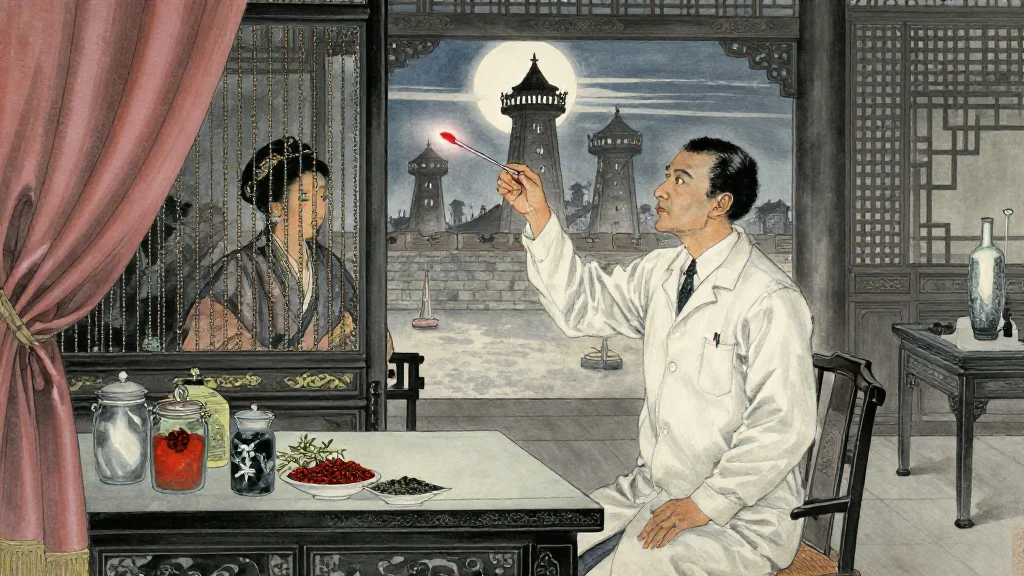
秦策二 (Stratagems of Qin, Part Two) — Chinese ink painting

Chapter 4 of 33 · Qin state

秦策二

Stratagems of Qin, Part Two

View:

齊助楚攻秦

Qi Helps Chu Attack Qin

齊助楚攻秦,取曲沃。其後,秦欲伐齊,齊、楚之交善,惠王患之,謂張儀曰:「吾欲伐齊,齊楚方歡,子為寡人慮之,奈何?」張儀曰:「王其為臣約車並幣,臣請試之。」張儀南見楚王曰:「弊邑之王所說甚者,無大大王;唯儀之所甚願為臣者,亦無大大王。弊邑之王所甚憎者,亦無先齊王。唯儀甚憎者,亦無大齊王。今齊王之罪,其於弊邑之王甚厚,弊邑欲伐之,而大國與之歡,是以弊邑之王不得事令,而儀不得為臣也。大王苟能閉關絕齊,臣請使秦王獻商於之地,方六百里。若此,齊必弱,齊弱則必為王役矣。則是北弱齊,西德於秦,而私商於之地以為利也,則此一計而三利俱至。」楚王大說,宣言之於朝廷,曰:「不穀得商於之田,方六百里。」群臣聞見者畢賀,陳軫後見,獨不賀。楚王曰:「不穀不煩一兵不傷一人,而得商於之地六百里,寡人自以為智矣!諸士大夫皆賀,子獨不賀,何也?」陳軫對曰:「臣見商於之地不可得,而患必至也,故不敢妄賀。」王曰:「何也?」對曰:「夫秦所以重王者,以王有齊也。今地未可得而齊先絕,是楚孤也,秦又何重孤國?且先出地絕齊,秦計必弗為也。先絕齊後責地,且必受欺於張儀。受欺於張儀,王必惋之。是西生秦患,北絕齊交,則兩國兵必至矣。」楚王不聽,曰:「吾事善矣!子其弭口無言,以待吾事。」楚王使人絕齊,使者未來,又重絕之。張儀反,秦使人使齊,齊、秦之交陰合。楚因使一將軍受地於秦。張儀至,稱病不朝。楚王曰:「張子以寡人不絕齊乎?」乃使勇士往詈齊王。張儀知楚絕齊也,乃出見使者曰:「從某至某,廣從六里。」使者曰:「臣聞六百里,不聞六里。」儀曰:「儀固以小人,安得六百里?」使者反報楚王,楚王大怒,欲興師伐秦。陳軫曰:「臣可以言乎?」王曰:「可矣。」軫曰:「伐秦非計也,王不如因而賂之一名都,與之伐齊,是我亡於秦而取償於齊也。楚國不尚全事。王今已絕齊,而責欺於秦,是吾合齊、秦之交也,國必大傷。」楚王不聽,遂舉兵伐秦。秦與齊合,韓氏從之。楚兵大敗於杜陵。故楚之土壤士民非削弱,僅以救亡者,計失於陳軫,過聽於張儀。

Qi helped Chu attack Qin and took Quwo. Afterward, Qin wanted to attack Qi, but Qi and Chu were on good terms. King Hui was troubled and said to Zhang Yi: "I want to attack Qi, but Qi and Chu are close. Think of something for me — what can be done?"

Zhang Yi said: "Have a carriage and gifts prepared for me, and I will see what I can do."

Zhang Yi went south to see the King of Chu and said: "No one does our humble king admire more than Your Majesty. No one does Zhang Yi wish more to serve than Your Majesty. And no one does our humble king detest more than the King of Qi. No one does Zhang Yi detest more than the King of Qi.

"The King of Qi's offenses against our humble king are grave. We wish to attack him, but Your Majesty's great state is allied with Qi — therefore our humble king cannot carry out his plans, and I cannot serve as I wish. If Your Majesty would close your borders and sever ties with Qi, I will have the King of Qin present Your Majesty with the lands of Shangyu, six hundred li on each side. Qi will certainly be weakened, and once weakened, Qi will serve Your Majesty's purposes. Thus you weaken Qi in the north, earn Qin's gratitude in the west, and privately gain the territory of Shangyu for profit — one plan, three benefits."

The King of Chu was overjoyed. He announced to his entire court: "I have obtained the lands of Shangyu, six hundred li!" Every minister who heard the news offered congratulations.

Chen Zhen came in last and alone did not congratulate. The King of Chu said: "Without mobilizing a single soldier or injuring a single person, I have obtained six hundred li of Shangyu. I consider myself quite clever! All my officials offer congratulations — you alone do not. Why?"

Chen Zhen replied: "I see that the lands of Shangyu cannot be obtained and that calamity will certainly come. I therefore dare not offer empty congratulations."

The king said: "Why?"

Chen Zhen said: "The reason Qin values Your Majesty is that you have Qi as an ally. Now the territory has not yet been received but Qi has already been cut off — Chu is isolated. Why would Qin still value an isolated state? Moreover, for Qin to give away territory first and then have you break with Qi — that is clearly not Qin's plan. If you break with Qi first and then demand the territory, you will certainly be swindled by Zhang Yi. And once you are swindled, Your Majesty will be filled with regret. You will have created an enemy in Qin to the west and severed your alliance with Qi to the north — then both states' armies will march against you."

The King of Chu would not listen. He said: "My plan is settled! Shut your mouth and say nothing more — just watch my success."

The king sent an envoy to break with Qi. Before the envoy even returned, he sent another to break with Qi a second time. Zhang Yi returned to Qin. Qin secretly sent envoys to Qi, and Qi and Qin formed a covert alliance.

Chu then dispatched a general to receive the territory from Qin. When Zhang Yi arrived, he pleaded illness and did not attend court. The King of Chu said: "Does Zhang Yi think I have not broken with Qi?" So he sent a brave man to go insult the King of Qi to his face.

Once Zhang Yi confirmed that Chu had truly severed ties with Qi, he emerged to see the Chu envoy and said: "From such-and-such a point to such-and-such a point — six li, both in length and width."

The envoy said: "I was told six hundred li, not six li."

Zhang Yi said: "I am merely a minor person. Where would I get six hundred li?"

The envoy returned and reported to the King of Chu. The king was enraged and wanted to raise an army to attack Qin.

Chen Zhen said: "May I speak now?"

The king said: "You may."

Chen Zhen said: "Attacking Qin is not the right plan. Your Majesty should instead bribe Qin with a notable city and join Qin in attacking Qi. What we lose to Qin, we recover from Qi — the state of Chu comes out whole. But now you have already broken with Qi and seek to punish Qin for its deception — this will unite Qi and Qin against us, and the state will be gravely harmed."

The King of Chu would not listen. He raised an army and attacked Qin. Qin allied with Qi, and Han joined them. Chu's army was catastrophically defeated at Duling.

Thus Chu's territory, population, and military strength were not inherently weak — but the state barely survived because it rejected Chen Zhen's counsel and fell for Zhang Yi's scheme.

Notes

1context

This is the most famous con job in the Zhanguoce and possibly in all of Chinese diplomatic history. Zhang Yi promised six hundred li and delivered six — claiming the original offer was a personal one from a 'minor person,' not a state commitment. The pivot from 六百里 to 六里 is so audacious it almost demands admiration. King Huai of Chu, by contrast, emerges as a cautionary study in wishful thinking.

2person楚懷王Chǔ Huái Wáng

King Huai of Chu (楚懷王, r. 328–299 BC) was the king who fell for Zhang Yi's deception. He later died in captivity in Qin in 296 BC, one of the most tragic figures of the Warring States.

3place

Shangyu (商於) was a region along the upper Dan River in modern Danfeng County, Shaanxi. It was the territory Qin supposedly offered.

4place

Duling (杜陵) was near modern Xi'an, Shaanxi. The Chu army was defeated there around 312 BC.

5person陳軫Chén Zhěn

Chen Zhen (陳軫) was right twice — before and after the disaster. His second piece of advice (bribe Qin, attack Qi together, recover losses) was actually the better of the two, since it addressed the situation as it existed rather than the situation that should have existed. The King of Chu rejected both.

6translation

不穀 (bù gǔ) is a self-deprecating royal pronoun used by the King of Chu, roughly meaning 'the unworthy one.' Translated simply as 'I' in context.

楚絕齊齊舉兵伐楚

Chu Breaks with Qi; Qi Attacks Chu

楚絕齊,齊舉兵伐楚。陳軫謂楚王曰:「王不如以地東解於齊,西講於秦。」楚王使陳軫之秦,秦王謂軫曰:「子秦人也,寡人與子故也,寡人不佞,不能親國事也,故子棄寡人事楚王。今齊、楚相伐,或謂救之便,或謂救之不便,子獨不可以忠為子主計,以其餘為寡人乎?」陳軫曰:「王獨不聞吳人之遊楚者乎?楚王甚愛之,病,故使人問之,曰:『誠病乎?意亦思乎?』左右曰:『臣不知其思與不思,誠思則將吳吟。』今軫將為王吳吟。王不聞管與之說乎?有兩虎諍人而鬥者,管莊子將刺之,管與止之曰:『虎者,戾蟲;人者,甘餌也。今兩虎諍人而鬥,小者必死,大者必傷。子待傷虎而刺之,則是一舉而兼兩虎也。無刺一虎之勞,而有刺兩虎之名。』齊、楚今戰,戰必敗。敗,王起兵救之,有救齊之利,而無伐楚之害。計聽知覆逆者,唯王可也。計者,事之本也;聽者,存亡之機。計失而聽過,能有國者寡也。故曰:『計有一二者難悖也,聽無失本末者難惑。』」

After Chu broke with Qi, Qi raised an army and attacked Chu. Chen Zhen said to the King of Chu: "Your Majesty should cede territory to resolve matters with Qi in the east and make peace with Qin in the west."

The King of Chu sent Chen Zhen to Qin. The King of Qin said to him: "You are a Qin man. You and I are old friends. I am not talented enough to personally manage affairs of state, so you left me to serve the King of Chu. Now Qi and Chu are at war. Some say it is advantageous to intervene; others say it is not. Can you not loyally plan for your current master while also sparing some counsel for me?"

Chen Zhen said: "Has Your Majesty not heard of the man from Wu who traveled to Chu? The King of Chu was very fond of him. When the man fell ill, someone was sent to ask after him: 'Is he truly ill, or is he homesick?' The attendants said: 'We do not know whether he is homesick or not, but if he is, he will start humming Wu songs.' Now I will hum a Wu song for Your Majesty.

"Has Your Majesty not heard the story of Guan Yu? Two tigers were fighting over a man they had killed. Guan Zhuangzi was about to stab them when Guan Yu stopped him: 'The tiger is a fierce beast; the man is a sweet morsel. Now two tigers are fighting over the man. The smaller one will certainly die, and the larger will certainly be wounded. Wait for the wounded tiger and stab it — one stroke to claim both tigers. No effort of killing one tiger, but the fame of killing two.'

"Qi and Chu are now fighting. One will certainly be defeated. When that happens, Your Majesty raises an army to rescue the loser — gaining the benefit of saving Qi without the cost of attacking Chu. The only ruler capable of hearing a plan and knowing its outcome in advance is Your Majesty.

"Planning is the root of all affairs. Judgment is the pivot of survival and destruction. When plans go wrong and judgment fails, few can keep their states. Hence it is said: one who has considered two possibilities is hard to mislead; one who never loses sight of means and ends is hard to confuse."

Notes

1context

The two-tigers parable is the centerpiece: let Qi and Chu exhaust each other, then Qin intervenes against the weakened winner. Chen Zhen is technically serving Chu's interests (he was sent to get Qin's help) while actually telling Qin to wait — which is also in Chu's interest, since Chu needs Qin to not attack it while it fights Qi. He is serving both masters simultaneously through strategic ambiguity.

2person管莊子Guǎn Zhuāngzǐ

Guan Zhuangzi (管莊子) and Guan Yu (管與) were figures from an uncertain period. The two-tigers parable became a standard strategic metaphor, later echoed in the Three Kingdoms period.

3translation

'Humming a Wu song' (吳吟) — Chen Zhen uses this metaphor to acknowledge his dual loyalties. He is a Qin native serving Chu; like a homesick man from Wu, his true sympathies may surface when he is under pressure. By saying 'I will hum a Wu song for you,' he is admitting his Qin sympathies while using them to give advice that happens to serve both states.

秦惠王死公孫衍欲窮張儀

King Hui of Qin Dies; Gongsun Yan Seeks to Destroy Zhang Yi

秦惠王死,公孫衍欲窮張儀。李讎謂公孫衍曰:「不如召甘茂於魏,召公孫顯於韓,起樗里子於國。三人者,皆張儀之讎也,公用之,則諸侯必見張儀無秦矣!」

After King Hui of Qin died, Gongsun Yan sought to destroy Zhang Yi. Li Chou said to Gongsun Yan:

"Better to summon Gan Mao from Wei, summon Gongsun Xian from Han, and elevate Chuli Zi within Qin. All three are Zhang Yi's enemies. If you employ them, the feudal lords will see that Zhang Yi has lost Qin."

Notes

1person公孫衍Gōngsūn Yǎn

Gongsun Yan (公孫衍), also called Xishou (犀首), was Zhang Yi's great rival. After King Hui's death (311 BC), the political landscape shifted against Zhang Yi.

2person李讎Lǐ Chóu

Li Chou (李讎) was an advisor to Gongsun Yan, otherwise unknown.

3context

The strategy is to surround Zhang Yi with his own enemies — a political flanking maneuver. Rather than attacking Zhang Yi directly, you fill the court with people who have personal reasons to undermine him. The feudal lords will draw their own conclusions.

義渠君之魏

The Lord of Yiqu Goes to Wei

義渠君之魏,公孫衍謂義渠君曰:「道遠,臣不得復過矣,請謁事情。」義渠君曰:「願聞之。」對曰:「中國無事於秦,則秦且燒爇獲君之國;中國為有事於秦,則秦且輕使重幣,而事君之國也。」義渠君曰:「謹聞令。」居無幾何,五國果伐秦。陳軫謂秦王曰:「義渠君者,蠻夷之賢君,王不如賂之以撫其心。」秦王曰:「善。」因以文繡千匹,好女百人,遺義渠君。義渠君致群臣而謀曰:「此乃公孫衍之所謂也。」因起兵襲秦,大敗秦人於李帛之下。

The Lord of Yiqu went to Wei. Gongsun Yan said to him:

"The road is long, and I may not have another chance to visit you. Let me speak plainly about your situation. When the central states are not at war with Qin, Qin will burn and ravage your country. When the central states are at war with Qin, Qin will send light envoys and heavy gifts to court your country."

The Lord of Yiqu said: "I hear you clearly."

Before long, five states did indeed attack Qin. Chen Zhen said to the King of Qin: "The Lord of Yiqu is a worthy ruler among the frontier peoples. Your Majesty should bribe him to keep his goodwill."

The King of Qin said: "Good." He sent a thousand bolts of embroidered silk and a hundred beautiful women to the Lord of Yiqu.

The Lord of Yiqu assembled his ministers to deliberate and said: "This is exactly what Gongsun Yan predicted." He raised his army and attacked Qin, inflicting a major defeat on the Qin forces at Libo.

Notes

1person義渠君Yìqú Jūn

The Yiqu (義渠) were a semi-nomadic people on Qin's northwestern frontier, in modern Qingyang, Gansu. They were a persistent thorn in Qin's side until Queen Dowager Xuan seduced and eventually destroyed their last ruler.

2context

Gongsun Yan's prediction is elegant in its simplicity: Qin only bribes when it is afraid. So when the bribes arrive, attack. The Lord of Yiqu followed the logic perfectly. Chen Zhen's advice to bribe Yiqu was sound in isolation but was already compromised — Gongsun Yan had turned Qin's own playbook into a tripwire.

3place

Libo (李帛) was a location on the Qin-Yiqu frontier, its exact position uncertain but probably in modern Gansu.

醫扁鵲見秦武王

The Physician Bian Que Sees King Wu of Qin

醫扁鵲見秦武王,武王示之病,扁鵲請除。左右曰:「君之病,在耳之前,目之下,除之未必已也,將使耳不聰,目不明。」君以告扁鵲。扁鵲怒而投其石:「君與知之者謀之,而與不知者敗之。使此知秦國之政也,則君一舉而亡國矣。」

The physician Bian Que was received by King Wu of Qin. The king showed him his ailment, and Bian Que proposed to remove it.

The king's attendants said: "Your Majesty's illness is located in front of the ears and below the eyes. Removing it may not cure it, and it could leave Your Majesty deaf and blind."

The king told Bian Que. Bian Que threw down his stone needle in anger:

"Your Majesty consulted with someone who understands, then let those who do not understand ruin it. If this is how Qin's government works, Your Majesty could lose the state in a single blunder."

Notes

1person扁鵲Biǎn Què

Bian Que (扁鵲) was a legendary physician, probably a composite or semi-mythical figure. Various stories place him in different centuries. King Wu of Qin (秦武王, r. 310–307 BC) died young after injuring himself in a weightlifting contest.

2context

The anecdote is not really about medicine — it is about the danger of letting amateurs overrule experts. Bian Que's parting shot pivots from surgery to statecraft in a single sentence. The subtext: if a king defers to ignorant courtiers over qualified advisors in a medical decision, he will do the same in political ones.

3translation

石 (shí) here means a stone needle or stone probe used in ancient Chinese medicine, an early form of acupuncture instrument.

秦武王謂甘茂

King Wu of Qin Addresses Gan Mao

秦武王謂甘茂曰:「寡人欲車通三川,以窺周室,而寡人死不朽乎?」甘茂對曰:「請之魏,約伐韓。」王令向壽輔行。甘茂至魏,謂向壽:「子歸告王曰:『魏聽臣矣,然願王勿攻也。』事成,盡以為子功。」向壽歸以告王,王迎甘茂於息壤。甘茂至,王問其故。對曰:「宜陽,大縣也,上黨、南陽積之久矣,名為縣,其實郡也。今王倍數險,行千里而攻之,難矣。臣聞張儀西並巴蜀之地,北取西河之外,南取上庸,天下不以為多張儀而賢先王。魏文侯令樂羊將,攻中山,三年而拔之,樂羊反而語功,文侯示之謗書一篋,樂羊再拜稽首曰:『此非臣之功,主君之力也。』今臣,羈旅之臣也,樗里疾、公孫衍二人者,挾韓而議之,王必聽之,是王欺魏,而臣受公仲侈之怨也。昔者曾子處費,費人有與曾子同名族者而殺人,人告曾子母曰:『曾參殺人。』曾子之母曰:『吾子不殺人。』織自若。有頃焉,人又曰:『曾參殺人。』其母尚織自若也。頃之,一人又告之曰:『曾參殺人。』其母懼,投杼踰牆而走。夫以曾參之賢,與母之信也,而三人疑之,則慈母不能信也。今臣賢不及曾子,而王之信臣又未若曾子之母也,疑臣者不適三人,臣恐王為臣之投杼也。」王曰:「寡人不聽也,請與子盟。」於是與之盟於息壤。果攻宜陽,五月而不能拔也。樗里疾、公孫衍二人在,爭之王,王將聽之,召甘茂而告之。甘茂對曰:「息壤在彼。」王曰:「有之。」因悉起兵,復使甘茂攻之,遂拔宜陽。

King Wu of Qin said to Gan Mao: "I want to drive my chariots through Sanchuan and look down upon the Zhou court. Will that make my name immortal?"

Gan Mao replied: "Allow me to go to Wei and arrange a joint attack on Han."

The king sent Xiang Shou to accompany him. When Gan Mao reached Wei, he said to Xiang Shou: "Go back and tell the king: 'Wei has agreed to my terms, but I urge the king not to attack.' If the affair succeeds, I will give you all the credit."

Xiang Shou returned and reported. The king went to meet Gan Mao at Xirang. When Gan Mao arrived, the king asked for his reasoning.

Gan Mao said: "Yiyang is a major stronghold. Shangdang and Nanyang have supplied it for years. It is called a county, but in reality it is a commandery. Now Your Majesty would cross multiple mountain barriers and march a thousand li to attack it. This will be difficult.

"I have heard that when Zhang Yi annexed Ba and Shu in the west, took the lands beyond the West River in the north, and captured Shangyong in the south, the world did not praise Zhang Yi more — it praised the late king. When Marquis Wen of Wei sent Yue Yang to attack Zhongshan, it took three years to conquer it. When Yue Yang returned boasting of his achievements, Marquis Wen showed him a chest full of denunciations. Yue Yang bowed twice to the ground and said: 'This was not my achievement — it was my lord's strength.'

"Now I am a minister far from home. Chuli Ji and Gongsun Yan will use Han's situation to argue against me, and Your Majesty will listen to them. Then Your Majesty will have broken faith with Wei, and I will bear the resentment of Han's chancellor Gongzhong Shi.

"In ancient times Zeng Zi lived at Fei. A man at Fei with the same name and clan as Zeng Zi killed someone. Someone told Zeng Zi's mother: 'Zeng Shen has killed a man.' His mother said: 'My son would not kill anyone,' and went on weaving. Before long, another person said: 'Zeng Shen has killed a man.' His mother still wove calmly. Then a third person said: 'Zeng Shen has killed a man.' His mother was frightened — she threw down her shuttle, climbed over the wall, and fled.

"Now with Zeng Shen's reputation for virtue, and his mother's trust in him, three accusers still made a loving mother lose faith. My virtue is no match for Zeng Zi's, and Your Majesty's trust in me is not as deep as Zeng Zi's mother's. Those who will speak against me number far more than three. I fear Your Majesty will throw down the shuttle on my account."

The king said: "I will not listen to them. Let us swear an oath."

They swore an oath at Xirang.

The attack on Yiyang proceeded, but after five months the city had not fallen. Chuli Ji and Gongsun Yan pressed the king, who was about to listen to them. He summoned Gan Mao and told him.

Gan Mao replied: "The oath of Xirang still stands."

The king said: "So it does." He mobilized his full army and sent Gan Mao to attack again. Yiyang fell.

Notes

1person秦武王Qín Wǔ Wáng

King Wu of Qin (秦武王, r. 310–307 BC) was known for his physical strength and ambition. His desire to 'look down upon Zhou' reflects Qin's growing confidence that the Zhou royal house was an obstacle to be removed.

2place

Xirang (息壤) was a location in Qin where the oath was sworn. Its exact position is uncertain.

3person曾參Zēng Shēn

Zeng Shen (曾參, 505–435 BC) was a disciple of Confucius, famous for his filial piety. The 'three accusations' parable (三人成虎 variant) illustrates how repetition makes even the incredible believable.

4context

Gan Mao's political acumen is on full display. He knows the siege will be long, knows his rivals will undermine him, and pre-commits the king to backing him through a sworn oath. When the moment comes — five months in, the king wavering — he has only to say three words: 'Xirang still stands.' The oath does the work. This is perhaps the best illustration in the Zhanguoce of why binding commitments matter in politics.

5person樂羊Yuè Yáng

Yue Yang (樂羊) was a general of Marquis Wen of Wei (魏文侯, r. 445–396 BC). During his three-year siege of Zhongshan, his enemies at court sent the marquis a chest full of slanders. The marquis kept them all and showed them to Yue Yang afterward — to demonstrate both the slanders and his own decision to ignore them.

宜陽之役馮章謂秦王

The Siege of Yiyang: Feng Zhang Addresses the King of Qin

宜陽之役,馮章謂秦王曰:「不拔宜陽,韓、楚乘吾弊,國必危矣!不如許楚漢中以歡之。楚歡而不進,韓必孤,無奈秦何矣!」王曰:「善。」果使馮章許楚漢中,而拔宜陽。楚王以其言責漢中於馮章,馮章謂秦王曰:「王遂亡臣,固謂楚王曰:『寡人固無地而許楚王。』」

During the siege of Yiyang, Feng Zhang said to the King of Qin:

"If we do not take Yiyang, Han and Chu will exploit our exhaustion and the state will be in danger. Better to promise Hanzhong to Chu to keep it happy. If Chu is pleased and does not advance, Han will be isolated and helpless against Qin."

The king said: "Good." He sent Feng Zhang to promise Hanzhong to Chu, and then took Yiyang.

Afterward the King of Chu invoked Feng Zhang's promise and demanded Hanzhong. Feng Zhang said to the King of Qin: "Simply disown me. Tell the King of Chu: 'I never had any territory to offer the King of Chu.'"

Notes

1person馮章Féng Zhāng

Feng Zhang (馮章) was a Qin diplomat willing to be sacrificed for the cause — he suggests the king disown him to avoid honoring the promise. Whether he was actually punished is not recorded.

2context

This is the same playbook Zhang Yi used on Chu with the six-hundred-li scam — promise territory to neutralize an enemy, then renege. The King of Chu keeps falling for variations of the same trick. Feng Zhang's willingness to be 'disowned' makes the deniability even more elegant: the promise was unauthorized, a rogue diplomat acting alone.

甘茂攻宜陽

Gan Mao Attacks Yiyang

甘茂攻宜陽,三鼓之而卒不上。秦之右將有尉對曰:「公不論兵,必大困。」甘茂曰:「我羈旅而得相秦者,我以宜陽餌王。今攻宜陽而不拔,公孫衍、樗里疾挫我於內,而公仲以韓窮我於外,是無伐之日已!請明日鼓之而不可下,因以宜陽之郭為墓。」於是出私金以益公賞。明日鼓之,宜陽拔。

Gan Mao attacked Yiyang. After three drum rolls the soldiers would not advance. Qin's Right General, an officer named Wei, said: "If you do not review your tactics, you will be in serious trouble."

Gan Mao said: "I am a man far from home who became Qin's chancellor by using Yiyang as bait for the king. If I attack Yiyang and fail, Gongsun Yan and Chuli Ji will undermine me at court, and Gongzhong will crush me from Han's side — I will never campaign again.

"Tomorrow, if the drums sound and the walls still do not fall, I will make Yiyang's outer wall my tomb."

He then spent his private funds to supplement the official rewards. The next day the drums sounded, and Yiyang fell.

Notes

1context

Gan Mao's desperation is palpable and genuine. He staked his entire career on Yiyang and now faces a recalcitrant army. His solution — supplementing the bounties from his own pocket — shows a man who understands that soldiers fight for money, not speeches. The threat to die at the walls is theater, but the private gold is real.

宜陽未得

Yiyang Not Yet Taken

宜陽未得,秦死傷者眾,甘茂欲息兵。左成謂甘茂曰:「公內攻於樗里疾、公孫衍,而外與韓侈為怨,今公用兵無功,公必窮矣。公不如進兵攻宜陽,宜陽拔,則公之功多矣。是樗里疾、公孫衍無事也,秦眾盡怨之深矣。」

Yiyang had not yet fallen and Qin's casualties were heavy. Gan Mao wanted to halt the campaign. Zuo Cheng said to Gan Mao:

"At court you are under attack from Chuli Ji and Gongsun Yan. Abroad you have made an enemy of Han's Gongzhong Shi. If you now withdraw without success, you are finished.

"Better to press the attack on Yiyang. If Yiyang falls, your achievement will be enormous — and Chuli Ji and Gongsun Yan will have nothing to say, while the Qin public's resentment will all be directed at them."

Notes

1context

Zuo Cheng's advice is brutally practical: retreating is worse than pressing on, even with heavy losses, because retreat means political death. The calculation is not military but bureaucratic — Gan Mao's enemies at court are more dangerous than Han's defenders.

宜陽之役楚畔秦而合於韓

The Siege of Yiyang: Chu Betrays Qin and Joins Han

宜陽之役,楚畔秦而合於韓。秦王懼。甘茂曰:「楚雖合韓,不為韓氏先戰;韓亦恐戰而楚有變其後。韓、楚必相御也。楚言與韓,而不餘怨於秦,臣是以知其御也。」

During the siege of Yiyang, Chu betrayed Qin and allied with Han. The King of Qin was afraid.

Gan Mao said: "Although Chu has allied with Han, it will not fight on Han's behalf first. Han, for its part, fears that if it fights, Chu will change sides behind its back. Han and Chu will hold each other in check. Chu has declared for Han but has not expressed any grievance against Qin — that is how I know they will restrain each other."

Notes

1context

Gan Mao reads the alliance correctly: Chu's commitment is verbal, not operational. Neither Han nor Chu trusts the other enough to move first, so the alliance is effectively paralyzed. This is the structural weakness of every Warring States coalition — each member fears being the one left exposed.

秦王謂甘茂

The King of Qin Addresses Gan Mao

秦王謂甘茂曰:「楚客來使者多健,與寡人爭辭,寡人數窮焉,為之奈何?」甘茂對曰:「王勿患也!其健者來使,則王勿聽其事;其懦弱者來使,則王必聽之。然則懦弱者用,而健者不用矣!王因而制之。」

The King of Qin said to Gan Mao: "The envoys Chu sends are all formidable debaters who argue me into corners. I am frequently at a loss. What should I do?"

Gan Mao replied: "Do not worry, Your Majesty. When they send a formidable envoy, refuse to grant his requests. When they send a meek one, grant everything. Then the meek envoys will be promoted and the formidable ones sidelined — and Your Majesty controls their appointments."

Notes

1context

This is institutional sabotage dressed as diplomatic advice. By rewarding Chu's worst diplomats and punishing its best, Qin would effectively degrade Chu's entire foreign service from the outside. The logic is perversely elegant: you cannot choose your enemy's personnel, but you can create incentives that make them choose badly.

甘茂亡秦且之齊

Gan Mao Flees Qin for Qi

甘茂亡秦,且之齊,出關遇蘇子,曰:「君聞夫江上之處女乎?」蘇子曰:「不聞。」曰:「夫江上之處女,有家貧而無燭者,處女相與語,欲去之。家貧無燭者將去矣,謂處女曰:『妾以無燭,故常先至,掃室布席,何愛餘明之照四壁者?幸以賜妾,何妨於處女?妾自以有益於處女,何為去我?』處女相語以為然而留之。今臣不肖,棄逐於秦而出關,願為足下掃室布席,幸無我逐也。」蘇子曰:「善。請重公於齊。」乃西說秦王曰:「甘茂賢人,非恆士也。其居秦累世重矣,自殽塞、谿谷,地形險易盡知之。彼若以齊約韓、魏,反以謀秦,是非秦之利也。」秦王曰:「然則奈何?」蘇代曰:「不如重其贄,厚其祿以迎之。彼來則置之槐谷,終身勿出,天下何從圖秦。」秦王曰:「善。」與之上卿,以相迎之齊。甘茂辭不往,蘇代偽謂齊王曰:「甘茂,賢人也。今秦與之上卿,以相迎之,茂德王之賜,故不往,願為王臣。今王何以禮之?王若不留,必不德王。彼以甘茂之賢得擅用強秦之眾,則難圖也!」齊王曰:「善。」賜之上卿,命而處之。

Gan Mao fled Qin, heading for Qi. At the pass he encountered Su Dai and said:

"Have you heard the story of the maidens by the river? A group of maidens spun thread together by candlelight. One was too poor to bring a candle. The others talked among themselves about sending her away. As the poor maiden was about to leave, she said to them: 'Because I have no candle, I always arrive first, sweep the room, and lay out the mats. The excess light that shines on the walls — what does it cost you to share it with me? How does it harm you? I believe I am useful to you all. Why send me away?' The maidens discussed this, agreed she was right, and kept her.

"Now I am an unworthy man, cast out of Qin and passing through the frontier. I am willing to sweep the room and lay the mats for you. Please do not send me away."

Su Dai said: "Very well. I will build your reputation in Qi."

He then went west and told the King of Qin: "Gan Mao is a man of exceptional ability, not an ordinary person. His family has served Qin for generations — he knows every pass, gorge, and geographic advantage from Yao to the frontier. If he uses Qi to coordinate with Han and Wei and plots against Qin, that is not in Qin's interest."

The King of Qin said: "What should I do?"

Su Dai said: "Better to offer him rich gifts and a generous salary and invite him back. When he arrives, confine him to Huaigu Valley and never let him leave. Then no one in the world can use him against Qin."

The King of Qin said: "Good." He offered Gan Mao the rank of Senior Minister and sent a chancellor-level invitation to Qi.

Gan Mao declined to go. Su Dai then went to the King of Qi and said: "Gan Mao is a man of great ability. Qin has offered him the rank of Senior Minister and a chancellor's invitation, but he is grateful for Your Majesty's hospitality and refuses to go — he wishes to remain your servant. How will Your Majesty honor him? If you do not keep him, he will not feel grateful. And if Qin obtains a man of Gan Mao's ability and gives him command of its powerful army, that will be hard to counter."

The King of Qi said: "Good." He granted Gan Mao the rank of Senior Minister and gave him a permanent position.

Notes

1context

Su Dai's scheme is a masterclass in playing both ends. He gets Qin to bid up Gan Mao's value, then uses Qin's bid to pressure Qi into matching it. He never spends a coin of his own — he simply creates a bidding war between two great powers for his client. The candlelight parable at the start is Gan Mao's job application; Su Dai's subsequent maneuvers are the placement fee.

2place

Huaigu (槐谷) was presumably a remote valley in Qin where Gan Mao would be effectively under house arrest. Su Dai's 'golden cage' proposal was designed to fail — he knew Gan Mao would refuse, which would then increase his value in Qi.

甘茂相秦

Gan Mao as Chancellor of Qin

甘茂相秦。秦王愛公孫衍,與之間有所立,因自謂之曰:「寡人且相子。」甘茂之吏,道而聞之,以告甘茂。甘茂因入見王曰:「王得賢相,敢再拜賀。」王曰:「寡人托國於子,焉更得賢相?」對曰:「王且相犀首。」王曰:「子焉聞之?」對曰:「犀首告臣。」王怒於犀首之洩也,乃逐之。

Gan Mao was chancellor of Qin. The King of Qin was fond of Gongsun Yan and had secretly agreed to appoint him. The king said to Gongsun Yan privately: "I am going to make you chancellor."

One of Gan Mao's subordinates overheard this on the road and reported it to Gan Mao. Gan Mao went in to see the king and said: "Your Majesty has found a worthy chancellor — I respectfully offer double congratulations."

The king said: "I have entrusted the state to you. Where would I find another worthy chancellor?"

Gan Mao replied: "Your Majesty is about to appoint Xishou."

The king said: "Where did you hear that?"

Gan Mao said: "Xishou told me."

The king was furious at Xishou for leaking the secret and expelled him.

Notes

1context

Gan Mao's counter-move is viciously efficient. He cannot confront the king directly about replacing him — that would be insubordinate. Instead he 'congratulates' the king, which forces the king to deny the plan. When asked how he knows, he attributes the leak to Gongsun Yan himself, which makes Gongsun Yan look like an indiscreet braggart. The king punishes the wrong man. Gan Mao keeps his job and eliminates a rival with one conversation.

甘茂約秦魏而攻楚

Gan Mao Arranges a Qin-Wei Alliance Against Chu

甘茂約秦、魏而攻楚。楚之相秦者屈盍,為楚和於秦,秦啟關而聽楚使。甘茂謂秦王曰:「怵於楚而不使魏制和,楚必曰:『秦鬻魏。』不悅而合於楚,楚、魏為一,國恐傷矣。王不如使魏制和,魏制和必悅。王不惡於魏,則寄地必多矣。」

Gan Mao arranged for Qin and Wei to jointly attack Chu. Chu's representative in Qin, Qu He, negotiated peace on Chu's behalf, and Qin opened its passes to receive Chu's envoy.

Gan Mao said to the King of Qin: "If you give in to Chu's overtures without letting Wei control the peace terms, Chu will say: 'Qin sold out Wei.' Wei will be displeased and join Chu — if Chu and Wei unite, the state will be harmed.

"Better to let Wei control the peace negotiations. Wei will be gratified. If Your Majesty does not alienate Wei, the territory entrusted to your care will only grow."

Notes

1person屈盍Qū Hé

Qu He (屈盍) was a Chu diplomat stationed at the Qin court.

2context

Gan Mao's point is about alliance management: if you start a war with an ally and then make peace without consulting them, the ally feels betrayed. Letting Wei control the terms costs Qin nothing but keeps the alliance intact.

陘山之事

The Affair at Xingshan

陘山之事,趙且與秦伐齊。齊懼,令田章以陽武合於趙,而以順子為質。趙王喜,乃案兵告於秦曰:「齊以陽武賜弊邑而納順子,欲以解伐。敢告下吏。」秦王使公子他之趙,謂趙王曰:「齊與大國救魏而倍約,不可信恃,大國不義,以告弊邑,而賜之二社之地,以奉祭祀。今又案兵,且欲合齊而受其地,非使臣之所知也。請益甲四萬,大國裁之。」蘇代為齊獻書穰侯曰:「臣聞往來者言曰:『秦且益趙甲四萬人以伐齊。』臣竊必之弊邑之王曰:『秦王明而熟於計,穰侯智而習於事,必不益趙甲四萬人以伐齊。』是何也?夫三晉相結,秦之深讎也。三晉百背秦,百欺秦,不為不信,不為無行。今破齊以肥趙,趙,秦之深讎,不利於秦。一也。秦之謀者必曰:『破齊弊晉,而後制晉楚之勝。』夫齊,罷國也,以天下擊之,譬猶以千鈞之弩潰癰也。秦王安能制晉、楚哉!二也。秦少出兵,則晉、楚不信;多出兵,則晉、楚為制於秦。齊恐,則必不走於秦且走晉、楚。三也。齊割地以實晉、楚,則晉、楚安。齊舉兵而為之頓劍,則秦反受兵。四也。是晉、楚以秦破齊,以齊破秦,何晉、楚之智而齊、秦之愚!五也。秦得安邑,善齊以安之,亦必無患矣。秦有安邑,則韓、魏必無上黨矣。夫取三晉之腸胃與出兵而懼其不反也,孰利?故臣竊必之弊邑之王曰:『秦王明而熟於計,穰侯智而習於事,必不益趙甲四萬以伐齊矣。』」

In the affair at Xingshan, Zhao was about to join Qin in attacking Qi. Qi was alarmed and ordered Tian Zhang to offer Yangwu to Zhao, sending Prince Shunzi as a hostage.

The King of Zhao was pleased. He halted his troops and informed Qin: "Qi has given our humble state Yangwu and sent us a hostage prince, hoping to stave off the attack. I dutifully report this to your officials."

The King of Qin sent Prince Ta to Zhao, who said to the King of Zhao: "Qi allied with your great state to rescue Wei and then broke its oath — it cannot be trusted. Your great state acted improperly and informed our humble state, and we gave you two districts' land for your ancestral rites. Now you halt your troops and intend to make terms with Qi and accept its territory — this is not what I was sent here to accept. I request an additional forty thousand armored troops. Your great state may decide."

Su Dai, on Qi's behalf, submitted a letter to the Marquis of Rang:

"I hear from travelers that Qin plans to add forty thousand troops to Zhao's forces to attack Qi. I have privately assured my humble king: 'The King of Qin is wise and skilled at calculation; the Marquis of Rang is clever and experienced in affairs. They will certainly not add forty thousand troops to Zhao to attack Qi.'

"Why? First: the Three Jin have formed a league — they are Qin's mortal enemies. They have betrayed Qin a hundred times, cheated Qin a hundred times. To destroy Qi and fatten Zhao — Zhao, Qin's deep enemy — is not in Qin's interest.

"Second: Qin's strategists will say, 'Destroy Qi, weaken the Jin states, then control the contest between Jin and Chu.' But Qi is already exhausted. Attacking it with all the world's forces is like using a thousand-catty crossbow to burst a boil. How could the King of Qin then control Jin and Chu?

"Third: if Qin sends few troops, Jin and Chu will not trust the commitment. If Qin sends many, Jin and Chu will use them against Qin. Qi, in its fear, will not run to Qin but to Jin and Chu.

"Fourth: if Qi cedes territory to Jin and Chu to buy peace, Jin and Chu are satisfied. If Qi raises troops to fight on Jin and Chu's behalf, Qin ends up the target.

"Fifth: the result is that Jin and Chu use Qin to destroy Qi, and then use Qi to destroy Qin. How clever Jin and Chu are, and how foolish Qi and Qin!

"If Qin holds Anyi and maintains good relations with Qi to stabilize it, there will be no problems. With Anyi in hand, Han and Wei will certainly lose Shangdang. Compare: seizing the Three Jin's vitals versus sending troops abroad and fearing they will not return — which is more profitable?

"Therefore I have privately assured my humble king: 'The King of Qin is wise and skilled at calculation; the Marquis of Rang is clever and experienced. They will certainly not add forty thousand troops to Zhao to attack Qi.'"

Notes

1person魏冉Wèi Rǎn

The Marquis of Rang (穰侯) is Wei Ran (魏冉), Qin's powerful chancellor and maternal uncle of King Zhaoxiang. Su Dai addresses him because Wei Ran, not the king, made the real decisions.

2place

Yangwu (陽武) was a city in modern Yuanyang County, Henan.

3context

Su Dai's letter is flattery weaponized. He frames his argument as things that a wise ruler and a clever minister would obviously already know — making it psychologically impossible for them to disagree without admitting they are not wise and clever. Each of the five points is sound, but the framing does the real work.

秦宣太后愛魏丑夫

Queen Dowager Xuan of Qin Loves Wei Choufu

秦宣太后愛魏丑夫。太后病將死,出令曰:「為我葬,必以魏子為殉。」魏子患之。庸芮為魏子說太后曰:「以死者為有知乎?」太后曰:「無知也。」曰:「若太后之神靈,明知死者之無知矣,何為空以生所愛,葬於無知之死人哉!若死者有知,先王積怒之日久矣,太后救過不贍,何暇乃私魏丑夫乎?」太后曰:「善。」乃止。

Queen Dowager Xuan of Qin was in love with Wei Choufu. When the Queen Dowager fell ill and was near death, she issued an order: "When I am buried, Wei Choufu must be buried with me."

Wei Choufu was terrified. Yong Rui spoke to the Queen Dowager on his behalf:

"Does Your Majesty believe the dead have consciousness?"

The Queen Dowager said: "They do not."

"If Your Majesty's divine wisdom clearly understands that the dead have no consciousness, why bury someone you love alive with an unconscious corpse?

"And if the dead do have consciousness — the late king has been accumulating rage for a long time now. Your Majesty will barely have time to apologize for your transgressions. How will you find leisure for a private affair with Wei Choufu?"

The Queen Dowager said: "You are right." She rescinded the order.

Notes

1person秦宣太后Qín Xuān Tàihòu

Queen Dowager Xuan (秦宣太后, d. 265 BC) was one of the most powerful women in Chinese history. Born a Chu princess (Mi surname), she effectively ruled Qin for decades during King Zhaoxiang's reign. Her affair with Wei Choufu was well known, and she previously had a famous sexual relationship with the Lord of Yiqu, whom she eventually had killed.

2person魏丑夫Wèi Chǒufū

Wei Choufu (魏丑夫) was the Queen Dowager's lover. His surname 'Wei' and given name 'Choufu' (Ugly Husband) are probably not his real name — the latter may be a scribe's joke.

3person庸芮Yōng Ruì

Yong Rui (庸芮) was an advisor who saved Wei Choufu's life with this argument.

4context

Yong Rui's argument is a perfect dilemma: if the dead are unconscious, burying your lover with you is pointless. If the dead are conscious, your deceased husband is furious about the affair and you will have bigger problems than romance. Either way, Wei Choufu should stay alive. The Queen Dowager, who was nothing if not practical, accepted the logic immediately.

Edition & Source

Text
《戰國策》 Zhanguoce
Edition
中華古詩文古書籍網 transcription
Commentary
鮑彪 (Bao Biao) Song dynasty commentary