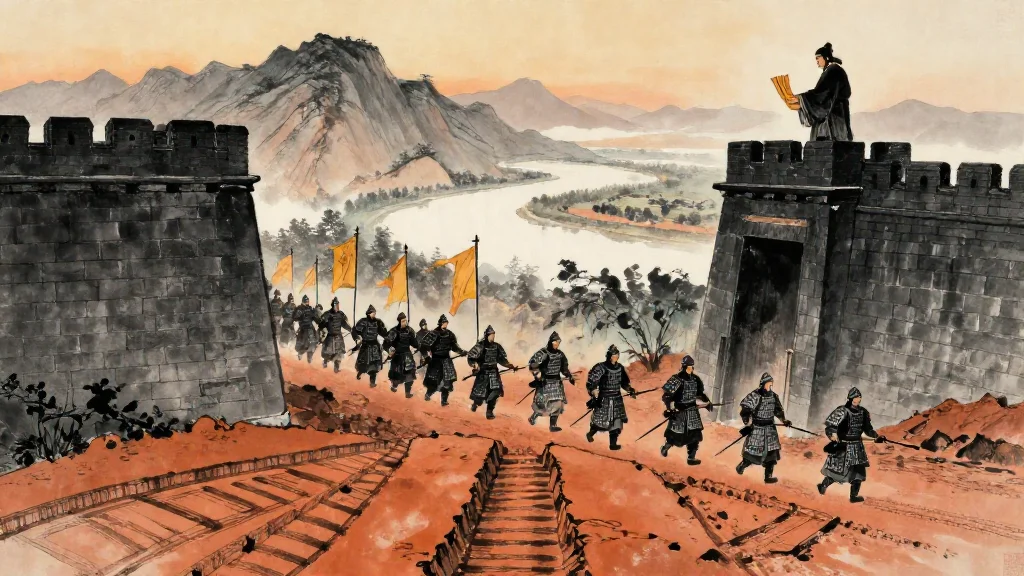
Qin Qín
法家 LegalismBy Augustin Chan with AI · Published January 2025 · Updated March 2026
Character 性格
Ruthless efficiency, institutional strength, expansionist. Rewards military merit, punishes dissent. Centralized bureaucracy eliminates feudal aristocracy.
Historical Overview 歷史
Originally a peripheral western state considered semi-barbaric by the central plains kingdoms. Under Shang Yang's reforms (c. 356 BC), Qin transformed into the most efficiently governed state through strict legalist policies: universal military conscription, merit-based advancement, harsh punishment codes, and abolition of hereditary privilege. By the late Warring States period, Qin's institutional advantages proved decisive, conquering all six rival states between 230-221 BC to establish China's first unified empire under Qin Shi Huang.
Strengths & Weaknesses 長短
Strengths
- +Institutional efficiency through Legalist reforms
- +Merit-based military promotion system
- +Superior agricultural output (Guanzhong plain + Dujiangyan irrigation)
- +Strategic geography (mountain passes, Wei River valley)
Weaknesses
- -Brutal governance creates resentment in conquered territories
- -Over-reliance on military expansion
- -Cultural isolation from central plains traditions
- -Succession instability